

What is quartzite for kitchen countertops? It is more than a stone definition. For real buyers, it is a material decision about durability, slab beauty, fabrication reliability, and long-term kitchen performance. This guide explains how quartzite kitchen countertops compare with other materials, what matters during slab selection, and why options often discussed in a taj mahal quartzite guide remain popular in premium kitchen projects.
When buyers search what is quartzite for kitchen countertops, they are usually not looking for geology alone. They are trying to answer a practical sourcing question: is quartzite the right material for a real kitchen project, a real budget, and a real fabrication workflow? That is what makes this topic valuable for both homeowners and B2B buyers.
In the current market, quartzite has become one of the most discussed natural stone materials for kitchen countertops because it sits in an attractive middle ground. It offers the natural depth and movement that many buyers want, while also being seen as a stronger everyday choice than softer decorative stones such as marble. At the same time, it delivers a more authentic quarried-stone character than many manufactured surfaces.
For kitchen use, that balance matters. A countertop is not simply a decorative slab. It is a working surface exposed to cooking, heat, cleaning, movement, spills, and long-term use. Buyers therefore need to evaluate quartzite not only by appearance, but also by performance, slab structure, finish suitability, edge detailing, and fabrication planning. The right quartzite can support a premium kitchen beautifully. The wrong buying process can turn even an attractive slab into a stressful project.
The question itself shows buyer intent. People are not usually asking whether quartzite exists. They are asking whether it is suitable, whether it is worth the price, and whether it fits the way they want to use the kitchen. In other words, the keyword is informational on the surface, but commercial underneath.
That is especially true for buyers comparing quartzite kitchen countertops with marble, granite, or engineered quartz. They want to understand the material before they commit to slab photos, samples, fabrication drawings, and supplier discussions. This is why a buyer-first explanation works better than a purely technical one. The material must be explained in the language of project decisions.
For many kitchens, the real attraction of quartzite is that it feels premium without feeling overly delicate. It can bring the visual calm of a natural slab, the individuality of genuine mineral movement, and the confidence that the surface is better suited to daily use than many people expect from luxury stone.
Quartzite is a natural metamorphic stone. It begins as sandstone and changes over time under heat and pressure. During that process, the original grains recrystallize and become more tightly bonded, creating a denser and harder material. This is one reason quartzite is commonly regarded as a strong option for countertop use.
For buyers, the key point is simple: quartzite is quarried from nature as a slab. It is not a printed surface and not a man-made imitation of stone movement. That natural origin gives quartzite much of its value in premium kitchen design, especially for buyers who want a one-of-a-kind slab rather than a repeated manufactured pattern.
One of the most common market confusions is the difference between quartzite and quartz. The names sound similar, but they are not the same product category. Quartzite is a natural stone slab. Engineered quartz is a manufactured surface made from quartz particles and binders. Both can be used for countertops, but the buying logic is different.
Quartzite is also different from marble. Marble is known for elegance, softness, and classic veining, but it is generally more vulnerable to scratching and etching in active kitchens. Quartzite often becomes the preferred option when a buyer wants natural beauty with a stronger feeling of day-to-day practicality.
This distinction is important because the wrong assumption can lead to the wrong expectations. Buyers who think quartzite behaves exactly like marble or exactly like quartz often end up asking the wrong questions during slab selection.

One of the main reasons quartzite is used for kitchen countertops is durability. Buyers want a material that can support real kitchen use without feeling fragile. Quartzite is widely appreciated because it combines natural elegance with strong resistance to everyday wear compared with softer decorative stones.
That does not mean every quartzite slab is identical or that every project carries the same technical requirements. Some slabs need more careful planning than others depending on vein structure, cutout positions, edge details, and unsupported spans. Even so, quartzite generally attracts buyers who want the appearance of a luxury natural stone with better confidence for active use.
Kitchen countertops are often evaluated not only by appearance but also by how they respond to heat. Quartzite is widely favored because it is seen as a strong natural-stone option in cooking spaces. Buyers still need responsible use habits, but quartzite gives many kitchens a better balance between beauty and functional reassurance.
This is especially relevant for island kitchens where cooking, prep, serving, and social use all happen on or near the same surface. A stone that performs well in a busy environment naturally becomes more attractive in higher-end residential design.
Quartzite also succeeds because of its visual language. Many slabs show refined movement, soft mineral layering, cloud-like transitions, and elegant veining that work beautifully in modern kitchens. This makes quartzite particularly attractive for buyers who want a calm, bright, or warm-neutral stone surface with more individuality than a manufactured product can usually provide.
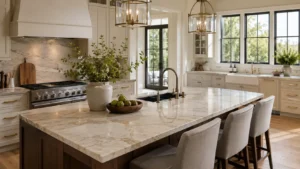
In today’s market, soft white, beige, cream, taupe, and light gray quartzites are especially strong because they integrate easily with wood cabinetry, painted cabinets, brushed metal hardware, contemporary lighting, and open-plan layouts. This is one reason terms like taj mahal quartzite guide continue to attract interest: buyers are looking for exactly that refined balance of warmth, luxury, and practicality.
Quartzite is especially well suited to kitchens where the material must do more than fill a surface area. In premium residential projects, the countertop often becomes a major design signature. The island may be the visual anchor of the room, and the stone must support both aesthetics and use. Quartzite fits this role well because it is both expressive and functional.
For B2B buyers, this matters commercially. A product that satisfies visual ambition and practical expectations is easier to position, easier to recommend, and more likely to convert into inquiry when slab presentation and supplier communication are strong.
Marble remains one of the most iconic materials in luxury interiors, but for active kitchens it often raises concerns about scratching, etching, and long-term visible wear. Quartzite is usually considered when the buyer wants a similar level of natural sophistication while reducing some of that daily-use concern.
This does not mean quartzite replaces marble in every situation. Marble still performs strongly in classic design settings and decorative applications. But in kitchen countertops, quartzite often becomes the more comfortable natural-stone recommendation for buyers who want performance as well as beauty.
Granite has long been trusted as a practical countertop material, and it remains an excellent choice for many kitchens. The difference is often visual positioning rather than simple quality ranking. Granite may feel stronger or more traditional in some cases, while quartzite often appeals to buyers who want a lighter, softer, more contemporary natural look.
For many projects, the real decision is not which stone is “better” in theory, but which one matches the design direction, layout importance, and buyer expectations more accurately.
Engineered quartz offers predictability, controlled appearance, and strong appeal in projects where batch consistency is a high priority. Quartzite offers uniqueness, natural geological depth, and a premium quarried-stone identity. Buyers who care most about authenticity usually respond strongly to quartzite. Buyers focused on uniformity across multiple units may still prefer engineered quartz.
The most important point is not to confuse the two material categories. A buyer who wants a natural stone statement island should not assume a manufactured product will deliver the same emotional or visual result. A buyer who wants total pattern control across repeated units should not assume natural quartzite will behave like an engineered surface.

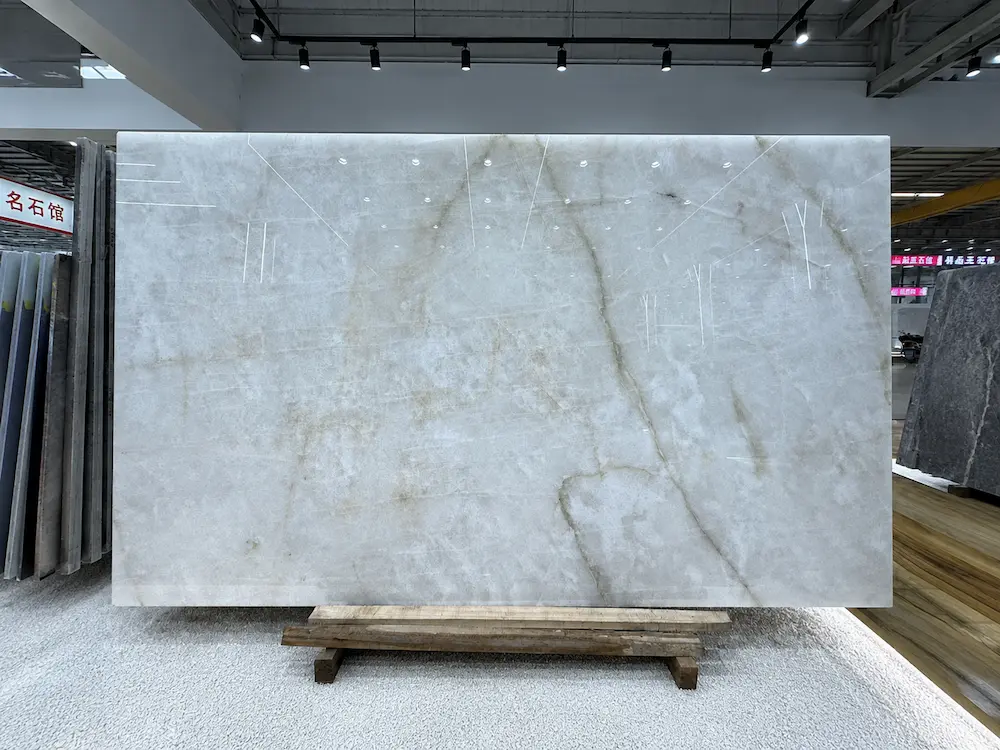
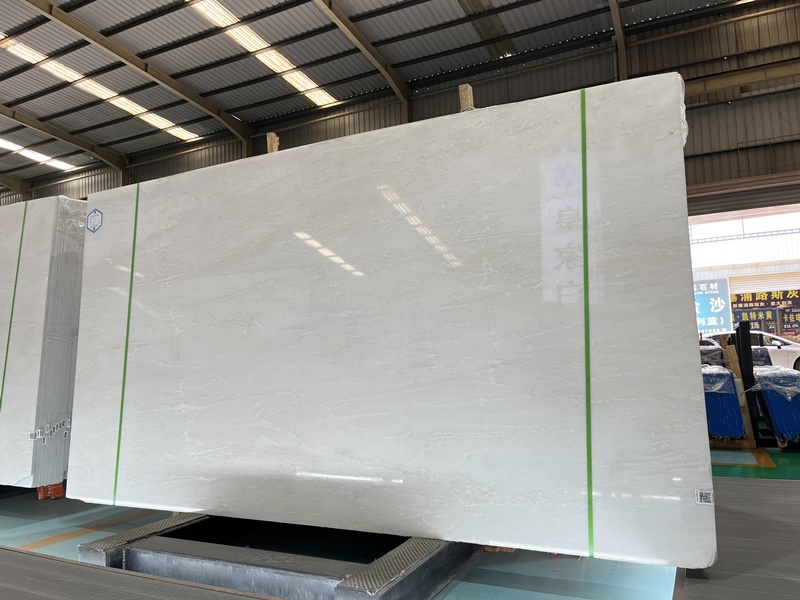
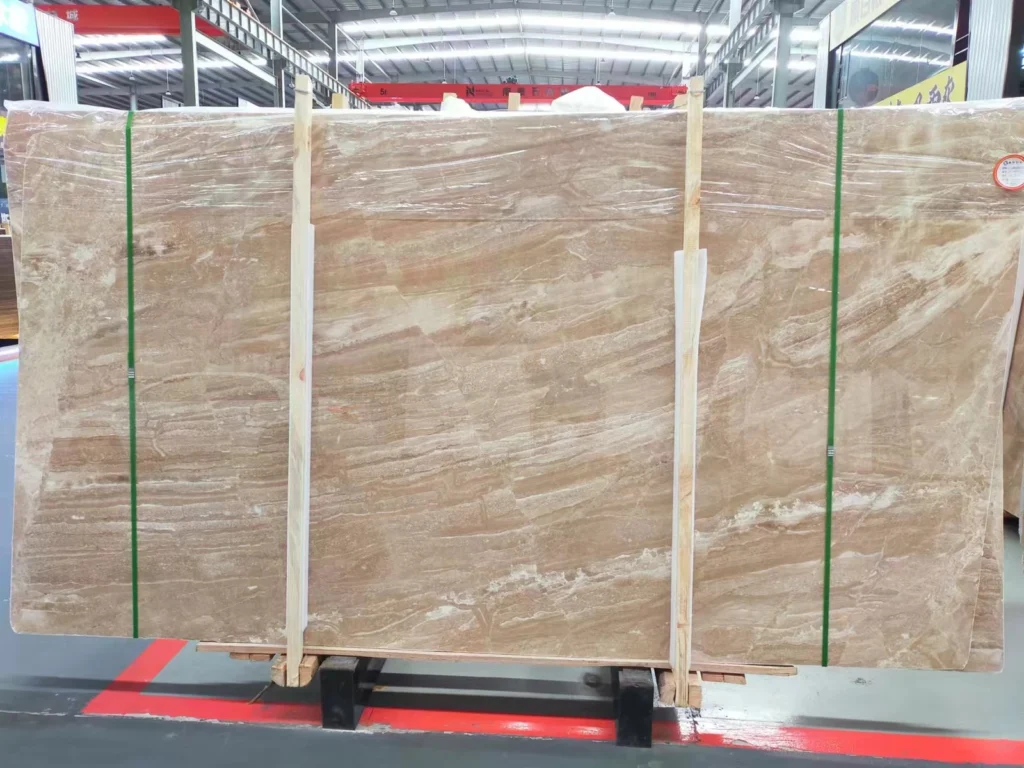
A quartzite purchase should never rely on stone name alone. Buyers should always evaluate the actual slab. The first question is whether the background tone and vein structure fit the intended kitchen. Does the project need a calm visual field, dramatic movement, or a balanced moderate pattern? The answer affects slab choice immediately.
Good suppliers should be able to show full slab photos, close-up details, and where possible video views under natural or neutral lighting. This helps buyers understand whether the slab feels warm or cool, quiet or expressive, and consistent enough for the project.
Quartzite is a natural product, so slab evaluation must include more than color. Buyers should pay attention to natural fissures, vein transitions, repaired zones, and overall structural confidence. These are not automatically defects, but they do influence fabrication planning. The location of sink cutouts, corners, unsupported spans, and waterfall edges must always be considered together with the slab’s internal character.
A serious supplier does not hide these issues. A serious supplier explains them, plans around them, and confirms whether the slab is suitable for the exact application.
The same quartzite can feel very different depending on finish and fabrication. A polished surface usually enhances depth, color richness, and reflectivity. A honed surface creates a softer architectural expression. Thickness also matters because it affects edge design, strength perception, and fabrication complexity.
Buyers should therefore confirm finish, thickness, edge style, and reinforcement needs before they finalize a stone decision. These are not small technical details. They directly affect cost, appearance, and production risk.
In large kitchens, especially those with waterfall islands or full-height backsplashes, slab direction and layout planning become critical. A visually impressive quartzite can lose much of its value if the vein movement breaks awkwardly at seams or flows in the wrong direction across key surfaces.
This is why good quartzite slab selection always includes layout logic. Buyers should ask where the best part of the slab will be used, how seams will be minimized, and whether island returns or backsplash sections can be planned for a clean visual result.
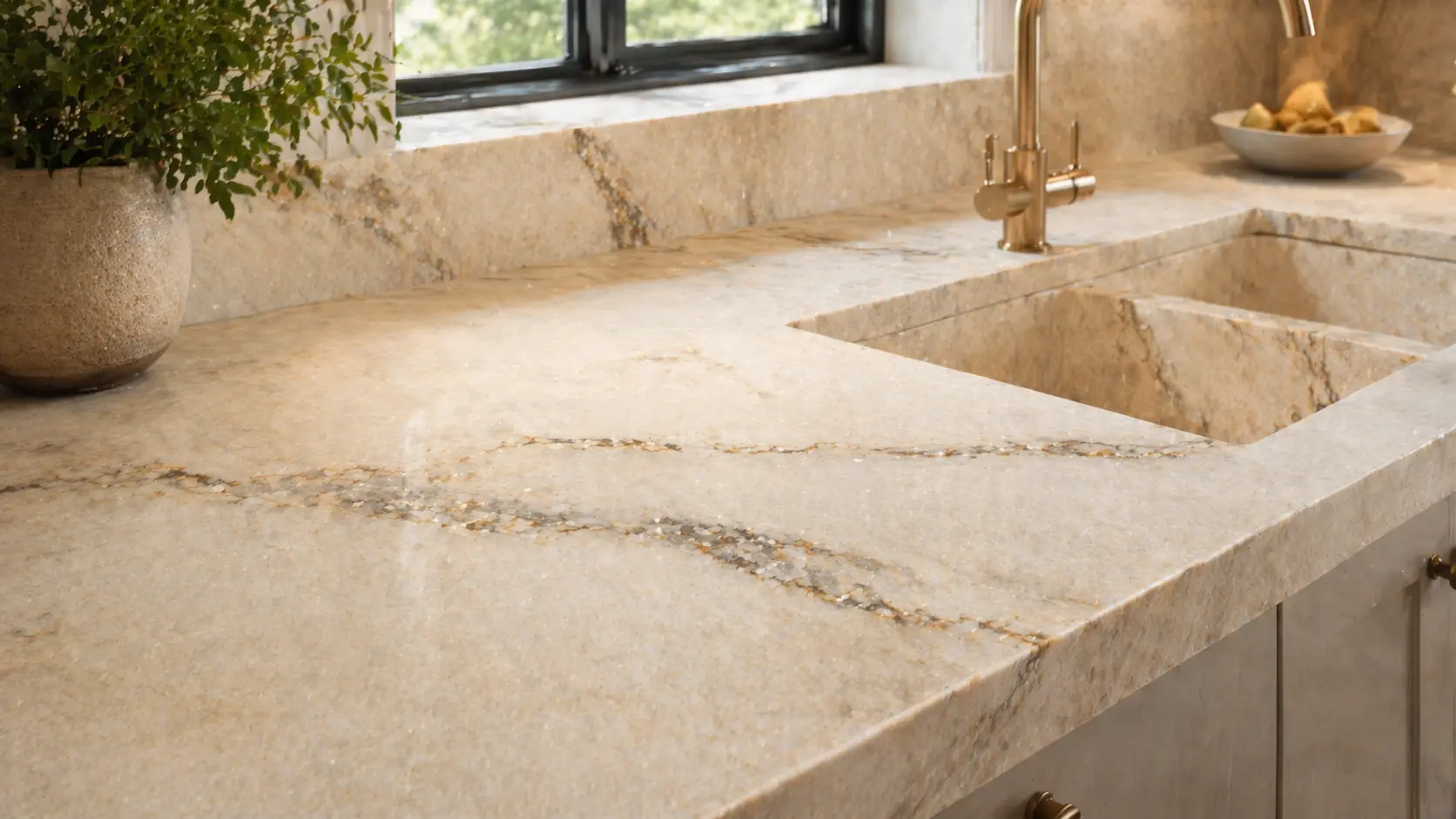
Quartzite works well in kitchens used daily by active households because it supports a strong combination of functionality and visual value. Families often want a surface that looks elevated but does not feel too delicate. Quartzite fits this expectation well when the slab is selected correctly and fabrication is handled professionally.
In high-end homes, the kitchen is often one of the most important design spaces. The countertop becomes part of the room’s identity. Quartzite suits this category because it provides authenticity, individuality, and premium presence without becoming overly ornate or artificial.
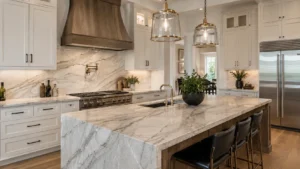
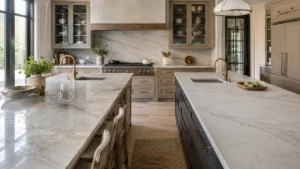
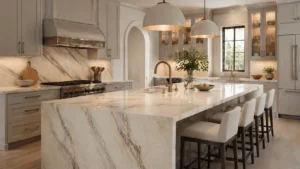
Quartzite is particularly effective for kitchen islands. The larger visual field allows the natural stone movement to be appreciated fully, and the island often becomes the place where buyers want the strongest design statement. This is where beautiful warm-neutral quartzites can perform exceptionally well.
Many modern residential kitchens borrow from boutique hospitality design, using cleaner lines, controlled palettes, and richer natural materials. Quartzite supports this trend because it can look luxurious without looking overstated. It works especially well in projects where stone is used to create a calm and sophisticated central atmosphere.
This is one of the most frequent and costly misunderstandings. Buyers assume the similar names mean similar products. They do not. One is a natural slab material. The other is an engineered surface. Confusing them can distort expectations about appearance, uniformity, and project planning.
Edited photos can make almost any slab look ideal. But stone decisions should not be made from stylized images alone. Lighting, color balance, and polish can all change the way a material appears. Real slab photos, videos, and layout confirmation are much safer than relying on one beautiful reference image.
Some buyers focus heavily on stone color and only later think about sink cutouts, seam locations, edge conditions, support requirements, and backsplash transitions. That sequence creates avoidable problems. A countertop is not only a slab choice. It is a fabrication system. The project should always be reviewed from both design and production perspectives.
Not all quartzites behave identically. Quarry source, density, internal structure, finish behavior, and fabrication requirements can vary. The most successful buyers do not rely on general assumptions. They ask specific questions about the exact slab for the exact kitchen.
The market continues to show strong interest in warm white, creamy beige, and soft taupe quartzites. These tones work well with both contemporary and transitional kitchen styles, which makes them commercially attractive across a wide range of buyer profiles.
Kitchen islands are no longer treated as purely functional. In many projects, the island is the focal point, and buyers are willing to invest more in the right slab because that one surface shapes the mood of the whole room. Quartzite benefits directly from this trend because its natural movement reads beautifully on larger surfaces.
Today’s buyers are not only choosing stone. They are choosing a process. Packaging, communication clarity, slab inspection, cut planning, and fabrication understanding all affect whether the final project succeeds. This is why a product page or guide should not only explain the material, but also help buyers move toward a reliable inquiry path.
If a buyer is ready to move from research into supplier communication, a clear next step is to submit a Quartzite slab / countertop inquiry and confirm slab availability, finish preference, project dimensions, and intended application details early.
| Factor | Quartzite | Marble | Granite | Engineered Quartz |
|---|---|---|---|---|
| Material type | Natural metamorphic stone | Natural metamorphic stone | Natural igneous stone | Manufactured surface |
| Typical buyer appeal | Premium natural beauty with stronger everyday confidence | Classic luxury and soft elegance | Practical natural durability | Controlled appearance and consistency |
| Visual variation | High and unique | High and unique | Medium to high | Usually more controlled |
| Best fit | Luxury kitchens, islands, premium residential projects | Classic and decorative interiors | Busy kitchens and practical stone use | Projects needing uniformity |
| Main buying caution | Needs slab-by-slab review and layout planning | More vulnerable to etching and scratching | Pattern may feel heavier depending on design | Less natural individuality |
| Checkpoint | Why It Matters | What to Confirm |
|---|---|---|
| Full slab photos | Shows actual movement and color balance | Request full slab images, not only close-ups |
| Vein direction | Affects island and waterfall appearance | Confirm layout orientation before cutting |
| Natural fissures or repaired areas | Influences fabrication planning and visual acceptance | Ask for marked details where necessary |
| Finish | Changes both style and practical feel | Choose between polished and honed based on project goals |
| Thickness | Affects strength, edge look, and cost | Match thickness to kitchen layout and fabrication plan |
| Cutout planning | Reduces production and breakage risk | Confirm sink, faucet, and cooktop positions early |
Before placing an order, buyers should confirm the exact slab rather than relying only on a stone name. They should also verify finish, thickness, vein direction, fabrication details, and how the stone will be used in the kitchen. This includes sink and cooktop cutouts, seam positions, edge profiles, backsplash coordination, and any waterfall panels.
Just as important, the buyer should evaluate supplier communication quality. A strong supplier should be able to explain what the slab looks like, what it can do, what the technical cautions are, and how the project should be planned. In premium stone sourcing, that level of clarity is not optional. It is part of the product value.
So what is quartzite for kitchen countertops in real buyer language? It is a premium natural-stone option for projects that need authentic slab beauty, stronger everyday confidence than softer decorative stones, and a kitchen surface that feels elevated rather than generic.
It is not simply a trend material and not simply a geological label. Quartzite matters because it helps buyers bridge design ambition and practical kitchen use. When chosen carefully, it can become one of the most successful natural-stone decisions in the entire home.
The smartest question is not only whether quartzite is good. The smarter question is which quartzite, for which kitchen, from which supplier, with which slab review and fabrication plan. Buyers who think that way usually make better countertop decisions and achieve better project results.
For buyers, the real meaning of what is quartzite for kitchen countertops is not just that quartzite is a natural stone. It is that quartzite offers a practical way to combine slab individuality, premium visual value, and stronger day-to-day kitchen confidence in one material decision.
The best result does not come from stone name alone. It comes from choosing the right slab, reviewing movement and structure carefully, planning the layout correctly, and working with a supplier that understands fabrication reality as well as sales presentation.
The biggest mistakes are confusing quartzite with quartz, buying from edited photos only, and leaving seam, cutout, and waterfall planning until too late. In the current market, buyers also care more about supplier reliability and communication clarity, not just appearance. That is why thoughtful slab evaluation and a clear inquiry process matter so much in real sourcing decisions.
Quartzite for kitchen countertops is a natural stone surface chosen for its combination of authentic slab beauty, strong everyday durability, and suitability for premium kitchen design. For most buyers, it means a natural-stone countertop option that feels both elegant and practical.
For many active kitchens, quartzite is often the safer choice because it is generally considered better suited to daily wear than marble. Marble still has strong design appeal, but quartzite is usually preferred when buyers want natural beauty with lower day-to-day concern.
No. Quartzite is a natural quarried stone, while engineered quartz is a manufactured surface. They may sound similar, but they differ in material origin, appearance, slab variation, and the way buyers should evaluate them for kitchen use.
You should check the actual slab appearance, vein direction, possible fissures or repaired areas, finish, thickness, and how the slab will be cut for your project. It is also important to confirm sink cutouts, seam planning, edge details, and the supplier’s understanding of fabrication requirements.
Yes, but its maintenance is manageable when expectations are clear. Buyers should use suitable stone-care methods, avoid harsh treatment, and confirm cleaning and care guidance according to the specific material and finish selected for the project.