Polished vs Honed Quartzite for Kitchen Countertops
Post navigation
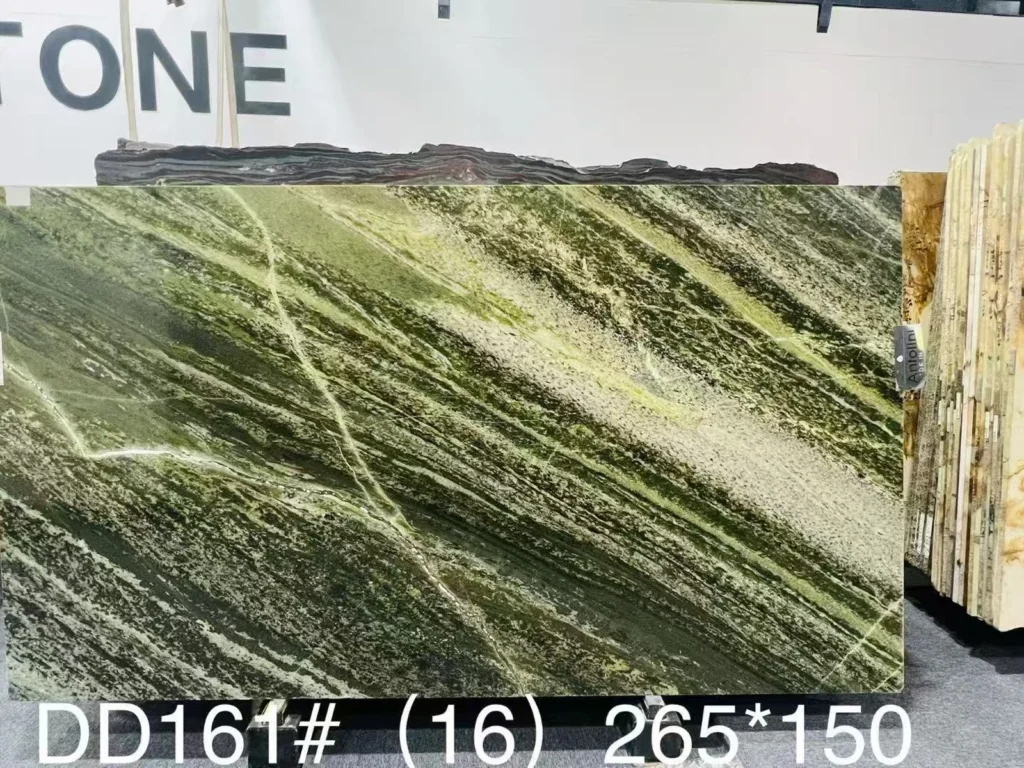
A luxury kitchen image representing the comparison between polished and honed quartzite countertop finishes.
Quick Summary
Quick Summary:Polished vs honed quartzite for kitchen countertops is not just a style decision. The finish changes how the slab reflects light, how color and veining appear, how everyday marks are noticed, and how the kitchen feels overall. The best choice depends on whether you want stronger visual depth and shine or a softer, more architectural natural stone look.
Many buyers decide on quartzite first and only later realize that the finish can change the entire result. At that point, the question becomes much more practical: should the kitchen use a polished surface or a honed surface? This is where many countertop decisions become confusing, because both finishes can look attractive, yet they behave differently in daily use and create different visual effects in the space.
For real projects, polished vs honed quartzite for kitchen countertops is a decision about more than gloss level. It affects how much the slab pattern stands out, how warm or cool the surface feels visually, how fingerprints or water marks are noticed, and whether the countertop reads as more luxurious or more understated. The finish also influences how the countertop works with cabinetry, backsplash design, natural light, and the overall mood of the kitchen.
That is why buyers should not treat the finish as a last-minute detail. The right finish should support the kitchen style, the slab personality, and the way the countertop will actually be used. A stunning slab can lose some of its value if the finish does not match the design intention. On the other hand, the right finish can make a quartzite countertop feel more refined, more practical, and more aligned with the rest of the project.
Why Finish Matters in Quartzite Kitchen Countertops
Quartzite is already valued because it combines natural stone character with strong everyday appeal for kitchen use. But the finish determines how that value is presented. A polished finish tends to bring out more color depth, more contrast, and more visual clarity in the veining. A honed finish softens reflectivity and gives the stone a more muted, relaxed, and architectural expression.
In kitchen design, these differences matter because countertops occupy one of the most visible surfaces in the room. On a large island, the finish becomes part of the kitchen’s identity. In bright kitchens, a polished surface may bounce more light and make the slab feel more vivid. In softer interiors, a honed finish may help the room feel more calm and more naturally premium.
From a buyer perspective, the finish should be chosen with the same care as the slab itself. Buyers often spend time comparing slab photos, but less time asking how the same slab will look once polished or honed. That can lead to disappointment later, especially if the finished surface looks brighter, darker, more reflective, or more understated than expected.
What Is a Polished Quartzite Finish?
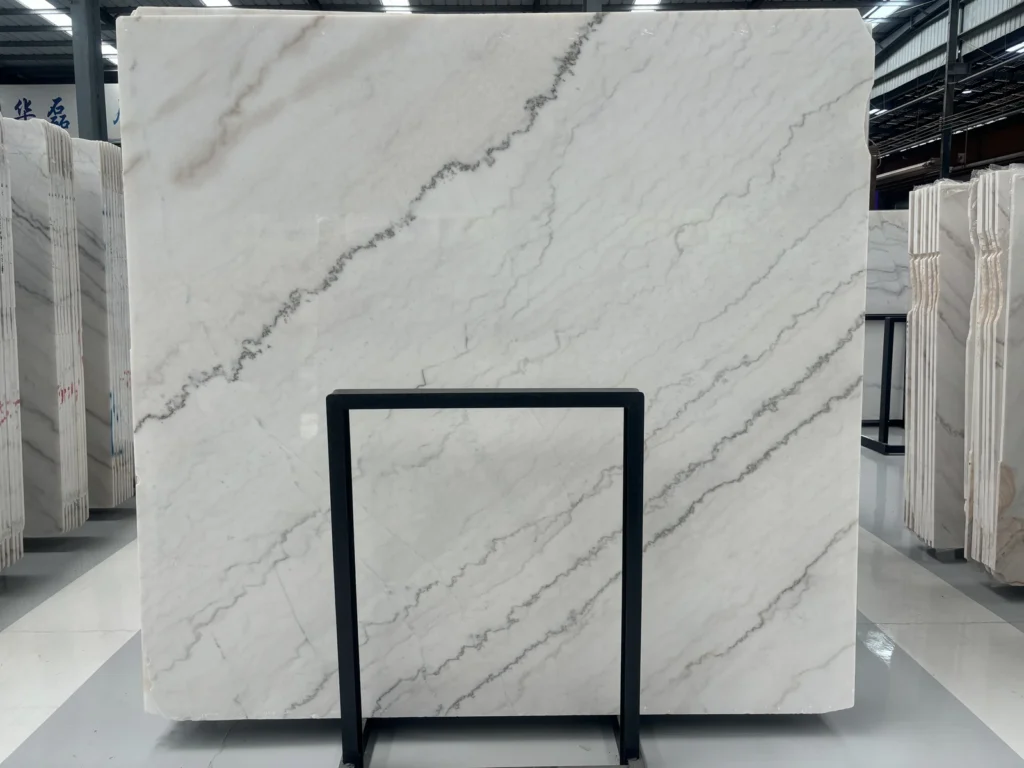
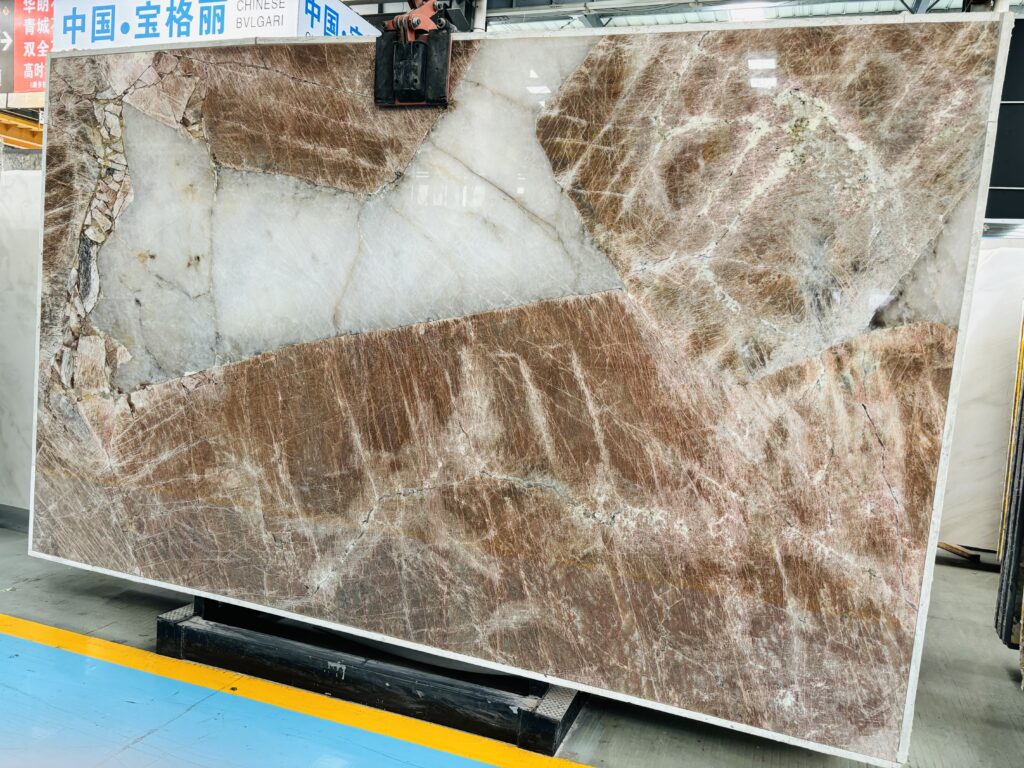
Polished quartzite countertops highlighting stronger shine, richer color depth, and more defined natural movement.
A polished quartzite finish is a glossy, reflective surface created through mechanical polishing. It gives the stone a more finished and luminous appearance, and it usually makes the color richer and the pattern more visually defined. Veins, mineral movement, and tonal variation often appear more dramatic under a polished finish, which is one reason polished quartzite remains highly popular in premium kitchens.
For many buyers, polished quartzite feels more luxurious at first glance. It can enhance the visual depth of beige, cream, white, gray, or gold-toned slabs and make the countertop read more like a statement material. In kitchens with abundant daylight or controlled lighting design, polished quartzite can create an elegant, crisp, and upscale effect.
Polished finishes also tend to align well with buyers who want stronger visual contrast and a cleaner, more finished appearance. If the slab itself has beautiful movement or layered depth, polishing often helps those features show more clearly.
What Is a Honed Quartzite Finish?
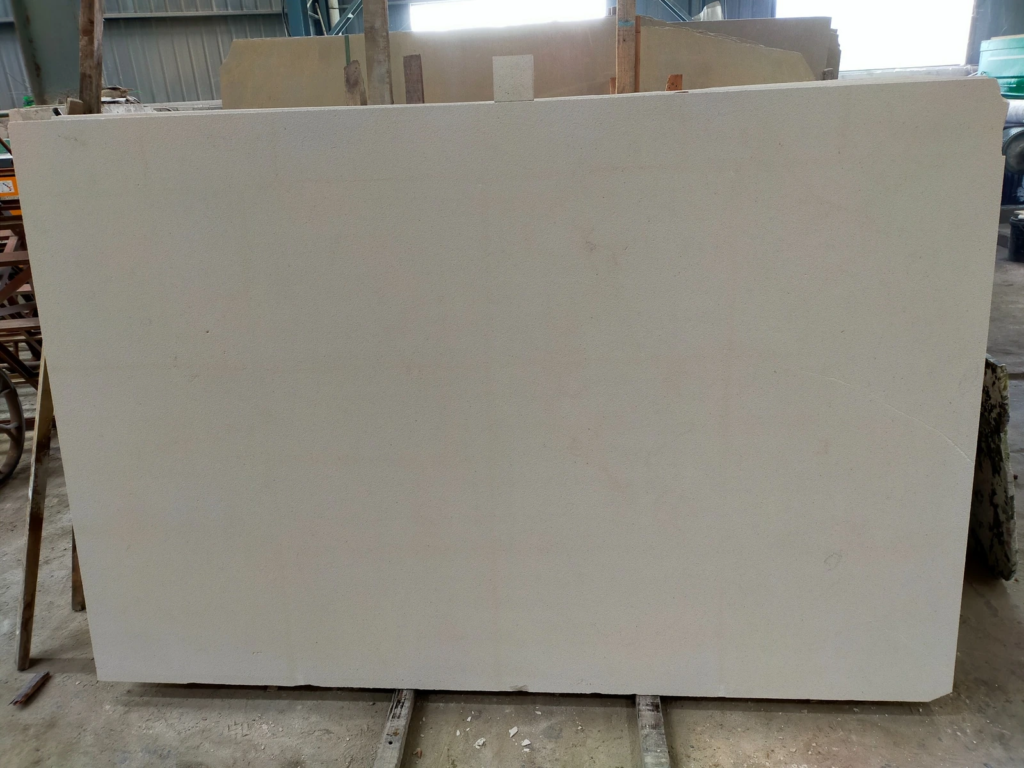
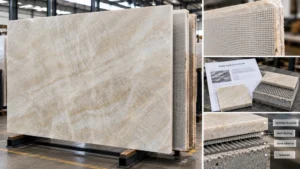
Honed quartzite countertops creating a softer, lower-sheen, and more architectural kitchen atmosphere.
A honed quartzite finish has a smooth but matte or low-sheen surface. It does not reflect light as strongly as a polished finish, which gives the countertop a softer and more understated appearance. The slab still shows its color and movement, but the effect is gentler and less glossy.
Honed quartzite is often chosen for kitchens that aim for a quieter, more architectural, or more relaxed luxury look. Instead of sparkle or sharp reflection, the surface reads as subtle and tactile. This makes honed quartzite especially appealing in warm-neutral kitchens, minimalist interiors, and spaces where the buyer wants the countertop to feel integrated rather than highly showy.
For some slabs, honing can also make the pattern feel more natural and less contrast-heavy. Buyers who feel that polished stone looks too formal or too reflective often respond well to honed quartzite because it feels softer and easier to live with visually over time.
Polished vs Honed Quartzite: Key Visual Differences
Color Depth and Contrast
One of the biggest differences between polished and honed quartzite is how the finish changes color perception. Polished quartzite usually looks deeper, more saturated, and more defined. Beige and cream slabs may look warmer and richer. White and gray slabs may show stronger contrast. Gold, taupe, and dramatic movement often become more visually pronounced.
Honed quartzite usually appears more muted. That does not mean dull in a negative sense. It means softer, more restrained, and less contrast-driven. For some kitchens, that is exactly the desired effect. Buyers who want a calm and balanced kitchen often prefer this lower-contrast presentation.
Reflectivity and Light Response
Polished quartzite reflects more light, which can make the countertop appear brighter and more energetic. In kitchens with large windows, reflective finishes can help the surface feel crisp and premium. In some cases, however, that same reflectivity may make the kitchen feel a little more formal or more visually active than intended.
Honed quartzite absorbs and diffuses light more softly. It tends to reduce glare and create a more settled visual effect. That makes it appealing for buyers who want natural stone presence without too much shine. In design terms, polished often feels more glamorous, while honed often feels more architectural.
Pattern Presentation
The finish also changes how veining and movement are read. A slab with bold directional veining may appear much more dramatic when polished. The same slab, when honed, may feel gentler and more blended. This is why finish selection should always be considered together with slab pattern. Buyers should not choose finish in isolation.
Polished vs Honed Quartzite in Everyday Kitchen Use
Daily Visual Experience
In everyday use, polished quartzite tends to look more striking and more finished. It often suits kitchens where the countertop is meant to stand out. Honed quartzite tends to feel quieter and more integrated into the room. It usually suits kitchens where the buyer wants a premium stone surface without high shine.
Neither experience is universally better. The right answer depends on how the buyer wants the kitchen to feel every day. Some people enjoy the brighter and more refined look of polished stone. Others prefer the softer, low-sheen confidence of honed stone.
Water Marks, Smudges, and Daily Surface Visibility
Buyers often ask which finish hides marks better. In practice, visibility can depend on slab color, lighting, and usage habits. Polished surfaces can sometimes show reflections, smudges, or water spots more clearly because of the shine. Honed surfaces may reduce reflective glare, but on some slabs they can make certain residues or oils feel more noticeable in a different way.
This is why the issue should not be simplified into one universal rule. A bright polished slab in a high-light kitchen may show one type of surface activity more clearly. A darker honed slab may show another. Buyers should think in terms of overall living experience, not only technical assumptions.
Scratch Perception
The underlying stone remains quartzite in both cases, but the way surface wear is perceived can differ visually. On polished finishes, fine surface disruption may sometimes be noticed through reflectivity. On honed finishes, the lack of gloss can create a different visual response, depending on the slab color and the kind of use the countertop receives. This is another reason why kitchen habits and slab tone should be considered alongside finish.
Which Finish Works Better for Different Kitchen Styles?
Polished Quartzite for Bright Luxury Kitchens
Polished quartzite is often the stronger choice for bright luxury kitchens where the stone is meant to feel crisp, elegant, and visually rich. It works especially well with refined cabinetry, statement islands, clean edge details, and designs where the countertop should have presence.
If the slab has beautiful veining or layered natural movement, polishing usually helps those qualities stand out more clearly. This makes polished finishes attractive for buyers who want the countertop to contribute more directly to the wow factor of the kitchen.
Honed Quartzite for Soft Modern and Architectural Kitchens
Honed quartzite is often the better fit for kitchens that aim for softness, restraint, and material harmony. It pairs well with warm woods, muted cabinetry, textured finishes, and interiors that prioritize calm rather than shine. In these kitchens, honed quartzite can feel highly sophisticated because it does not try too hard visually.
This finish is particularly strong when the design goal is natural, understated luxury rather than a high-gloss premium look. It also works well in spaces where buyers want the stone to support the room rather than dominate it.
Busy Family Kitchens
For busy family kitchens, the choice should depend on how the kitchen is used and how the buyer feels about visual maintenance. Some buyers prefer polished because it feels easier to wipe and visually cleaner. Others prefer honed because the lower sheen feels more relaxed and less formal. The better choice is the one that matches the user’s habits and expectations.
How Finish Changes Quartzite Color and Pattern
Finish can significantly change slab personality. A warm beige quartzite with soft movement may look richer, more golden, and more elegant when polished. The same slab, honed, may look more muted and earthy. A white quartzite with gray veining may feel sharper and brighter when polished, but softer and more blended when honed.
This effect becomes even more important on statement islands and waterfall designs. Large-format surfaces magnify both color and pattern behavior. A finish that feels subtle on a small sample can feel much more expressive across a large slab. Buyers should therefore ask to review finish examples or slab visuals at meaningful scale whenever possible.
For this reason, quartzite slab selection and finish selection should happen together. The slab should not be chosen first and the finish second as if the two decisions are unrelated. They are part of the same visual outcome.
Polished vs Honed Quartzite Comparison Table
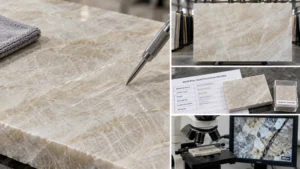
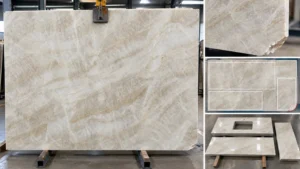
A surface comparison image showing the visual difference between polished and honed quartzite finishes for countertop selection.
Factor
Polished Quartzite
Honed Quartzite
Surface look
Glossy and reflective
Matte to low-sheen
Color effect
Deeper and more saturated
Softer and more muted
Pattern visibility
More defined and dramatic
More blended and subtle
Light response
Higher reflectivity
Lower reflectivity
Design feeling
Luxurious, crisp, more formal
Soft, relaxed, architectural
Best fit
Bright luxury kitchens, statement islands
Warm modern kitchens, understated spaces
Buyer caution
Can feel more reflective than expected
Can look flatter if slab lacks visual depth
Which Finish Should You Choose?
Kitchen Goal
Better Finish Direction
Why
Bright luxury kitchen
Polished
Enhances richness, light response, and stone clarity
Warm natural kitchen
Honed
Creates a softer and calmer material presence
Statement island
Polished
Usually highlights pattern and movement more strongly
Common Buyer Mistakes When Choosing Quartzite Finish
One common mistake is choosing polished simply because it looks more premium in a showroom. Polished can be beautiful, but it is not always the right fit for every kitchen style. Another mistake is choosing honed only because it feels trendy or more architectural, without considering whether the actual slab has enough depth and pattern character to carry that softer finish.
Another frequent mistake is evaluating finish through small samples only. Small pieces rarely show how light moves across a large island or how veining will feel once spread across a full slab. Buyers should always think about the finish at kitchen scale, not sample scale.
The last major mistake is separating finish choice from the rest of the design. Countertop finish should be chosen with the cabinet tone, hardware, backsplash approach, lighting quality, and slab pattern already in mind. The best finish is the one that fits the full kitchen, not just the stone itself.
Buyer Checklist Before Finalizing Quartzite Finish
Before confirming polished or honed quartzite, buyers should review the actual slab, confirm whether the kitchen design calls for more shine or more softness, evaluate the slab under realistic lighting conditions, think about whether the countertop should feel statement-making or subtle, and compare the finish against cabinetry and backsplash materials. They should also decide how important visual depth, reflectivity, and day-to-day surface appearance are in their own kitchen routine.
Buyers still comparing broader material directions may benefit from reviewing more ideas around quartzite kitchen countertops. Those moving into project planning can also submit a countertop material inquiry to compare slab photos, finish options, and application advice for the intended kitchen layout.
Final Recommendation
The best choice between polished and honed quartzite for kitchen countertops depends on what the kitchen needs visually and practically. If the goal is a brighter, richer, and more luxurious stone effect, polished is often the stronger option. If the goal is a softer, calmer, and more understated natural-stone atmosphere, honed is often the better fit.
The most reliable approach is to evaluate finish, slab personality, and kitchen style as one combined decision. Buyers who do that usually get a countertop that feels intentional, balanced, and genuinely right for the space rather than simply fashionable.
Final Note / Practical Takeaway
For buyers, the difference between polished and honed quartzite is not just gloss level. It changes how the stone communicates in the room, how much the pattern stands out, and whether the countertop feels more luxurious or more relaxed.
Polished quartzite is usually the better choice when buyers want stronger color depth, sharper movement, and a more visibly premium finish. Honed quartzite is usually the better choice when buyers want softness, lower reflectivity, and a calmer architectural look.
The right answer depends on the slab, the lighting, and the kitchen design as a whole. Finish should never be treated as a final small detail. It should be chosen as part of the core countertop decision.
FAQ
1. Is polished or honed quartzite better for kitchen countertops?
Neither finish is universally better. Polished quartzite is often better for buyers who want stronger color depth, more shine, and a more luxurious visual effect. Honed quartzite is often better for buyers who prefer a softer, lower-sheen, and more understated kitchen look.
2. Does polished quartzite show more marks than honed quartzite?
Polished quartzite can make certain reflections, smudges, or water spots more noticeable because of its shine. Honed quartzite reduces glare, but depending on slab color and usage, it can create a different kind of visible surface activity. The experience depends on the slab, the lighting, and the kitchen routine.
3. Does honed quartzite make the slab look lighter or duller?
Honed quartzite usually makes the slab look softer and less contrast-heavy rather than truly dull. It can reduce color intensity and reflective depth, which may be desirable in kitchens that aim for a warm, quiet, or architectural feel.
4. Which quartzite finish is better for a statement kitchen island?
In many cases, polished quartzite is better for a statement island because it often highlights veining, mineral depth, and color variation more clearly. Honed quartzite can still work beautifully, but it usually creates a more restrained and subtle statement.
5. Should I choose quartzite finish before or after selecting the slab?
You should evaluate finish together with the slab, not as a completely separate final decision. The same quartzite can look very different when polished or honed, so slab selection and finish choice should be reviewed as one combined design and sourcing decision.
Hi, I am the author of this article. I have been working in the field of Natural Stone for more than 15 years. If you need customized Natural Stone services, please feel free to contact me.