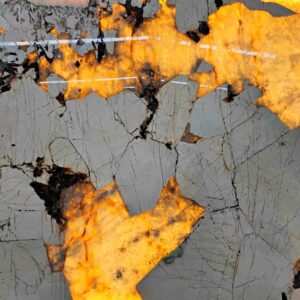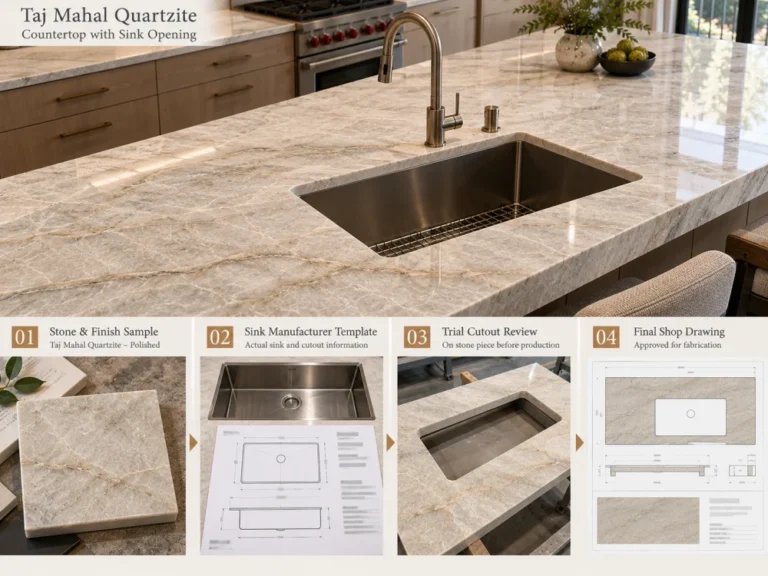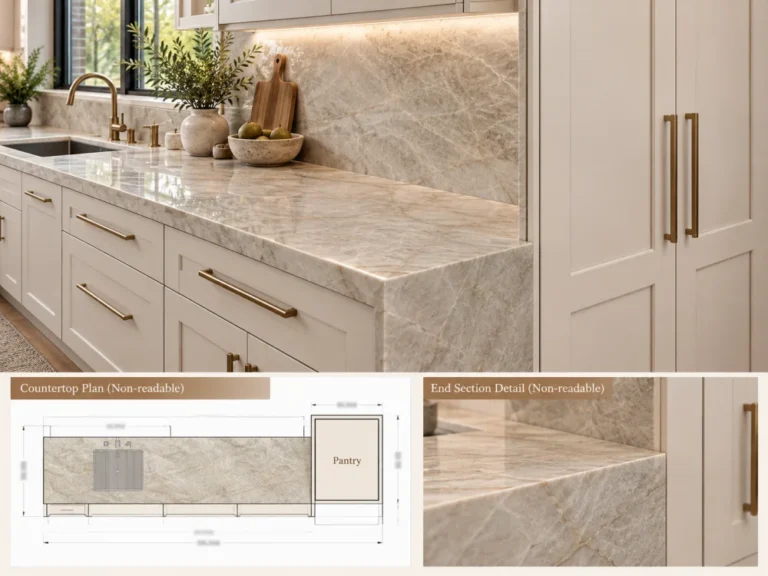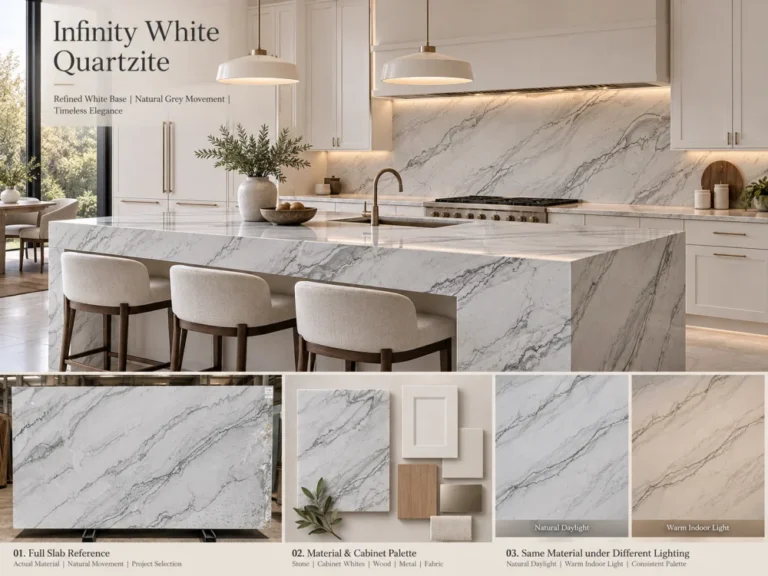
Labradorite Blue Granite is a distinctive natural stone from Madagascar known for large reflective feldspar crystals that can produce vivid blue, green and sometimes gold or violet flashes when viewed under changing light. Its darker background and iridescent crystal structure give the material a much deeper and more dynamic appearance than conventional blue granite.
Madagascar Origin
15mm / 18mm
Blue Crystal Flash
Custom Fabrication

Natural Granite
Madagascar
Blue / Green / Grey / Black
Slabs / Tiles / Cut-to-Size
Labradorite Blue Granite Product Overview
Labradorite Blue, also searched as Blue Labradorite or Labradorite Granite, is defined by its large reflective feldspar crystals. These crystals can display intense flashes of electric blue, turquoise, green and occasional warm gold or violet depending on lighting direction and viewing angle.
The background usually appears dark grey-green, charcoal or black, which increases the contrast of the reflective crystal areas. This makes Blue Crystal Stone particularly effective in interiors where controlled lighting can reveal the changing optical character of the surface.
Because the crystal flash is directional, two slabs with similar base color may still produce very different visual results. Actual Labradorite Slab selection under suitable lighting should therefore be part of the procurement process.

Product Specifications
| Item | Specification Details |
| Material Name | Labradorite Blue Granite |
| Alternative Names | Labradorite Blue / Blue Labradorite / Labradorite Granite / Labradorite Stone |
| Material Type | Natural Granite |
| Origin | Madagascar |
| Primary Colors | Blue, Turquoise, Green, Dark Grey, Black and Occasional Gold or Violet Reflections |
| Texture Pattern | Large reflective feldspar crystals distributed through a dark grey-green to black mineral base |
| Optical Character | Directional blue-green labradorescent crystal flash that changes with light and viewing angle |
| Available Thickness | 15mm / 18mm |
| Surface Finishing | Polished / Honed / Project-Specific Finish |
| Supply Forms | Slabs, Tiles, Countertops, Island Tops, Vanity Tops, Wall Panels, Flooring, Fireplace Pieces, Table Tops and Custom Components |
| Application Scope | Luxury Residential, Villas, Hotels, Kitchens, Bathrooms, Feature Walls, Floors, Fireplaces and Stone Furniture |

How to Select Labradorite Blue Granite
The most important selection factor is not simply how blue the slab appears in a photograph. Buyers should evaluate crystal size, reflective intensity, distribution and the direction from which the strongest blue flashes become visible.
For a Labradorite Counter, Labradorite Island or feature wall, key crystal areas should be positioned where they can interact with the intended room lighting.
Selection Logic
If maximum blue reflection is required → Choose slabs with larger and more evenly distributed blue-flashing crystals.
If a darker and more restrained result is preferred → Choose slabs with more dark background and smaller reflective areas.
If the project uses directional lighting → Review the slab from the intended viewing angle before cutting.
If several pieces form one installation → Coordinate crystal orientation and finished-piece direction before fabrication.
Labradorite Blue Granite Applications
The optical character of Luxury Blue Stone makes Labradorite particularly suitable for projects where lighting and surface orientation can enhance the natural crystalline effect.
Labradorite Island
Large kitchen islands provide enough surface area for the reflective crystal structure to remain visible and can create a dramatic centerpiece under pendant or architectural lighting.
Labradorite Counter
Countertops can use selected high-reflection slab areas while sink openings, cooktops and seams are coordinated around the strongest crystals.
Labradorite Vanity
Vanity tops can be fabricated with basin openings, faucet holes and finished edges while maintaining selected reflective crystal zones on the visible surface.
Labradorite Wall
Feature wall panels can create changing blue-green reflections as viewers move through hotel lobbies, villas, reception areas and premium retail interiors.
Labradorite Floor
Selected flooring applications can use the darker stone base and reflective mineral structure where finish, traffic level and maintenance requirements are properly specified.
Labradorite Table
Dining tables, coffee tables, consoles and custom furniture can use carefully selected slab sections to create close-range blue crystal reflections.
Understanding Labradorescence
The defining visual feature of Labradorite Blue is labradorescence. Light entering the feldspar crystal structure is reflected internally, creating flashes that can appear blue, green or other colors depending on the angle.
This means the same slab can appear relatively dark from one position and dramatically blue from another. Product photos taken under strong lighting may therefore show more reflection than the stone displays under flat or poorly positioned light.
If blue flash is the primary design goal → Evaluate the actual slab under directional lighting and from the intended viewing angle.
If the project uses soft diffuse lighting → Expect a darker and more understated appearance.
If several panels are installed together → Keep crystal orientation consistent where possible so the reflective behavior feels coordinated.
Lighting and Orientation Planning
For Labrador Wall Panel, island and furniture applications, lighting should be considered before the final cutting orientation is approved. Rotation of a finished piece can change how strongly its crystal flashes are visible.
A horizontal island may respond differently to overhead lighting than a vertical wall panel responds to grazing or directional light. This is why slab photography alone is insufficient for high-value architectural projects.
Practical Project Check
Slab Face → Viewing Direction → Light Direction → Finished Orientation → Crystal Flash Review → Cutting Approval
Application Selection Guide
| Project Requirement | Choose | Selection Priority |
| Maximum blue crystal effect | High-flash Labradorite Slab | Crystal intensity and viewing angle |
| Statement kitchen island | Large Blue Labrador Slab | Crystal distribution and overhead lighting |
| Feature wall | Labrador Wall Panel | Panel orientation and directional lighting |
| Luxury bathroom | Labradorite Vanity | Visible crystals and opening position |
| Statement furniture | Labradorite Table | Close-range reflection and finished edge quality |
Surface Finishes and Fabrication
Polished Labrador
A polished finish generally provides the strongest color depth and makes blue-green crystal reflections more visible under suitable lighting.
Honed Labradorite
A honed finish creates lower reflection and a softer surface appearance, but the dramatic crystal flash may become more restrained than on a polished surface.
Custom Fabrication
Processing can include CNC openings, miters, waterfall returns, edge profiles, vanity tops, wall panels, fireplace pieces, table tops and project-specific architectural components.
Key Procurement Risks
A photograph captures the slab from only one lighting and viewing angle. It cannot fully represent the changing crystal flash visible when moving around the stone.
Crystal size, orientation and reflective intensity vary naturally. Some slabs appear much more blue than others under the same lighting.
Rotating a panel or countertop component can change the visible labradorescent effect and reduce the expected blue reflection.
The best crystal areas may be lost inside sink openings, divided at seams or used on secondary components if slab mapping is skipped.
Common Purchasing Mistakes and Consequences
| Common Mistake | Possible Consequence | Recommended Control |
| Approving one close-up photo only | Unexpected overall crystal distribution | Review full-slab photos and video |
| No lighting review | Weak blue reflection after installation | Review slab under representative directional light |
| Ignoring orientation | Finished pieces flash differently from expectation | Mark orientation before cutting |
| No slab mapping | Best crystals lost inside openings | Assign focal pieces before fabrication |
| Comparing material price only | Lower-cost slabs may have weaker optical quality or poorer usable yield | Compare slab appearance, yield, fabrication, packing and logistics |
Custom Fabrication and Quality Control
Labradorite Blue Granite can be fabricated into countertops, waterfall islands, vanity tops, wall panels, flooring, fireplace pieces, table tops, bar counters and other custom architectural components according to approved CAD or shop drawings.
Quality control should include both conventional dimensional inspection and optical review. Before cutting, actual slab identity, crystal distribution, reflective direction, natural fissures, visible face, finished orientation, cutout positions, seams and exposed edges should be confirmed.
Recommended Project Flow
Material Inspection → Actual Slab Selection → Lighting & Reflection Review → Slab Mapping → Drawing Approval → Orientation Marking → Cutting Layout → Cutting → CNC & Edge Fabrication → Dry-Lay Confirmation Where Required → Final QC → Packing Inspection
Packaging and Project Delivery
Finished Labradorite Blue Granite components should be packed according to their dimensions, geometry, weight and breakage risk. Countertops with openings, waterfall pieces, wall panels and long furniture tops require suitable support during handling and international transportation.
Finished surfaces should be protected with non-abrasive materials, while corners, polished edges and openings receive additional cushioning. Each finished component should also retain clear orientation and piece identification before being securely fixed inside reinforced fumigated wooden crates.
Information Required for Quotation
For accurate B2B pricing, provide the main design and technical requirements so slab quantity, usable yield, fabrication complexity, packing and logistics can be evaluated together.
Island / Counter / Wall / Vanity / Table
Finished component sizes
Pieces or total area
15mm / 18mm
Polished / Honed
Viewing and lighting conditions
Edges / Cutouts / Miters / Waterfall
Port or delivery address
Labradorite Blue Granite FAQ
1. What makes Labradorite Blue Granite look blue?
The blue appearance comes from reflective feldspar crystals that produce labradorescence. These crystals can show blue, turquoise, green and occasional gold or violet flashes depending on lighting and viewing angle.
2. Where does Labradorite Blue Granite come from?
Labradorite Blue Granite is primarily associated with Madagascar and is widely supplied internationally as a premium dark granite with blue-green reflective crystal structure.
3. Does every Labradorite slab have the same blue reflection?
No. Crystal size, orientation, concentration and reflective strength vary between slabs, so actual full-slab review under suitable lighting is strongly recommended.
4. Can Labradorite Blue Granite be used for kitchen islands?
Yes. Labradorite Island applications are particularly effective because a large horizontal surface can display many reflective crystals under pendant and architectural lighting.
5. Can Labradorite Granite be used for feature walls?
Yes. Labradorite Wall and Labrador Wall Panel applications can create changing blue-green reflections as the viewing angle changes, making them suitable for luxury focal walls.
6. Which finish shows the blue crystals best?
A polished surface generally provides the strongest visual depth and reflective crystal effect. Honed Labradorite produces a softer, lower-reflection result.
7. Should the slab orientation be confirmed before cutting?
Yes. Because labradorescence is directional, rotating a finished piece can change the visible blue flash. Orientation should be reviewed and marked before fabrication.
8. Can Labradorite Blue Granite be used for tables?
Yes. Labradorite Table applications are suitable for dining tables, coffee tables and consoles where the crystal structure can be viewed at close range under changing light.
9. What affects Labradorite Blue Granite price?
Price depends on crystal flash quality, slab dimensions, overall visual grade, thickness, usable yield, finish, fabrication complexity, quantity, packaging and logistics.
Final Note / Practical Takeaway
Labradorite Blue Granite is best suited to projects where changing light and crystal reflection are intended to become part of the design. Its dark mineral background and intense blue-green labradorescent crystals work especially well for kitchen islands, feature walls, countertops, vanities, fireplaces and custom stone furniture. For B2B procurement, buyers should evaluate the actual slab under representative lighting rather than relying on a single photo. If maximum blue flash is required → choose slabs with larger and more evenly distributed reflective crystals. If a darker and more restrained result is preferred → choose slabs with more continuous dark background. If several pieces form one installation → coordinate crystal direction, finished orientation, cutting layout and lighting before fabrication.