
Blog

6 Types of Brackets in Stone Dry Hanging Systems Explained

Stone dry hanging is a widely adopted technique in modern architectural cladding, known for its safety, efficiency, and aesthetics. Central to this method are various types of stone dry hanging brackets (also known as stone cladding fixings or hangers). These components provide crucial structural support and secure stone panels on buildings.

This article explores the types of dry hanging brackets used in stone applications, comparing their advantages, disadvantages, and optimal use cases. Whether you’re an architect, contractor, or stone enthusiast, this guide will help you choose the right hardware for your stone installation projects

What is Stone Dry Hanging?

Stone dry hanging is a method of installing stone slabs or panels onto walls or facades without the use of traditional cement mortar. Instead, mechanical brackets and fixings support the stone, offering numerous advantages:

  • Reduced construction time
  • Improved safety and earthquake resistance
  • Easy maintenance and future replacements
  • Better ventilation and insulation

Types of Stone Dry Hanging Brackets

1. Double Hook Brackets (Double-Groove Brackets)double hook

Features:

  • These brackets provide both upper and lower connections to the stone.
  • Commonly used due to their balance of safety and efficiency.

Advantages:

  • Shorter installation time compared to back bolts.
  • Good structural strength.

Disadvantages:

  • Difficult to disassemble or replace individual panels after installation.

Use Case: Ideal for large-scale exterior wall cladding where long-term stability is crucial.


2. T-Shape Welding Brackets (T-Shape Welded Anchors)

Features:

  • Thin base plates that offer better support for thinner stone panels.

Advantages & Disadvantages:

  • Shares similar pros and cons with double hook brackets.
  • Better suited for delicate or thin stones due to reduced pressure points.

Use Case: Used when working with thin slabs or when aesthetic edges are critical.

3. Tilted Brackets (Stone Tilt Brackets)

Features:

  • Provide two additional fixed points, turning a two-point hold into a four-point system.

Advantages:

  • Improved load-bearing capacity.
  • Adds stability, especially at the top and bottom layers of the structure.

Use Case: Common at the base or top of buildings where additional support is required.

T-shaped welding                                                               tilted bracket


4. Corner Brackets (Angle Brackets)

Features:

  • Eliminates the need for an entire supporting keel.

Advantages:

  • Saves space and reduces cost.
  • Simplifies installation.

Disadvantages:

  • Less secure than using a full frame.

Use Case: Best for interior wall installations or small-scale projects like decorative backgrounds.


5. Angle Brackets and Angle Welded Brackets

Features:

  • Simple L-shaped brackets used in projects with flat wall surfaces.

Advantages:

  • Further reduces material usage.

Disadvantages:

  • Wall surface must be very flat.

Use Case: Interior projects or renovations with minimal structural demands.

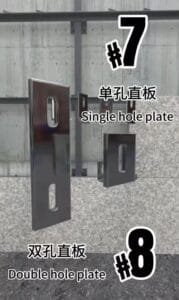
6. Straight Plates (Single-Hole and Double-Hole Plates)

Features:

  • Auxiliary components used to extend or level brackets.

Use Case:

  • Extend reach if brackets are too short.
  • Adjust for uneven walls during installation.

                                                                     Single hole plate


How to Choose the Right Stone Hanging Bracket

When selecting the appropriate bracket for your stone cladding project, consider the following factors:

  1. Stone Thickness and Weight: Thinner stones benefit from T-shaped welded anchors.
  2. Project Scale: Use double-hook or tilt brackets for large exteriors.
  3. Wall Flatness: Angle brackets are only suitable for flat wall conditions.
  4. Budget and Time Constraints: Corner brackets help reduce cost and labor.
  5. Maintenance Needs: For easy replacements, avoid brackets that are hard to dismantle.

Installation Tips for Stone Hanging Brackets

  • Always check wall load-bearing capacity before installation.
  • Use stainless steel or anti-corrosion materials for durability.
  • Regularly inspect installed brackets for rust or structural damage.
  • Maintain at least 4-point support for heavy or large stone panels.

FAQs About Stone Dry Hanging Brackets

1. What are stone dry hanging brackets used for?

Stone dry hanging brackets are used to mechanically fix stone panels to walls or facades without mortar. They provide structural support and ensure safety and aesthetic appeal.

2. Which is better: double-hook brackets or back bolts?

Double-hook brackets are faster to install and widely used, while back bolts are more secure but labor-intensive. The choice depends on the project’s safety and aesthetic requirements.

3. Are T-shape welded brackets suitable for all stones?

No. T-shape welded brackets are ideal for thin stones that require delicate handling, offering better edge protection.

4. Can I use corner brackets for outdoor cladding?

It’s not recommended for large or outdoor projects due to lower structural reliability. Corner brackets are best for small interior installations.

5. Do stone dry hanging systems require a metal frame?

Not always. Systems like corner brackets or angle welded brackets may work without a full keel, but structural safety must always be evaluated.


Conclusion: Why Choose HRST STONE for Your Stone Bracket Needs?

HRST STONE is a leading supplier of high-quality natural stone and associated hardware. Our advantages include:

  • Comprehensive Product Range: From marble to granite and quartzite.
  • Certified Quality: ISO-compliant and rigorously tested hanging systems.
  • Customization: Tailor-made brackets to fit your specific project needs.
  • Experienced Technical Team: Over 15 years of global project expertise.
  • Fast Global Delivery: Reliable supply chain ensures timely delivery worldwide.

Whether you’re working on a landmark commercial tower or a custom home interior, HRST STONE delivers the materials and support you need for safe, stylish, and sustainable stone installations.

🌐 Explore more: www.quartzite-stone.com
📩 Email: assistant@hrststone.com
📱 WhatsApp: +86 13685922793
Related Products

goldmagmagranite 1663314171302 3

Magma Gold Granite

Magma Gold Granite is a luxury and exotic stone. Magma Gold granite has mostly gold, and black colors on each slab. Some areas slab has more black colors while some other areas have mostly gold color. Most used in kitchen countertops, bathroom vanity top, bar tops and wall decor.

Read More »

Calacatta Zebrino Marble

Calacatta Zebrino Marble, a natural stone from Italy, is known for its striking appearance and aesthetic appeal. Originating in Gorfigliano, Carrara, it features a pure white background, a luminous base color that gives it a sense of purity and sophistication.

Read More »

Blue Sodalite Granite Table Top

Blue Sodalite Granite is a beautiful natural stone that is primarily known for its unique blue color with white and gray veining. It has a hard and durable texture, making it an ideal choice for interior and exterior applications. This granite offers excellent resistance to scratches, heat, and acid, which makes it perfect for high traffic areas like kitchen countertops and flooring. Additionally, the natural pattern of Blue Sodalite Granite is visually stimulating and distinctive, which makes it suitable for creating stunning accent pieces and decorative features.

Read More »

Wild West Granite

Wild West Green Granite is a unique, durable igneous rock with a unique blend of dark and light cloud-like patterns. Its exceptional hardness ensures durability and resistance to scratches, heat, and stains, making it ideal for high-traffic areas like kitchen countertops and flooring. Its intricate patterning and color variations complement both traditional and contemporary designs, enhancing any space.

Read More »