What Water Absorption Results Mean for a Quartzite Order
Post navigation
Quick Summary
A Quartzite water absorption result tells you how the tested specimen performed under the stated test method and reporting basis. It should not be read as a standalone promise that every slab in an order is waterproof, stain-proof, frost-proof, or suitable for every application. Before using the result in a purchasing or technical-submittal decision, confirm the test method, specimen identity, reported unit, test date, relationship to the proposed material, and the project criterion the result is being compared against.
A Natural Quartzite test report shows a water absorption value.
For a buyer, the temptation is to look immediately at the number and ask:
“Is this good?”
But that question comes too early.
Before interpreting a Quartzite water absorption result, establish what was tested, how it was tested, how the result was reported, whether the specimen relates to the stone being purchased, and what requirement the project is actually trying to verify.
The useful sequence is:
Test Method → Specimen → Result → Order Relevance → Project Criterion → Technical Decision
What Does a Quartzite Water Absorption Test Measure?
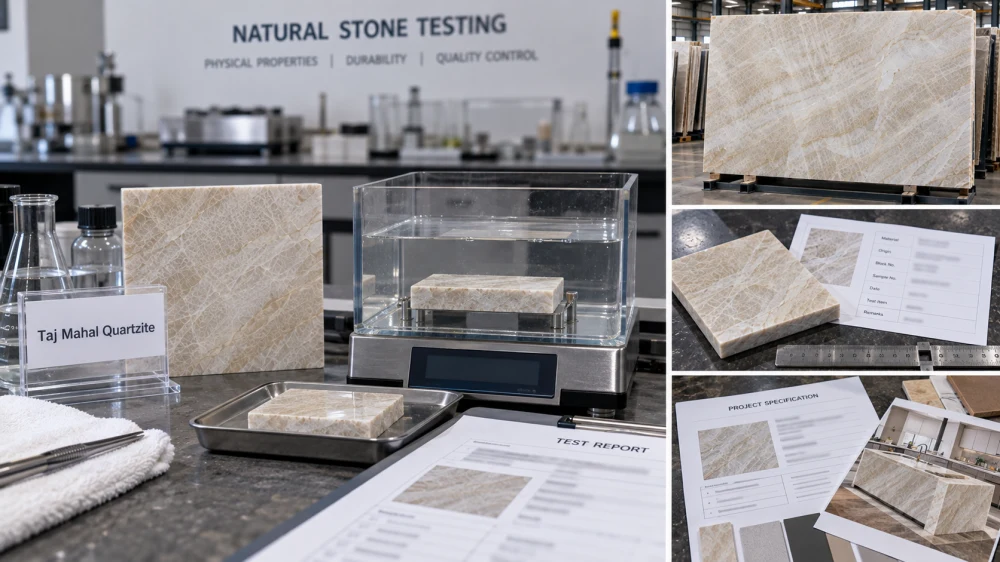
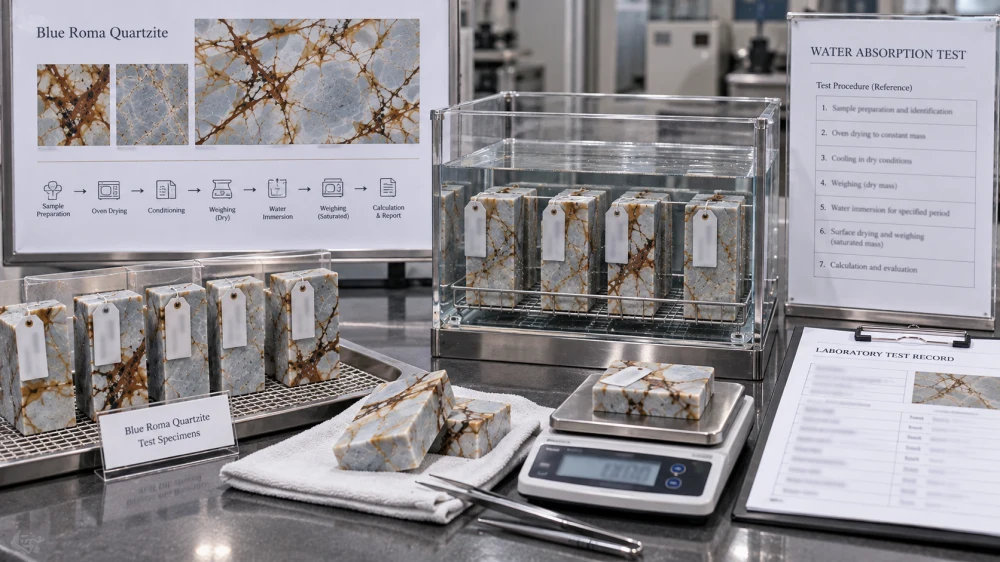
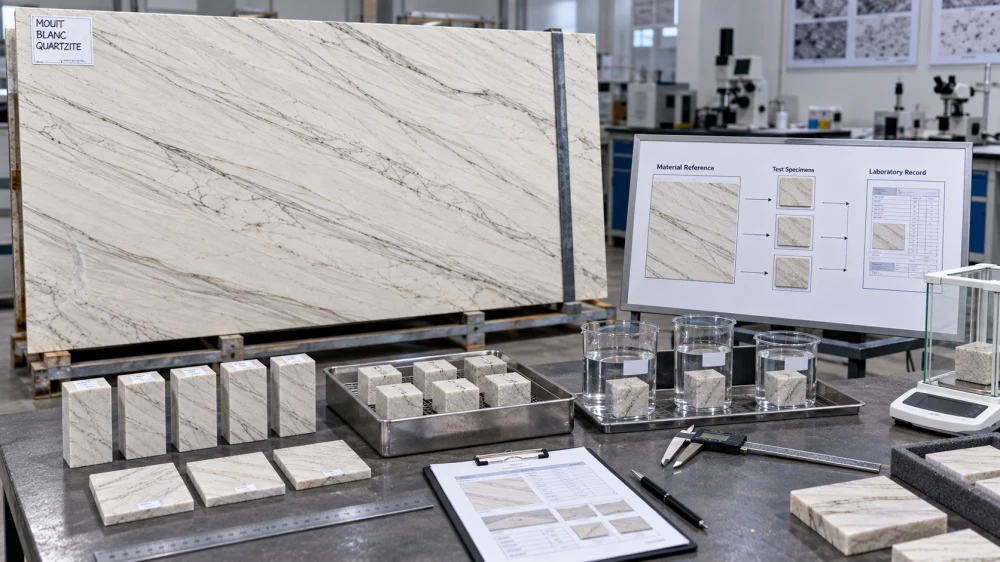
At a practical buyer level, a water absorption test reports how much water a prepared stone specimen absorbs under the conditions of a defined test method.
The important words are:
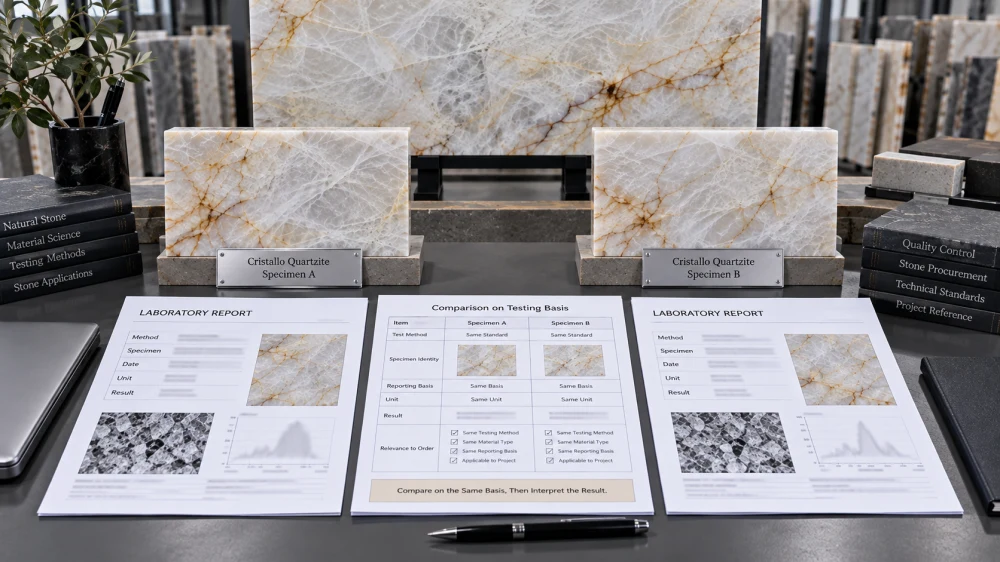
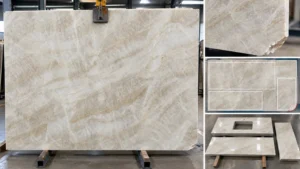
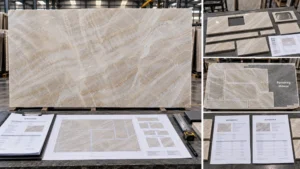
quartzite-water-absorption-results-order
prepared specimen + defined method.
The result does not describe every possible way water can interact with a finished stone project.
It is a measured physical-property result for the specimens and procedure represented by the report.
Start With the Test Report, Not Just the Number
A standalone value copied into an email or quotation has much less meaning than a traceable report.
Before interpreting the result, look for:
laboratory name;
report number;
test date;
test method;
material or sample name;
sample identification;
specimen information where reported;
reported value;
unit or reporting basis;
notes or limitations; and
the relationship between the tested specimen and the material being offered.
Buyer Rule
Never separate a Quartzite water absorption number from the method, specimen identity, and report that give the number its meaning.
Why Does the Test Method Matter?
“Water absorption” is the property being discussed. The test method defines how that property was evaluated and reported.
When reviewing two reports, do not assume they are directly comparable merely because both contain the words “water absorption.”
Is a block, lot, bundle, quarry or other reference stated?
Can the supplier connect the tested material to the current order?
Is the connection documented or only assumed?
The weaker the traceability between the specimen and the proposed Quartzite order, the narrower the report’s procurement value becomes.
Does One Water Absorption Result Represent Every Quartzite Slab?
Not automatically.
Natural Quartzite is natural stone, and variation can exist between geological zones, blocks, slabs and production lots.
A report therefore needs to be read according to what was actually sampled and tested.
This does not make historical or representative laboratory data useless.
It means the buyer should label it correctly.
Evidence
What It Can Support
Do Not Automatically Claim
Report for an identified specimen
Result for the tested specimen under the stated method
Every future slab has exactly the same value
Report linked to a known lot or material reference
Stronger traceability to the proposed supply
Every location in every slab is identical
Old report with unclear sample relationship
Background technical information with stated limitations
Current order-specific verification
What Does a Lower Water Absorption Result Mean?
When two genuinely comparable specimens are tested under the same relevant method and reporting basis, a lower reported absorption value indicates that the tested specimen absorbed less water under those test conditions.
That is the interpretation to keep.
Do not automatically extend it into:
lower absorption = better stone for every project.
The project may also need to consider:
strength;
abrasion or wear;
finish;
slip requirements;
environmental exposure;
fabrication;
panel or piece geometry;
substrate;
installation system;
joints and detailing;
maintenance; and
other specification requirements.
Water Absorption Is Not the Same as Stain Resistance
This distinction is particularly important for countertop buyers.
A laboratory water absorption value should not be treated as a direct stain-resistance rating.
Staining can involve:
the contaminant;
contact time;
surface finish;
surface treatment or sealer;
cleaning procedure;
mineral characteristics; and
actual service conditions.
Water absorption data and stain evaluation therefore answer different questions.
Water Absorption Is Not the Same as Strength
A low Quartzite water absorption value does not, by itself, tell the buyer the material’s flexural strength, compressive strength, modulus of rupture, or ability to support a particular fabricated geometry.
Likewise, a strength test does not substitute for water absorption data.
The existing Natural Quartzite petrographic report guide explains the broader evidence principle: geological identification, physical testing and actual slab review are different information layers and should not be asked to replace one another.
Water Absorption Is Not Automatically a Frost-Resistance Result
Exterior projects create another common interpretation error.
Water inside or around natural stone can be relevant to exposure discussions, but a water absorption number alone should not be converted into a complete freeze-thaw or exterior-suitability conclusion.
An exterior project may also depend on:
the applicable specification;
climate and exposure;
stone thickness and geometry;
fixing or installation system;
drainage;
joints;
substrate;
other required physical properties; and
project-specific technical review.
If frost or another environmental performance requirement is important, evaluate the evidence required for that specific question rather than relabeling an absorption test.
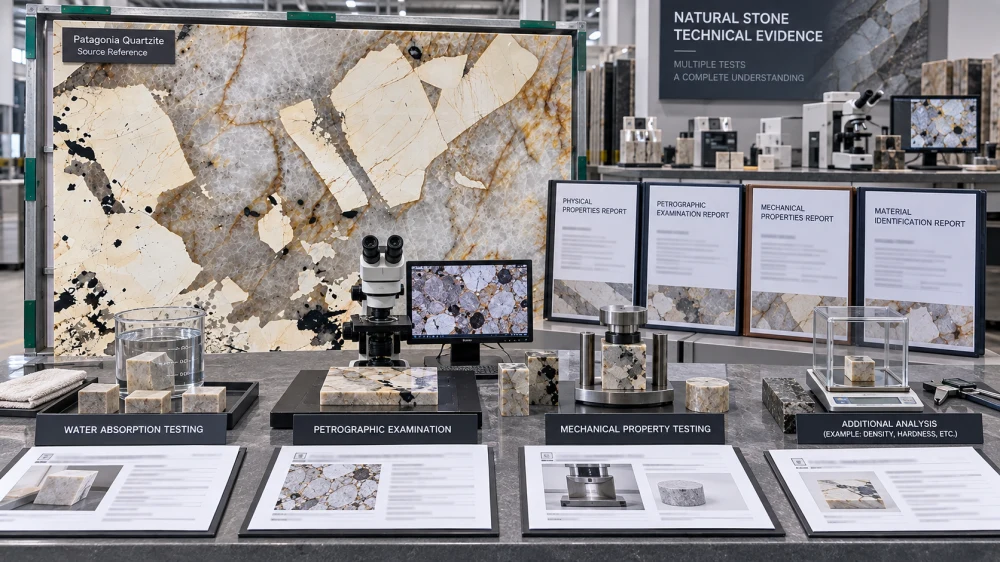
Different Test Documents Answer Different Questions
Evidence
Main Question
Water absorption test
How did the tested specimens absorb water under the stated method?
Petrographic examination
What minerals, texture, fabric and geological characteristics were observed in the tested sample?
Strength test
How did the tested specimens respond under the stated mechanical test?
Abrasion / wear test
How did the tested material respond under the stated wear-related method?
Actual slab review
What material is actually being purchased and how does it look?
This separation is also important when writing specifications. Commercial material identity, geological classification, physical test data and actual slab approval serve different procurement functions and should remain separate records.
If two Quartzite suppliers provide different results, do not rank the stones immediately.
First build a comparable-result table.
Check
Report A
Report B
Test method
Record exactly
Record exactly
Specimen identity
Record
Record
Reporting basis / unit
Record
Record
Report date
Record
Record
Relationship to current order
Confirmed / unclear
Confirmed / unclear
Reported result
Preserve original value
Preserve original value
If the basis differs materially, label the comparison accordingly instead of creating a false winner from two numbers that may not be directly comparable.
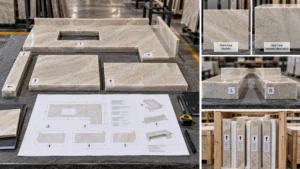
quartzite-water-absorption-report-comparison
The Project Specification Decides Whether the Result Is Acceptable
A laboratory reports a result.
A project specification may define a requirement.
Those are two separate pieces of information.
RESULT ≠ ACCEPTANCE CRITERION
The laboratory result tells you what was measured for the tested specimens. Whether that result satisfies a project requirement depends on the applicable specification, referenced standard, material category, application, and responsible technical review.
This is why a supplier should be careful about answering a technical submittal request with only:
“Our Quartzite absorption is X%, so it is suitable.”
A stronger response attaches the actual report, identifies the material relationship, and lets the relevant project requirement be reviewed against the documented evidence.
Do Not Invent a Universal “Good Quartzite” Threshold
Buyers often want one simple number that separates good Quartzite from bad Quartzite.
That shortcut can be misleading.
The relevant criterion may depend on:
the test method;
the material classification used by the specification;
the applicable standard;
the project type;
the intended application;
the jurisdiction or consultant requirement; and
the technical submittal basis.
Use the project’s actual requirement instead of inventing a generic acceptance threshold for every Natural Quartzite order.
When Should a Buyer Request New Testing?
New or project-specific testing may deserve consideration when:
the specification explicitly requires current test data;
the available report cannot be connected adequately to the proposed material;
the existing report uses a method different from the required method;
the consultant or client requests a project-specific submittal;
the material source or supply basis has materially changed;
the existing documentation is incomplete for the decision being made; or
the responsible technical reviewer requests additional evidence.
Before selecting a new specimen, define the test question first.
This avoids paying for a laboratory result that does not answer the project’s actual requirement.
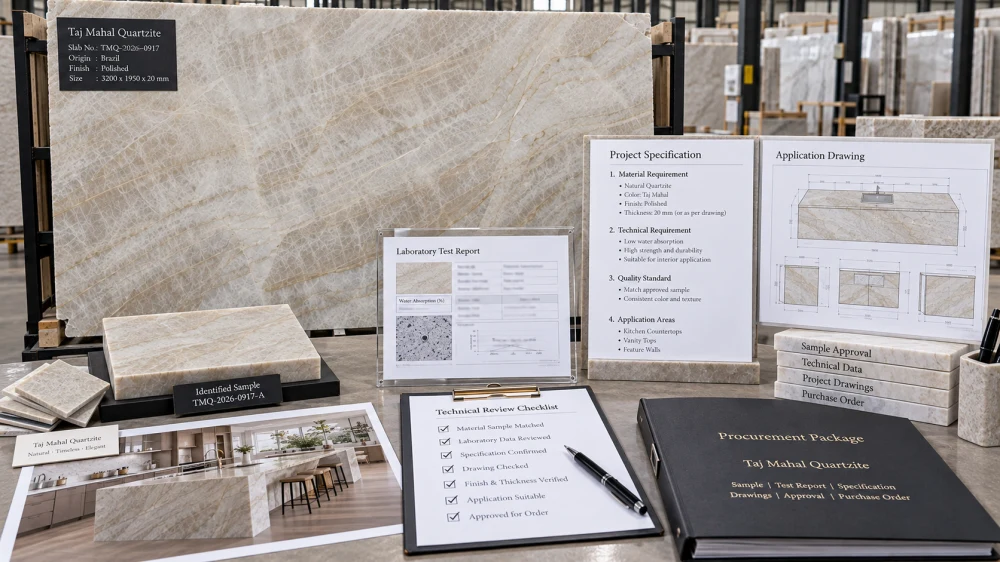
Build a Water Absorption Submittal Pack
For larger architectural or procurement projects, keep the absorption report inside a controlled technical package.
WATER ABSORPTION SUBMITTAL PACK
01 — Commercial material name
02 — Supplier reference
03 — Current slab / lot / sample reference where available
04 — Laboratory report
05 — Test method
06 — Specimen identity
07 — Reported result and unit
08 — Relevant specification requirement
09 — Intended application
10 — Reviewer comments / questions
11 — Approval, rejection, request for clarification, or open status
This creates a much stronger project record than copying one test value into the quotation.
Buyer Review Gate
Before relying on a Quartzite water absorption result, confirm:
1. What does a Quartzite water absorption result mean?
It reports how the tested stone specimens absorbed water under the conditions and reporting basis of the stated test method. The result should be read together with the method, specimen identity, unit, report date, and laboratory documentation.
2. Is lower water absorption always better for Quartzite?
A lower value means a comparable tested specimen absorbed less water under the stated test conditions. It should not automatically be interpreted as meaning the stone is better for every application, because project suitability may depend on many other material, design, fabrication, installation, and exposure requirements.
3. Does low water absorption mean Quartzite is waterproof or stain-proof?
No. A water absorption result should not automatically be converted into a waterproof or stain-proof claim. Water absorption, staining, sealing, surface finish, maintenance, and finished-project exposure are different questions.
4. Does one water absorption report apply to every slab in a Quartzite order?
Not automatically. The report applies to the specimens and scope identified in the document. Buyers should establish how the tested material relates to the slabs, lot, block, or other material reference being offered and retain any limitations in the project record.
5. Can water absorption tell me whether Quartzite is strong enough for my project?
No. Water absorption and mechanical strength are different physical properties. If the project requires flexural, compressive, modulus-of-rupture, or other strength information, review the appropriate separate test data and project criteria.
6. Can I compare water absorption results from two Quartzite suppliers?
Yes, but first confirm that the reports are sufficiently comparable in test method, specimen basis, unit, reporting conditions, and project relevance. Do not rank two values as equivalent evidence when their testing basis is materially different or unclear.
7. When should a buyer request a new Quartzite water absorption test?
New testing may be appropriate when the project specification requires it, the existing report cannot be adequately linked to the proposed material, the required test method differs, the available documentation is incomplete, or the responsible project reviewer requests more directly relevant evidence.
Final Interpretation RuleDo not ask a Quartzite water absorption number to answer more than it actually measures. Keep the evidence chain intact: Test Method → Identified Specimen → Reported Result → Relationship to the Order → Project Criterion → Technical Review. A precise number without this context can create more certainty than the report actually supports.
For project-based Natural Quartzite procurement, HRST STONE can coordinate current material references, slab photographs, representative sample information, available supplier test documentation, fabrication records, and technical-submittal information associated with the proposed supply. Where a project requires a particular test method, acceptance criterion, engineering interpretation, or application-specific performance determination, the applicable specification and responsible qualified technical parties should control that decision.
Hi, I am the author of this article. I have been working in the field of Natural Stone for more than 15 years. If you need customized Natural Stone services, please feel free to contact me.