Quick Summary:
The Xiamen Stone Fair 2026 exhibitor list is not just a directory of companies—it is a strategic sourcing roadmap. This guide explains how international buyers can filter suppliers by capability, verify manufacturing strength, and plan structured meetings to improve procurement efficiency and reduce project risk.
Why the Exhibitor List Is a Strategic Tool for Global Buyers
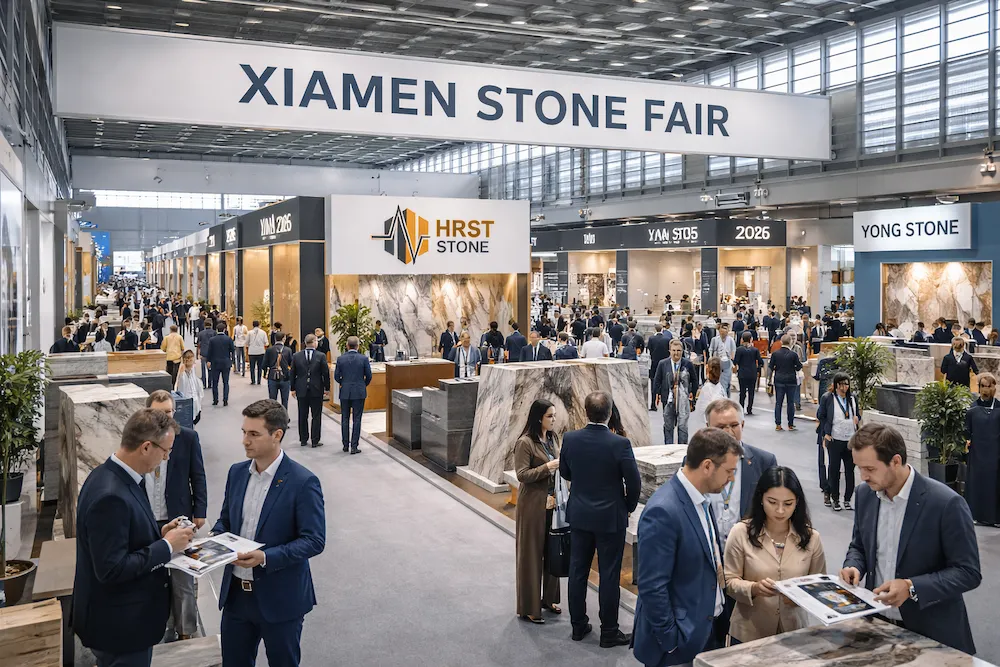
For experienced procurement teams, the exhibitor list of Xiamen Stone Fair 2026 is more than a reference document. It represents the full spectrum of China’s export-oriented stone manufacturing ecosystem. Instead of relying on random booth visits, structured buyers use the exhibitor list to identify qualified manufacturers, compare capabilities, and pre-plan sourcing meetings before arriving at the exhibition.
In large-scale international projects, supplier selection determines long-term risk exposure. Therefore, analyzing the exhibitor list in advance allows buyers to reduce uncertainty, align technical expectations, and prioritize companies that demonstrate manufacturing stability rather than only attractive samples.
How to Analyze the Xiamen Stone Fair 2026 Exhibitor List
| Analysis Step |
What to Look For |
Why It Matters |
| Category Filtering |
Marble, quartz, cut-to-size, architectural stone |
Ensures relevance to project scope |
| Export Orientation |
International market presence |
Indicates documentation readiness |
| Production Scope |
Slab only vs full fabrication |
Determines project execution capability |
| Years in Operation |
Established factory history |
Signals operational stability |
This structured approach allows buyers to shortlist 10–15 priority suppliers before the exhibition begins.
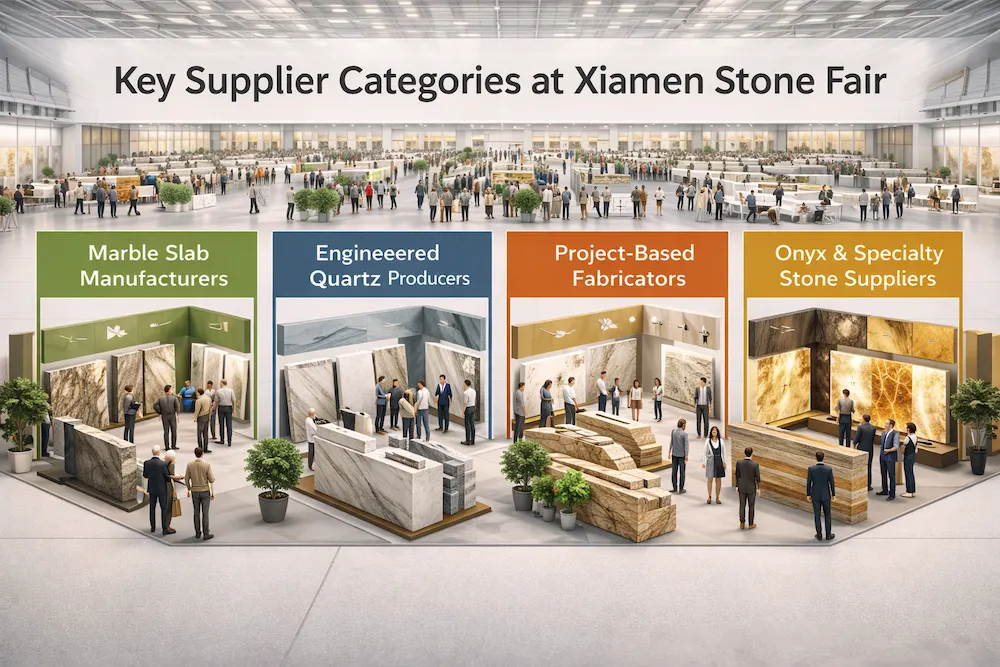
Key Supplier Categories at Xiamen Stone Fair 2026
Marble Slab Manufacturers
These suppliers focus on block sourcing, slab cutting, polishing, and grading systems. Buyers should examine block traceability and batch control processes to ensure long-term material consistency.
Engineered Quartz Producers
Quartz suppliers typically serve high-volume residential and distribution markets. Quality control standards, thickness tolerance, and surface resistance certifications are key evaluation points.
Project-Based Fabricators
Factories offering cut-to-size and architectural solutions support hotels, commercial buildings, and mixed-use developments. Processing accuracy and engineering coordination are essential for these suppliers.
Onyx and Specialty Stone Suppliers
High-end decorative materials such as onyx are increasingly used in furniture and feature walls. Buyers should verify slab inventory stability and protection standards during shipment.
Factory vs Trading Company: Why It Matters
| Evaluation Area |
Factory |
Trading Company |
| Machinery Ownership |
In-house cutting and polishing lines |
Outsourced production |
| Lead Time Control |
Direct scheduling |
Dependent on subcontractors |
| Quality Inspection |
Structured internal QC system |
Limited inspection authority |
| Technical Coordination |
Engineering support available |
Minimal technical involvement |
For large-scale procurement, direct manufacturers such as HRST STONE provide better visibility into production planning and quality control procedures.
How to Plan Efficient Meetings at the Fair
Meeting efficiency determines sourcing success. Instead of exploring hundreds of booths, buyers should structure their visit.
| Time Block |
Meeting Focus |
| Morning |
Pre-qualified target manufacturers |
| Midday |
Material comparison and sampling |
| Afternoon |
New supplier exploration |
Scheduling meetings before arrival ensures deeper discussions about capacity, documentation, and production scheduling.
From Exhibitor List to Factory Visit

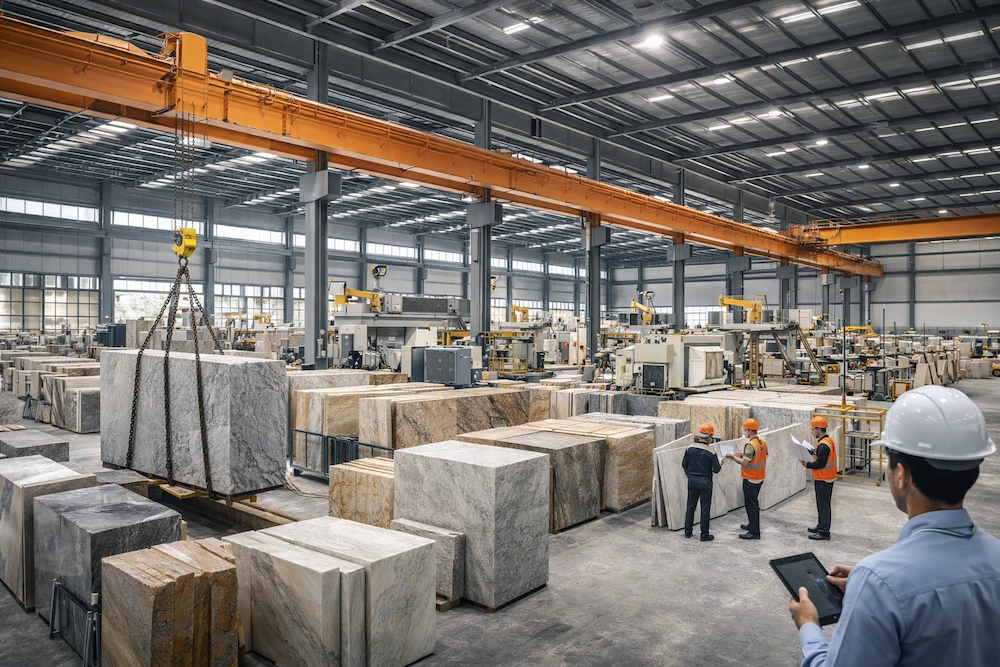
The exhibitor list helps buyers identify which suppliers deserve on-site factory inspection. A booth presentation cannot fully represent machinery scale, slab storage organization, or inspection workflow.
After the exhibition, factory visits should verify:
- Block yard management
- Slab grading classification
- Processing workshop capacity
- Inspection documentation system
- Container loading procedures
Export-oriented manufacturers such as HRST STONE typically operate structured systems to support international procurement projects.
Risk Signals Buyers Should Monitor
- No clear slab labeling system
- Uncertain production lead time
- Lack of export documentation clarity
- Over-promising without factory evidence
These signals often indicate operational instability that may affect project delivery timelines.
Frequently Asked Questions
When will the Xiamen Stone Fair 2026 exhibitor list be available?
The official exhibitor list is usually released on the event website before the exhibition date.
How many suppliers should buyers shortlist?
Focusing on 10–15 qualified suppliers allows meaningful evaluation rather than superficial comparisons.
Is scheduling appointments necessary?
Yes. Pre-arranged meetings ensure focused discussions about production capacity and documentation systems.
Should buyers visit factories after the fair?
Factory visits provide essential verification of machinery, slab inventory management, and quality inspection processes.
Final Note / Practical Takeaway
Expert Commentary & Analysis:
The Xiamen Stone Fair 2026 exhibitor list should be treated as a strategic sourcing blueprint rather than a simple catalog. Buyers who analyze supplier structure, verify manufacturing capability, and conduct structured factory visits significantly reduce procurement risk. Working with established export-oriented manufacturers such as HRST STONE enables international projects to transition smoothly from exhibition discussion to reliable production execution.