
Quartzite Seam Layout: Why a Seam Was Moved

A quartzite seam should be moved when the revised position gives the project a better overall result without creating a new fabrication, support, installation or visual problem. The strongest explanation is a before-and-after layout using the same identified slabs and current component geometry. It should show what the original seam interrupted, what triggered the revision, […]
Quartzite Islands with Rounded Corners: Review the Full-Size Template
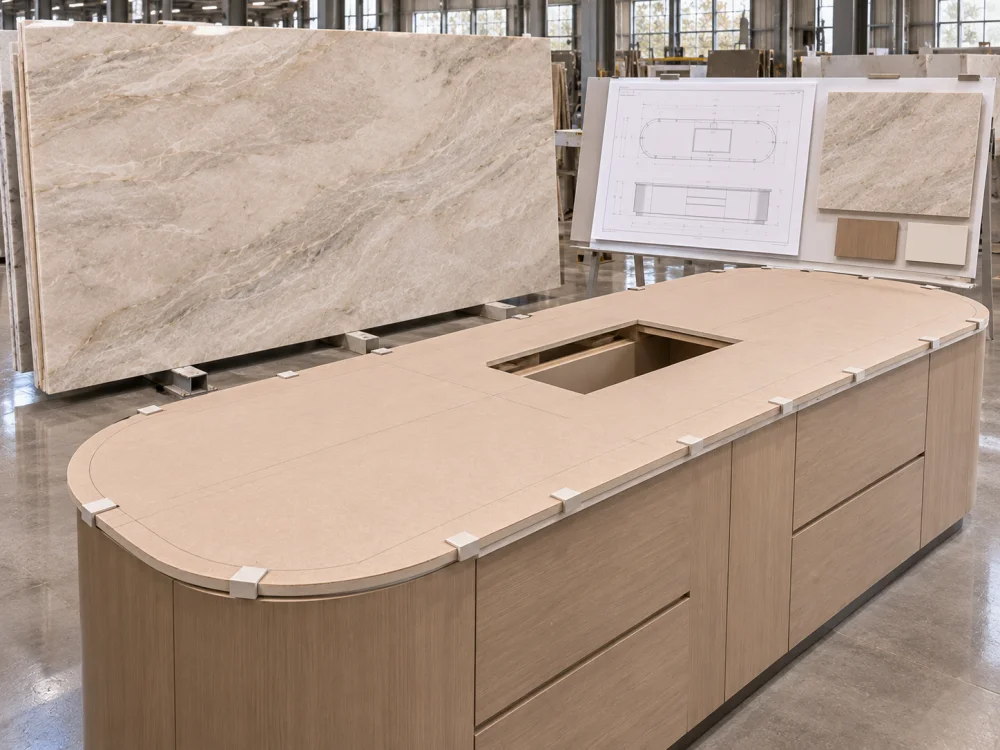
Quick SummaryQuartzite Islands with Rounded Corners should be released from a verified full-size geometry rather than from a conceptual radius shown on a rendering. The full-size template should represent the finished island outline, straight-to-curve transitions, relevant openings, visible edges, cabinetry relationship, seating or overhang zones, and other fabrication-critical geometry. Keep the plan-view corner shape separate […]
Natural Quartzite vs Engineered Quartz for an Undermount-Sink Detail
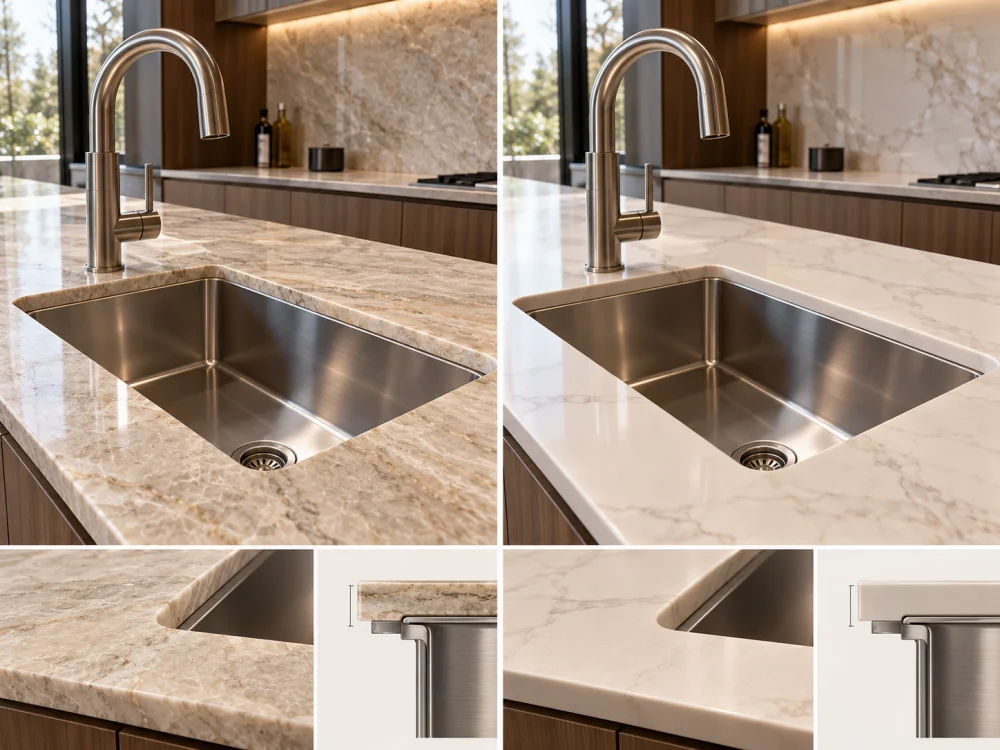
Quick SummaryNatural quartzite vs. engineered quartz for an undermount sink detail should be compared through the actual sink interface rather than a general material ranking. Confirm the exact sink model, current manufacturer information, mounting type, cutout basis, intended reveal, visible cut-edge finish, faucet and accessory holes, surrounding countertop geometry, and required support before releasing the […]
Ultimate Guide to Quartzite vs Porcelain Slab for Kitchen Countertops: Cost, Design, Performance, and Sourcing

Project guide to Natural Quartzite versus porcelain slab for kitchen countertops, covering design approval, fabrication planning, care, and sourcing workflow.