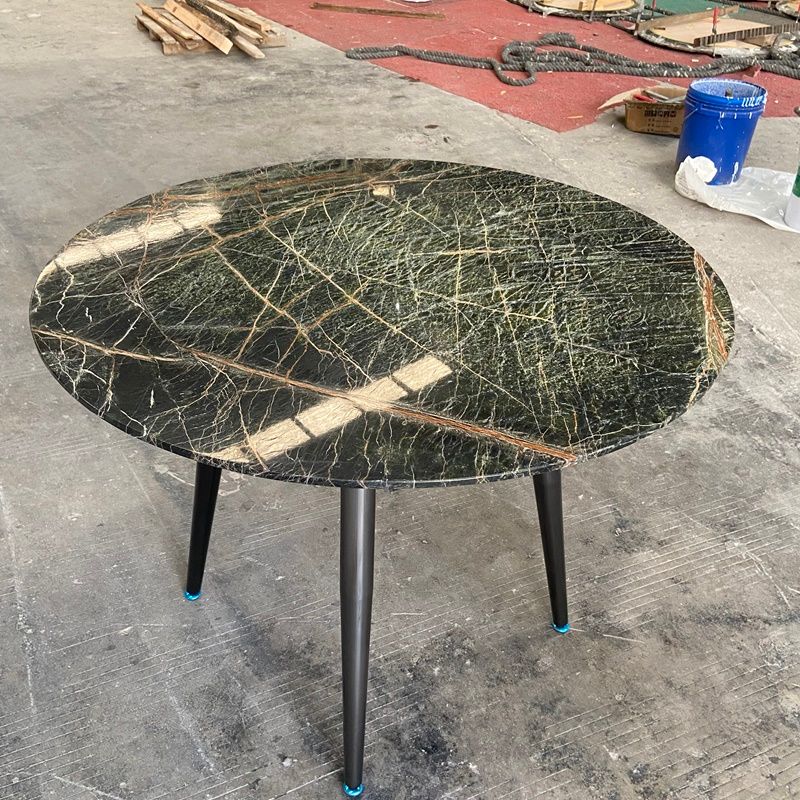
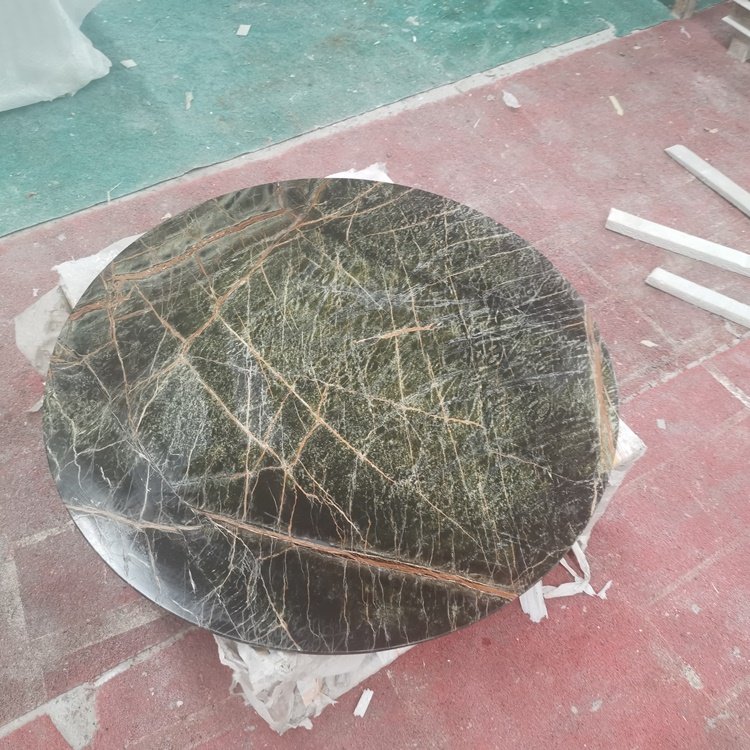
Rainforest Green Marble Product Overview
Rainforest Green Marble is a distinctive decorative stone from India, particularly associated with Rajasthan and the Bidasar stone-producing region.
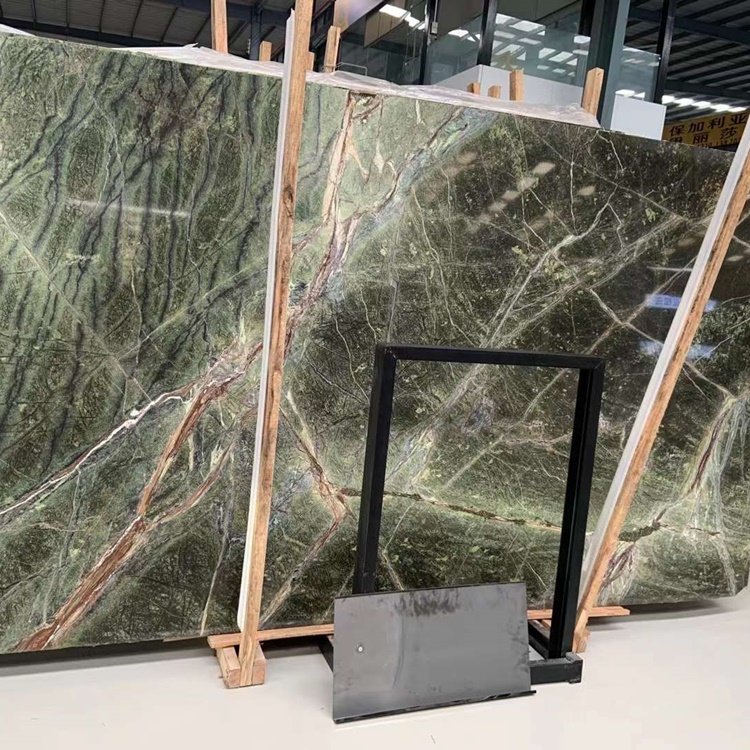
Its most recognizable feature is a deep to muted forest-green background crossed by irregular brown, gold, cream and darker mineral structures that resemble branches, roots or natural tree networks.
Unlike a conventional Green Marble with relatively regular veining, Rainforest Green develops a more graphic and highly variable geological composition. This makes full-slab selection especially important for projects where pattern direction forms part of the design.

Product Specifications
| Specification | Project Details |
| Material Name | Rainforest Green Marble |
| Material Type | Natural Decorative Stone / Commercial Marble Classification |
| Origin | India / Rajasthan / Bidasar Region |
| Related Trade Names | Bidasar Green / Rain Forest Green / Forest Green Marble / Fancy Green Marble |
| Primary Colors | Forest Green / Olive Green / Brown / Gold / Cream / Dark Mineral Accents |
| Texture Pattern | Branching / Root-Like / Networked / Irregular Natural Mineral Movement |
| Available Slab Size | Subject to Current Slab and Block Availability |
| Available Tile / Custom Size | Cut-to-Size According to Approved Drawings and Project Requirements |
| Available Thickness | 18mm / 20mm |
| Surface Finishing | Polished / Honed / Project-Specific Finish |
| Edge Options | Straight / Eased / Beveled / Mitered / Custom Profile |
| Application | Feature Walls / Table Tops / Islands / Vanities / Countertops / Floors / Decorative Panels |
| Package Details | Surface Protection + Edge Protection + Reinforced Fumigated Wooden Crates |
| Payment Details | T/T or Agreed Commercial Terms |
| MOQ | Subject to Slab Availability and Fabrication Scope |
| Delivery Time | Confirmed According to Quantity, Material Selection and Fabrication Requirements |
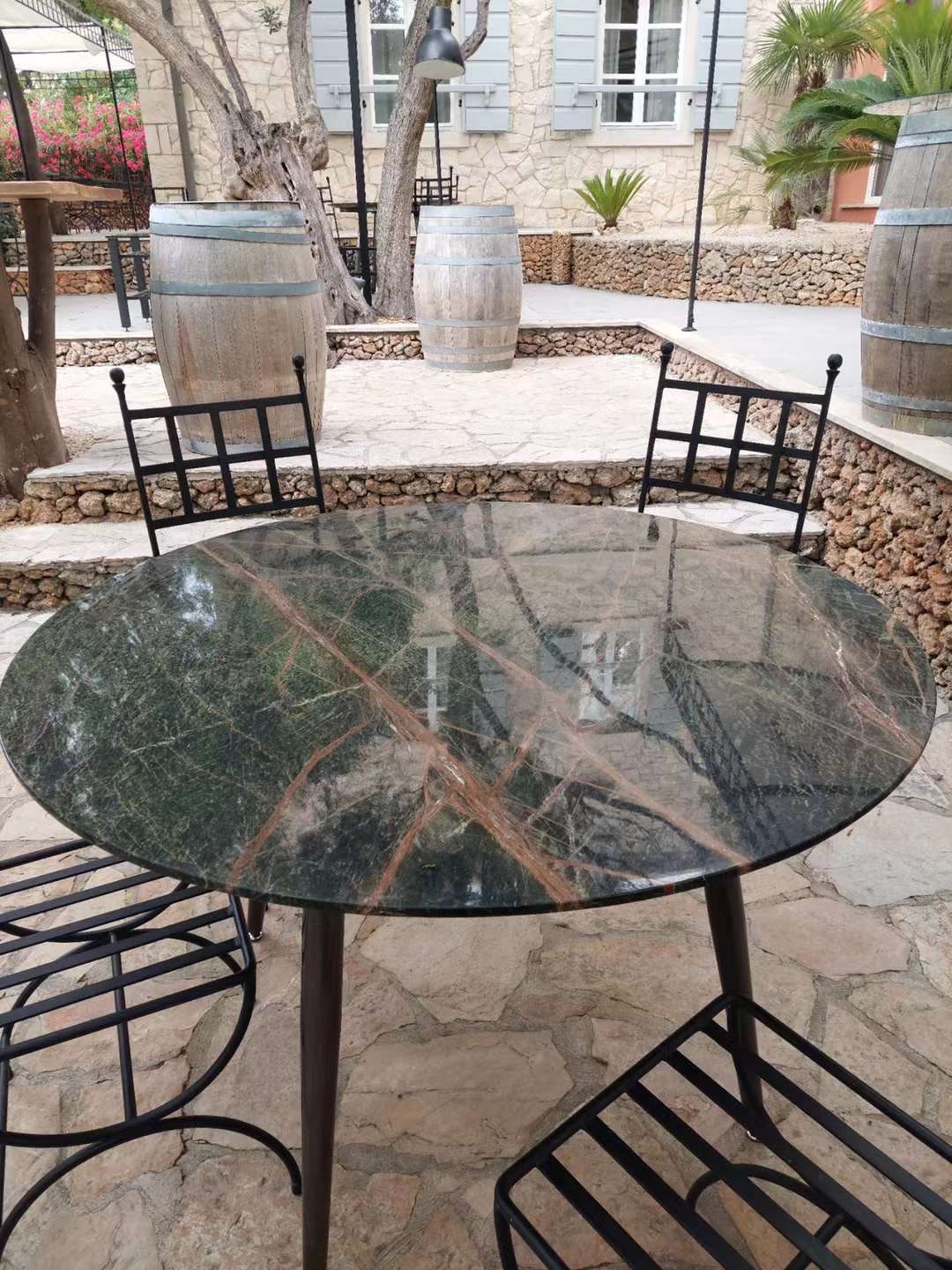
Bidasar Green and Rajasthan Stone Character
Bidasar Green is one of the most recognized trade references associated with Rainforest Green material.
As an India Marble from the Rajasthan region, its visual identity depends heavily on large branching mineral structures rather than subtle background veining.
For a Rajasthan Marble project, the full slab should therefore be reviewed for direction, branch density, background green tone and the amount of visually quieter material available for finished pieces.
The term Bidasar Marble is widely used commercially, although the stone’s mineral composition can differ from conventional calcitic marble. Technical requirements should therefore be confirmed for the intended application.
Rainforest Green Visual Character
The main design value of Rainforest Green comes from its tree-like mineral network.
Brown and gold lines may split, reconnect and cross the slab in irregular directions, while cream or lighter mineral areas can form natural transitions between darker green zones.
This structure gives Forest Green Marble an almost landscape-like appearance, but it also means that cutting orientation strongly influences the final visual result.
More Graphic Character → Choose slabs with stronger brown and gold branch networks.
Furniture Pieces → Position the finished outline around one balanced branching composition.
Large Walls → Review several slabs together before establishing panel sequence.
Rainforest Green Marble Slabs
A Rainforest Slab should be selected from complete slab photographs rather than a small hand sample.
For a Green Marble Slab, buyers should review four main points: background green tone, branching density, mineral intersections and available clean cutting area.
Each Marble Slab can contain both highly graphic and relatively calm zones. Those zones can be intentionally allocated to different finished components according to the project design.
Full-Slab Photos → Slab Numbers → Green Tone → Branch Pattern → Structural Areas → Usable Yield → Cutting Layout
Rainforest Green for Statement Interiors
Rainforest Green works best when its natural pattern is allowed to remain visible rather than divided into many small unrelated pieces.
It can coordinate with walnut, bronze, black metal, cream plaster, muted beige finishes and darker architectural interiors.
Because the stone itself already contains a highly detailed natural composition, surrounding materials are often most effective when kept visually restrained.
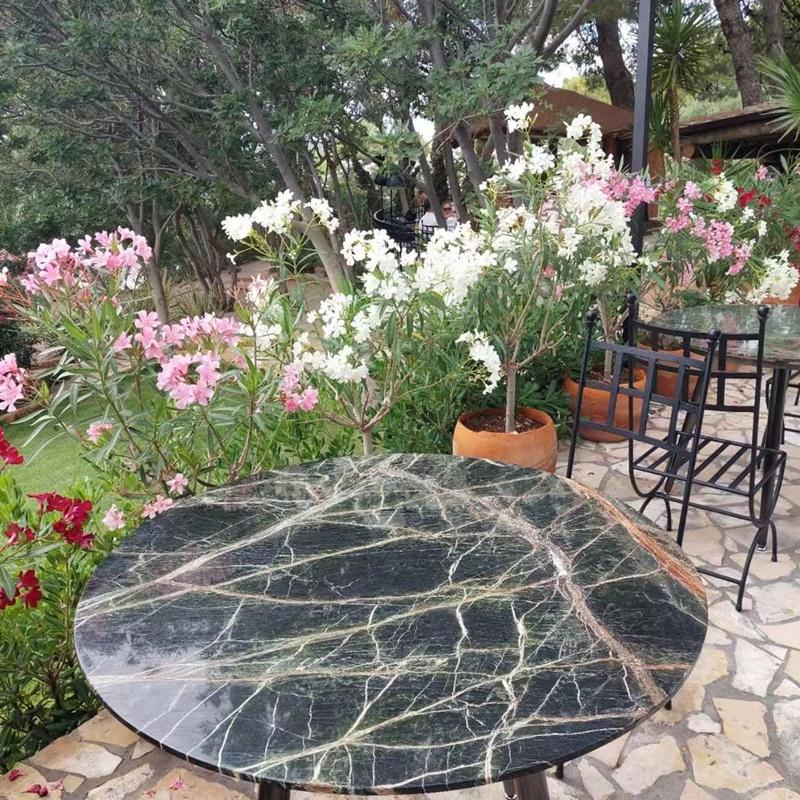
Rainforest Green Marble Countertops
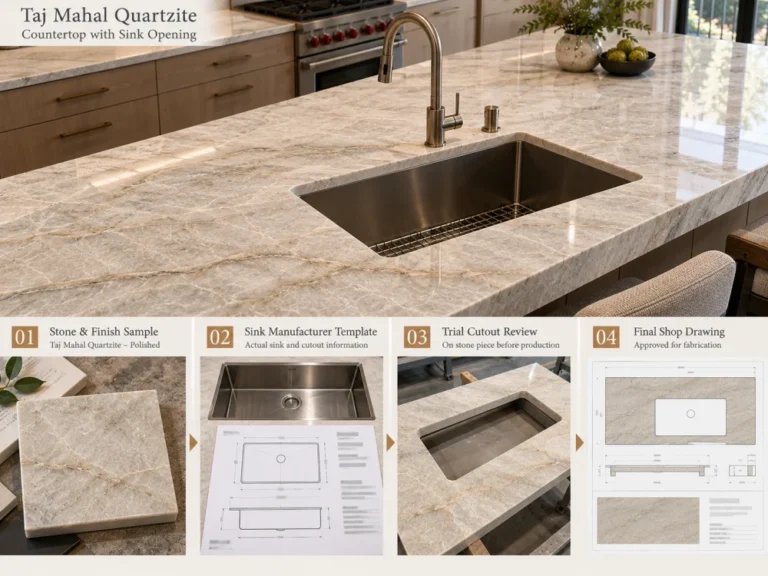
A Rainforest Counter creates a strong natural focal surface rather than a visually uniform worktop.
For a Green Countertop, the cutting layout should determine whether the main branch network runs along the length of the counter or across it.
When fabricating a Marble Countertop, sink and cooktop openings should be positioned carefully. Large openings placed directly over important mineral intersections can reduce both visual continuity and usable stone around the cutout.
Actual Slab → Finished Template → Main Branch Direction → Sink / Cooktop → Narrow Areas → Edge Profile → Cutting Approval
Rainforest Green Marble Kitchens
A Rainforest Kitchen is generally most successful when the stone is used strategically rather than repeated without visual control.
A central island can carry the strongest branch pattern, while perimeter countertops may use quieter slab areas from the same material group.
For multiple kitchen components, the project should be nested together on the approved slabs before cutting so pattern orientation remains intentional.
Rainforest Green Marble Islands
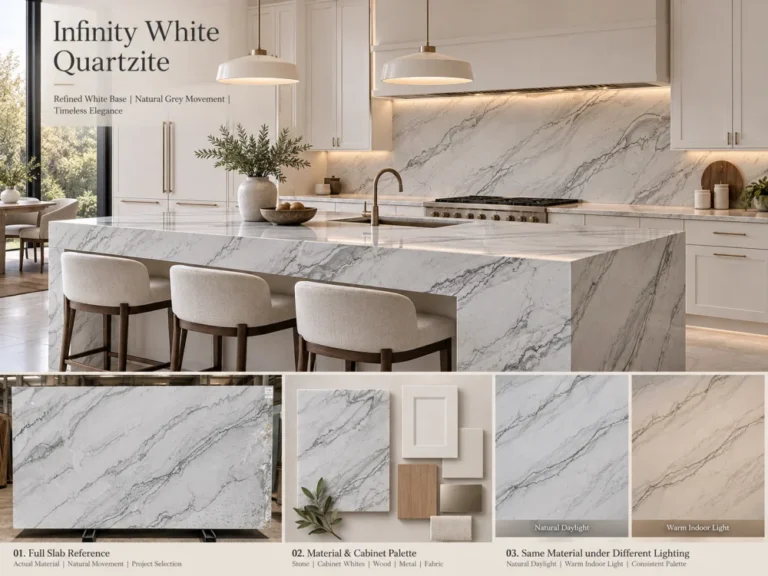
A Rainforest Island provides enough uninterrupted area for the tree-like network to remain visible.
For a large Marble Island, the primary view should be identified before fabrication. The strongest natural formation can then be positioned toward that side while cutouts are located in less visually critical areas where practical.
This approach is particularly valuable for designer kitchens where the stone island acts as a furniture-like centerpiece.
Waterfall Island Fabrication
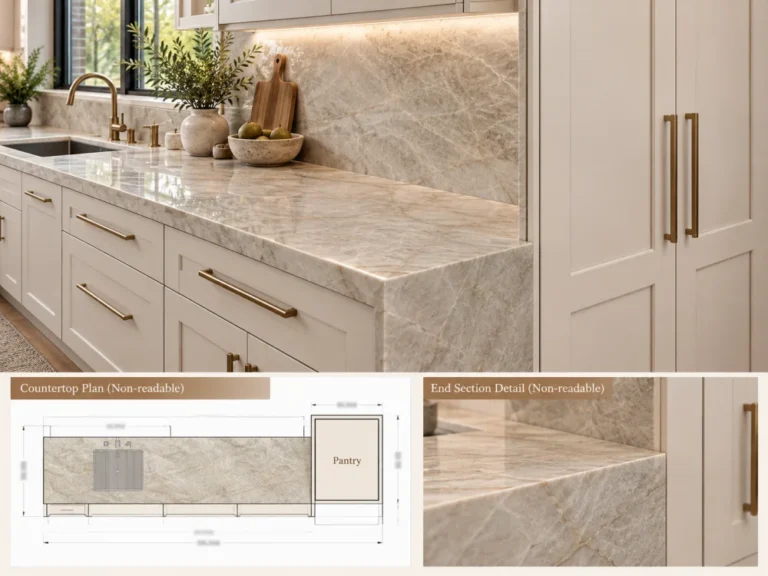
A Waterfall Island using Rainforest Green requires careful consideration of the top-to-side pattern relationship.
Because the branch structures are irregular, exact continuation may not always be practical. A balanced transition around the miter is often more natural than attempting to force an artificial match.
Mitered edges, support and narrow return sections should be evaluated carefully before cutting.
Main Top → Side Panels → Branch Direction → Miter Zone → Structural Review → Trial Fit → Final QC
Rainforest Green Marble Table Tops
A Rainforest Table is one of the most natural applications for this material because the entire tabletop can frame one selected branch network.
For a Marble Table Top, the finished outline should be moved and rotated over the actual slab image before cutting.
This allows the designer to compare several compositions and avoid placing the most attractive mineral formation outside the finished furniture outline.
Base connection points and support locations should also avoid concentrating stress near visually or structurally complex mineral intersections where possible.
Rainforest Green Marble Vanity Tops
A Rainforest Vanity introduces a strong organic green surface into bathrooms and hospitality interiors.
Basin openings should be mapped onto the actual slab before production. For double vanities, the pattern relationship between both basin zones and the remaining visible stone should be reviewed as one composition.
Matching backsplash components can be selected from adjoining cutting areas where continuity is required.
Rainforest Green Marble Feature Walls
A large Rainforest Wall is one of the strongest architectural applications for the material because the branching pattern can remain close to its natural slab scale.
For a Green Marble Wall, panel joints should be planned around important branch structures rather than dividing them randomly.
Hotel lobbies, residential living rooms, reception spaces, restaurants and luxury retail interiors can all use the material as a natural graphic feature.
Available Slabs → Elevation → Branch Direction → Panel Division → Piece Numbering → Dry-Lay → Installation Reference
Rainforest Green Marble Flooring
Rainforest Flooring can create highly expressive entrance halls, feature zones and selected interior floors.
For larger areas, the project should determine whether the visual goal is random natural distribution or controlled directional movement.
A repetitive tile layout may reduce the visual strength of the material, while larger coordinated pieces can preserve more of the natural tree-like pattern.
Surface Finishes and Fabrication
Polished Marble
A Polished Marble finish increases green saturation and highlights the contrast between the dark background and brown-gold branch structures.
Honed Surface
A honed surface softens reflection and can give the highly graphic pattern a more architectural and restrained character.
Custom fabrication can include cut-to-size panels, countertops, table tops, vanity tops, CNC profiling, mitered edges, sink cutouts and other project-specific stone components.
Fabrication Risk Around Natural Mineral Networks
Rainforest Green requires a different fabrication mindset from visually uniform stone.
Strong mineral networks, natural fissure-like structures and intersections may occur through areas that also form the most attractive part of the slab. These features should be reviewed before nesting narrow strips, large cutouts or long unsupported sections.
Where appropriate, fabrication planning may include adjusted cutting positions, additional handling care or project-specific reinforcement methods.
| Fabrication Risk | Recommended Control |
| Dense branch intersection near cutout | Review template position before cutting |
| Long narrow stone strip | Check slab structure and handling support |
| Strong pattern changes between pieces | Approve orientation and sequence before production |
| Large mitered island components | Review pattern, edge geometry and transport support together |
Slab Selection and Pattern Mapping
The most important purchasing decision for Rainforest Green is often not the finish but the actual slab composition.
Full-size photographs should be reviewed under consistent lighting. For multi-piece work, finished templates can then be positioned on the slabs to compare alternative orientations.
Full-Slab Photos → Slab Numbers → Background Tone → Branch Density → Finished Templates → Buyer Approval → Cutting
Custom Fabrication and Quality Control
Project fabrication should follow the approved drawings and confirmed slab layout so finished pieces remain traceable to their original positions.
Approved material traceability
Background color grouping
Branch direction and placement
Finished piece verification
Geometry and surrounding stone
Miter and profile quality
Visual piece relationship
Inspection before packing
Packaging and International Delivery
Finished Rainforest Green components should be packed according to their dimensions, stone structure, cutouts and exposed edge conditions.
Finished faces are separated using suitable non-staining protective materials. Corners, mitered edges, narrow pieces and vulnerable sections around openings receive additional cushioning and support according to the actual component.
Finished pieces are secured inside reinforced fumigated wooden crates with internal separation and fixing. Production inspection is completed before packing, and export documentation and logistics support can be coordinated according to the agreed trade terms.
Why Work with a Marble Supplier?
For a highly variable decorative stone, a professional Marble Supplier should provide more than one sample and a generic product photograph.
Project support can include current slab photography, visual grouping, CAD cutting layouts, pattern positioning, custom fabrication, dry-lay review, final QC and export packing.
A capable Marble Factory should also understand how branch direction, cutout placement and narrow-piece design affect fabrication planning for Rainforest Green.
Why Choose HRST STONE
HRST STONE provides one-stop natural stone solutions backed by 17+ years of stone supply and project experience.
For Rainforest Green projects, support can include slab selection, full-slab photography, CAD and shop-drawing coordination, cutting-layout review, custom fabrication, production tracking, dry-lay inspection, final QC and international export packing.
This workflow helps designers, distributors, contractors and project buyers control both the visual composition of the stone and the practical risks associated with custom fabrication.
Information Required for Quotation
| Quotation Item | Information Required |
| Application | Wall / Table / Island / Countertop / Vanity / Floor |
| Dimensions & Quantity | Finished sizes, CAD drawings or quantity schedule |
| Thickness | 18mm / 20mm or specified requirement |
| Finish | Polished / Honed / Project-specific finish |
| Visual Preference | More green / stronger branches / balanced pattern / quieter areas |
| Fabrication | Cutouts / Miter / Edge profile / Pattern matching / Custom shaping |
| Destination | Destination port or complete delivery location |
Rainforest Green Marble FAQ
1. What is Rainforest Green Marble?
Rainforest Green Marble is an Indian decorative green stone characterized by forest-green fields and irregular brown, gold and cream branching mineral structures.
2. Where does Rainforest Green Marble come from?
It is strongly associated with Rajasthan, India, particularly the Bidasar stone-producing region.
3. Is Bidasar Green the same as Rainforest Green?
Bidasar Green is widely used as a related commercial name. Actual slab appearance should still be confirmed before ordering.
4. Is Rainforest Green really a marble?
It is widely sold commercially as Rainforest Green Marble or Bidasar Marble, although its mineralogical classification may differ from conventional calcitic marble.
5. Can Rainforest Green be used for countertops?
Yes. Countertop layouts should be reviewed carefully around sink openings, cooktops and strong mineral intersections.
6. Is Rainforest Green suitable for kitchen islands?
Yes. Large islands allow its branch-like geological pattern to remain visible and can create a strong focal feature.
7. Can Rainforest Green Marble be used for table tops?
Yes. Tabletop templates can be positioned and rotated over the actual slab to select the most balanced natural composition.
8. Can Rainforest Green Marble be used for feature walls?
Yes. Large feature walls are one of the best applications because they preserve more of the natural tree-like mineral structure.
9. Why should actual slabs be approved before cutting?
Green tone, branch density, mineral intersections and available clean cutting areas vary considerably from slab to slab.
10. How should fabricated Rainforest Green pieces be packed?
Finished pieces should be inspected, separated with suitable protective material, protected at vulnerable edges and secured inside reinforced fumigated wooden crates.
Final Note
Rainforest Green Marble should be purchased and fabricated according to its actual branch-like slab structure rather than treated as a uniform green stone. For feature walls → preserve the strongest natural network across large coordinated panels. For countertops → position cutouts away from critical visual and structural intersections where practical. For islands → determine the main viewing side before slab nesting. For table tops → compare several template positions before cutting. For multi-piece projects → approve orientation and sequence before fabrication. Full-slab selection, CAD layout, pattern mapping, careful fabrication and protected export packing give B2B buyers greater control over both the finished appearance and project risk.