Bathroom Applications
Porto Beige Limestone Bathroom Design for Walls, Floors, Showers and Vanities
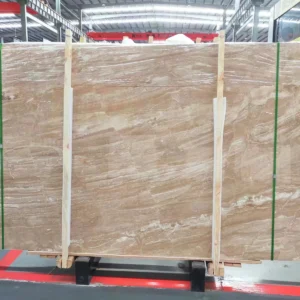
A Porto Beige Limestone bathroom combines warm neutral color with the subtle texture of natural stone. Its soft beige background and restrained geological movement make it suitable for bathrooms where designers want a calm architectural surface rather than a highly dramatic decorative material.
The same material can be coordinated across bathroom floors, shower walls, vanity areas, wet-room surfaces and selected wall cladding, helping create a visually continuous interior for private residences, villas, hotels and spa-style projects.
Floors
Showers
Vanities
Cut-to-Size
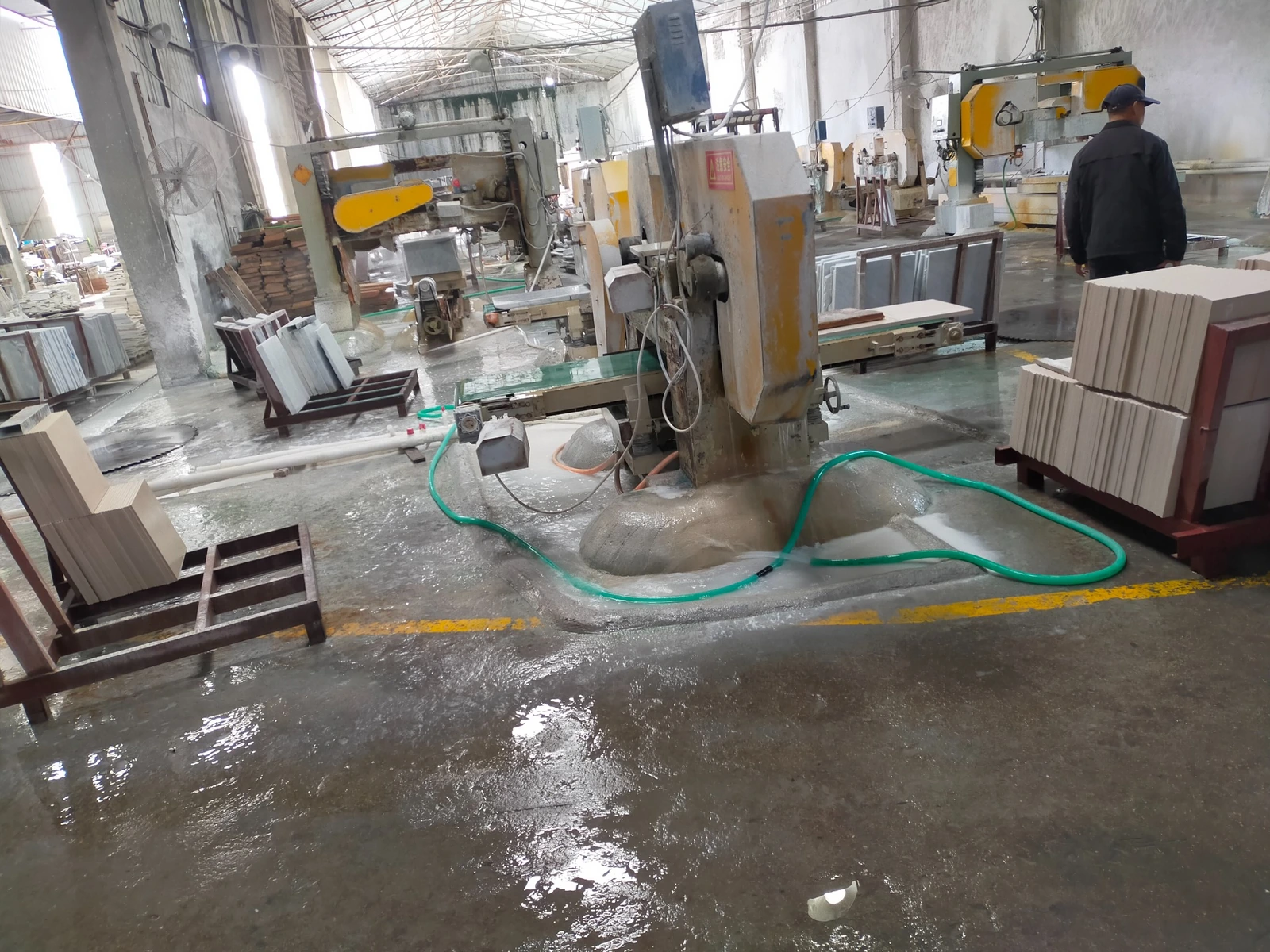
Porto Beige Limestone is suitable for bathroom walls, floors, shower areas, vanity surrounds and coordinated wet-room applications where a warm beige natural stone appearance is desired. Honed surfaces are commonly considered for interior applications, while floor and wet-area finishes should be selected with slip resistance, sealing, drainage and maintenance requirements in mind.
Porto Beige Limestone Bathroom Specifications
Bathroom limestone should be selected as part of a complete surface system. Stone thickness, finish, slab or tile size, joint layout, waterproofing, drainage and edge details all influence the final result.
| Project Item | Typical Specification |
| Material | Porto Beige Limestone |
| Stone Type | Natural Limestone |
| Primary Color | Warm Beige to Cream Beige |
| Typical Thickness | 18 mm / 20 mm or Project-Specific Thickness |
| Surface Options | Honed, Brushed, Textured or Project-Specific Finish |
| Supply Forms | Slabs, Tiles, Cut-to-Size Panels and Custom Fabricated Pieces |
| Applications | Floors, Walls, Showers, Vanities, Wet Rooms and Feature Surfaces |
Why Porto Beige Works in Modern Stone Bathrooms
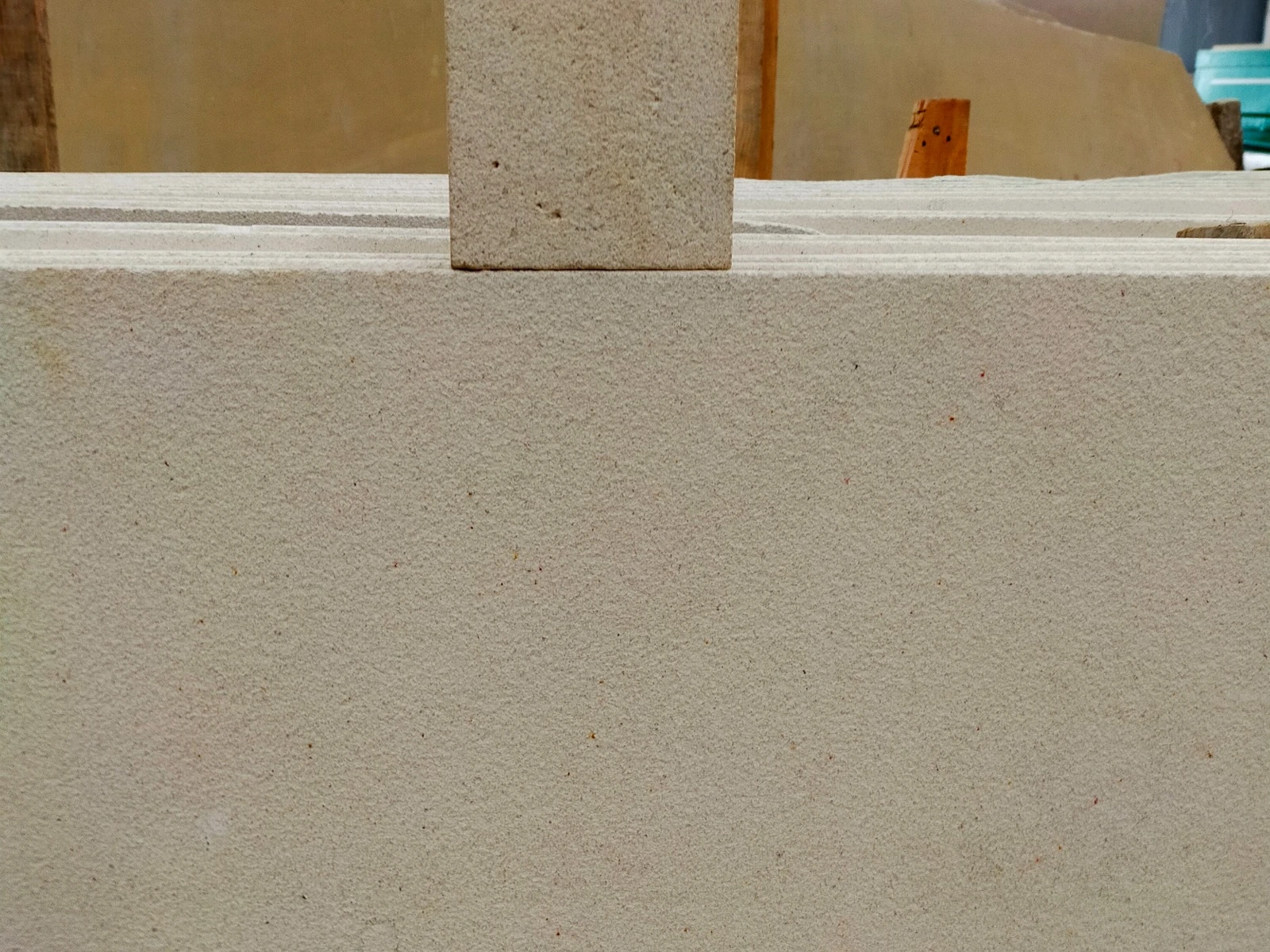
A modern stone bath often depends on material continuity and restrained color rather than excessive decoration. Porto Beige Limestone supports this design language because its warm tone can soften hard bathroom surfaces while maintaining the architectural character of natural stone.
It coordinates naturally with off-white cabinetry, warm wood, brushed metal, plaster finishes, clear glass and neutral bathroom fixtures.
This makes it useful for both minimal modern interiors and more luxurious bathrooms where the stone is intended to create a quiet, spa-like atmosphere.
Warm Beige Bathroom Design
Beige bathroom design is particularly effective when several neutral materials need to work together. A beige limestone can provide more natural depth than a uniform manufactured surface because each piece contains subtle tonal and geological variation.
The goal is usually not to make every surface identical. Instead, a well-designed limestone bath uses controlled variation to create a natural visual rhythm across floors, walls and fabricated elements.
Porto Beige Limestone Shower Applications
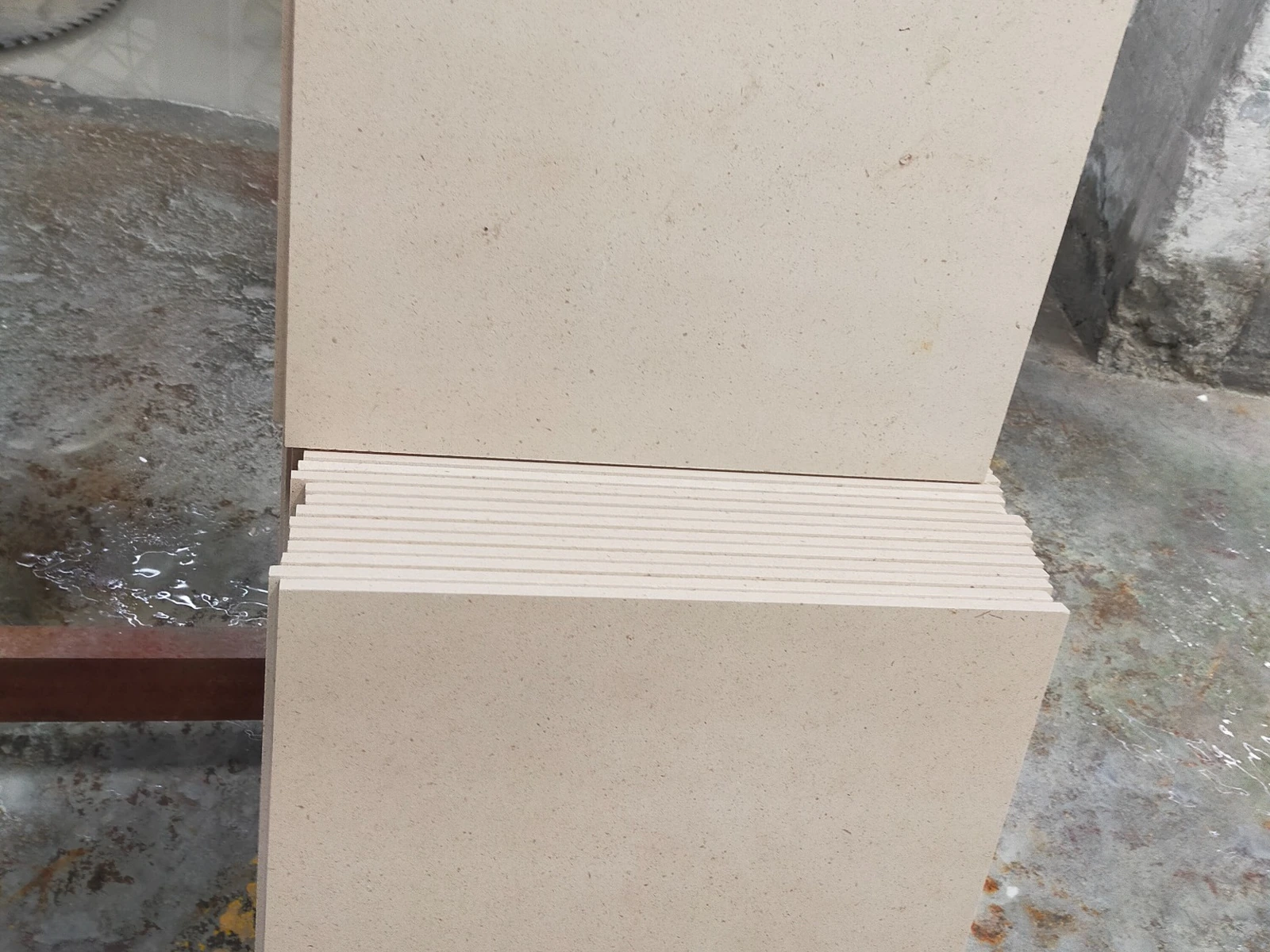
A limestone shower can create stronger visual continuity than a shower assembled from many unrelated finishes. Porto Beige Limestone may be used on large shower wall panels, cut-to-size wall pieces, niches, thresholds and selected shower-floor details according to the project design.
Large-format stone shower walls can also reduce the number of visible joints compared with smaller tiles, creating a calmer architectural surface. Joint locations should still be planned around panel size, handling limits, waterproofing and installation access.
Stone Shower Wall Planning
For a stone shower wall, installers and fabricators should coordinate wall dimensions, plumbing penetrations, niches, mixers, shower heads, glass interfaces and corner conditions before fabrication.
The position of visible natural markings should also be reviewed when several adjacent panels are used. Even a relatively quiet beige stone shower benefits from thoughtful panel sequencing.
Bathroom Stone Walls and Limestone Wall Tile
Bathroom stone walls can be developed using large panels, regular tiles or a combination of both. Large panels generally produce fewer joints and a more architectural result, while limestone wall tile can offer easier handling and more flexible module planning.
Porto Beige can be used behind a vanity, around a bathtub, within shower enclosures or across selected full-height bathroom walls.
Where several surfaces meet, joint alignment should be planned together with cabinetry, sanitaryware and architectural lines rather than treated as an afterthought.
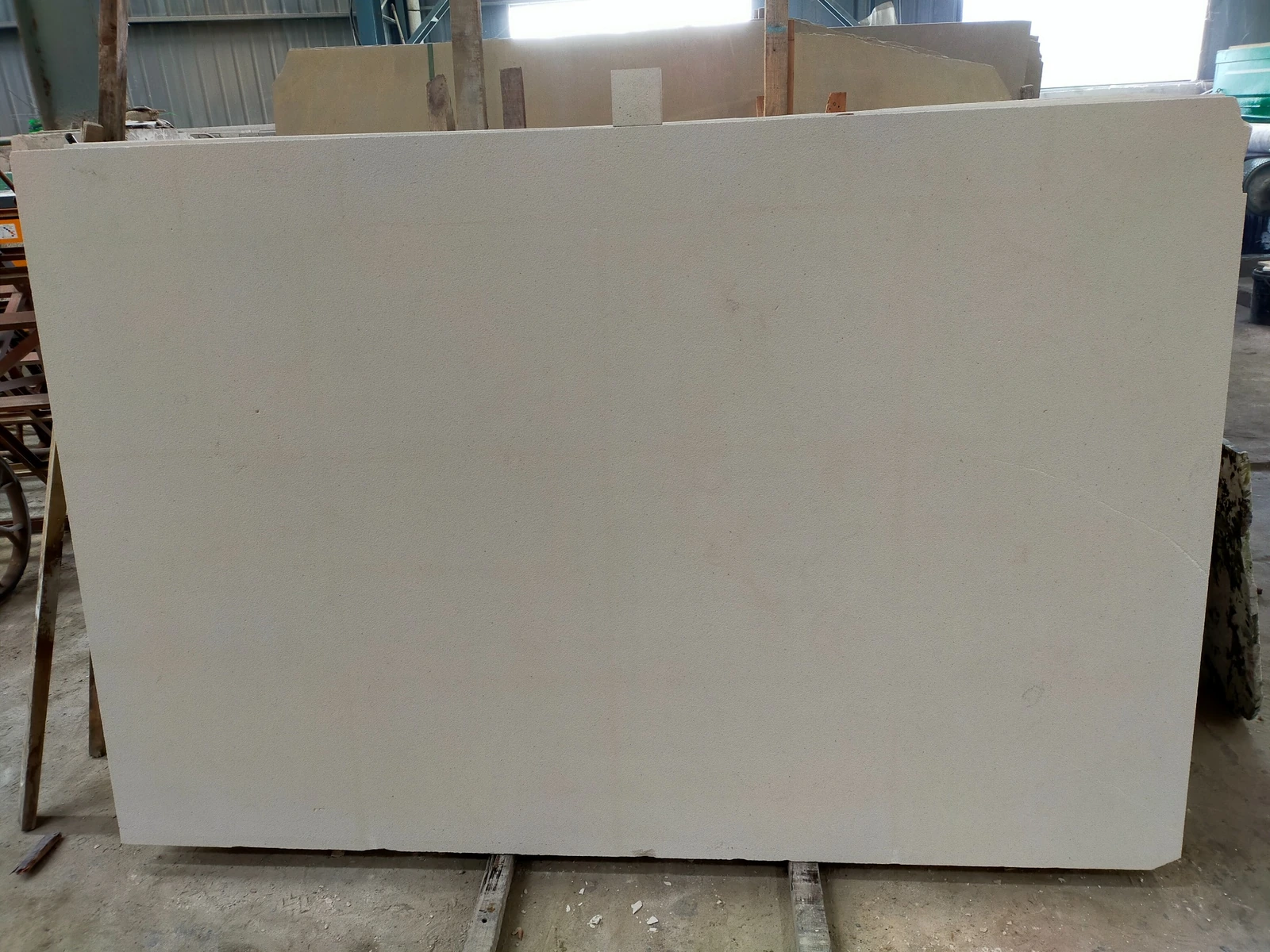
Limestone Bathroom Floors
A limestone floor can visually connect the entire bathroom and provide a stable neutral base for the rest of the interior. Porto Beige is particularly suitable where designers want a beige stone floor without strong dark veining.
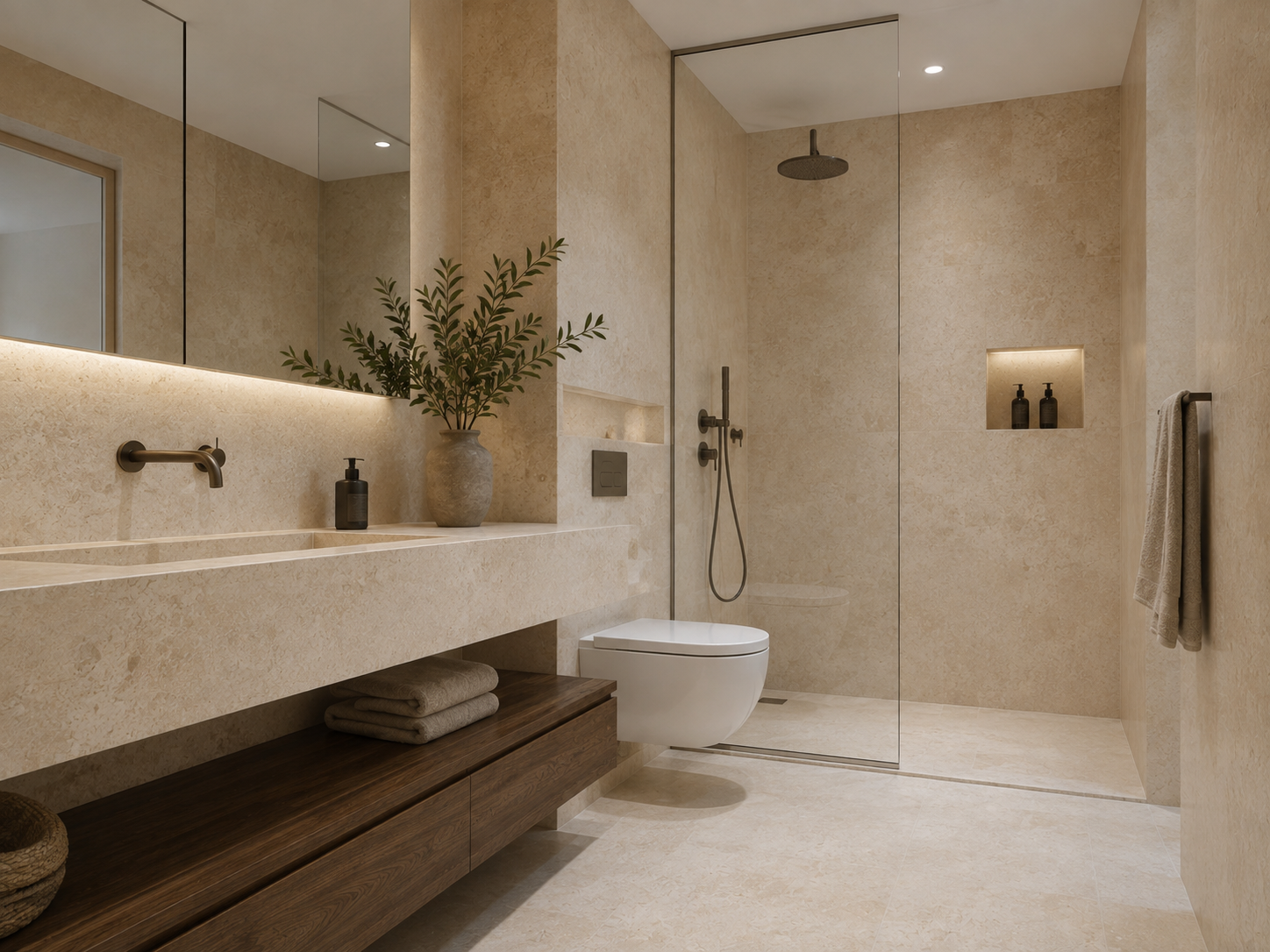
Bathroom floors should not be specified only according to appearance. Slip resistance, water exposure, cleaning, drainage slope and the selected sealer all need to be considered.
Larger pieces can create a more continuous stone bath floor, while smaller modules may be more practical in areas requiring multiple drainage slopes.
Floor Joint Planning
Joint layout can significantly influence how a bathroom feels. Straight joints aligned with vanity edges, shower glass or wall transitions often create a cleaner appearance than arbitrary cuts made only during installation.
Porto Beige Limestone Vanity Design
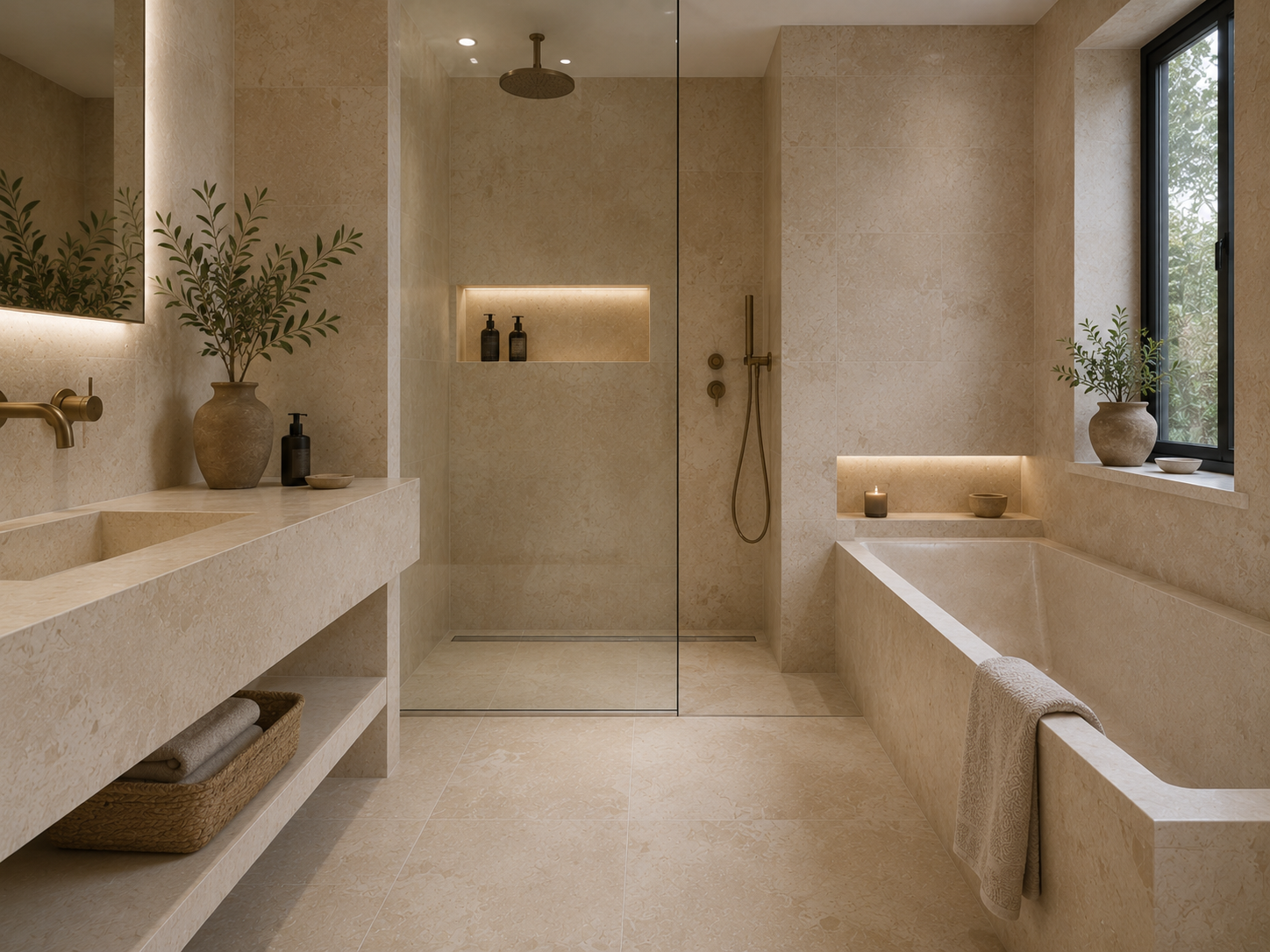
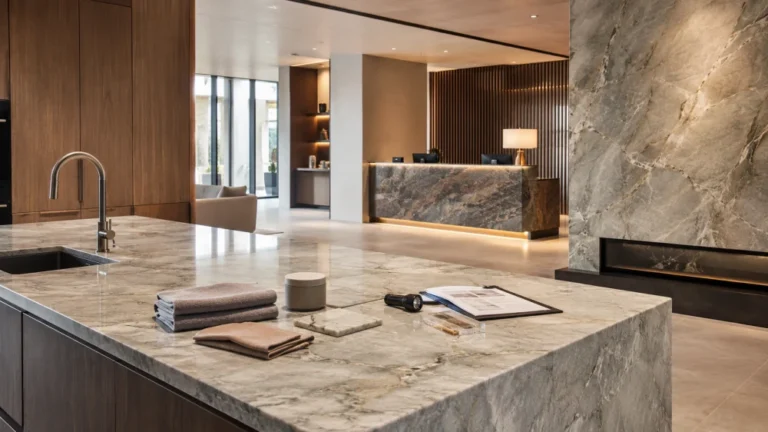
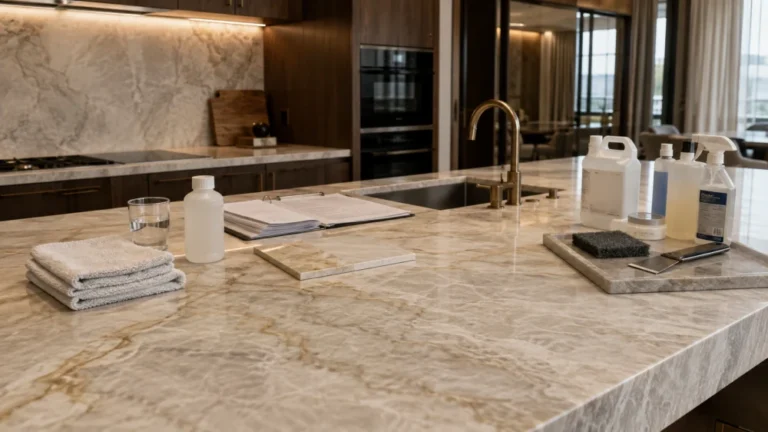
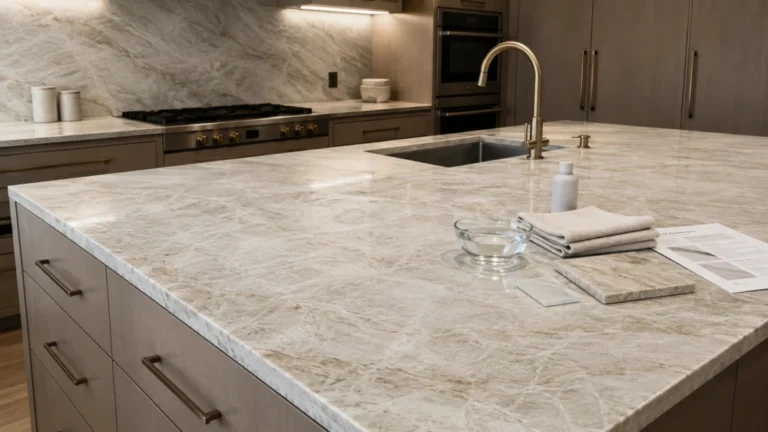
A limestone vanity can extend the same material language used on the floor or walls into a functional bathroom element. Depending on the design, Porto Beige may be fabricated as a stone vanity top, backsplash, side panel or coordinated wall surface.
Sink openings, faucet holes, exposed edges, backsplash dimensions and cabinet interfaces should be defined before fabrication.
Where the vanity is intended to look visually substantial, edge build-ups or other fabricated details can be planned according to the architectural design.
Vanity Fabrication Details
Stone vanity fabrication should be based on approved dimensions and actual sink or basin information. Undermount basins, vessel sinks and integrated design concepts can require different opening and edge treatments.
Particular care should be given to narrow stone sections around basin openings and faucet areas because these locations can become more vulnerable during processing, transport and installation.
Limestone Wet Room and Spa Bathroom Design
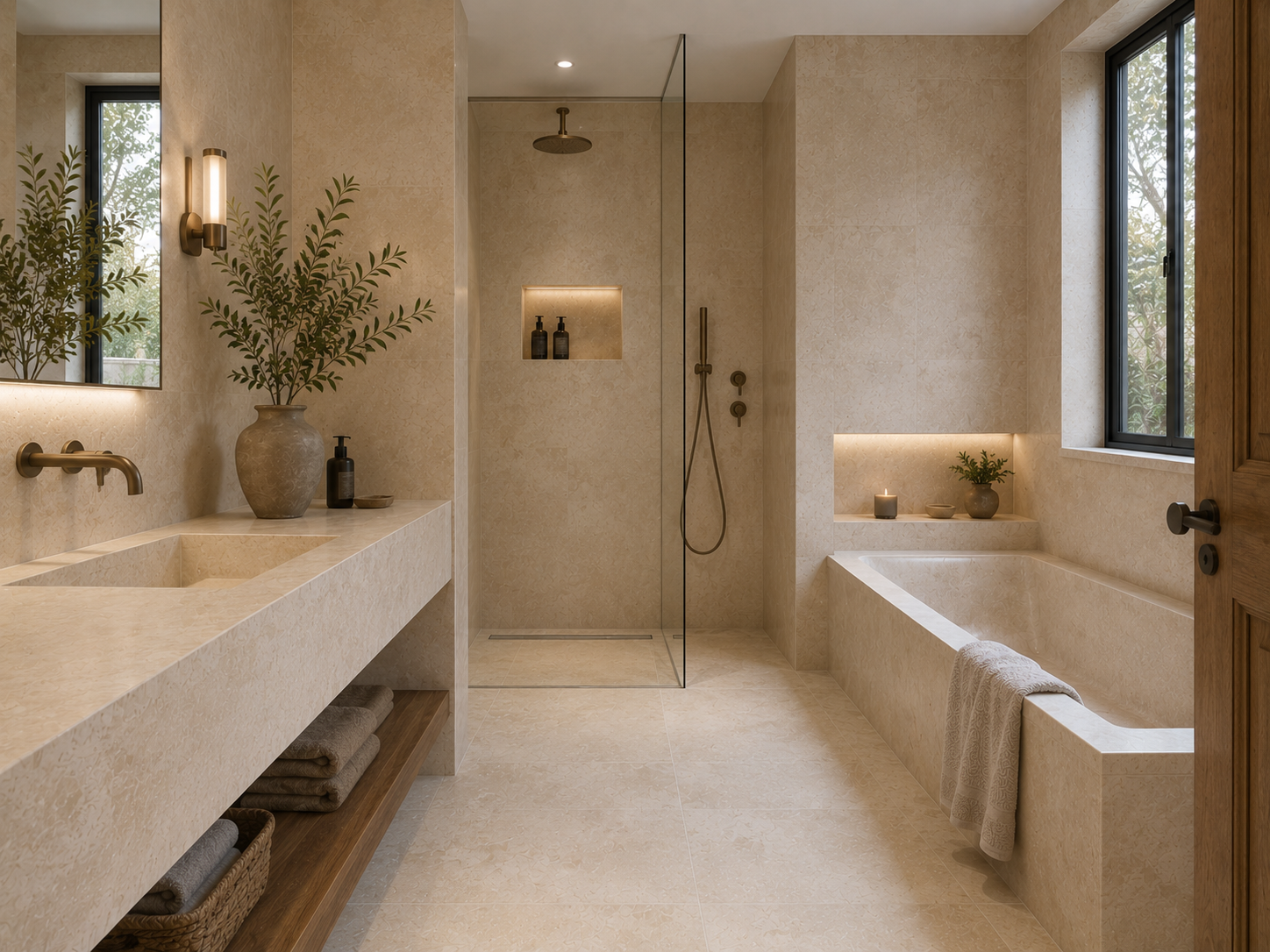
A limestone wet room uses stone across a larger percentage of the bathing environment, often connecting the main bathroom floor with the shower zone and adjacent walls.
This approach is especially suitable for spa bathroom concepts because the warm beige color creates a calm background and avoids excessive visual transitions between different finishes.
Wet-room specification requires careful waterproofing, drainage and surface planning. The limestone itself is only one part of the system; substrate preparation, waterproof membranes, adhesives, grout, sealers and drainage details all contribute to long-term performance.
Surface Finishes for Porto Beige Bathroom Limestone
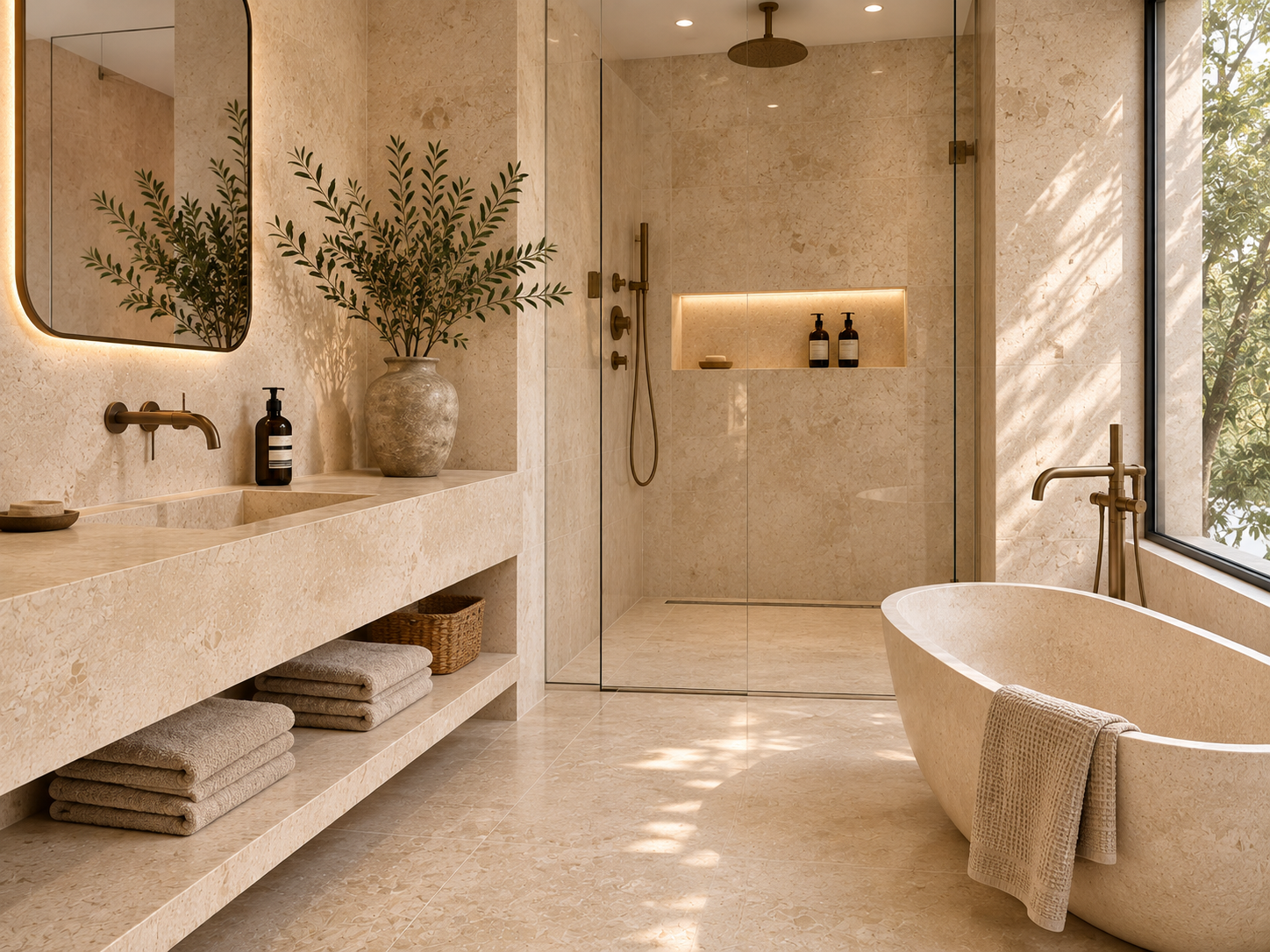
Surface finish changes both the appearance and the practical behavior of bathroom limestone. A honed finish is widely associated with contemporary limestone interiors because it creates a soft matte appearance without excessive reflection.
More textured finishes may be considered for specific flooring or wet-area locations where greater surface grip is needed.
The finish should therefore be selected by application rather than applying one finish automatically to every bathroom component.
| Application | Finish Consideration | Project Focus |
| Bathroom Wall | Honed or other approved decorative finish | Appearance, panel layout and maintenance |
| Vanity | Honed or project-specific finish | Water exposure, sealing and edge finish |
| Main Bathroom Floor | Honed or suitable textured finish | Walking safety and cleaning |
| Shower / Wet Area | Approved wet-area surface | Slip resistance, drainage and sealing |
Natural Variation and Material Selection
Porto Beige Limestone is a natural material, so tonal variation, small fossil markings, grain changes and other geological characteristics should be expected.
For large bathrooms using the same stone across multiple surfaces, material selection becomes especially important. Pieces for the floor, shower, vanity and walls should be reviewed as one visual package where possible.
This does not mean removing every natural variation. The objective is to distribute variation intentionally so that the completed stone bathroom appears balanced rather than randomly mixed.
Bathroom Drawings Before Stone Fabrication
Stone fabrication should begin only after the main bathroom dimensions and interfaces are sufficiently confirmed. Bathrooms contain many fixed elements, which means even a visually simple stone panel may require precise coordination.
Typical information to confirm includes:
- Finished wall and floor dimensions
- Stone thickness
- Panel and tile sizes
- Vanity dimensions
- Sink type and sink opening
- Faucet-hole locations
- Shower mixer and outlet positions
- Shower niches
- Drain locations and floor slope
- Glass partition interfaces
- Bathtub dimensions
- Visible edge profiles
- Joint positions
- Piece numbering
Custom Stone Fabrication for Bathroom Projects
Custom stone fabrication makes it possible to coordinate large wall panels, flooring modules, vanity tops, backsplashes, niches, thresholds and other stone details within one bathroom package.
Fabrication can include straight cutting, sink cutouts, faucet holes, edge polishing, grooves, mitered details, backsplash pieces and other project-specific processing according to approved drawings.
For project supply, individual pieces can also be numbered to correspond with drawings and installation locations. This becomes increasingly useful when a bathroom uses many unique panels rather than repeated standard tiles.
Residential, Villa and Hotel Bathroom Applications
Residential Bathrooms
In private homes, Porto Beige Limestone can provide a softer alternative to strongly patterned stone. It is suitable for master bathrooms, guest bathrooms and other spaces built around warm neutral interior palettes.
Villa Stone Bathrooms
A villa stone bath often has larger wall surfaces, larger vanity units and more spacious shower zones. This creates opportunities to use coordinated limestone panels and larger floor modules with fewer visual interruptions.
Hotel Stone Bathrooms
Hotel stone bath projects require additional attention to repeatability, cleaning, maintenance, replacement material and production consistency. Sample approval and clear fabrication documentation are particularly valuable where many guestrooms use the same design.
Spa-Style Bathrooms
Porto Beige naturally supports spa bathroom interiors because its warm beige palette can visually connect floors, bathing zones and wall surfaces without introducing excessive contrast.
What to Confirm When Ordering Porto Beige Limestone for a Bathroom
A bathroom stone quotation should be based on more than the total square-meter quantity. Different pieces may involve very different fabrication requirements.
| Information | Why It Matters |
| Drawings | Determines actual panel sizes, openings and quantities |
| Application Area | Separates floors, walls, shower areas and vanities |
| Thickness | Affects fabrication, handling and installation |
| Surface Finish | Influences appearance, cleaning and floor performance |
| Sink / Faucet Details | Required for accurate vanity fabrication |
| Panel Layout | Controls joints and visual material distribution |
| Project Location | Helps determine packing and shipping requirements |
Installation, Waterproofing and Sealing
Natural stone does not replace the bathroom waterproofing system. Shower walls, wet-room floors and other water-exposed areas should be built on a properly designed substrate and waterproofing assembly.
Porto Beige Limestone should also be treated with a sealer suitable for the stone and the intended bathroom environment. Sealing helps reduce liquid absorption but does not make limestone completely maintenance-free.
Installers should follow appropriate natural-stone installation methods and avoid products that may discolor, stain or chemically attack limestone.
Bathroom Limestone Cleaning and Maintenance
Limestone is calcium-based and can react with acidic cleaners. For regular bathroom maintenance, neutral products suitable for natural stone are generally more appropriate than aggressive acidic bathroom cleaners.
Soap residue and standing water should be managed through routine cleaning, correct drainage and appropriate ventilation. High-contact vanity areas and shower zones may also require periodic review of the sealer depending on use.
Is Porto Beige a Good Choice for a Limestone Bathroom?
Porto Beige Limestone is especially suitable for projects seeking a warm, understated natural stone bathroom. It offers enough natural variation to avoid looking artificial while remaining visually quiet enough for large-scale wall and floor applications.
It works particularly well in modern bathrooms, luxury residential interiors, villa bathrooms, hotel rooms and spa-inspired spaces where beige, cream, wood and other neutral materials form the main design palette.
The final specification should always account for the intended surface location. A vanity wall, main floor and shower floor do not have identical performance requirements, so finish, installation and sealing decisions should be made accordingly.
Frequently Asked Questions
1. Is Porto Beige Limestone suitable for bathroom walls?
Yes. Porto Beige Limestone can be used for bathroom wall panels, wall tiles, shower walls, vanity walls and other interior stone surfaces according to the project design.
2. Can Porto Beige Limestone be used in a shower?
Yes, it can be considered for shower applications when the stone finish, waterproofing, sealing, drainage and installation system are properly specified.
3. Is limestone suitable for bathroom floors?
Limestone can be used for bathroom flooring, but surface finish, slip resistance, drainage and maintenance requirements should be evaluated for the specific area.
4. What finish is recommended for Porto Beige Limestone bathrooms?
Honed finishes are commonly used for walls and many interior bathroom surfaces. Flooring and wet zones may require a more specific surface treatment depending on slip-resistance requirements.
5. Can Porto Beige Limestone be used for a vanity top?
Yes. Porto Beige can be fabricated as a stone vanity top with sink openings, faucet holes, backsplashes and custom edge details according to approved drawings.
6. Does bathroom limestone need sealing?
Sealing is generally recommended for limestone used in bathrooms because the stone is naturally porous. The sealer type and maintenance interval should match the specific application and usage.
7. Can large limestone panels be used for shower walls?
Yes. Large cut-to-size panels can reduce visible joints, but panel dimensions should consider available stone sizes, transportation, handling and installation access.
8. What information is needed for a custom bathroom stone quotation?
Useful information includes project drawings, dimensions, quantity, thickness, surface finish, wall and floor layouts, vanity details, sink openings, edge profiles and the project delivery location.
Porto Beige Limestone can be used to develop a coordinated natural stone bathroom rather than treating the floor, shower, vanity and wall surfaces as unrelated elements. Early coordination of material selection, panel layout, surface finish, fabrication drawings, waterproofing and installation details helps achieve a more consistent final result for residential, villa, hotel and spa bathroom projects.