Introduction: Why Curved Stone Always Starts from Flat Stone
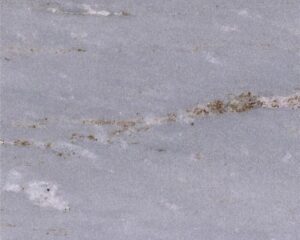
Every curved marble project begins with a flat slab. Whether the final result is a circular column, curved feature wall, spiral reception desk, or exterior radius facade, the original material remains a flat polished slab produced in quarry processing lines.
This creates one of the most misunderstood questions in stone fabrication: how can a rigid natural material become curved without breaking?
Unlike metal sheets or wood veneer, marble has almost no elastic tolerance. Curvature is not created by bending force but by geometric transformation.
If you have not yet reviewed the full overview of curved stone systems, our first technical guide explains the full fabrication framework here:
curved marble panels fabrication guide.
For buyers evaluating project feasibility, understanding the factory logic behind curved stone is often more important than selecting slab color at the beginning.
You may also review our production capability here:
company introduction.

Why Marble Cannot Be Bent Like Other Materials
Natural marble consists of interlocked calcite crystals. These crystals provide high compressive strength but weak tensile resistance.
What Happens Under Direct Bending Force
- Micro-cracks form first at vein intersections
- Stress concentrates near slab edges
- Hidden fractures propagate internally
- Surface may appear intact but structural risk remains
This means even if bending appears visually successful during trial handling, long-term project failure may occur after installation.
Why This Matters in Real Projects
In many projects, buyers assume thinner slabs can simply flex. In reality, thinner slabs often break faster unless supported by engineered backing.
Method 1: CNC Carving from Thick Slabs
CNC carving is the most accurate method when true curvature must be continuous and seamless.
Factory Production Process
- Slab thickness selected according to radius depth
- 3D drawing imported into CNC machine
- Material removed from rear side progressively
- Front decorative face preserved
Why CNC Is Preferred for Premium Interiors
- Continuous radius accuracy
- No visible segment joints
- High-end finish quality
Typical Applications
- Luxury hotel reception desks
- Circular marble columns
- Curved villa staircase cladding
- Sculptural bathroom surrounds
Main Cost Factor
The largest cost comes from waste. A large amount of stone is removed and cannot be reused in most cases.

Method 2: Segmented Fabrication for Architectural Radius Surfaces
Segmented fabrication is the most widely used commercial solution because it balances cost, risk, and installation practicality.
Basic Logic
A full radius is divided into narrow straight segments.
Each segment receives slight angular adjustment so that when multiple pieces are assembled, the final geometry appears curved.
Why Segmentation Dominates Hotel Projects
- Lower material waste
- Easy transport
- Lower breakage during installation
- Simple replacement if damage occurs
Critical Production Requirement
Segment width must be calculated according to final viewing distance.
If segments are too wide, the curve becomes visually faceted.

Method 3: Rear Kerf Cutting for Controlled Flexibility
Kerf cutting reduces slab stiffness by cutting controlled grooves on the back side.
How It Works
- Parallel grooves are cut at equal intervals
- Depth depends on slab thickness
- Front face remains visually continuous
Advantages
- Lower cost than CNC
- Useful for moderate curvature
Main Risk
- Excessive groove depth weakens slab strength
- Vein crossing may create hidden crack lines
For this reason, kerf cutting is usually limited to softer marble and larger radius conditions.
Method 4: Honeycomb Composite Curved Panels
Honeycomb composite systems are now standard in many large facade projects.
Factory Production Method
- Stone sliced to 3–5 mm veneer
- Bonded to aluminum honeycomb core
- Pressed into required curve
Why Composite Systems Matter
- Weight reduced by more than 70%
- Large panels become possible
- Anchoring becomes safer
- Transport loss reduces sharply
Typical Exterior Uses
- Airport facades
- Luxury hotel exteriors
- Commercial tower entrances
Radius Selection Table
| Radius Condition | Best Method |
|---|---|
| Very small radius | CNC carving |
| Medium radius | Segmented fabrication |
| Large radius | Honeycomb composite |

Material Type Changes Fabrication Difficulty
Safer Stones
- White marble
- Grey marble
- Uniform limestone
Higher Risk Stones
- Quartzite
- Strong directional veined marble
- Highly fractured exotic slabs
Quartzite often requires slower tooling speed because internal hardness creates higher tool stress.
Transport Planning Is Often More Important Than Cutting
Many curved stone failures happen after fabrication, not during production.
Main Transport Risks
- Radius edge vibration
- Unsupported packing zones
- Improper crate orientation
Curved panels should always receive custom support points matching geometry.
Installation Sequence Must Be Decided Before Production
Curved stone cannot be treated like flat cladding during installation.
Why Early Numbering Matters
- Radius order must follow sequence
- Joint direction affects final visual continuity
- Incorrect order creates visible mismatch
Factory Mock-Up Is Mandatory
Before full production, one sample section should always be fabricated.
Mock-Up Confirms
- Radius accuracy
- Joint visibility
- Vein continuity
- Anchoring feasibility
Cost Comparison Table
| Method | Relative Cost | Waste Level |
|---|---|---|
| CNC carving | High | High |
| Segmented fabrication | Medium | Low |
| Kerf cutting | Low | Very low |
| Honeycomb composite | Medium-high | Low |
When Buyers Should Contact Factory Engineers
The best time is before slab cutting begins.
If your project includes radius drawings, custom templates, or complex installation zones, you can directly
contact us
for technical evaluation before production starts.
FAQ
1. Can every marble slab be curved?
No. Internal stability determines feasibility.
2. Which method gives the smoothest result?
CNC carving provides the smoothest true radius.
3. Is segmented fabrication suitable for luxury interiors?
Yes, if segment width is properly controlled.
4. Why are mock-ups necessary?
They verify radius and joint logic before mass cutting.
5. Is quartzite harder to curve than marble?
Yes. Quartzite increases tooling difficulty and breakage risk.