
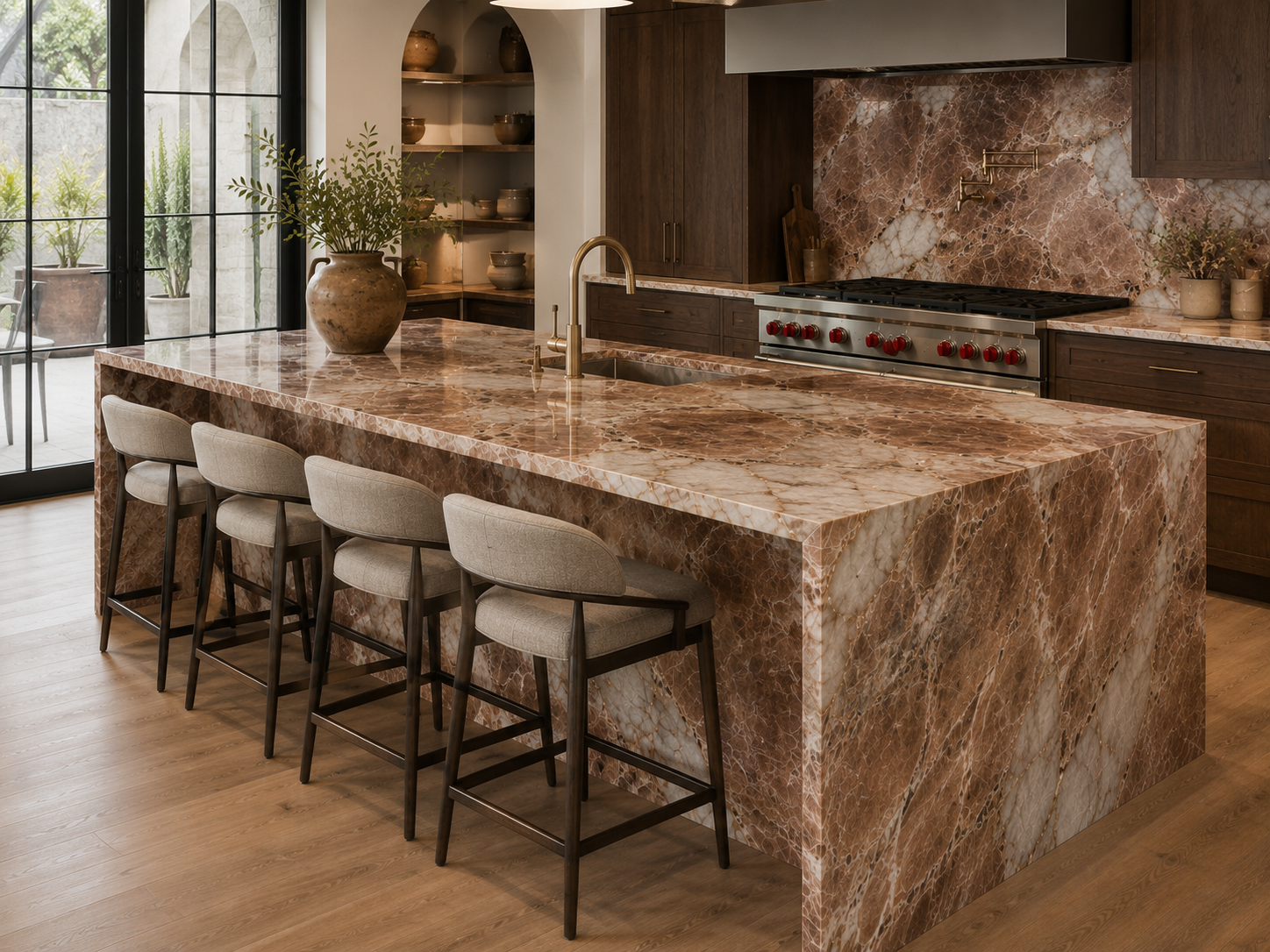
Patagonia Brown Quartzite Kitchen Island
Patagonia Quartzite is valued for its complex natural geology rather than a repetitive linear pattern. In Patagonia Brown, large pale crystal formations interact with warm brown and beige mineral masses, smoky grey transitions and scattered darker fragments.
This makes the material particularly suitable for a statement Kitchen Island, where a large uninterrupted surface allows the original slab composition to remain visible.
For a custom Quartzite Island, the design should begin with the actual slab. Island dimensions, sink location, cooktop, seating overhang, waterfall panels and visible edges should all be coordinated before cutting.
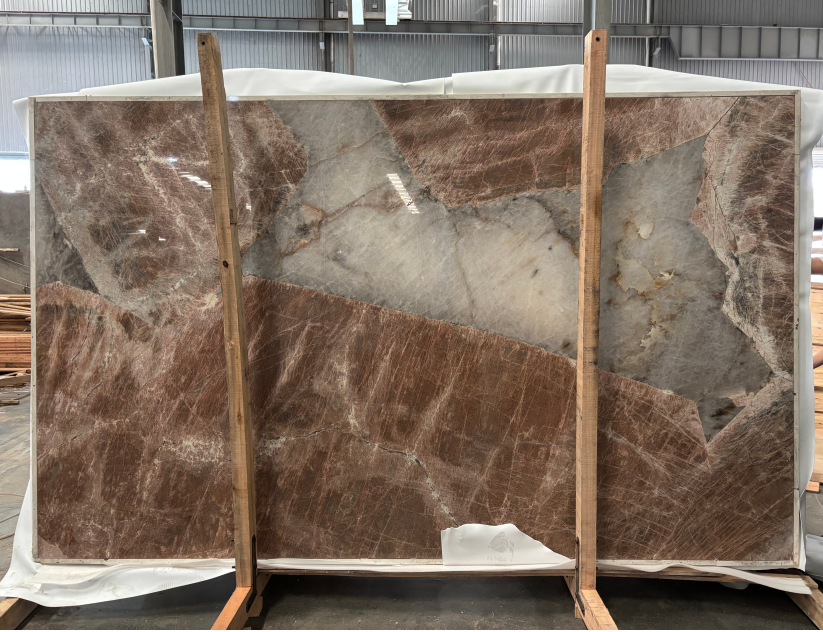
Product Specifications
| Specification | Project Details |
| Material Name | Patagonia Brown Quartzite |
| Material Type | Natural Quartzite |
| Primary Colors | Milky White / Ivory / Cream / Beige / Brown / Smoky Grey / Dark Mineral Accents |
| Texture Pattern | Large Crystal Fields / Brecciated Mineral Structure / Irregular Brown-Grey Movement |
| Translucency | Variable by Crystal Zone; Actual Slab Lighting Test Recommended |
| Available Thickness | 18mm / 20mm Standard Options |
| Available Slab Size | Subject to Current Slab Inventory |
| Surface Finishing | Polished / Honed / Project-Specific Finish |
| Fabrication Options | Island Tops / Waterfalls / Mitered Edges / Sink Cutouts / Cooktop Cutouts / Backsplashes |
| Edge Options | Eased / Beveled / Mitered Build-Up / Custom Profile |
| Application Scope | Kitchen Islands / Countertops / Waterfall Ends / Backsplashes / Feature Surfaces |
| Custom Size | According to Approved Shop Drawings, Slab Dimensions and Usable Yield |
| Package Details | Surface Protection + Edge Guards + Cutout Support + Reinforced Fumigated Wooden Crates |
| MOQ | According to Selected Slab and Fabrication Requirements |
| Delivery Time | Confirmed According to Material Availability, Quantity and Processing Scope |
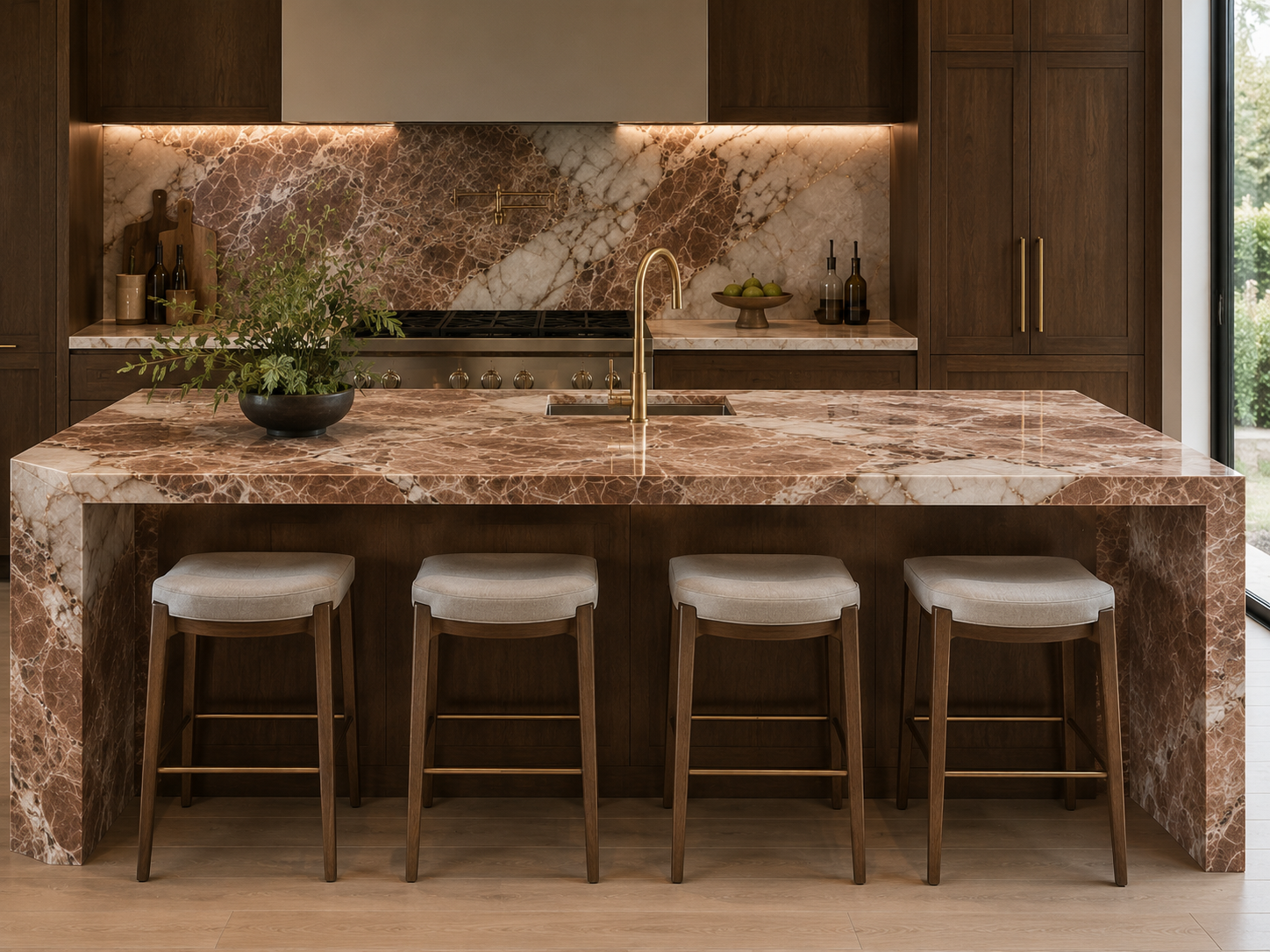
Crystal, Brown and Smoky Mineral Character
Patagonia Brown is not a uniformly colored Brown Quartzite. Its identity comes from the contrast between large light crystals and much denser brown, grey and dark mineral structures.
Pale milky and cream crystal areas can appear almost translucent, while deeper brown and dark fragments create visual weight.
This irregular geological structure gives the material the character of a Crystal Quartzite rather than a conventional flowing-vein stone.
The location and scale of these mineral areas should be reviewed before assigning finished island components.
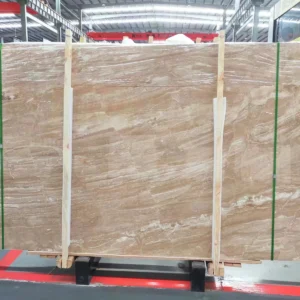
Full-Slab Selection Before Island Design
A small sample cannot represent a complete Patagonia Slab.
For a large Quartzite Slab, the buyer should review not only color but also the usable relationship between crystalline fields, brown mineral zones, dark fragments, fissures and repaired areas.
Full-Slab Review:
Slab Size → Crystal Distribution → Brown Mineral Field → Smoky Grey Movement → Dark Fragments → Fissures → Repairs → Translucent Zones → Usable Yield → Slab Sequence
This determines whether the selected slab can realistically produce the island top, waterfall panels and other components while preserving the desired visual composition.
Kitchen Island Cutting Layout
A Stone Island should be laid out using the actual slab images after the cabinet and appliance dimensions are confirmed.
The finished template can show:
Island Top → Sink → Cooktop → Faucet → Seating Overhang → Support Zones → Seam → Waterfall Panels → Finished Edge → Backsplash
This allows the fabricator to preserve important crystal areas and avoid placing vulnerable mineral transitions inside narrow bridges around openings.
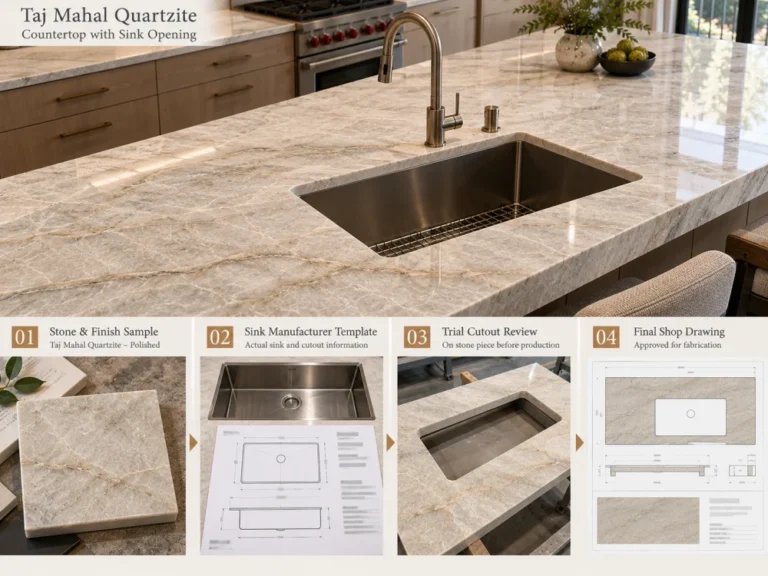
Sink and Cooktop Placement
A sink or cooktop can remove a substantial portion of the visual pattern from an Island Countertop.
For Patagonia Brown, cutout planning should therefore consider both appearance and structural suitability.
| Cutout Check | Why It Matters |
| Main Crystal Zone | Avoid removing the most important visual feature unnecessarily |
| Natural Fissures | Review areas around narrow bridges before cutting |
| Repairs | Avoid vulnerable repaired zones where practical |
| Transport Support | Large openings may require temporary reinforcement during handling |
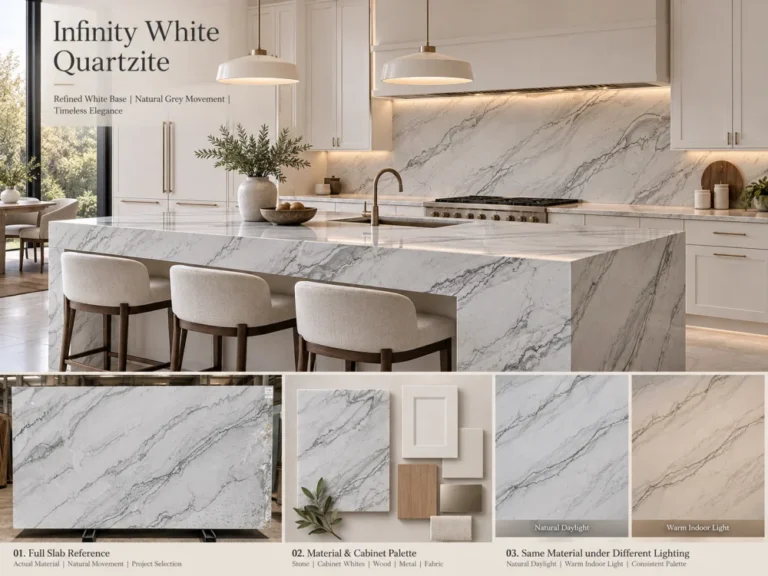
Waterfall Island Design
A Waterfall Island allows Patagonia Brown to continue from the horizontal island top down to the floor.
For a successful Stone Waterfall, top and side panels should be planned as a visual pair before either piece is cut.
Where possible, adjacent slab areas can be used to create a believable transition between the horizontal and vertical mineral structures.
The objective is natural continuity, not an artificial mirrored pattern.

Mitered Edge Fabrication
A Mitered Island can create the appearance of a thicker stone top without using one solid section of equal apparent thickness.
The Mitered Edge should be cut precisely and trial fitted before final finishing.
Approved Layout → Precision Cutting → 45° Miter → Reinforcement Review → Trial Fit → Joint Alignment → Adhesive Control → Edge Refinement → Final QC
Particular care is required when a miter crosses a crystalline or brecciated zone because edge behavior may vary significantly across the same slab.
Backlit Patagonia Brown Quartzite
Selected pale crystalline zones can behave as a Translucent Stone and may be considered for a Backlit Island.
However, Patagonia Brown is not uniformly translucent. The actual response depends on crystal density, color, mineral composition and thickness.
| Stone Area | Expected Response |
| Milky White Crystal | Potentially higher transmission; verify on actual slab |
| Cream Crystal | Variable warm transmission |
| Brown Mineral Zone | Generally lower light transmission |
| Dark Fragment | Often largely opaque |
For Backlit Quartzite, actual slab testing should be completed before finalizing LED placement and cutting layout.
Backlight System Coordination
A backlit island should coordinate the stone and lighting system as one assembly.
Stone Thickness → Crystal Mapping → Light Chamber → LED Distribution → Diffuser → Structural Support → Ventilation → Maintenance Access → Dimming
Testing the complete system before fabrication helps reduce LED hotspots, dark support shadows and unintended brightness differences.

Kitchen Countertops and Worktops
Patagonia Brown can also be coordinated as a Kitchen Countertop, Stone Countertop or Quartzite Worktop.
For kitchens where the island is intended to remain the focal point, perimeter counters can be produced from visually calmer sections of compatible slabs.
This maintains design hierarchy while still keeping a consistent natural material palette throughout the kitchen.
Quartzite Backsplash Coordination
A Quartzite Backsplash can extend the material vertically behind a cooktop, sink or perimeter counter.
The backsplash should be included in the slab-yield calculation before cutting begins.
If the island already contains strong crystal and dark mineral movement, a calmer backsplash may create a more balanced kitchen composition.
Polished Patagonia Brown Quartzite
Polished Quartzite emphasizes the depth of pale crystals and the contrast between brown, beige, smoky grey and dark mineral structures.
This finish is particularly suitable where the island is intended to act as a dramatic natural-stone focal point.
Final inspection should check surface gloss, scratches, repairs, edge quality and any visible resin treatment across both crystal and dense mineral areas.
Usable Slab Yield
A beautiful Brown Stone Slab does not automatically provide high usable yield.
For Patagonia Brown, usable area can be reduced by:
Visual Selection → Fissures → Repairs → Cutout Location → Waterfall Matching → Edge Requirements → Spare Material → Structural Risk Areas
The final stone cost should therefore be evaluated against the complete cutting plan rather than only the slab’s gross square-meter area.
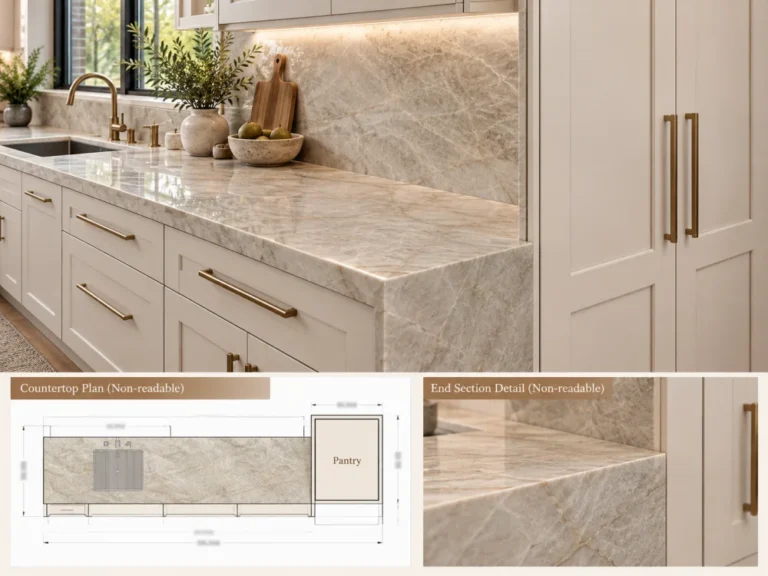
CAD and Shop Drawing Coordination
A Custom Quartzite island should be fabricated from approved drawings.
The shop drawing should define:
Overall Dimensions → Cabinet Envelope → Sink → Cooktop → Faucet → Finished Thickness → Overhang → Structural Support → Waterfall → Miter → Seam → Backsplash → Service Openings
Once these details are approved, finished pieces can be positioned on actual slab photographs for final visual confirmation.
Fabrication and Quality Control
Actual material confirmation
Component-to-slab mapping
Sink and cooktop geometry
Joint and angle inspection
Vulnerable area review
Finish and repair review
Waterfall and seam check
Protection before shipment
B2B Procurement Risk Control
| Buyer Risk | Recommended Control |
| Island differs from small reference sample | Approve actual full-size slabs before fabrication |
| Important crystal section is lost in a sink opening | Overlay finished templates on slab photography before cutting |
| Waterfall does not visually connect with top | Reserve adjacent or visually compatible slab areas |
| Fissure crosses narrow sink or cooktop bridge | Review natural structure and reposition the layout where practical |
| Backlight produces uneven brightness | Test actual stone with proposed LED and diffuser configuration |
| Large fabricated pieces are damaged during shipping | Use rigid support, edge guards and cutout reinforcement where required |
Packaging and International Delivery
Large Patagonia Brown island pieces require packaging developed around their actual size, weight, openings and fracture-sensitive areas.
Visible surfaces receive soft non-staining protection, while exposed corners and mitered edges receive dense cushioning and rigid edge guards.
Sink and cooktop openings can receive temporary transport reinforcement where needed to protect narrow stone bridges.
Finished components are secured inside reinforced fumigated wooden crates with rigid separation, internal blocking and protective materials appropriate to the product geometry. Production inspection and final packing inspection are completed before shipment.
Working with a Quartzite Supplier
A project-focused Quartzite Supplier should provide more than one representative slab image for Patagonia Brown.
Useful B2B support includes full-slab photography, slab dimensions, visual sorting, CAD nesting, island drawings, waterfall coordination, cutout planning, trial fitting, production QC and export packing.
This gives the buyer control over the relationship between the selected natural slab and the finished island before irreversible fabrication begins.
Why Choose HRST STONE
HRST STONE provides one-stop natural stone solutions backed by 17+ years of stone supply and international project experience.
For Patagonia Brown Quartzite kitchen islands, support can include actual slab selection, full-slab photography, CAD and shop drawings, cutting-layout approval, island and waterfall fabrication, miter processing, trial fitting, final QC and international export packing.
This coordinated process helps designers, importers, contractors and homeowners control slab appearance, usable yield, cutout risk, waterfall continuity, fabrication accuracy and transport protection from material approval through delivery.
Information Required for Quotation
| Quotation Item | Information Required |
| Island Size | Length / Width / Finished Height |
| Stone Thickness | 18mm / 20mm or specified build-up |
| Waterfall | None / One End / Two Ends |
| Cutouts | Sink / Cooktop / Faucet / Other Openings |
| Edge | Eased / Mitered Build-Up / Custom Profile |
| Backlighting | Required / Not Required / Under Evaluation |
| Visual Preference | More Crystal / More Brown / Balanced / Specific Slab Reference |
| Destination | Destination port or complete project delivery address |
Patagonia Brown Quartzite Kitchen Island FAQ
1. What does Patagonia Brown Quartzite look like?
It typically combines milky-white and ivory crystal areas with brown, beige, smoky grey and darker natural mineral structures.
2. Is Patagonia Brown suitable for kitchen islands?
Yes. Its large-scale crystal and mineral composition makes it particularly suitable for statement island tops and waterfall panels.
3. Can Patagonia Brown Quartzite be backlit?
Selected pale crystalline zones may transmit light, but translucency varies significantly. Actual slab testing is required before lighting design is finalized.
4. Can it be used for a waterfall island?
Yes. The top and waterfall panels should be mapped from adjacent or visually compatible slab areas where natural continuity is desired.
5. Should sink and cooktop positions be approved before cutting?
Yes. Openings should be coordinated with actual crystal zones, fissures, repairs and remaining stone bridges.
6. Does Patagonia Quartzite contain natural fissures?
It can. Complex crystalline and brecciated natural stones may contain fissures and repaired zones that should be reviewed during slab selection.
7. What finish is recommended?
Polished finishing is often selected to emphasize crystal depth and mineral contrast, while honing creates a softer lower-reflection appearance.
8. Why is usable slab yield important?
Waterfall matching, visual selection, fissures, repairs and cutouts may reduce the amount of slab that can be used for finished components.
9. What drawings are required?
Final island dimensions, cabinet geometry, sink and cooktop openings, overhangs, support, waterfall panels, edge details and seam positions should be confirmed.
10. How is a large Patagonia island packed?
Finished pieces receive surface protection, edge guards, temporary cutout support where required, rigid separation and reinforced fumigated wooden crate packing.
Final Note
Patagonia Brown Quartzite kitchen islands should be designed from the actual slab outward. First approve the crystal, brown-beige, smoky grey and dark mineral composition. Then position the island top, sink, cooktop, waterfalls, seams and mitered edges on the selected slabs. If backlighting is required, test the actual translucent crystal zones before finalizing the lighting system. Finally, verify usable slab yield, fissures, reinforcement, trial fitting, finish quality and export packing. This process protects both the visual value of the stone and the technical reliability of the finished island.