Best Quartzite Colors and Patterns for Kitchen Countertops
Post navigation
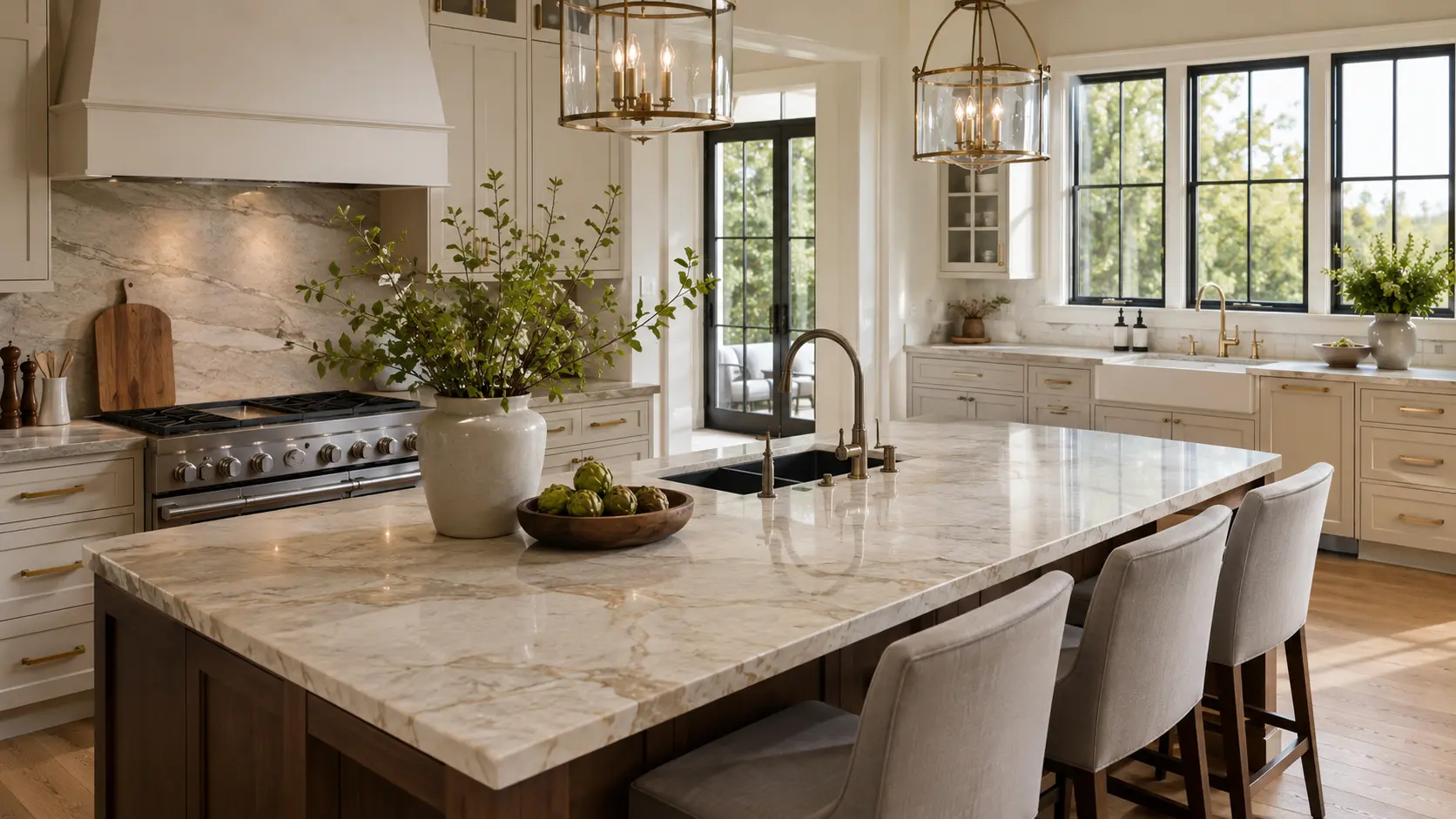
A luxury kitchen scene showing quartzite countertops as the visual centerpiece of the space.
Quick Summary
Best quartzite colors and patterns for kitchen countertops is not just a style question. It is a buying decision that affects kitchen brightness, visual balance, slab layout, and long-term satisfaction. The best choice depends on whether you want soft warm neutrals, bright light-reflective tones, or stronger natural movement, and whether your kitchen calls for a calm background or a statement surface.
Choosing quartzite for a kitchen countertop is rarely only about selecting a stone name. For most buyers, the real challenge is choosing the right color family and the right pattern style. A slab that looks beautiful in a showroom photo may feel too busy in a compact kitchen, too flat in a large open-plan space, or too cool for warm wood cabinetry. That is why the best quartzite colors and patterns for kitchen countertops should always be evaluated in relation to the full kitchen design, not as isolated samples.
Quartzite remains highly attractive because it combines the value of natural stone with a rich range of visual expressions. Some slabs are soft and quiet, with warm ivory or beige backgrounds and gentle cloud-like movement. Others are brighter and more architectural, showing white, gray, and cream tones with longer linear veins. Still others are dramatic, with bolder movement that turns an island into the visual centerpiece of the room. The best option depends on what role the countertop should play in the kitchen.
For buyers, this means the most important question is not simply which quartzite is famous. The better question is which quartzite color and pattern best fit the kitchen size, cabinet tone, lighting conditions, edge profile, backsplash strategy, and overall design goal. Buyers who think in this way usually make more successful slab decisions and avoid costly regret later.
Why Quartzite Color and Pattern Matter in Kitchen Design
In kitchen design, color sets the emotional tone while pattern controls visual rhythm. A soft beige quartzite can make a kitchen feel warm, inviting, and high-end without becoming too formal. A white or pale gray quartzite can brighten the room and support a cleaner, more architectural look. A dramatic veined slab can add movement and luxury, but it can also dominate the room if the rest of the design is already visually busy.
This is especially important for countertops because they occupy one of the most visible horizontal planes in the kitchen. On an island, the stone is often read almost like furniture. On perimeter counters, it interacts closely with cabinetry, hardware, wall paint, backsplash surfaces, and lighting. A good quartzite color does not work alone. It works because it helps all these elements feel coordinated.
Pattern matters just as much. Some buyers are drawn to expressive veining because it feels luxurious and one-of-a-kind. Others prefer quieter movement because it is easier to live with over time. Neither preference is wrong. The right answer depends on whether the countertop should be a background surface or a design statement.
Most Popular Quartzite Color Families for Kitchen Countertops
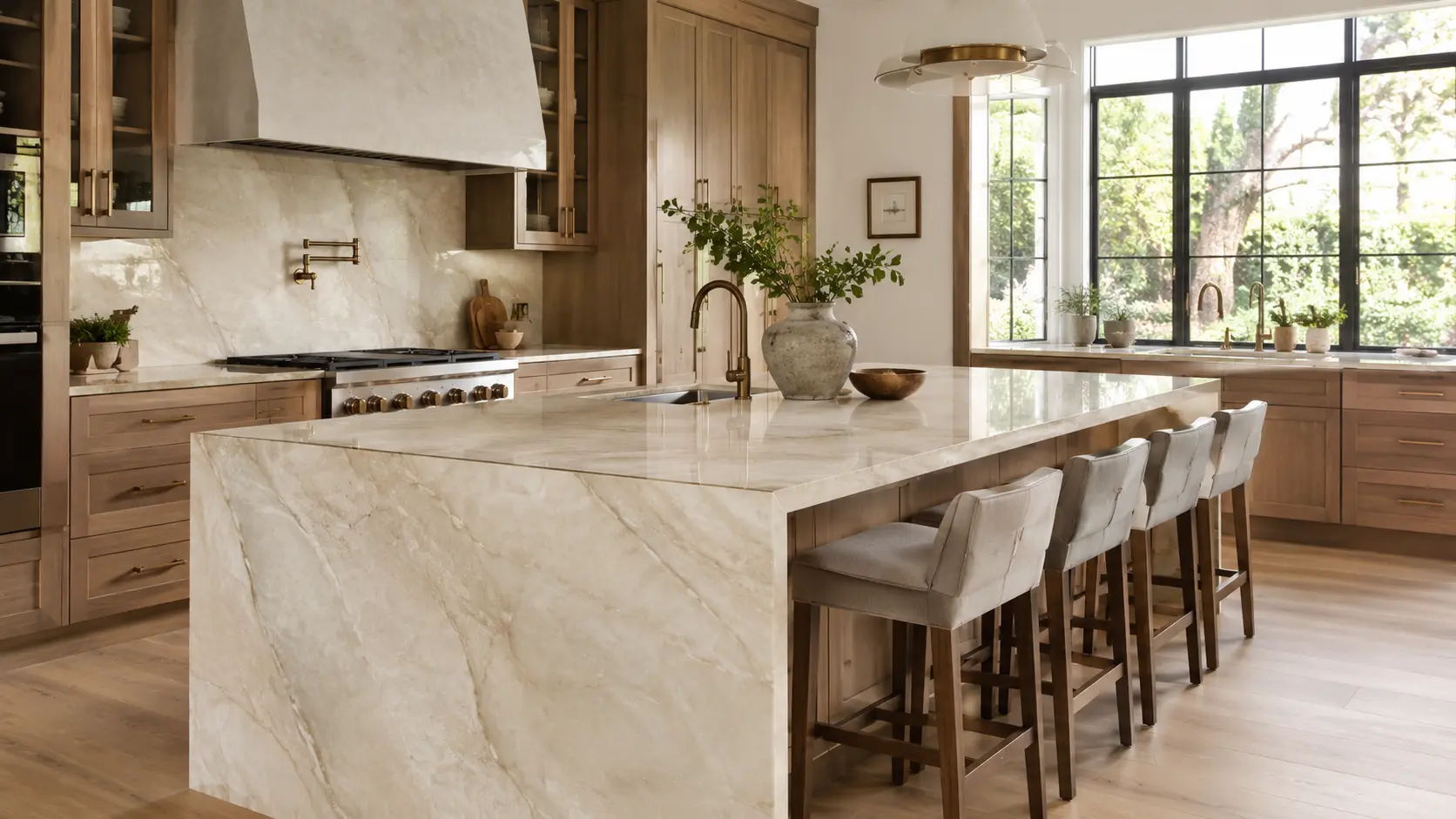
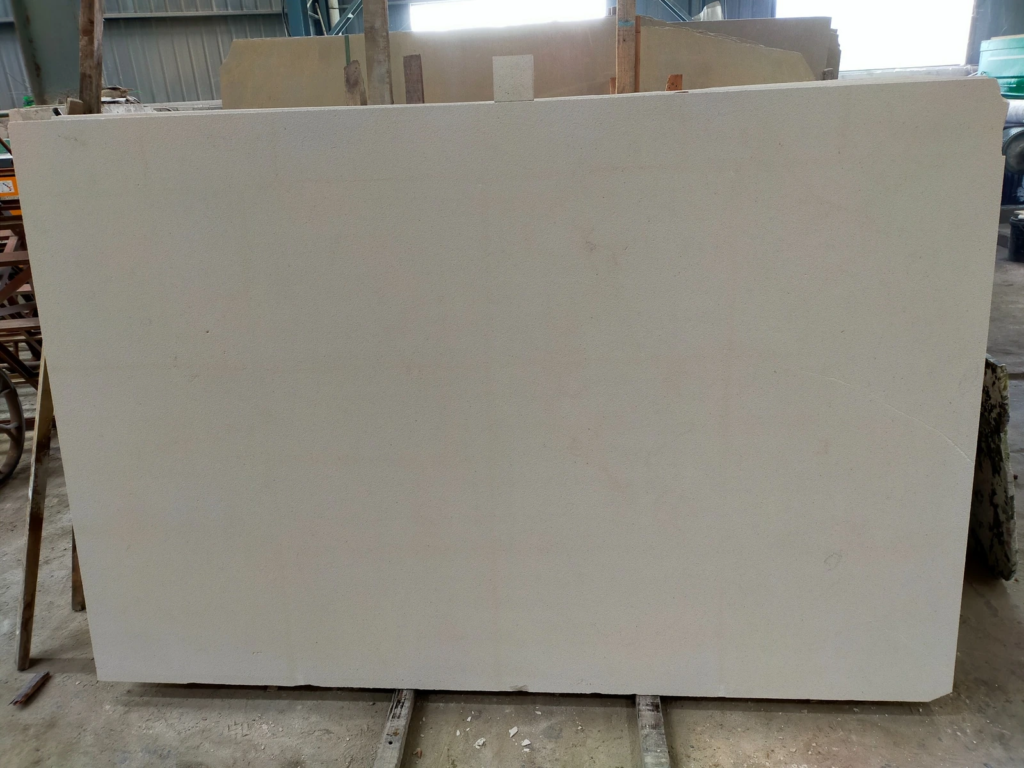
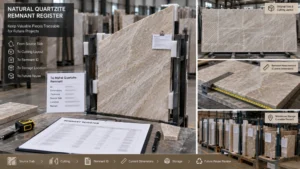
Warm beige quartzite countertops creating a calm and upscale kitchen atmosphere.
Warm Beige and Cream Quartzite
Warm beige and cream quartzites are among the most commercially successful choices for kitchen countertops because they balance brightness with warmth. They work especially well in kitchens where the buyer wants a premium look without the colder feel that some pure white surfaces can create. This family often suits oak, walnut, taupe, greige, and warm painted cabinetry extremely well.
Many buyers are drawn to this category because it feels timeless. It can work in contemporary kitchens, transitional kitchens, and luxury residential spaces alike. Taj Mahal style quartzites are often referenced in this category because they create a calm, elegant, and upscale visual effect without overpowering the room.
White and Off-White Quartzite
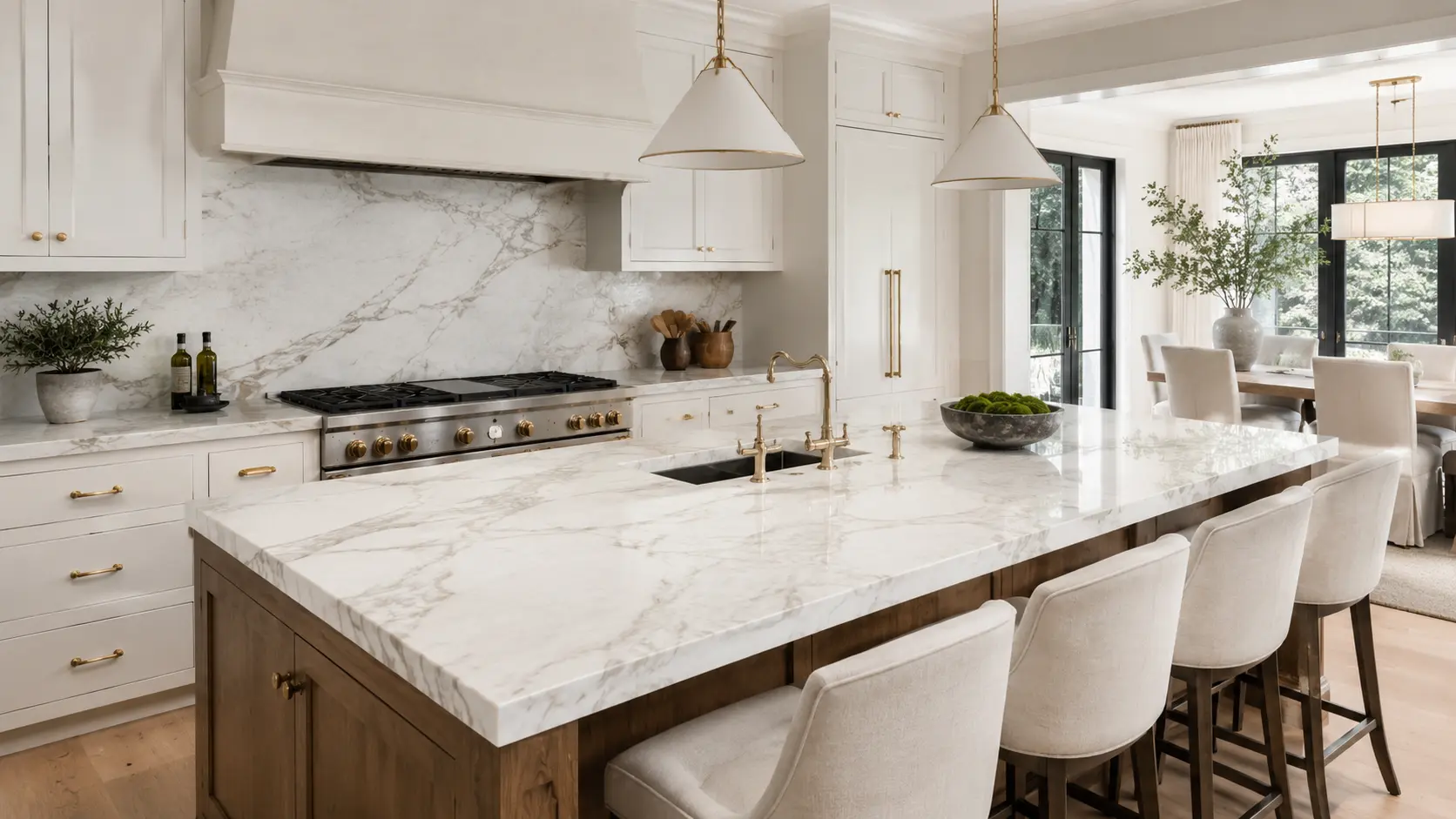
White and off-white quartzites appeal strongly to buyers who want a brighter kitchen and a cleaner visual impression. These slabs often support kitchens with light cabinetry, black accents, brushed nickel, chrome, or minimalist detailing. They can make the room feel larger and fresher, especially when natural daylight is strong.
However, buyers should be careful not to assume that every white quartzite will feel the same. Some read warm and creamy, while others read cool and gray. Some have soft, barely-there movement, while others contain stronger directional veining. That difference matters a great deal once the slab is installed across a large island or extended countertop run.
Gray and Greige Quartzite
Gray and greige quartzites are useful for buyers who want a more grounded, slightly moodier kitchen palette without moving into very dark stone. These colors often work well in kitchens with deeper cabinet colors, mixed metal finishes, or a more tailored contemporary style. Greige quartzites are especially flexible because they can bridge warm and cool elements at the same time.
The caution with gray-toned stone is that lighting becomes even more important. In low-light kitchens, an overly cool slab may make the space feel flatter or heavier than expected. In well-lit kitchens, the same slab can feel refined and architectural. Buyers should always check slab photos or videos in realistic light conditions before deciding.
Gold, Taupe, and Earth-Toned Quartzite
Quartzites with gold, taupe, sand, or earth-driven undertones are often chosen when the buyer wants a stronger natural character. These slabs can feel luxurious, organic, and layered. They are particularly effective in large kitchens where the countertop needs enough visual richness to hold its own against substantial cabinetry, flooring, and lighting features.
This family is often successful in high-end residential projects because it adds depth without relying on strong black-white contrast. It is also a good direction for buyers who want the room to feel expensive and natural rather than stark and ultra-minimal.
Dark Quartzite for Statement Kitchens
Dark quartzites are less universal than beige, white, or greige options, but they can be extremely effective in the right design. They work best in kitchens where contrast is part of the concept or where the buyer wants a moodier, more dramatic statement. These slabs often pair well with warm woods, brass, textured cabinetry, and controlled lighting.
The risk is that dark stone can make a smaller kitchen feel visually heavier if the rest of the space also carries strong contrast. For this reason, dark quartzite is usually a more deliberate design choice rather than the default recommendation for broad buyer appeal.
Best Quartzite Pattern Types for Different Kitchen Styles
Soft Movement
Soft movement is one of the safest and most versatile quartzite pattern types for kitchen countertops. It creates interest without becoming visually aggressive. Buyers who want a calm, elegant kitchen often do well with slabs that show gentle mineral movement, light layering, or subtle diffuse veining. This pattern type tends to age well visually because it is easy to coordinate with changing accessories and finishes over time.
Linear Veining
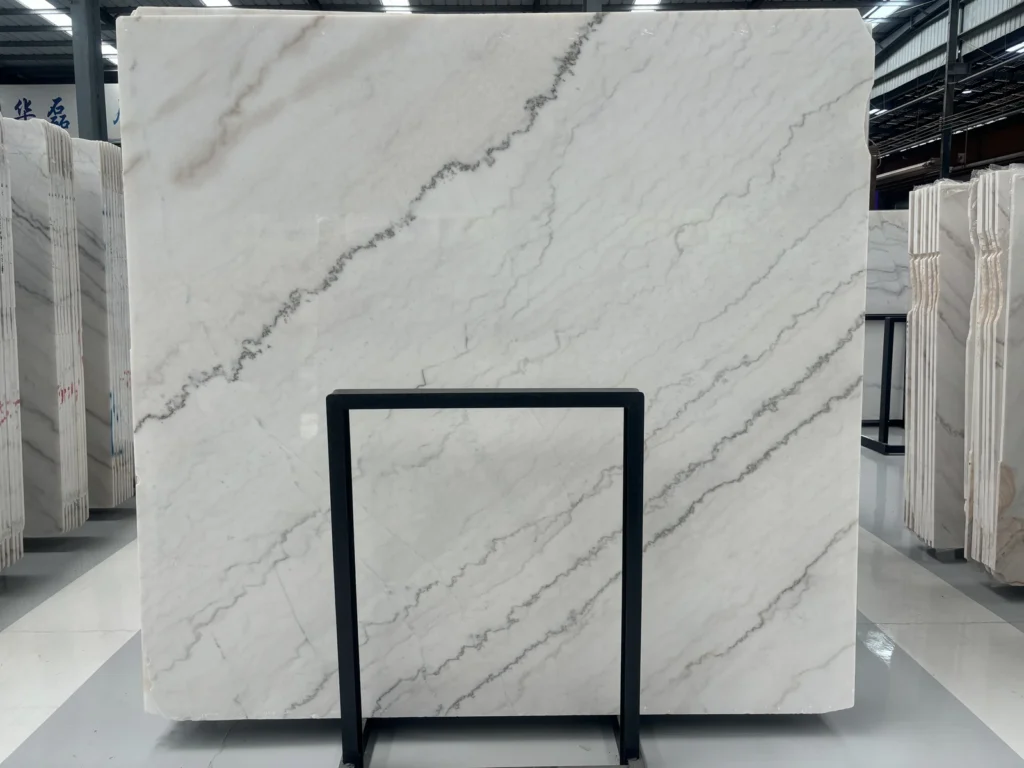
Linear veining works well when the kitchen design calls for direction, structure, and a more architectural feeling. These slabs can be particularly strong for long islands, waterfall edges, and backsplashes because the movement can reinforce the geometry of the room. They are a good option when the buyer wants the countertop to feel intentional and design-driven rather than simply decorative.
Bold Dramatic Veining
Bold dramatic veining is best for buyers who want the stone to become a visual event. In the right kitchen, it can be stunning. A large island with strong quartzite movement can become the signature feature of the room. But this choice requires discipline. If cabinetry, lighting, flooring, and hardware are all visually active, a very dramatic slab can push the kitchen into visual overload.
For this reason, bold veining usually works best when the surrounding design is more restrained. The stone then becomes the hero rather than competing with everything else.
Cloudy or Layered Texture
Some quartzites do not present as clearly veined at all. Instead, they show softer clouding, layered mineral depth, or diffuse transitions. These slabs can be ideal for buyers who want a natural stone appearance without strong directional lines. They often feel softer and more atmospheric than sharply veined slabs, which can make them attractive in relaxed luxury kitchens.
Brecciated and Highly Expressive Patterns
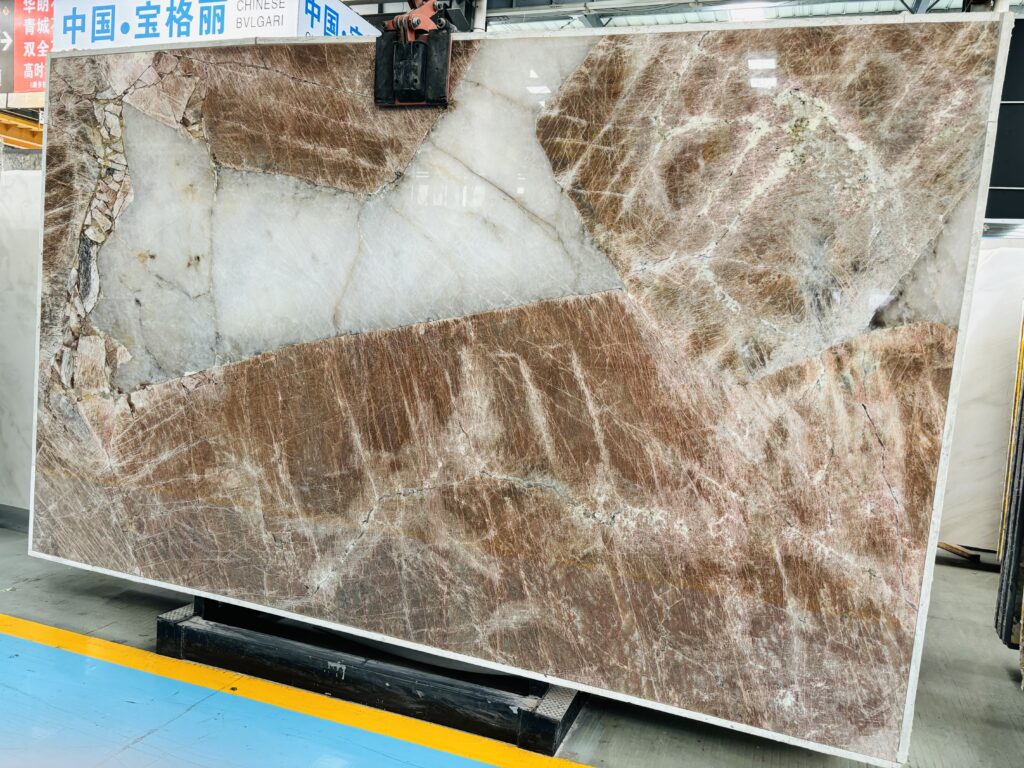
Brecciated or highly expressive quartzites create the strongest visual identity, but they are also the least forgiving if used without a clear design plan. These patterns are best suited to statement islands, feature surfaces, or larger kitchens where the stone can be appreciated from a comfortable viewing distance. They are usually not the first recommendation for buyers seeking the most universally appealing countertop look.
How to Choose Quartzite Colors by Kitchen Style
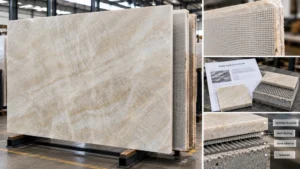
Light quartzite countertops helping create a bright, open, and elegant kitchen design.
Modern Warm-Neutral Kitchens
For modern warm-neutral kitchens, beige, cream, taupe, and soft greige quartzites are usually the strongest choices. These colors support the calm, premium feeling that many buyers want today. They pair naturally with warm woods, textured painted cabinetry, and understated metal finishes.
Bright Luxury Kitchens
If the goal is a bright and refined luxury kitchen, white, off-white, or very pale cream quartzites usually perform best. Buyers often choose these slabs because they lift the whole room and create a more open visual effect. The key is to decide whether the brightness should feel cool and crisp or warm and gentle.
Classic Transitional Kitchens
Transitional kitchens often benefit from slabs that feel elegant but not overly trendy. Soft white, cream, beige, and lightly veined quartzites are especially useful here because they can bridge traditional detailing and contemporary simplicity. A calm pattern generally works better than a highly dramatic one in this category.
Bold Designer Kitchens
For buyers who want a more expressive or editorial look, stronger veining and richer contrast can be appropriate. This is where a quartzite island can act almost as a sculptural piece. The rest of the kitchen, however, should usually stay relatively controlled so that the stone remains the focal point.
How Kitchen Size and Layout Affect Quartzite Choice
Kitchen size changes the way stone is perceived. In a compact kitchen, a slab with very strong movement can make the space feel crowded. In a large open-plan kitchen, a slab that is too quiet may disappear and fail to deliver enough design presence. Buyers therefore need to judge slab personality in relation to scale.
Layout matters too. On a long island, directional veining may become a major design feature. On smaller perimeter counters, a more diffuse pattern may feel easier and more balanced. If the design includes waterfall ends, the buyer must also think about how the movement continues from top to side. A quartzite that looks good in a small sample may not behave the same way when cut across a larger composition.
Best Quartzite Colors and Patterns for Different Buyer Goals
Buyer Goal
Best Color Direction
Best Pattern Direction
Why It Works
Warm luxury kitchen
Beige, cream, taupe
Soft movement or light linear veining
Creates a calm and expensive look without feeling cold
Bright open kitchen
White, off-white, pale cream
Soft or moderate veining
Helps the room feel larger and lighter
Balanced transitional style
Cream, greige, warm white
Subtle layered movement
Feels timeless and easy to coordinate
Statement island design
Depends on room palette
Bold dramatic veining
Turns the island into the centerpiece
Calm everyday kitchen
Soft neutral tones
Low-contrast movement
Easier to live with visually over time
Quartzite Pattern Selection Guide
Pattern Type
Visual Effect
Best Use Case
Buyer Caution
Soft movement
Quiet, elegant, versatile
Most kitchen styles
May feel too subtle in a very large room
Linear veining
Directional, structured, architectural
Islands, waterfalls, long counters
Needs careful layout planning
Bold dramatic veining
Luxurious, expressive, focal-point driven
Statement kitchens and large islands
Can overwhelm visually busy kitchens
Cloudy layered texture
Soft, atmospheric, natural
Relaxed luxury and warm interiors
Can look flatter in weak lighting
Brecciated expressive pattern
Rich, artistic, high-impact
Feature islands and statement applications
Less forgiving for broad buyer appeal
Common Mistakes When Choosing Quartzite Slabs
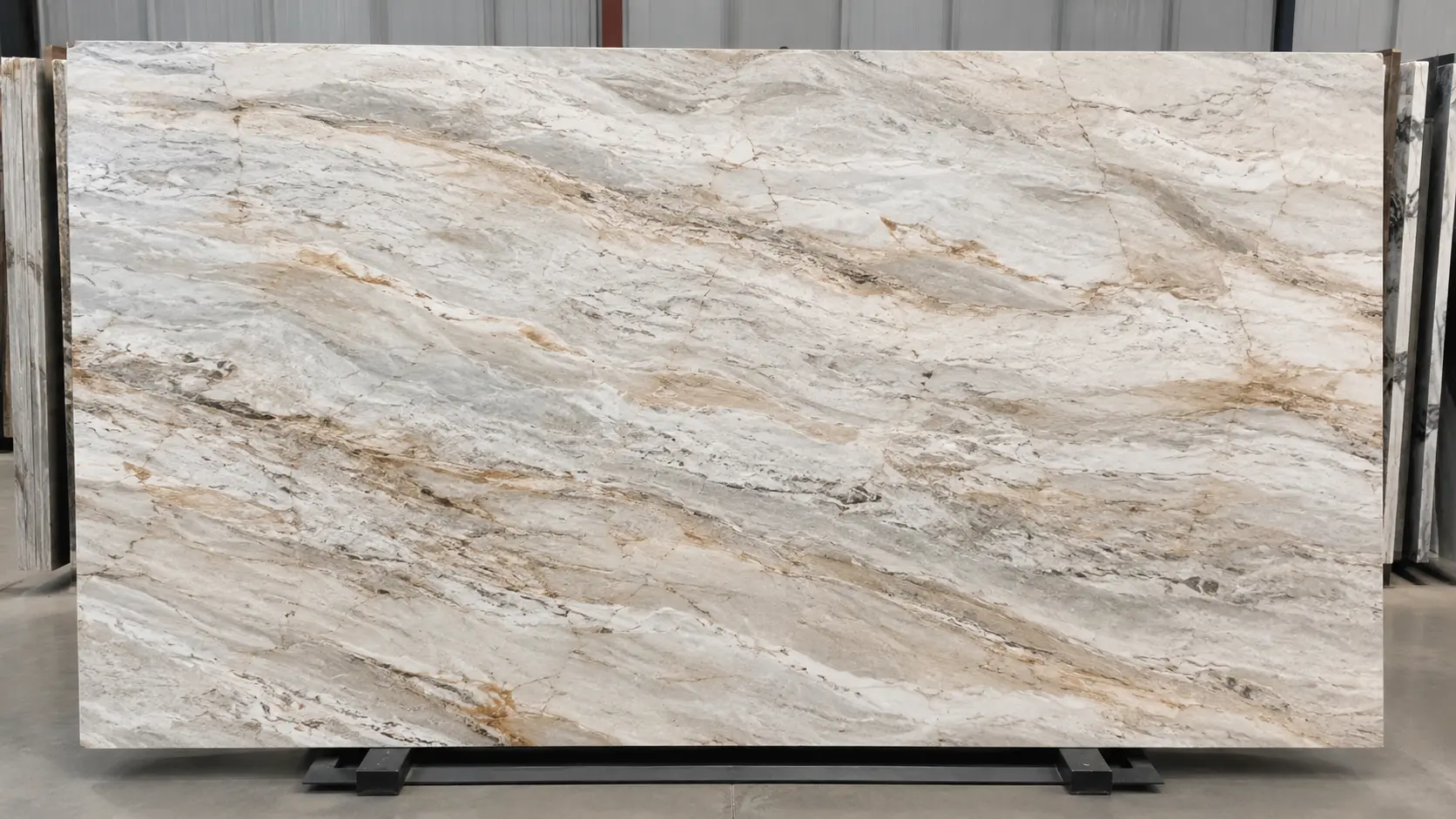
One of the biggest mistakes is choosing from a small sample instead of reviewing the full slab. Quartzite is a natural material, and the same color family can vary greatly in movement, contrast, and overall personality. A sample can suggest tone, but it rarely tells the full design story.
Another common mistake is selecting the most dramatic slab simply because it looks impressive in a photo. Strong patterns are not always the best fit for everyday kitchens. Buyers should think about how often they want the stone to command attention and whether the rest of the room is quiet enough to support it.
Some buyers also choose a color without considering cabinet undertones. A quartzite that feels creamy and beautiful on its own may clash with cool-gray cabinetry. A bright white slab may make warm wood cabinets look more yellow than expected. Good selection is always relational.
The final mistake is ignoring layout. Waterfall edges, seam positions, backsplash transitions, and sink cutouts all affect how the pattern is ultimately read. The best slab can lose much of its value if it is not planned properly in fabrication.
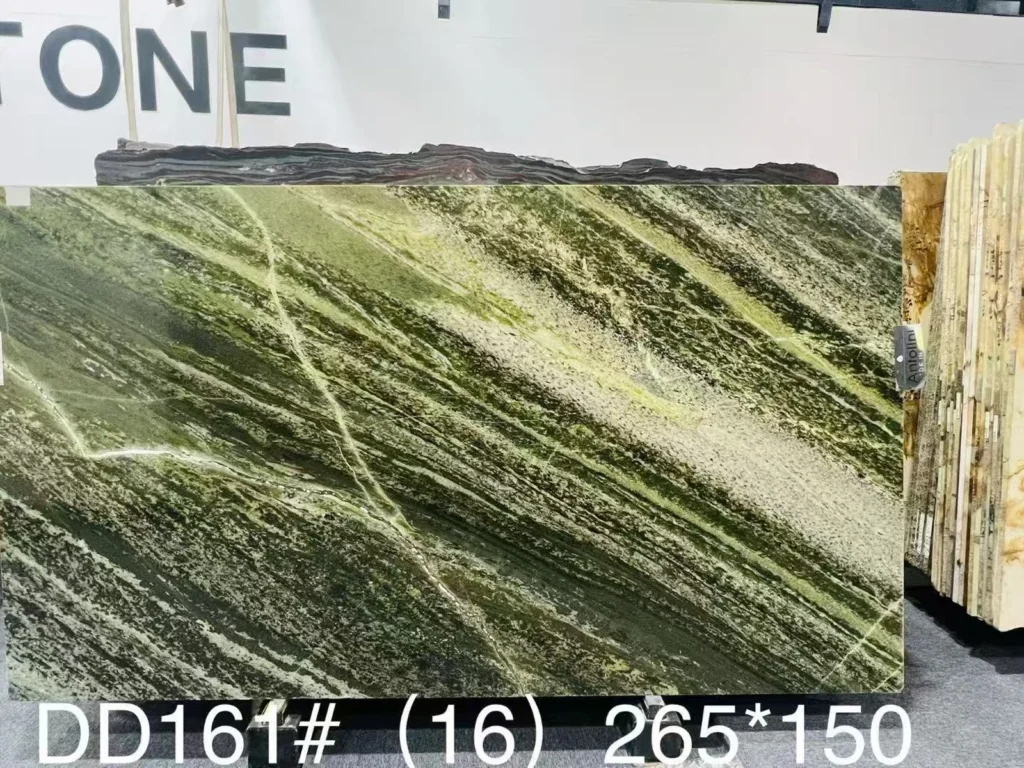
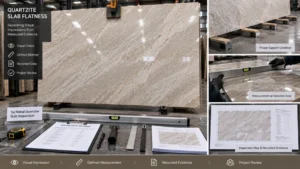
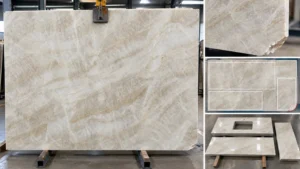
A full slab view showing how quartzite color and pattern selection should be evaluated for kitchen countertops.
Buyer Checklist Before Choosing a Quartzite Color and Pattern
Before confirming a slab, buyers should review the full slab image, confirm whether the kitchen needs warmth or brightness, compare the stone with cabinet and flooring tones, decide whether the countertop should be calm or statement-making, and evaluate how the pattern will behave across islands, seams, and waterfall returns. They should also confirm whether the selected slab still looks balanced under the lighting conditions expected in the actual kitchen.
For buyers who are still narrowing down options, it often helps to compare two or three slab directions rather than trying to find the perfect name immediately. In practice, successful selection depends less on brand-like stone labels and more on choosing the right slab personality for the project.
If the next step is active material evaluation, buyers should move from inspiration into a countertop material inquiry and request actual slab photos, finish options, and project-based recommendations. Buyers who want broader planning guidance can also review more ideas around quartzite kitchen countertops before finalizing a selection direction.
Final Recommendation
The best quartzite colors and patterns for kitchen countertops are not the same for every project. The best choice is the one that supports the kitchen’s scale, light, cabinet palette, and intended visual mood. For most buyers, soft warm neutrals and moderate movement offer the safest balance of beauty and versatility. For more design-driven kitchens, stronger veining or richer tones can create a memorable statement when the rest of the room is controlled.
The smartest buying approach is to think in terms of kitchen atmosphere, slab personality, and fabrication layout together. Buyers who evaluate those three factors as one decision usually achieve better results than those who focus on stone name alone.
Final Note / Practical Takeaway
For buyers, quartzite color and pattern selection is not only a design preference. It is a practical decision about how the kitchen will feel every day, how the stone will interact with cabinetry and light, and whether the countertop should serve as a quiet foundation or a visual focal point.
In most kitchens, the strongest results come from choosing a slab that looks balanced at full scale, not just attractive in a cropped image. Warm beige, cream, off-white, and soft greige quartzites remain the most versatile directions because they are easier to coordinate and easier to live with over time.
The most expensive or dramatic slab is not automatically the best slab. The better choice is the one that fits the kitchen’s atmosphere, supports the layout, and can be fabricated in a way that preserves the visual value of the natural pattern.
FAQ
1. What are the best quartzite colors for kitchen countertops?
The best quartzite colors for kitchen countertops are usually warm beige, cream, off-white, soft gray, and greige because these tones are versatile and work well across many kitchen styles. The right choice depends on whether the kitchen needs more warmth, more brightness, or a stronger statement effect.
2. Are light quartzite countertops better than dark ones?
Light quartzite countertops are often easier to use in a wide range of kitchens because they help the space feel brighter and more open. Dark quartzites can be very effective too, but they usually require a more deliberate design plan so the room does not feel too heavy or overly contrasted.
3. What quartzite pattern is best for a kitchen island?
For many kitchen islands, moderate to bold veining works well because the island is often the visual centerpiece of the room. If the rest of the kitchen is already visually busy, a softer pattern may create a more balanced result.
4. How do I choose between soft movement and dramatic veining in quartzite?
Choose soft movement if you want a calm, timeless, and easy-to-coordinate kitchen. Choose dramatic veining if you want the countertop or island to become a stronger design feature and the surrounding kitchen elements are restrained enough to support that statement.
5. Is full slab selection more important than stone name?
Yes. Stone name can help narrow the direction, but full slab selection is usually more important because quartzite is a natural material and individual slabs can vary significantly in color balance, veining, and overall personality. Final decisions should always be based on the actual slab.
Hi, I am the author of this article. I have been working in the field of Natural Stone for more than 15 years. If you need customized Natural Stone services, please feel free to contact me.