
Quartzite with Terrazzo Floors: Avoiding Competing Patterns

Quick SummaryQuartzite with Terrazzo Floors should be coordinated through visual hierarchy rather than a rule that one material must always be plain. Natural Quartzite can carry broad geological movement, while terrazzo may introduce a matrix color, aggregate colors, chip size, chip density, divider strips, and sometimes a larger floor pattern. These two materials compete when […]
Quartzite Adhesive Mock-Ups: Discoloration Tests Before Installation
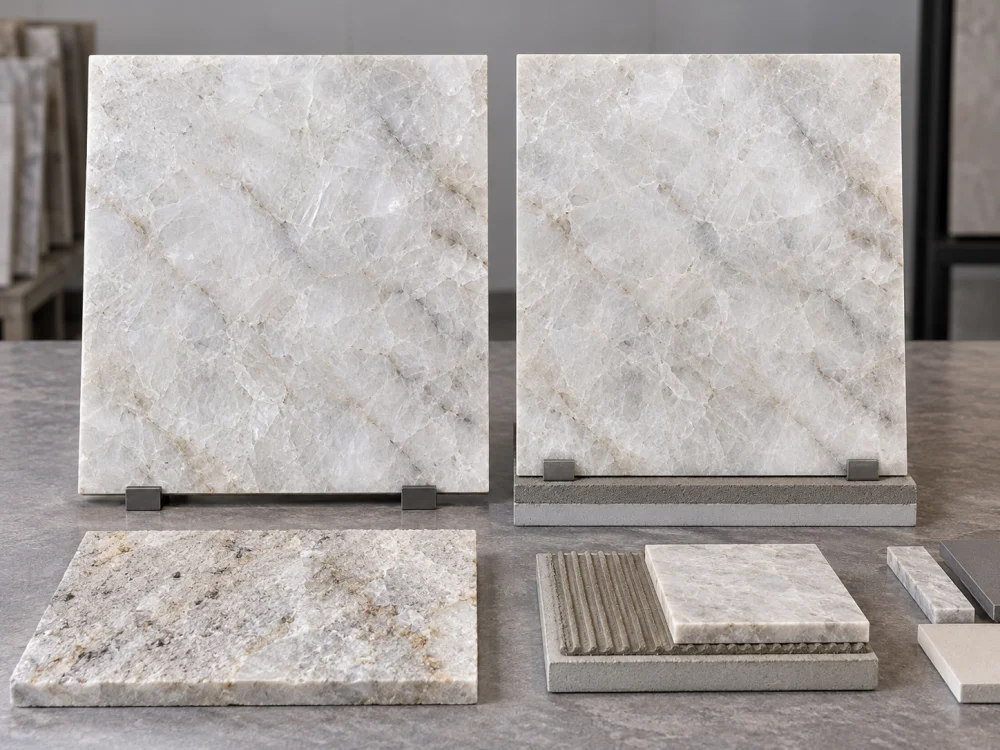
Quick SummaryQuartzite Adhesive Mock-Ups should test the complete proposed installation interface before production begins. Use the actual Natural Quartzite or a representative project piece, preserve the relevant back condition, apply the candidate adhesive and preparation specified for the project, use a representative substrate, and keep an unbonded control reference from the same stone where practical. […]
Drainer Grooves in Quartzite: What to Test on a Sample First
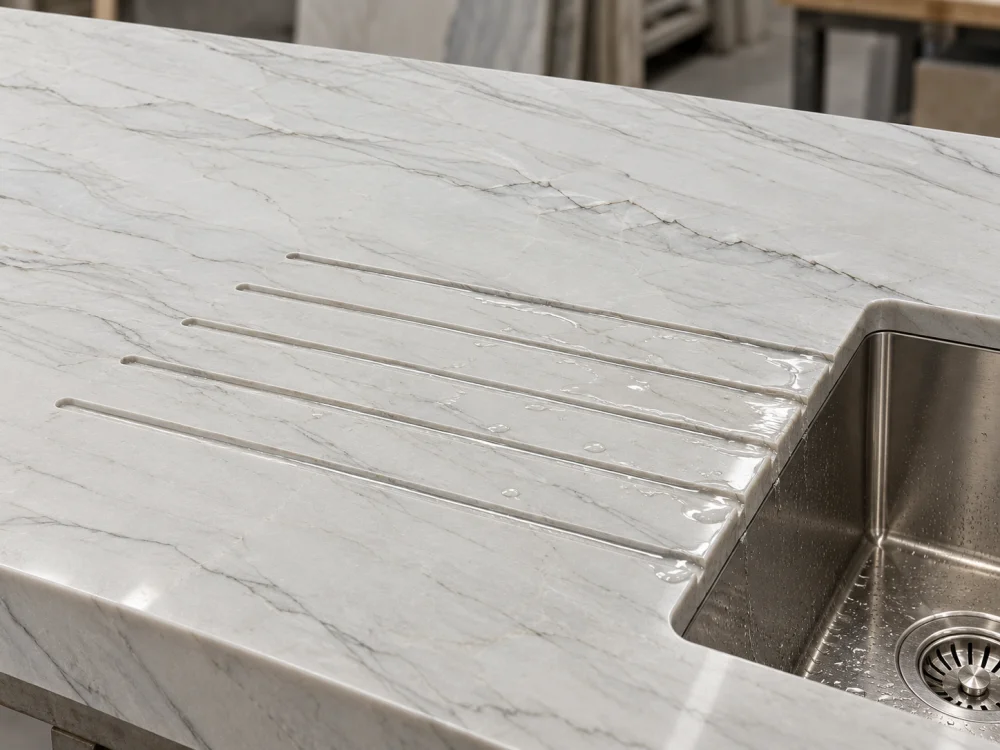
Quick SummaryDrainer Grooves in Quartzite should be tested as a fabricated sink-zone detail before the design is repeated across a finished countertop. A useful sample should answer whether the proposed grooves actually direct water toward the sink, whether the chosen groove profile can be fabricated and finished cleanly in the selected Natural Quartzite, whether water […]
Quartzite with Two-Tone Cabinets: Which Colour Should It Follow?
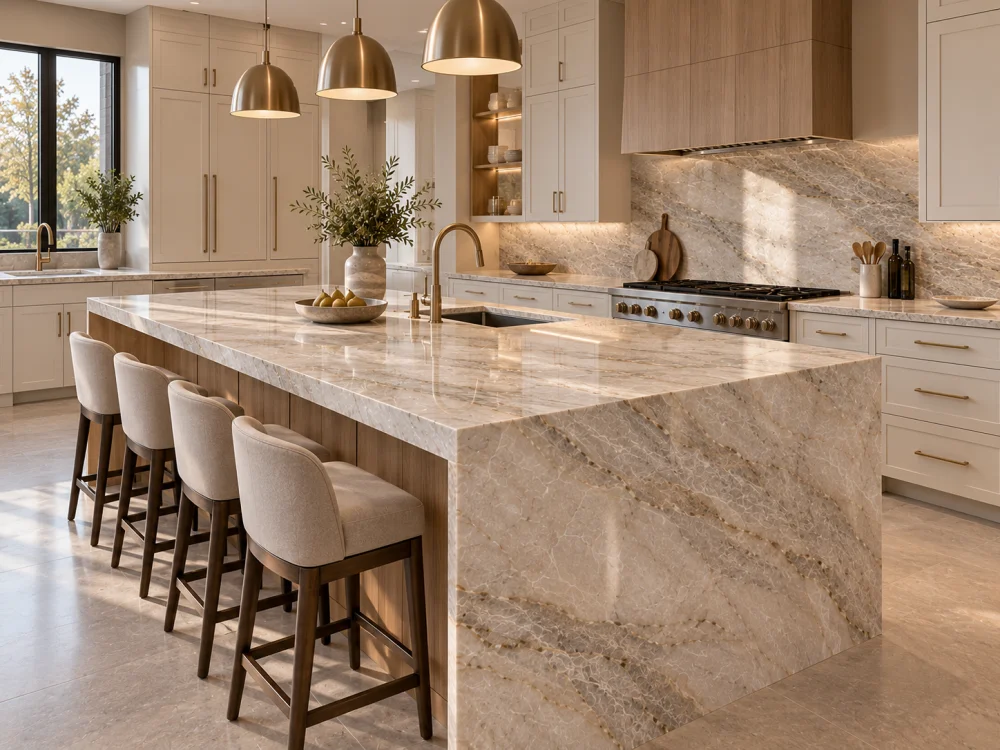
Quick SummaryQuartzite with Two-Tone Cabinets does not require the stone to “match” one cabinet colour and ignore the other. First identify where each cabinet finish appears, which one occupies the larger visual field, which one directly touches the stone, and whether the Natural Quartzite is used on the island, perimeter, backsplash, or all three. Then […]
Quartzite with Stainless-Steel Appliances: Reviewing Reflections

Quick SummaryQuartzite with Stainless-Steel Appliances should be reviewed as a relationship between physical surfaces, lighting, surrounding colours, and viewing direction. A polished Natural Quartzite countertop can reflect windows, ceiling lights, cabinetry, stainless-steel appliance fronts, dark appliance openings, and nearby objects. Stainless-steel appliances can also reflect the countertop, cabinetry, floor, and room lighting, while brushed or […]
Quartzite Wall Panels: Checking the Backing Bond Interface
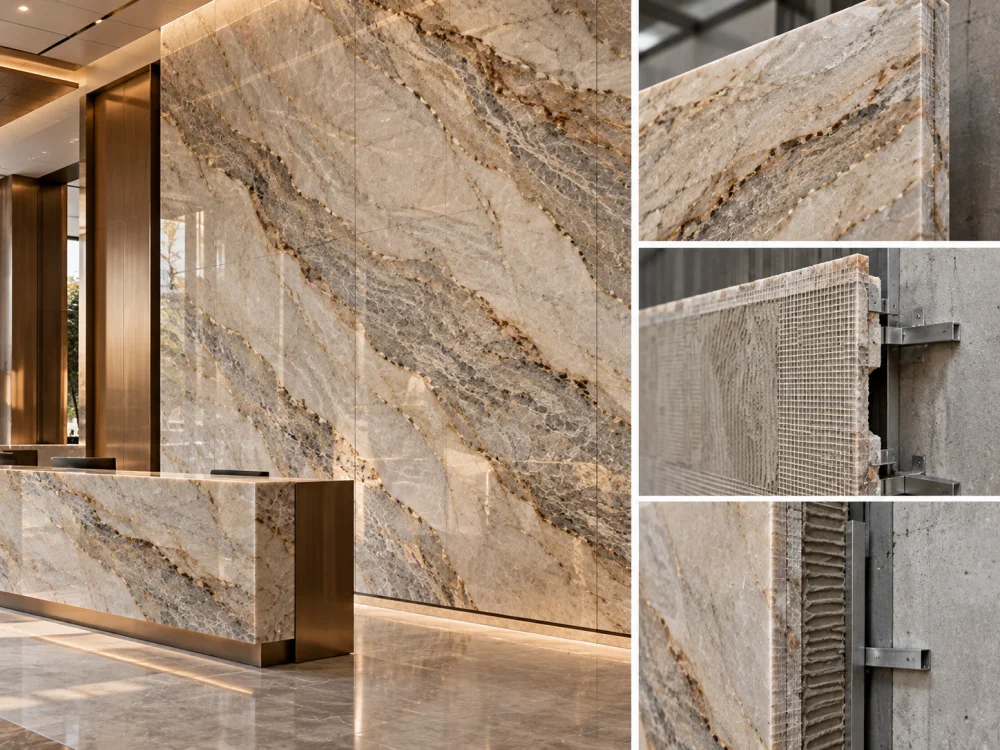
Quick SummaryQuartzite Wall Panels and Backing Materials should be reviewed as a complete installation interface rather than by the stone name alone. The installation adhesive may contact bare Natural Quartzite, resin, fiberglass mesh, sanded resin, a repaired area, or a mixed prepared surface. On the other side of the bond is the actual project substrate, […]
Quartzite Under Raking Light: Why Surface Marks Become More Visible

Quick SummaryQuartzite Under Raking Light can reveal surface information that is difficult to see under broad diffuse lighting. When light travels across a stone surface at a very low angle, shallow scratches, polishing swirls, local waviness, filled areas, residue, fine texture and differences in reflectivity can create stronger highlights or longer shadows. This makes raking […]
Quartzite Restaurant Bar Tops: Service Openings & Drip Zones
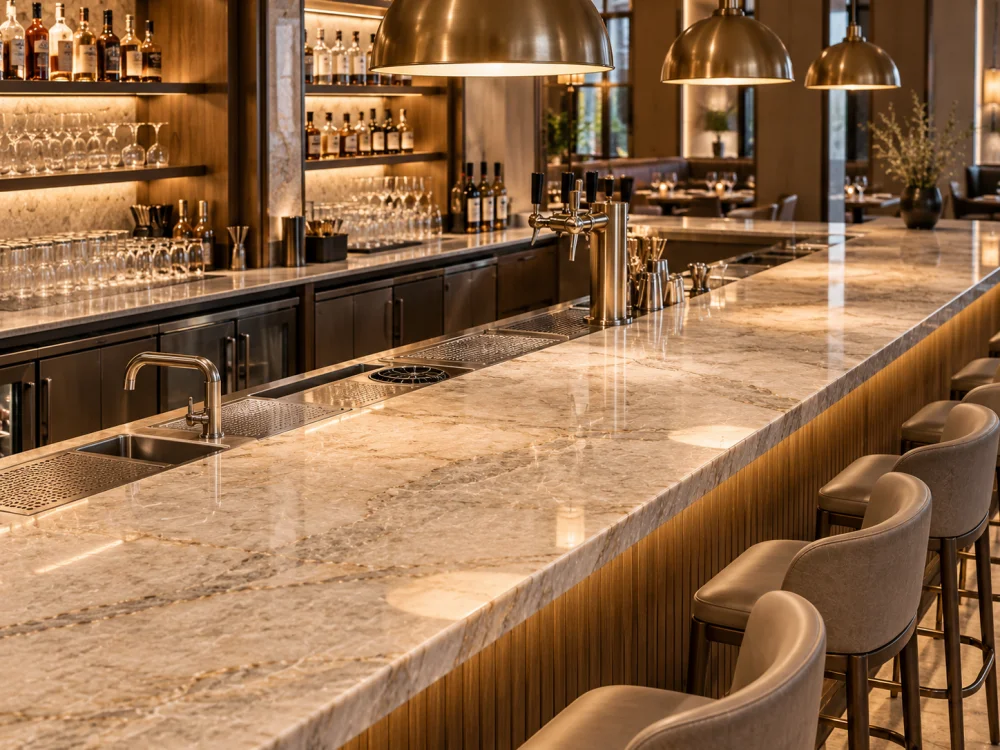
Quick SummaryQuartzite Restaurant Bar Tops should be planned from the current equipment schedule and service layout before irreversible stone cutting begins. Identify every sink, tap tower, drip tray, glass rinser, beverage connection, power opening, waste opening, accessory hole, removable insert, and other component that physically interfaces with the Natural Quartzite. Then map the areas that […]
Quartzite Islands Under Pendant Lights: Checking Shadows on the Surface
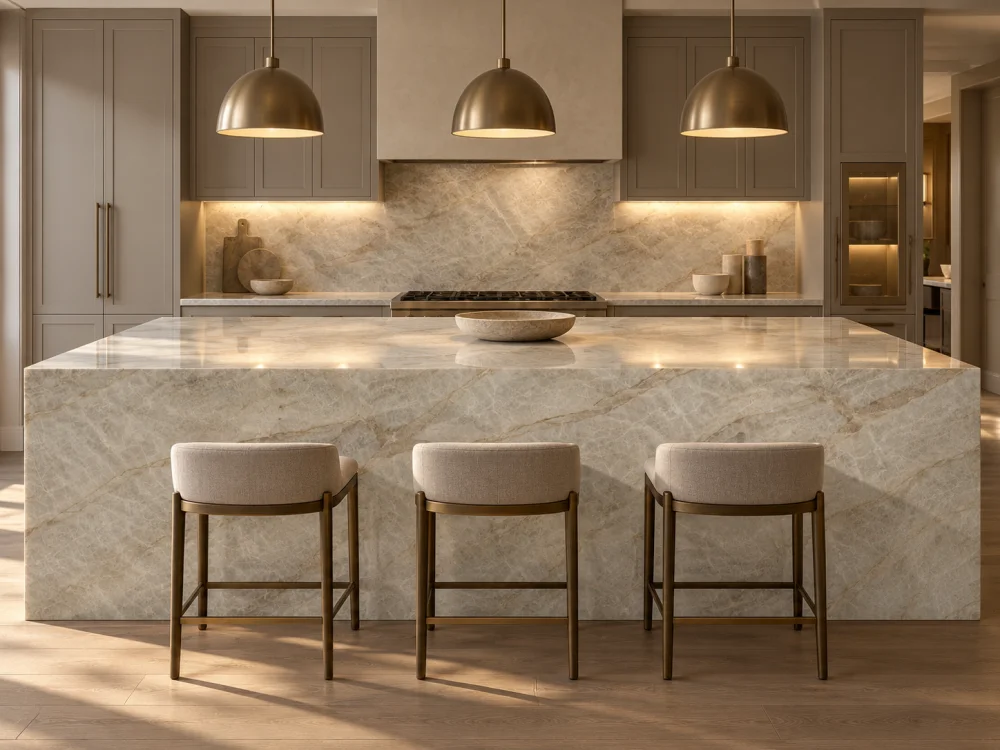
Quick SummaryQuartzite Islands Under Pendant Lights should be reviewed as a relationship between the actual Natural Quartzite, its surface finish, the pendant fixtures, their positions, the surrounding daylight, and the main viewing directions. Pendant lighting can create bright pools, darker shadow zones, reflected highlights, overlapping beams, and changing contrast across a large island. These effects […]
Quartzite Edge Colour: Why a Cut Edge May Look Different from the Face

Quick SummaryQuartzite Edge Colour should be reviewed separately from the broad slab face. A cut edge exposes the same natural stone from a different direction, and its appearance can change because different mineral structures are being viewed in cross-section. A raw sawn edge may also look lighter or duller than the finished surface because it […]