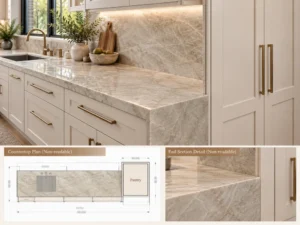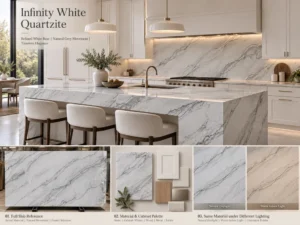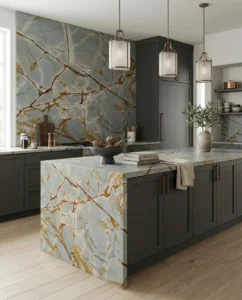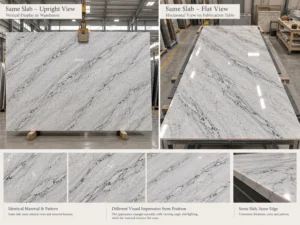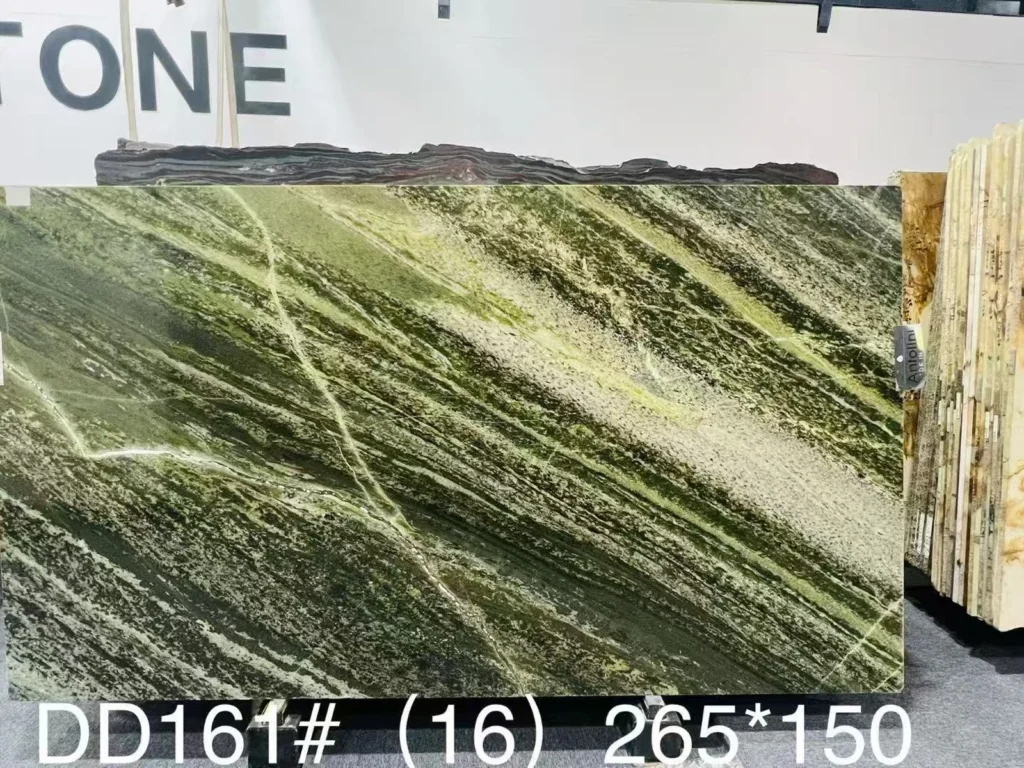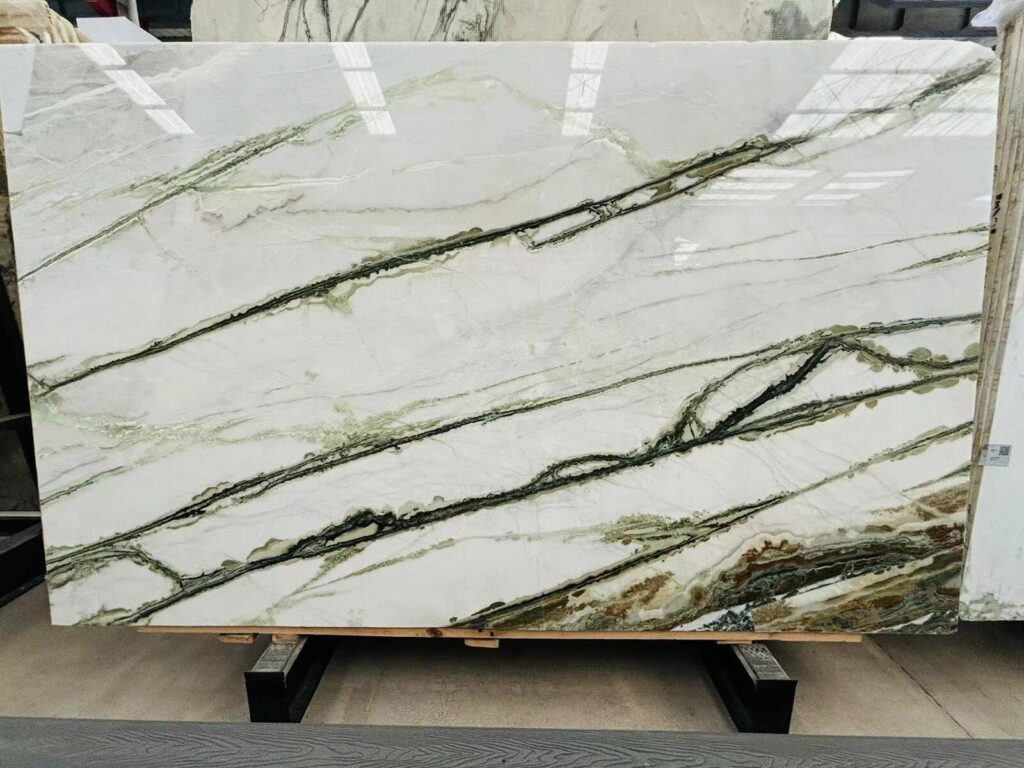

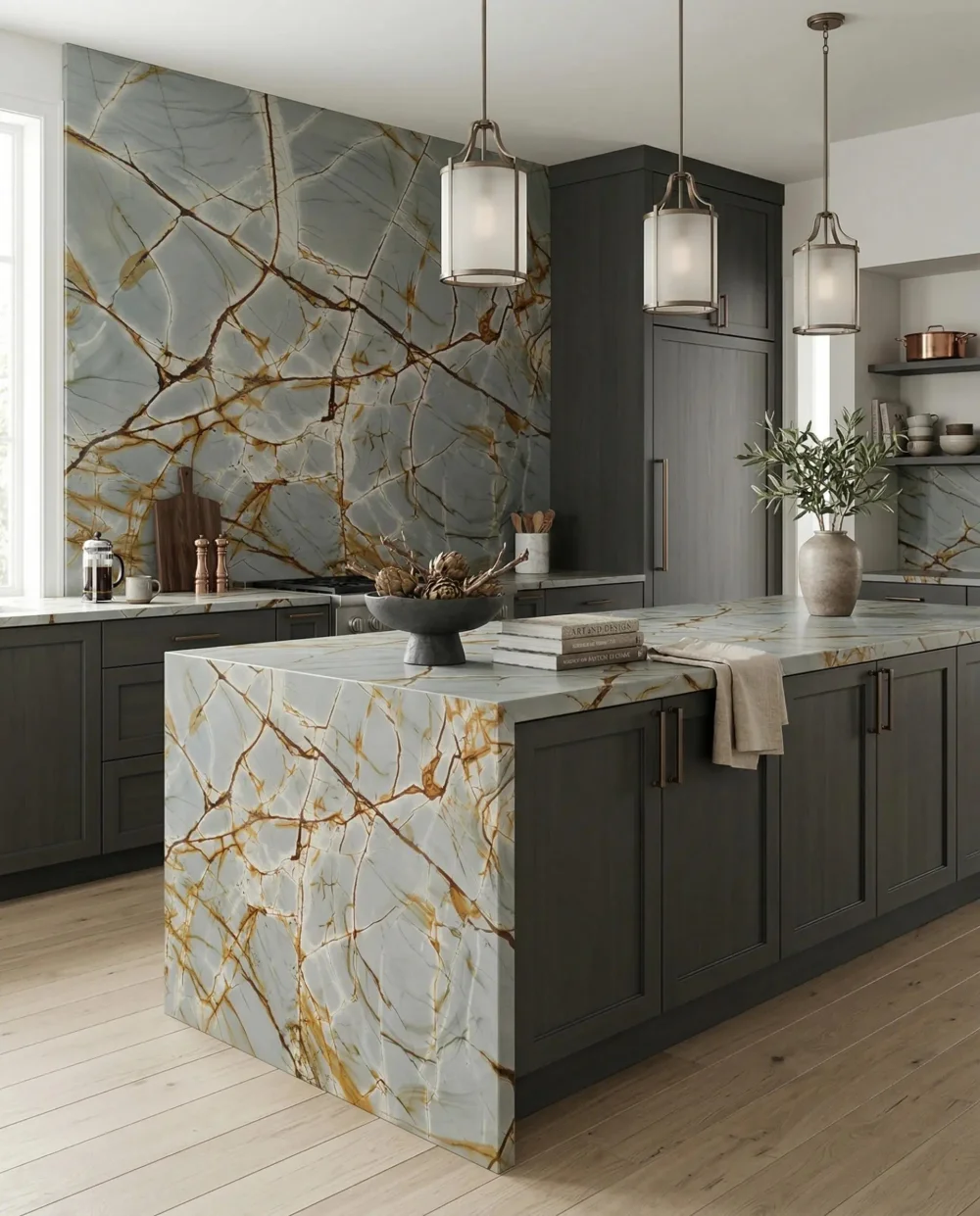
A melhor orientação para uma ilha com cascata em Quartzo Azul Roma depende da laje real, das proporções da ilha e das superfícies que mais se destacam no ambiente. Compare a mesma ilha finalizada com o movimento da laje seguindo seu eixo longitudinal e atravessando sua largura. Em seguida, observe como os campos azul‑cinza claro, as linhas minerais marrom‑café escuras e as áreas cristalinas mais quentes aparecem na parte superior e nas extremidades da cascata. Escolha a orientação com base na composição tridimensional completa — e não apenas na fotografia da laje — e confirme o arranjo do corte antes da fabricação.
Uma grande laje de Quartzo Azul Roma pode apresentar aspectos convincentes em diversas direções. Seu fundo azul‑cinza claro, o movimento irregular marrom‑escuro e as áreas minerais mais quentes podem gerar composições muito diferentes, dependendo de como o contorno da ilha é posicionado sobre a pedra.
Para uma bancada convencional, a decisão de orientação costuma concentrar-se principalmente na superfície horizontal principal. Uma ilha com cascata acrescenta outro desafio: a pedra também deve funcionar verticalmente. O movimento selecionado segue em direção a um canto externo, e uma porção diferente da laje torna-se um painel de extremidade visível.
É por isso que escolher a ilha com cascata em Quartzo Azul Roma requer uma revisão de design própria.
A questão não é apenas a direção dos veios. É como toda a ilha se apresenta após a disposição escolhida ser transformada em um objeto finalizado.
O Quartzo Azul Roma é frequentemente reconhecido por seu fundo azul‑cinza frio, suas linhas minerais irregulares marrom‑café até marrom‑escuro e áreas de caráter mineral bege ou creme mais quente. No entanto, a quantidade relativa e a disposição dessas características variam entre as lajes reais.
Uma laje pode apresentar um forte movimento diagonal semelhante a uma fissura. Outra pode conter várias áreas escuras concorrentes. Uma terceira pode ter movimentos mais amplamente distribuídos e campos azul‑cinza maiores e ininterruptos.
Essas diferenças tornam-se significativas quando uma ilha ocupa uma posição de destaque entre a cozinha e a sala de estar ou de jantar.
Por exemplo, um elemento escuro que se dirige à extremidade longa de uma ilha pode conferir à composição uma sensação de direcionalidade. Ao girar o contorno finalizado da ilha em relação a esse elemento, o mesmo movimento da pedra pode passar pela largura da ilha, cruzar a borda do assento ou terminar próximo a um canto da cascata.
Nenhuma dessas disposições é automaticamente preferível. Seu sucesso depende da laje específica e da composição interior pretendida.
Para referência às características de fundo azul‑cinza e ao movimento mineral mais escuro do material, consulte a página do material Quartzo Azul Roma. As escolhas finais de layout ainda devem utilizar fotografias das lajes reais propostas para o projeto.
Comece desenhando a ilha como um retângulo simples, com eixos longo e curto claramente identificados, lado do assento, lado da cozinha e extremidades da cascata. Utilize as dimensões medidas do projeto e a versão atualizada.
Agora compare duas orientações iniciais em relação à mesma laje candidata.
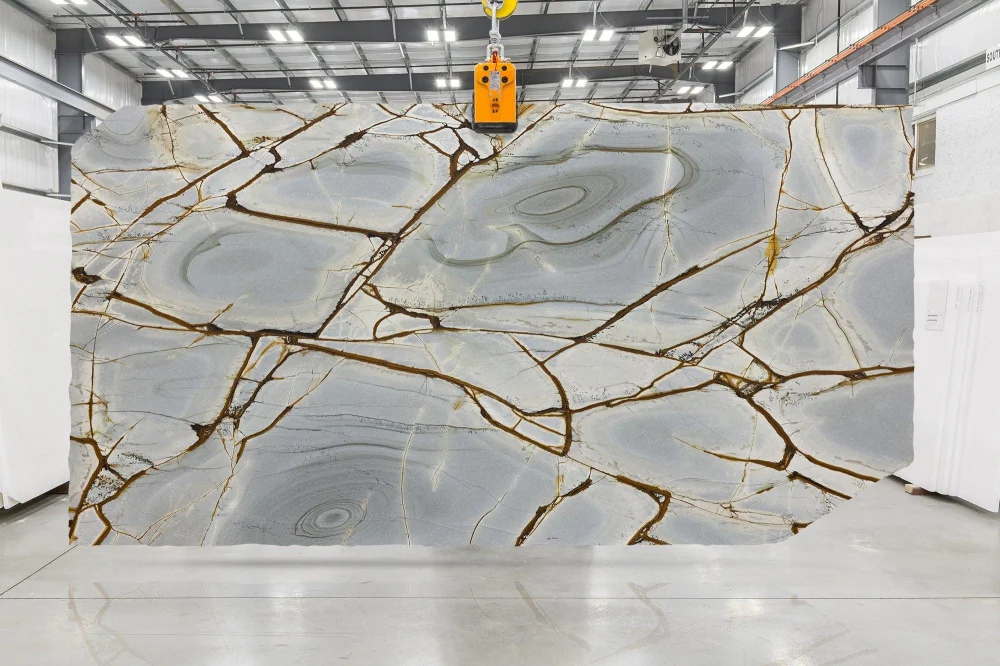
Posicione o movimento dominante do Quartzo Azul Roma de modo que siga, em geral, o comprimento da ilha. Isso pode enfatizar a dimensão horizontal alongada quando a laje selecionada apresenta um traço suficientemente direcional.
Visto de cima, o movimento pode percorrer grande parte da superfície superior da ilha. De um ponto de vista mais baixo no ambiente, ele também pode conduzir o olhar em direção a uma das extremidades da cascata.
No entanto, um arranjo pelo eixo longo não garante que o elemento relevante continue a atrair visualmente essa extremidade. A peça proposta para a cascata pode capturar outra parte da laje, ou as tolerâncias de fabricação podem alterar a relação próxima ao canto.
Gire o modelo da ilha em relação à laje de modo que o movimento dominante geralmente atravesse a largura da ilha. Isso pode tornar o padrão mais visível do lado do assento ou criar vários eventos visuais mais curtos ao longo da bancada.
Para algumas lajes de Quartzo Azul Roma, essa disposição proporciona ao amplo campo azul‑cinza mais espaço contínuo ao longo da superfície superior, enquanto o movimento marrom mais intenso surge como um destaque transversal.
A compensação é que um forte elemento mineral pode cruzar a borda finalizada longitudinalmente, passar próximo a uma abertura ou concentrar-se visualmente perto de uma determinada seção.
| Ponto de Revisão | Opção pelo Eixo Longo | Opção pelo Eixo Transversal |
| Padrão na superfície superior | O movimento dominante geralmente segue o comprimento da ilha. | O movimento dominante geralmente atravessa a largura. |
| Ênfase visual | Possível ênfase no movimento longitudinal. | Possível ênfase nos eventos do padrão transversal. |
| Relação com a cascata | Verifique qual movimento alcança cada extremidade. | Confira se as extremidades apresentam campos mais intensos ou mais suaves. |
| Restrição de layout | Pode exigir comprimento suficiente da laje utilizável na direção selecionada. | Pode alterar a forma como a ilha se encaixa na largura útil da laje. |
| Melhor maneira de comparar | Sobreposição completa da laje com a vista finalizada do ambiente. | A mesma sobreposição e vista do ambiente, com apenas a orientação modificada. |
Estas são situações de comparação, não regras universais sobre como o Quartzo Azul Roma deve ser cortado. Lajes fortemente diagonais podem exigir uma terceira orientação intermediária, desde que as dimensões reais e as restrições de fabricação permitam.
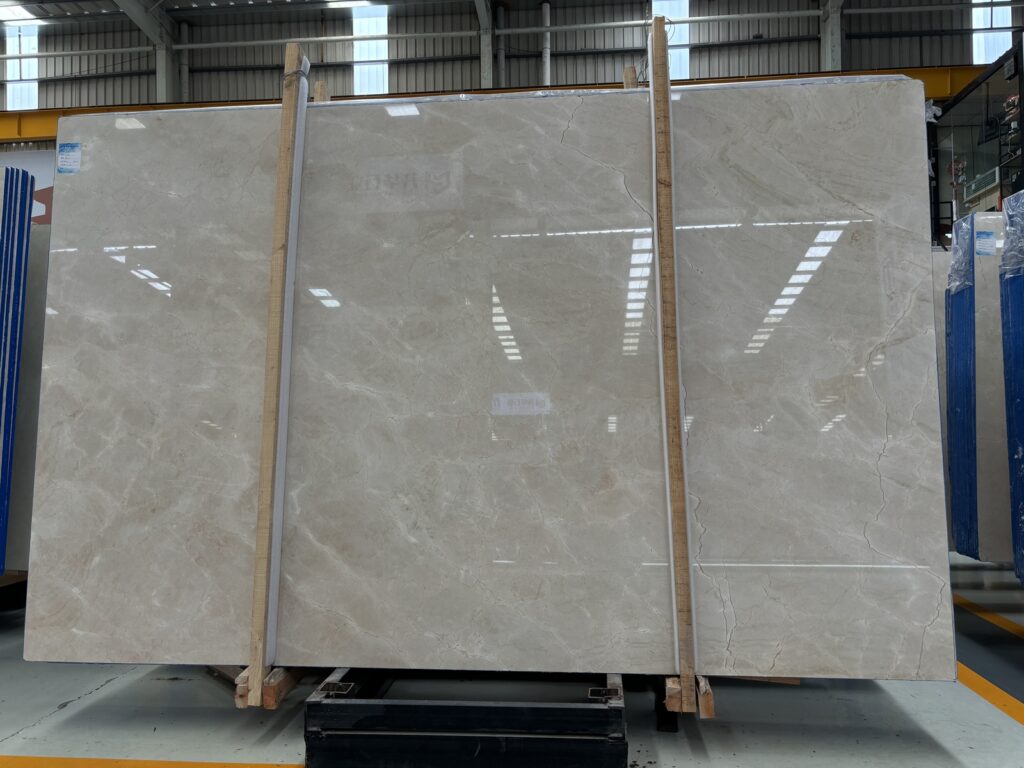
Uma comparação confiável começa com uma única fotografia da laje inteira. Ela deve mostrar a laje completa, a referência identificável da placa e detalhes visuais suficientes para reconhecer as principais áreas minerais.
Posicione um contorno da parte superior da ilha, em escala, sobre essa imagem. Em seguida, compare posições e rotações alternativas desse contorno. Mantenha a pia, o cooktop, a saliência do assento e outras geometrias fixas na mesma relação em relação à ilha finalizada.
Same Blue Roma slab
+ Same island dimensions
+ Same cutout locations
+ Different template orientation
= Two genuinely comparable slab-layout proposals
Do not redraw, stretch, mirror, or invent the natural pattern to make a layout look more convincing. The material itself is the fixed reference. Only the proposed cutting geometry changes.
Also check whether the rotated island template still fits inside the usable slab. A composition may be visually appealing but impossible to obtain from the selected board once finished dimensions, edge processing, cut allowances, and areas requiring technical review are considered.
This is an important distinction between rotating a digital image for inspiration and approving a physical cutting layout.
After comparing the island tops, add the proposed waterfall panels to each option. A single-waterfall island and a double-waterfall island may lead to different orientation choices.
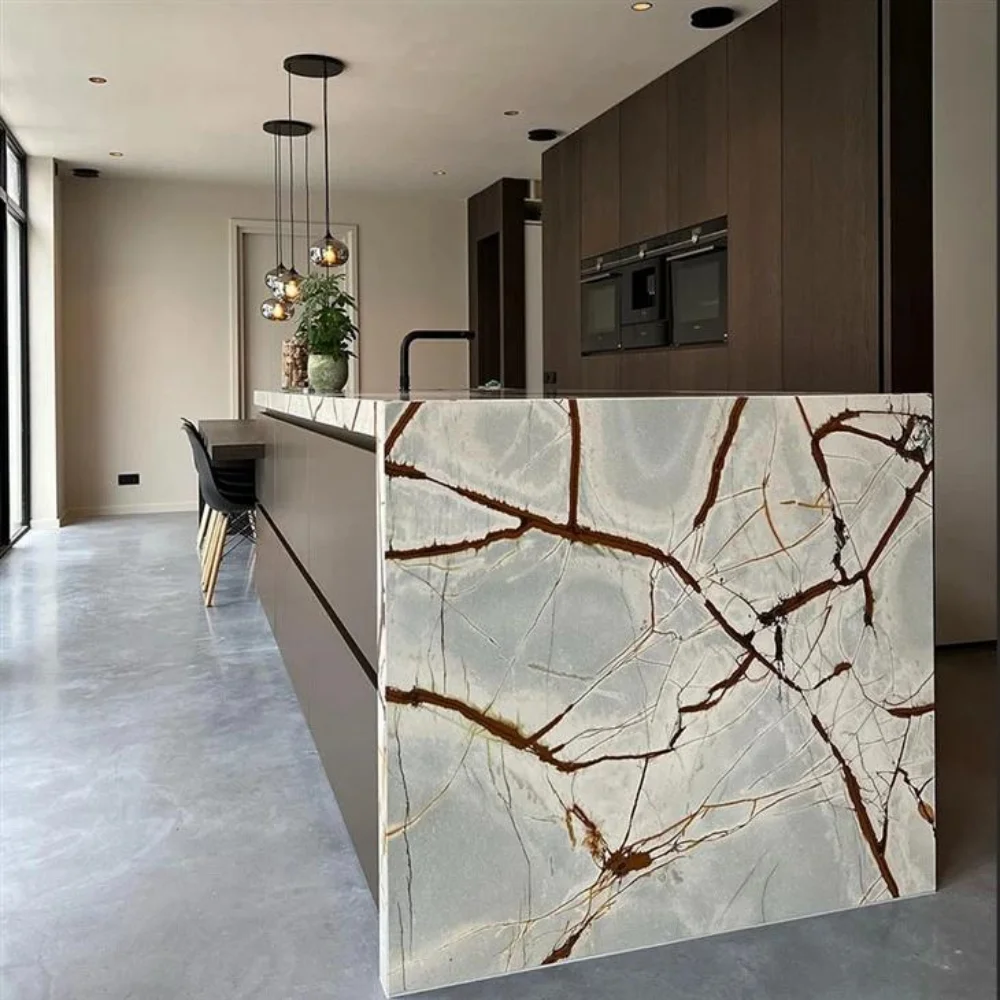
If the island has one waterfall, determine whether the end should carry the strongest Blue Roma feature or provide a calmer conclusion to the top.
An island facing a living area may have one particularly prominent end. In that case, the end-panel pattern can influence the room more strongly than the less visible portions of the countertop.
For a dark brown feature approaching the corner, compare what happens when that feature is located on the horizontal top, near the transition, or mainly within the vertical panel.
A striking dark feature on the end can create a deliberate visual anchor. But if that same feature competes with a very active top, the finished island may feel more visually concentrated than expected.
A double-waterfall island contains three principal visible planes: the top, left end, and right end.
One possible design aims for similarly weighted ends. Another intentionally places stronger movement on the primary viewing side and quieter blue-grey material on the secondary end.
Because Blue Roma is natural stone, equivalent left and right dimensions do not imply matching natural patterns. The actual slab allocation determines the resulting visual relationship.
Review both ends together before approving either one. Do not select a perfect-looking top crop and assume suitable waterfall panels can always be found in the remaining material.
Orientation is especially important because a waterfall island is not experienced from one fixed viewpoint.
An overhead review makes the overall mineral structure easier to understand. It shows how the darker brown movement crosses the blue-grey fields and how major features relate to the island boundaries and cutouts.
Use this view to compare the placement and direction of important stone features. It is valuable for planning, but it should not be the only approval image.
From normal standing height in the adjacent living or dining area, the viewer may see only a compressed portion of the top surface. The waterfall end, exposed edge, cabinetry, and island silhouette become more significant.
A dramatic pattern visible in a full overhead slab photograph may have less impact from this viewpoint. Conversely, an important mineral feature near the visible edge may become more prominent than it first appeared on the plan.
For this reason, compare both orientation options from the same realistic camera position.
Stand virtually or physically at the principal end of the island. Examine the blue-grey field, concentration of dark brown movement, and distribution of warmer mineral areas on the waterfall face.
This view often reveals whether the proposed end panel has become an intentional part of the design or merely a remaining piece selected after the top.
Para uma ilha com cascata em Quartzo Azul Roma, the most effective orientation is the one that serves the specified viewing priorities while remaining feasible on the actual slab set.

Not every Blue Roma slab has a simple linear vein that can be followed continuously. Some contain irregular intersecting fissure-like features, patches of cream-colored mineral character, and areas where movement changes direction.
Near a waterfall corner, these features can create three quite different visual situations.
Corner A — Strong Pattern at the Turn
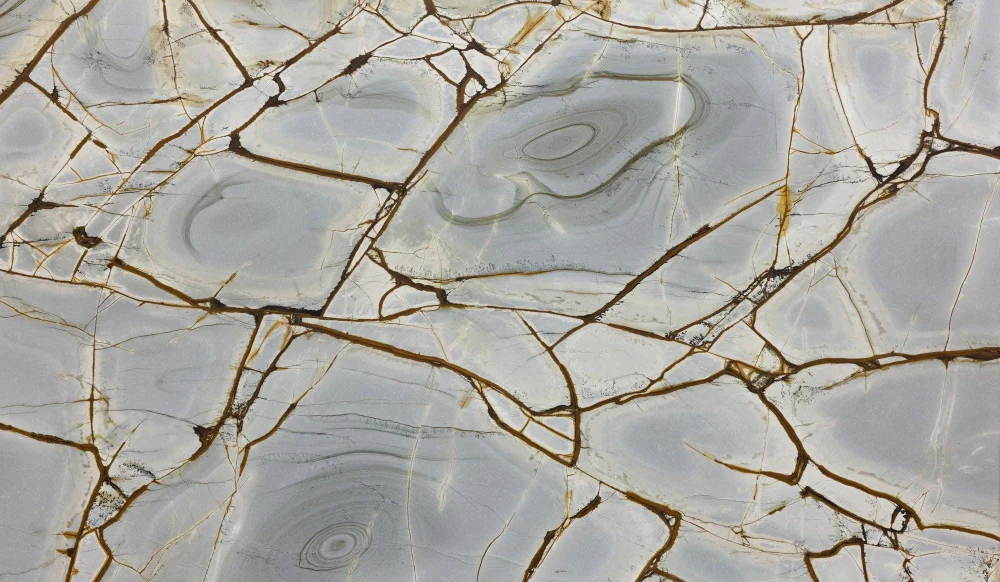
The prominent mineral movement approaches the corner and becomes part of the top-to-end visual transition.
Corner B — Quiet Transition
A calmer blue-grey area occupies the visible corner, allowing stronger movement to remain elsewhere.
Corner C — Contrasting Faces
The top and waterfall contain visibly different mineral concentrations, creating a deliberate contrast rather than an assumed continuous vein.
The third option is not necessarily a mistake. The issue is whether the resulting contrast is understood and accepted before cutting.
When a project requires a convincing continuation, the selected pieces should be reviewed as adjacent visible faces in the actual slab layout. The appearance at a real mitre can change during fabrication because of cutting, trimming, and edge preparation.
For a detailed explanation of that separate production issue, see Mitras de Cascata em Quartizito: Por que a Sequência de Corte é Importante. This orientation guide focuses on deciding where the stone movement should appear before the fabrication method is finalized.
A sink or cooktop can influence the orientation choice because its opening removes part of the stone that would otherwise contribute to the visual composition.
Consider a Blue Roma slab with one concentrated dark mineral feature. In the long-axis option, that feature might travel toward the waterfall while passing through the planned sink opening. In the cross-axis option, more of it might remain visible beside the opening.
That does not automatically make the cross-axis option preferable. The alternative orientation may create different constraints near the finished edges, support zones, and waterfall allocation.
Use the same confirmed opening geometry on both options. Then examine what remains visible around the opening, including the portions of the top that will actually be seen from the principal room viewpoints.
The visual review should remain separate from the fabricator’s assessment of opening geometry, supports, handling, and other project-specific requirements. Neither a conceptual layout nor a photograph establishes technical suitability on its own.
There is often tension between visual orientation and material utilization. One layout may present the most desirable blue-grey and brown mineral composition but consume more usable slab area. Another may be more economical in its allocation while producing a less desirable focal view.
The right sequence is to identify the visual priority, establish which layouts are technically feasible, and then compare material use within those feasible alternatives.
Do not assume a rotated option has the same material yield. The usable length and width of the actual slab, required component sizes, finishing allowances, and whether waterfall panels come from the same or another board can all affect the allocation.
| Decisão | Buyer Should Confirm | Evidências |
| Visual priority | Which view matters most? | Current room perspective |
| Orientação | Long-axis, cross-axis, or another reviewed direction? | Actual slab A/B overlay |
| Extremidades da cascata | Which geological features appear on each end? | Developed three-face layout |
| Usable material | Can the proposed pieces be allocated with fabrication allowances? | Reviewed cutting proposal |
| Final decision | Which exact layout revision is accepted? | Dated slab-layout approval |
For a premium project, the quotation should make clear whether alternative slab allocations, additional boards, special pattern selection, or matching-related work are included in the offered scope. A general material rate cannot describe those project-specific differences.
After selecting a preferred option, convert the visual decision into a traceable drawing package. The package should distinguish the intended visual movement from the physical orientation of each fabricated component.
For example, an arrow on the island top may indicate a desired direction of mineral movement. It should not be assumed to tell the fabrication team everything about the cutting position, finished face, or installation orientation.
Record the actual slab reference, island plan, waterfall elevations, piece IDs, visible faces, direction marks, mitre positions, cutouts, finish, and current revision. If the stone allocation is changed, revisit the visual comparison before accepting the new layout.
The related guide to Quartzite Vein Direction Symbols for Shop Drawings explains how to define directional marks so different teams interpret them consistently.
For remote projects, photographs and inspection records should use the same component references. This is particularly helpful when the people approving Blue Roma in the design stage are different from those coordinating fabrication, packing, and site installation.
The final Blue Roma orientation review should answer the following questions clearly:
The buyer’s decision should concern the approved material, visible composition, and agreed project scope. Fabrication processes, structural details, installation interfaces, and other specialist requirements must be reviewed by the responsible professionals.
The best Blue Roma Quartzite orientation is not necessarily the direction that looks most dramatic on a slab photograph. It is the feasible arrangement that creates the intended visual relationship across the finished island’s most important surfaces.
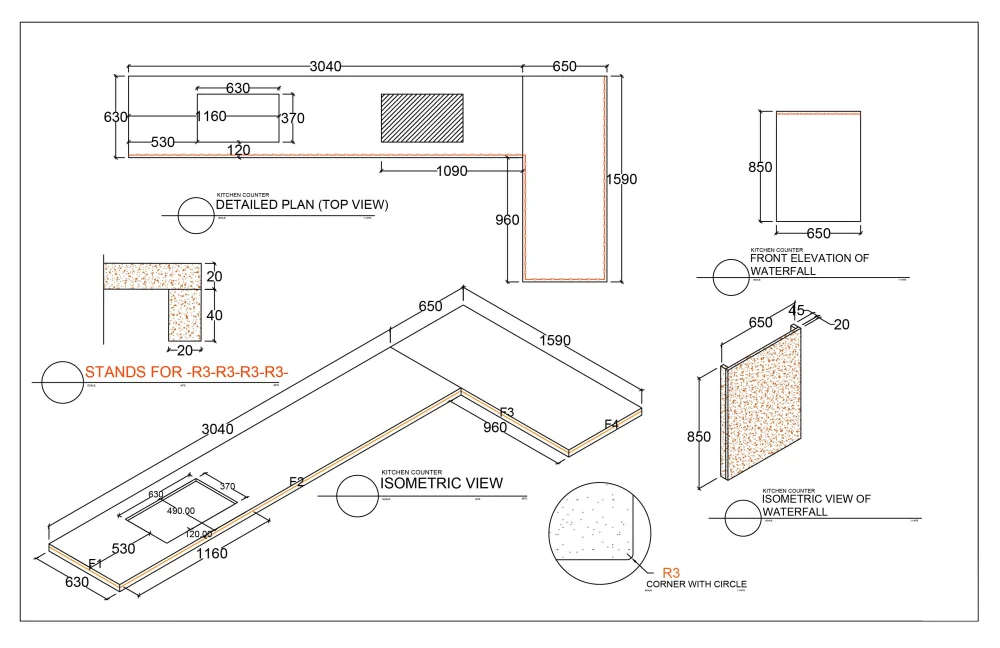
Não existe uma orientação preferida universal. Compare o mesmo contorno final da ilha na laje real Blue Roma em ambas as orientações. Analise o padrão resultante na parte superior, nas extremidades em cascata e na vista do ambiente principal antes de selecionar a opção preferida.
A rotação do layout proposto pode alterar substancialmente quais partes da laje aparecem nas faces superior e em cascata. Também pode modificar a alocação de materiais e a viabilidade do corte. As posições reais de corte devem ser revisadas novamente sempre que houver mudanças na orientação.
Não. O projeto pode exigir uma relação de padrão convincente, uma transição mais sutil ou um contraste deliberado entre as faces. Não se deve presumir uma continuidade exata de veio a veio, pois a pedra é cortada em componentes separados e material é removido durante a fabricação.
Isso depende da prioridade de visualização. Algumas ilhas destacam a parte superior horizontal, enquanto outras são dominadas por uma das extremidades da cachoeira, vistas a partir da sala de estar ou da sala de jantar. Identifique os principais pontos de vista e compare as características geológicas reais de cada face finalizada.
Revise o conjunto de lajes proposto e registre qual placa fornece cada componente visível. A aparência, a variação, a área utilizável e a relação visual entre as peças devem ser consideradas antes da aprovação do layout.
Não. Uma seta indica uma direção definida ou um movimento pretendido, mas não pode substituir o arranjo real das lajes. A aprovação também deve identificar os respectivos códigos das peças, as faces visíveis, as posições das lajes, as juntas, as dimensões e a revisão do desenho.
Envie a Josh as referências propostas das lajes Blue Roma ou os requisitos de material, as dimensões atuais da ilha, o projeto da cozinha, os detalhes da extremidade em cascata, as posições da pia e do cooktop, o acabamento preferido, as vistas principais do ambiente, a quantidade e o destino da entrega. Indique a prioridade visual principal e quaisquer opções de orientação que necessitem de comparação.
HRST STONE can help coordinate available material information, slab photographs, CAD/shop drawing requirements, visual layout proposals, fabrication communication, QC records, and export-packing information for the confirmed project scope. Send Josh your island drawings and preferred viewing directions to discuss the actual Blue Roma Quartzite slab options and the next review steps.
Direitos autorais © HRST STONE / XIAMEN HRST STONE CO., LTD. Todos os direitos reservados.