빠른 요약
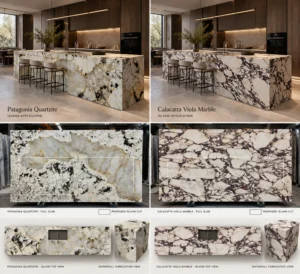
Patagonia Quartzite and Calacatta Viola Marble can both create a statement island, but they should be compared through the actual proposed slabs rather than through commercial names or small samples alone. Define what kind of visual statement the island should make, place the same island geometry on both materials, then compare the finished top, waterfall faces, cutouts, room-distance composition, close-range details and project-specific technical requirements before selecting and approving the stone.
A client asks for a statement island.
That does not yet tell us what the stone should do.
Should the island feel like a geological object?
Should one dramatic feature dominate the room?
Should strong veining travel across a pale background?
Should the top and waterfall read as one sculptural volume?
Or should the island reveal more complexity only when someone walks closer?
These questions make Patagonia Quartzite vs Calacatta Viola Marble more useful than a simple material-versus-material comparison.
The first decision is not which stone wins.
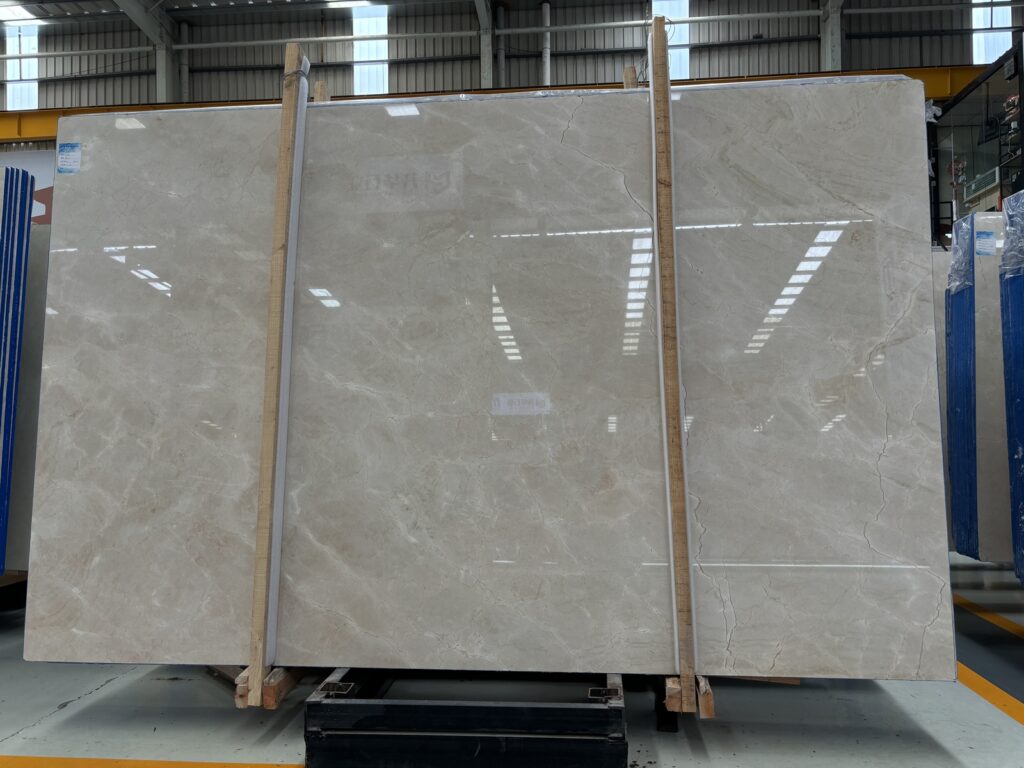
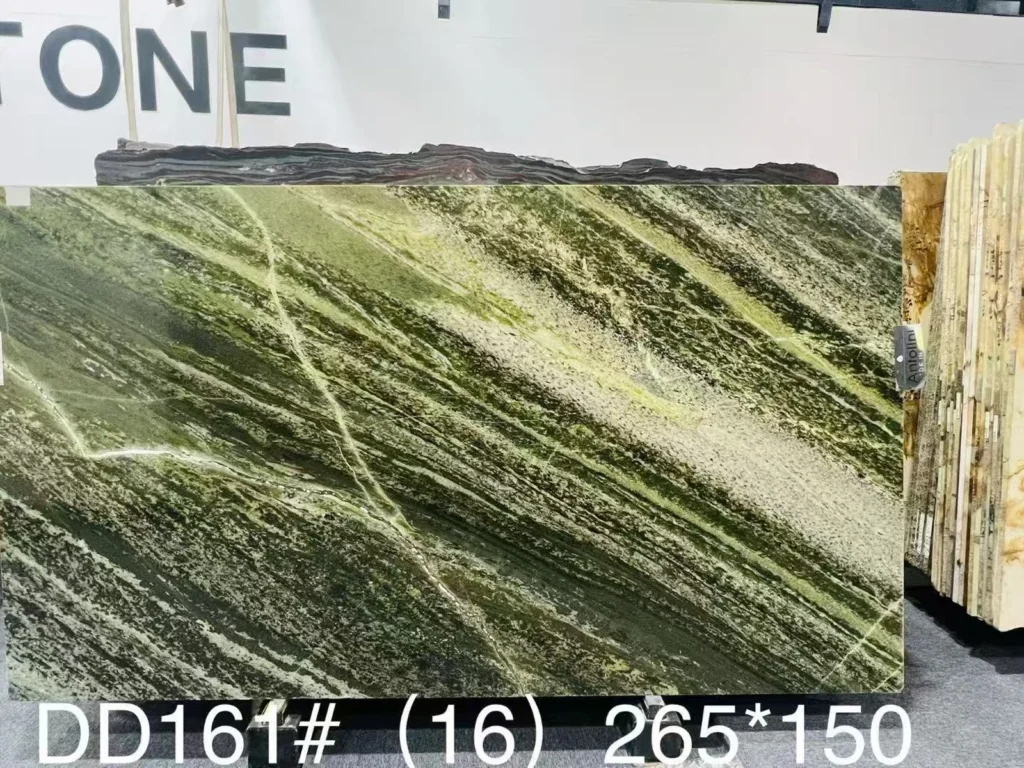
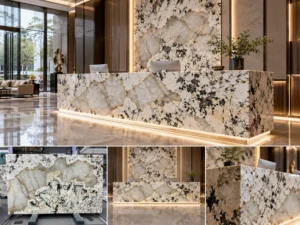
Patagonia Quartzite is often selected when the actual slab contains visually distinct geological areas that can become part of the design composition.
Depending on the specific slab, the island crop may contain relationships between:
For a statement island, these areas should not be judged independently.
The visual impact comes from how they occupy the complete finished island.
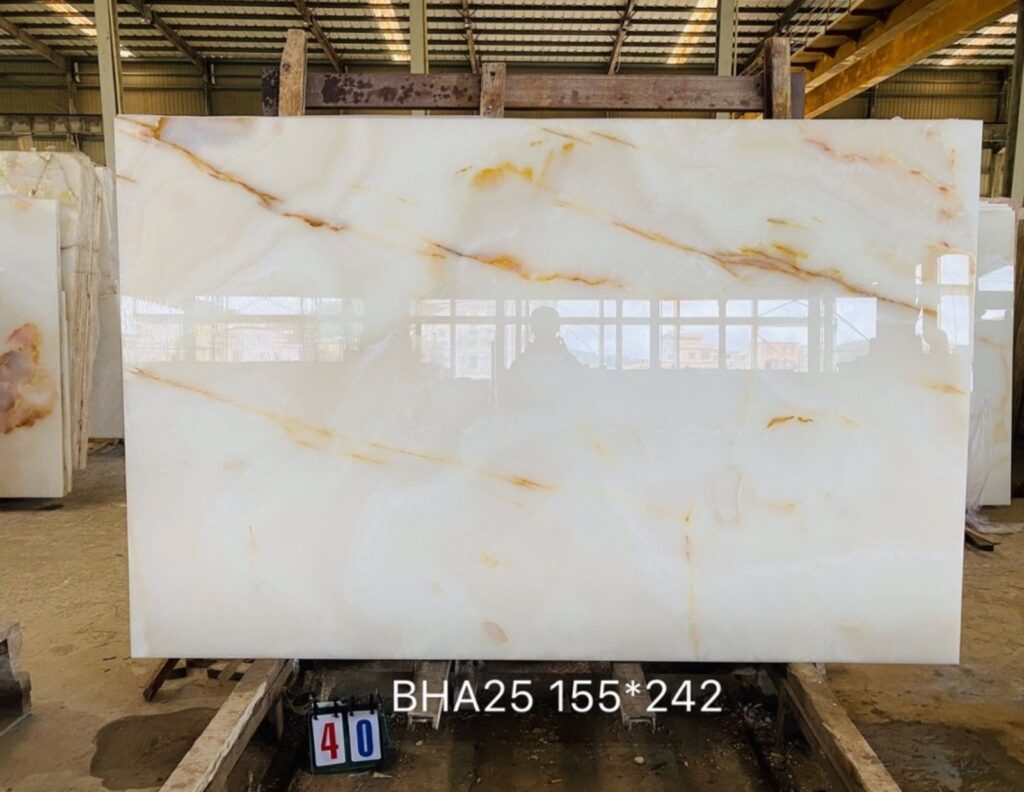
With a proposed Calacatta Viola Marble slab, the comparison should again begin with the actual slab rather than an assumed catalogue appearance.
검토:
This creates a different design question.
Instead of asking only:
“Which slab is more dramatic?”
ask:
“How is the drama organized across the finished island?”
A controlled comparison requires the same design brief.
If the island dimensions change between the Patagonia Quartzite and Calacatta Viola Marble options, you are no longer comparing only the material.
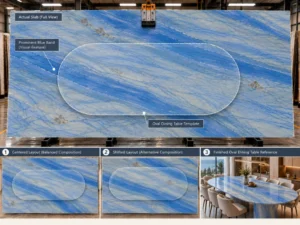
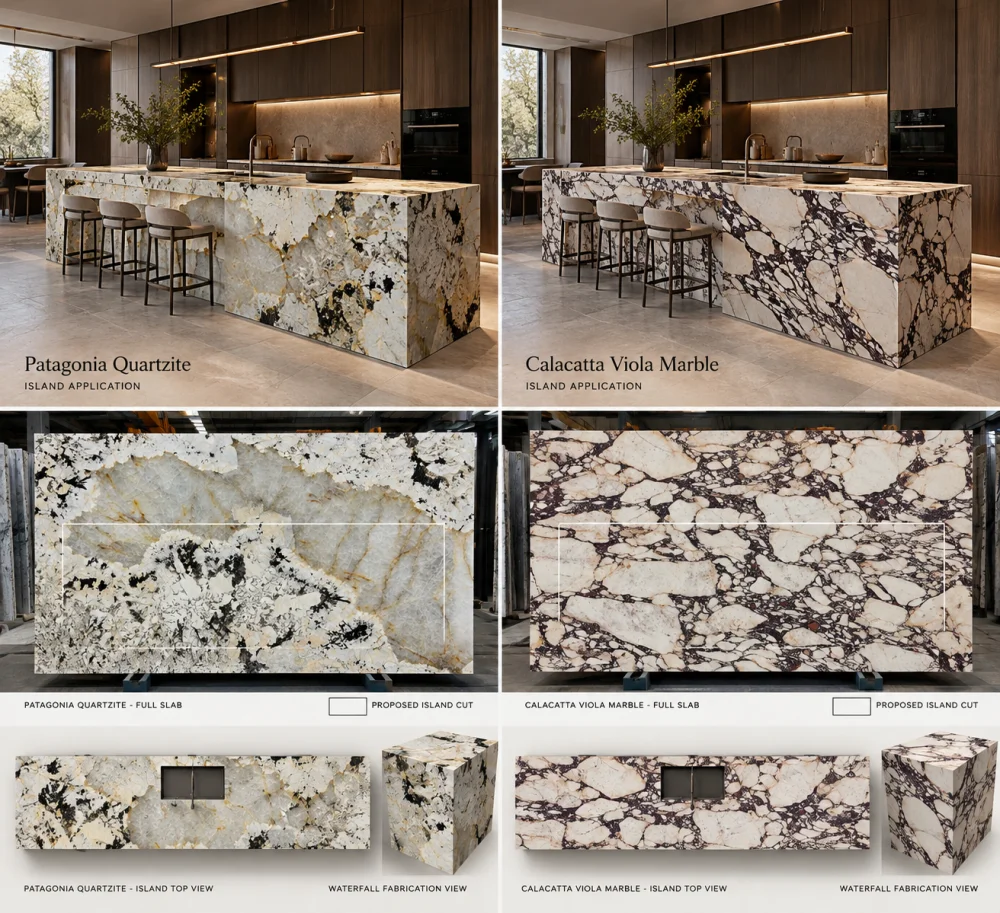
Place the actual island outline over the proposed Patagonia Quartzite slab.
Then stop looking at the unused slab.
Look only at the stone that would become the finished island.
PATAGONIA CROP TEST
Which crystalline areas remain inside the top? Which darker fragments become prominent? What reaches the seating side? What is removed by openings? What remains available for waterfall faces?
A spectacular full slab can create a very different composition after it is reduced to the actual island geometry.
Repeat the process without changing the island design.
Place the same outline over the actual proposed Calacatta Viola Marble slab.
Now examine the finished crop rather than the full slab.
다음과 같이 질문하십시오:
This is the point where the comparison becomes meaningful.
| Statement-Island Question | 파타고니아 규암 | Calacatta 비올라 대리석 |
| Main Visual Event | Identify which geological relationship becomes dominant in the actual finished crop. | Identify which vein or color relationship becomes dominant in the actual finished crop. |
| Quiet Space | Check how calmer crystalline or light areas balance stronger fragments. | Check how pale areas balance stronger colored movement. |
| 방향 | Review how irregular geological movement occupies the island geometry. | Review how the principal veining travels across the island geometry. |
| Room-Distance Reading | Does the island read as one geological composition from the main room view? | Which vein relationships remain legible from the main room view? |
| Close View | What crystalline and mineral relationships become more visible at the island? | What smaller vein, color and mineral details become more visible at the island? |
A statement island is not experienced as an untouched rectangular slab.
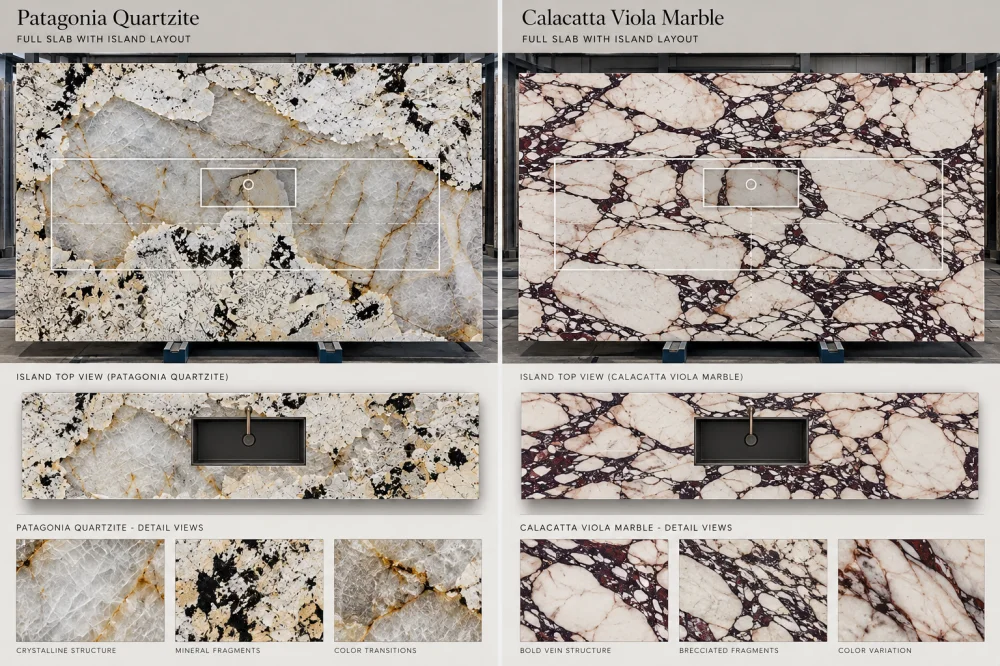
If it contains a sink or cooktop, that opening removes part of the selected stone composition.
Repeat the comparison after those areas are removed.
PATAGONIA AFTER CUTOUT
Which crystalline, cream, smoky or dark geological areas remain around the opening?
CALACATTA VIOLA AFTER CUTOUT
Which parts of the principal veining remain, and how does the opening change their relationship?
Do not approve either statement composition before looking at what remains after the functional openings are removed.
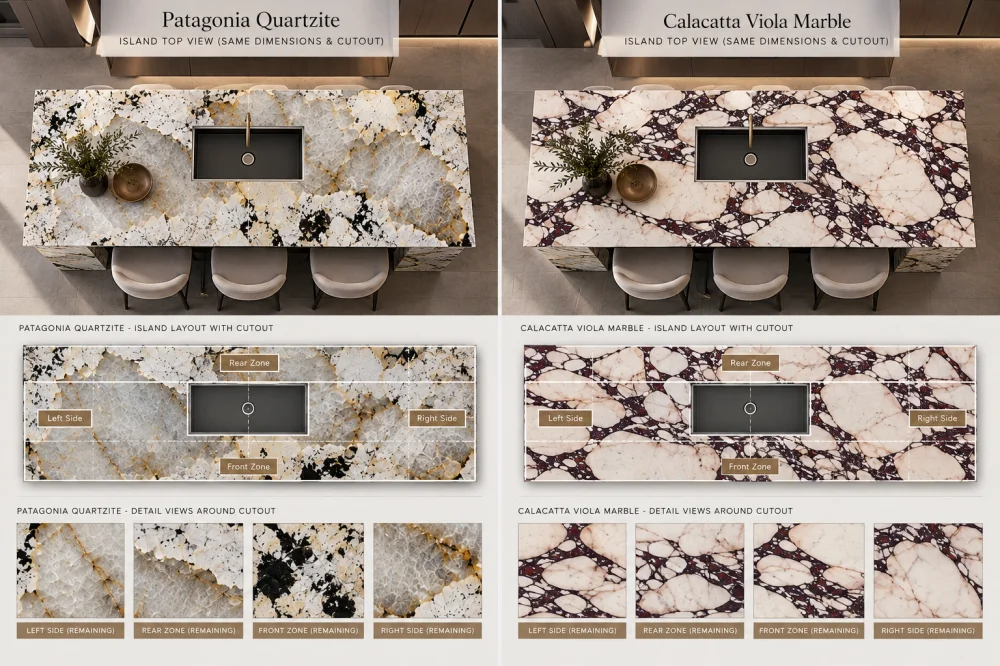
The top view is only one part of the comparison.
Identify the main architectural viewpoints.
VIEW 01 — ROOM ENTRY
What geological or vein feature is visible first?
VIEW 02 — LIVING / DINING SIDE
What becomes the main long-distance island composition?
VIEW 03 — SEATING SIDE
What pattern reaches the principal visible edge and overhang?
VIEW 04 — WATERFALL END
How does the top composition turn into the vertical face?
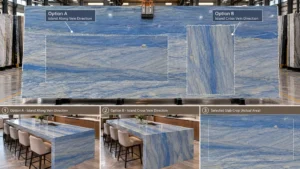
A waterfall island asks more of the slab layout than a horizontal top alone.
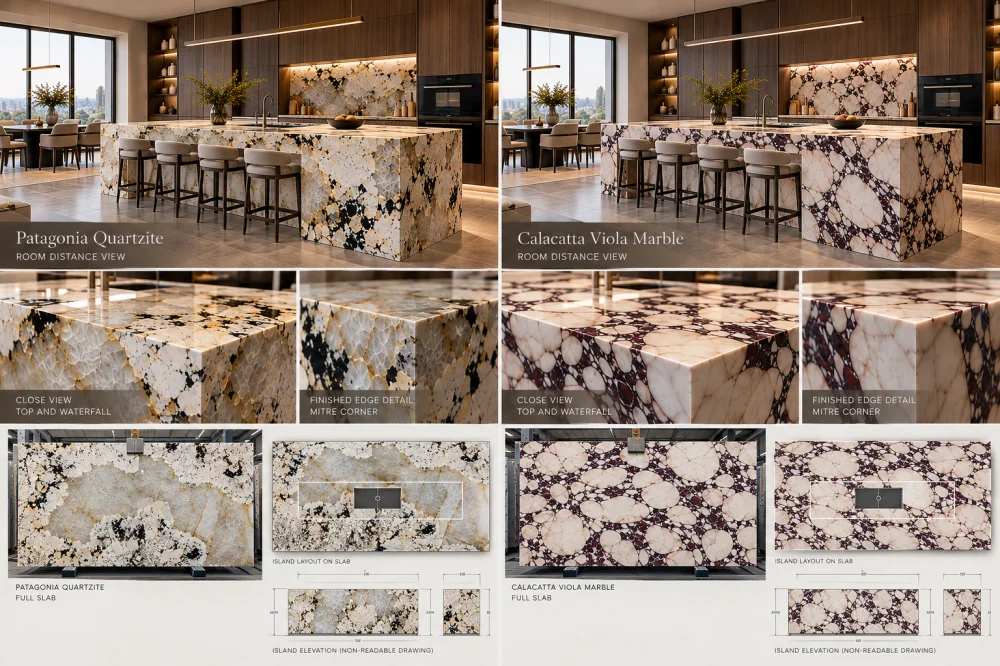
Now the stone must occupy both a horizontal and vertical plane.
For each candidate material, review:
TOP ALONE ≠ FINISHED STATEMENT ISLAND
Top + Waterfall + Edge + Cutout + Room View
=
FINISHED STONE COMPOSITION
A controlled comparison does not mean forcing identical pattern logic onto two different natural stones.
For example, if one Patagonia slab contains an irregular crystalline composition, do not artificially redesign it into a conventional linear vein match.
Likewise, do not force the movement of a Calacatta Viola slab to imitate the visual logic of Patagonia.
Keep the island geometry constant.
Let each actual slab show how it naturally occupies that geometry.
In an open-plan interior, much of the island top may be hidden by perspective from normal standing distance.
The long side, finished edge and waterfall may become more visually prominent.
This creates an important statement-island test:
LOW-ANGLE ROOM TEST
Stop judging the island from an overhead slab-layout view. Lower the viewpoint to normal room height and compare how much of the actual stone composition remains visible.
At room distance, the viewer may first perceive:
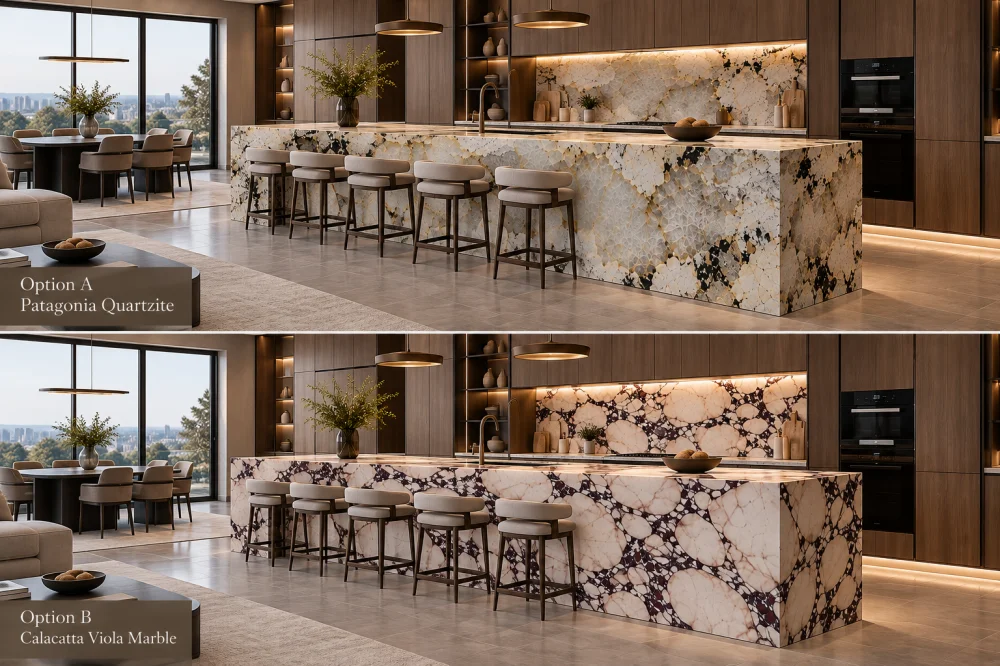
At close range, attention can shift toward:
A statement island should therefore be reviewed at both scales.
If Patagonia Quartzite is visualized with dark walnut cabinetry while Calacatta Viola is visualized with warm white cabinetry, the comparison is no longer controlled.
Use the same:
Change the stone.
Then compare what happens to the island.
A rendering is useful for judging architectural scale and visual hierarchy.
It should not replace the actual stone record.
This last step matters.
After comparing the room options, confirm that the preferred composition can still be traced back to the actual proposed stone.
Surface finish can affect reflection, perceived contrast, color relationships and how the stone reads under project lighting.
Therefore, where finish is an important part of the design, compare representative finish references for both candidate materials.
Do not assume that a polished online image accurately represents a proposed honed surface, or that two materials photographed under different conditions can be compared directly.
Patagonia Quartzite and Calacatta Viola Marble belong to different natural-stone categories.
That distinction should be retained without turning it into unsupported universal claims.
VISUAL TRACK
Actual slab, pattern scale, island crop, focal area, cutouts, waterfalls, edges, room views, finish and adjacent materials.
TECHNICAL TRACK
Project use, relevant material information, fabrication method, support, cutouts, handling, installation interfaces, maintenance expectations and other project-specific requirements.
A strong visual option still needs to satisfy the requirements established for the actual project.
Do not use a commercial stone name as a substitute for project evidence.
If a specific physical property, treatment, test result or technical requirement affects the selection, ask for information relevant to the proposed material and project.
This is more reliable than making a universal statement such as:
“Quartzite always does X.”
or:
“Marble always does Y.”
A material price alone may not represent the cost of the finished statement island.
When comparing quotations, align the scope.
| 범위 항목 | Confirm for Both Options |
| Material Quantity | Required slab allocation or material quantity for the same island design |
| Fabrication | Cut-to-size scope, openings, edges, mitres and other confirmed processing |
| Waterfalls | Number and dimensions of vertical returns |
| 레이아웃 검토 | Actual slab allocation and visible pattern planning where included |
| 포장 | Export packing appropriate to the confirmed fabricated pieces |
| Freight / Delivery | Same trade term and destination basis |
Instead of finishing the comparison with a generic pros-and-cons list, review each option at two scales.
SCALE A — THE ROOM
Does the finished island create the intended focal hierarchy from the main approach, living area and dining area?
SCALE B — THE STONE
When standing at the island, does the actual crop, finish, edge, cutout and natural detail still support the design?
The statement should work at both distances.
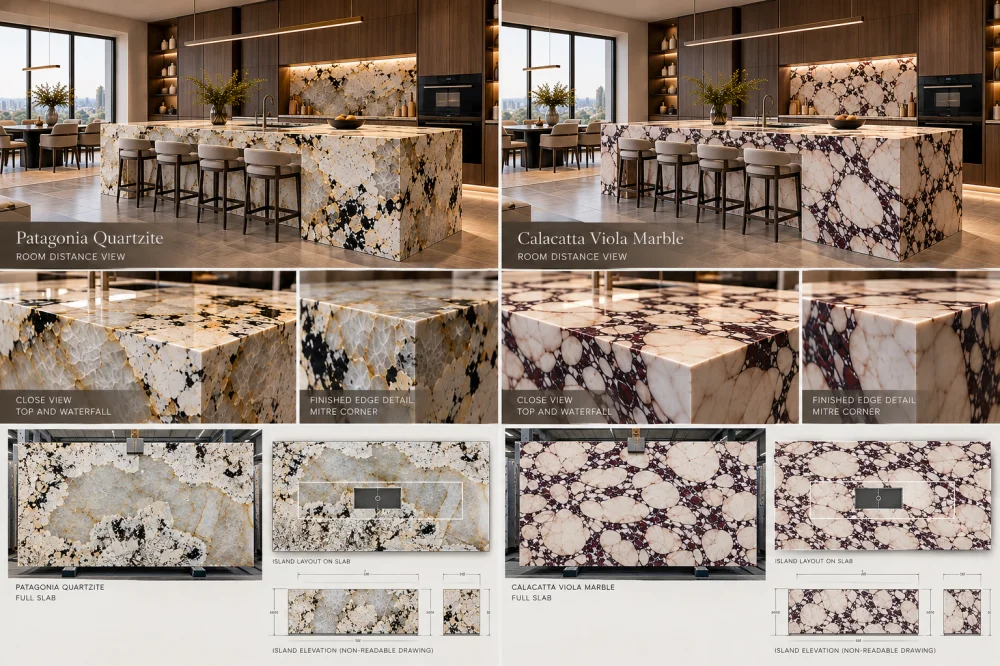
For a project where either material remains under consideration, a useful comparison package can show:
The decision is then tied to a real project option rather than a generic material category.
실제로 제안된 판재를 기준으로 각각 동일한 섬의 형상을 배치해 보십시오. 상업적 명칭이나 소규모 샘플에만 의존하기보다는, 최종 컷트, 컷아웃, 노출된 모서리, 워터폴 면, 주요 공간의 시야, 표면 마감 및 프로젝트별 요구사항을 종합적으로 비교 분석하십시오.
이는 실제 석판의 상태와 의도된 시각적 표현의 유형에 따라 달라집니다. 주요 지질학적 특징이나 맥이 완성된 조리대 위에서 어떻게 배치되어 있는지, 그 주변에 얼마나 여유로운 공간이 남아 있는지, 그리고 주된 실내 시점에서 전체 구성이 어떻게 읽히는지를 검토해 보십시오.
반드시 그렇지는 않습니다. 비교를 위해 섬의 지형은 일정하게 유지하되, 각 실제 자연석 판재가 고유한 패턴 구조를 표현하도록 하십시오. 불규칙한 파타고니아식 배치를 정맥이 두드러지는 대리석의 배치와 억지로 맞추거나, 반대로 이를 강요하지 마십시오.
그들은 선택된 석재 구성의 일부를 제거합니다. 개구부가 제거된 후에는 두 재료를 다시 한 번 검토하여, 절단 부분 주변과 완성된 섬 전체에 남아 있는 지질학적 또는 맥상 특징을 확인할 수 있습니다.
The comparison must include the vertical faces as well as the top. Review how the actual slab allocation supplies the top and waterfall components, how the visible patterns relate at the mitred edges, and how the complete three-dimensional island reads from the room.
No. Natural Quartzite is natural stone, while engineered quartz is a manufactured composite. Patagonia Quartzite should therefore be specified and reviewed as Natural Quartzite rather than engineered quartz.
Online images can help with initial design exploration, but final slab-specific decisions should use the actual proposed material references. Natural stone varies, and photography can also differ in scale, lighting, cropping and surface appearance.
Send Josh the Patagonia Quartzite and Calacatta Viola Marble references under consideration, current island dimensions, drawings, sink and cooktop information, waterfall requirements, finish, visible sides, cabinetry and floor references, important room views, quantity and delivery destination.
Compare the Finished Island, Not Just the Slabs
HRST STONE can coordinate actual slab references, CAD/shop drawings, island cutting layouts, cutout positions, waterfall relationships, visible-face planning, fabrication QC, dry-lay or trial review where applicable, production photographs and reinforced fumigated wooden-crate packing around the confirmed project scope. Send Josh both material options and the current island drawing so each stone can be compared through the same finished geometry.
© HRST STONE / XIAMEN HRST STONE CO., LTD. 모든 권리 보유.