Guida definitiva a quarzite vs lastra di porcellana per piani cucina: costi, design, prestazioni e approvvigionamento
Post navigation
Riepilogo rapido
Questa guida aiuta gli acquirenti di progetti a confrontare le lastre in quarzite naturale e in porcellana in base all’applicazione, all’aspetto, alle specifiche, alla lavorazione, alla pianificazione della manutenzione e a un flusso di approvazione documentato.
La Guida definitiva al confronto tra quarzite e lastre in porcellana per i piani cucina: costi, design, prestazioni e approvvigionamento è meglio considerarla come una decisione basata su specifiche tecniche, non su slogan. Per un importatore, un fabbricante, un architetto, un appaltatore o il team di approvvigionamento di un progetto, la domanda utile è capire come i due percorsi materiali si adattino ai disegni, all’uso previsto e al processo di approvazione. Il confronto dovrebbe distinguere la quarzite naturale, una pietra naturale, dai prodotti in lastre di porcellana, che sono materiali superficiali realizzati industrialmente. La quarzite naturale e altri materiali lapidei naturali non sono intercambiabili solo perché un campione esposto in showroom appare simile.
HRST STONE, nota anche come XIAMEN HRST STONE CO., LTD., supporta le richieste relative alla quarzite naturale attraverso un approccio basato sulla documentazione. Gli acquirenti possono iniziare fornendo il nome del materiale, l’applicazione prevista, le dimensioni, la quantità, i requisiti relativi ai bordi o alla superficie, i disegni e la destinazione di consegna. Ciò crea una base più chiara per la revisione delle lastre, la discussione sulla lavorazione, le aspettative riguardo all’imballaggio e la conferma commerciale, senza presupporre disponibilità, prezzo, risultati dei test o tempi di consegna.
quarzite-vs-lastra-di-porcellana-piani-cucina
Iniziare dall’applicazione, non da un’affermazione pubblicitaria
Prima di confrontare la quarzite naturale e le lastre in porcellana, definisci l’applicazione in termini pratici. Un’isola da cucina, un mobile bagno per ospitalità, un bancone reception, un pannello murale e una superficie decorativa a secco impongono requisiti diversi in termini di aspetto, lavorazione, pulizia, supporto e consegna. Chiedi al team di progettazione quali caratteristiche siano essenziali e quali siano preferenze. Una decisione risulta più affidabile quando è collegata a un disegno e a un percorso di approvazione del campione, piuttosto che a una classificazione generica.
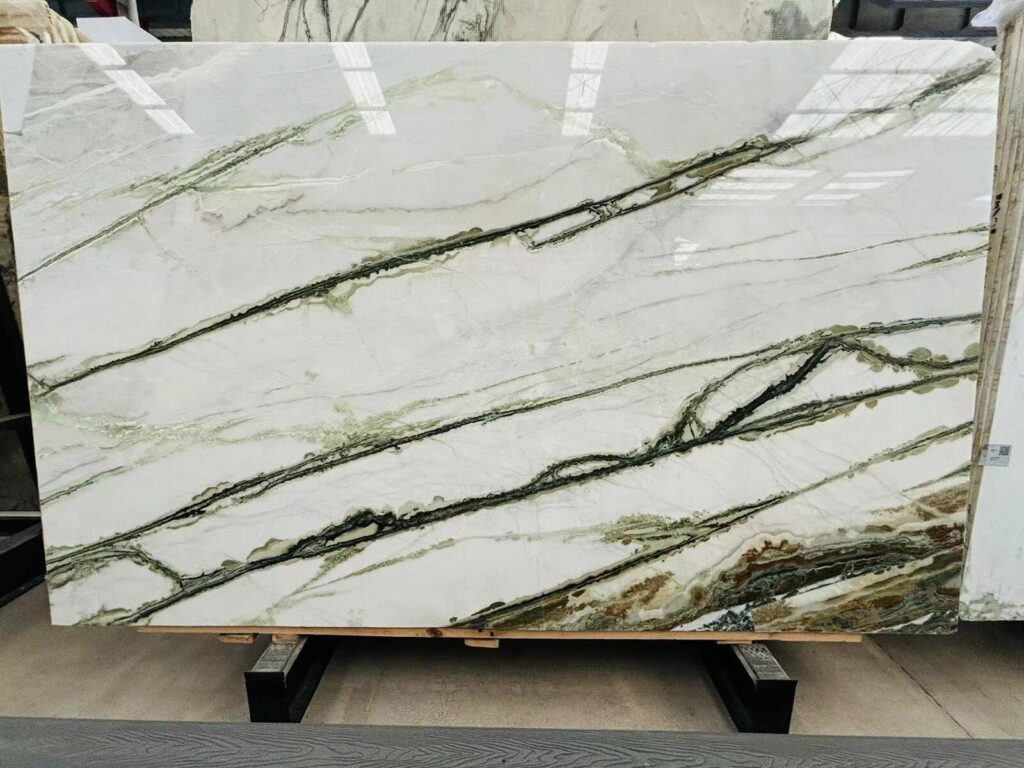
Per la quarzite naturale, i nomi commerciali possono coprire pietre con variazioni evidenti di colore, venature, movimento, traslucenza e struttura. È importante esaminare la lastra effettiva o una rappresentazione concordata per l’approvazione quando tali variazioni sono rilevanti. Per i materiali da confronto, richiedere lo stesso livello di chiarezza riguardo al formato e alla finitura del prodotto fornito. Non considerare un piccolo frammento, un’immagine digitale o un’etichetta generica di catalogo come sostituto completo dell’approvazione specifica per il progetto.
Input decisionale
What to confirm
Perché è importante
Applicazione
Posizione, esposizione, modalità d’uso e routine di pulizia
Aiuta a allineare la scelta del materiale con le condizioni d’uso
Intento visivo
Sfondo, movimento, direzione, logica giunti e illuminazione
Evita una scelta del materiale basata esclusivamente sul nome
Ambito della lavorazione
Spessore, dettagli dei bordi, ritagli, giunture e supporto
Consente al fabbricante di valutare l’esecuzione pratica
Percorso di approvazione
Revisione delle lastre, campione di controllo, disposizione e firma finale da parte del proprietario
Crea una base tracciabile per le decisioni
La quarzite naturale e le lastre in porcellana appartengono a categorie materiali diverse
La quarzite naturale è una pietra naturale. Il suo aspetto può presentare movimenti e variazioni che vanno valutati in fase di selezione del materiale e di progettazione dell’opera. Le lastre in porcellana sono prodotti superficiali realizzati industrialmente. Un confronto non dovrebbe mescolare queste categorie né usare la parola “quarzo” come se descrivesse automaticamente il quarzo ingegnerizzato. Il quarzo ingegnerizzato è un’altra categoria di materiali fabbricati ed è diverso dalla quarzite naturale.
Per gli acquirenti, il primo compito è rendere esplicita la categoria richiesta nella scheda tecnica e nei documenti di presentazione. Poi occorre definire il prodotto commerciale specifico o il nome della quarzite naturale, la finitura richiesta, l’elemento previsto e la sequenza di approvazione. In questo modo si evita un errore comune nell’approvvigionamento: approvare una descrizione generica mentre il team di progetto presume un sistema materiale diverso.
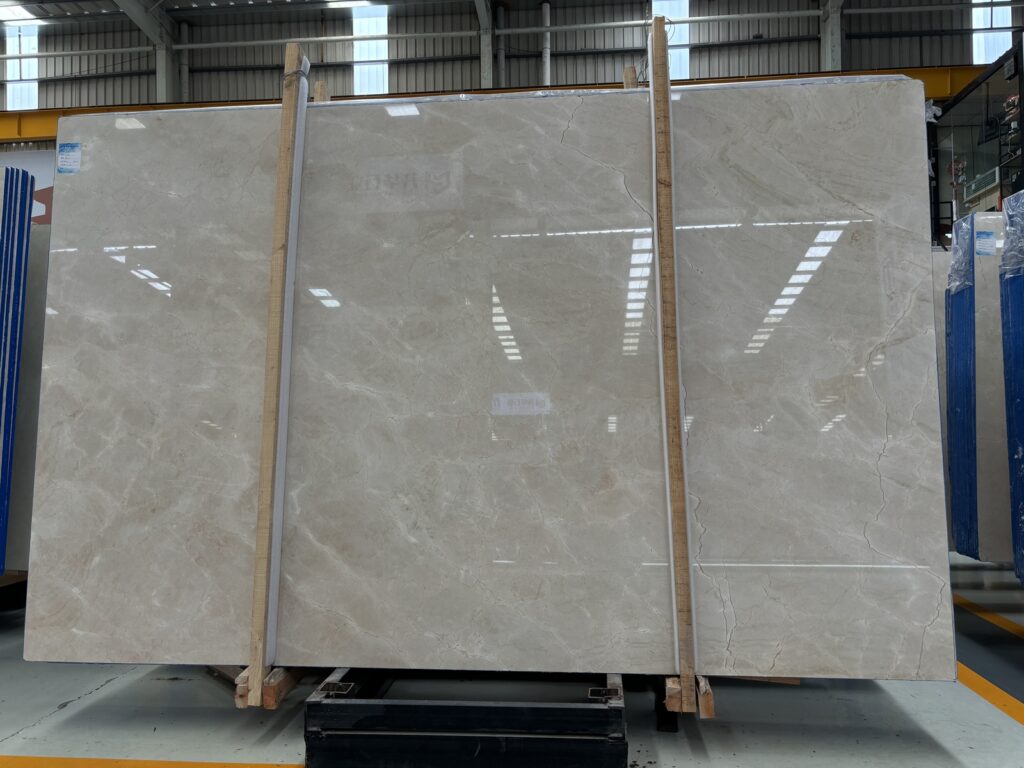
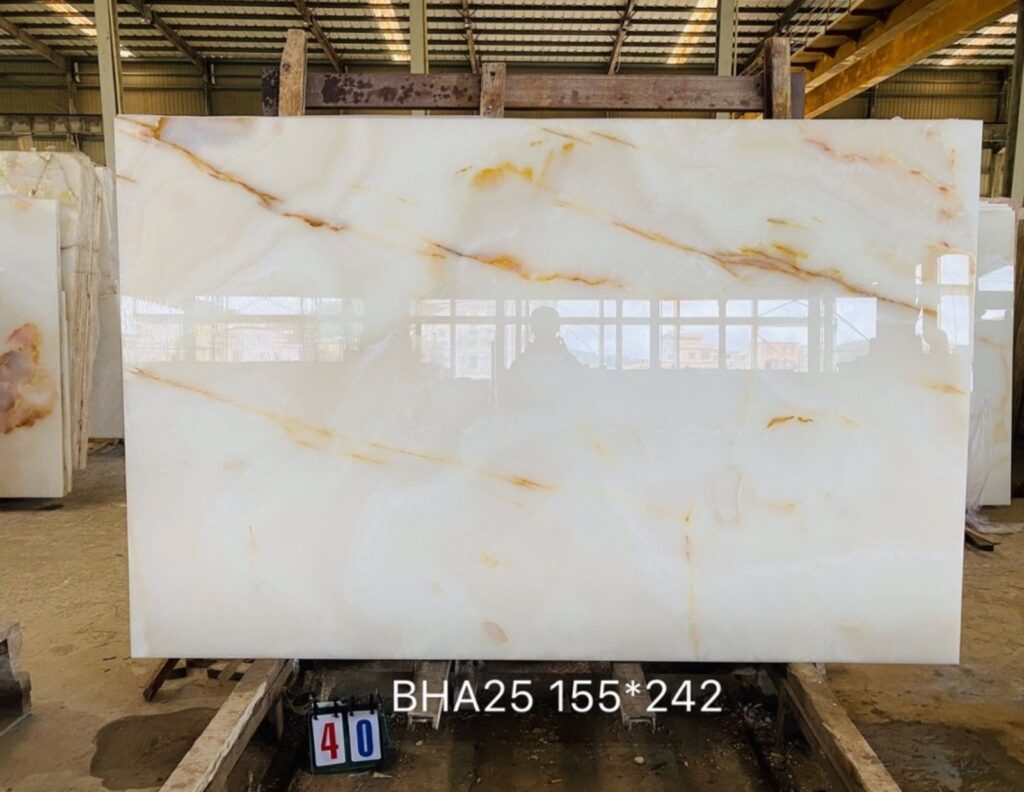
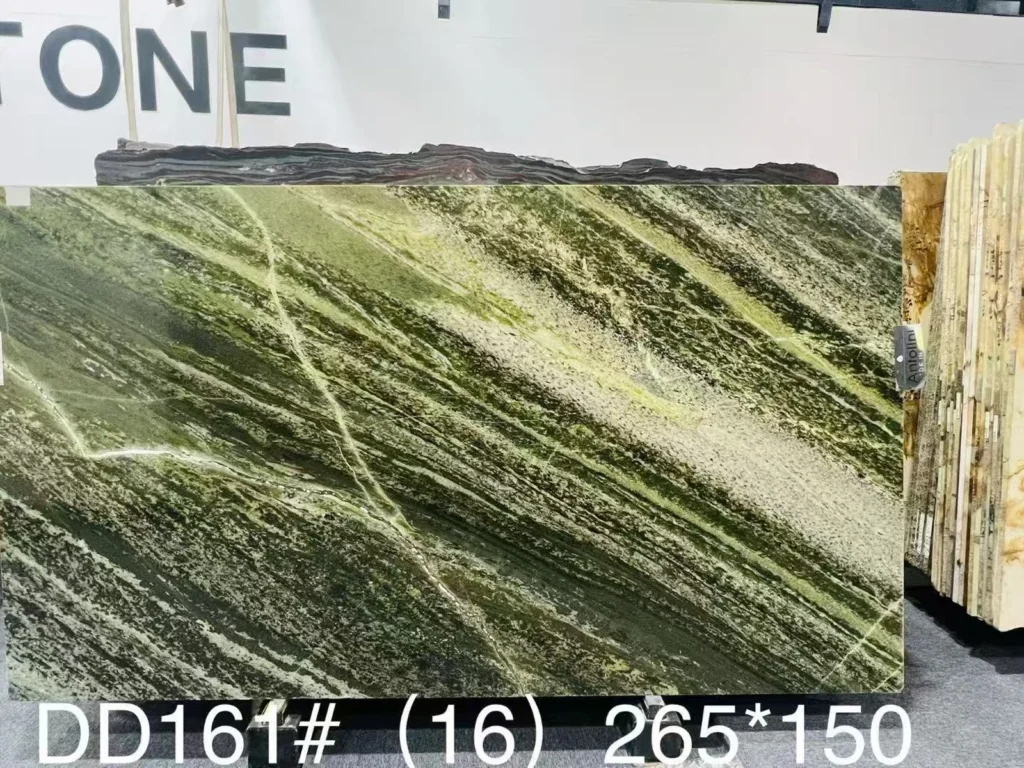
La scelta visiva dovrebbe tenere conto dell’intera composizione, anziché di un singolo campione. Per la quarzite naturale, valuta il tono di fondo, le venature o i movimenti, la direzione, i pezzi adiacenti, le giunzioni, i ritorni, l’illuminazione e il rapporto con le altre finiture. Una parete d’accento o un’isola possono richiedere un percorso di approvazione diverso rispetto a un piccolo piano lavabo. Quando il progetto fa affidamento su movimenti drammatici o su accoppiamenti speculari, inserisci la revisione del layout come fase ufficiale del progetto.
Per le selezioni di lastre in porcellana, conferma con il team di progetto il design del prodotto, la direzione, le aspettative di ripetizione e la strategia delle giunzioni. L’obiettivo non è dichiarare universalmente migliore un percorso rispetto all’altro, ma assicurarsi che il linguaggio visivo disponibile sostenga l’intento progettuale e possa essere lavorato e installato in modo accettato dal team.
Area di confronto
Domande sulla quarzite naturale
Domande sulle lastre in porcellana
Categoria dei materiali
La pietra naturale selezionata è chiaramente nominata e approvata?
Il prodotto fabbricato e la finitura specificati sono chiaramente identificati?
Aspetto
Come verranno esaminate la variabilità naturale e la disposizione?
Come verranno esaminate la direzione del motivo e la ripetizione?
Fabrication
Quali spessori, bordi, giunzioni e dettagli di manipolazione si applicano?
Quale approccio specifico al taglio e alla manipolazione del prodotto si applica?
Controllo del progetto
Chi firma i campioni, i layout e le dimensioni finali?
Utilizzare un flusso di lavoro per l’acquirente che sia verificabile
1. Tradurre il brief in domande misurabili
Elencate la stanza, l’elemento, la preferenza di spessore, le dimensioni finite, il profilo del bordo, il programma di taglio, le posizioni delle giunzioni, la finitura superficiale e la destinazione della consegna. Se i disegni sono ancora in fase di sviluppo, indicate ciò che è provvisorio. Questo è più utile che chiedere una dichiarazione generale secondo cui la quarzite naturale o le lastre in porcellana siano sempre migliori. In questo modo, la conversazione sui materiali può seguire i vincoli effettivi del progetto.
2. Separare l’approvazione visiva dalle ipotesi sulle prestazioni
La quarzite naturale può offrire un aspetto naturale distintivo, ma l’acquirente non dovrebbe trasformarlo in una promessa non verificata per ogni nome commerciale di pietra o per ogni installazione. Discutere le caratteristiche visibili, l’orientamento, il bookmatching e la variazione ammissibile con le persone che approvano il progetto. Discutere le condizioni d’uso, la pianificazione della manutenzione, i dettagli dell’installazione e tutta la documentazione necessaria del progetto con le parti tecniche competenti.
3. Costruire un registro scritto del confronto
Una matrice concisa facilita l’approvazione interna. Registrare l’applicazione prevista, l’obiettivo visivo, la finitura richiesta, i vincoli di lavorazione, le fasi di ispezione, le esigenze di imballaggio e i requisiti di consegna. Inoltre, aiuta a evitare che un confronto tra materiali venga trattato come una decisione basata esclusivamente sul prezzo. Quando una dichiarazione richiede test, certificazioni o prove specifiche del fornitore, richiedere tali documenti alla parte responsabile invece di fare affidamento su affermazioni generali.
Valuta la coordinazione tra fabbricazione e installazione
La conversazione sulla fabbricazione dovrebbe partire dai disegni attuali e da un calendario chiaro di aperture, ritorni, bordi e transizioni. Conferma le dimensioni finite e la proprietà delle misurazioni prima del taglio. Un fabbricante dovrebbe valutare il materiale selezionato, lo spessore, la finitura, la geometria, la manipolazione e i requisiti di supporto per il singolo progetto. Non trasformare indicazioni generali in una garanzia per un layout o una condizione del cantiere diversi.
Installatori e appaltatori dovrebbero allineare la preparazione del sottofondo, l’accesso, la sequenza, la protezione, il trattamento delle giunzioni e la consegna. Se il progetto richiede condizioni speciali, inseriscile nello scope scritto e confermale con le parti tecniche responsabili. Una buona coordinazione trasforma un confronto tra materiali in una decisione progettuale esecutiva.
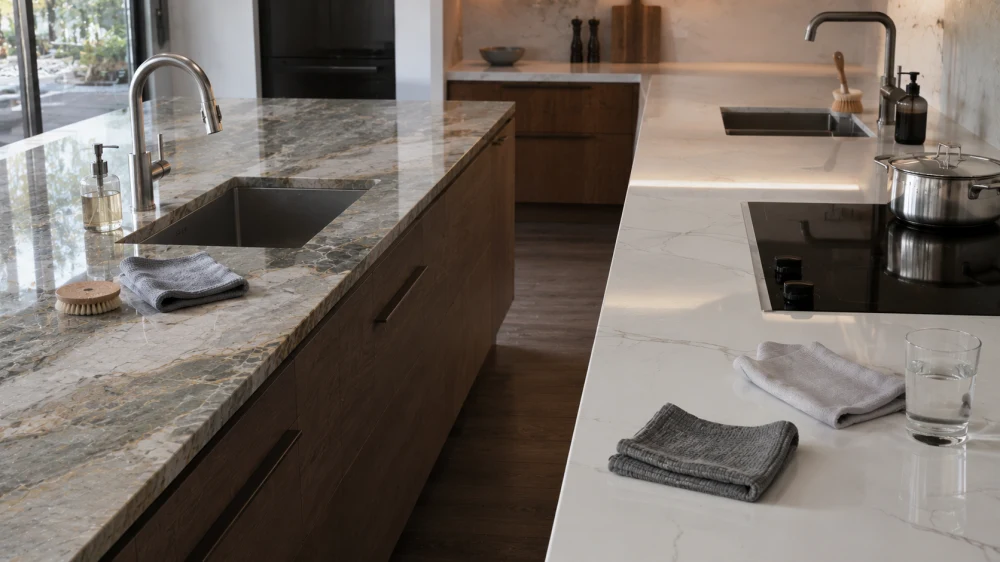
I team operativi hanno bisogno di un piano di cura pratico che corrisponda al materiale e alla finitura selezionati. Individua l’uso previsto, la frequenza di pulizia, i prodotti detergenti, le responsabilità del personale e la protezione durante l’allestimento. Non si deve presumere che quarzite naturale e lastre in porcellana abbiano gli stessi requisiti di cura solo perché occupano applicazioni simili. Richiedi indicazioni adeguate alla selezione confermata e fai in modo che il proprietario o l’operatore le integri nei materiali di consegna.
Una discussione ponderata sulla manutenzione individua anche la responsabilità dei rischi. L’acquirente può dichiarare l’uso previsto; i team di progettazione e tecnici possono stabilire i criteri di performance pertinenti; e i fornitori responsabili possono fornire la documentazione di progetto appropriata, ove disponibile. Questo è più affidabile di un linguaggio generico sulla durabilità senza contesto.
quarzite-porcellana-manutenzione-cucina-confronto
Costruisci un pacchetto di approvazione prima dell’impegno finale
Un pacchetto di approvazione conciso include normalmente la descrizione del materiale, l’intento cromatico o di finitura, i disegni, le dimensioni finali, i dettagli relativi ai bordi e alle giunzioni, il verbale di revisione dei campioni o delle lastre, le note di posa quando necessarie, i requisiti di imballaggio, la destinazione della consegna e i referenti per l’approvazione. Mantenere visibili le date di revisione. Se il progetto subisce modifiche dopo l’approvazione, ripetere la fase di revisione interessata anziché presumere che l’approvazione originaria copra la geometria rivista.
Per gli acquisti transfrontalieri, richiedere per tempo le informazioni necessarie relative alla destinazione e al piano di trasporto. HRST STONE può esaminare una richiesta nel contesto della selezione di quarzite naturale e dei dettagli del progetto indicati. Qualsiasi condizione commerciale, disponibilità, test, certificazione o impegno di consegna deve essere confermato separatamente per la singola richiesta.
Dettagli decisionali per i team di progetto
Definire lo scenario d’uso
Annotare ciò che accadrà sulla superficie dopo la consegna. Considerare la stanza, il gruppo di utenti, l’eventuale contatto con alimenti o acqua, la responsabilità della pulizia, le lavorazioni adiacenti, il traffico intorno all’elemento e se la superficie è principalmente a scopo estetico oppure viene utilizzata attivamente. Questo non sostituisce la valutazione tecnica, ma fornisce ai team di progettazione, fabbricazione e approvvigionamento un punto di partenza comune. Più specifico è lo scenario, più facile risulta porre domande pertinenti su quarzite naturale e lastre in gres porcellanato, anziché fare affidamento sulla sola reputazione generale del materiale.
Confermare i punti di controllo visivo
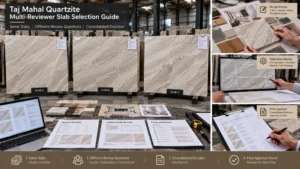
Le decisioni relative alla pietra visibile traggono beneficio da un approvatore designato e da una sequenza scritta. Individuare se il progetto necessita di un campione di controllo, immagini della lastra, una revisione dal vivo, una proposta di layout o un mock-up. Specificare quale lato del pezzo costituisce la faccia espositiva, in quale direzione deve avvenire il movimento, dove possono cadere le giunzioni e quale variazione è accettabile. Per un materiale di confronto fabbricato, identificare con pari attenzione il design del prodotto e la direzione. In questo modo, una preferenza estetica si trasforma in un registro di approvazione, discutibile prima del taglio o dell’installazione.
Separare la selezione dalla fabbricazione
Un materiale può risultare attraente in un campione e tuttavia richiedere un approccio di fabbricazione diverso per la geometria selezionata. Fornire al fabbricante i disegni aggiornati e un programma dettagliato di bordi, mitri, fori, piani di scarico, ritorni, giunture, raggi e condizioni di supporto. Chiedere al fabbricante responsabile di esaminare le implicazioni specifiche del progetto. L’acquirente dovrebbe evitare di trasformare un’affermazione generica presente su un blog in istruzioni di fabbricazione. La selezione del materiale, il progetto finale e la revisione della fabbricazione sono collegati ma rappresentano decisioni distinte.
Rendere fruibili le informazioni sull’approvvigionamento
Una richiesta è più facile da esaminare quando separa i fatti confermati dalle questioni aperte. Indicare il nome del materiale o la via di confronto, le dimensioni, la quantità, la finitura, i disegni, la destinazione della consegna e, se noti, i tempi desiderati. Segnalare se il progetto richiede una revisione del campione, una preferenza per l’imballaggio, un contributo al layout o un checkpoint formale di approvazione. Ciò aiuta Josh e il team di HRST STONE a comprendere la richiesta senza suggerire inventario, prezzo, origine, certificazione, test o termini di consegna non ancora confermati per quella specifica richiesta.
Assegnare la responsabilità alle interfacce
La maggior parte dei problemi evitabili emerge tra le diverse fasi: approvazione del progetto, misurazione, fabbricazione, trasporto, accesso al cantiere, installazione e pulizia. Identificare chi è responsabile di ciascun punto di controllo e come verranno comunicate le modifiche. L’architetto o il designer può essere responsabile dell’approvazione visiva; il fabbricante può occuparsi dei dettagli di taglio; l’appaltatore può coordinare il sottofondo e l’accesso; l’acquirente può gestire la documentazione dell’ordine. Una semplice tabella delle responsabilità genera più valore di una dichiarazione generica secondo cui un materiale è superiore a un altro.
Mantieni onesto il confronto finale
Non esiste sostituto alla conferma specifica per il progetto quando un requisito è critico. Se un team necessita di prestazioni particolari, documenti di conformità, condizioni commerciali o metodi di installazione, dovrebbe richiedere tali informazioni ai soggetti responsabili e conservarle nel fascicolo del progetto. Questa guida supporta una conversazione disciplinata tra acquirenti riguardo a quarzite naturale e lastre in gres porcellanato. Non pretende risultati universali per ogni nome di pietra, prodotto, design o condizione del cantiere.
Controlli pratici prima della conferma dell’ordine
Prima di procedere con l’ordine, confrontare l’ultima richiesta con gli ultimi disegni. Verificare che quantità, misure, spessore richiesto, finitura, informazioni sui bordi, dati relativi agli intagli e destinazione della consegna non siano cambiati rispetto alla precedente discussione. Se sono variati, stabilire se anche l’approvazione visiva, la revisione della fabbricazione, l’imballaggio o la pianificazione del trasporto debbano essere aggiornati. Questo controllo rigoroso risulta utile sia per la quarzite naturale sia per le lastre in gres porcellanato, poiché le informazioni di progetto spesso evolvono dopo la prima fase di selezione.
Utilizza un linguaggio semplice nelle approvazioni. Una breve nota che indichi il materiale approvato, l’approvatore responsabile, la revisione del disegno e gli eventuali punti aperti aiuta il team a distinguere i dettagli accettati dalle supposizioni. Quando le informazioni rimangono provvisorie, etichettale come tali. Ciò protegge tutti dall’interpretare una descrizione di marketing, un’immagine preliminare o un articolo generico come istruzione definitiva per il progetto.
Infine, mantieni la decisione collegata alle reali priorità del committente. Un progetto può valorizzare il movimento naturale, un particolare ritmo visivo, un sistema produttivo specifico, la praticità della fabbricazione, un piano di pulizia o un determinato flusso di lavoro di approvvigionamento. Il percorso scelto dovrebbe rispondere a tali priorità così come documentate per il progetto. HRST STONE potrà quindi esaminare una richiesta relativa al quarzite naturale insieme a Josh, basandosi su dati chiari anziché su supposizioni.
Una verifica finale utile pone una domanda per ogni disciplina. Il progettista può confermare che l’aspetto approvato continui a sostenere il concept dell’ambiente. Il fabbricante può verificare che geometria e dettagli siano realizzabili sulla base dei disegni attuali. L’appaltatore può assicurarsi che siano stati presi in considerazione la sequenza di posa e le condizioni del cantiere. L’acquirente può accertarsi che la richiesta e il registro delle approvazioni identifichino lo stesso ambito. Questo controllo incrociato non aggiunge complessità superflua; al contrario, rende la scelta del materiale comprensibile, tracciabile e pronta per il passo successivo del progetto. Inoltre, offre al team un momento documentato per sollevare questioni irrisolte prima che la fabbricazione o i lavori in cantiere rendano i cambiamenti più difficili da gestire. I team possono allegare questa verifica finale al proprio fascicolo interno di approvazione e farvi riferimento durante le fasi di approvvigionamento, coordinamento della fabbricazione e discussioni di consegna. Ciò favorisce una migliore continuità nell’esecuzione.
Checklist comparativa per piani di lavoro da cucina
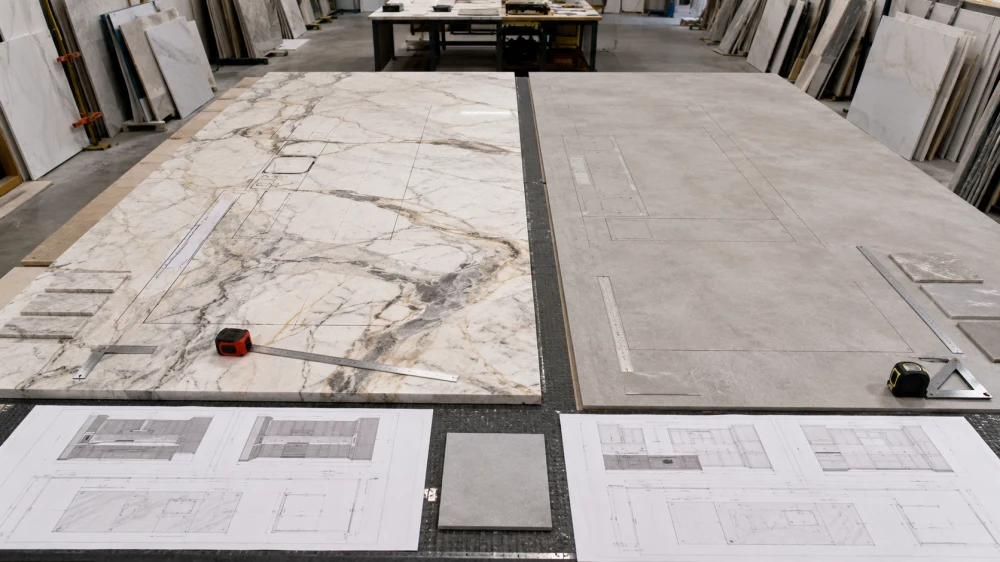
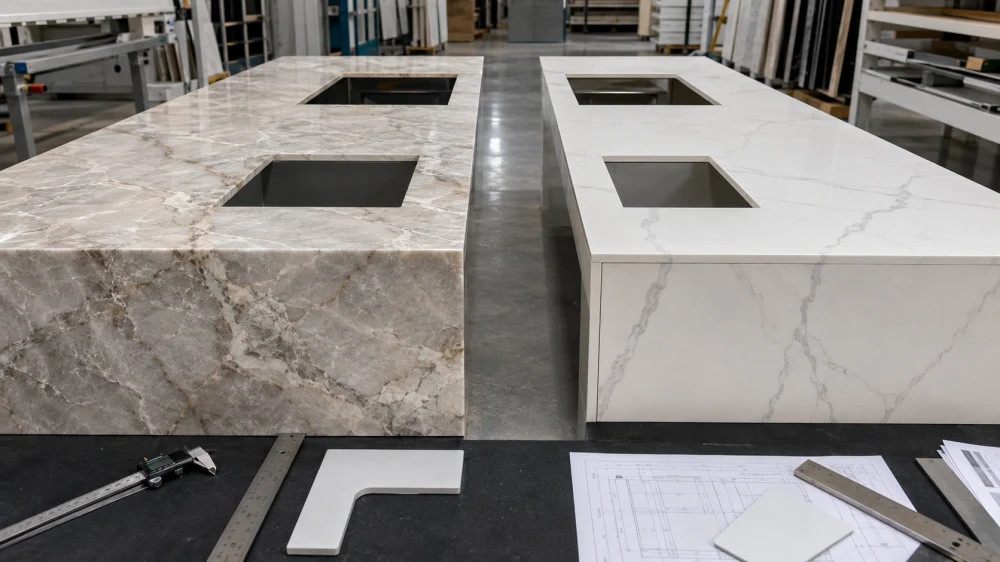
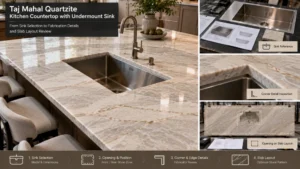
I piani di lavoro da cucina rappresentano un esempio utile di come una semplice classificazione dei materiali possa indurre in errore. Il team di progetto dovrebbe identificare se l’elemento principale è un’isola, un bancone perimetrale, uno schienale, un tavolo integrato, un bar o una combinazione di questi. Ognuno può presentare considerazioni diverse dal punto di vista estetico, dimensionale, delle giunzioni, dell’accesso e dell’installazione. I disegni dovrebbero mostrare le aperture per gli elettrodomestici, i lavelli, i rubinetti, gli sbalzi, i supporti, le condizioni delle pareti e le interfacce con armadi e altre finiture. La scelta potrà quindi essere discussa nell’ambito di un vero e proprio pacchetto di fabbricazione.
Per la via della quarzite naturale, chiedere come verrà effettuata la verifica visiva della pietra selezionata e come si articolerà il movimento tra i pezzi collegati. Per la via delle lastre in gres porcellanato, chiedere come saranno esaminate la trama del prodotto, la direzione, il formato e la pianificazione delle giunzioni. In entrambi i casi, verificare chi detiene la responsabilità finale delle misurazioni e quando le informazioni sul cantiere vengono ritenute complete. Ciò aiuta l’acquirente a evitare di approvare un primo concept come se fosse un disegno definitivo di produzione.
Costo, design, prestazioni e approvvigionamento sono interconnessi, ma non devono essere ridotti a un’affermazione non verificata. Utilizzare il processo di richiesta per chiarire l’ambito specifico e richiedere, dove necessario, informazioni commerciali o tecniche proprie del progetto. Conservare tali conferme separatamente da questa guida generale. Una documentazione trasparente consente agli uffici acquisti di confrontare le offerte e le decisioni effettive con lo stesso brief.
Durante lo sviluppo del progetto, registrare il profilo del bordo del bancone, il ritorno dello schienale, il trattamento delle giunzioni, i dettagli del drenaggio e eventuali transizioni speciali verso altri materiali. Questi elementi influenzano la discussione con il fabbricatore e l’installatore. Se il programma della cucina comprende diverse stanze o unità ripetitive, individuare quali dettagli sono standard e quali su misura. La stessa informazione strutturata facilita un confronto equo tra quarzite naturale e lastre in gres porcellanato, mantenendo il team di progetto focalizzato sul pacchetto di disegni approvato.
Prima della consegna, l’appaltatore e il proprietario possono concordare il processo di protezione e cura della superficie selezionata. Le istruzioni per la pulizia dovrebbero provenire dalla fonte competente e appropriata per il materiale e la finitura confermati. Registrare il canale di comunicazione per eventuali domande future e conservare i documenti finali di approvazione insieme al fascicolo del progetto cucina. Questa chiusura ordinata risulta preziosa per proprietari, gestori, progettisti e team di approvvigionamento, poiché collega la decisione originaria di selezione al risultato installato.
La scelta finale dovrebbe rimanere visibile nella documentazione del progetto. Indicare la categoria di materiale approvata, il nome o il prodotto selezionato, i requisiti della superficie, la revisione del disegno e le eventuali istruzioni speciali per la disposizione. Se in seguito viene proposta una sostituzione o una modifica del design, tornare al flusso di approvazione e individuare cosa debba essere nuovamente esaminato. Questa semplice disciplina aiuta ogni partecipante a comprendere la decisione corrente e riduce il rischio di basarsi su presupposti obsoleti. Fornisce inoltre un riferimento chiaro quando i team di progetto coordinano successivi traguardi di approvvigionamento, discussioni in fabbrica, pianificazione della consegna e comunicazione relativa all’installazione finale. Mantenere accessibili tutti i registri aggiornati ai referenti responsabili del progetto.
Domande che gli acquirenti dovrebbero risolvere prima della firma
1. La quarzite naturale è uguale alle lastre in gres porcellanato per i piani di lavoro da cucina?
No. Il quarzite naturale è una pietra naturale, mentre la lastra in porcellana è un materiale di superficie prodotto industrialmente. Un progetto di cucina dovrebbe specificare chiaramente la categoria richiesta e la finitura selezionata.
2. Quali dettagli visivi dovrebbero essere approvati prima della fabbricazione?
Approvare il materiale o il prodotto selezionato, le finiture, le direzioni, i giunti, le posizioni delle cuciture, i bordi, le sagomature, le riprese e tutte le note di disposizione che influenzano l’aspetto finale della cucina.
3. Il costo dovrebbe essere l’unico criterio di confronto?
No. Confronta l’intero ambito del progetto, inclusi la selezione dei materiali, i dettagli di fabbricazione, il coordinamento dell’installazione, le fasi di approvazione, la pianificazione delle cure, le esigenze di imballaggio e la destinazione della consegna.
4. Cosa deve esaminare il fabbricatore?
Un fabbricante ha bisogno di disegni aggiornati, dimensioni finali, spessore, dettagli dei bordi, ritagli, giunture, condizioni di supporto, vincoli di movimentazione e la selezione confermata del materiale o del prodotto.
5. What should buyers send to Josh at HRST STONE?
Inviare il nome del materiale, le dimensioni, la quantità, i disegni, la finitura superficiale richiesta, l’applicazione prevista in cucina e la destinazione di consegna per una verifica pratica della richiesta.
Nota finale
Ultimate Guide to Quartzite vs Porcelain Slab for Kitchen Countertops: Cost, Design, Performance, and Sourcing should be decided through the project brief, sample and slab review, fabrication discussion, and written approval steps. A careful comparison is more dependable than a universal material claim.
Discuti il tuo requisito di quarzite naturale con Josh
Contatta Josh di HRST STONE indicando il nome del materiale, le dimensioni, la quantità, i disegni, la superficie richiesta e la destinazione della consegna. Includi l’applicazione prevista e qualsiasi requisito di approvazione o imballaggio, così da permettere una valutazione della richiesta secondo un ordine pratico.
Copyright (c) HRST STONE / XIAMEN HRST STONE CO., LTD.
Hi, I am the author of this article. I have been working in the field of Natural Stone for more than 15 years. If you need customized Natural Stone services, please feel free to contact me.
Cina Marmo, granito, quarzite, produttore e fornitore di agata - PIETRA HRST
Benvenuti su HRST STONE!
Salve, vorrei saperne di più sui vostri prodotti. Potreste fornirmi informazioni su prezzi, quantità minima d’ordine, opzioni di personalizzazione e campioni?