Riepilogo rapido: I pannelli di marmo curvi CNC vengono prodotti rimuovendo materiale da lastre piatte mediante percorsi digitali controllati. Questo metodo offre la massima precisione, ma richiede un controllo attento dell'attrezzatura, del raffreddamento e della stabilità del materiale.
Introduzione: Perché i pannelli di marmo curvi CNC definiscono i progetti in pietra di alta gamma
Nella moderna fabbricazione di pietra per l'architettura, i pannelli di marmo curvi CNC sono diventati la soluzione più affidabile per ottenere geometrie con raggio preciso. A differenza dei metodi tradizionali di lavorazione, la tecnologia CNC consente di trasformare lastre di marmo in superfici curve con precisione e ripetibilità controllate. Ciò rende i pannelli di marmo curvi CNC essenziali in progetti in cui la continuità visiva e la precisione dimensionale sono fondamentali.
I pannelli di marmo curvi CNC sono comunemente utilizzati in interni di lusso come aree reception di hotel, negozi flagship retail e progetti residenziali personalizzati. In queste applicazioni, anche piccole deviazioni nella curvatura possono influire sul risultato visivo finale. La lavorazione CNC garantisce che ogni pannello segua esattamente il raggio definito nel modello di progetto, permettendo agli architetti di ottenere superfici curve lisce e uniformi.
Se sei nuovo nella lavorazione di pietra curva, ti consigliamo prima di tutto di esaminare l'intero sistema qui:
guida alla fabbricazione di pannelli curvi in marmo. Questo fornisce una panoramica completa su come i pannelli di marmo curvi CNC si inseriscono nel flusso di lavoro generale della fabbricazione.
Per comprendere come le lastre piatte vengono preparate prima della lavorazione CNC, puoi fare riferimento anche a:
lastre piatte di marmo a pannelli curvi in pietra. I pannelli di marmo curvi CNC non vengono creati isolatamente, ma dipendono da decisioni precedenti relative alla selezione del materiale e all'ingegneria.
Come vengono prodotti i pannelli di marmo curvi CNC
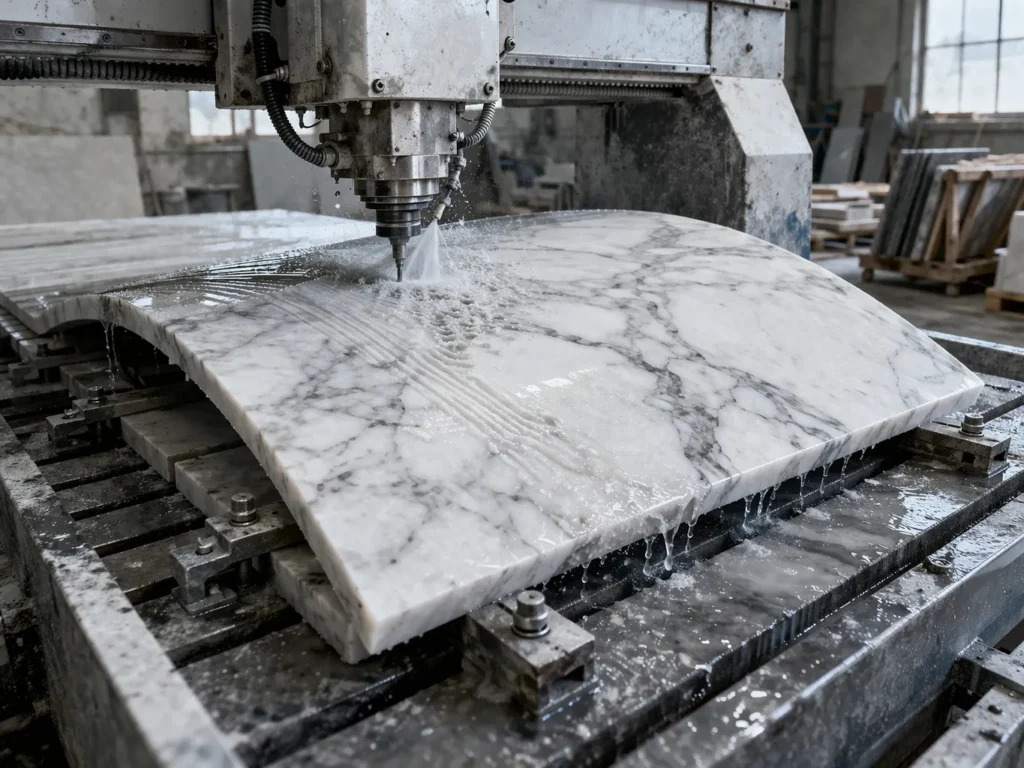
La produzione di pannelli di marmo curvi CNC si basa su un processo di fabbricazione sottrattivo. Una lastra di marmo piatta viene fissata su un piano di una macchina CNC, e uno strumento di taglio rimuove gradualmente materiale secondo un modello digitale. La curvatura viene formata controllando con precisione profondità e movimento dello strumento sulla superficie.
I pannelli di marmo curvi CNC vengono generati utilizzando percorsi utensile calcolati tramite software CAM. Questi percorsi determinano come si muove la testa di taglio, quanta materia viene rimossa in ogni passaggio e come viene rifinita la superficie finale. Il processo viene ripetuto in più strati fino a ottenere la curvatura desiderata.
Poiché i pannelli di marmo curvi CNC si basano sulla rimozione di materiale anziché sulla piegatura, lo spessore della lastra gioca un ruolo cruciale. Lastre più spesse sono necessarie quando è richiesta una curvatura più profonda, poiché deve essere disponibile sufficiente materiale per la modellatura. Questo è uno dei motivi per cui la fabbricazione CNC è spesso più costosa rispetto ad altri metodi.
Tipi di macchine utilizzate per i pannelli di marmo curvi CNC
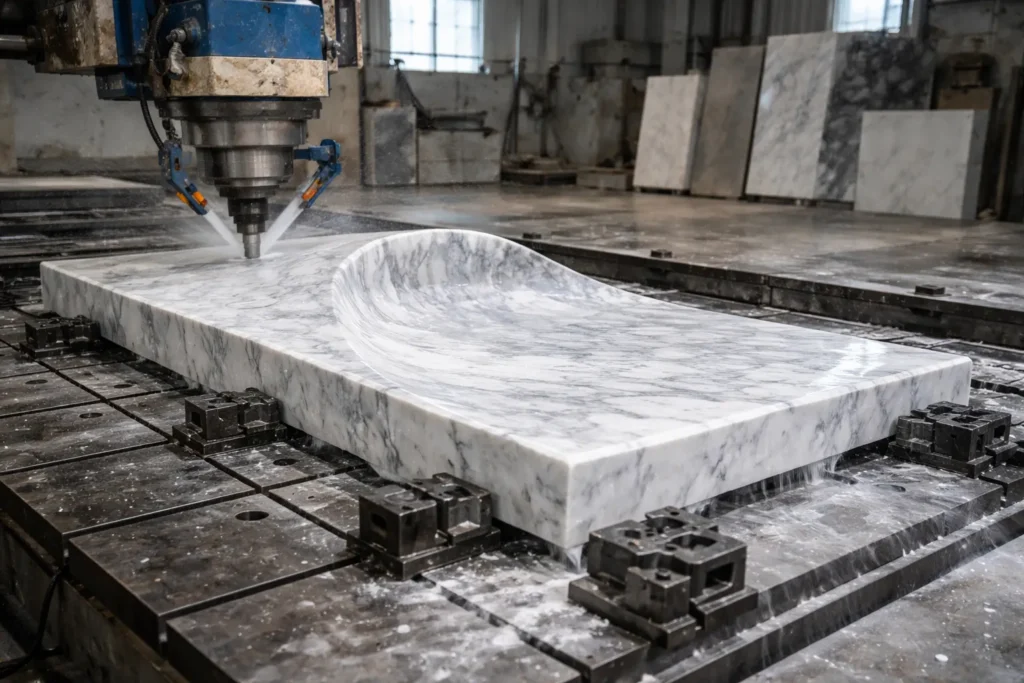
Vengono utilizzate diverse macchine CNC a seconda della complessità del progetto. Le macchine a tre assi sono comunemente impiegate per pannelli di marmo curvi CNC standard, dove la curvatura è relativamente semplice. Queste macchine si muovono lungo assi lineari e sono adatte alla maggior parte delle applicazioni architettoniche.
Le macchine CNC a cinque assi vengono impiegate quando i pannelli di marmo curvi CNC richiedono geometrie più complesse. Queste macchine consentono allo strumento di taglio di avvicinarsi al materiale da più angolazioni, permettendo la creazione di forme curve avanzate. Ciò è particolarmente importante in progetti con curvature non uniformi o design scultorei.
Le macchine CNC di tipo ponte sono preferite per la lavorazione di lastre grandi. La loro struttura rigida garantisce stabilità durante il taglio, migliorando la precisione dei pannelli di marmo curvi CNC. Tuttavia, la scelta della macchina deve sempre corrispondere alla complessità del design e alle esigenze del progetto.
Attrezzatura e qualità della superficie nei pannelli di marmo curvi CNC
La qualità dei pannelli di marmo curvi CNC dipende fortemente dagli utensili di taglio utilizzati durante la fabbricazione. Di solito si usano utensili diamantati, perché riescono a tagliare efficacemente materiali lapidei duri. Anche la forma dell'utensile influisce sulla superficie finale; per le superfici curve si preferiscono utensili con punta sferica.
Man mano che gli utensili si consumano durante la produzione, la qualità dei pannelli di marmo curvi CNC può deteriorarsi. Ciò potrebbe causare irregolarità superficiali o lievi deviazioni nella curvatura. Pertanto, una manutenzione e sostituzione regolare degli utensili sono essenziali per mantenere una qualità costante.
Una scelta errata degli utensili può anche causare difetti nei pannelli di marmo curvi CNC. Ad esempio, utilizzare un diametro di utensile inadatto può portare a una formazione imprecisa del raggio. Allo stesso modo, utensili di scarsa qualità possono provocare scheggiature sui bordi o superfici irregolari.
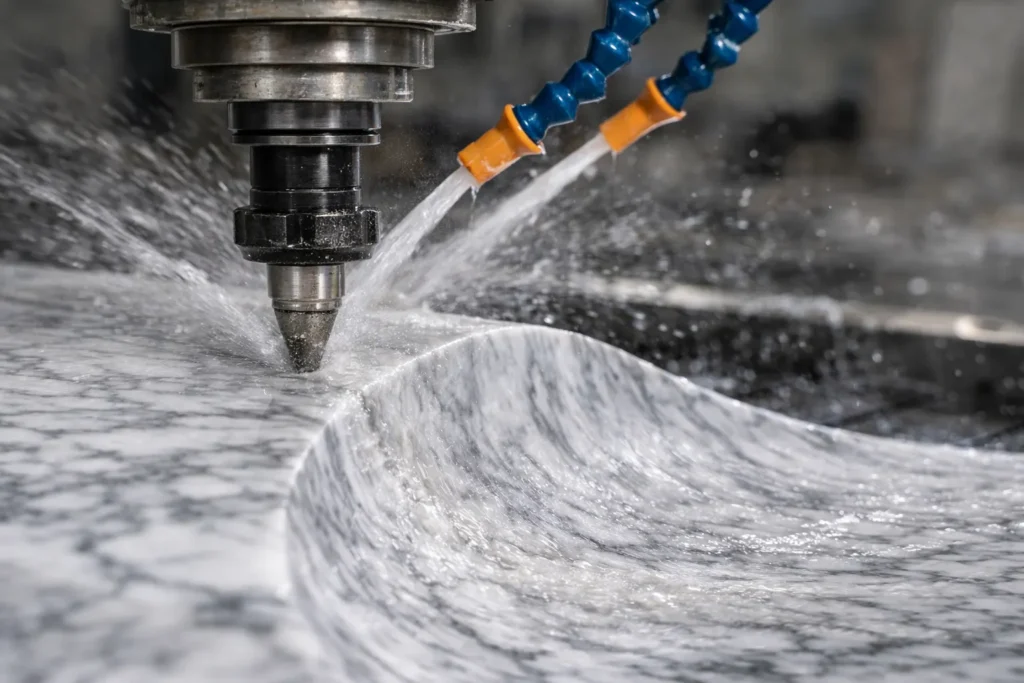
Raffreddamento ad acqua e stabilità del processo
Durante la fabbricazione dei pannelli di marmo curvi CNC, il raffreddamento ad acqua viene utilizzato per controllare il calore generato dall'attrito. Senza un raffreddamento adeguato, la temperatura nel punto di taglio può aumentare notevolmente, causando stress termico nella pietra.
Il raffreddamento ad acqua contribuisce a mantenere la stabilità dei pannelli di marmo curvi CNC riducendo il calore e rimuovendo i detriti dall'area di taglio. Ciò migliora sia l'efficienza di taglio che la qualità della superficie. Un raffreddamento inadeguato può causare danni agli utensili e guasti al materiale.
Precisione e tolleranza nei pannelli di marmo curvi CNC
Uno dei principali vantaggi dei pannelli di marmo curvi CNC è la loro elevata precisione. Tuttavia, ottenere una tolleranza costante richiede un controllo attento di diversi fattori, tra cui la taratura della macchina, lo stato degli utensili e la consistenza del materiale.
La tolleranza tipica per i pannelli di marmo curvi CNC va da uno a due millimetri. Questo livello di precisione è sufficiente per la maggior parte delle applicazioni architettoniche, ma per installazioni complesse potrebbe essere richiesta una tolleranza più stretta. Persino piccole deviazioni possono diventare evidenti quando i pannelli vengono montati insieme.
Le procedure di controllo qualità sono essenziali per garantire che i pannelli di marmo curvi CNC soddisfino le specifiche di progetto. Ciò include l'ispezione delle lastre prima del taglio, il monitoraggio delle prestazioni della macchina durante la fabbricazione e la verifica delle dimensioni dopo la lavorazione.
Comportamento del materiale e pannelli di marmo curvi CNC
Il comportamento del materiale lapideo gioca un ruolo significativo nella produzione dei pannelli di marmo curvi CNC. Il marmo uniforme è generalmente più facile da lavorare e produce risultati più consistenti. Al contrario, il quarzite è più duro e abrasivo, il che aumenta l'usura degli utensili e riduce l'efficienza di taglio.
Anche il marmo con venature marcate può presentare difficoltà nella produzione di pannelli di marmo curvi CNC. Le venature possono agire come punti deboli, aumentando il rischio di fratture durante la lavorazione. Pertanto, una selezione accurata del materiale è fondamentale per ottenere risultati positivi.
Quando i pannelli di marmo curvi CNC sono la soluzione migliore
I pannelli di marmo curvi CNC sono ideali per progetti che richiedono curvature senza soluzione di continuità e alta precisione. Sono particolarmente indicati per applicazioni con raggi piccoli, dove la fabbricazione segmentata creerebbe giunti visibili. Sono inoltre preferiti in progetti di lusso in cui la qualità visiva è una priorità assoluta.
Tuttavia, i pannelli di marmo curvi CNC potrebbero non essere la soluzione più economica per tutti i progetti. Per superfici con raggi ampi o progetti con vincoli di budget, metodi alternativi come la fabbricazione segmentata potrebbero essere più pratici.

Pianificazione prima della produzione dei pannelli di marmo curvi CNC
Una pianificazione adeguata è essenziale prima della produzione dei pannelli di marmo curvi CNC. Ciò include la verifica dei disegni di progetto, la conferma dello spessore della lastra e la valutazione della stabilità del materiale. Spesso viene effettuato un taglio di prova per assicurare che il materiale selezionato si comporti come previsto durante la lavorazione.
Poiché i pannelli di marmo curvi CNC vengono prodotti attraverso la rimozione di materiale, gli errori non possono essere corretti una volta iniziato il taglio. Questo rende fondamentale una revisione tecnica precoce per evitare costosi sbagli.
Se il tuo progetto prevede pannelli di marmo curvi CNC, puoi direttamente
Contattaci richiedere una consulenza tecnica prima della fabbricazione.
FAQ
1. Cosa sono i pannelli di marmo curvi CNC?
I pannelli di marmo curvi CNC sono pannelli in pietra modellati mediante macchine CNC per ottenere una geometria curva precisa.
2. Perché i pannelli di marmo curvi CNC sono più precisi?
Poiché vengono prodotti utilizzando percorsi utensile digitali che controllano con precisione la rimozione del materiale.
3. I pannelli di marmo curvi CNC sono costosi?
[SÌ, a causa dello spreco di materiale e del tempo di lavorazione.].
4. I pannelli di marmo curvi CNC possono essere utilizzati per facciate?
Sì, ma bisogna tenere conto del peso e dei metodi di installazione.
5. I pannelli di marmo curvi CNC richiedono un'installazione speciale?
Sì, sono necessari sistemi di allineamento e supporto adeguati.
Nota finale / Conseguenze pratiche
Punto chiave pratico: I pannelli di marmo curvi CNC offrono una precisione senza pari, ma una produzione di successo dipende da una pianificazione corretta, dall'attrezzatura appropriata e dalla comprensione del comportamento del materiale.
Riferimenti