Guia definitivo do quartzito verde da Amazon para cozinhas e móveis de destaque: design, custo, fornecimento, fabricação e manutenção
Post navigation
Resumo Rápido
Este guia de Quartizito Verde da Amazon conecta a direção do projeto, a análise das lajes reais, as aprovações de fabricação, o planejamento de cuidados e as informações de aquisição para as equipes de projeto.
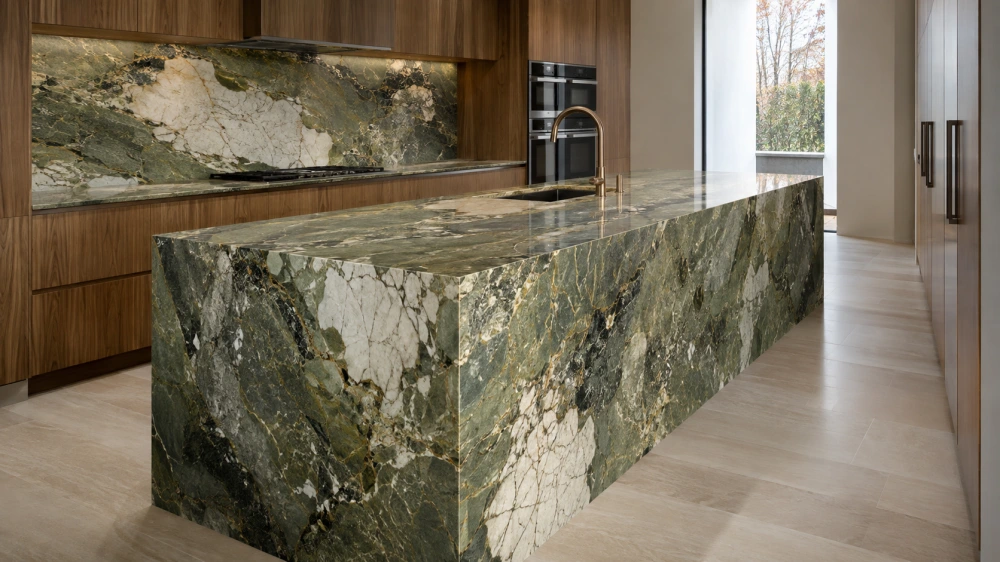
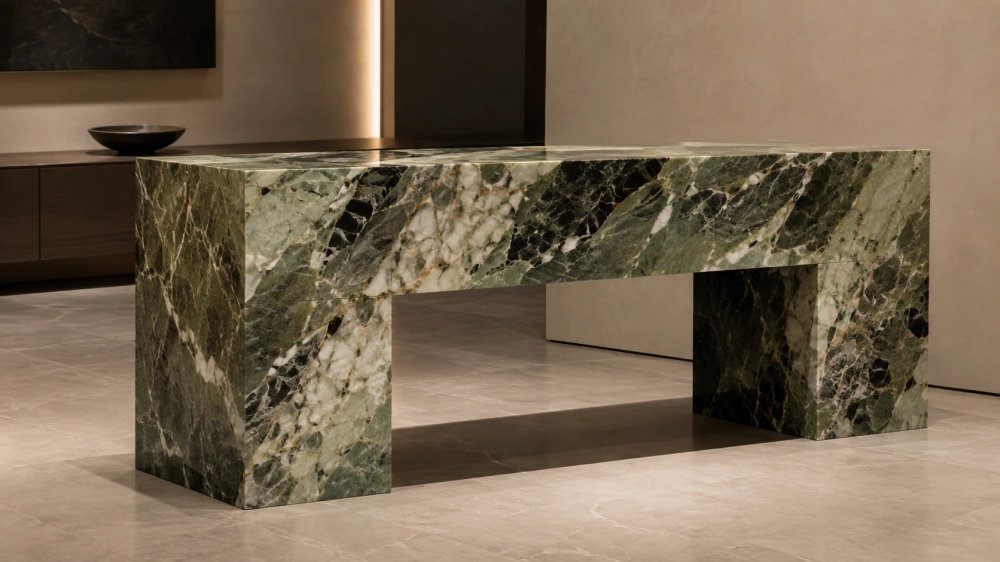
Um guia de Quartizito Verde da Amazon deve ajudar os compradores a transformar uma ideia visual do material em uma decisão coordenada para o projeto. Para cozinhas e móveis de destaque, isso significa revisar as lajes atuais de pedra natural, definir o design pretendido, preparar as informações de fabricação e documentar as aprovações antes de assumir qualquer compromisso de produção.
Comece pelo material, não pelo nome comercial
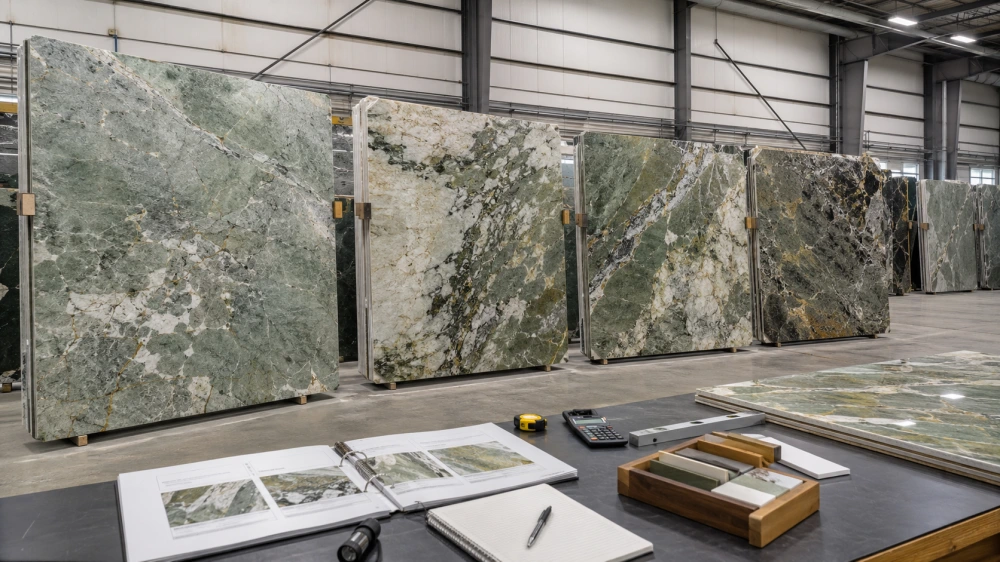
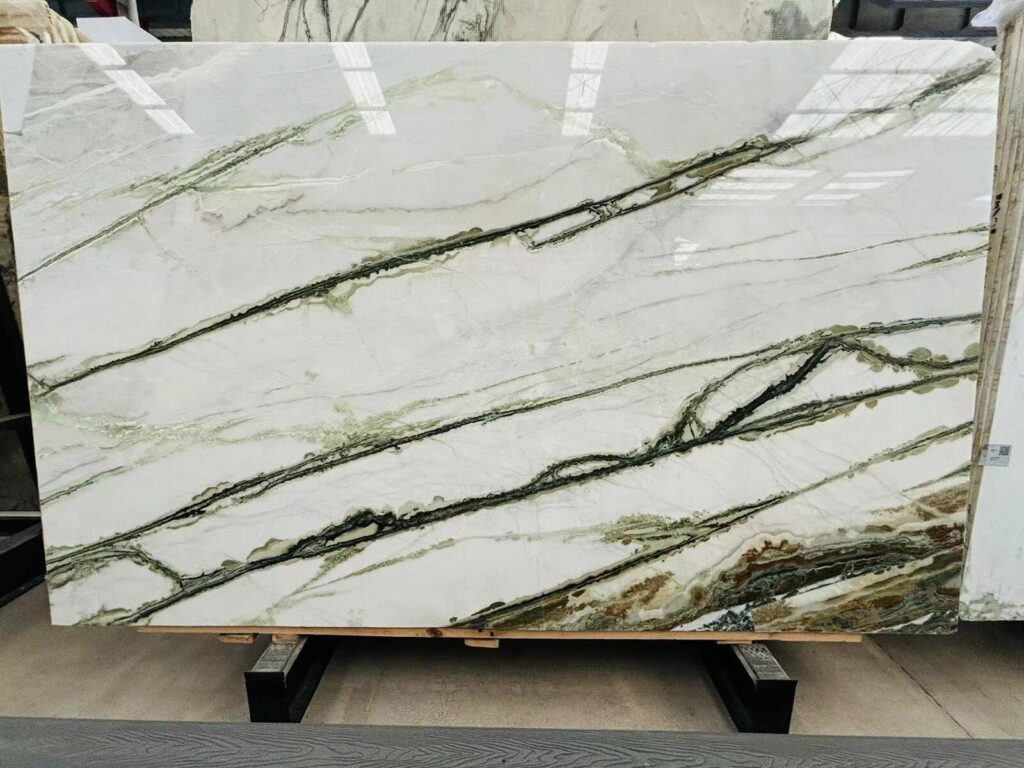
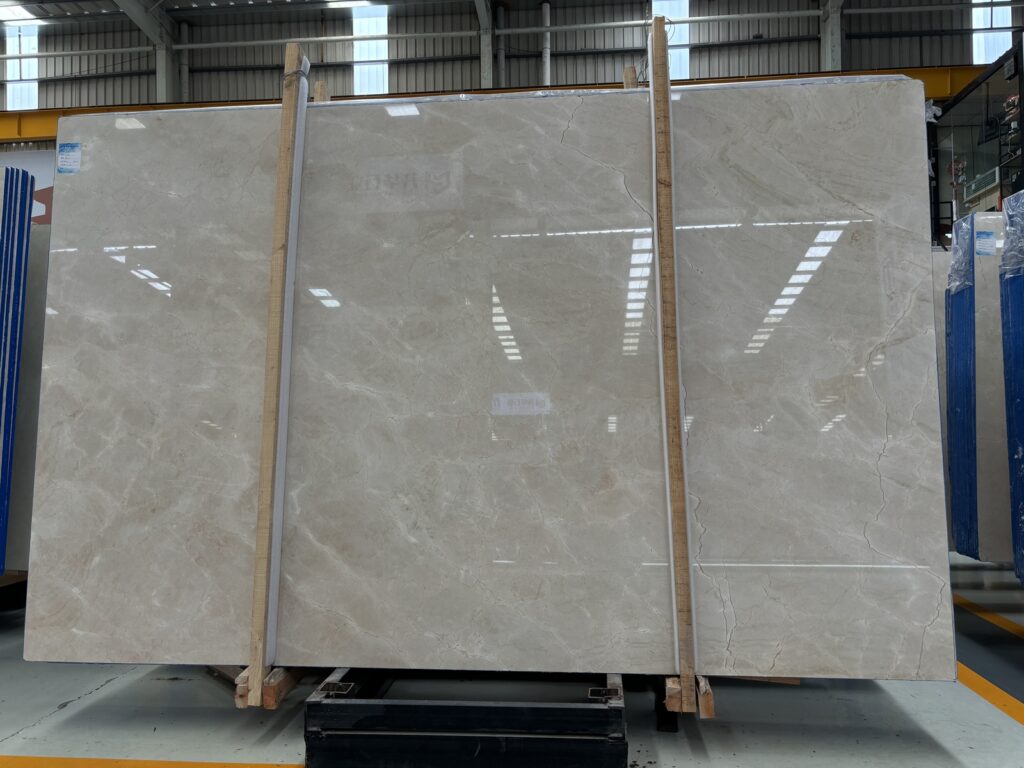
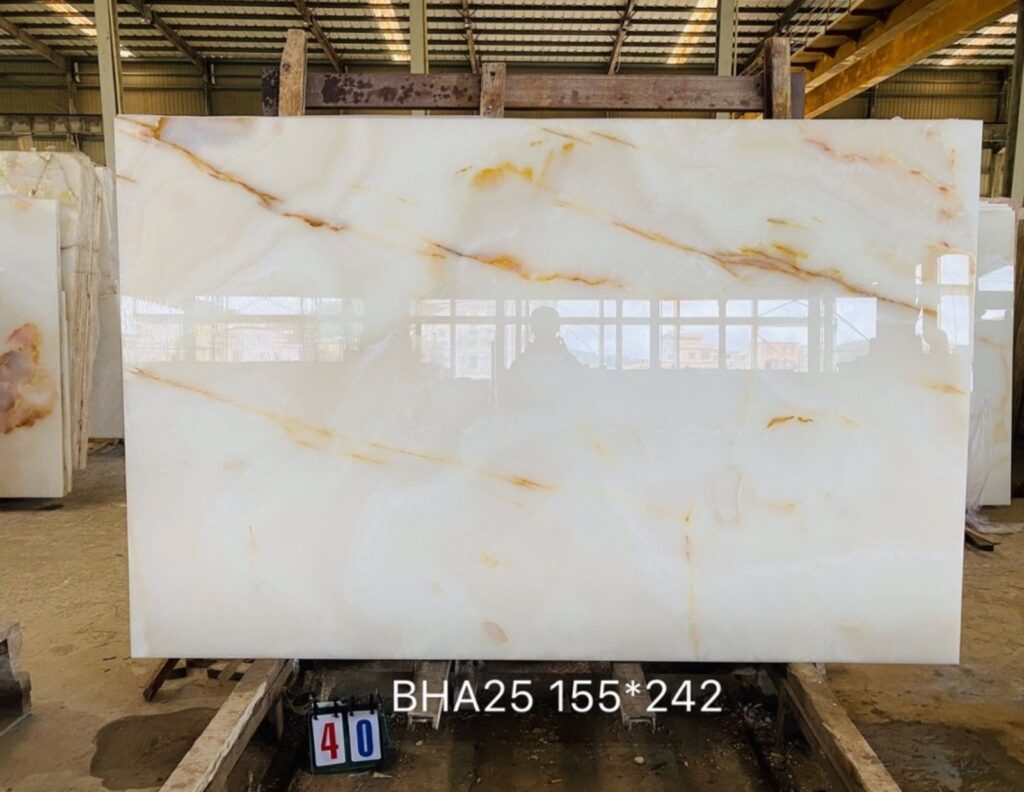
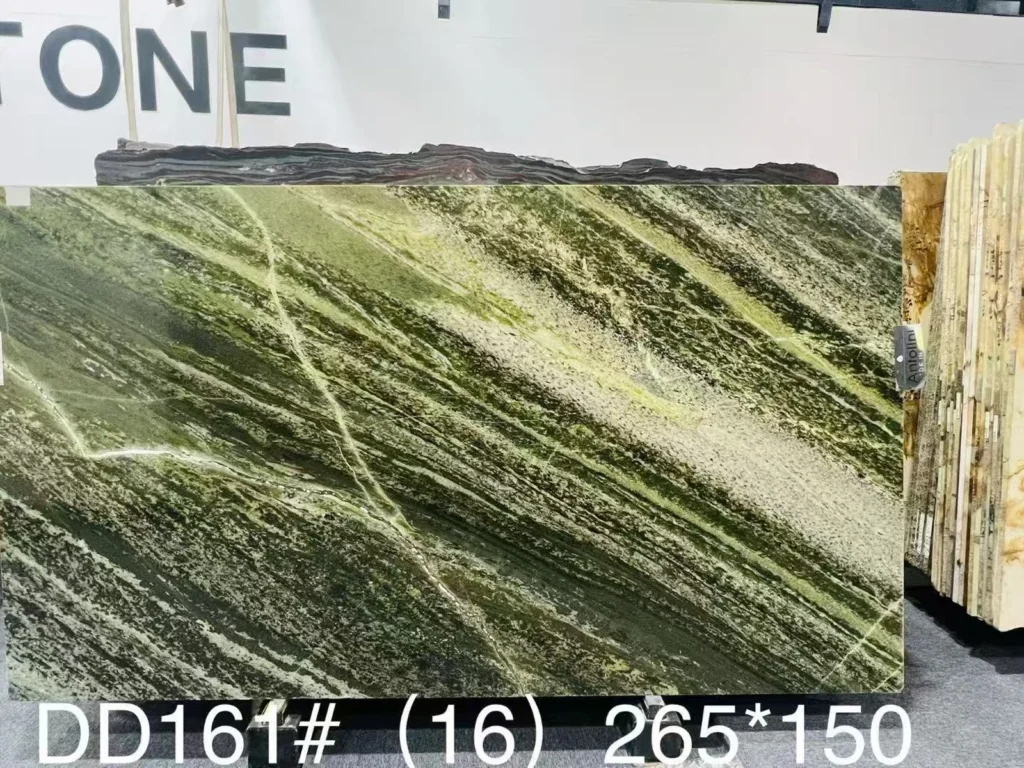
Amazon Green é um nome comercial de pedra; portanto, uma especificação responsável começa pelas lajes reais propostas para o projeto. O quartzito natural é uma rocha metamórfica e não deve ser descrito como quartzo engenheirado. A aparência, a composição mineral, o tratamento com resina, as fissuras, a disponibilidade de espessuras e a resposta à fabricação podem variar entre as diferentes seleções. A HRST STONE recomenda que os compradores aprovem fotografias das lajes atuais, amostras físicas quando possível e o layout previsto antes de tomar a decisão final de produção.
Para importadores, fabricantes, designers, arquitetos, empreiteiros e equipes de compras, a pergunta relevante não é se todas as lajes terão a mesma aparência. A questão é se a gama aprovada, o plano de processamento e os pontos de controle de qualidade estão claros o suficiente para gerenciar a variação natural. Essa abordagem protege a intenção do projeto, mantendo alinhadas as decisões de fábrica, obra e logística.
Uma estrutura completa para projetos com Quartizito Verde da Amazon
O guia mais confiável é uma sequência, e não uma promessa. Confirme a aplicação e a direção visual, revise as lajes reais, estabeleça o layout, coordene os requisitos de fabricação e instalação com os profissionais responsáveis e concorde sobre as evidências necessárias antes da liberação. Essa estrutura apoia a tomada de decisões sem inventar disponibilidade, dados de desempenho, resultados do projeto ou prazos de entrega.
Defina os pontos de aprovação antes do início dos trabalhos
Registre o nome do material, a aplicação, as dimensões acabadas, a espessura nominal, o acabamento superficial, os detalhes de borda ou retorno, as faces visíveis e o destino em um único briefing do projeto. Inclua desenhos sempre que houver recortes, emendas, casamento de padrões, iluminação traseira, sistemas de parede ou acabamentos mistos. Um briefing não substitui a engenharia, mas cria um registro prático do que o comprador deseja revisar antes da fabricação.
Ponto de decisão
What to confirm
Por que isso Importa
Seleção de lajes
Gama de cores, movimentação, fissuras, reparos e faces utilizáveis
A variação natural é avaliada antes do corte.
Layout
Direção das veios, emendas, numeração dos painéis e posições dos recortes
A continuidade visual pode ser revisada desde cedo.
Fabricação
Espessura, perfil da borda, acabamento, reforços e tolerâncias
O escopo de processamento torna-se verificável.
Liberação
Fotos, dimensões, proteção e marcas de embalagem
As verificações de expedição estão vinculadas ao escopo aprovado.
Como avaliar lajes para a decisão de um projeto
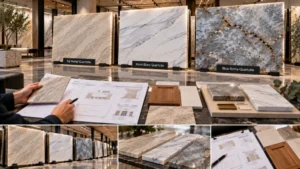
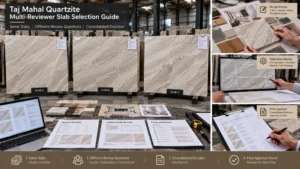
Analise as lajes sob iluminação que revele tanto a composição geral quanto as características locais. Solicite vistas amplas para observar padrão e tonalidade, seguidas de vistas próximas das bordas, cantos, veios, fissuras naturais, áreas preenchidas e quaisquer zonas de recorte propostas. Uma fissura pode ser uma característica natural e não uma falha estrutural; a resposta correta é identificá-la, concordar sobre sua posição no layout e permitir que o fabricante avalie o método de manuseio necessário.
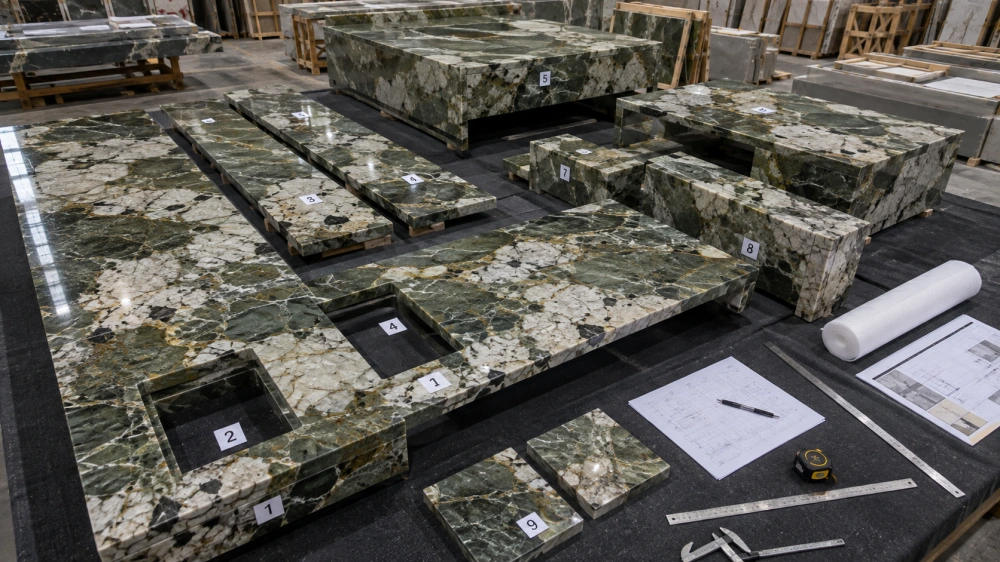
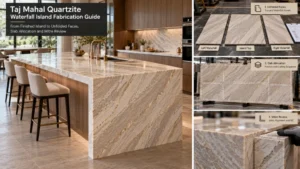
Solicite um layout numerado quando o projeto incluir painéis repetidos, uma grande ilha, uma recepção, uma parede decorativa ou uma sequência de unidades. O layout deve indicar quais peças ficam voltadas para cima, sua orientação, as emendas propostas e as principais transições visuais. Isso é mais útil do que aprovar uma descrição genérica de cor, pois conecta as lajes aprovadas aos componentes acabados.
Coordene a intenção do projeto e a realidade da fabricação
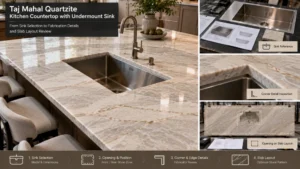
Desenhos de pedras naturais devem mostrar mais do que apenas as dimensões nominais. Marque as bordas visíveis, vãos sem suporte, aberturas para pia ou cooktop, retornos de parede, restrições de acesso e a relação com os acabamentos adjacentes. O fabricante designado e o engenheiro do projeto devem definir os suportes, fixações e detalhes estruturais para a instalação real. A HRST STONE pode usar o briefing para coordenar a revisão do material e o escopo de usinagem, mas não deve substituir o aconselhamento técnico específico ao projeto.
Informações a enviar ao Josh
Formato útil
Resultado da revisão
Material e uso pretendido
Calendário de acabamento marcado ou lista concisa
A seleção é avaliada no contexto.
Tamanhos e quantidades
Calendário de dimensões ou lista de quantidades
A discussão sobre rendimento e corte está fundamentada.
Desenhos e detalhes
PDF, exportação CAD ou esboços anotados
Emendas, bordas e aberturas são visíveis.
Acabamento e destino da entrega
Confirmação escrita
As expectativas de embalagem e manuseio estão mais claras.
Controle de qualidade que apoia aprovações informadas
Uma sequência prática de revisão separa a aprovação do material da aprovação do produto acabado. Primeiro, confirme a seleção da laje e o layout. Em seguida, revise o plano de corte e bordas antes de iniciar trabalhos irreversíveis. Por fim, inspecione fotografias ou outras evidências acordadas das peças acabadas, etiquetas, proteção e embalagem antes da liberação. As evidências devem corresponder ao escopo aprovado, em vez de fazer afirmações amplas sobre desempenho ou consistência.
Especifique o que deve ser fotografado ou medido: faces acabadas, bordas, cantos, recortes, sequências de montagem a seco, etiquetas e proteção da embalagem. Se surgir alguma preocupação, peça que seja documentada em relação ao desenho e aos critérios de aceitação acordados. Isso mantém a conversa factual e evita que uma preferência estética seja confundida com um defeito de fabricação.
Separe o quartzito natural do quartzo engenheirado
O quartzito natural e o quartzo engenheirado são materiais diferentes. O quartzito natural provém de lajes de pedra natural e pode apresentar variação mineral inerente, veios, fissuras e outras características geológicas. Já o quartzo engenheirado é um produto compósito fabricado, com composição e documentação específicos distintos. Não transfira suposições, instruções de limpeza, afirmações de desempenho ou detalhes de instalação de um material para o outro sem verificar as informações específicas do produto.
Fluxo de trabalho de compra para projetos internacionais
A aquisição internacional se beneficia de uma transferência clara de responsabilidades entre a equipe de design, o comprador, o fabricante, o coordenador de frete e a equipe de obra. Comece pelo material e pela aplicação, depois confirme dimensões e quantidades, aprove a seleção das lajes e o layout, revise as amostras das peças acabadas e alinhe as instruções de embalagem e entrega. Mantenha os desenhos e fotos mais recentes aprovados em um único registro do projeto, para que as revisões possam ser rastreadas.
Não dependa de promessas genéricas sobre disponibilidade, prazo de entrega, testes ou resultado do projeto. Esses detalhes variam conforme a escolha do material, o escopo da fabricação, os requisitos do projeto e o destino final. Uma consulta específica permite que a equipe avalie o trabalho solicitado e identifique o que precisa ser confirmado antes de efetuar o pedido.
Antes da aprovação, verifique se os tomadores de decisão concordam quanto à gama visual, aos tamanhos dos cortes, às bordas visíveis, ao acabamento, às juntas, aos recortes, à proteção, à rotulagem e ao ponto de entrega. Confirme qual parte é responsável pela medição das condições do local, do suporte estrutural, das tolerâncias de instalação e da aceitação final. Esses controles tornam o gerenciamento de um pedido de pedra natural mais fácil, sem pressupor que todos os projetos possuem os mesmos requisitos técnicos.
Para uma solicitação envolvendo o Quartzito Verde da Amazon, envie a Josh o nome do material, as dimensões, as quantidades, os desenhos, o acabamento superficial exigido e o destino de entrega. Adicione fotografias de materiais adjacentes ou uma referência visual se a correspondência for importante. A HRST STONE / XIAMEN HRST STONE CO., LTD. poderá então discutir um fluxo de revisão adequado às informações fornecidas.
Mantenha o registro de aprovação útil
Utilize desenhos datados e fotografias claramente identificadas para que a equipe de compras possa identificar a decisão atual. Quando o escopo mudar, registre se a alteração afeta o layout, a lista de cortes, o acabamento, a embalagem ou os trabalhos no local. Essa disciplina simples é especialmente valiosa quando várias partes avaliam um projeto em pedra natural em diferentes locais.
Adeque a revisão à aplicação
Uma bancada, um painel retroiluminado, um piso e um revestimento de parede podem exigir perguntas distintas. Discuta as faces visíveis, as juntas, o trajeto de manuseio e as interfaces de instalação específicas para a aplicação em questão. A seleção do material é mais confiável quando avaliada junto ao uso real, em vez de isoladamente.
Use fotografias como evidência, não como suposições
As fotografias ajudam o comprador a avaliar o movimento, o tom, o tratamento das bordas e as condições da embalagem, mas a iluminação e as telas podem influenciar a aparência. Combine-as com um layout escrito, dimensões e a descrição aprovada do acabamento. Se um detalhe for crítico, informe isso antes da fabricação, em vez de considerá-lo como um requisito implícito.
Planeje para a variação natural
O quartzito natural deve ser selecionado tendo em mente uma variação razoável. Uma equipe de projeto pode gerenciar essa variação por meio do agrupamento de lajes, da orientação, da revisão em seco e do planejamento claro das juntas. Essas etapas não tornam a pedra uniforme; elas ajudam a alinhar o resultado instalado com a direção visual aprovada.
Torne as consultas prontas para decisão
Uma consulta concisa reduz a incerteza. Informe o nome do material, a aplicação, os tamanhos acabados, as quantidades, os desenhos, o acabamento superficial e o destino, e identifique quaisquer requisitos visuais ou técnicos críticos. Assim, Josh poderá estruturar a próxima discussão sobre o material e a fabricação sem assumir compromissos sem respaldo.
Proteja as decisões durante as transferências
Compartilhe os documentos aprovados com as pessoas responsáveis pela fabricação, embalagem, transporte e instalação. Uma transferência deve indicar a revisão mais recente do desenho e quaisquer pontos especiais de manuseio. Isso garante continuidade entre a decisão de seleção do comprador e as equipes que executam o trabalho.
Mantenha o registro de aprovação útil
Utilize desenhos datados e fotografias claramente identificadas para que a equipe de compras possa identificar a decisão atual. Quando o escopo mudar, registre se a alteração afeta o layout, a lista de cortes, o acabamento, a embalagem ou os trabalhos no local. Essa disciplina simples é especialmente valiosa quando várias partes avaliam um projeto em pedra natural em diferentes locais.
Adeque a revisão à aplicação
Uma bancada, um painel retroiluminado, um piso e um revestimento de parede podem exigir perguntas distintas. Discuta as faces visíveis, as juntas, o trajeto de manuseio e as interfaces de instalação específicas para a aplicação em questão. A seleção do material é mais confiável quando avaliada junto ao uso real, em vez de isoladamente.
Use fotografias como evidência, não como suposições
As fotografias ajudam o comprador a avaliar o movimento, o tom, o tratamento das bordas e as condições da embalagem, mas a iluminação e as telas podem influenciar a aparência. Combine-as com um layout escrito, dimensões e a descrição aprovada do acabamento. Se um detalhe for crítico, informe isso antes da fabricação, em vez de considerá-lo como um requisito implícito.
Planeje para a variação natural
O quartzito natural deve ser selecionado tendo em mente uma variação razoável. Uma equipe de projeto pode gerenciar essa variação por meio do agrupamento de lajes, da orientação, da revisão em seco e do planejamento claro das juntas. Essas etapas não tornam a pedra uniforme; elas ajudam a alinhar o resultado instalado com a direção visual aprovada.
Torne as consultas prontas para decisão
Uma consulta concisa reduz a incerteza. Informe o nome do material, a aplicação, os tamanhos acabados, as quantidades, os desenhos, o acabamento superficial e o destino, e identifique quaisquer requisitos visuais ou técnicos críticos. Assim, Josh poderá estruturar a próxima discussão sobre o material e a fabricação sem assumir compromissos sem respaldo.
Proteja as decisões durante as transferências
Compartilhe os documentos aprovados com as pessoas responsáveis pela fabricação, embalagem, transporte e instalação. Uma transferência deve indicar a revisão mais recente do desenho e quaisquer pontos especiais de manuseio. Isso garante continuidade entre a decisão de seleção do comprador e as equipes que executam o trabalho.
Mantenha o registro de aprovação útil
Utilize desenhos datados e fotografias claramente identificadas para que a equipe de compras possa identificar a decisão atual. Quando o escopo mudar, registre se a alteração afeta o layout, a lista de cortes, o acabamento, a embalagem ou os trabalhos no local. Essa disciplina simples é especialmente valiosa quando várias partes avaliam um projeto em pedra natural em diferentes locais.
Adeque a revisão à aplicação
Uma bancada, um painel retroiluminado, um piso e um revestimento de parede podem exigir perguntas distintas. Discuta as faces visíveis, as juntas, o trajeto de manuseio e as interfaces de instalação específicas para a aplicação em questão. A seleção do material é mais confiável quando avaliada junto ao uso real, em vez de isoladamente.
Use fotografias como evidência, não como suposições
As fotografias ajudam o comprador a avaliar o movimento, o tom, o tratamento das bordas e as condições da embalagem, mas a iluminação e as telas podem influenciar a aparência. Combine-as com um layout escrito, dimensões e a descrição aprovada do acabamento. Se um detalhe for crítico, informe isso antes da fabricação, em vez de considerá-lo como um requisito implícito.
Planeje para a variação natural
O quartzito natural deve ser selecionado tendo em mente uma variação razoável. Uma equipe de projeto pode gerenciar essa variação por meio do agrupamento de lajes, da orientação, da revisão em seco e do planejamento claro das juntas. Essas etapas não tornam a pedra uniforme; elas ajudam a alinhar o resultado instalado com a direção visual aprovada.
Torne as consultas prontas para decisão
Uma consulta concisa reduz a incerteza. Informe o nome do material, a aplicação, os tamanhos acabados, as quantidades, os desenhos, o acabamento superficial e o destino, e identifique quaisquer requisitos visuais ou técnicos críticos. Assim, Josh poderá estruturar a próxima discussão sobre o material e a fabricação sem assumir compromissos sem respaldo.
Proteja as decisões durante as transferências
Compartilhe os documentos aprovados com as pessoas responsáveis pela fabricação, embalagem, transporte e instalação. Uma transferência deve indicar a revisão mais recente do desenho e quaisquer pontos especiais de manuseio. Isso garante continuidade entre a decisão de seleção do comprador e as equipes que executam o trabalho.
Mantenha o registro de aprovação útil
Utilize desenhos datados e fotografias claramente identificadas para que a equipe de compras possa identificar a decisão atual. Quando o escopo mudar, registre se a alteração afeta o layout, a lista de cortes, o acabamento, a embalagem ou os trabalhos no local. Essa disciplina simples é especialmente valiosa quando várias partes avaliam um projeto em pedra natural em diferentes locais.
Adeque a revisão à aplicação
Uma bancada, um painel retroiluminado, um piso e um revestimento de parede podem exigir perguntas distintas. Discuta as faces visíveis, as juntas, o trajeto de manuseio e as interfaces de instalação específicas para a aplicação em questão. A seleção do material é mais confiável quando avaliada junto ao uso real, em vez de isoladamente.
Use fotografias como evidência, não como suposições
As fotografias ajudam o comprador a avaliar o movimento, o tom, o tratamento das bordas e as condições da embalagem, mas a iluminação e as telas podem influenciar a aparência. Combine-as com um layout escrito, dimensões e a descrição aprovada do acabamento. Se um detalhe for crítico, informe isso antes da fabricação, em vez de considerá-lo como um requisito implícito.
Planeje para a variação natural
O quartzito natural deve ser selecionado tendo em mente uma variação razoável. Uma equipe de projeto pode gerenciar essa variação por meio do agrupamento de lajes, da orientação, da revisão em seco e do planejamento claro das juntas. Essas etapas não tornam a pedra uniforme; elas ajudam a alinhar o resultado instalado com a direção visual aprovada.
Torne as consultas prontas para decisão
Uma consulta concisa reduz a incerteza. Informe o nome do material, a aplicação, os tamanhos acabados, as quantidades, os desenhos, o acabamento superficial e o destino, e identifique quaisquer requisitos visuais ou técnicos críticos. Assim, Josh poderá estruturar a próxima discussão sobre o material e a fabricação sem assumir compromissos sem respaldo.
Proteja as decisões durante as transferências
Compartilhe os documentos aprovados com as pessoas responsáveis pela fabricação, embalagem, transporte e instalação. Uma transferência deve indicar a revisão mais recente do desenho e quaisquer pontos especiais de manuseio. Isso garante continuidade entre a decisão de seleção do comprador e as equipes que executam o trabalho.
Mantenha o registro de aprovação útil
Utilize desenhos datados e fotografias claramente identificadas para que a equipe de compras possa identificar a decisão atual. Quando o escopo mudar, registre se a alteração afeta o layout, a lista de cortes, o acabamento, a embalagem ou os trabalhos no local. Essa disciplina simples é especialmente valiosa quando várias partes avaliam um projeto em pedra natural em diferentes locais.
Adeque a revisão à aplicação
Uma bancada, um painel retroiluminado, um piso e um revestimento de parede podem exigir perguntas distintas. Discuta as faces visíveis, as juntas, o trajeto de manuseio e as interfaces de instalação específicas para a aplicação em questão. A seleção do material é mais confiável quando avaliada junto ao uso real, em vez de isoladamente.
Use fotografias como evidência, não como suposições
As fotografias ajudam o comprador a avaliar o movimento, o tom, o tratamento das bordas e as condições da embalagem, mas a iluminação e as telas podem influenciar a aparência. Combine-as com um layout escrito, dimensões e a descrição aprovada do acabamento. Se um detalhe for crítico, informe isso antes da fabricação, em vez de considerá-lo como um requisito implícito.
Planeje para a variação natural
O quartzito natural deve ser selecionado tendo em mente uma variação razoável. Uma equipe de projeto pode gerenciar essa variação por meio do agrupamento de lajes, da orientação, da revisão em seco e do planejamento claro das juntas. Essas etapas não tornam a pedra uniforme; elas ajudam a alinhar o resultado instalado com a direção visual aprovada.
Torne as consultas prontas para decisão
Uma consulta concisa reduz a incerteza. Informe o nome do material, a aplicação, os tamanhos acabados, as quantidades, os desenhos, o acabamento superficial e o destino, e identifique quaisquer requisitos visuais ou técnicos críticos. Assim, Josh poderá estruturar a próxima discussão sobre o material e a fabricação sem assumir compromissos sem respaldo.
Perguntas frequentes
1. O que um guia de Quartizito Verde da Amazon deve abranger antes da compra?
Deve abranger a seleção efetiva da laje, a aplicação, os tamanhos, as quantidades, o layout visual, o acabamento, os detalhes das bordas, os desenhos de fabricação, as comprovações de controle de qualidade, o embalamento e o destino da entrega.
2. Como o quartizito natural difere do quartzo engenheirado?
O quartzito natural é uma pedra natural com variações geológicas inerentes. O quartzo engenheirado é um produto compósito fabricado; portanto, os materiais não devem ser considerados intercambiáveis.
3. Como gerenciar a variação de cor e padrão no Quartizito Verde da Amazon?
Revise as lajes reais e aprovem um layout numerado que indique a orientação, as faces visíveis, as juntas e as transições críticas. Utilize fotografias e desenhos datados para registrar a direção visual acordada.
4. Quais informações de fabricação são necessárias para uma peça de mobiliário de destaque?
Fornecer dimensões finais, quantidades, desenhos, faces visíveis, detalhes de bordas, acabamento, recortes, emendas, interfaces e destino da entrega. O fabricante e o engenheiro de projeto devem avaliar os requisitos específicos do projeto quanto ao suporte e à instalação.
5. Como Josh pode ajudar em uma consulta sobre Quartizito Verde da Amazon?
Josh pode utilizar o nome do material, a aplicação, os tamanhos, as quantidades, os desenhos, o acabamento, referências visuais e o destino para organizar uma revisão focada de materiais e fabricação com a HRST STONE.
Nota Final
A compra de pedra natural é mais eficaz quando as lajes aprovadas, os desenhos, os detalhes de fabricação e os requisitos de entrega estão documentados conjuntamente. Entre em contato com Josh informando o nome do material, as dimensões, as quantidades, os desenhos, o acabamento e o destino de entrega para iniciar uma revisão focada no Quartzito Verde da Amazon.
Hi, I am the author of this article. I have been working in the field of Natural Stone for more than 15 years. If you need customized Natural Stone services, please feel free to contact me.
Fabricante e Fornecedor de Mármore, Granito, Quartzito, Ágata da China - HRST STONE
Bem-vindo à HRST STONE!
Olá, gostaria de saber mais sobre seus produtos. Você poderia compartilhar informações sobre preços, quantidade mínima de pedido, opções de personalização e amostras?