블로그

Batch Consistency Strategy for Marble Projects After Xiamen Stone Fair 2026

빠른 요약: Batch consistency is one of the most critical challenges in large marble projects. Even premium materials can fail visually if slabs from different quarry blocks are mixed. This guide explains how buyers visiting Xiamen Stone Fair 2026 can evaluate suppliers for multi-container consistency before production begins.

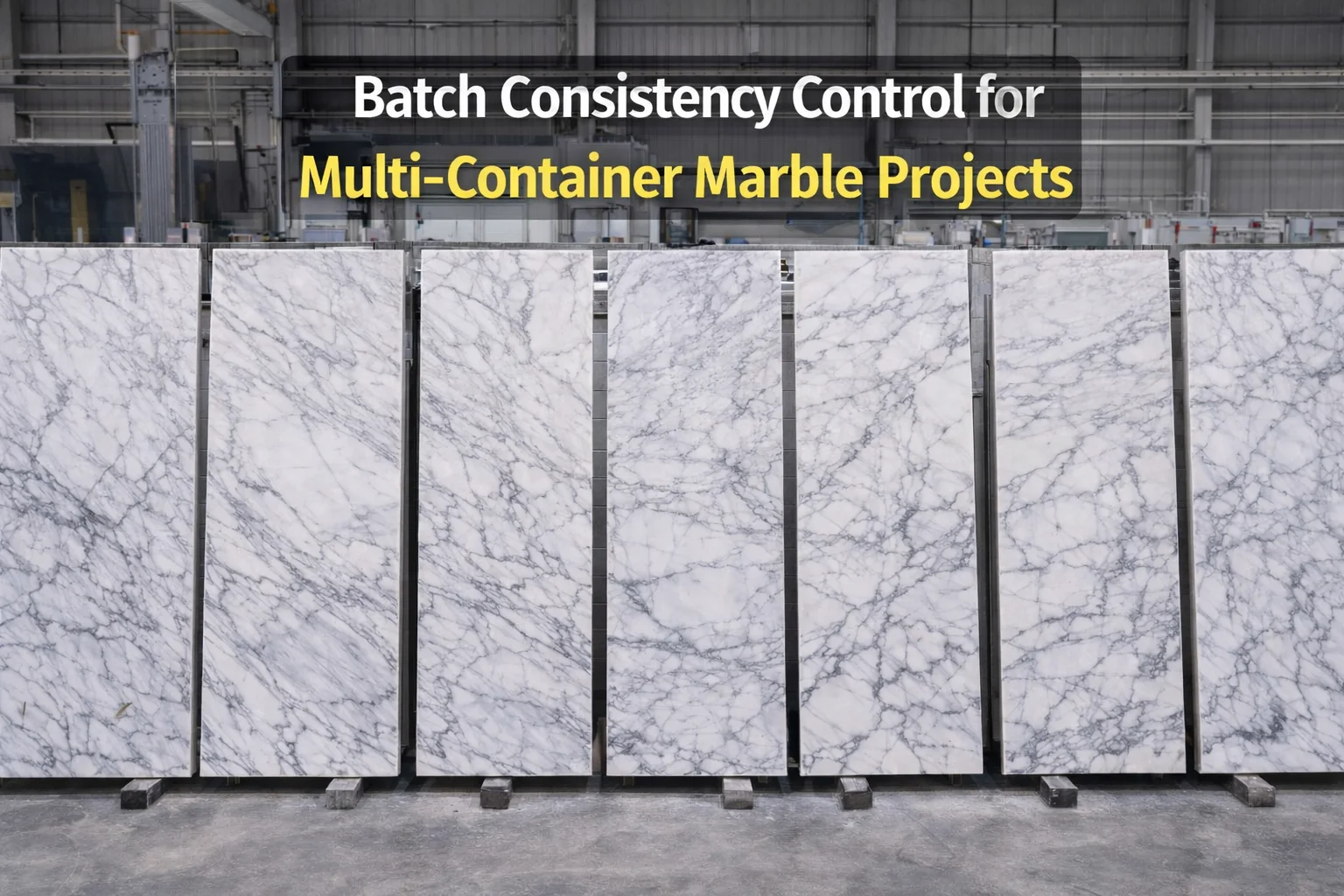
Batch consistency control for multi-container marble projects with same quarry block slabs arranged in factory

For global buyers managing large stone projects, visual consistency is often more important than individual slab beauty. A single container of marble may look excellent during sampling, but once multiple containers arrive from different production stages, color variation, vein direction, background density, and gloss differences can become serious installation problems. This is why experienced procurement teams treat batch consistency as a production strategy rather than a simple quality issue.

At Xiamen Stone Fair 2026, many suppliers will display attractive slabs under ideal lighting conditions, but professional buyers know that fair samples represent only a small portion of actual production capacity. Before placing large orders, buyers should first understand supplier stock depth and quarry control. If you are still building your supplier shortlist, reviewing the Xiamen Stone Fair exhibitor list and suppliers guide helps identify manufacturers capable of stable material allocation.

Batch consistency becomes even more important when the project includes open floor areas, long wall elevations, hotel lobbies, or continuous countertop installations. In these situations, minor variation becomes highly visible after installation. Buyers should therefore ask suppliers to show slabs from the same quarry block rather than isolated showroom pieces.

Why Batch Consistency Fails in Marble Projects

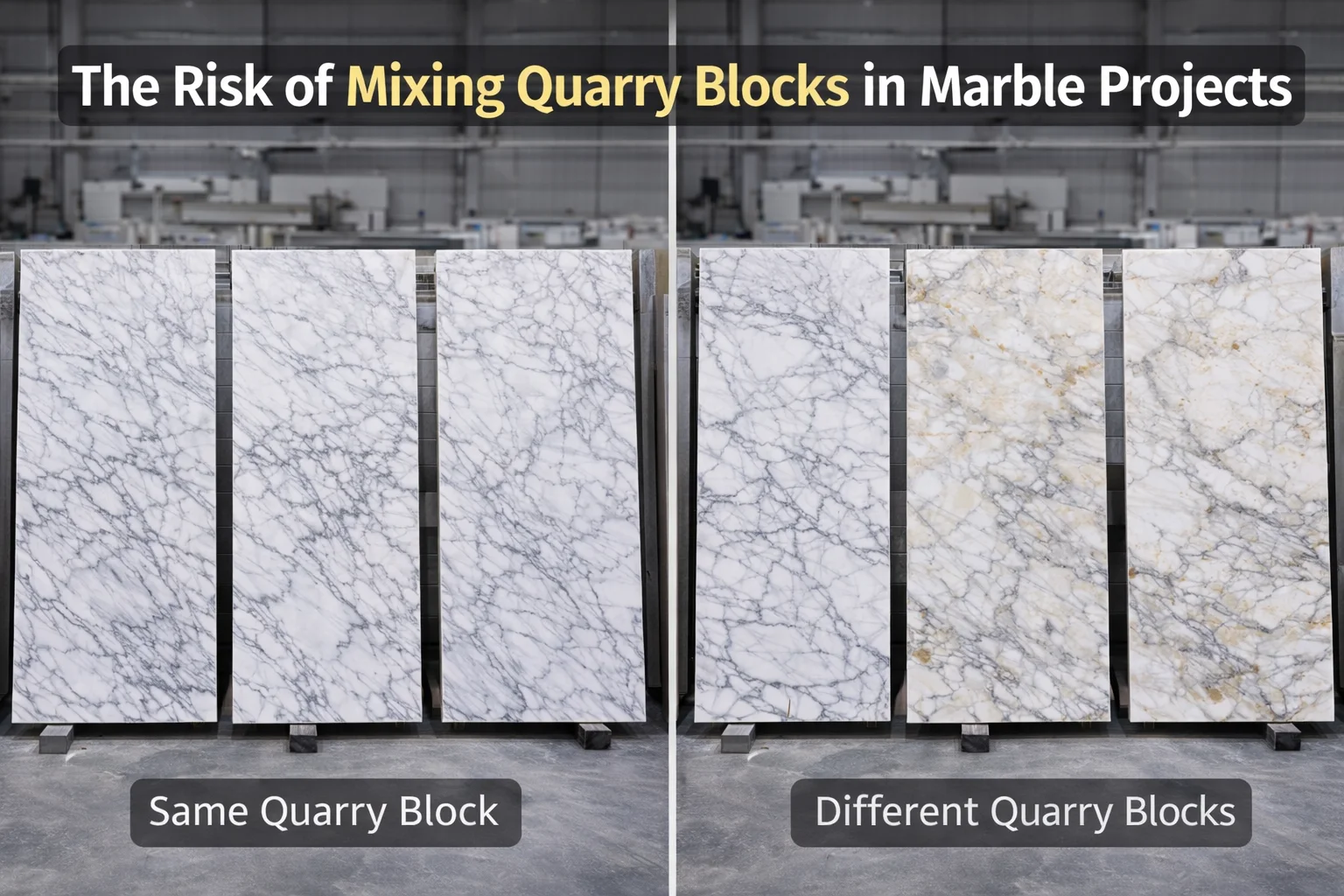
Many batch problems happen because buyers approve samples too early without confirming raw block origin. Natural marble changes significantly between quarry layers, and two blocks extracted from the same quarry may still show different visual patterns. Suppliers who rely on external stockyards often cannot guarantee continuity once production begins.

This is why supplier verification remains essential. Before production, buyers should review factory allocation methods, slab numbering systems, and stock reservation policy. If supplier control is unclear, it is advisable to use the evaluation framework described in 샤먼 석재 박람회 2026에서 석재 공급업체를 확인하는 방법.

위험 영역 Common Problem Project Impact
Block Source Different quarry blocks mixed Visible tone variation
Production Timing Containers produced weeks apart Finish inconsistency
Slab Numbering No sequence tracking 설치 불일치
Polishing Stage Different gloss levels Surface reflection differences

How Buyers Should Reserve Slabs Before Production

Comparison of same quarry block and different quarry block marble slabs showing visual risk in large projects

Professional buyers reserve slabs before cutting begins. This means selecting all visible slabs for the full project first, photographing them, numbering them, and locking them before processing. Suppliers with large slab yards can usually allocate same-block materials if decisions are made early.

At the fair, many buyers focus only on price negotiation, but material continuity often saves more money than minor cost reduction. A supplier offering lower price but weak stock control usually creates higher downstream cost through replacement and sorting delays.

When planning sourcing strategy, many procurement teams first define container volume and then map slab quantity backward to quarry availability. This strategic logic is also discussed in Xiamen Stone Fair strategic sourcing guide.

Slab Sequencing for Large Installations

For flooring, wall cladding, and bookmatch applications, slab sequencing should happen before cutting. Suppliers should provide digital slab layouts showing sequence order. Buyers must confirm whether finished pieces preserve vein continuity across adjacent surfaces.

Without sequencing, installers often receive correctly sized pieces but lose visual harmony. This is especially risky for hotel lobby floors and luxury villas where slab direction strongly affects design outcome.

Some buyers also compare marble and quartz alternatives when visual stability is critical. In projects where uniformity matters more than natural movement, engineered materials may reduce risk, which is why some sourcing teams also review 샤먼 석재 박람회 2026의 대리석 대 석영 트렌드.

Slab sequencing for large installations with marble slab tags and production sequence control in factory

Production Controls Buyers Must Confirm

During factory visits, buyers should confirm cutting machines, polishing lines, calibration systems, and packaging zones. Production consistency depends heavily on whether the same polishing line processes the full order.

If one container is produced on one machine and the next container on another, gloss difference becomes visible. Calibration tolerance should remain within controlled thickness deviation, especially for flooring projects where level differences affect installation quality.

Factory visits remain one of the strongest tools for confirming this capability. Buyers planning post-fair inspections should also review how to visit a stone factory after Xiamen Stone Fair 2026.

How Experienced Buyers Reduce Batch Risk

Experienced buyers do not approve only one sample. They request full slab photos, dry layout previews, pallet sequence control, and written agreement on replacement policy before deposit payment.

In many successful projects, suppliers reserve 5–10% extra slabs from the same block for future replacements. This prevents visual mismatch if breakage occurs during installation.

Large developers increasingly request digital approval before each production stage. This slows the first week slightly but prevents expensive claims later.

Container inspection before shipping marble slabs for large project after factory quality control

최종 참고 사항 / 실용적인 팁: In large marble projects, consistency is not luck—it is controlled through quarry selection, slab reservation, sequencing, and disciplined production monitoring. Buyers who address batch logic before signing contracts avoid the most common visual disputes after delivery.

자주하는 질문

1. Why is marble batch consistency difficult in large projects?

Because natural marble changes between quarry blocks, and visual variation becomes obvious across large surfaces.

2. How many slabs should buyers reserve before production?

Ideally all visible slabs for the full project plus extra backup material.

3. Can suppliers guarantee same color in multiple containers?

Only if slabs are reserved from the same quarry block and processed under controlled sequencing.

4. Is slab numbering necessary?

Yes, especially for flooring, walls, and bookmatch installations.

5. Should buyers always visit factories after the fair?

Yes, factory inspection reveals production capability beyond fair samples.

6. Can quartz replace marble when consistency matters?

In some projects yes, because engineered quartz provides more uniform visual control.

HowTo

Step 1: Confirm quarry block source before order.

Step 2: Reserve slabs before cutting.

Step 3: Approve slab numbering layout.

Step 4: Verify polishing line consistency.

Step 5: Reserve replacement quantity.

참조

관련 상품

핑크 쿼츠 크리스탈

Pink Crytsal Quartz는 외적으로나 내적으로 보편적인 사랑의 결정체입니다. 핑크 크리스탈은 인테리어를 장식하여 긴장을 완화하고, 짜증을 완화하고, 마음 속 깊이 들어가 자신을 발견하고 이해력을 높일 수 있도록 도와줍니다. 핑크 크리스탈은 부드럽고 매력적인 핑크 빛을 발합니다.

자세히 보기 »

아보카투스 규암

Avocado Green Quartzite는 녹색과 회색을 결합한 다용도 색상 팔레트로 신선하고 활력이 넘치는 분위기를 자아냅니다. 낮은 채도와 따뜻함은 어떤 공간에도 따뜻함을 더해 다양한 가정 스타일에 적합합니다. 집에 아보카도 색상의 아이템을 추가하면 전체적인 미학을 변화시키고 아늑한 분위기를 조성하며 전반적인 식사 및 주방 경험을 향상시킬 수 있습니다.

자세히 보기 »

화이트 마카우바 규암

브라질 화이트 마카우바 규암은 세계에서 가장 유명한 규암입니다. 백색 규암은 장식용으로 생각할 때 섬세한 질감과 흰색과 회색의 아름다운 색조, 저렴한 가격 때문에 최고의 선택입니다. 저희 회사는 White Macaubas에 집중하고 있습니다 ...

자세히 보기 »