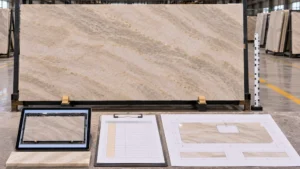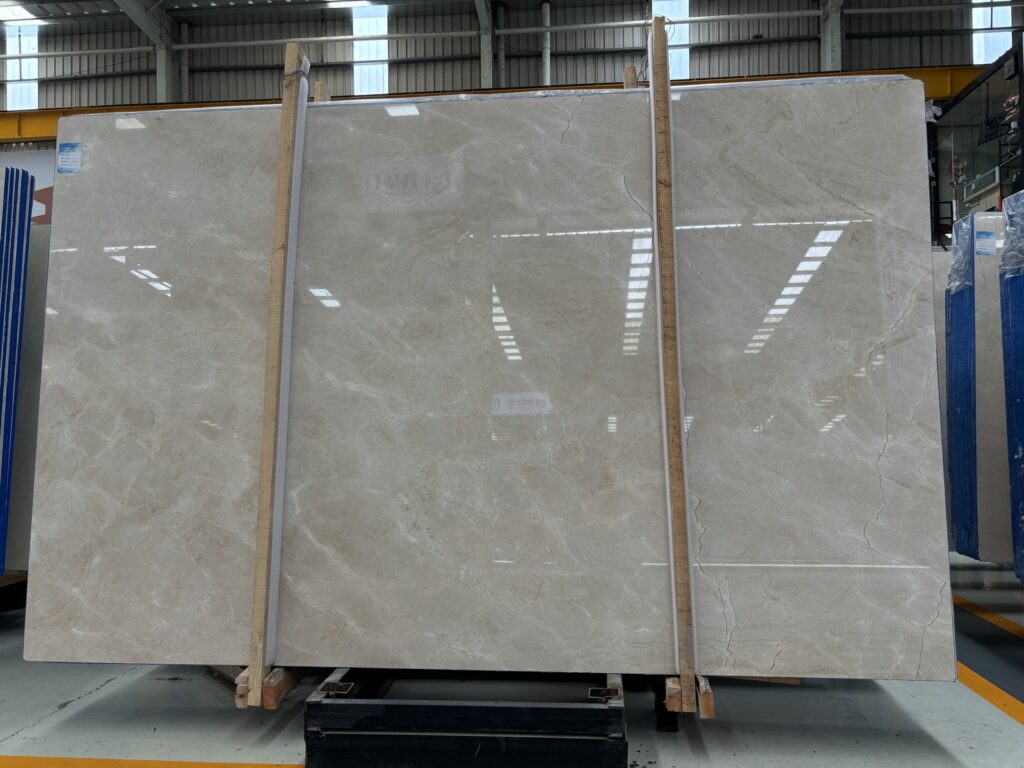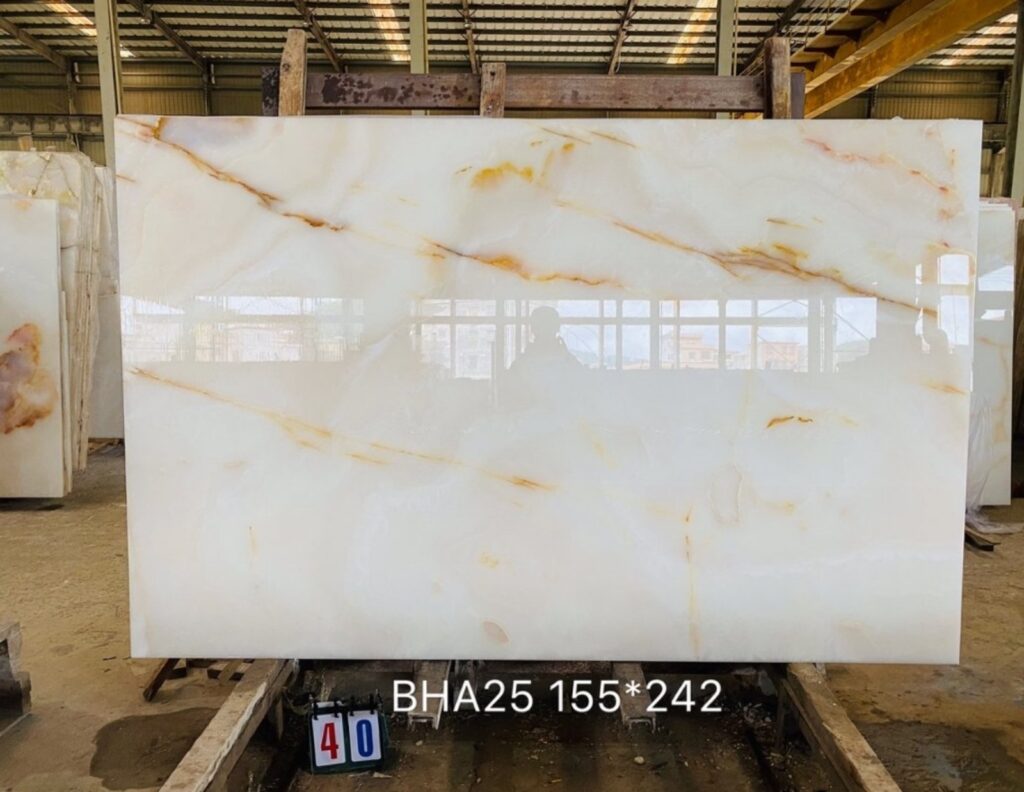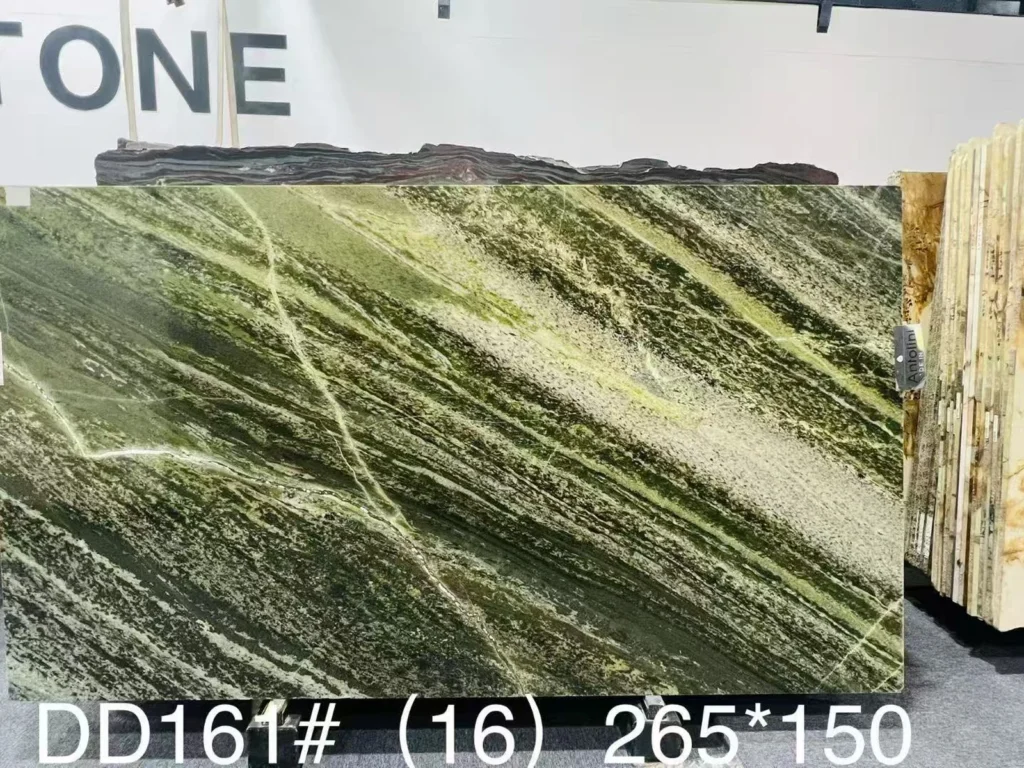
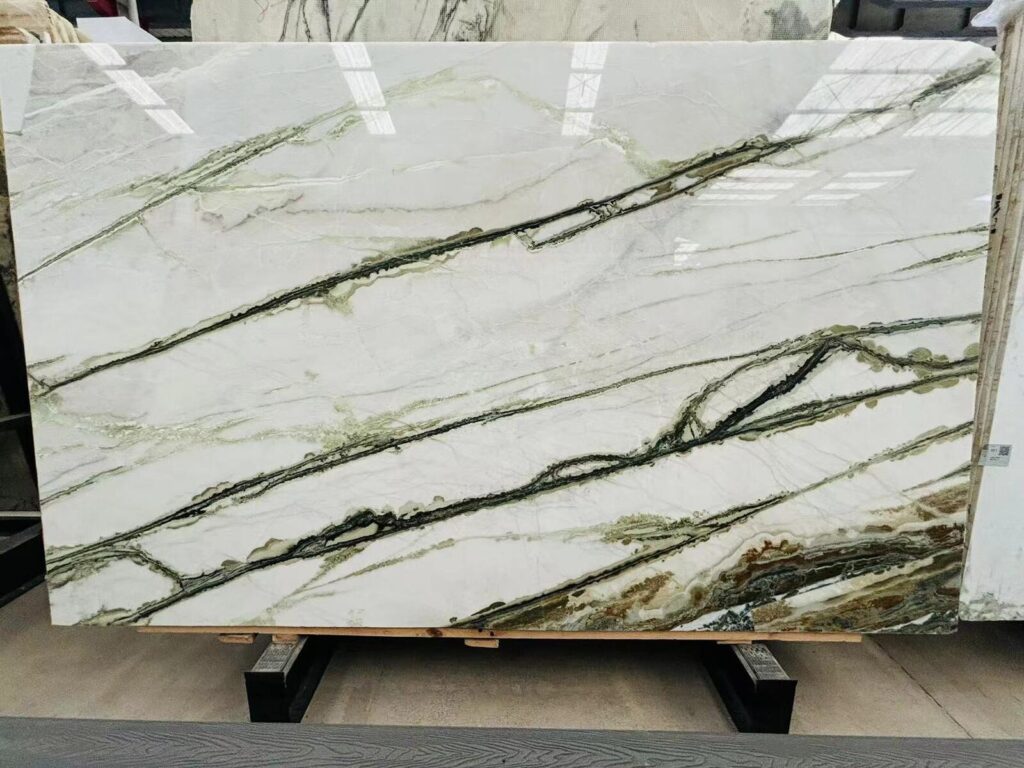

A previous-batch Quartzite sample can remain useful as a historical material reference, finish reference or broad colour-direction guide, but it should not automatically approve current inventory. Natural Quartzite varies between slabs and stock groups, and the commercial stone name does not prove that today’s available slabs match a sample retained from an earlier order. Request a current piece when the present stock must support a visual decision, and review the actual current slabs when large-scale movement, continuity, waterfall relationships or multi-slab allocation matter.
簡単なまとめDo not discard every older Quartzite sample simply because new inventory has arrived. First define what the sample is still being used to approve. A previous-batch piece may remain useful for general material direction or an established finish, but it cannot prove that current slabs have the same tone, movement, mineral distribution or usable layout. Request a current sample when today’s material must support a colour or finish decision. For visually sensitive work, connect the current sample to identifiable slabs and review the actual boards before final approval.
あ previous-batch Quartzite sample is an identified physical sample taken from an earlier stock group, slab group, order or project rather than from the material currently being offered for fabrication.
という言葉がある。 batch should be used carefully with natural stone.
Quartzite is not manufactured as a printed surface in controlled production batches. A supplier may use “batch,” “lot,” “bundle” or similar commercial language to organize material received or stored together, but that wording does not mean that every later group carrying the same commercial name will reproduce the earlier appearance.
The key decision is therefore not:
“Is this old sample still Quartzite?”
正しくは以下のとおりです:
“What decision can this old physical reference still support for the material currently being purchased?”
An older sample does not automatically become useless when the associated slabs are sold.
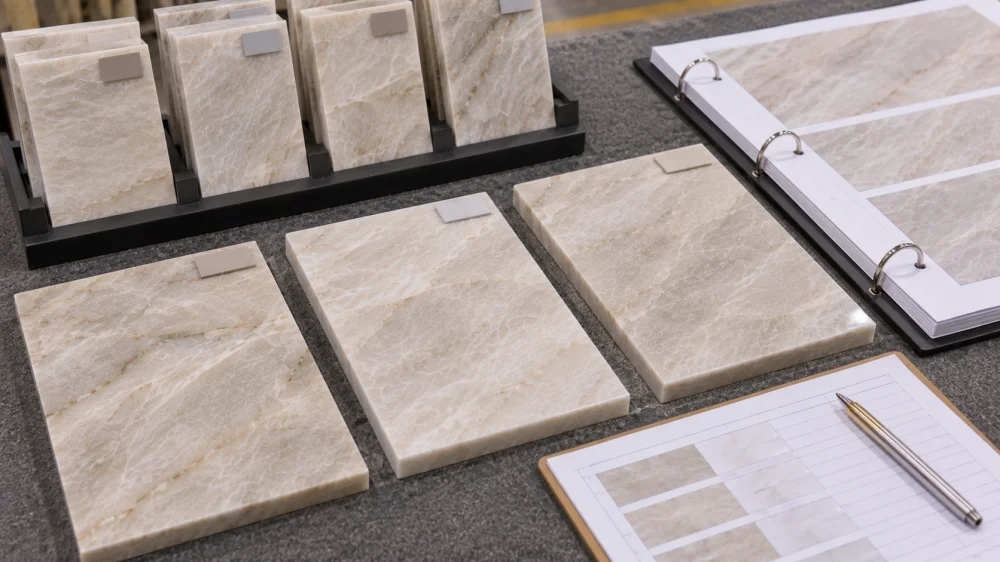
It may still provide valuable information about:
For example, a designer may have approved a Taj Mahal Quartzite sample for its warm beige-grey direction and low-contrast movement during concept design.
Months later, the exact slabs associated with that sample may no longer be available.
The sample can still communicate the preferred design direction.
What it cannot do is prove that the new slabs currently available have the same colour balance, vein distribution or project suitability.
Approval BoundaryPrevious sample accepted can mean: “This remains our preferred material direction.”
It should not silently become: “Every current slab sold under this stone name is approved.”
A small older sample cannot establish the complete visual range of current natural-stone inventory.
It normally cannot prove:
This distinction becomes more important as the finished component gets larger.
A 100 mm sample may communicate local colour and finish reasonably well while revealing almost nothing about the movement of a three-metre slab.
The buyer should therefore match the approval evidence to the scale of the decision.
A current piece should be linked to material that is presently relevant to the proposed order.
That can mean different things depending on the project.
| Current Evidence | Useful For | Does Not Automatically Prove |
| Current Small Sample | Local colour, finish, texture and mineral character | Full-slab movement or usable layout |
| Current Slab Offcut | Local appearance from an identifiable slab | Whole-board appearance unless linked to slab images |
| Current Full-Slab Photograph | Overall movement, tone and usable visual areas | Tactile finish or precise colour reproduction on every screen |
| Identified Current Slab | Physical board approval and project allocation | That another board with the same name is automatically equivalent |
| Current Bundle / Slab Sequence | Multi-slab visual range and related-board review | Fabrication release without layout approval |
A supplier should therefore be able to explain the relationship between the new sample and the current inventory.

A useful statement may be:
“Sample CS-024 was cut from Board TM-241, currently offered for Project A.”
または:
“This is a representative current stock sample, but it is not traceable to the exact slab being reserved.”
Both statements can be useful.
They simply support different levels of approval.
A new physical sample becomes more important when the current purchasing decision depends on characteristics that an older sample may no longer represent.
| Project Situation | Previous Sample | Recommended Current Evidence |
| Early concept design | Often useful for general direction | Current stock check later, before purchase |
| Current quotation / procurement | Useful as historical reference | Current sample plus current slab evidence |
| 大型キッチンアイランド | Insufficient for final visual approval | Actual full slab + layout review |
| Waterfall / vein continuity | Insufficient | Identified slabs + cutting relationship |
| Replacement beside existing stone | Useful historical evidence | Current physical comparison + slab review |
| Finish process changed | Useful finish target | Current processed sample |
| Reserved slab substituted | Historical only | New slab / sample approval before cutting |
| Hotel or multi-room package | Can support agreed material direction | Current slab range / grouping evidence |
Request a current piece when one or more of these conditions apply:
A current sample can improve confidence, but it remains a small view of a large natural surface.
For slab-scale design decisions, the next evidence should be the current slab itself.

This is particularly important for:
The current article on Quartzite bundles with hidden slabs makes the same distinction at bundle scale: one visible slab cannot automatically approve all slabs positioned behind it.
The same principle applies to samples.
Evidence ScaleOld Sample: Historical direction.
Current Sample: Current local colour / finish evidence.
Current Slab: Current large-scale visual evidence.
Current Slab + Cutting Layout: Project-specific fabrication evidence.
Approval should move up this evidence scale as the purchase decision becomes more specific.
Use comparable conditions rather than photographing each sample independently.
Place the pieces side by side where possible.
Confirm that both are dry and reasonably clean.
Orient them consistently.
Review them under the same light.
Then separate the observations into categories.

Does the current piece read warmer, cooler, lighter or darker than the previous reference?
Does the sample suggest finer, broader, quieter or more directional movement?
Remember that this is only local evidence. Confirm the complete movement on current slab photographs.
Are crystal zones, dark minerals, iron-coloured features or other visible components more or less prominent?
Are sheen and texture comparable when the same finish is intended?
Can the current piece be connected to an identifiable current slab or stock group?
Do not ask whether the two pieces are “identical.”
Ask whether the current material remains within the project’s accepted natural range and whether the difference changes the design or procurement decision.
Do not automatically reject the current material and do not force it to “match” an old sample that came from unavailable slabs.
First determine what the old sample was intended to control.
If it was only a broad concept reference, the current material may still be acceptable after review.
If the old sample was explicitly retained as the current project colour standard, the difference requires a new project decision.
Possible responses include:
サイトの Quartzite Sample Library status-control guide uses the same distinction between active, superseded and expired references.
An old sample can remain physically useful without remaining the active approval standard.
Sample control and inventory control should connect before the buyer treats the material as secured.

A current sample can be accepted while the exact slabs are still unreserved.
Likewise, exact slabs can be reserved while the project is still waiting for final finish approval.
These are different controls.
A robust sequence is:
Previous Reference → Current Stock Evidence → Current Sample → Current Slab Review → Board Selection → Reservation → Layout → Fabrication Release
既存の Quartzite Slab Reservation Formガイド explains why the commercial stone name, board number, reservation status, expiry and substitution approval should remain separate.
This becomes especially important if the buyer approves a new sample but delays the purchase.
The sample may remain on the desk while the associated slabs are sold to another project.
Do Not Confuse Sample Approval With Inventory ControlSample approved means the physical sample supports the defined decision.
Slab reserved means identified physical boards are being held under agreed commercial terms.
Fabrication released means the approved boards and current cutting documents are authorized for production.
Potentially, yes.
Finish approval and slab appearance should be separated where possible.
An older honed sample may remain a useful sheen and texture reference even after its original slab is gone.
However, the factory should confirm that the current stone can be processed to an acceptable result.
Different mineral zones can react visually to finishing in different ways, and a change in process, equipment or treatment may also change the final appearance.
For a finish-sensitive order, the strongest process is:
Historical Finish Reference → Current Stone Trial → Side-by-Side Review → Approved Current Finish Reference → Production
This avoids two opposite mistakes:
discarding a useful previous finish standard unnecessarily, or treating an old finish sample as proof of how every current slab will look after processing.
Do not request “a new sample” without explaining what decision it needs to support.
For a current procurement review, ask for a package that connects the evidence.
A useful request may include:
例えば:
“Please send one current honed sample linked to the Taj Mahal Quartzite slabs presently offered for Project A, together with complete current slab photographs and board references. Our previous Sample TM-014 remains the design-direction reference, but current material approval is required before reservation.”
That request is much more useful than:
“Please send another Taj Mahal sample.”
A previous sample can support broad material direction or an established finish reference, but it should not automatically approve current slabs. If the current purchasing decision depends on appearance, request current stock evidence and review the actual slabs to the level appropriate for the project.
No. A commercial material name identifies the stone selection but does not uniquely identify one visual appearance. Natural Quartzite can vary between slabs and stock groups in tone, movement, mineral distribution and other features.
Request one when the old sample cannot be connected to current inventory, when the project has moved into purchasing, when current slabs appear different, when the finish process has changed, when a reserved slab is substituted, or when the actual material being supplied needs a new physical approval reference.
Usually not for final visual approval. A current small sample can support local colour and finish review, but a large island should also be evaluated on the actual current slab so movement, major mineral zones, usable area and cutting orientation can be reviewed.
Not necessarily. Keep useful previous samples as historical, finish or comparison references, but update their status so nobody mistakes a superseded or expired piece for the current purchasing standard.
First confirm whether the difference comes from natural stone variation, finish, source relationship or another controlled condition. Then decide whether to accept the current range, select different slabs, issue a new active reference or retain the earlier sample only as historical evidence.
Ask for the current material and finish, an identified physical sample, its relationship to current stock or board numbers where available, complete current slab photographs, available quantity and the specific slabs being offered or reserved. State whether the older sample is being used only as a historical reference, finish target or material-direction reference.
Current Material DecisionA previous-batch sample does not become worthless simply because it is old, and a new sample does not automatically solve every natural-stone approval question.
Use the previous sample for the decision it can still support. Request a current physical piece when today’s stock needs a local colour or finish reference. Move to actual slab review when the project depends on large-scale pattern, usable area, continuity or exact board selection.
Buyer Next Step: Before relying on an older sample, ask the supplier whether the associated slabs still exist and what current physical material can be linked to the sample being offered today.