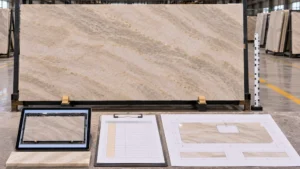
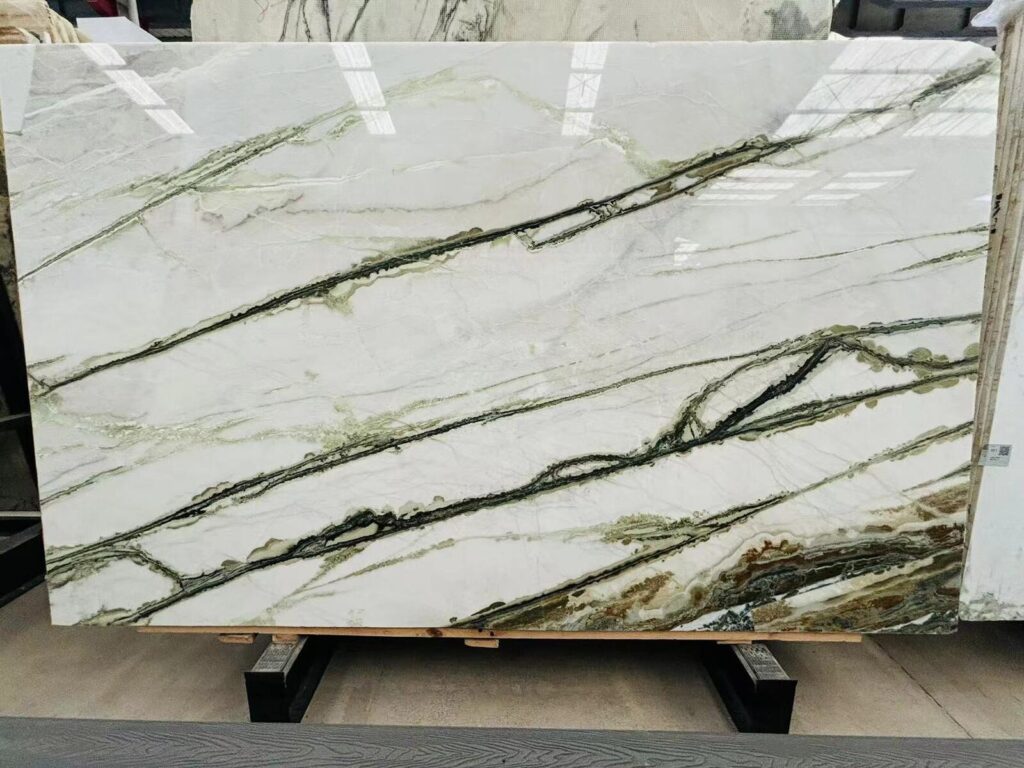

簡単なまとめクォーツァイトサンプルライブラリは、現在選定されている参照サンプルと、有効期限切れ・代替品となったもの・損傷したもの・歴史的資料としてのサンプルを明確に区別する必要があります。天然クォーツァイトの実物サンプルは、元のスラブがすでに入手不可能になったり、新しいサンプルに置き換えられたり、意図された仕上げが変更されたり、出所関係が不明になったり、あるいはサンプル自体が摩耗・再仕上げ・染色・取り扱いなどにより変化したりすることで、現行の購入判断において信頼性を失う可能性があります。各管理対象サンプルには安定したIDを付与し、素材名、仕上げ、分かっている場合は出所関係、用途、ステータス、日付、物理的所在、承認範囲、および代替参照があればそれを記録してください。有用な歴史的証拠を一律に廃棄せず、不要となったサンプルを現行の参照サンプルとは物理的・デジタル的に区別できる状態で保管してください。最も重要なのは、古いサンプルをもって現行の天然クォーツァイトスラブを自動的に承認してはならないことです。スラブ固有のプロジェクトでは、依然として現時点で入手可能な実物ボードの審査が必要です。
デザイナーがクォーツァイトサンプルライブラリを開く。
見慣れた石材名が付けられた淡いクリーム色のサンプルがいくつかあります。
あるサンプルは先月届きました。
別のサンプルはライブラリに3年間保管されています。
3つ目のサンプルは、すでに加工・販売済みのスラブグループから提供されたものです。
4つ目のサンプルは、現行の素材選定が見た目で異なるため、最近交換されました。
これら4つのサンプルはいずれも、まだ使用可能な石材サンプルのように見えます。
しかし、それらは同じステータスではありません。
これが、 クォーツァイトサンプルライブラリ:有効期限切れおよび代替品となったサンプルの識別.
問題は、古い実物サンプルが突然天然クォーツァイトでなくなることではありません。
問題は、石材そのものは物理的に無傷であっても、その意味合いが時代遅れになってしまうことです。
したがって、管理されたサンプルライブラリは次のような問いに答える必要があります。
このサンプルは現在何を表しており、どのような意思決定をサポートできるのか、また、より新しくて適切な参照サンプルに置き換えられていないか?
天然クォーツァイトには、腐敗しやすい商品のような普遍的な物理的「有効期限」はありません。
サンプルライブラリにおける有効期限は管理概念にすぎません。
つまり、かつて支持していた意思決定のための現行参照として、もはや扱ってはならないということです。
サンプルは特定可能な1枚または複数のスラブから切り出された可能性があります。
もしそれらのスラブがすでに以下の場合には:
そのサンプルは依然として歴史的証拠や一般的な素材指針として有用であり得ます。
一致するスラブが依然として利用可能であると、暗黙的に示唆してはなりません。
商業的な天然クォーツァイト名称は存続しつつ、物理的な在庫は変化することがあります。
新しいグループは以下の点で異なる可能性があります:
その違いが重要となる場合には、新しいサンプルは旧サンプルの権威を自動的に引き継ぐのではなく、独自のアイデンティティを持つべきです。
研磨済みのサンプルが、自動的に現行のホーンド仕上げの参照になるわけではありません。
プロジェクトやライブラリの基準で仕上げが変更される場合は、区別が消滅するまで古いサンプルの履歴を編集するのではなく、代替品を記録してください。
繰り返しの取り扱いによって実物サンプルは変化します。
例としては、
変化したサンプルは、当初承認された状態を表さなくなる可能性があります。
ステータス原則
実物サンプルが存在する ≠ 現行参照が有効である。棚にまだ置いてあるかどうかだけでなく、そのサンプルが何を表すのかを管理しましょう。
問題が発生する前にステータスの定義を行っておけば、サンプルライブラリはより使いやすくなります。
アクティブなサンプルとは、現在、定められたライブラリまたはプロジェクトの目的に対して承認されているものです。
例えば:
タージマハル・クォーツァイトの現在の一般的な色方向基準。

または:
プロジェクトK向けの現在のホーニング仕上げサンプル。
「アクティブ」という状態は、その素材名で販売されるすべてのスラブが自動的に承認されていることを意味するわけではありません。
代替済みのサンプルとは、意図的に別の特定された参照に置き換えられたものを指します。
例えば:
サンプルTH-018はTH-026に代替されました。
古いサンプルは比較や履歴として有用な場合があります。
もはや現在の選定基準としては表示されるべきではありません。
期限切れのサンプルとは、定められた条件が終了したため、かつてのアクティブな目的において有効でなくなったものを指します。
考えられる要因には以下が含まれます:
すべてのナチュラルクォーツァイトサンプルについて、一律の月数を設定してはなりません。
歴史的なサンプルは、以下の事項を記録しているために意図的に保持されることがあります:
歴史的であることは、新たな購入承認に適していることを意味しません。
サンプルは依然として現行の素材に関連付けられているかもしれませんが、物理的な状態が変化しているため、視覚的な審査には適さない場合があります。
この場合は、サンプルが依然として代表的であるかのように装うのではなく、独自のステータスを付与すべきです。
| ステータス | 意味 | 現在の選定での使用 |
| アクティブ | 定められた目的のための現在の参照 | はい、記録された範囲内であれば |
| 代替済み | 新しい特定されたサンプルに置き換えられた | いいえ;代替となる参照を使用してください |
| 期限切れ | かつてのアクティブな目的はもはや有効ではありません | 新しいレビューなしでは不可 |
| 歴史的 | トレーサビリティまたは過去プロジェクトの参照のために保持される | いいえ;参照のみ |
| 破損/変更 | 物理的なサンプルはもはや元の状態を信頼性高く表していない | 置き換えられるか、特別に再評価されるまで不可 |
安定したサンプルIDを持たない石材片は、類似の素材が複数ライブラリに流入すると管理が困難になります。
サンプルの履歴に常に紐づけられる、一つの安定した参照を使用してください。
素材的に異なる代替品に対して同じサンプルIDを再利用してはなりません。
商業用またはプロジェクトの石材名を記録してください。
これは素材の大まかな方向性を示します。
現在のスラブを一意に特定するものではありません。
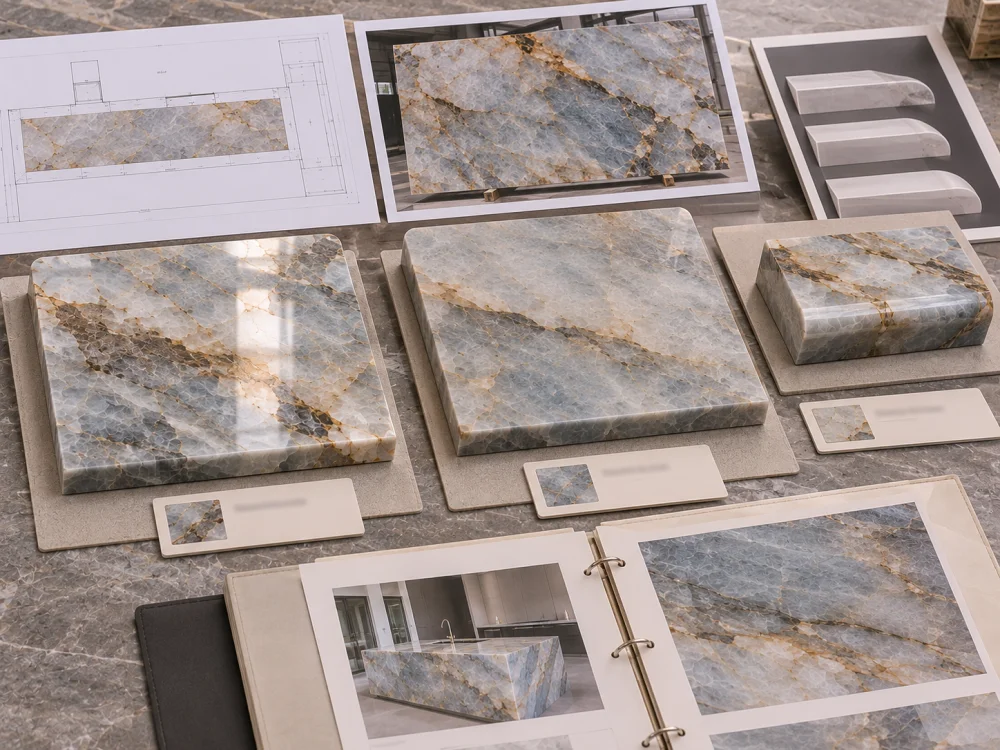
記録内容:
研磨/ホーニング/レザード/プロジェクト固有の仕上げ。
一つの素材に複数の有効な仕上げがある場合、各物理的参照にはそれぞれ独立した管理対象の識別が必要となることがあります。
既知かつ関連性のある場合は、サンプルが以下のいずれかから来たかどうかを記録してください。
関係が不明な場合は、スラブ間のつながりを勝手に推測せず、「不明」と記録してください。
一つのサンプルは以下のような目的で存在することがあります。
サンプルが持つ権限の大きさは、その目的によって決まります。
新しいサンプルが古いものを置き換える場合、次のように記録してください。
「上書きされたもの」→「新しいサンプルID」。
単に古いサンプルを削除して変更理由を失うよりも、この方法の方がはるかに有用です。
の クォーツァイトサンプルの送料:発送前に解決すべき疑問 ガイドラインでは同じサンプル管理ロジックを使用しています:物理サンプルは素材、サンプルID、仕上げ、出所との関係、目的、および改訂情報と引き続き紐づけられるべきです。
サンプルライブラリにおける最も危険な誤りの一つは、初期段階の参考資料が時間の経過とともに包括的な承認へと変化してしまうことです。
サンプルが確立できるのは次のうちのいずれかのみです。
暖色系クリーム色のナチュラルクォーツァイトの方向性が承認されました。
これにより承認されるのは以下の項目ではありません。
管理されたホーニング処理済みのサンプルは、定義されたプロジェクト向けに意図された表面特性を承認できる場合があります。
それでもなお、すべてのスラブや鉱物帯が同一の視覚的結果を再現することを証明するものではありません。
加工済みのエッジは以下の事項を承認できます。
黙って完全なフルスラブパターンの基準になるべきではありません。
デザイナーはプロジェクトAのためにサンプルM-12を承認するかもしれません。
しかし、それが自動的に2年後のプロジェクトBにおける最新の基準となるわけではありません。
A useful approval record can say:
Accepted for general background colour and polished-finish direction only. Actual project slabs remain subject to board-specific selection.
That sentence is much more useful than:
“Approved.”
Approval Boundary
Sample Approval should answer: Which physical reference? Which decision? Which project or library scope? Which finish? What remains pending?
When a new sample replaces an old one, the library has two competing goals:
prevent accidental reuse
と
preserve traceability.
If the active and superseded samples sit beside each other with identical presentation, a future user may select the wrong one.
The physical library should make the status difference obvious.
A coloured sticker can help visual organization.
But colour by itself may be ambiguous.
The controlled record should state the actual status, such as:
ACTIVE
SUPERSEDED
EXPIRED
HISTORICAL — NOT FOR CURRENT SELECTION
The exact wording can follow the organization’s library system.
A superseded sample should point to its current replacement where one exists.
例えば:
Old Sample → Superseded → Current Sample.
If the physical library is large enough, historical and obsolete references can be moved away from the primary active-selection area.
This reduces the chance that a visitor or new employee interprets old stone as current inventory.
A superseded sample can remain useful for:
The goal is controlled retention, not automatic disposal.
Natural Quartzite samples do not need one universal calendar expiry.
A useful library instead defines the events that require review.
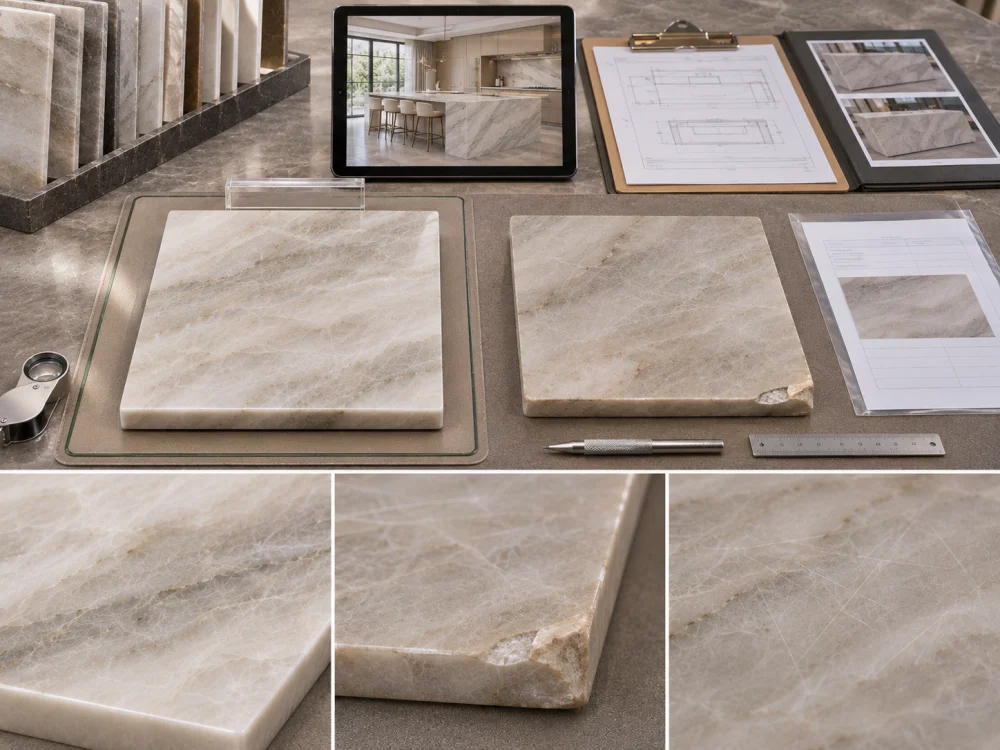
If the sample represented identified boards that are no longer available, update its status.
The sample might become:
Historical source reference — current slabs require new review.
If the supplier or project team intentionally provides a replacement because the current material direction has changed, supersede the old piece.
If a current project moves from polished to honed, do not leave the polished sample labelled as the active finish reference.
A project-specific approval sample can move into project archive status after completion rather than remaining indefinitely in the active general library.
Scratches, heavy handling, contamination, refinishing, or another modification can trigger sample replacement even when the underlying material selection remains current.
If nobody can determine which slab group, project, finish, or supplier record a sample represents, its authority should be reduced.
“We think this is the current piece” is not a strong sample-control system.
A larger library may choose periodic review dates to force status checks.
That is an organizational control decision.
Do not imply that all Natural Quartzite samples become physically invalid after a fixed number of months.
Physical samples are useful.
They cannot reproduce the complete movement of a full Natural Quartzite slab.
It may help review:

For slab-specific projects, the buyer still needs to review:
の クォーツァイトスラブのショールーム:選定のための来店時に持参するもの guide makes this distinction explicit: a physical sample can support colour or finish review, while final slab-specific selection should preserve exact board references and full-slab evidence.
A sample sitting in a library does not prove:
If current slabs are visibly different from the library piece, do not force the boards to conform to the old sample.
Decide whether to:
Sample-library control and slab-inventory control should not operate as unrelated systems.
For example, the material direction may remain acceptable while one set of reserved boards is released back into inventory.
The sample does not necessarily become physically wrong.
But it should no longer be used to imply that those exact boards are secured.
If a reserved slab is replaced by another board, the buyer should review the current physical board rather than relying only on the historical sample.
の クォーツァイトスラブ予約フォーム:ボード番号、有効期限、代替案など guide explains why material name, board number, reservation status, expiry and substitution approval should remain distinct.
A prior sample approval may support:
material direction
while the new board still requires:
current slab approval.
This distinction is especially important for:
A spreadsheet that says a sample is active is not enough if the physical shelf contains a different piece.
The record and the stone should be reconciled.
Confirm:
The digital record should identify the same physical piece and current status.
For every superseded sample, confirm whether the stated replacement still exists and remains active.
Project-specific pieces that no longer belong in the active general library should be moved to the appropriate archive or disposal workflow.
An attractive piece with no trustworthy identity should not automatically remain in the current approval library.
It may be:
A current sample photograph helps remote teams verify that the physical piece they are discussing is still the same reference recorded in the system.
| Library Field | 記録 |
| Sample Identity | Stable sample ID + material name |
| Physical Condition | Current / damaged / altered / needs review |
| 終了 | Polished / honed / leathered / other defined finish |
| 出所との関係性; | Board / slab group / project / supplier / unknown |
| 目的 | Colour / finish / edge / project approval / other |
| ステータス | Active / superseded / expired / historical / damaged |
| Replacement | Current replacement sample ID where applicable |
| Approval Scope | Exact decision the sample may support |
| 所在地 | Current physical library / archive position |
An old sample should not become active again merely because somebody finds it useful for a new project.
If a historical or expired piece is being reconsidered, verify its current relevance.
□ Stable sample ID confirmed.
□ Natural Quartzite material name confirmed.
□ Physical sample matches the digital record.
□ Current surface finish confirmed.
□ Sample condition checked clean and dry.
□ Source relationship verified where known.
□ Current purpose defined.
□ Current project / library scope defined.
□ Current slab availability checked separately where relevant.
□ Sample approval kept separate from board-specific slab approval.
□ Previous superseded or expired status reviewed.
□ Current replacement sample checked before reactivation.
□ New status date or review record added.
□ Approval owner identified where project-specific.
□ Physical status marking updated.
□ Physical storage location updated.
□ Current photograph retained where useful.
□ Obsolete reference will not remain visually indistinguishable from active samples.
The best sample library is not the library with the largest number of stone pieces.
It is the library where another person can quickly answer:
What is this?
What does it represent?
Is it current?
What replaced it?
What may it approve?
And do we still need to review the actual slabs?
There is no universal physical expiry period for every Natural Quartzite sample. A library may mark a piece expired when its former reference purpose is no longer valid—for example because associated inventory is unavailable, a defined review period has ended, the project has closed, the source relationship is uncertain, or another current sample has replaced it. The organization’s control system should define the applicable trigger.
廃止されたサンプルは、意図的に新しい識別済み参照に置き換えられています。期限切れのサンプルは、時間、入手可能性、プロジェクト、出典、またはレビューに関する条件が終了したため、従来の有効な用途においてはもはや有効ではありません。サンプルが両方の状態にある場合もあります。たとえば、古いプロジェクトの参照が期限切れとなり、同時に新しい最新のサンプルに置き換えられることがあります。.
自動的には除外されません。これらの資料は、依然として有用な履歴情報、プロジェクト情報、代替品情報、仕上げ情報、または承認証拠を提供する可能性があります。保持する場合は、該当する場合に新しい参照資料と明確に関連付け、現在の選択対象として使用されないようにしてください。そうすることで、これらが有効なサンプルと誤解されるのを防ぐことができます。.
自動的には対応できません。少量のサンプルは、記録された範囲内での色合い、仕上げ、エッジ形状、または素材の方向性に関する判断をサポートできますが、ナチュラルクォーツァイトは依然としてスラブ単位での評価が必要です。厳密な板材選定が求められるプロジェクトでは、引き続き最新のフルスラブ写真、板材番号、寸法、関連する板材、および必要に応じて後の切断レイアウトを確認してください。
変更内容を記録し、当該の実物が本来示すべき基準を依然として表しているか評価してください。傷、汚れ、再塗装、処理、またはその他の改変により外観が著しく変化した場合は、変更後の品を元の仕上げの基準として使用し続けるのではなく、使用から除外するか、交換してください。
本記事では、万能な監査間隔を一つだけ定めているわけではありません。レビューは、新たなサンプルの追加、在庫の変動、プロジェクトの完了、仕様変更、物理的損傷、サプライヤー情報の更新、調達先に関する不確実性、または組織が定める定期的なライブラリ管理スケジュールなどによってトリガーされます。重要なポイントは、アクティブステータスは無期限に当然維持されるものと見なすのではなく、意図的に維持すべきであるということです。
ジョシュに、素材の方向性または既知のクォーツァイト名、想定用途、求められる仕上げ、該当する場合はプロジェクトの図面や主要寸法、数量、納品先、色調調整が重要な場合は隣接素材の参照情報、およびサンプルで確認すべき具体的な質問事項を送付してください。古いサンプルと交換する場合は、旧サンプルのIDまたは写真を添付し、最新のカラーリファレンス、仕上げサンプル、エッジサンプル、現在のスラブオプション、あるいはプロジェクト固有の承認用素材のいずれが必要か明示してください。
Sample-Library Control TakeawayA Quartzite sample library should preserve both current references and useful history without allowing the two to become confused. Give each controlled physical sample a stable identity, record what material, finish, source relationship and decision it represents, and assign a clear current status. When a piece is replaced, expired, damaged or retained only for historical use, change both the physical marking and digital record. Keep the old piece when traceability value justifies retention, but remove it from active selection use. Most importantly, treat a physical sample as evidence for its stated scope—not as permanent proof that future Natural Quartzite slabs, finishes, inventory or project conditions remain unchanged.
For Natural Quartzite sourcing and project sample coordination, HRST STONE can organize current sample references, finish samples, edge samples, sample IDs, related full-slab photographs, board references, project-specific approval records, packing and international sample dispatch within the confirmed scope. Send Josh the material direction, required finish, application, project information, previous sample reference where applicable, requested sample purpose and destination so the current physical reference can be distinguished from older or superseded material.