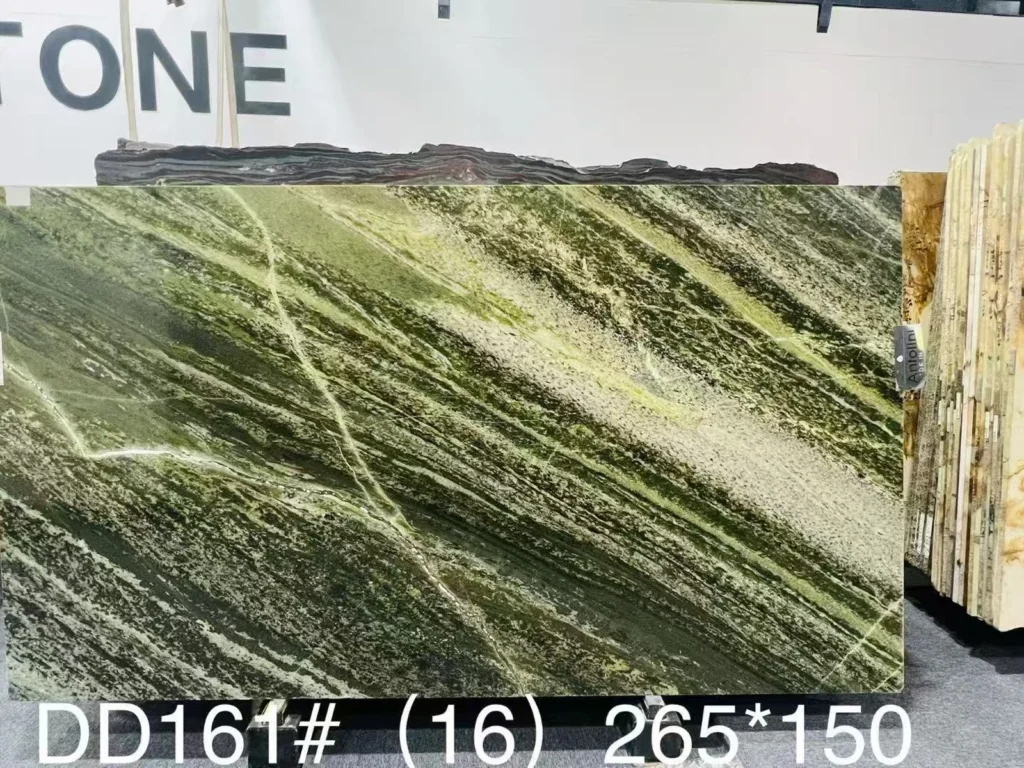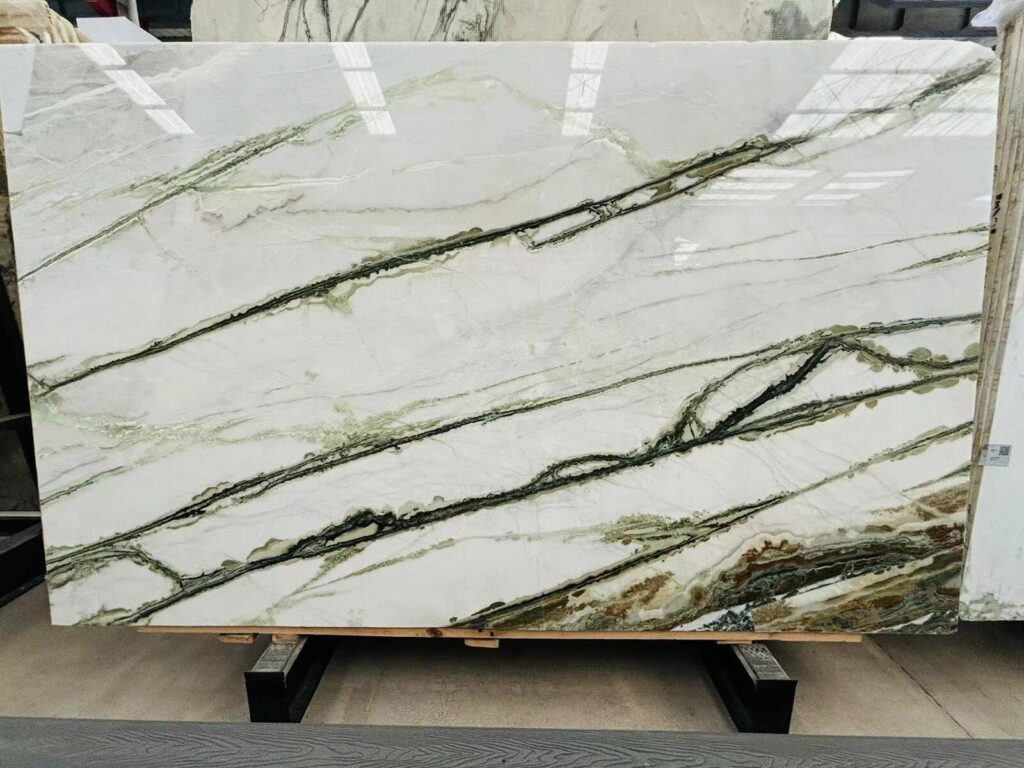

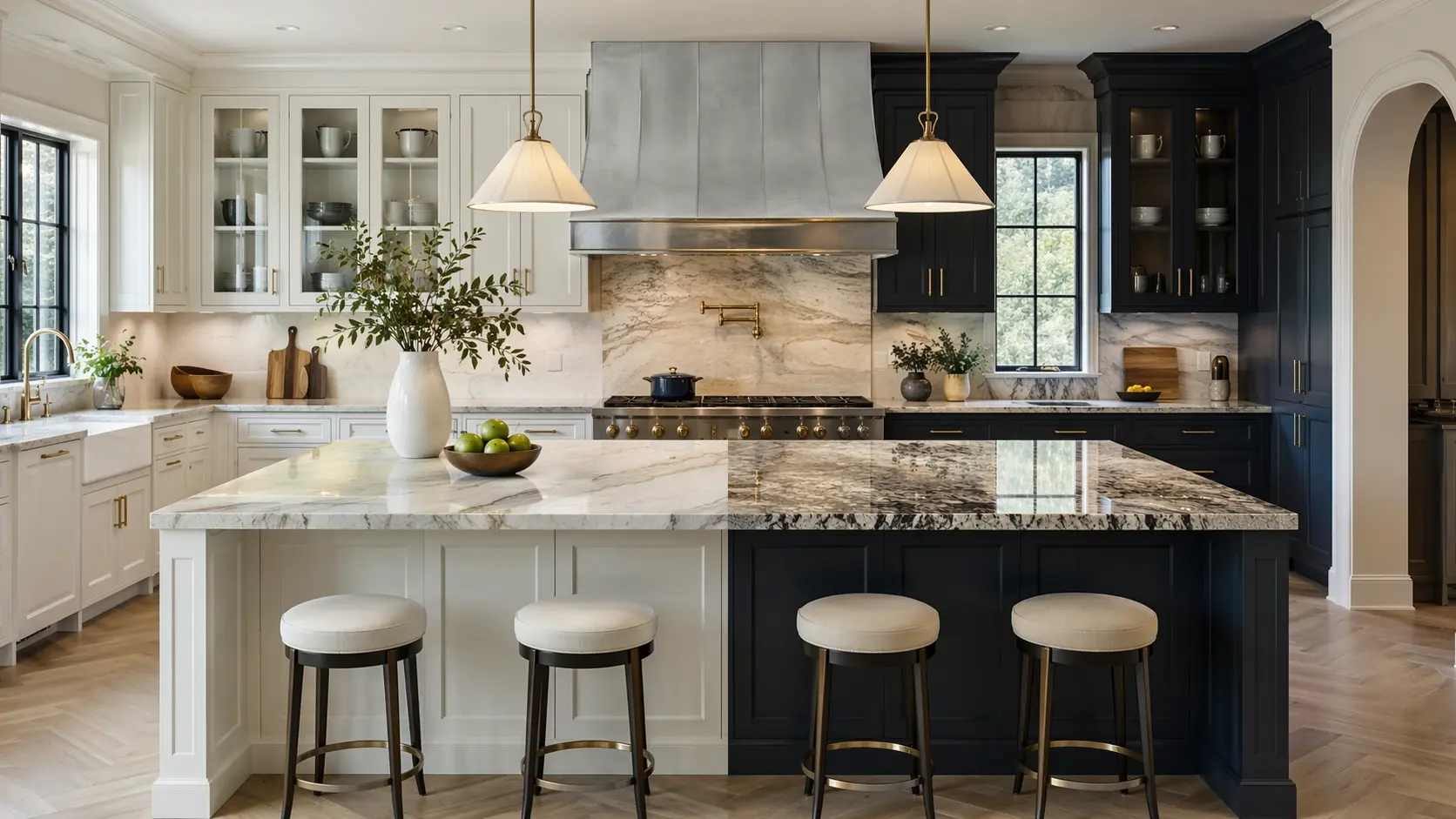
Quarzite vs granito per i piani della cucina non è una semplice questione di quale pietra sia complessivamente migliore. Si tratta di una decisione che riguarda l’aspetto, la durabilità, le aspettative di manutenzione e lo stile del progetto. Questa guida spiega le reali differenze tra piani in quarzite e in granito, quali cucine si adattano meglio a ciascun materiale e come gli acquirenti possono prendere una decisione più intelligente in materia di pietre naturali, riducendo gli errori nella selezione dei fornitori.
Quando gli acquirenti confrontano quarzite e granito per i piani della cucina, di solito non stanno cercando un dibattito teorico sui materiali. Stanno cercando di decidere cosa funzionerà meglio in una cucina reale, con un budget reale, uno stile di vita reale e aspettative concrete in termini di aspetto e manutenzione. Ecco perché questo tema è così importante. La risposta giusta raramente riguarda solo la durezza o il prezzo. Si tratta di capire quale pietra si allinea meglio con l’obiettivo del progetto.
Sia la quarzite sia il granito sono solide opzioni in pietra naturale per i piani della cucina. Entrambe sono ampiamente utilizzate nei progetti residenziali. Entrambe possono avere un aspetto splendido e prestazioni eccellenti. Ma non sono uguali per carattere visivo, posizionamento sul mercato, logica di approvvigionamento o tipo di acquirente che tendono ad attrarre. La quarzite attrae spesso acquirenti che desiderano un movimento naturale più morbido, un aspetto premium più luminoso e una dichiarazione più orientata al design. Il granito attira invece acquirenti che cercano una durabilità affidabile, prestazioni stabili e una soluzione pratica in pietra naturale per cucine molto frequentate.
Per questo motivo, il miglior confronto non è “qual è più di fascia alta” o “qual è più resistente” in modo semplificato. Un confronto più intelligente chiede: quale materiale si adatta al modo in cui questa cucina verrà effettivamente utilizzata e quale corrisponde alla direzione visiva, alla tolleranza di manutenzione e al livello di comfort del budget dell’acquirente?
I piani della cucina sono tra le superfici più visibili e più utilizzate in casa. Gli acquirenti non li vedono solo ogni giorno. Ci cucinano, ci puliscono, vi si appoggiano, decorano intorno e spesso giudicano l’intera cucina in base a loro. Ecco perché scegliere il materiale giusto per il piano è sia una decisione di design sia una decisione funzionale.
Il confronto tra granito e quarzite per i piani della cucina è diventato più comune perché sono cambiate le aspettative degli acquirenti. Molti acquirenti non vogliono più un piano solo resistente. Vogliono anche che abbia un aspetto attuale, architettonico e di alto livello. Allo stesso tempo, non vogliono sacrificare la praticità quotidiana. Sia la quarzite sia il granito entrano in questa discussione, ma vi rispondono in modo diverso.
Il granito ha una reputazione consolidata come materiale affidabile per i piani della cucina. La quarzite ha attirato l’attenzione perché offre un aspetto in pietra naturale che spesso appare più morbido, più leggero e più lussuoso negli stili di cucina di oggi. Questo rende il confronto estremamente rilevante per i proprietari di casa, i designer e gli acquirenti di pietre che hanno bisogno di chiarezza prima di passare alla selezione delle lastre e alle richieste ai fornitori.
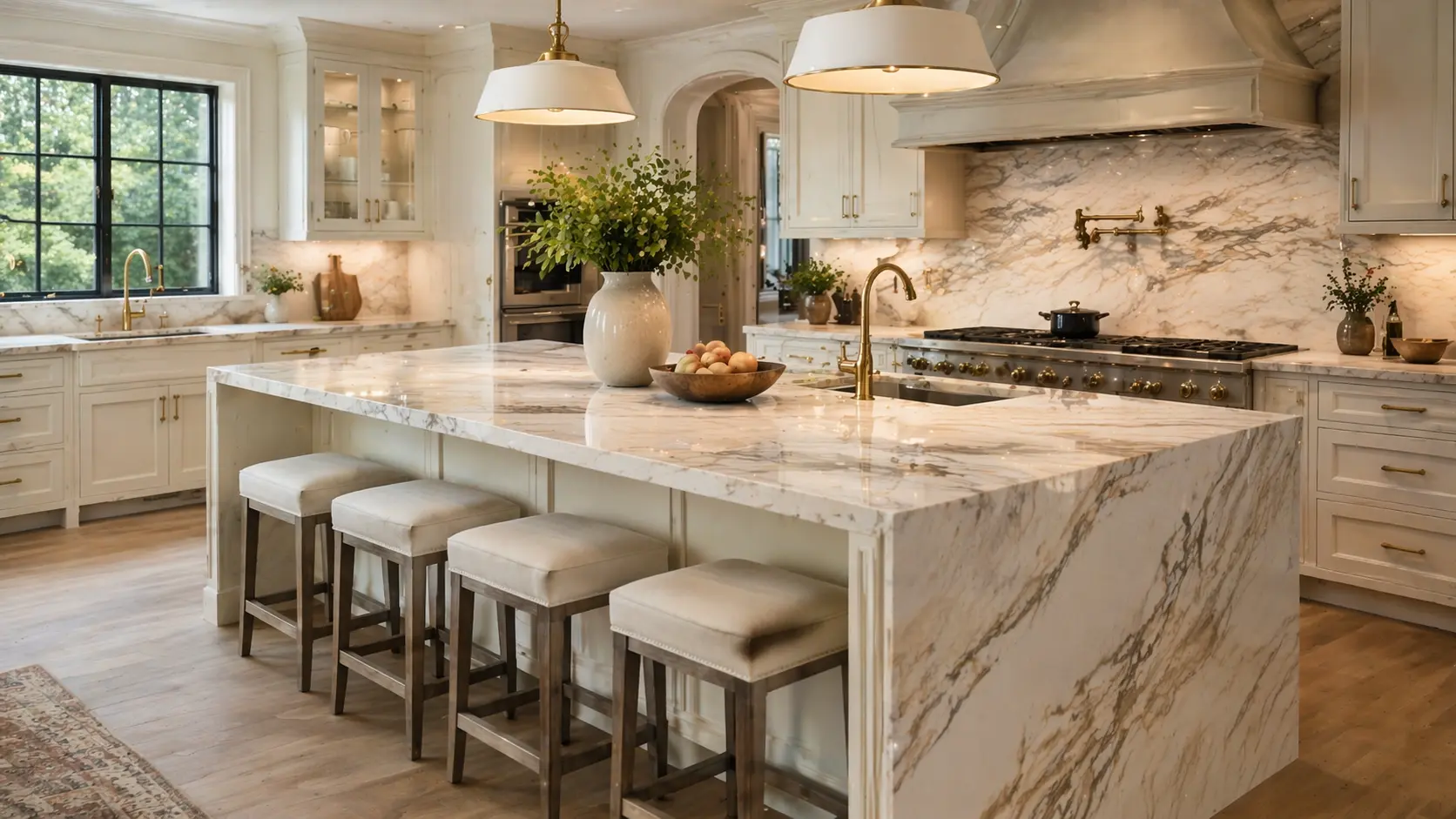
La quarzite è una pietra metamorfica naturale che si forma quando la sabbia si trasforma sotto l’azione del calore e della pressione nel corso del tempo. Di conseguenza, sviluppa solitamente una struttura densa e un aspetto minerale distintivo. Nel design della cucina, la quarzite è particolarmente apprezzata per il suo movimento naturale, le venature eleganti e la palette di colori raffinata. Molte delle quarziti più ricercate presentano bianchi caldi, tonalità beige cremose, grigi tenui o motivi fluidi e sottili che si integrano perfettamente in cucine moderne e di lusso.
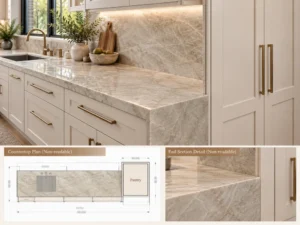
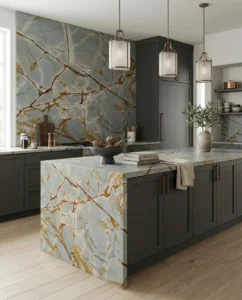
La quarzite viene spesso scelta da acquirenti che desiderano una pietra naturale dall’aspetto premium, meno tradizionale rispetto a molti graniti e meno delicata nella percezione rispetto a molti marmi. È particolarmente attraente in cucine con isole a cascata, mobili luminosi o layout open space, dove il piano diventa un elemento di design principale.
Detto ciò, la quarzite non dovrebbe mai essere trattata come un’unica categoria di prodotto uniforme. Diverse lastre possono variare per movimento, densità, struttura e comportamento durante la lavorazione. Ecco perché l’effettiva analisi della singola lastra conta sempre più del solo nome della pietra.
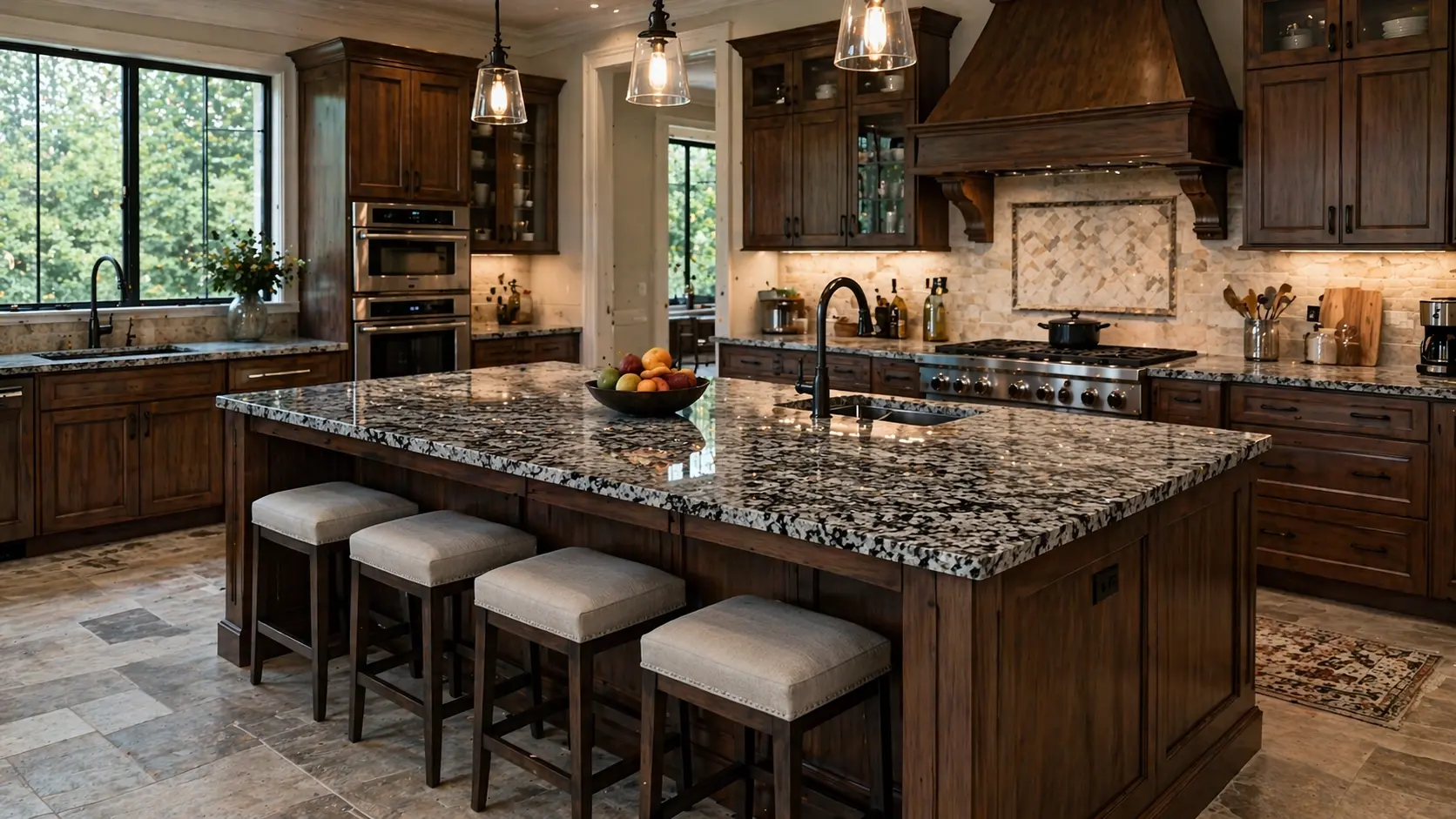
Il granito è una pietra ignea naturale che si forma attraverso il lento raffreddamento del magma sotto la superficie terrestre. Nel mercato dei piani da cucina, il granito è noto per la sua resistenza, praticità e lunga tradizione nei progetti residenziali. È considerato affidabile da decenni perché funziona bene nelle condizioni quotidiane di una cucina ed è disponibile in un’ampia gamma di colori e stili di movimento.
Alcuni graniti sono audaci e drammatici. Altri sono discreti e coerenti. Alcuni hanno un aspetto screziato più tradizionale, mentre altri risultano più moderni e controllati. Questa varietà è uno dei motivi per cui il granito rimane commercialmente forte. Può soddisfare diversi obiettivi di design pur essendo ampiamente riconosciuto come un materiale affidabile per i piani della cucina.
Gli acquirenti scelgono spesso il granito quando cercano fiducia, familiarità e un buon rapporto qualità-prezzo a lungo termine. Potrebbe non offrire sempre lo stesso motivo fluido e morbido che rende alcune quarziti così attraenti dal punto di vista visivo, ma resta una delle scelte classiche più solide in pietra naturale per le cucine.
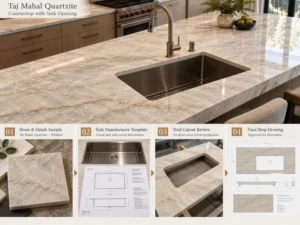
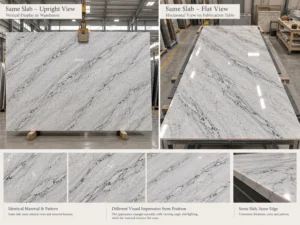
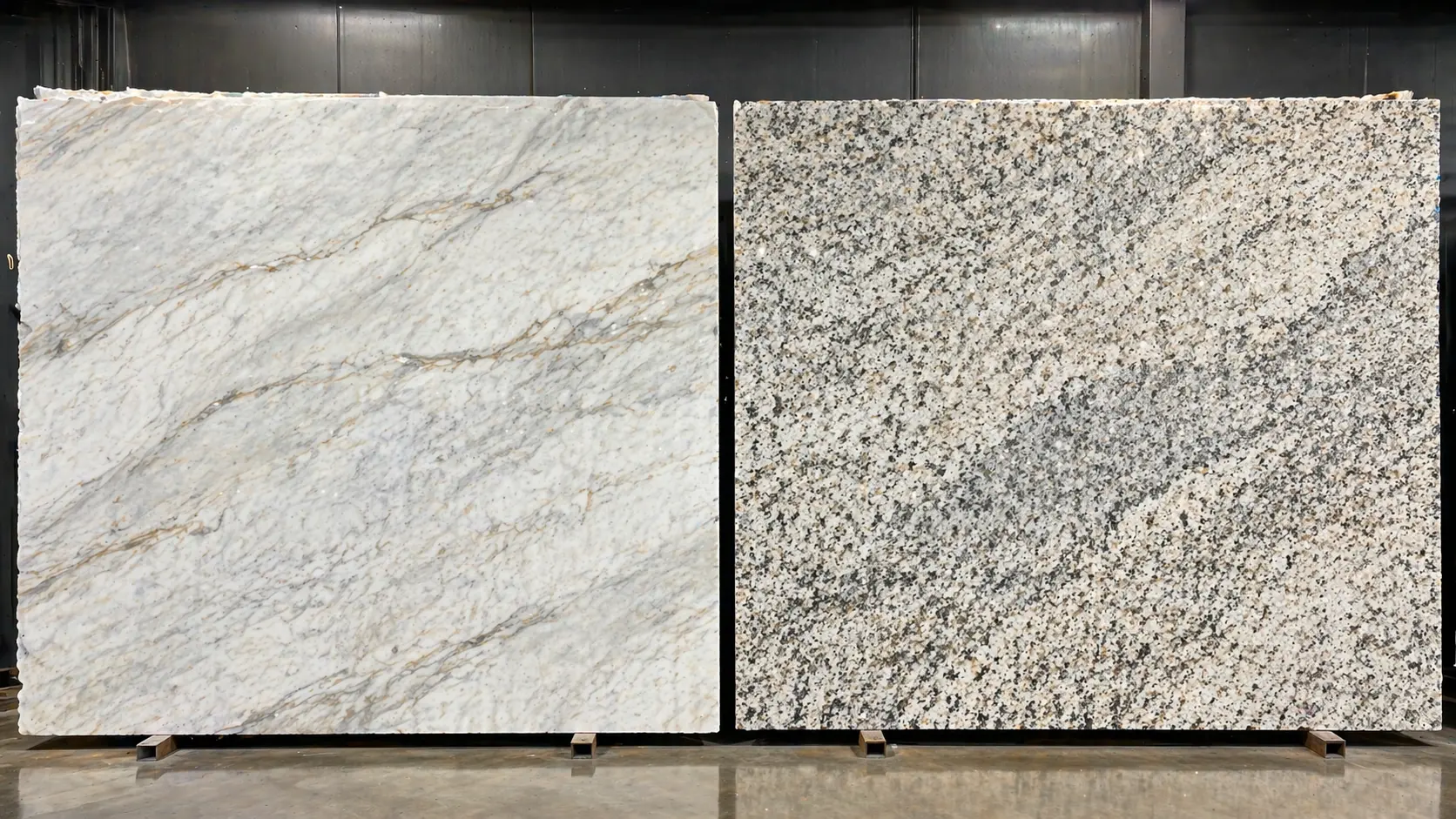
La differenza più evidente tra quarzite e granito è il loro aspetto finale in una cucina finita. La quarzite mostra spesso un movimento fluido, effetti minerali stratificati e un ritmo visivo più morbido. Tende a rispondere alla domanda attuale di interni luminosi, eleganti e sereni. Questo è uno dei motivi per cui molti acquirenti che esplorano i piani di lavoro in quarzite per la cucina sono attratti dalle quarziti caldo-neutre per isole e superfici di grande impatto.
Granite, by contrast, often reads as more textured, more granular, or more visibly crystalline. That does not make it less attractive. In fact, many buyers like granite precisely because it looks durable, grounded, and unmistakably natural. Granite often works especially well in kitchens where visual stability and practicality matter more than a soft luxury effect.
Quartzite is more often positioned as a premium design-driven stone. Granite is more often positioned as a dependable and versatile kitchen material. This does not mean granite cannot be luxurious or quartzite cannot be practical. It means the market usually reads them differently, and buyers should understand that difference when deciding what atmosphere they want in the kitchen.
Buyers who want dramatic yet elegant slab movement often respond better to quartzite. Buyers who prefer more visual consistency or a more familiar natural stone look may feel more comfortable with granite. This is especially important when the countertop must coordinate with cabinets, backsplash choices, flooring, and lighting.
Both quartzite and granite are strong materials for kitchen countertops when selected and fabricated properly. Both can support active household use. In practical terms, most buyers considering either option are already in a solid natural-stone category. The better question is not whether one is durable enough, but whether the chosen slab and finish suit the intended application.
Granite has long been preferred by buyers who want a straightforward and proven kitchen work surface. Quartzite also attracts buyers who want everyday confidence, but its appeal is more often tied to the balance between performance and refined appearance.
In daily use, both materials perform well compared with softer decorative stones. Granite is widely trusted as a highly durable working surface. Quartzite is also often selected because buyers believe it offers a strong everyday natural-stone solution while delivering a more elevated visual effect. In real life, good countertop performance depends not only on stone category, but also on slab quality, finish choice, fabrication quality, and how the kitchen is used.
Both materials are popular in kitchens partly because buyers feel more confident using natural stone in cooking environments than some other surfaces. That said, countertop care should still be responsible. A premium stone should be treated like a premium material. Buyers looking for a kitchen that feels both beautiful and dependable often find that quartzite and granite are both strong candidates.
One of the most important parts of the granite or quartzite for kitchen countertops decision is maintenance comfort. Some buyers are happy to accept a little more care if they get the exact look they want. Others want the most comfortable everyday ownership experience possible.
Granite is often viewed as the lower-stress choice in buyer psychology because of its long reputation as a practical and forgiving kitchen material. Quartzite is also highly attractive, but buyers may approach it with more attention to slab individuality, finish behavior, and long-term appearance expectations.
In both cases, the right maintenance discussion should include cleaning habits, finish preference, sealing expectations, and how visible everyday marks may appear under the chosen color and polish level. A light elegant surface may show kitchen life differently than a darker or busier one. That is not a flaw. It is part of choosing the right material for the right user.
Quartzite is often positioned higher in the market, especially when the slab has a sought-after premium look such as warm white or flowing beige movement. Buyers who choose quartzite are often paying not just for function, but for a specific visual effect that feels current and upscale.
Granite can offer excellent value because it delivers natural-stone authenticity, durability, and broad style flexibility, often with a more comfortable budget profile. For many families, granite remains one of the smartest natural-stone purchases precisely because it feels dependable without requiring the same design premium as certain quartzites.
That said, value is not the same as lowest cost. A buyer who really wants a bright luxury island may be disappointed if they choose granite purely to save money and then never love the final look. On the other hand, a buyer focused mainly on practicality may overspend on quartzite without gaining meaningful extra value in daily use. The right choice depends on what kind of satisfaction matters most in the project.
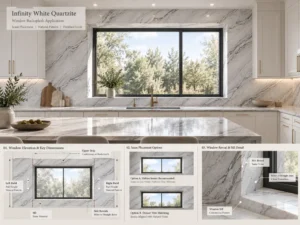
Quartzite is especially well suited to kitchens where appearance carries major weight in the decision. It works very well in open-plan homes, design-led remodels, statement islands, and projects where buyers want the countertop to feel elegant, bright, and premium. It is also a strong choice when the kitchen palette includes warm woods, soft painted cabinets, brass or brushed metal details, and a calm contemporary atmosphere.
Quartzite is often the better fit when buyers want natural movement that feels softer and more architectural than many traditional granites. It is also a strong fit for buyers who see the countertop as one of the main emotional decisions in the whole kitchen project.
Granite is especially well suited to active family kitchens, practical remodels, and projects where durability, familiarity, and value clarity matter most. It is also a strong option for buyers who want natural stone but do not necessarily need the brighter, softer visual effect associated with certain quartzites.
Granite often works well in kitchens where the countertop needs to feel grounded and durable without becoming the sole design focus of the room. It can also be a smart choice for buyers who prefer a more classic stone language or who want a reliable material for daily use without overcomplicating the decision.
Quartzite may look more premium in many current kitchen styles, but that does not automatically make it the better choice for every buyer. A practical family kitchen with strong daily use may be better served by granite if the buyer values familiarity, lower stress, and straightforward durability above all else.
Granite is sometimes unfairly reduced to a standard or lower-end category. In reality, granite can be beautiful, highly functional, and commercially smart. The right granite can be a very successful kitchen material, especially when chosen with strong color and pattern judgment.
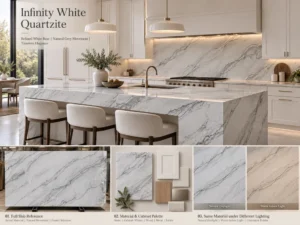
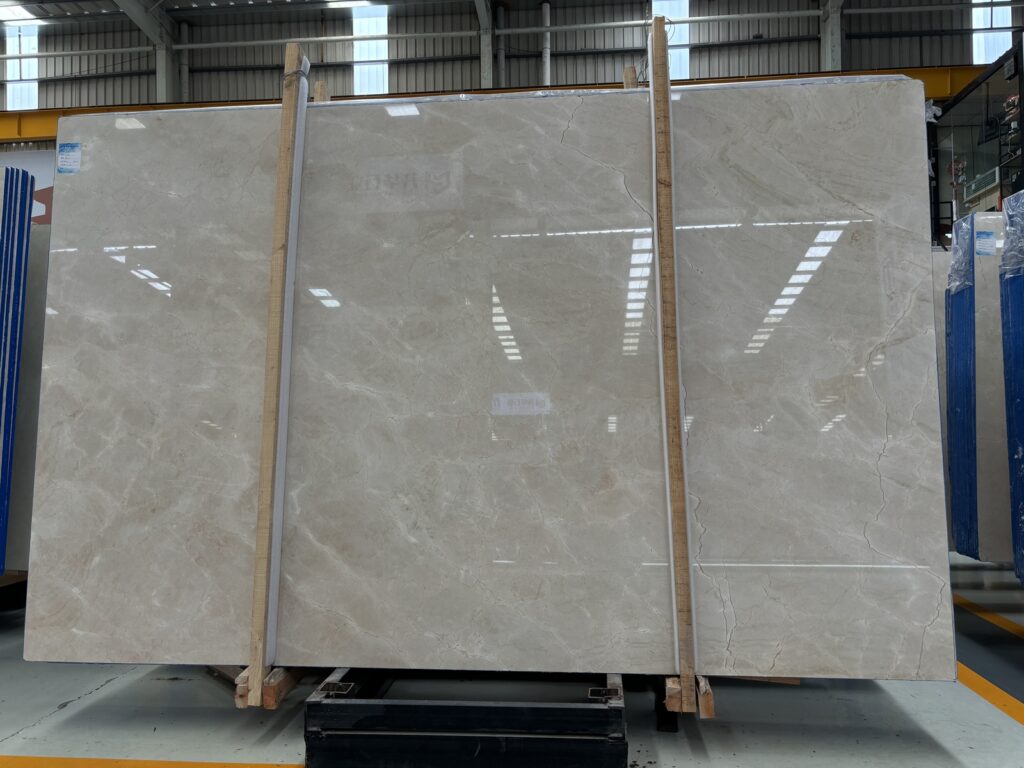
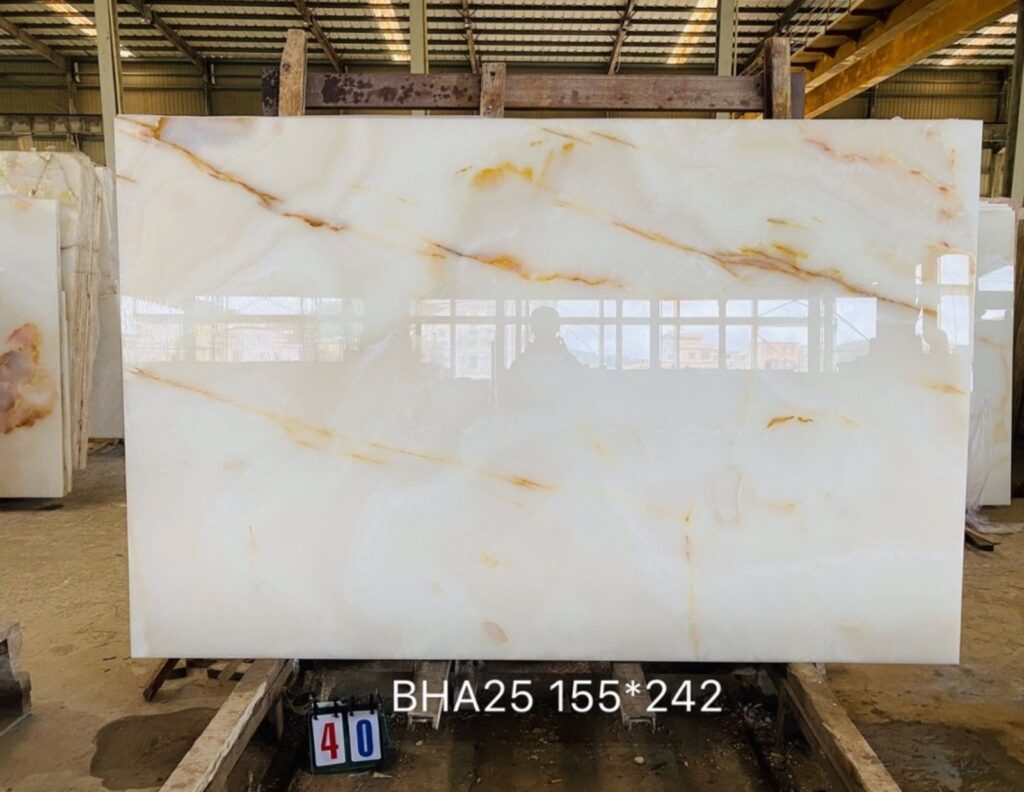
Natural stone should not be judged from a tiny sample alone. Slab movement, variation, and overall visual impact are much clearer on full slabs. This matters especially in quartzite, where long flowing movement may be one of the main reasons for choosing the material in the first place.
A countertop should never be selected in isolation. Cabinet color, backsplash style, floor tone, hardware finish, lighting, and kitchen layout all affect whether quartzite or granite will feel more successful in the final space.
| Factor | Quarzite | Granito |
|---|---|---|
| Material type | Natural metamorphic stone | Natural igneous stone |
| Typical visual style | Soft movement, flowing veining, bright premium look | Granular texture, crystalline character, classic natural look |
| Design positioning | More design-led and statement-oriented | More practical, familiar, and versatile |
| Best fit | Luxury kitchens, waterfall islands, bright modern interiors | Busy family kitchens, practical remodels, classic natural-stone use |
| Budget tendency | Often higher when premium slabs are selected | Often more value-oriented for many buyers |
| Main buying caution | Do not choose by name only; slab review matters | Do not dismiss it based on outdated style assumptions |
| Kitchen Scenario | Better Fit | Why |
|---|---|---|
| Luxury statement island | Quarzite | Often offers softer movement and a more premium visual effect |
| Busy family kitchen | Granito | Often feels more straightforward and practical for daily heavy use |
| Bright modern kitchen palette | Quarzite | Pairs well with warm white, beige, and soft contemporary interiors |
| Classic natural-stone kitchen | Granito | Offers a dependable and well-established countertop identity |
| Buyer prioritizes visual impact | Quarzite | Usually chosen when appearance and slab movement lead the decision |
| Buyer prioritizes value clarity | Granito | Often provides strong practical value in natural-stone kitchens |
If the kitchen project is driven mainly by visual elegance, statement value, and a desire for soft natural movement, quartzite is often the stronger choice. If the project is driven mainly by practicality, confidence, and a more familiar natural-stone solution for active daily use, granite is often the better fit.
The real answer to quarzite e granito per i piani della cucina is therefore not absolute. It depends on what the buyer wants the countertop to do. If the countertop is meant to be the visual centerpiece of the kitchen, quartzite often wins. If the countertop is meant to deliver strong long-term daily performance with broad design flexibility, granite often wins.
For buyers ready to move from research into real project discussion, the next smart step is to submit a countertop material inquiry with kitchen photos, approximate dimensions, preferred tones, and whether the priority is design impact, durability, or budget balance. That makes stone selection much more accurate from the beginning.
Quartzite vs granite countertops should not be judged by trend language alone. Both are strong natural stone options, but they solve different buyer priorities. Quartzite usually suits projects where premium appearance, bright movement, and design impact lead the decision. Granite usually suits projects where practicality, familiarity, and dependable everyday use lead the decision.
The best choice comes from understanding the kitchen as a whole system, not just the slab in isolation. Buyers should consider lifestyle, budget comfort, cabinet palette, countertop visibility, and how much emotional value they place on the stone’s final appearance.
The biggest mistake is assuming one material is universally better. In real kitchen sourcing, the better material is the one that fits the project goal more accurately and can be supplied, reviewed, and fabricated with confidence.
La quarzite non è automaticamente migliore del granito per ogni cucina. La quarzite è spesso preferita quando i clienti desiderano un aspetto in pietra naturale più luminoso, più delicato e di maggiore pregio, mentre il granito è spesso scelto quando i clienti cercano un materiale per piano di lavoro pratico, affidabile e versatile, adatto all’uso quotidiano.
Sia il granito sia la quarzite sono materiali lapidei naturali molto resistenti, ideali per i piani di lavoro della cucina, a patto che vengano scelti e lavorati correttamente. Nella maggior parte dei progetti reali di cucina, la scelta migliore dipende meno da affermazioni semplificate sulla durabilità e più dalla qualità delle lastre, dalla finitura, dal tipo di progetto e dalle aspettative dell’acquirente.
In molti casi, il granito è spesso l’opzione più orientata al rapporto qualità-prezzo, mentre la quarzite può avere un prezzo più elevato quando la lastra presenta un aspetto di pregio particolarmente richiesto. Tuttavia, la determinazione del prezzo effettivo dipende dalla pietra specifica, dalla provenienza, dalla qualità della lastra, dalla finitura e dalle esigenze del progetto.
La quarzite è spesso considerata più lussuosa nell’attuale design della cucina, poiché presenta generalmente un aspetto più morbido e un’estetica premium più luminosa. Il granito può comunque apparire bello e di alto livello, ma di solito conferisce un effetto più solido e classico tipico della pietra naturale.
Dovresti decidere in base all’obiettivo principale del progetto. Se la tua priorità è l’eleganza visiva, il valore espressivo e un movimento naturale raffinato, la quarzite è spesso la scelta più adatta. Se la tua priorità è l’uso pratico quotidiano, la chiarezza del valore e un piano di lavoro in pietra naturale affidabile, il granito è spesso la scelta più adatta.