
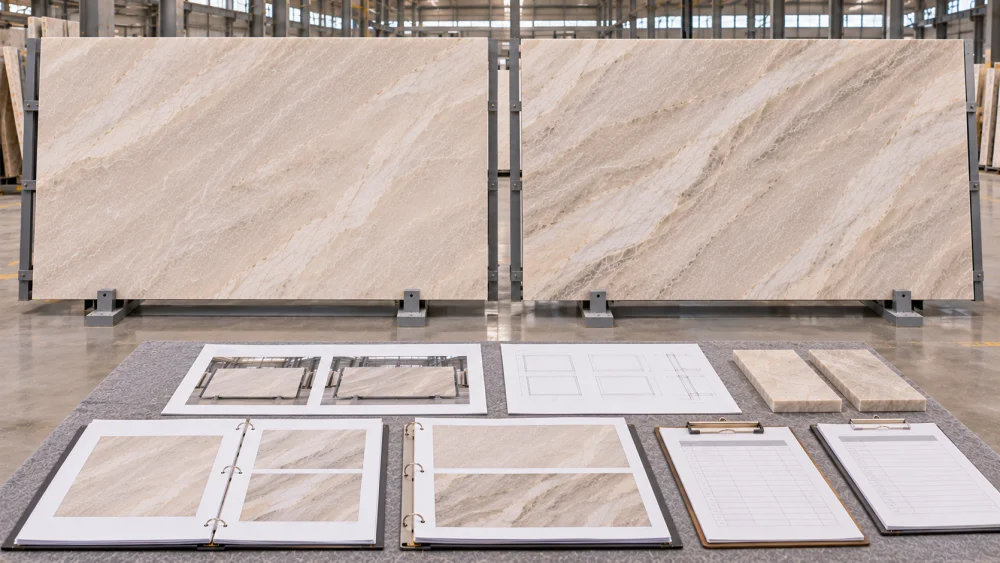
A declined Quartzite material substitution should be recorded as a specific project decision, not simply marked “rejected” without explanation. The record should identify the original material or slab approval, the proposed alternative, the reason for substitution, the evidence reviewed and the exact condition that prevented acceptance. It should also state who made the decision, which revision was reviewed and whether the alternative can be resubmitted. A declined substitute is not necessarily defective stone; it may be unsuitable for the particular design, dimensions, quantity or commercial agreement.
Riepilogo rapidoA Quartzite material substitution record explains why a proposed replacement was accepted, declined, returned for more information or withdrawn. A useful rejection record identifies the original approved basis, substitute board or material, comparison criteria, observed differences, project impact, decision authority and current status. Distinguish confirmed noncompliance from missing evidence and commercial disagreement. Preserve the original record and its later revisions so procurement teams can explain what was reviewed, what changed and what would be required for another submission.
UN Quartzite material substitution record is a controlled project document that identifies a proposed alternative to an earlier specified, offered or approved natural-stone material and records the evidence, decision, scope and subsequent disposition of that proposal.
It is particularly useful for architects, developers, general contractors, stone procurement managers and natural-stone fabricators handling current slab shortages, revised designs, multiple material options or changes after buyer approval.
The purpose is not to prove that the original stone is always superior.
It is to make a particular substitution decision understandable without reconstructing emails, sample shipments and unrelated photographs.
Before writing a rejection reason, establish the original design or procurement basis.
There are several possible situations.
The project originally specified one commercially identified Quartzite and the supplier proposes another named stone.
The material change may affect appearance, applicable technical evidence, fabrication or commercial conditions.
The commercial material name remains unchanged, but the supplier proposes a different physical board.
This is common when a selected board becomes unavailable or a project requires more material.
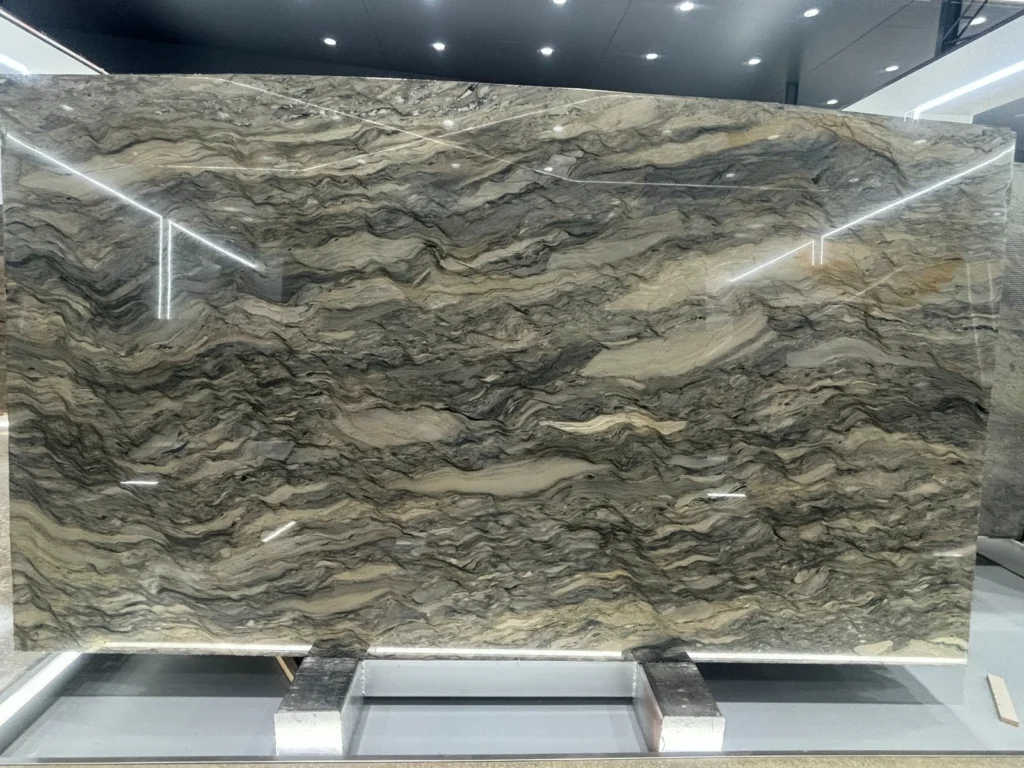
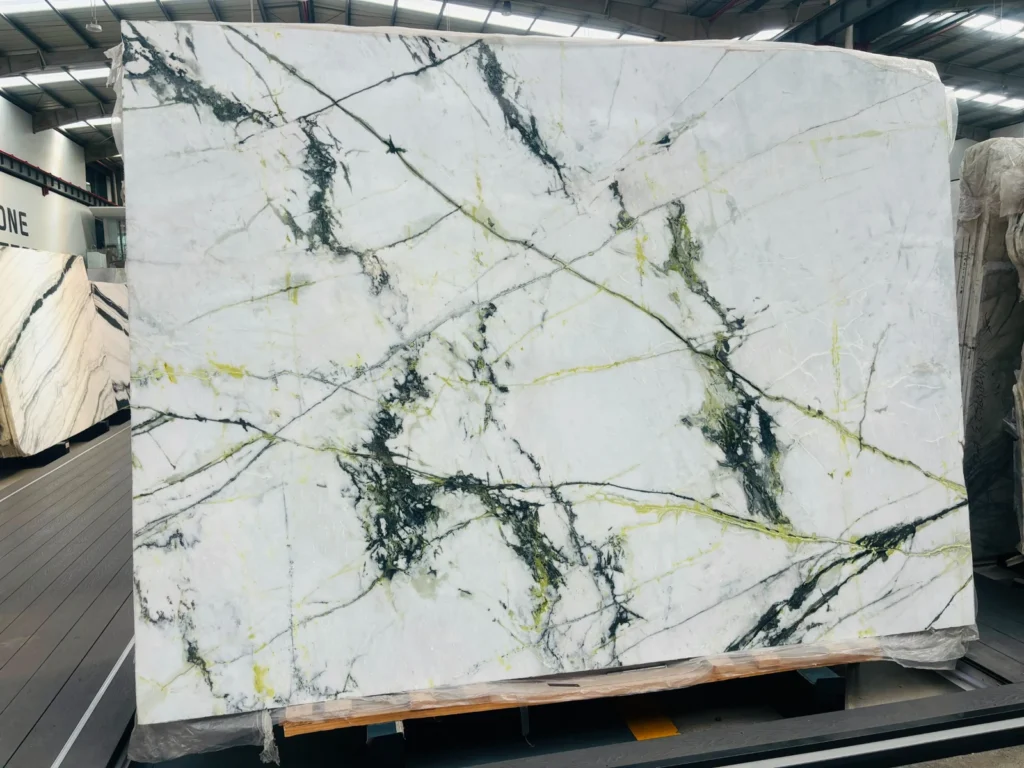
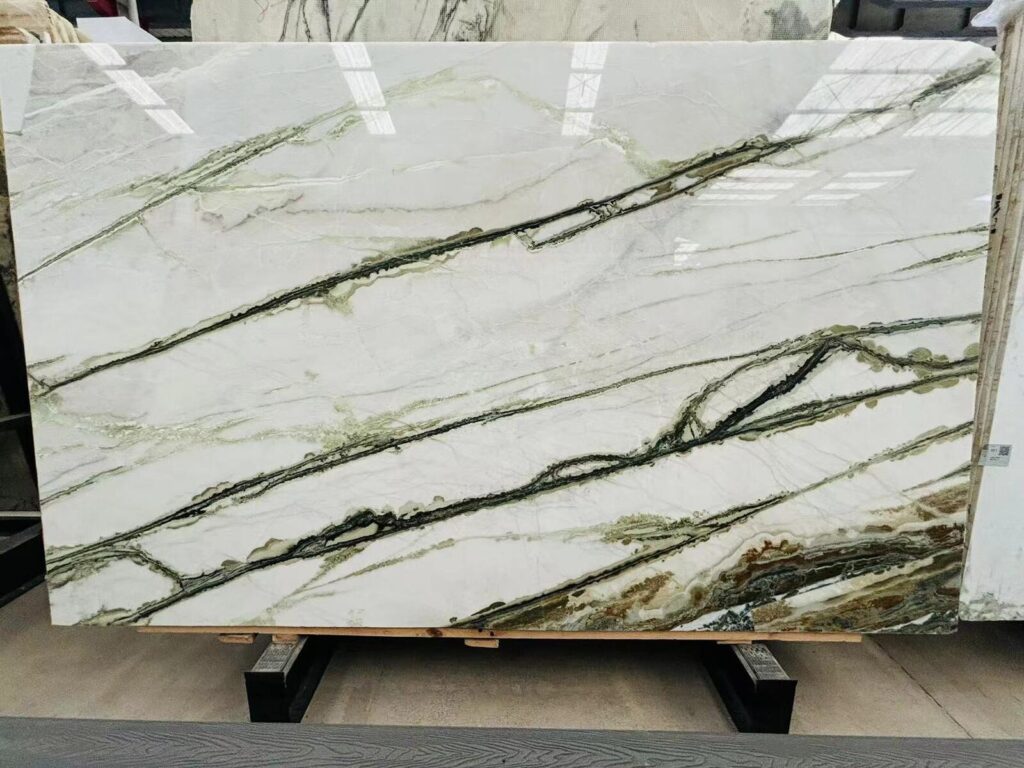
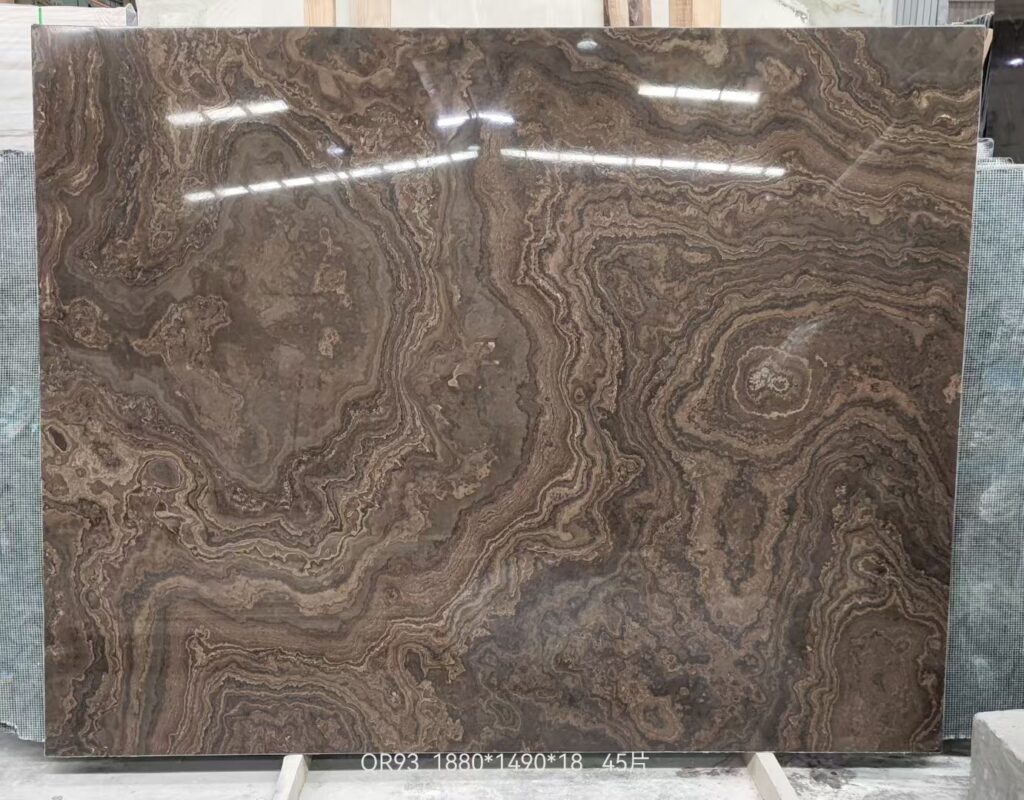
Two boards sold as Taj Mahal Quartzite may differ in background tone, directional movement and mineral distribution. The shared trade name does not make their physical identities interchangeable.
A project may have approved several related boards for one feature wall, island, staircase or set of furniture components.
The alternative may replace only one board or an entire group.
In that case, the project must consider how the substitute interacts with the remaining approved slabs.
The alternative may involve the same general material but a different quantity, delivery schedule, price, supplier, reservation arrangement or fabrication scope.
The buyer may decline the commercial offer without rejecting the stone’s visual or physical suitability.
A reliable record begins by identifying which of these situations actually applies.
IL Quartzite slab-substitution guide explains why a change in physical boards should be treated as a revised material and purchasing decision rather than an invisible continuation of the earlier offer.
One of the most damaging documentation errors is using the word rejected for every alternative that has not been accepted.
Different outcomes require different treatment.
| Decision Status | Significato | Prossima azione |
| Declined / Not Accepted | The reviewed alternative is not accepted for the specified project scope. | Record the specific reason and whether a revised proposal is permitted. |
| Not Approved / Pending | Insufficient information or an unresolved review prevents a final acceptance decision. | Request identified missing evidence or clarification. |
| Technically Noncompliant | The evidence demonstrates failure to meet an identified applicable requirement. | Reference the specific criterion, result and responsible technical decision. |
| Commercially Declined | The proposed price, delivery, quantity or supply conditions are not acceptable. | Record the commercial difference and possible revised offer. |
| Withdrawn | The proposing party removes the option before or after review. | Record the withdrawal and close the proposal without inventing a rejection reason. |
| Superseded | A newer proposal replaces the earlier alternative for active review. | Link the old proposal to the current revision while retaining its history. |
The exact status terminology can follow the project’s document-control system.
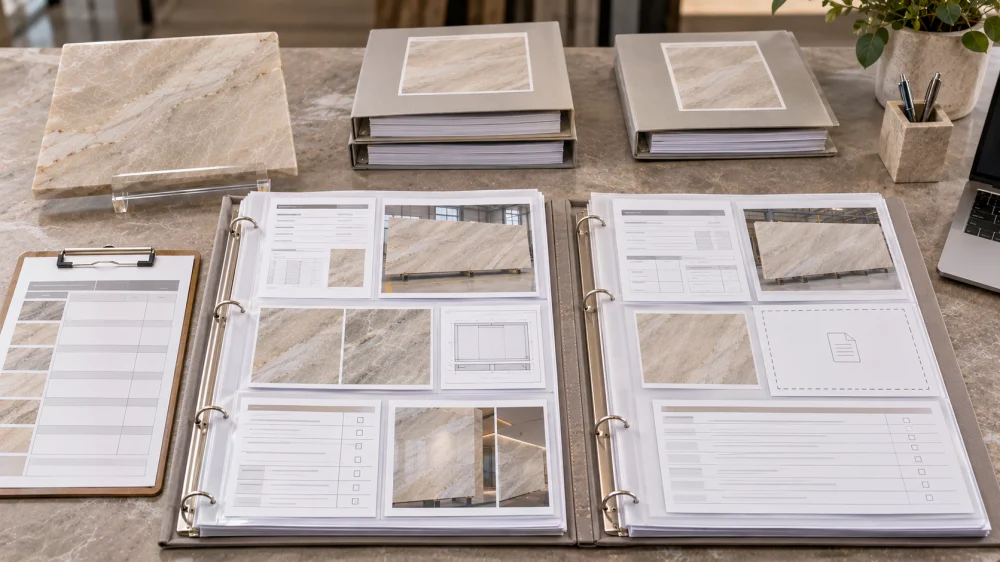
What matters is that a final rejection, a request for information and a withdrawn proposal are not silently recorded as the same event.
Decision Status RuleMissing evidence is not the same as demonstrated failure.
If the reviewer has not received the necessary laboratory report, full-slab photographs or cutting layout, the record should say what information is missing. Do not invent a technical defect to explain an incomplete review.
A meaningful rejection must refer to the decision the alternative was supposed to replace.
Start with the controlling documents.
Depending on the project, those may include:
Do not assume that an earlier acceptance of a small colour sample also approved exact slab allocation, performance, fabrication or the commercial terms of future replacements.
For example, the original basis may be:
Material direction: Taj Mahal Quartzite, soft pale warm greige.
Visual requirement: Restrained natural movement across a hotel reception wall.
Specific board approval: Current identified boards reviewed under a particular layout revision.
Open technical item: Final support or attachment details remain subject to the responsible design review.
These are separate approvals.
IL Quartzite layout approval guide explains why visual approval must identify the actual slabs, finished-piece positions, orientation and controlling revision rather than relying on a generic approval signature.
The reason should relate to a requirement, a comparison or another condition that materially affects the project.
Aesthetic preference can be legitimate where the design approval scope includes visual selection.
However, a useful record should describe the relevant visual difference rather than simply calling the material unattractive.
| Reason Category | Project-Specific Finding | Supporting Evidence |
| Visual Appearance | Alternative has stronger movement than the approved quiet-wall direction. | Comparable full-slab images, approved visual range, recorded design decision |
| Layout / Pattern Relationship | Revised slab allocation changes a critical seam or waterfall relationship. | Original and alternate layout drawings |
| Dimensions / Usable Yield | Available boards cannot produce the required finished pieces under the proposed cutting plan. | Current slab measurements and revised cut layout |
| Technical Requirement | Verified data fails an identified applicable project criterion. | Actual test report, requirement and technical reviewer decision |
| Evidence Gap | Required source information, current testing or sample evidence has not been supplied. | Submission register and specific missing-information request |
| Supply Quantity / Schedule | Available quantity or confirmed delivery arrangement does not meet the project need. | Current inventory statement, quotation and project schedule |
| Commercial Conditions | Revised price, payment or reservation terms have not been accepted. | Original and revised commercial offers |
More than one reason may apply.
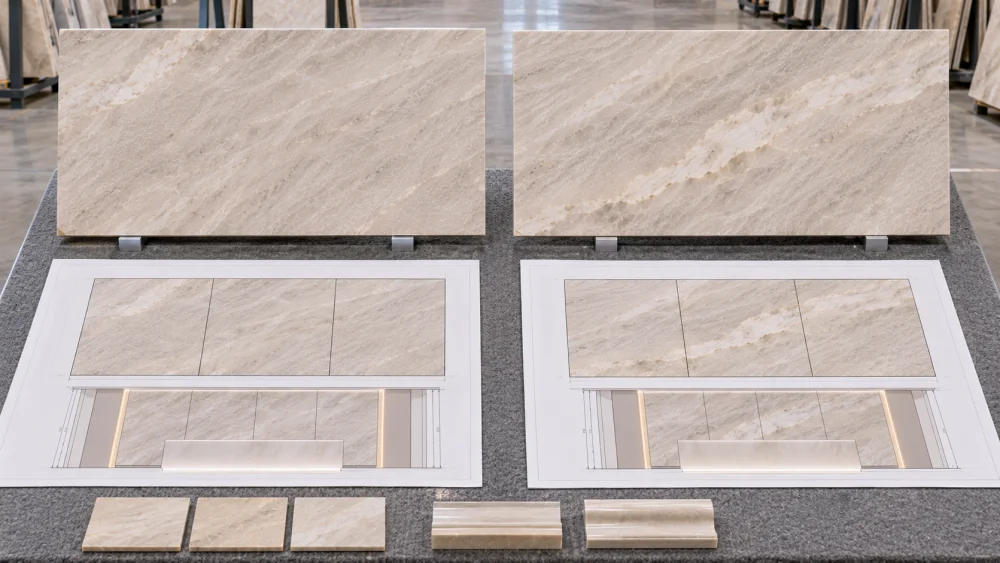
For example, a proposed replacement slab may have an acceptable background tone but require an additional seam and a further slab purchase.
In that case, the record should not label the stone itself as defective.
It should explain the actual design and quantity consequences.
The following example is fictional and illustrates a record structure rather than an actual customer decision.
A hospitality project has selected Taj Mahal Quartzite for a high-visibility reception wall.
The approved visual direction emphasizes a warm pale greige background with relatively quiet taupe movement.
The design includes several large adjacent panels that should form a calm overall composition.
One originally selected board becomes unavailable before final production release.
The supplier proposes a current Taj Mahal Quartzite board under a revised slab offer.
The designer receives:
The replacement board remains within the same commercial stone family.
However, it has much stronger directional movement than the neighbouring boards retained for the wall.
In the proposed layout, the strongest movement falls across a highly visible panel junction near the reception entrance.
The designer declines the alternative for that wall position.
Illustrative Substitution Decision — DeclinedProposal: ALT-02 / Current Revision.
Original Basis: Approved Taj Mahal Quartzite reception-wall slab arrangement, Layout R03.
Proposed Change: Replace one identified board with a current alternate.
Decisione: Declined for the specified reception-wall panel allocation.
Reason: The alternate’s stronger directional mineral movement creates a visual transition at the main entrance that differs from the approved restrained wall composition.
Prove: Original and proposed full-board photographs, revised allocation drawing and recorded design review.
Technical Status: No conclusion of material defect or technical noncompliance is made by this visual decision.
Prossima azione: Submit another board or a revised layout for separate review if permitted by the project.
Production Status: Do not use ALT-02 as the approved replacement under the rejected layout.
That statement is more accurate than:
“Stone rejected because colour is bad.”
It identifies what was rejected, which project condition mattered and what remains possible.
A rejection record becomes unreliable when the original and substitute were reviewed using materially different evidence.
For natural Quartzite, the comparison should reflect the decision being made.
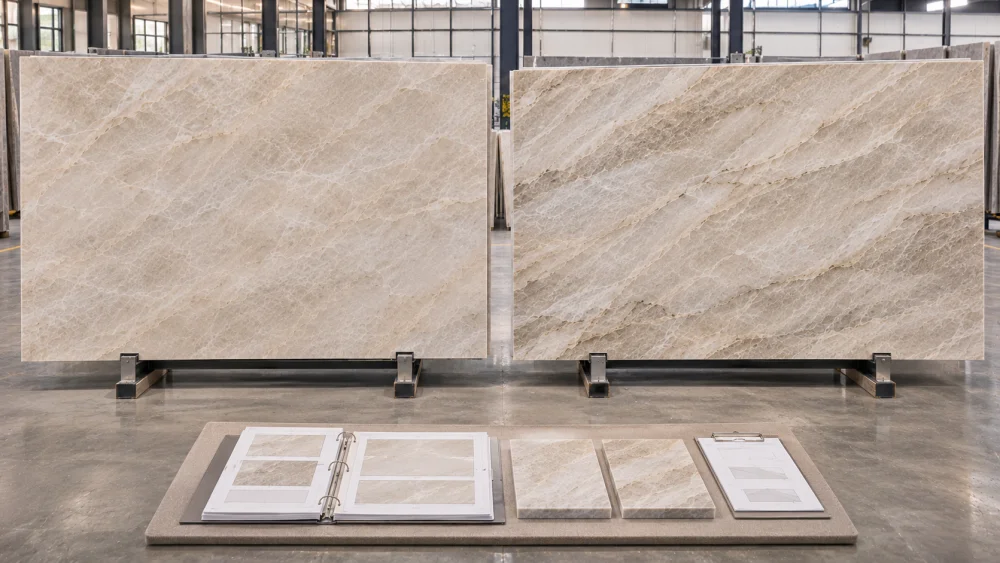
Identify the original and proposed slabs or samples separately.
The same commercial material name does not prove that the boards are visually identical.
Where practical, compare complete slab faces under similar orientation, lighting, white balance and camera conditions.
Record any significant differences in the photographic setup that may affect interpretation.
Do not digitally recolour the substitute to resemble the original.
Where a finished piece has important visual positioning, place the proposed cutting geometry on the current substitute slab.
For a multi-slab installation, review the alternative against the boards that remain in the project, not only against the missing board.
If technical performance is part of the decision, compare the actual required properties, test methods, material identity and relevant report scope.
Do not use an unrelated laboratory report or assume that all materials sold under one trade name share identical measured properties.
Distinguish visual approval from current stock availability, reservation, pricing and delivery terms.
A visually acceptable alternative may still be commercially declined.
Similarly, a lower-priced alternative may be visually or technically unsuitable for the intended project.
For complex projects, a concise comparison pack should include both original and proposed evidence in one controlled submission rather than making reviewers search through several message threads.
The decision record should be short enough to use, but complete enough to explain the result later.
A practical record can include the following fields.
| Campo di registrazione | What to Enter |
| Project / Location | Relevant project and installation area |
| Substitution Proposal ID | Unique proposal reference and revision |
| Original Approved Basis | Specification, board IDs, sample approval, quotation or layout revision |
| Reason for Proposal | Shortage, changed geometry, price, schedule, material change or another confirmed cause |
| Alternative Identity | Current material name, physical boards, finish, thickness and available quantity |
| Comparison Evidence | Referenced photographs, drawings, samples, tests or revised commercial offer |
| Decision Reason | Identified unmet requirement, difference, evidence gap or commercial objection |
| Decision Status | Accepted, declined, pending, withdrawn or superseded |
| Decision Authority | Authorized reviewer, role, decision date and approval record |
| Scope / Consequence | Affected pieces, zones, reservation, quotation and fabrication release status |
| Resubmission Conditions | What new evidence or revised proposal would be needed, if resubmission is permitted |
The record should retain the original proposed alternative identity even if the supplier later offers another board.
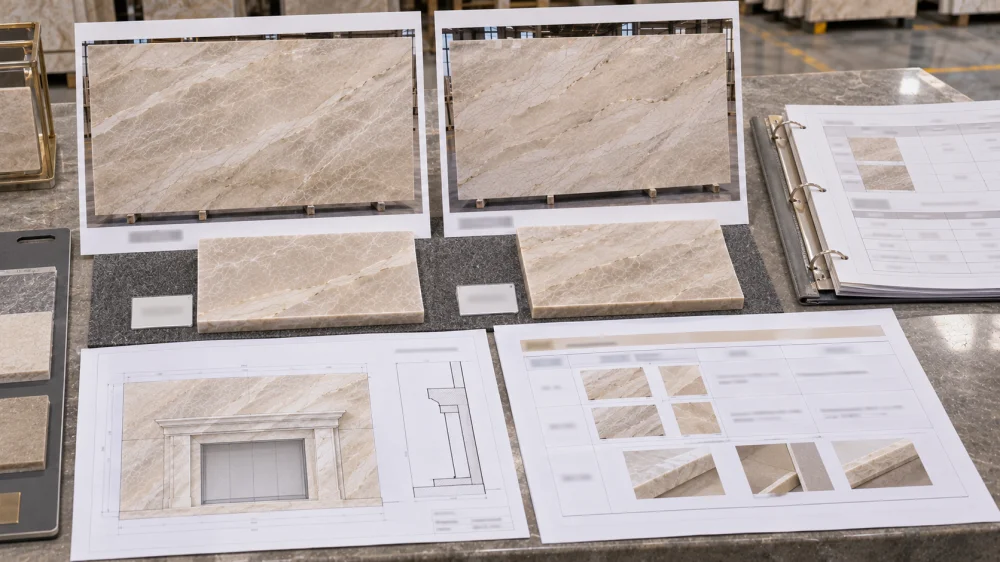
Do not overwrite a declined proposal with a new photograph and leave the old decision attached to different material.
A project may involve several reviewers with different responsibilities.
An architect or interior designer may have authority over the visual material selection.
A structural or facade specialist may review technical material suitability for a defined application.
A procurement manager may review price, quantity, delivery and contract compliance.
A stone fabricator may identify fabrication constraints, available yield or physical conditions requiring further review.
These decisions should not be silently merged.
Ad esempio:
Visual Decision: Alternative not accepted for the entrance feature wall.
Technical Decision: Material test evidence remains under review.
Commercial Decision: Revised quotation not yet accepted.
Fabrication Status: No release to cut the proposed replacement pieces.
A single person may be authorized to coordinate several of these decisions, but the applicable contract and approval procedure determine the actual authority.
The decision record should not claim that a visual reviewer has certified the stone’s structural suitability.
Likewise, laboratory results do not automatically establish the architectural acceptance of a particular natural-stone pattern.
Potentially, depending on the stated decision and project procedure.
The record should distinguish whether the original proposal is closed or whether a revised option can be considered.
For example, an alternative declined because its proposed slab layout introduces an unacceptable seam might be reconsidered with a different cutting arrangement or additional usable material.
An alternative placed on hold because a required technical report is missing may proceed to review when appropriate evidence is supplied.
A commercially declined proposal may become acceptable if the supplier issues a revised offer.
However, a revised submission should have its own controlled identity.
It should not replace the historical reason for declining the earlier version.
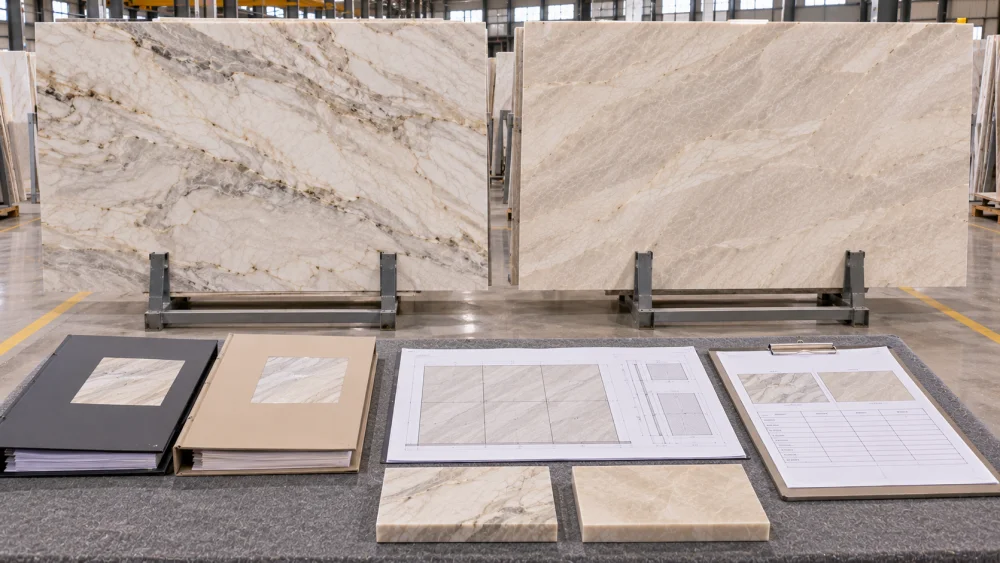
A useful resubmission note identifies:
Do not describe a previously rejected board as approved merely because a later, different proposal was accepted.
Resubmission PrincipleA new alternative needs a new review basis.
The previous decline remains part of project history. A later acceptance applies only to the alternative and revision actually approved.
Declining an alternative does not automatically resolve what will be supplied instead.
The original specified material may remain the preferred design direction, but its physical availability may have changed.
The procurement team should separately establish the status of the original material and the available next steps.
Possible outcomes include:
Do not assume that an original board remains reserved because the substitute was declined.
Inventory availability, reservations, payment and ownership are separate commercial matters controlled by the actual agreement.
A previously approved but unavailable board cannot be restored to physical stock by keeping its old approval status active.
Where an alternative is declined, the team should identify which current offer or material-selection status now controls the project.
A declined alternative may remain relevant after the project is completed.
It can explain why one visually similar board was not used, why a different supplier was selected or why a fabrication layout changed.
The document-control system should retain:
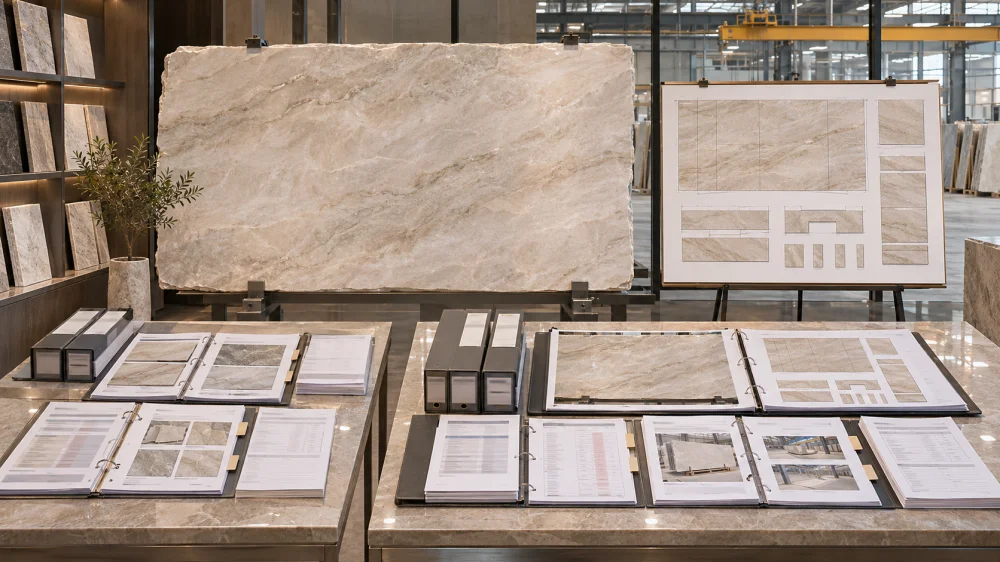
IL Indice del documento di consegna dalla fabbrica al cantiere per la quarzite includes material substitution records among the project documents that may need to remain connected to current drawings and finished-piece identities.
Earlier revisions should remain identifiable as historical records rather than being confused with current production instructions.
This helps a future reviewer determine which physical stone was finally supplied and why another candidate was not used.
A defensible record does not need to be long or adversarial.
It should allow another authorized team member to answer five questions.
1. What was the original requirement or approval?
2. What exact alternative was proposed?
3. What evidence was reviewed?
4. Which project condition prevented acceptance?
5. What is the current status and permitted next step?
Where the reason is visual, describe the actual difference and the affected project area.
Where the reason is technical, identify the applicable requirement and the supporting evidence.
Where the reason is commercial, record the relevant quotation or delivery condition.
Where the information is incomplete, identify the outstanding evidence rather than creating an unsupported rejection.
Natural Stone Institute resources emphasize the importance of representative natural-stone samples and variation in assessing the material proposed for a project. This supports comparing the actual submitted stone against the agreed reference rather than treating its commercial name or one small sample as a complete acceptance basis.
However, the exact contractual meaning of rejecting a substitution depends on the project specification, approval procedure and applicable agreement. This guide is a procurement documentation framework, not a substitute for contractual or legal review.
Substitution Decision CloseoutA rejected Quartzite alternative should remain an identifiable proposal with a specific reason and decision scope.
Do not turn a design mismatch into an unsupported material defect. Do not treat missing evidence as a proven technical failure. Do not allow a new physical slab to inherit an approval issued for another board.
Buyer Next Step: Before closing or revising a Quartzite substitution, request one decision record showing the original approved basis, alternate board identity, comparison evidence, exact reason for the decision, responsible reviewer and next permitted action.
It is a controlled project document identifying an alternative natural-stone material or physical slab proposed in place of an earlier selection. It records the original basis, proposed change, supporting evidence, review decision, reasons and subsequent procurement or production status.
No. A material may be declined because its appearance, cutting yield, slab relationship, quantity, schedule or commercial terms do not suit the project. A technical defect or noncompliance should only be recorded when supported by the relevant evidence and review.
Declined means the proposal was reviewed and not accepted for a stated scope. Not approved or pending may mean the decision is incomplete because required information, testing, layout drawings or another review remains outstanding. The project should define its status terms consistently.
Use the original material or slab references, current substitute board identity, comparable photographs, relevant sample records, project layouts, dimensional or technical evidence where applicable, revised commercial documents and the authorized decision record. The evidence should relate directly to the stated rejection reason.
Yes. The same commercial stone name does not identify the same physical slab. A replacement may have different colour movement, usable dimensions, mineral distribution or relationships with retained project slabs. Review those differences against the actual approved project basis.
Potentially, if the project procedure allows a revised submission. The new proposal should identify what changed and provide evidence addressing the previous decision. The original decline remains part of the record and should not be overwritten by a later approval.
The reviewer should have authority under the project’s contract and approval procedure. Visual, technical, commercial and fabrication decisions may belong to different parties, so the record should identify the relevant decision scope, reviewer, role and date.
Send the original specified material or slab references, proposed alternative board IDs, current project drawings, relevant approval records, sample or full-slab photographs, the specific reason for decline, required dimensions and quantity, finish, decision authority, requested next action and delivery requirements. Clarify whether another alternative, revised layout or additional evidence is required.