

Diano Beige Marble
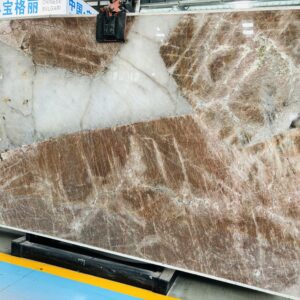
Diano Beige Marble, also commonly traded as Daino Reale Marble, is an Italian natural marble characterized by a warm cream and beige base with irregular ivory, taupe and light-brown movement. Its pattern often develops in layered, diagonal or softly flowing directions rather than isolated high-contrast veins.
This warm visual range makes the material suitable for coordinated residential, hospitality and commercial interiors. It can be fabricated into marble vanity tops, wash basin components, wall panels, flooring, stair pieces, reception counters, countertops and custom architectural stonework.
The finished appearance depends strongly on the selected slab. Some slabs are lighter and creamier, while others contain stronger taupe or brown movement. For projects using several adjoining pieces, the slab batch and cutting direction should therefore be approved together rather than evaluating each component independently.

Marmo beige naturale
Italia
Cream · Ivory · Taupe
Slabs · Panels · Fabrication
Product Specifications
| Specifiche | Dettagli |
| Material Name | Diano Beige Marble |
| Material Type | Marmo naturale |
| Alternative Names | Daino Reale Marble / Daino Beige Marble |
| Origine | Italia |
| Primary Colors | Cream, beige, ivory, taupe and light brown |
| Texture Pattern | Layered, diagonal and flowing natural mineral movement with slab-dependent vein density |
| Spessori disponibili | 18mm / 20mm |
| Forme disponibili | Slabs, tiles, wall panels, flooring, vanity tops, wash basin components, stairs and custom-fabricated pieces |
| Available Slab Size | Subject to Current Block and Slab Inventory |
| Custom Size | According to approved CAD, shop drawings or project dimensions |
| Surface Finishing | Polished, honed and other project-specific finishes subject to confirmation |
| Opzioni per i bordi | Straight polished, eased, bevel, mitered and custom fabricated edges |
| Application Scope | Vanities, bathrooms, walls, floors, stairs, fireplaces, countertops, reception counters and custom stonework |
| Package Details | Project-specific protection with reinforced fumigated wooden crates |
| MOQ | According to Slab, Tile or Custom Fabrication Requirements |
| Tempi di consegna | Confirmed According to Material Availability, Quantity and Processing Scope |
Slab Color Range and Pattern Direction
Diano Beige Marble should not be treated as a perfectly uniform beige surface. Actual slabs can move from pale cream and ivory into warmer beige, taupe and light-brown areas. Pattern density can also change significantly across the slab.
This variation can be useful in design, but it needs to be controlled in procurement. A calmer slab may suit a large bathroom or continuous floor, while a slab with stronger layered movement may be intentionally selected for a reception counter, vanity or feature component.
For projects requiring several slabs, buyers should define an acceptable color range and decide whether the finished installation should appear relatively uniform or intentionally display stronger natural variation.

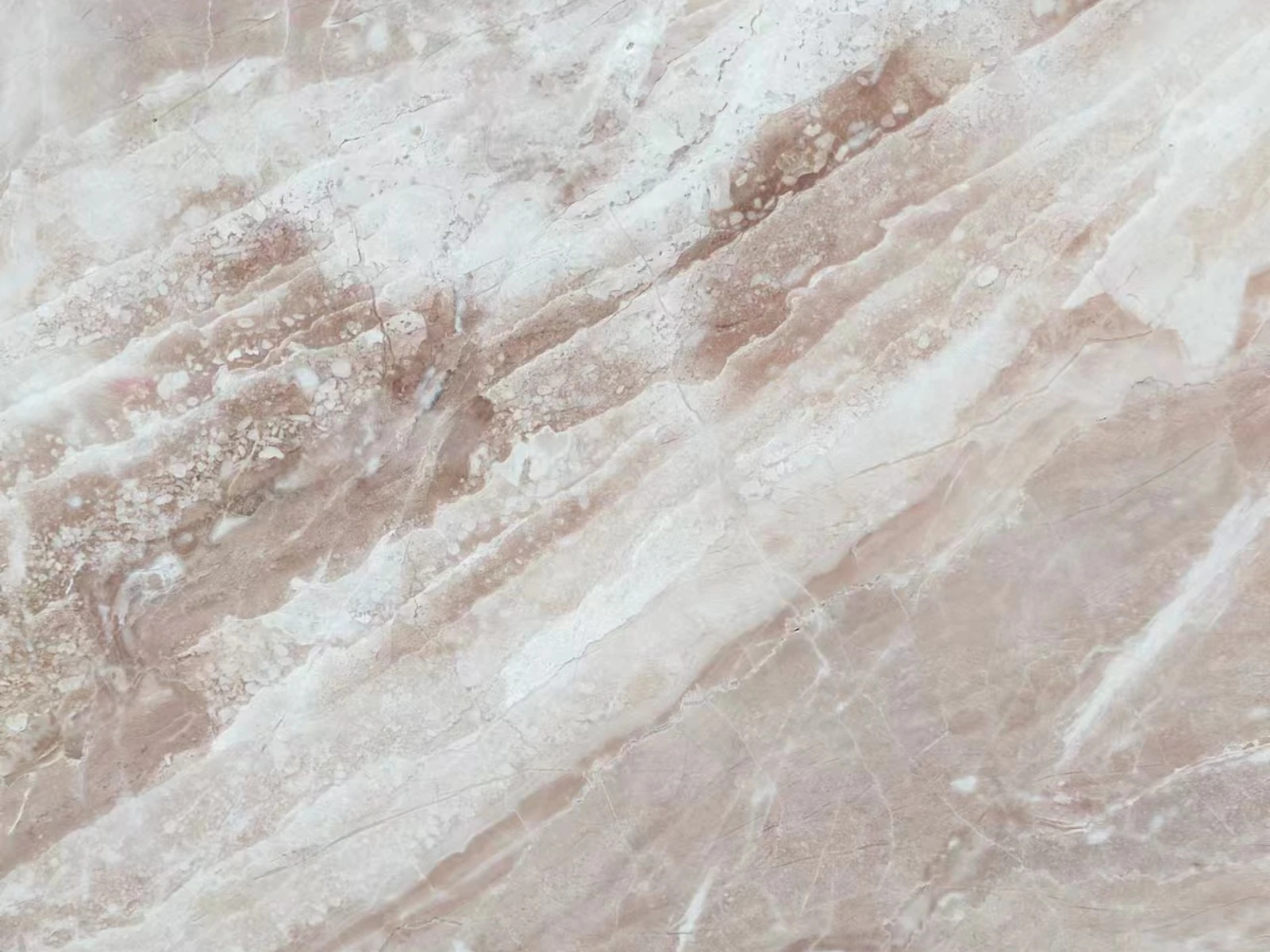
Surface Detail and Natural Marble Character
At close range, the stone shows more than a simple beige background. Ivory mineral zones, warm taupe bands, lighter crystalline-looking areas and fine natural lines combine to create a layered surface.
Natural marble can contain mineral lines, small fissures, filled areas and variations in crystal structure. These characteristics should be reviewed on the actual selected material. The key purchasing question is not whether every slab is identical, but whether the selected range is appropriate for the intended application and visible position.
Vanity Tops and Custom Wash Basin Fabrication
The supplied project photos show Diano Beige Marble already fabricated into substantial bathroom and vanity components. This type of work requires more control than simply cutting a rectangular marble top. Basin openings, tap holes, visible fascia, internal joints, edge alignment and supporting construction all need to follow approved drawings.


Dry-Lay Inspection for Multi-Piece Projects
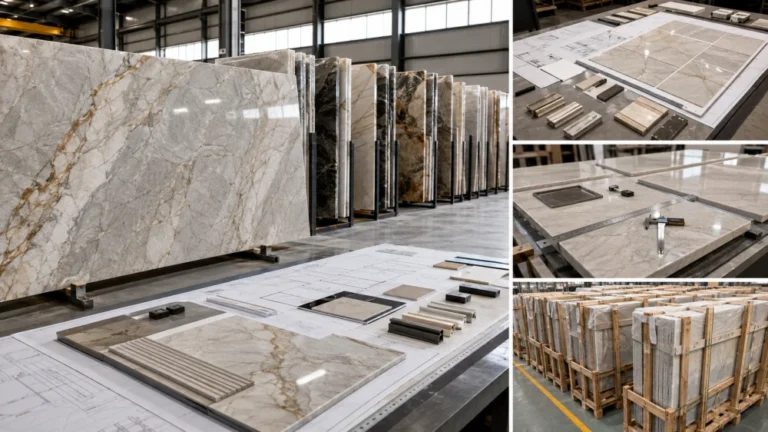
For a multi-piece bathroom, hotel or residential project, dry-lay inspection provides information that individual QC photos cannot show. It allows the supplier and buyer to review the relationship between finished pieces, compare background tone, identify sudden changes in vein density and verify that the fabricated components correspond to the project sequence.


Where installation sequence matters, finished pieces can also be numbered according to approved drawings. This is especially useful for long vanity runs, wall panels, stair packages and other projects containing multiple similar components.
Cutouts, Long Pieces and Vein Placement
Basin cutouts create narrow stone zones around the opening. Their position should therefore be considered together with the natural vein structure rather than added after the slab has already been allocated.
Long vanity pieces also require attention to slab yield and vein direction. If adjoining components are intended to read as one continuous surface, the cutting layout should preserve compatible movement across the visible pieces wherever the selected slab permits.
Temporary support or reinforcement may be required around vulnerable openings during fabrication and transportation, depending on the geometry of the finished component.

Wall, Floor, Stair and Interior Applications
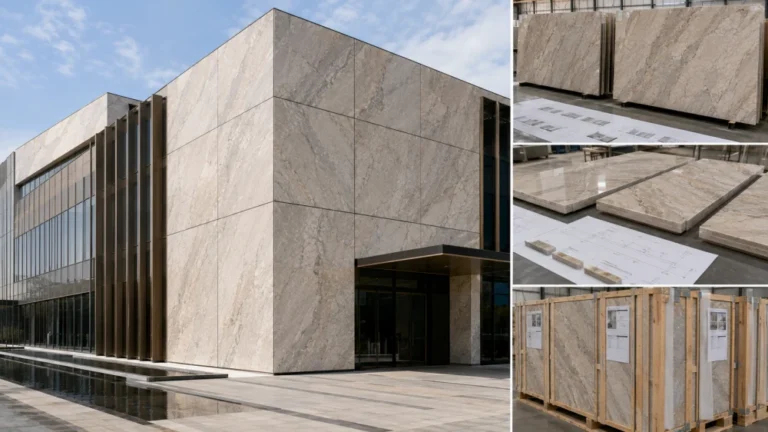
Warm beige wall panels can be arranged with controlled vein direction and numbered according to the approved elevation.
Floor pieces should be pre-sorted to balance lighter cream and stronger taupe areas across the installation.
Treads, risers and landings can be coordinated through drawings, vein planning, edge processing and piece numbering.
Selected slabs can be used for reception counters, table components and other custom stone elements where vein placement is visible.
Surface Finishes and Maintenance Considerations
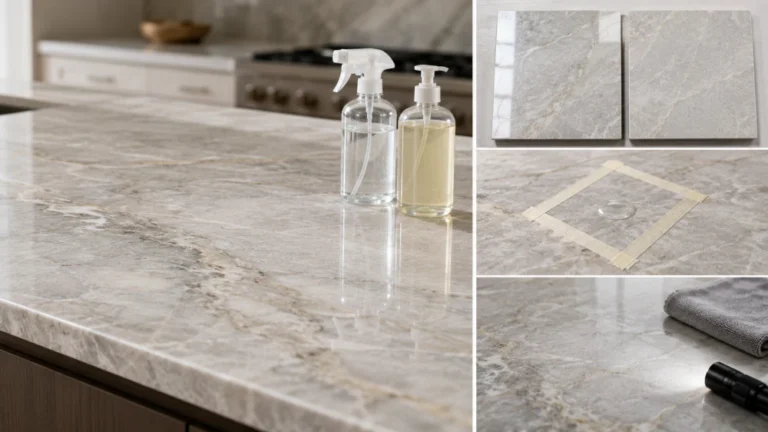
A polished finish emphasizes the contrast between cream, taupe and lighter mineral areas and gives the stone a stronger reflective surface. Honed Diano Beige Marble has lower reflection and creates a softer visual effect.
Because Diano Beige is natural marble, it should not be evaluated like granite, quartzite or engineered stone in applications exposed to acidic substances. Marble can develop etching and natural patina with use. For countertops, vanity tops and hospitality surfaces, the end user’s maintenance expectations should therefore be discussed before material approval.
B2B Procurement Risk Control
| Buyer Risk / Project Risk | Recommended Control |
| Slabs vary from pale cream to deeper taupe beige | Define the acceptable color range and approve current full slabs before reserving project material. |
| Layered veins run in different directions between pieces | Prepare cutting layouts and identify required vein direction before fabrication. |
| Basin openings leave vulnerable narrow marble sections | Confirm cutout geometry, inspect the cutting zone and use suitable temporary support or reinforcement where required. |
| Multiple vanity pieces look unrelated after installation | Use batch matching, dry-lay inspection and piece numbering before packing. |
| Natural fissures or filled areas fall in critical visible positions | Inspect actual slabs and allocate important focal pieces before final cutting. |
| Marble is specified where very high acid resistance is expected | Confirm the end-use environment and explain marble maintenance and etching characteristics before material approval. |
| Long fabricated pieces are damaged during handling | Plan rigid support, edge protection, internal blocking and crate structure according to finished dimensions and cutouts. |
Custom Fabrication and Quality Control
Diano Beige Marble project QC should connect the selected slab with the finished piece. Dimensional inspection alone cannot confirm whether a vanity, wall panel or long counter has been cut from the intended visual zone.
Track approved slabs and batch allocation before cutting.
Confirm dimensions, basin openings, tap holes, joints and visible edges.
Position important pieces according to the approved movement and visual priority.
Check opening dimensions, narrow sections and surrounding stone condition.
Inspect visible edges, joints, polish or hone consistency and repaired areas.
Arrange related pieces to review color balance, vein direction and project sequence.
Verify finished dimensions, quantity, piece identity, appearance and fabrication quality.
Check protection, numbering, supports, internal blocking and crate stability.

Packaging and Delivery
Packing should be designed according to the finished component rather than using one method for every marble product. Diano Beige Marble vanity tops and long fabricated pieces can include vulnerable openings, narrow stone sections and finished visible edges that require additional protection.
Finished surfaces are protected with soft non-staining surface protection. Vulnerable edges and corners use edge guards and corner protection, while rigid separators and internal blocking help prevent movement inside the package. Temporary cutout support or reinforcement can be added where appropriate for fabricated countertop and vanity components.
Multi-piece wall, vanity and stair packages can be identified according to the approved drawing or installation sequence. Production inspection is completed before packing, followed by a final packing inspection. Export products are secured in reinforced fumigated wooden crates appropriate to their dimensions, weight and breakage risk.
Why Choose HRST STONE for Diano Beige Marble Projects?
Con 17+ years of natural stone project experience, HRST STONE provides one-stop natural stone solutions from slab selection through custom fabrication and export packing.
For Diano Beige Marble, project support can include current slab review, batch selection, CAD and shop drawings, cutting-layout planning, basin and countertop fabrication, edge processing, dimensional QC, dry-lay or trial fitting where relevant, piece numbering and international export packing.
This workflow is particularly useful for hotel bathrooms, villas and multi-piece custom projects because the buyer can evaluate both the natural stone appearance and the finished fabrication before shipment.
Information Required for a Quotation
- Product Form: slabs, tiles, vanity tops, wash basins, wall panels, flooring, stairs or other custom pieces
- Dimensions: finished sizes or required slab format
- Quantity: pieces, square meters or slab quantity
- Spessore: required stone thickness
- Finish: polished, honed or other required finish
- Visual Preference: lighter cream, warmer beige, quieter pattern or stronger taupe movement
- Fabrication: basin openings, tap holes, edge profiles, miters, joints, grooves or other processing
- Drawings: CAD, PDF, basin templates or dimensional sketches where available
- Destination: destination port or delivery location for logistics evaluation
Diano Beige Marble FAQ
1. Is Diano Beige Marble the same as Daino Reale Marble?
Diano Beige Marble is commonly traded under names including Daino Reale Marble and Daino Beige Marble. Because commercial naming can vary, B2B orders should be approved using actual slab photos, batch information and the required visual range rather than relying only on the trade name.
2. Why can two Diano Beige Marble slabs look noticeably different?
Natural slabs vary in cream-to-beige background depth, taupe concentration, layered movement and vein density. For projects using several slabs, compatible material should be selected and reserved as one coordinated batch.
3. Is Diano Beige Marble suitable for custom vanity tops and wash basins?
Yes. It can be fabricated into vanity tops, basin surrounds and more complex wash basin components. Accurate basin templates, cutout dimensions, tap-hole positions, visible edges and structural support should be confirmed before fabrication.
4. How should vein direction be controlled on long vanity pieces?
The finished pieces should first be positioned on a slab cutting layout. This allows the fabricator to coordinate the direction of the layered movement and avoid random changes between adjoining components where continuity is required.
5. Why is dry-lay inspection useful for Diano Beige Marble projects?
Dry-lay inspection makes it possible to compare related finished pieces before packing. It helps identify unexpected color jumps, incorrect vein direction, missing components and sequencing issues that may not be obvious when each piece is inspected separately.
6. What should buyers approve before Diano Beige Marble is cut?
Buyers should approve the current slabs or acceptable batch range, surface finish, fabrication drawings, visible edge requirements, cutout details and important vein directions. For multi-piece projects, the cutting layout and dry-lay requirement should also be agreed before production.
7. Is Diano Beige Marble suitable for kitchen countertops?
It can be used for countertops when the end user accepts the maintenance characteristics of natural marble. Marble can etch when exposed to acidic substances, so applications requiring very high acid resistance or minimal maintenance should be evaluated carefully before material selection.
Nota finale
For slabs: approve the actual cream-to-taupe color range and pattern density rather than selecting from a small sample alone.
For vanity tops: confirm basin templates, tap holes, visible edges, cutout reinforcement and vein direction before fabrication.
For walls: prepare panel layouts and control the direction of the layered movement across adjoining pieces.
For floors: sort lighter and darker pieces before packing to avoid unintended tonal patches after installation.
For stairs and multi-piece work: use approved drawings, dry-lay inspection and piece numbering to simplify installation.
For custom Diano Beige Marble projects, the preferred control sequence is actual slab approval → CAD/shop drawing review → cutting layout → cutout and edge fabrication → dry-lay inspection → dimensional and visual QC → piece numbering → packing QC → reinforced export packing.