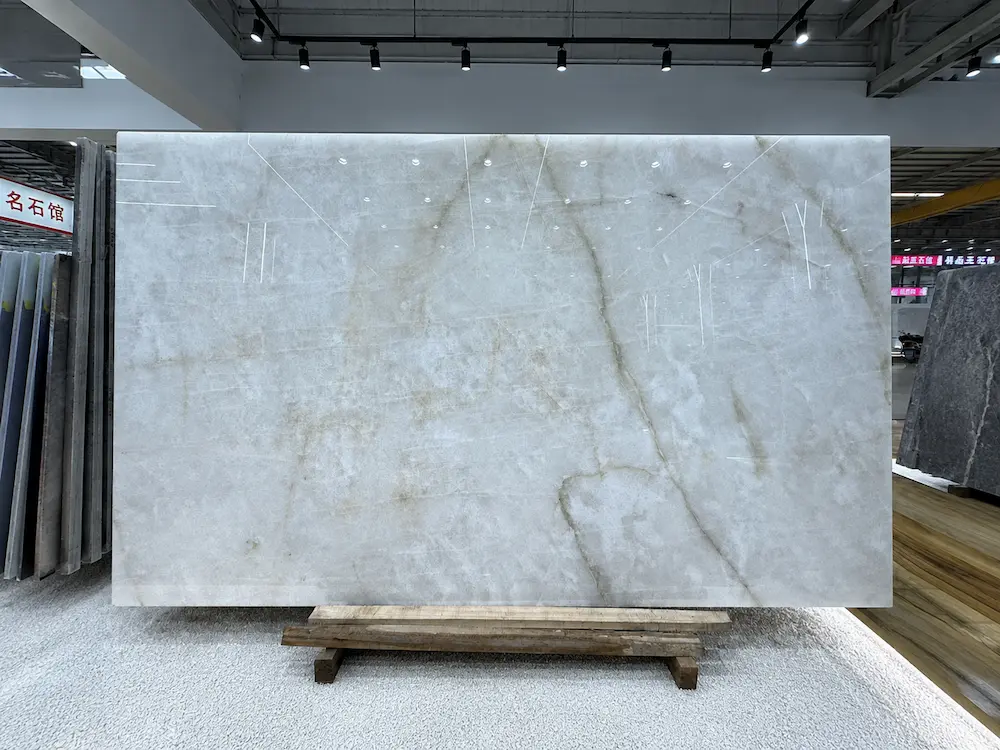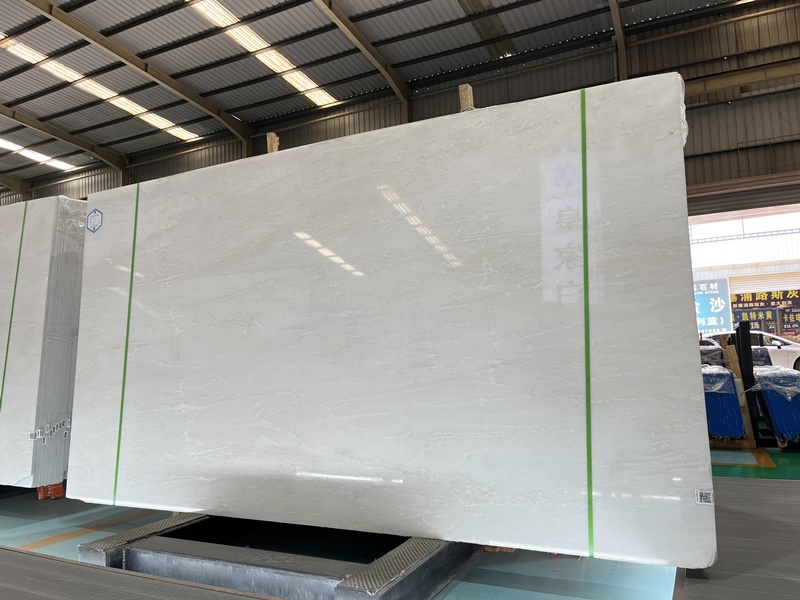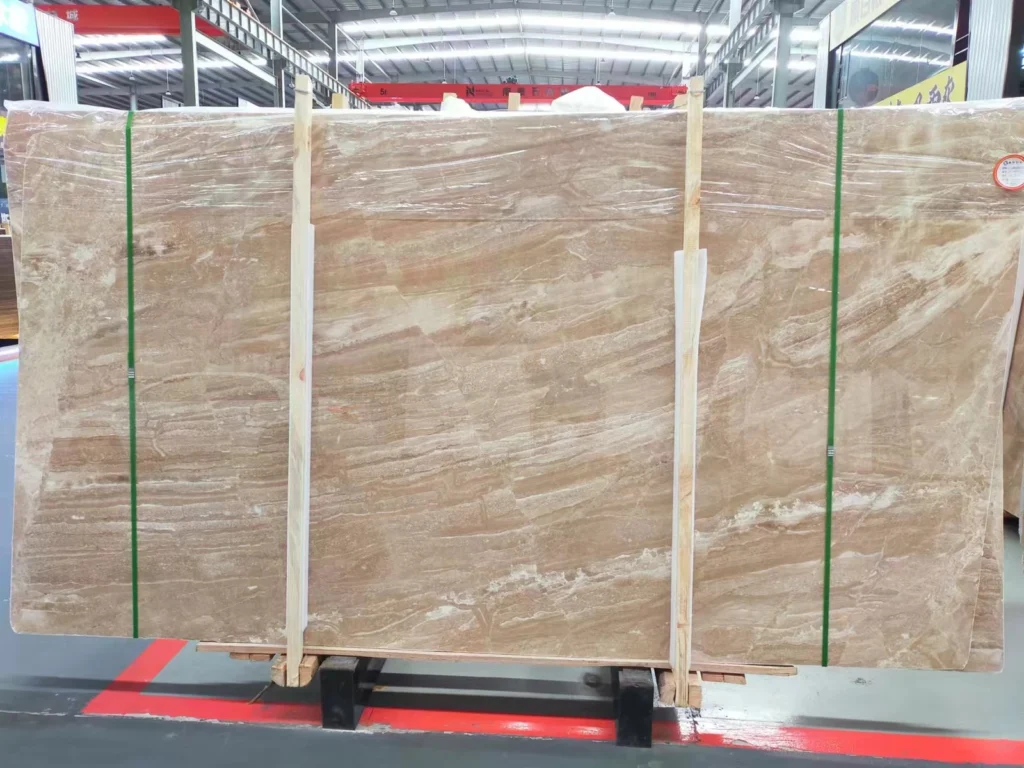


Xiamen Stone Fair 2026 continues to function as a global “signal event” for stone procurement. Buyers do not come only to see new slabs; they come to evaluate how the supply base is evolving. Among the many categories on display, marble and engineered quartz remain dominant because they represent two different ways of managing procurement risk. Marble is tied to quarry reality and natural variation, while quartz is tied to industrial repeatability and controlled manufacturing inputs.
For international buyers, these materials are often compared as if they are substitutes. In real projects, they serve different purposes and carry different risk profiles. A luxury hotel lobby may require the depth and prestige of marble, but a multi-unit residential program may require quartz for predictable delivery and uniform appearance across hundreds of kitchens. At the fair, the right question is not “Which is better?” but “Which is more stable for my project scope, timeline, and replacement risk tolerance?”
In 2026, professional procurement teams increasingly evaluate systems, not samples. Many disputes in international stone projects start when teams treat stone as a decorative finish rather than a managed supply system. On-site, buyers compare how suppliers manage blocks, slabs, processing, inspection documentation, and export logistics.
| Comparison Factor | What Buyers Check | Why It Matters |
|---|---|---|
| Supply Stability | Quarry access, slab inventory structure, lead time discipline | Determines if delivery timelines are realistic |
| Batch Consistency | Slab grading logic, batch reservation process, photo approval workflow | Prevents variation disputes and replacements |
| Fabrication Control | In-house machining, tolerance reporting, edge/finish standardization | Impacts installation fit and site rework cost |
| Compliance Readiness | Export documents, labeling, packaging standards, certifications (when relevant) | Reduces customs delay and claim risk |
This is why the marble versus quartz conversation at Xiamen Stone Fair 2026 looks different from a design showroom discussion. It is mainly a conversation about repeatability, documentation, and controlled execution.

Neutral palettes—especially grey and soft beige—remain the most widely displayed marble direction. This is driven by hospitality and commercial interiors that require a timeless look and broad design compatibility. For buyers, the trend signal is not only color; it is how suppliers present grading and consistency control. More exhibitors highlight structured slab sorting, clearer labeling, and batch photo approval, indicating the market is moving toward procurement-friendly marble sourcing.
Large-format marble slabs remain a strong focus because they reduce joint lines, simplify some design outcomes, and can lower installation labor in certain applications. However, large slabs also increase handling risk during shipping and processing. Buyers should focus on packaging standards, edge protection methods, and loading discipline when evaluating large slabs—especially for long-distance export routes.
In previous years, buyers often selected marble based on a showroom-like presentation. In 2026, more international teams request block allocation confirmation and slab-by-slab batch documentation. This shift is practical: large projects cannot rely on “similar” slabs; they need defined acceptance standards. Buyers who require a clear grading system reduce disputes later when additional containers are needed.

Quartz suppliers increasingly emphasize standardized performance indicators: stain resistance, scratch resistance, and repeatable thickness control. Even when two surfaces look similar, buyers compare whether the supplier can provide consistent production runs and stable delivery for high-volume programs.
One of quartz’s strongest procurement advantages remains pattern replication. For developer programs, the ability to replicate the same look across hundreds of units reduces replacement and warranty risk. Buyers at the fair often evaluate whether the supplier can maintain color uniformity between different production batches and whether the brand has a structured QC process to detect variation early.
Quartz exhibitors frequently center production around global thickness standards such as 20mm and 30mm. The real decision factor is not only the slab thickness, but how stable that thickness is across production. Buyers should ask about calibration routines, inspection frequency, and tolerance reporting, particularly if the project requires prefabrication or tight installation tolerances.
At Xiamen Stone Fair, buyers often see significant price variation for both marble and quartz. Price is rarely “random.” It usually reflects structural supply factors. Marble pricing is linked to block availability, quarry yield, and selection level. Quartz pricing is linked to manufacturing scale, resin and mineral input costs, and quality system maturity.
| Pricing Driver | Marmo | Quarzo |
|---|---|---|
| Cost Base | Quarry block supply and selection grade | Manufacturing inputs and factory efficiency |
| Price Predictability | Lower (can fluctuate with block availability) | Higher (more stable forecasting) |
| Variation Risk | Higher (natural variation) | Lower (controlled repetition) |
| Replacement Planning | More difficult without reserved stock | Easier if the same line remains active |
For procurement, the most important pricing question is often: “What does this price include in terms of risk control?” A slightly higher unit price may reduce total project cost if it prevents delays, rework, or replacement shipments.
| Applicazione | Recommended Material | Reason |
|---|---|---|
| Luxury hotel lobby, reception, feature wall | Marmo | Natural depth and premium identity |
| Developer housing kitchens and bathrooms | Quarzo | Uniformity and predictable maintenance |
| High-traffic commercial interiors | Quartz (often) / Marble (selectively) | Quartz offers durability; marble needs stricter care planning |
| Brand-standard retail fit-outs | Quarzo | Repeatable look across multiple sites |
| Signature spaces and bespoke detailing | Marmo | Unique material storytelling |
Buyers can use this table as a first filter, but final decisions should be made based on supplier capability, batch management, and installation constraints in the target market.

Marble and quartz follow different supply chain models. Marble depends on quarry extraction and block allocation. This creates inherent variation and sometimes supply uncertainty. Quartz depends on industrial inputs and factory scale. This creates stronger repeatability, but it also means buyers must verify that the supplier’s quality system is mature enough to maintain consistency across long runs.
For international projects, a stable supply chain is often more valuable than a perfect sample. Export-oriented manufacturers such as HRST STONE support buyers by aligning material selection with production planning, inspection documentation, and packaging discipline. This matters most when projects require multiple containers over an extended schedule, or when the buyer expects future reorders to match the original selection.
| Risk Area | Marble Control Method | Quartz Control Method |
|---|---|---|
| Appearance Consistency | Batch grading, slab-by-slab photo approval | Batch sample verification, production lot control |
| Fabrication Accuracy | Tolerance reporting and template confirmation | Template confirmation and thickness stability checks |
| Export Damage Risk | Edge protection, crate reinforcement | Crate stability, surface protection film quality |
| Replacement Planning | Reserve slabs or confirm future block allocation | Confirm continued production line availability |
This risk-control view is often the difference between a successful sourcing decision and a long-term project headache.
No. Marble remains a premium choice for hospitality and luxury projects, especially for signature spaces where natural depth and prestige matter.
Il quarzo offre spesso una migliore prevedibilità in termini di prezzi e di uniformità dell’aspetto per i programmi ad alto volume. Il costo totale del ciclo di vita può essere inferiore grazie alla riduzione del rischio di sostituzione.
Sì, ma ciò richiede una gestione dei lotti più rigorosa, standard di accettazione più chiari e un fornitore affidabile in grado di riservare lastre o assegnare blocchi per garantire la coerenza futura.
Gli acquirenti dovrebbero informarsi in merito alla classificazione delle lastre, alla possibilità di riservare lotti, al flusso di lavoro per le ispezioni, alle tolleranze di lavorazione, agli standard di imballaggio per l’esportazione e alla disciplina dei tempi di consegna.
Utilizzare standard di accettazione scritti, confermare le foto del lotto prima della produzione, richiedere i registri di ispezione e allineare i modelli e le tolleranze prima dell’inizio della fabbricazione.