उच्च श्रेणी की वास्तुकला की दुनिया में, एक डिज़ाइन उतना ही अच्छा होता है जितना कि उसका निष्पादन। आपने संभवतः रेंडर देखे होंगे: व्यापक पैरामीट्रिक फेसेड, जैविक संगमरमर की सीढ़ियाँ जो गुरुत्वाकर्षण को चुनौती देती हैं, और जटिल रिलीफ दीवारें जो चूना पत्थर में एक कहानी बयान करती हैं। लेकिन जैसा कि कोई भी अनुभवी परियोजना प्रबंधक जानता है, एक सुंदर CAD फ़ाइल और एक पूर्ण संगमरमर की रचना के बीच की दूरी तकनीकी बाधाओं से भरी होती है।.
जब स्क्रीन से पत्थर तक जाने का समय आता है, तो सवाल सिर्फ “हम इसे कैसे काटें?” नहीं होता है, बल्कि, “पत्थर निर्माण CNC बनाम वॉटरजेट बनाम 5 अक्ष—कौन सा बजट को नहीं उड़ाएगा या शेड्यूल को नहीं बिगाड़ेगा?” गलत चुनना पत्थर काटने की तकनीक किनारों को दांतेदार बनाने, सामग्री की बर्बादी या ऐसे बिल का कारण बन सकता है जिससे ग्राहक रो पड़े। यह गाइड वर्कशॉप के तीन दिग्गजों का विश्लेषण करता है ताकि आप अपनी अगली जटिल पत्थर निर्माण परियोजना के लिए सही उपकरण का चुनाव कर सकें।.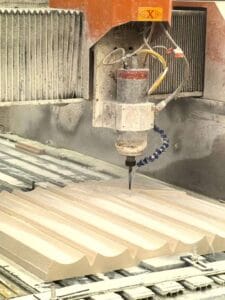
इससे पहले कि हम तकनीक में गोता लगाएं, आइए उन सिरदर्दों को स्वीकार करें जो डिज़ाइनरों को रात में जगाते हैं:
विस्तार का “वैनिश-एक्ट”: आप एक नाजुक 3D टेक्सचर डिज़ाइन करते हैं, लेकिन निर्माता कहता है कि यह “असंभव” है या वह एक ऐसा टुकड़ा वापस कर देता है जैसे इसे मक्खन की चाकू से काटा गया हो।.
बजट का विस्तार: एक ऐसे काम के लिए 5-अक्ष वाली मशीन का चयन करना जिसे एक सामान्य CNC संभाल सकता था, जिसके परिणामस्वरूप लागत आवश्यकता से 3 गुना अधिक हो जाती है।.
संरचनात्मक स्नैप: ऐसी कटिंग विधि का चयन करना जो स्लैब पर बहुत अधिक कंपन या थर्मल तनाव डालती है, जिससे महंगे क्वार्ट्जाइट या संगमरमर के अंतिम उत्पादन चरण में दरार आ जाती है।.
नेविगेट करने के लिए जटिल पत्थर निर्माण, पहले आपको प्रत्येक मशीन के मूल “DNA” को समझना होगा।.
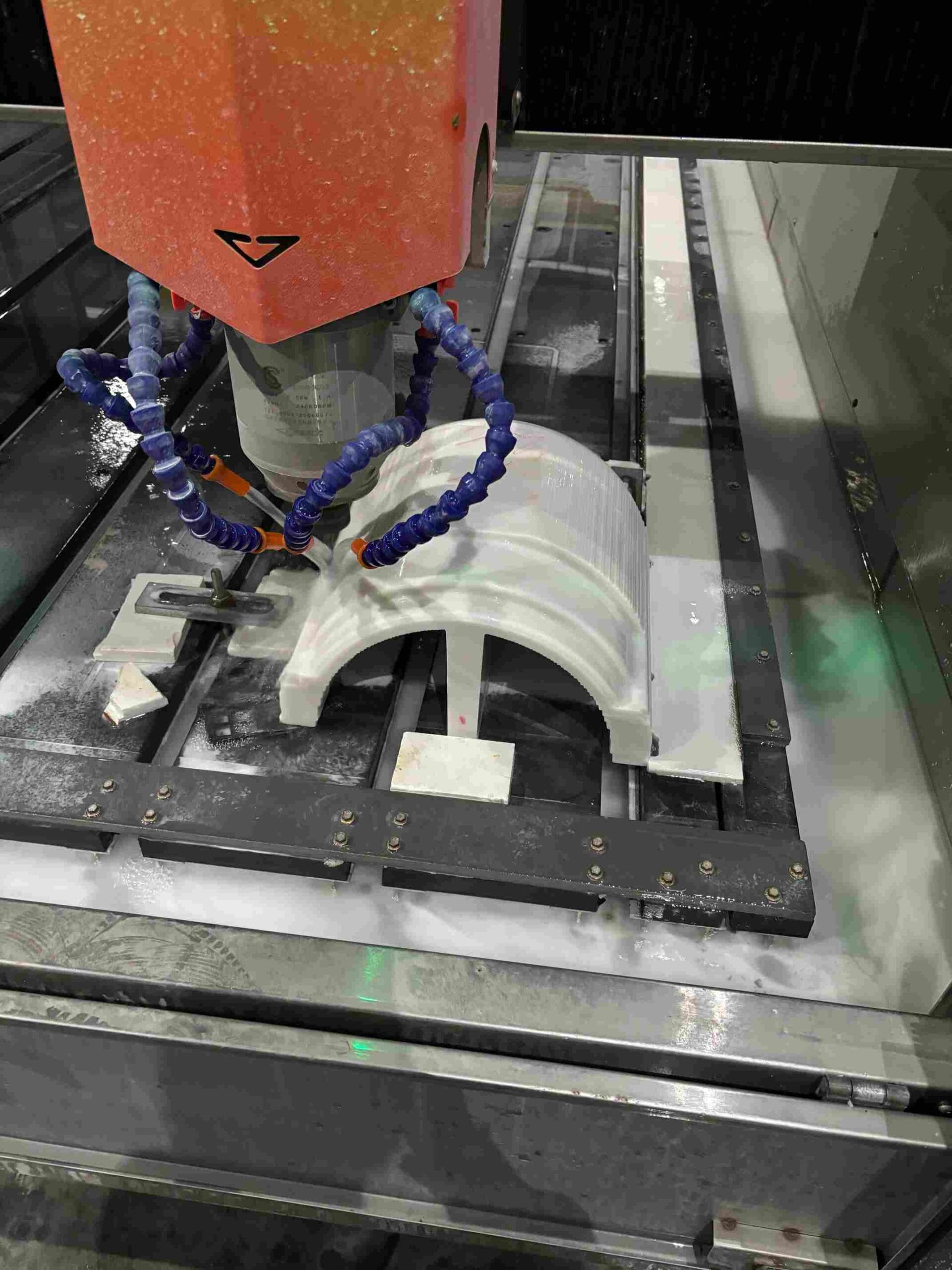
मानक सीएनसी पत्थर मशीनिंग कार्टेशियन निर्देशांक प्रणाली पर काम करता है ($X, Y, Z$)। इसे एक अत्यंत अनुशासित मूर्तिकार के रूप में सोचें जो बाईं ओर से दाईं ओर, सामने से पीछे और ऊपर से नीचे तक चलता है।.
सबसे अच्छा है: सपाट सतहें, रिबेट्स, उत्कीर्णन और बुनियादी 3D रिलीफ।.
पकड़: यह अंडरकट या खड़ी ऊर्ध्वाधर वक्रों के साथ संघर्ष करता है क्योंकि टूल हेड हमेशा टेबल के लंबवत होता है।.
 2. वॉटरजेट कटिंग
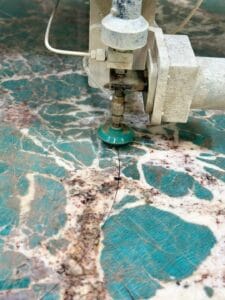
वॉटरजेट तकनीक गर्नेट घर्षण के साथ मिलाए गए सुपरसोनिक पानी के प्रवाह का उपयोग करती है। यह उद्योग का “स्कैल्पेल” है।.
सबसे अच्छा है: जटिल 2D रूपरेखा, पत्थर के इनले (मार्केट्री), और मोटी स्लैबों (200 मिमी तक) को अत्यंत सटीकता से काटना।.
पकड़: यह सख्ती से “थ्रू-कटर” है। यह गहराई, जेब या 3D उत्कीर्णन नहीं बना सकता है।.
5-अक्ष वाली मशीन में दो घूर्णन अक्ष जोड़े जाते हैं ($A$ और $B$) सामान्य $X, Y, Z$. में। कटिंग हेड झुक सकता है और घूम सकता है, जिससे यह किसी भी कोण से पत्थर के पास जा सकता है।.
सबसे अच्छा है: सच्ची 3D मूर्तियाँ, मुड़ी हुई सीढ़ियाँ और “अंडरकट” डिज़ाइन जहाँ टूल को पत्थर के किनारे के नीचे तक पहुँचना पड़ता है।.
पकड़: उच्च प्रोग्रामिंग जटिलता और महंगी घंटे की दर।.
जब आप पत्थर काटने की तकनीक, का फैसला कर रहे हों, तो अपनी प्राथमिकताओं को तौलने के लिए निम्नलिखित मैट्रिक्स का उपयोग करें।.
| विशेषता | CNC (3/4 अक्ष) | वॉटरजेट | 5-अक्ष मशीनिंग |
| आयामीता | 2.5D (रिलीफ) | 2D (सपाट प्रोफाइल) | पूर्ण 3D (मूर्तिकारी) |
| सटीकता | उच्च | अल्ट्रा-हाई | उच्च |
| सेटअप समय | Medium | तेज़ | धीमा (जटिल कोडिंग) |
| सामग्री की बर्बादी | मध्यम | न्यूनतम (पतली कर्फ) | मध्यम |
| सबसे अच्छा है | रसोई के टॉप / दीवार पैनल | फर्श के इनले / मेडलियन | मूर्तिकारी / जटिल वक्र |
“गोल्डन रूल” का जटिल पत्थर निर्माण टूल की गति को पत्थर की ज्यामिति से मिलाना है।.
If your design features a repeating geometric wave, सीएनसी पत्थर मशीनिंग is usually the winner. Since the panels are mostly flat with varying depths, a 3-axis CNC can batch-produce these efficiently.
Why not 5-axis? It’s overkill. You’re paying for rotational movement you don’t need.
For a hotel lobby featuring interlocking marble colors, waterjet cutting is the only logical choice. The “kerf” (the width of the cut) is less than 1mm, allowing pieces to fit together like a perfect jigsaw puzzle.
Why not CNC? A mechanical bit has a diameter (usually 6mm-20mm) and cannot cut sharp internal corners.
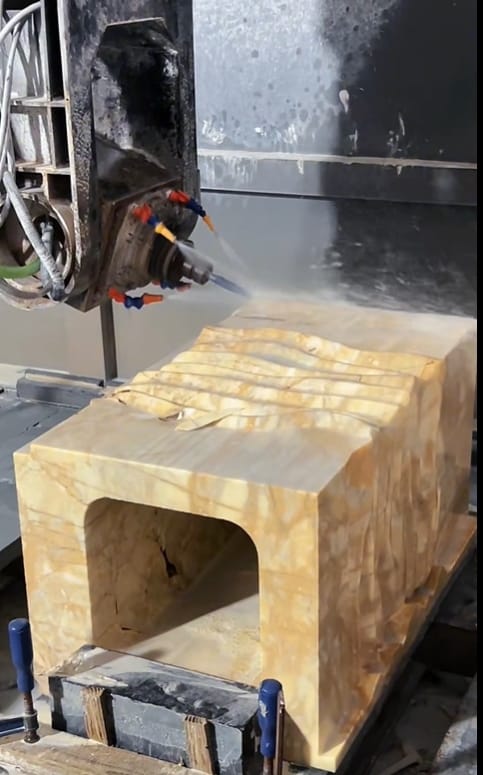
When the underside of a tread is curved and the side is twisted, you need 5-axis machining. The tool must “follow” the curve of the stone in a fluid, multi-directional motion to ensure a smooth finish.
Why not Waterjet? It cannot carve; it can only cut through.
Beyond the machine choice, the success of जटिल पत्थर निर्माण depends on how you prepare the “Digital Twin.”
Mind the “Safety Thickness”: When using 5-axis paths for thin organic shapes, always leave a 2-3mm “tolerance” in the digital model. Stone is a natural product with internal stresses; if you go too thin, the vibration of the tool will shatter the piece.
Integrated Fixings: For heavy 3D wall claddings, use सीएनसी पत्थर मशीनिंग to pre-cut the pockets for undercut anchors or T-slots. This should be done in the factory, never on-site.
The Hybrid Approach: Most high-end projects use a combination. A waterjet might cut the rough “blank” of a statue to save time, followed by 5-axis milling for the detail, and finally, manual hand-finishing for the soul.
The stone industry is moving toward “Industry 4.0.” We are seeing an increase in Robotic Arm Machining (effectively 6-axis or 7-axis), which allows for even larger-scale जटिल पत्थर निर्माण, such as entire monolithic columns.
Sustainability is also driving the popularity of waterjets. Because they use a “cold cutting” process, there is no thermal shock to the stone, and the water can be recycled in closed-loop systems. Furthermore, the ability of waterjets to nest parts tightly reduces material waste—a critical factor when working with $1,000-per-square-metre Calacatta Borghini.
There is no “best” machine—only the best machine for your specific geometry and budget.
चुनें waterjet for flat, intricate patterns and interlocking parts.
चुनें सीएनसी पत्थर मशीनिंग for traditional architectural elements, moldings, and shallow textures.
चुनें 5-axis machining for the “impossible” shapes—the curves, the twists, and the true 3D forms.
पर Quartzite Stone, we specialise in bridging the gap between ambitious design and technical reality. Whether you are sourcing यह त्योहार केवल काम से ब्रेक से ज्यादा है; यह एक सांस्कृतिक रीसेट है। यह सुनिश्चित करने के लिए कि हमारे वैश्विक साझेदार बिना किसी रुकावट के अपने लक्जरी विकास की योजना बना सकें, हमने इस त्योहारी मौसम के दौरान अपनी परिचालन उपलब्धता का खाका तैयार किया है। अपनी पत्थर आपूर्ति श्रृंखला के प्रबंधन के बारे में अधिक टिप्स के लिए, हमारे or need advice on a custom installation, our team is here to ensure your vision is set in stone—perfectly.
Ready to bring your complex design to life? Contact our engineering team today for a technical review of your CAD drawings.
Generally, yes. The hourly rate for the machine is higher, and the “CAM” (Computer-Aided Manufacturing) programming takes significantly longer. However, for a very complex part, it might be cheaper because it can finish the piece in one setup, whereas a 3-axis CNC would require the stone to be moved and recalibrated multiple times.
Yes. Modern waterjets can cut through stone up to 200mm thick, though the speed decreases as the thickness increases.
Waterjet is often safest for fragile materials because it exerts very little lateral force on the stone. CNC and 5-axis machining involve physical bits “pushing” against the material, which can cause vibrations.
For waterjet (2D), a clean .DXF or .DWG is standard. For CNC and 5-axis (3D), you will need to provide .STEP, .IGES, or .STL files.
No. While these machines can get the stone very close to the final shape, a high-gloss polish usually requires secondary oscillating heads or manual polishing by a craftsman.
Absolutely. In fact, waterjet is the preferred method for sintered stone to avoid the internal tension issues common with mechanical cutting.