
Marble vs Quartzite for Bathroom Vanities and Walls is a practical decision guide for homeowners, designers, architects, contractors, fabricators, and stone buyers. The objective is to choose between marble and quartzite based on the actual material, bathroom zone, finish, detailing, maintenance expectations, and project controls. Natural stone is inherently variable, so the advice below emphasizes the actual material, documented approvals, qualified fabrication, and project-specific judgment rather than absolute promises.
Dans tout ce guide, “ quartzite ” désigne la pierre naturelle, et non le quartz d’ingénierie. Les appellations commerciales peuvent varier selon les fournisseurs et les marchés. Lorsque l’identité géologique, le comportement structurel, l’absorption, la réaction chimique ou toute autre caractéristique de performance est essentielle, précisez clairement l’exigence et organisez une évaluation représentative appropriée, plutôt que de vous fier uniquement à l’appellation commerciale.
A vanity top, decorative dry wall, shower surround, niche, bench, threshold, and floor face different water, chemical, slip, load, and maintenance conditions. Compare materials for the exact location rather than asking which stone is universally better.
For homeowners, designers, architects, contractors, fabricators, and stone buyers, the useful question is not whether begin with the bathroom zone is generally recommended, but what evidence will make the choice defensible for this order. Record the assumption, the person responsible for confirming it, the approval format, and the stage after which a change becomes costly. This turns a broad preference into a controlled project decision.
At the approval stage, ask four practical questions: what exactly is being accepted, what evidence supports it, who owns the next action, and how will a deviation be handled? For choose between marble and quartzite based on the actual material, bathroom zone, finish, detailing, maintenance expectations, and project controls, these questions create a repeatable trail from selection through installation. They also make it easier to compare proposals without assuming that similar names or photographs represent identical material and service.
Marble is generally carbonate-based and is often more responsive to acids. Quartzite is generally silica-rich metamorphic stone, yet trade names can be inconsistent and some quartzite-looking products may be different stones. Confirm identity when it affects the specification.
Apply this point to the actual marble and natural quartzite for bathroom vanities and wall applications, not to an idealized sample. Compare full-scale appearance, measurements, drawings, and practical handling constraints. Where uncertainty remains, use a representative test, mock-up, fabricator review, or third-party inspection appropriate to the consequence of failure. Avoid inventing numerical acceptance limits unless the contract names a method and tolerance.
At the approval stage, ask four practical questions: what exactly is being accepted, what evidence supports it, who owns the next action, and how will a deviation be handled? For choose between marble and quartzite based on the actual material, bathroom zone, finish, detailing, maintenance expectations, and project controls, these questions create a repeatable trail from selection through installation. They also make it easier to compare proposals without assuming that similar names or photographs represent identical material and service.
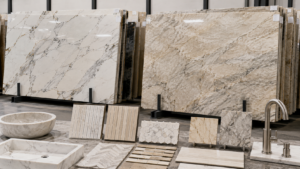
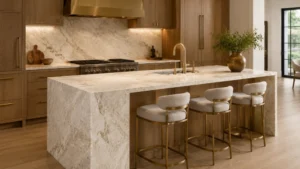
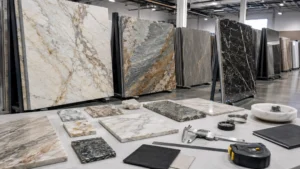
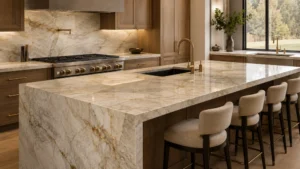
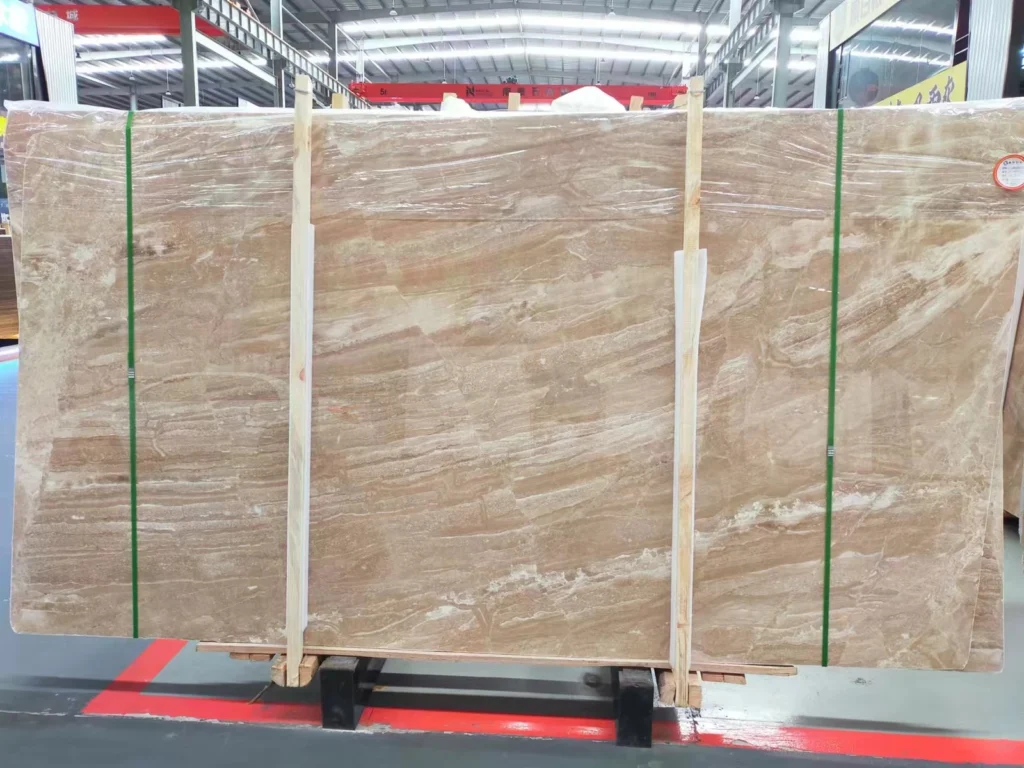
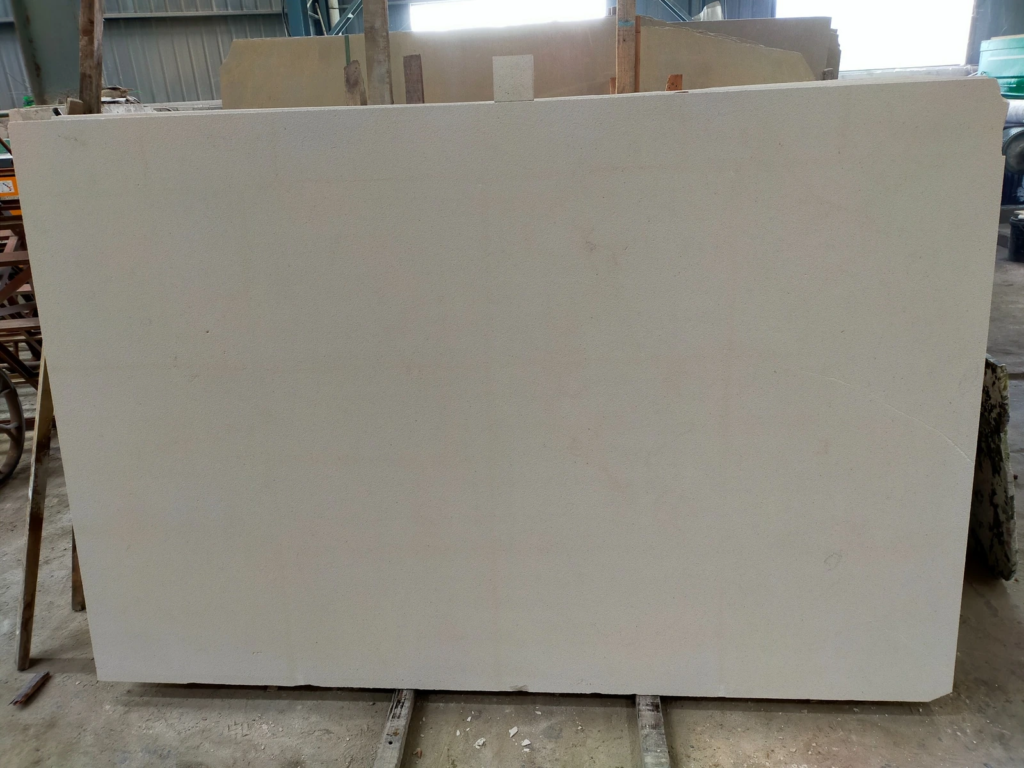
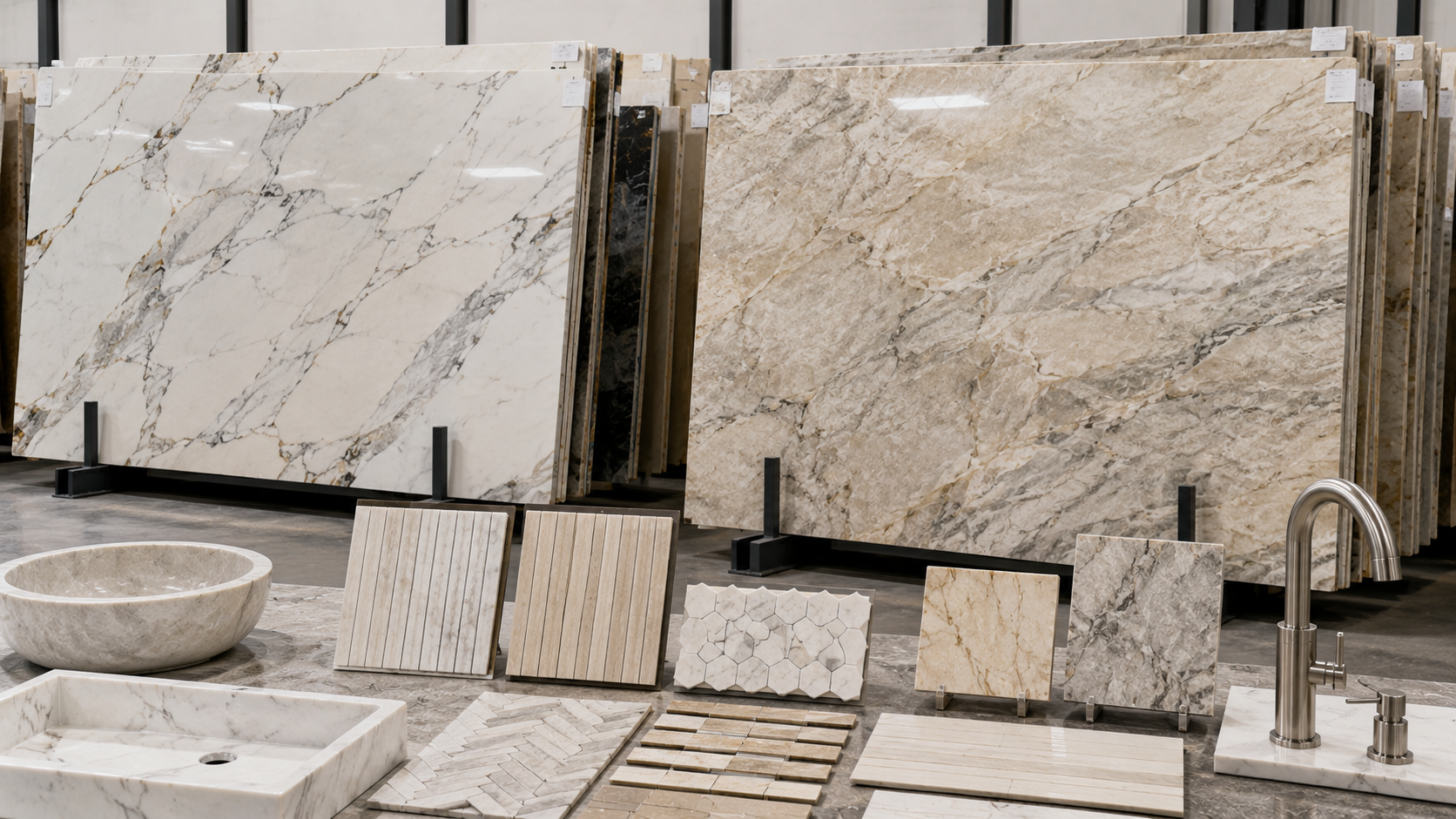
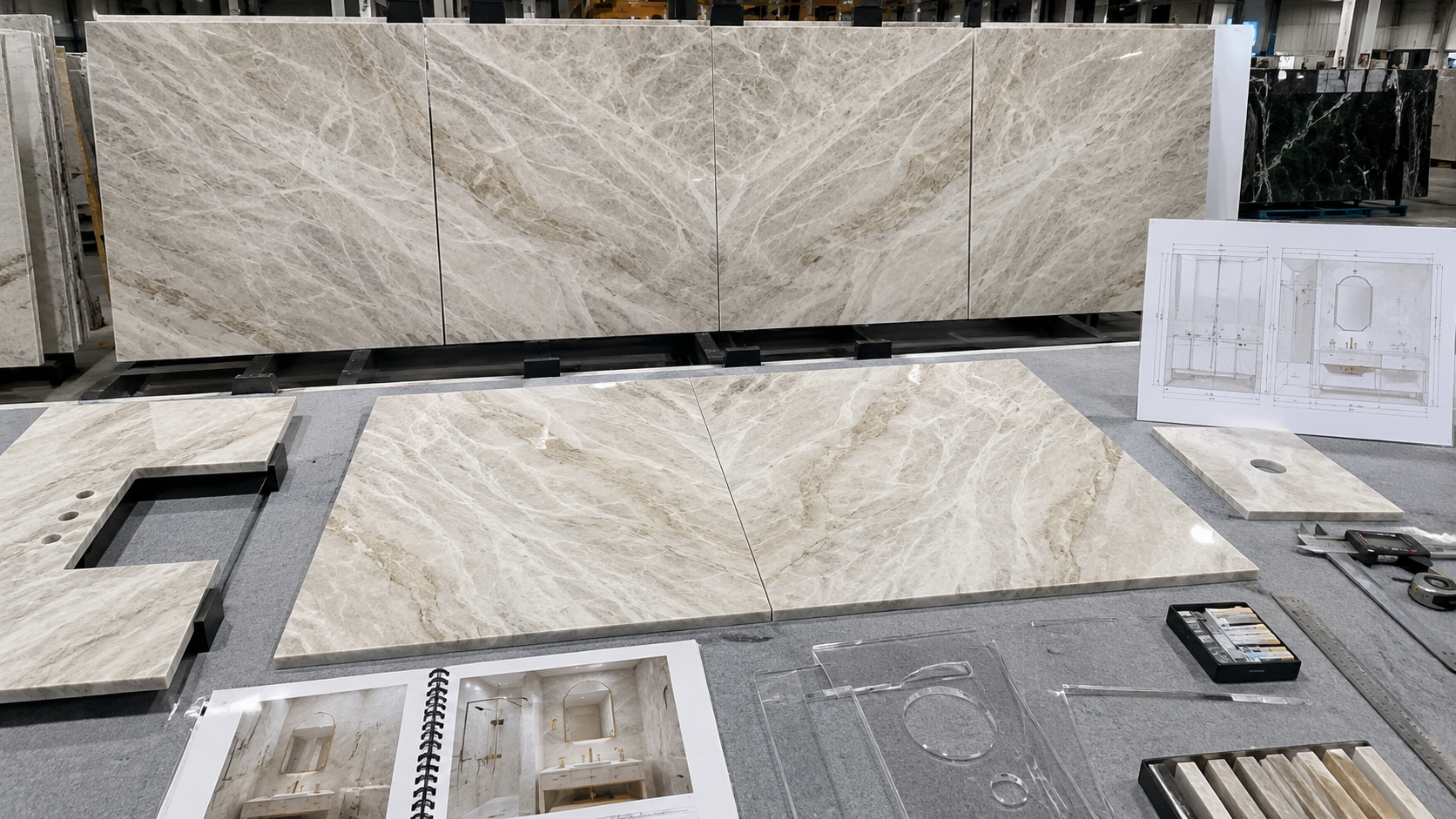
Marble can offer crystalline depth and familiar veining, while quartzite can provide linear, clouded, dramatic, or translucent movement. Neither category has one visual language. View large samples or actual slabs vertically and horizontally under the intended lighting.
The commercial documents should support the technical decision. Quotations, approvals, shop drawings, piece labels, packing records, and change notices need consistent terminology. If appearance and design character changes after approval, document the effect on price, yield, timing, appearance, and responsibility before work continues.
At the approval stage, ask four practical questions: what exactly is being accepted, what evidence supports it, who owns the next action, and how will a deviation be handled? For choose between marble and quartzite based on the actual material, bathroom zone, finish, detailing, maintenance expectations, and project controls, these questions create a repeatable trail from selection through installation. They also make it easier to compare proposals without assuming that similar names or photographs represent identical material and service.
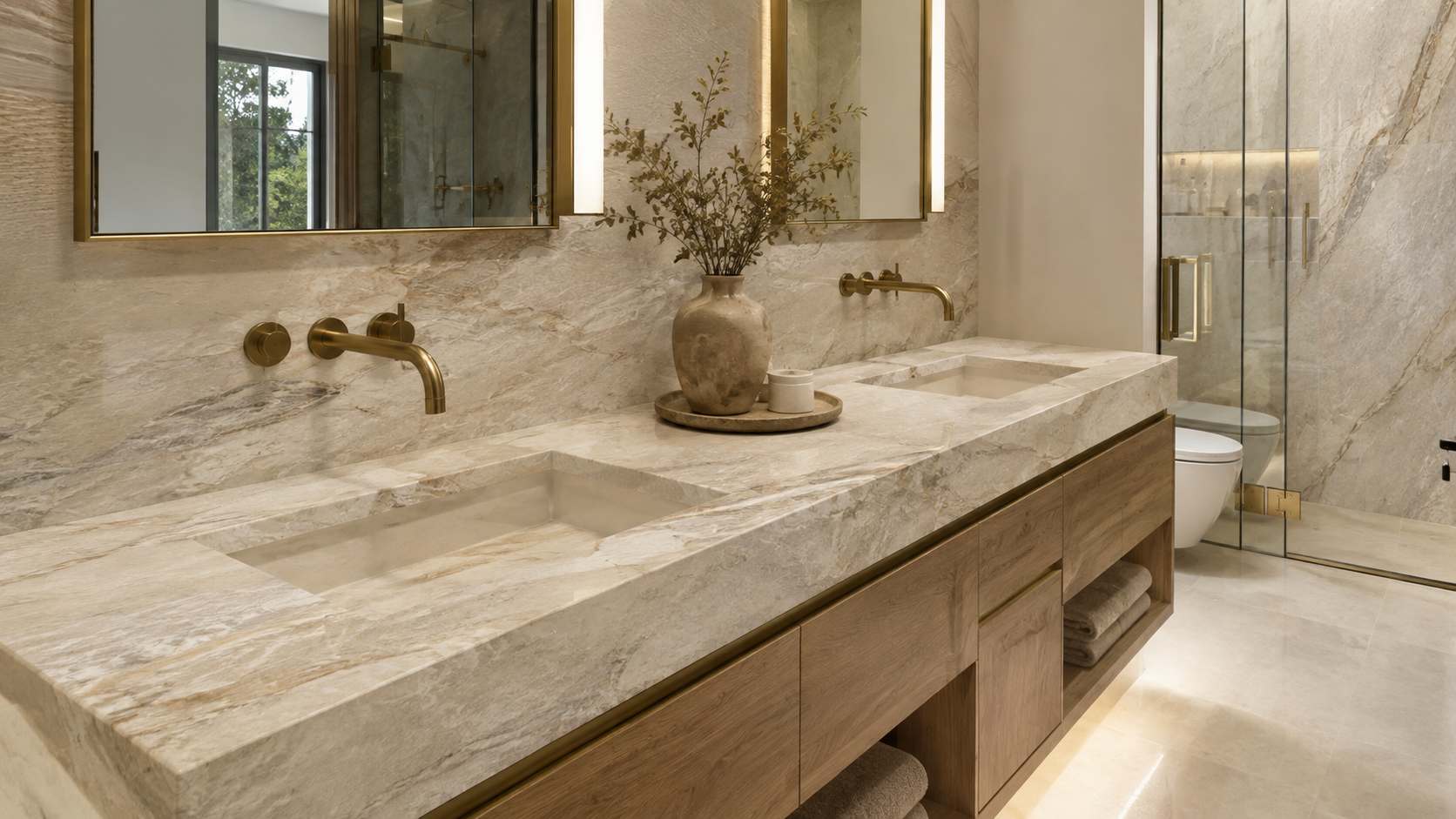
Many marbles can etch when exposed to acidic products, leaving a dull change that is distinct from a stain. Quartzite behavior varies and mislabeled material can confuse expectations. Test representative finished samples with the products relevant to the bathroom.
La communication visuelle est primordiale, car la pierre naturelle est variable et que les appareils photo, les écrans, l’éclairage et les surfaces humides peuvent fausser la perception. Utilisez des repères d’identification et d’échelle, présentez à la fois des vues d’ensemble et des détails pertinents, et conservez les fichiers originaux. Les preuves doivent aider l’équipe à comprendre la gamme et l’emplacement, plutôt que de créer une promesse irréaliste d’une uniformité parfaite.
At the approval stage, ask four practical questions: what exactly is being accepted, what evidence supports it, who owns the next action, and how will a deviation be handled? For choose between marble and quartzite based on the actual material, bathroom zone, finish, detailing, maintenance expectations, and project controls, these questions create a repeatable trail from selection through installation. They also make it easier to compare proposals without assuming that similar names or photographs represent identical material and service.
Water exposure alone does not determine success. Stone absorption, resin or treatment, grout, joints, drainage, ventilation, waterproofing, sealing, and cleaning all contribute. A sealer may reduce absorption but does not substitute for a correct wet-area assembly.
Risk should be allocated to the party able to control it. The stone supplier can document the selected material; the fabricator controls cutting methods and shop execution; the installer controls site placement; designers coordinate intent; and the buyer confirms commercial acceptance. Clear interfaces reduce gaps where every party assumed someone else had checked moisture, absorption, and staining.
At the approval stage, ask four practical questions: what exactly is being accepted, what evidence supports it, who owns the next action, and how will a deviation be handled? For choose between marble and quartzite based on the actual material, bathroom zone, finish, detailing, maintenance expectations, and project controls, these questions create a repeatable trail from selection through installation. They also make it easier to compare proposals without assuming that similar names or photographs represent identical material and service.
Polished surfaces emphasize color and reflection; honed finishes usually feel quieter and may make some wear less conspicuous. Textured finishes alter touch, cleaning, and sometimes suitability. For floors, slip considerations require project-specific assessment under applicable standards.
For homeowners, designers, architects, contractors, fabricators, and stone buyers, the useful question is not whether finish selection is generally recommended, but what evidence will make the choice defensible for this order. Record the assumption, the person responsible for confirming it, the approval format, and the stage after which a change becomes costly. This turns a broad preference into a controlled project decision.
At the approval stage, ask four practical questions: what exactly is being accepted, what evidence supports it, who owns the next action, and how will a deviation be handled? For choose between marble and quartzite based on the actual material, bathroom zone, finish, detailing, maintenance expectations, and project controls, these questions create a repeatable trail from selection through installation. They also make it easier to compare proposals without assuming that similar names or photographs represent identical material and service.
Faucet holes, sink cutouts, narrow rails, backsplashes, edge profiles, wall conditions, and cabinet support must be coordinated. Vessel and undermount sinks impose different details. Confirm fixture templates and final dimensions before cutting.
Apply this point to the actual marble and natural quartzite for bathroom vanities and wall applications, not to an idealized sample. Compare full-scale appearance, measurements, drawings, and practical handling constraints. Where uncertainty remains, use a representative test, mock-up, fabricator review, or third-party inspection appropriate to the consequence of failure. Avoid inventing numerical acceptance limits unless the contract names a method and tolerance.
At the approval stage, ask four practical questions: what exactly is being accepted, what evidence supports it, who owns the next action, and how will a deviation be handled? For choose between marble and quartzite based on the actual material, bathroom zone, finish, detailing, maintenance expectations, and project controls, these questions create a repeatable trail from selection through installation. They also make it easier to compare proposals without assuming that similar names or photographs represent identical material and service.
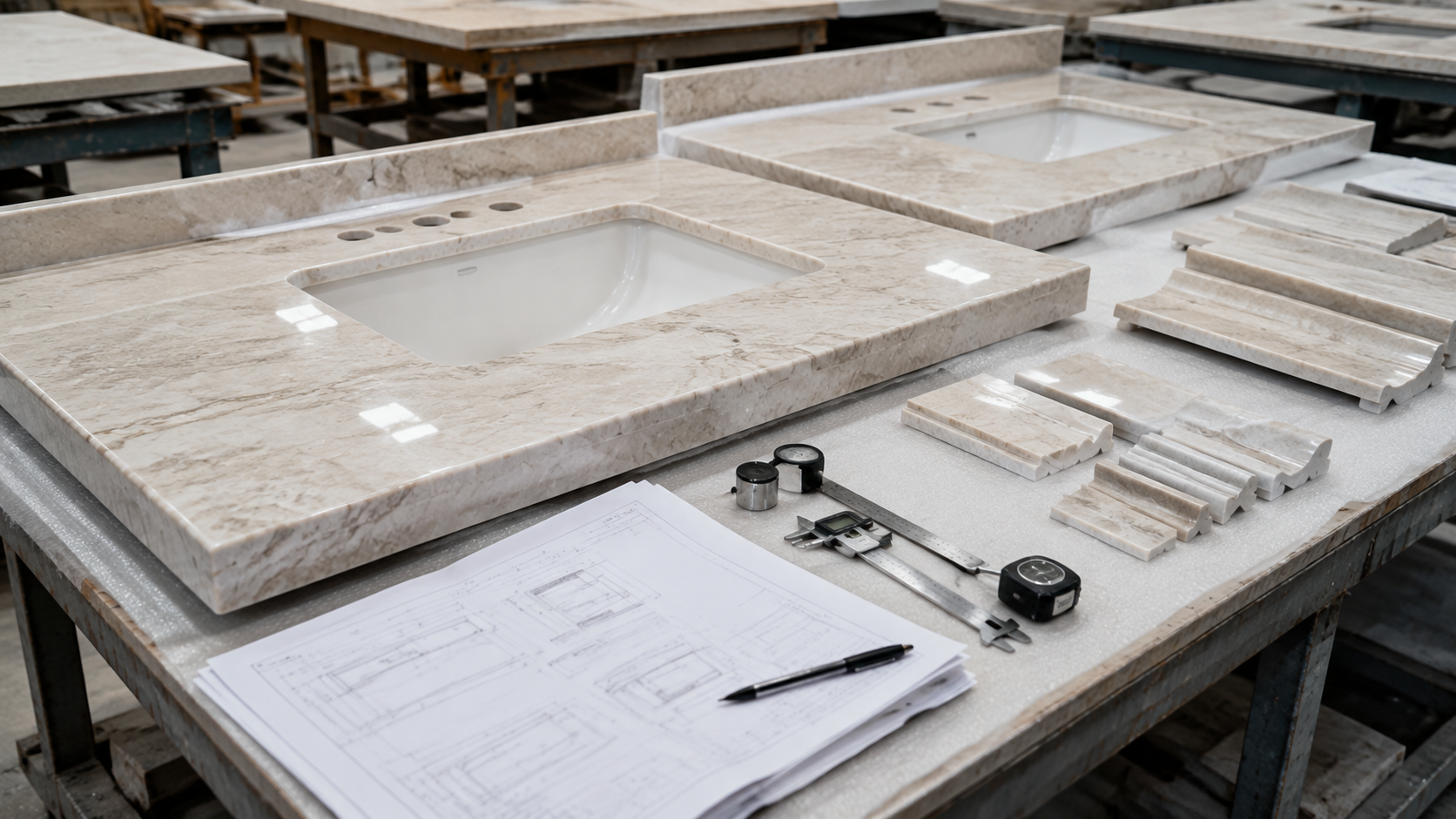
Wall installations depend on a suitable substrate, waterproofing in wet zones, compatible setting materials, movement joints, anchorage where required, and controlled lippage. Large-format slabs need a handling and installation plan that accounts for access and piece weight.
The commercial documents should support the technical decision. Quotations, approvals, shop drawings, piece labels, packing records, and change notices need consistent terminology. If bathroom wall and shower detailing changes after approval, document the effect on price, yield, timing, appearance, and responsibility before work continues.
At the approval stage, ask four practical questions: what exactly is being accepted, what evidence supports it, who owns the next action, and how will a deviation be handled? For choose between marble and quartzite based on the actual material, bathroom zone, finish, detailing, maintenance expectations, and project controls, these questions create a repeatable trail from selection through installation. They also make it easier to compare proposals without assuming that similar names or photographs represent identical material and service.
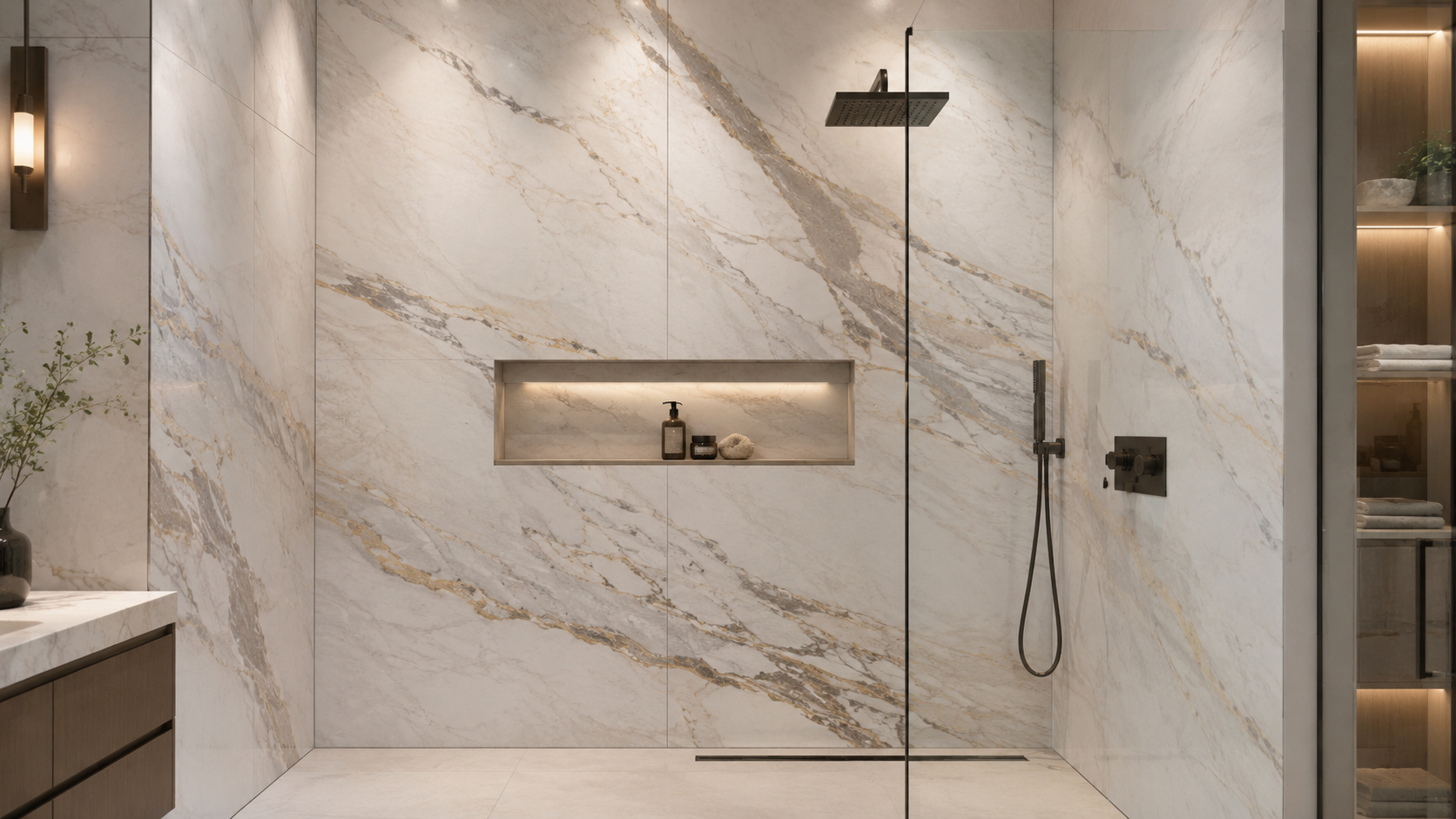
Bathroom walls can display pattern at eye level, making seams and transitions prominent. Use elevations and a slab layout to decide focal panels, niche alignment, corner turns, and bookmatching. Record face orientation so polished pieces are not reversed unintentionally.
La communication visuelle est primordiale, car la pierre naturelle est variable et que les appareils photo, les écrans, l’éclairage et les surfaces humides peuvent fausser la perception. Utilisez des repères d’identification et d’échelle, présentez à la fois des vues d’ensemble et des détails pertinents, et conservez les fichiers originaux. Les preuves doivent aider l’équipe à comprendre la gamme et l’emplacement, plutôt que de créer une promesse irréaliste d’une uniformité parfaite.
At the approval stage, ask four practical questions: what exactly is being accepted, what evidence supports it, who owns the next action, and how will a deviation be handled? For choose between marble and quartzite based on the actual material, bathroom zone, finish, detailing, maintenance expectations, and project controls, these questions create a repeatable trail from selection through installation. They also make it easier to compare proposals without assuming that similar names or photographs represent identical material and service.
Bathroom cleaners may contain acids, alkalis, chelating agents, abrasives, fragrances, or dyes. A product safe for ceramic tile may not be suitable for natural stone. Provide the owner with approved routine-cleaning guidance and test unfamiliar products discreetly.
Risk should be allocated to the party able to control it. The stone supplier can document the selected material; the fabricator controls cutting methods and shop execution; the installer controls site placement; designers coordinate intent; and the buyer confirms commercial acceptance. Clear interfaces reduce gaps where every party assumed someone else had checked cleaning product compatibility.
At the approval stage, ask four practical questions: what exactly is being accepted, what evidence supports it, who owns the next action, and how will a deviation be handled? For choose between marble and quartzite based on the actual material, bathroom zone, finish, detailing, maintenance expectations, and project controls, these questions create a repeatable trail from selection through installation. They also make it easier to compare proposals without assuming that similar names or photographs represent identical material and service.
Marble may develop a lived-in patina that some clients appreciate and others dislike. Quartzite may reduce certain concerns but is not maintenance-free. Discuss visible water marks, soap residue, sealant joints, hard-water deposits, and restoration options before selection.
For homeowners, designers, architects, contractors, fabricators, and stone buyers, the useful question is not whether maintenance expectations is generally recommended, but what evidence will make the choice defensible for this order. Record the assumption, the person responsible for confirming it, the approval format, and the stage after which a change becomes costly. This turns a broad preference into a controlled project decision.
At the approval stage, ask four practical questions: what exactly is being accepted, what evidence supports it, who owns the next action, and how will a deviation be handled? For choose between marble and quartzite based on the actual material, bathroom zone, finish, detailing, maintenance expectations, and project controls, these questions create a repeatable trail from selection through installation. They also make it easier to compare proposals without assuming that similar names or photographs represent identical material and service.
Compare total installed cost: slab or tile selection, yield, calibration, finishing, edge work, substrate, waterproofing, setting system, access, installation, protection, and maintenance. A more expensive material can still be economical if its layout and execution are efficient.
Apply this point to the actual marble and natural quartzite for bathroom vanities and wall applications, not to an idealized sample. Compare full-scale appearance, measurements, drawings, and practical handling constraints. Where uncertainty remains, use a representative test, mock-up, fabricator review, or third-party inspection appropriate to the consequence of failure. Avoid inventing numerical acceptance limits unless the contract names a method and tolerance.
At the approval stage, ask four practical questions: what exactly is being accepted, what evidence supports it, who owns the next action, and how will a deviation be handled? For choose between marble and quartzite based on the actual material, bathroom zone, finish, detailing, maintenance expectations, and project controls, these questions create a repeatable trail from selection through installation. They also make it easier to compare proposals without assuming that similar names or photographs represent identical material and service.
Choose the stone whose actual appearance, tested behavior, fabrication requirements, and maintenance profile match the specific zone and client expectations. Document the decision with samples, slab IDs, finish, drawings, approved details, and care instructions.
The commercial documents should support the technical decision. Quotations, approvals, shop drawings, piece labels, packing records, and change notices need consistent terminology. If how to make the final choice changes after approval, document the effect on price, yield, timing, appearance, and responsibility before work continues.
At the approval stage, ask four practical questions: what exactly is being accepted, what evidence supports it, who owns the next action, and how will a deviation be handled? For choose between marble and quartzite based on the actual material, bathroom zone, finish, detailing, maintenance expectations, and project controls, these questions create a repeatable trail from selection through installation. They also make it easier to compare proposals without assuming that similar names or photographs represent identical material and service.
| Zone de décision | Ce qu’il faut confirmer | Principal levier de contrôle |
|---|---|---|
| Acid response | Many marbles are acid-sensitive | Varies; verify actual material and naming |
| Visual language | Often crystalline with classic veining | Ranges from quiet to strongly directional |
| Wet-area success | Depends on complete assembly and care | Also depends on complete assembly and care |
| Decision evidence | Representative sample and slab approval | Representative sample, identity review, and slab approval |
Ce flux de travail est volontairement fondé sur des preuves. Il n’élimine ni les variations naturelles ni tous les risques liés au projet, mais il met en lumière les hypothèses dès le début, lorsque l’équipe dispose encore de plusieurs options. L’approbation la plus précieuse est celle que quelqu’un d’autre pourra comprendre ultérieurement, sans avoir à reconstituer des conversations informelles.
No. Suitability depends on the actual stone, bathroom zone, finish, installation system, cleaning products, maintenance expectations, and design intent. A well-specified marble can be appropriate, while an assumed or mislabeled quartzite can create surprises.
Il peut être utilisé dans certaines installations correctement conçues, mais l’équipe doit prendre en compte le comportement de la pierre, l’étanchéité, le support, les matériaux de pose, les joints, le drainage, la ventilation, le nettoyage ainsi que les exigences locales. Faire approuver des échantillons et obtenir des conseils d’installation qualifiés.
Les besoins varient selon la pierre et la finition. Un produit d’imprégnation adapté peut être recommandé après des essais, mais il ne rend pas l’ensemble étanche ni n’élimine la nécessité d’un entretien. Suivez les recommandations des professionnels de la pierre et celles du fabricant.
No finish hides every mark. Honed surfaces reduce reflection but can show oils or residues differently; polished surfaces may show droplets and surface changes under light. Test the intended stone, finish, water, and cleaning routine together.
Using the same lot can improve continuity, but quantity, piece sizes, vein direction, thickness, finish, and wet-area detailing may differ. A coordinated cutting layout should confirm whether sharing slabs improves the project or compromises yield.
Chaque projet impliquant du quartzite naturel ou du marbre doit être évalué en tenant compte de la pierre réelle, de la finition, des plans ainsi que des conditions locales de fabrication et d’installation. Cet article constitue un guide général d’achat et de spécification, et ne remplace en aucun cas les conseils professionnels en géologie, ingénierie, droit, douane ou spécifiques au chantier.
Pour la sélection des dalles, les discussions de projet et la coordination des exportations, veuillez contacter Josh chez XIAMEN HRST STONE CO., LTD. Partagez l’application, les dimensions approximatives, la finition, la quantité, la destination et la direction visuelle souhaitée afin que la conversation puisse démarrer sur la base d’un brief clair.
© 2026 XIAMEN HRST STONE CO., LTD. Tous droits réservés.