Guide ultime du quartzite Taj Mahal pour les plans de travail de cuisine
Post navigation
Résumé rapide
Taj Mahal is a commercial stone name; appearance and geological characteristics can vary, so approve the actual slabs and test when identity or performance is critical.
Total project cost is driven by selection, usable slab size, layout, yield, edges, cutouts, access, fabrication, logistics, and installation—not only slab price.
The best results come from early digital or physical layout, clear support details, controlled fabrication, and a stone-specific care plan.
Ultimate Taj Mahal Quartzite Guide for Kitchen Countertops is a practical decision guide for homeowners, interior designers, architects, fabricators, importers, and project buyers. The objective is to evaluate Taj Mahal quartzite as an actual slab selection and manage the design, budget, sourcing, fabrication, installation, and care decisions around it. Natural stone is inherently variable, so the advice below emphasizes the actual material, documented approvals, qualified fabrication, and project-specific judgment rather than absolute promises.
Dans tout ce guide, “ quartzite ” désigne la pierre naturelle, et non le quartz d’ingénierie. Les appellations commerciales peuvent varier selon les fournisseurs et les marchés. Lorsque l’identité géologique, le comportement structurel, l’absorption, la réaction chimique ou toute autre caractéristique de performance est essentielle, précisez clairement l’exigence et organisez une évaluation représentative appropriée, plutôt que de vous fier uniquement à l’appellation commerciale.
What Buyers Mean by Taj Mahal Quartzite
Taj Mahal is widely used as a commercial name for pale natural stone with warm movement, but names in the stone trade are not universal geological certificates. Lots may differ in tone, structure, finish behavior, and visual range. Treat the name as the start of selection rather than the end of verification.
For homeowners, interior designers, architects, fabricators, importers, and project buyers, the useful question is not whether what buyers mean by taj mahal quartzite is generally recommended, but what evidence will make the choice defensible for this order. Record the assumption, the person responsible for confirming it, the approval format, and the stage after which a change becomes costly. This turns a broad preference into a controlled project decision.
At the approval stage, ask four practical questions: what exactly is being accepted, what evidence supports it, who owns the next action, and how will a deviation be handled? For evaluate Taj Mahal quartzite as an actual slab selection and manage the design, budget, sourcing, fabrication, installation, and care decisions around it, these questions create a repeatable trail from selection through installation. They also make it easier to compare proposals without assuming that similar names or photographs represent identical material and service.
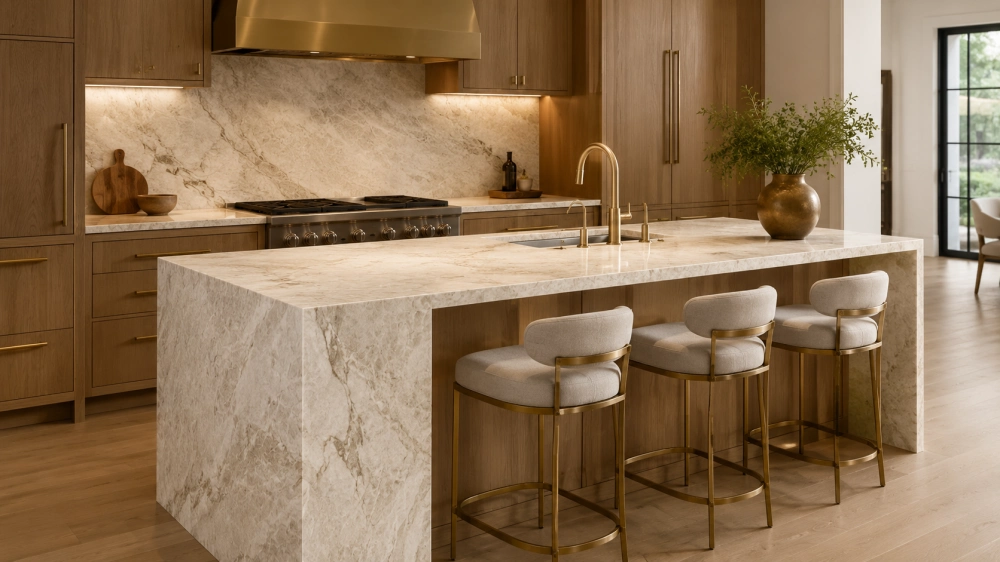
The generally light, warm palette can bridge white, cream, beige, taupe, timber, brass, and darker accent finishes. Its movement may read quietly from a distance while adding detail close up. The actual slab should be viewed with cabinet, floor, metal, and lighting samples.
Apply this point to the actual Taj Mahal quartzite used for kitchen countertops, not to an idealized sample. Compare full-scale appearance, measurements, drawings, and practical handling constraints. Where uncertainty remains, use a representative test, mock-up, fabricator review, or third-party inspection appropriate to the consequence of failure. Avoid inventing numerical acceptance limits unless the contract names a method and tolerance.
At the approval stage, ask four practical questions: what exactly is being accepted, what evidence supports it, who owns the next action, and how will a deviation be handled? For evaluate Taj Mahal quartzite as an actual slab selection and manage the design, budget, sourcing, fabrication, installation, and care decisions around it, these questions create a repeatable trail from selection through installation. They also make it easier to compare proposals without assuming that similar names or photographs represent identical material and service.
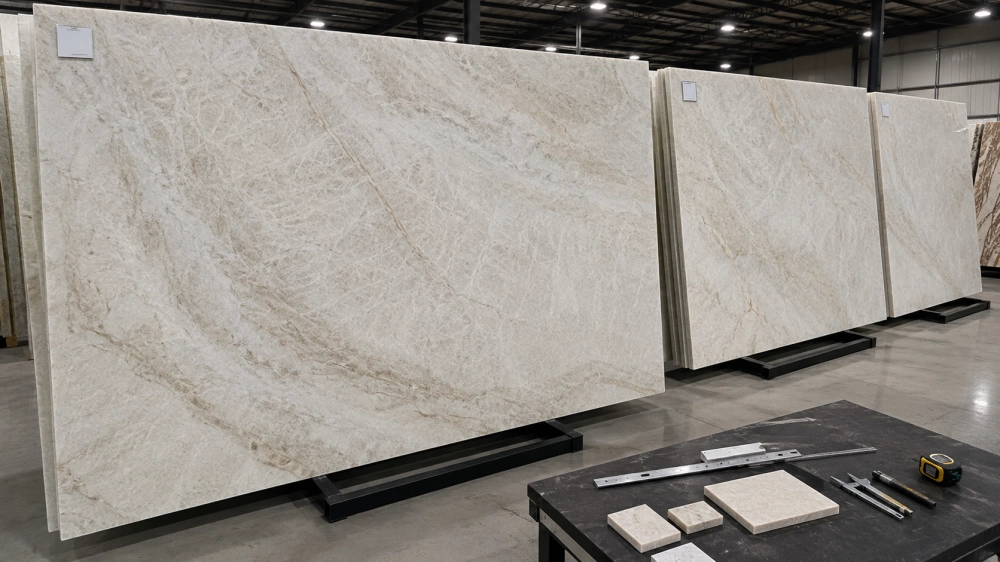
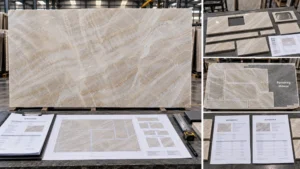
Some lots appear soft and linear; others contain broader movement, mineral concentrations, tonal clouds, fissures, or more visible contrast. Decide which features are desirable, acceptable, or unsuitable for focal areas. Range boards and full-slab evidence are more informative than a single curated photograph.
The commercial documents should support the technical decision. Quotations, approvals, shop drawings, piece labels, packing records, and change notices need consistent terminology. If understand natural range changes after approval, document the effect on price, yield, timing, appearance, and responsibility before work continues.
At the approval stage, ask four practical questions: what exactly is being accepted, what evidence supports it, who owns the next action, and how will a deviation be handled? For evaluate Taj Mahal quartzite as an actual slab selection and manage the design, budget, sourcing, fabrication, installation, and care decisions around it, these questions create a repeatable trail from selection through installation. They also make it easier to compare proposals without assuming that similar names or photographs represent identical material and service.
Honed, Polished, and Other Finishes
A polished finish can emphasize depth and color, while a honed finish usually produces lower reflection and a softer reading. Finish changes can also affect perceived marks, cleaning behavior, and color saturation. Approve a representative finished sample and discuss maintenance before ordering.
La communication visuelle est primordiale, car la pierre naturelle est variable et que les appareils photo, les écrans, l’éclairage et les surfaces humides peuvent fausser la perception. Utilisez des repères d’identification et d’échelle, présentez à la fois des vues d’ensemble et des détails pertinents, et conservez les fichiers originaux. Les preuves doivent aider l’équipe à comprendre la gamme et l’emplacement, plutôt que de créer une promesse irréaliste d’une uniformité parfaite.
At the approval stage, ask four practical questions: what exactly is being accepted, what evidence supports it, who owns the next action, and how will a deviation be handled? For evaluate Taj Mahal quartzite as an actual slab selection and manage the design, budget, sourcing, fabrication, installation, and care decisions around it, these questions create a repeatable trail from selection through installation. They also make it easier to compare proposals without assuming that similar names or photographs represent identical material and service.
Confirm Material and Performance
Do not assume every slab sold under the same name performs identically. When the project has explicit absorption, abrasion, acid-response, slip, or structural requirements, define test methods and have representative material assessed by an appropriate laboratory or stone professional.
Risk should be allocated to the party able to control it. The stone supplier can document the selected material; the fabricator controls cutting methods and shop execution; the installer controls site placement; designers coordinate intent; and the buyer confirms commercial acceptance. Clear interfaces reduce gaps where every party assumed someone else had checked confirm material and performance.
At the approval stage, ask four practical questions: what exactly is being accepted, what evidence supports it, who owns the next action, and how will a deviation be handled? For evaluate Taj Mahal quartzite as an actual slab selection and manage the design, budget, sourcing, fabrication, installation, and care decisions around it, these questions create a repeatable trail from selection through installation. They also make it easier to compare proposals without assuming that similar names or photographs represent identical material and service.
How Much Does Taj Mahal Quartzite Cost?
There is no durable universal price. Cost changes with lot selection, slab size, thickness, finish, quantity, location, exchange and freight conditions, yield, fabrication complexity, edges, cutouts, site access, installation, tax, and risk allocation. Request an itemized, time-bound quotation tied to the exact specification.
For homeowners, interior designers, architects, fabricators, importers, and project buyers, the useful question is not whether how much does taj mahal quartzite cost? is generally recommended, but what evidence will make the choice defensible for this order. Record the assumption, the person responsible for confirming it, the approval format, and the stage after which a change becomes costly. This turns a broad preference into a controlled project decision.
At the approval stage, ask four practical questions: what exactly is being accepted, what evidence supports it, who owns the next action, and how will a deviation be handled? For evaluate Taj Mahal quartzite as an actual slab selection and manage the design, budget, sourcing, fabrication, installation, and care decisions around it, these questions create a repeatable trail from selection through installation. They also make it easier to compare proposals without assuming that similar names or photographs represent identical material and service.
Budget Using Installed Cost
A low slab price can be offset by poor yield, extra seams, difficult matching, breakage exposure, specialized tooling, or complex access. Compare the cost of approved material transformed into installed pieces. Include templating, shop drawings, reinforcement, supports, delivery, installation, and contingency.
Apply this point to the actual Taj Mahal quartzite used for kitchen countertops, not to an idealized sample. Compare full-scale appearance, measurements, drawings, and practical handling constraints. Where uncertainty remains, use a representative test, mock-up, fabricator review, or third-party inspection appropriate to the consequence of failure. Avoid inventing numerical acceptance limits unless the contract names a method and tolerance.
At the approval stage, ask four practical questions: what exactly is being accepted, what evidence supports it, who owns the next action, and how will a deviation be handled? For evaluate Taj Mahal quartzite as an actual slab selection and manage the design, budget, sourcing, fabrication, installation, and care decisions around it, these questions create a repeatable trail from selection through installation. They also make it easier to compare proposals without assuming that similar names or photographs represent identical material and service.
Sourcing and Supplier Qualification
Evaluate whether the supplier can provide traceable lot evidence, consistent documents, clear measurements, packing records, and responsive change control. Ask specific questions rather than relying on adjectives. For higher-risk orders, consider an independent inspection before balance payment or dispatch.
The commercial documents should support the technical decision. Quotations, approvals, shop drawings, piece labels, packing records, and change notices need consistent terminology. If sourcing and supplier qualification changes after approval, document the effect on price, yield, timing, appearance, and responsibility before work continues.
At the approval stage, ask four practical questions: what exactly is being accepted, what evidence supports it, who owns the next action, and how will a deviation be handled? For evaluate Taj Mahal quartzite as an actual slab selection and manage the design, budget, sourcing, fabrication, installation, and care decisions around it, these questions create a repeatable trail from selection through installation. They also make it easier to compare proposals without assuming that similar names or photographs represent identical material and service.
Select the Actual Slabs
Use slab identifiers, full-face images, scale references, close-ups, and range views. Confirm which faces are included, whether images are color adjusted, and how repairs or backing are represented. Reserve or identify the approved lot in writing, subject to agreed commercial terms.
La communication visuelle est primordiale, car la pierre naturelle est variable et que les appareils photo, les écrans, l’éclairage et les surfaces humides peuvent fausser la perception. Utilisez des repères d’identification et d’échelle, présentez à la fois des vues d’ensemble et des détails pertinents, et conservez les fichiers originaux. Les preuves doivent aider l’équipe à comprendre la gamme et l’emplacement, plutôt que de créer une promesse irréaliste d’une uniformité parfaite.
At the approval stage, ask four practical questions: what exactly is being accepted, what evidence supports it, who owns the next action, and how will a deviation be handled? For evaluate Taj Mahal quartzite as an actual slab selection and manage the design, budget, sourcing, fabrication, installation, and care decisions around it, these questions create a repeatable trail from selection through installation. They also make it easier to compare proposals without assuming that similar names or photographs represent identical material and service.
Plan Vein Direction and Bookmatching
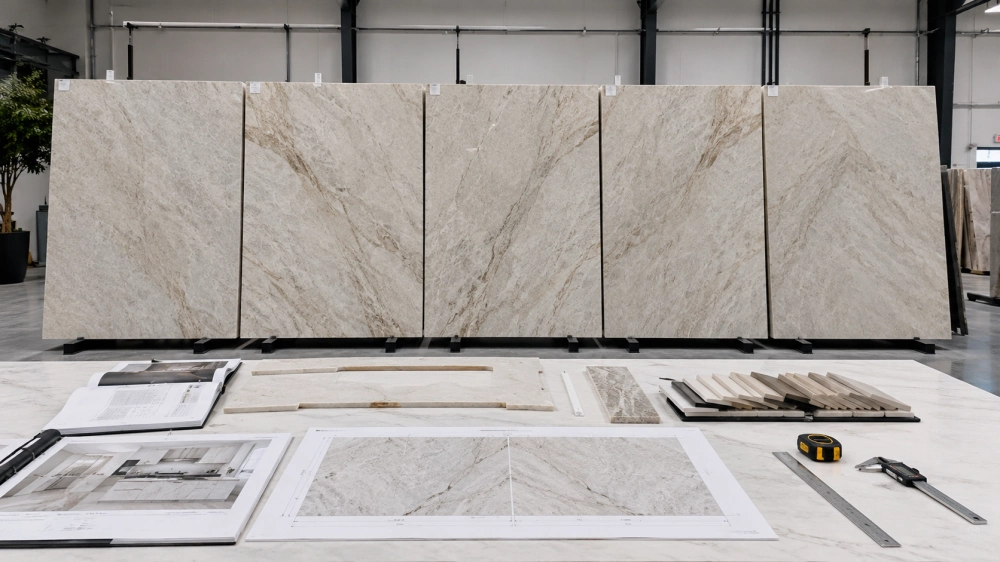
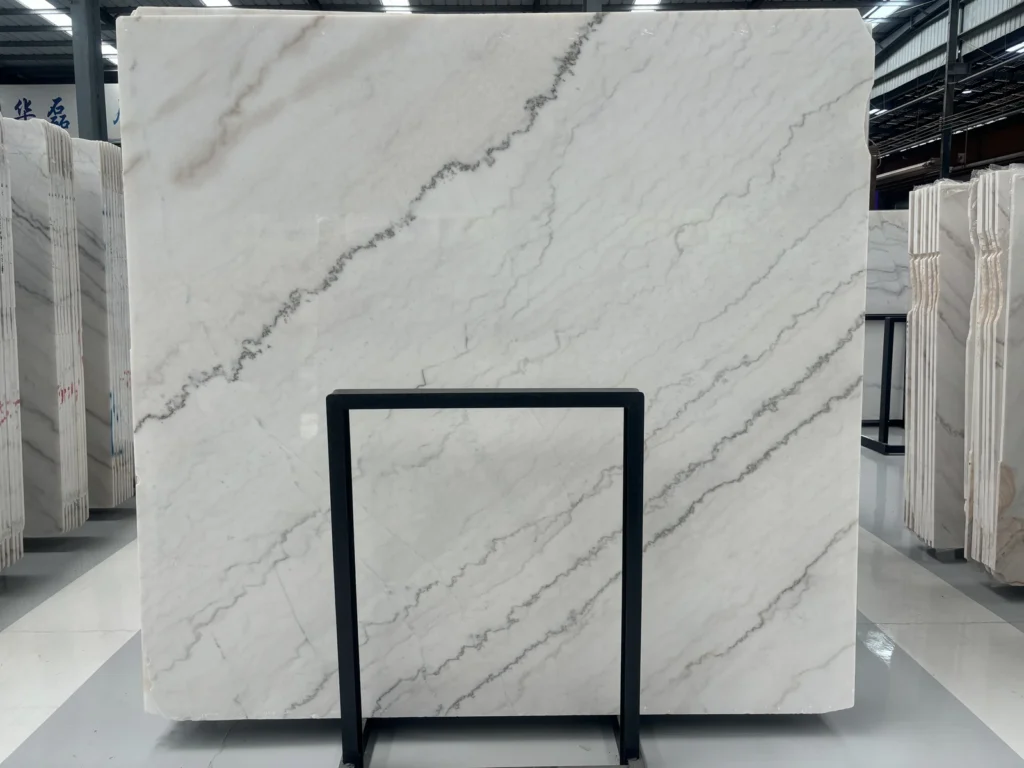
Directional movement affects islands, waterfalls, backsplashes, and long runs. Bookmatching may be possible only when slab sequence, faces, and cutting orientation support it; it should not be assumed. A digital layout helps visualize transitions and calculate realistic yield.
Risk should be allocated to the party able to control it. The stone supplier can document the selected material; the fabricator controls cutting methods and shop execution; the installer controls site placement; designers coordinate intent; and the buyer confirms commercial acceptance. Clear interfaces reduce gaps where every party assumed someone else had checked plan vein direction and bookmatching.
At the approval stage, ask four practical questions: what exactly is being accepted, what evidence supports it, who owns the next action, and how will a deviation be handled? For evaluate Taj Mahal quartzite as an actual slab selection and manage the design, budget, sourcing, fabrication, installation, and care decisions around it, these questions create a repeatable trail from selection through installation. They also make it easier to compare proposals without assuming that similar names or photographs represent identical material and service.
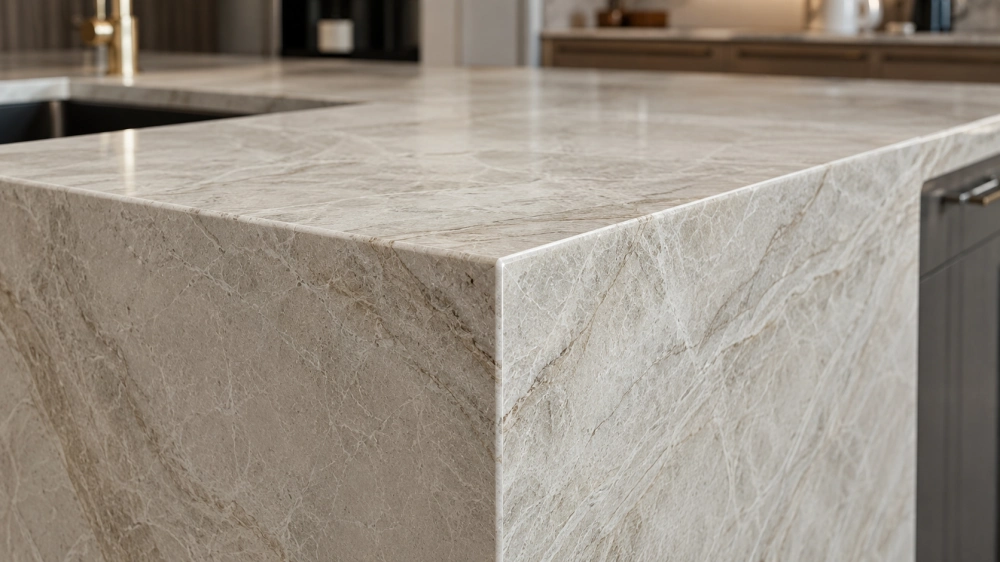
Coordinate nominal and measured thickness with cabinet heights, appliances, support, and edge design. Waterfall ends and mitered build-ups require careful pattern choice and joint execution. Approve the corner treatment, return direction, joint appearance, and floor or wall interfaces.
For homeowners, interior designers, architects, fabricators, importers, and project buyers, the useful question is not whether thickness, edges, and waterfalls is generally recommended, but what evidence will make the choice defensible for this order. Record the assumption, the person responsible for confirming it, the approval format, and the stage after which a change becomes costly. This turns a broad preference into a controlled project decision.
At the approval stage, ask four practical questions: what exactly is being accepted, what evidence supports it, who owns the next action, and how will a deviation be handled? For evaluate Taj Mahal quartzite as an actual slab selection and manage the design, budget, sourcing, fabrication, installation, and care decisions around it, these questions create a repeatable trail from selection through installation. They also make it easier to compare proposals without assuming that similar names or photographs represent identical material and service.
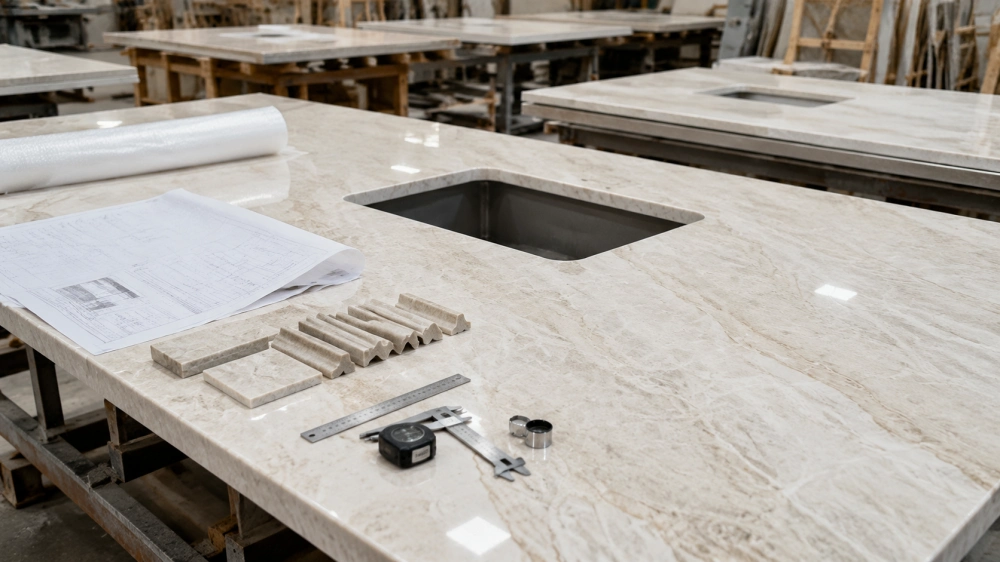
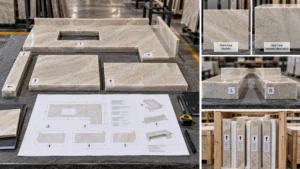
Sink and cooktop openings create narrow areas, while seams may be necessary for transport, access, pattern, or structural reasons. The fabricator should determine corner radii, reinforcement, seam position, handling frames, and installation sequence after examining the actual slabs.
Apply this point to the actual Taj Mahal quartzite used for kitchen countertops, not to an idealized sample. Compare full-scale appearance, measurements, drawings, and practical handling constraints. Where uncertainty remains, use a representative test, mock-up, fabricator review, or third-party inspection appropriate to the consequence of failure. Avoid inventing numerical acceptance limits unless the contract names a method and tolerance.
At the approval stage, ask four practical questions: what exactly is being accepted, what evidence supports it, who owns the next action, and how will a deviation be handled? For evaluate Taj Mahal quartzite as an actual slab selection and manage the design, budget, sourcing, fabrication, installation, and care decisions around it, these questions create a repeatable trail from selection through installation. They also make it easier to compare proposals without assuming that similar names or photographs represent identical material and service.
Cabinets, Substrates, and Support
Cabinets must be level, stable, and suitable for the intended load. Overhangs, seating areas, voids, appliance gaps, and unsupported transitions need an approved support system. Concealed brackets should be coordinated early because late changes can compromise both appearance and schedule.
The commercial documents should support the technical decision. Quotations, approvals, shop drawings, piece labels, packing records, and change notices need consistent terminology. If cabinets, substrates, and support changes after approval, document the effect on price, yield, timing, appearance, and responsibility before work continues.
At the approval stage, ask four practical questions: what exactly is being accepted, what evidence supports it, who owns the next action, and how will a deviation be handled? For evaluate Taj Mahal quartzite as an actual slab selection and manage the design, budget, sourcing, fabrication, installation, and care decisions around it, these questions create a repeatable trail from selection through installation. They also make it easier to compare proposals without assuming that similar names or photographs represent identical material and service.
Fabrication Quality Control
Before cutting, verify slab IDs, templates, layout, finished edges, sink reveal, hole positions, seam map, piece labels, and face orientation. During fabrication, record relevant conditions and protect finished surfaces. Dry fitting may be useful for complex pattern transitions or assemblies.
La communication visuelle est primordiale, car la pierre naturelle est variable et que les appareils photo, les écrans, l’éclairage et les surfaces humides peuvent fausser la perception. Utilisez des repères d’identification et d’échelle, présentez à la fois des vues d’ensemble et des détails pertinents, et conservez les fichiers originaux. Les preuves doivent aider l’équipe à comprendre la gamme et l’emplacement, plutôt que de créer une promesse irréaliste d’une uniformité parfaite.
At the approval stage, ask four practical questions: what exactly is being accepted, what evidence supports it, who owns the next action, and how will a deviation be handled? For evaluate Taj Mahal quartzite as an actual slab selection and manage the design, budget, sourcing, fabrication, installation, and care decisions around it, these questions create a repeatable trail from selection through installation. They also make it easier to compare proposals without assuming that similar names or photographs represent identical material and service.
Finished pieces need appropriate frames, separation, restraint, labels, and handling instructions. Confirm the delivery route, stairs, elevators, door clearances, lifting equipment, staging, and personnel. Installation should follow approved drawings and use compatible materials and methods.
Risk should be allocated to the party able to control it. The stone supplier can document the selected material; the fabricator controls cutting methods and shop execution; the installer controls site placement; designers coordinate intent; and the buyer confirms commercial acceptance. Clear interfaces reduce gaps where every party assumed someone else had checked packing, delivery, and installation.
At the approval stage, ask four practical questions: what exactly is being accepted, what evidence supports it, who owns the next action, and how will a deviation be handled? For evaluate Taj Mahal quartzite as an actual slab selection and manage the design, budget, sourcing, fabrication, installation, and care decisions around it, these questions create a repeatable trail from selection through installation. They also make it easier to compare proposals without assuming that similar names or photographs represent identical material and service.
Cleaning, Sealing, and Maintenance
Obtain care guidance for the actual stone and finish. Use a compatible neutral cleaner for routine care, wipe spills promptly, and avoid unapproved acidic or highly alkaline products. If sealing is recommended, test first and follow application, cure, and renewal guidance.
For homeowners, interior designers, architects, fabricators, importers, and project buyers, the useful question is not whether cleaning, sealing, and maintenance is generally recommended, but what evidence will make the choice defensible for this order. Record the assumption, the person responsible for confirming it, the approval format, and the stage after which a change becomes costly. This turns a broad preference into a controlled project decision.
At the approval stage, ask four practical questions: what exactly is being accepted, what evidence supports it, who owns the next action, and how will a deviation be handled? For evaluate Taj Mahal quartzite as an actual slab selection and manage the design, budget, sourcing, fabrication, installation, and care decisions around it, these questions create a repeatable trail from selection through installation. They also make it easier to compare proposals without assuming that similar names or photographs represent identical material and service.
Managing Stains, Etching, Chips, and Cracks
Le diagnostic doit précéder le traitement. Une tache sombre peut être due à l’humidité, à de l’huile, à des résidus ou à une autre condition ; une zone terne peut concerner la finition ou une réaction de surface. Photographiez le problème, arrêtez tout remède expérimental et consultez un professionnel qualifié en restauration de pierres lorsque la cause demeure incertaine.
Apply this point to the actual Taj Mahal quartzite used for kitchen countertops, not to an idealized sample. Compare full-scale appearance, measurements, drawings, and practical handling constraints. Where uncertainty remains, use a representative test, mock-up, fabricator review, or third-party inspection appropriate to the consequence of failure. Avoid inventing numerical acceptance limits unless the contract names a method and tolerance.
At the approval stage, ask four practical questions: what exactly is being accepted, what evidence supports it, who owns the next action, and how will a deviation be handled? For evaluate Taj Mahal quartzite as an actual slab selection and manage the design, budget, sourcing, fabrication, installation, and care decisions around it, these questions create a repeatable trail from selection through installation. They also make it easier to compare proposals without assuming that similar names or photographs represent identical material and service.
Une étape complète d’approbation pré‑achat
Ne libérez pas la commande tant que les informations relatives à l’identité du matériau, au lot, aux numéros de dalle, à la gamme visuelle, aux dimensions, à la finition, aux quantités, aux hypothèses de disposition, à la base de prix, aux inspections, à l’emballage, aux documents, aux responsabilités ainsi qu’à la procédure de modification n’ont pas été consignées. Cette étape doit indiquer clairement qui approuve chaque élément.
Les documents commerciaux doivent étayer la décision technique. Les devis, les approbations, les plans d’exécution, les étiquettes de pièce, les registres d’emballage et les avis de modification doivent utiliser une terminologie cohérente. Si une étape complète d’approbation pré‑achat est modifiée après validation, documentez l’impact sur le prix, le rendement, le calendrier, l’apparence et les responsabilités avant la reprise des travaux.
At the approval stage, ask four practical questions: what exactly is being accepted, what evidence supports it, who owns the next action, and how will a deviation be handled? For evaluate Taj Mahal quartzite as an actual slab selection and manage the design, budget, sourcing, fabrication, installation, and care decisions around it, these questions create a repeatable trail from selection through installation. They also make it easier to compare proposals without assuming that similar names or photographs represent identical material and service.
Matrice de décision
Zone de décision
Ce qu’il faut confirmer
Principal levier de contrôle
Sélection visuelle
Dalles réelles, gamme, identifiants, échantillon de finition
Approbation uniquement sur échantillon
Budget
Coût d’installation et rendement de découpe réaliste
Comparaison du prix unitaire des dalles seule
Conception
Disposition, joints, bords, chutes d’eau, support
Approbation du matériau avant la géométrie
Exécution
Révision par le fabricant, registres de contrôle qualité, emballage, plan d’accès
En supposant que toutes les parties partagent les mêmes détails
Flux de travail d’approbation recommandé
Définir l’application. Enregistrer les plans, les dimensions, l’usage prévu, la finition, les faces visibles, les interfaces et les préoccupations liées aux performances.
Identifier le matériau. Relier le nom commercial, le fournisseur, le lot, les identifiants des dalles, l’épaisseur, la finition, la quantité et les preuves visuelles actuelles.
Examiner les dalles réelles. Vérifier la gamme globale et les détails pertinents au rendement, au motif, à la fabrication et au caractère naturel de la pierre convenu.
Coordonner la fabrication. Faire examiner par le fabricant qualifié la disposition, les joints, les découpes, les bords, les supports, la manutention, les accès et la séquence d’installation.
Approuver les éléments mesurables. Préciser la méthode d’inspection, les tolérances nécessaires, les registres, le processus de modification et les personnes habilitées à autoriser la production.
Protéger la logistique et l’installation. Confirmer les étiquettes, l’emballage, l’itinéraire, l’inspection à la réception, le stockage, la préparation du chantier et les soins lors de la passation.
Ce flux de travail est volontairement fondé sur des preuves. Il n’élimine ni les variations naturelles ni tous les risques liés au projet, mais il met en lumière les hypothèses dès le début, lorsque l’équipe dispose encore de plusieurs options. L’approbation la plus précieuse est celle que quelqu’un d’autre pourra comprendre ultérieurement, sans avoir à reconstituer des conversations informelles.
Questions fréquemment posées
Le Taj Mahal est-il toujours un véritable quartzite ?
Le Taj Mahal est une marque commerciale, et les pratiques en matière de dénomination peuvent varier selon le vendeur et le marché. Ne considérez pas le nom seul comme une preuve géologique. Demandez des informations matérielles cohérentes et organisez des essais représentatifs lorsque la classification ou les performances sont essentielles.
Le quartzite du Taj Mahal est-il adapté à une cuisine très fréquentée ?
Cette option peut être envisagée pour une utilisation en cuisine, mais son adéquation dépend de la pierre utilisée, de sa finition, de la fabrication, du système de support, de l’installation, de l’entretien ainsi que des attentes du propriétaire. Examinez un échantillon représentatif du matériau et convenez des modalités pratiques d’entretien avant l’achat.
Does Taj Mahal quartzite stain or etch?
Behavior can vary. Absorption, surface treatment, finish, contaminants, dwell time, cleaning chemistry, and misclassification all matter. Test representative material for critical concerns and use a suitable sealer only when recommended; no sealer creates complete immunity.
How many slabs should I order?
Base quantity on a scaled cutting layout that includes vein direction, seams, cutouts, edge build-ups, unusable areas, and contingency. Highly directional designs may require more material than a simple percentage calculation suggests.
Can Taj Mahal slabs be bookmatched?
Some slab sequences may support bookmatching or coordinated movement, but availability and results depend on how blocks were cut, slab faces, finish, thickness, and layout. Confirm using the actual numbered slabs before committing to the design.
Note finale
Chaque projet impliquant du quartzite naturel ou du marbre doit être évalué en tenant compte de la pierre réelle, de la finition, des plans ainsi que des conditions locales de fabrication et d’installation. Cet article constitue un guide général d’achat et de spécification, et ne remplace en aucun cas les conseils professionnels en géologie, ingénierie, droit, douane ou spécifiques au chantier.
Pour la sélection des dalles, les discussions de projet et la coordination des exportations, veuillez contacter Josh chez XIAMEN HRST STONE CO., LTD. Partagez l’application, les dimensions approximatives, la finition, la quantité, la destination et la direction visuelle souhaitée afin que la conversation puisse démarrer sur la base d’un brief clair.
Hi, I am the author of this article. I have been working in the field of Natural Stone for more than 15 years. If you need customized Natural Stone services, please feel free to contact me.
Fabricant et fournisseur de marbre, granit, quartzite, agate de Chine - HRST STONE
Bienvenue chez HRST STONE !
Bonjour, j’aimerais en savoir plus sur vos produits. Pourriez-vous m’indiquer les prix, la quantité minimale de commande, les options de personnalisation ainsi que des informations sur les échantillons ?