
Resumo Rápido
This is a clearly hypothetical reception-desk decision scenario, not a real customer case. Compare Natural Quartzite and granite from the actual slabs offered, the current drawings, proposed layout, fabrication details, approval route, and delivery brief. Natural Quartzite is not engineered quartz, and neither material name should be treated as a promise about colour, performance, availability, price, origin, testing, or lead time.
Natural Quartzite vs granite reception desk decision is best handled as a buyer-controlled project review. The following framework is written for importers, fabricators, designers, architects, contractors, and procurement teams who need a transparent natural-stone decision process without fabricated project claims.
| Decision point | Natural Quartzite review | Granite review | Buyer action |
|---|---|---|---|
| Visual direction | Review exact slabs, movement, visible faces, and lot variation. | Review exact slabs, grain, tone, and visible faces. | Approve the current slab set and layout, not a name alone. |
| Desk components | Match front, counter, returns, and joints to the proposed layout. | Match front, counter, returns, and joints to the proposed layout. | Share current dimensions, edge intent, and cutout information. |
| Fabrication coordination | Confirm support-related assumptions, joints, and handling with the fabricator. | Confirm support-related assumptions, joints, and handling with the fabricator. | Use project drawings and qualified technical review where needed. |
| Approval record | Record slab references, finish, layout, and accepted natural features. | Record slab references, finish, layout, and accepted natural features. | Issue one traceable approval package before cutting. |
A case structure can help procurement teams turn a broad material discussion into a sequence of practical decisions. This article deliberately uses a hypothetical commercial reception desk. It is not a customer story and does not claim that HRST STONE supplied, inspected, fabricated, packed, or installed any named project. The value of the scenario is its method: it shows which questions should be answered before Natural Quartzite or granite is selected for a highly visible interior element.
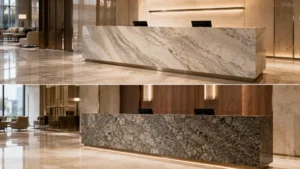
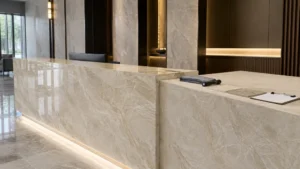
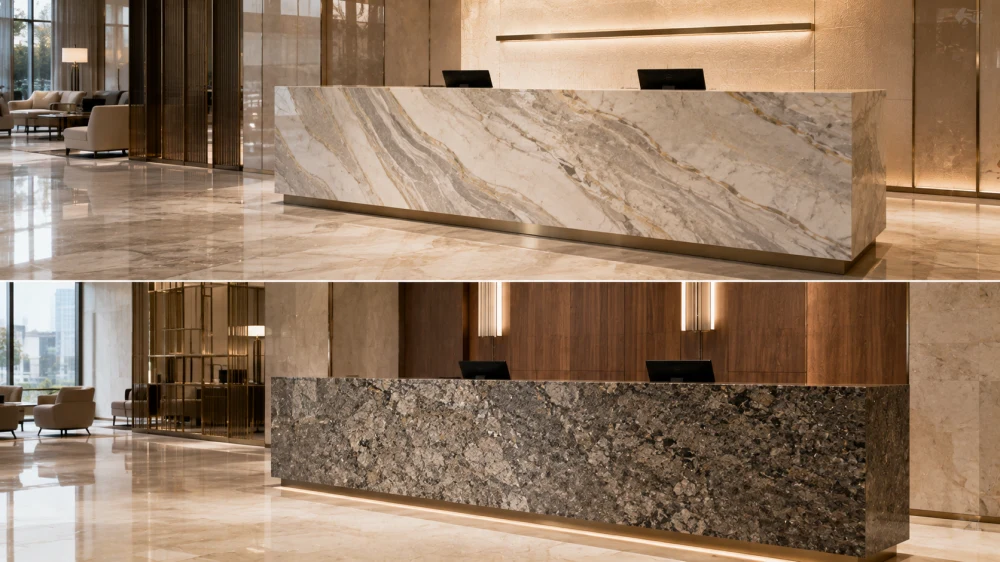
Imagine a lobby reception desk with a long public-facing counter, a front cladding plane, lighting from several directions, and adjoining joinery. The design team wants a natural stone surface with a calm but distinctive character. The buyer must choose between Natural Quartzite and granite only after receiving the current drawings, intended finish, visible edge concept, approximate piece sizes, access constraints, and the list of people who can approve material and layout decisions. The scenario does not assume a budget, a slab size, an origin, a stock position, or a completion date.
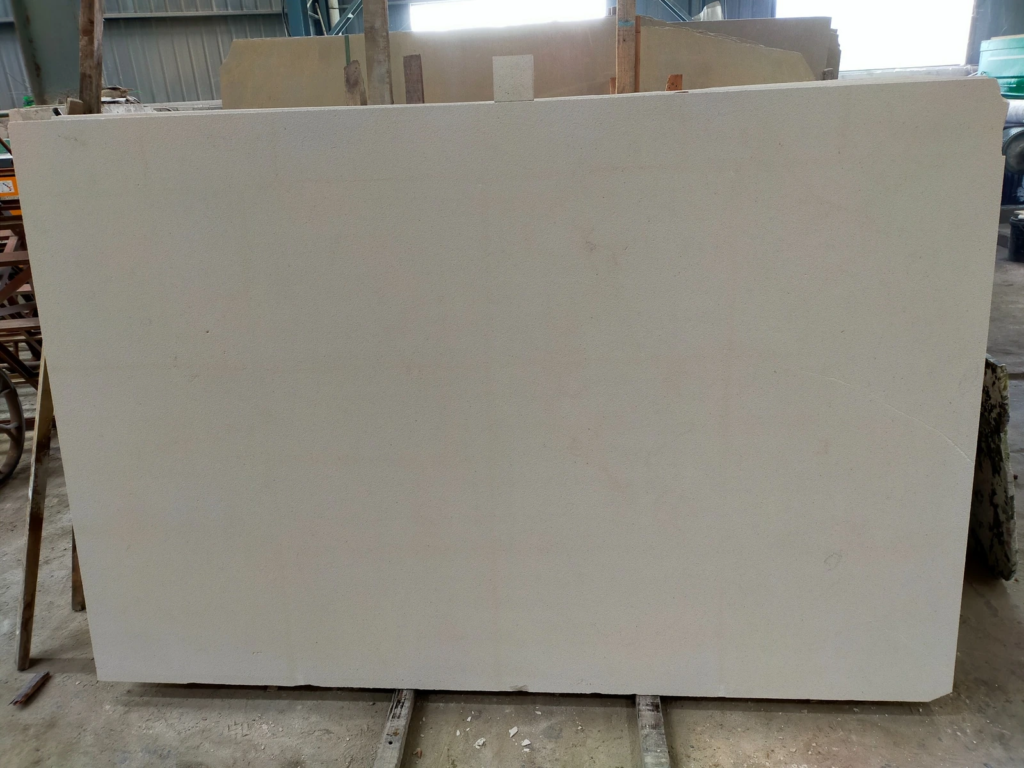
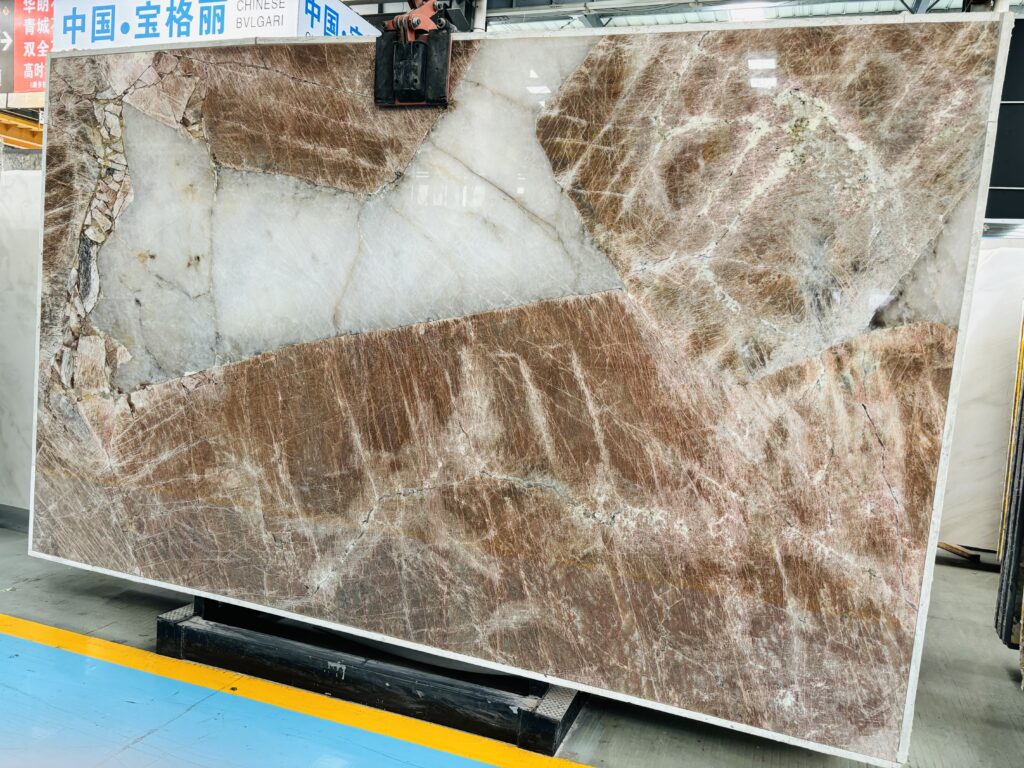
For a reception desk, the first question is not which material wins in the abstract. It is what the front-facing and horizontal surfaces need to communicate at the actual viewing distance. Natural Quartzite often has material-specific movement that should be reviewed from the offered slabs, while granite also needs lot-level review for tone, grain, and pattern. The buyer should request current full-slab images or video, record preferred visible faces, and decide whether the design calls for directional movement, bookmatching, quiet areas, or a more uniform reading.

Commercial names are helpful references, but they do not guarantee a particular colour, pattern, vein, density, or working response. Natural stone varies. In the hypothetical scenario, neither a small sample nor a catalogue image is treated as a final approval. The project team should connect the selected slabs to a revision-controlled layout and describe the features that matter most. This makes it possible to distinguish a real approval criterion from a broad preference such as elegant, consistent, or dramatic.
The reception desk should be broken into components: counter surface, public front, returns, end panels, joints, and any service or equipment openings. For each component, identify viewing direction, finished size, exposed edge, adjoining work, and access for handling. This avoids an unhelpful material-wide comparison. A designer may favour the slab movement of Natural Quartzite for the public front while the fabricator needs a clear drawing for every return, joint, and cutout. Granite can be considered through the same component-by-component discipline.
A practical brief names the material category, identifies the proposed slabs, states finished dimensions, specifies the surface and edge treatment, identifies joints and cutouts, and attaches the current drawings. It should also identify what is still provisional. Thickness by itself is not a performance guarantee. Panel geometry, support, openings, handling, joint details, and the particular stone all affect the final scope. When structural or specialist fixing issues arise, the buyer should obtain review from the appropriately qualified project parties.
Before any cutting decision, the team should see a proposed layout based on the actual slabs and current dimensions. In the hypothetical reception desk, that layout would identify face orientation, seam positions, visible returns, and the relationship between the front cladding and the counter. The buyer can then ask whether a prominent movement should continue across a corner or remain on one main face. A documented layout approval is more useful than informal verbal agreement because it records the visual direction attached to the pieces that will be fabricated.
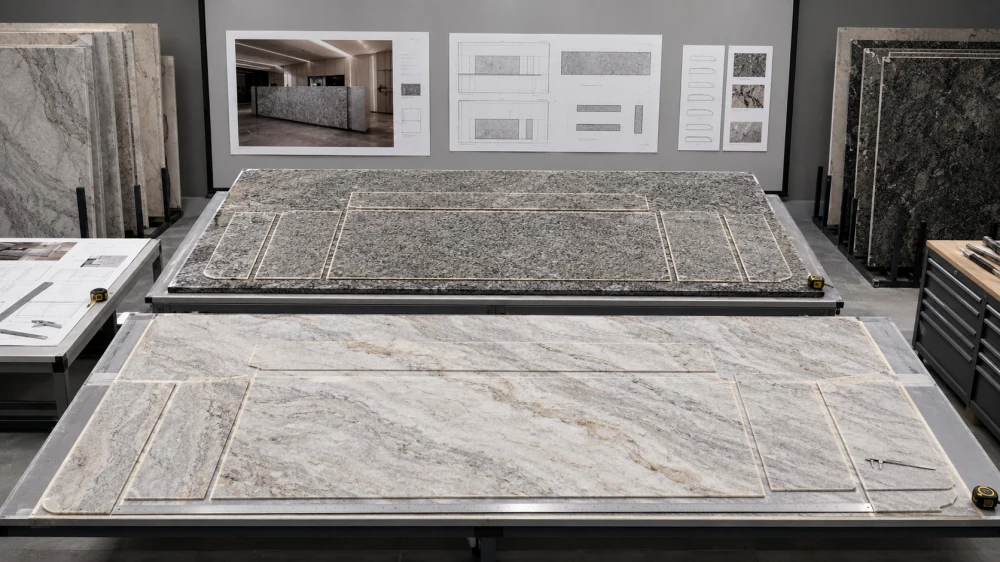
Reception desks meet joinery, metal trims, lighting, power outlets, data points, floor finishes, walls, and sometimes security equipment. These interfaces need to be checked on the latest drawings before a material layout is released. A joint that is acceptable in a stone-only elevation may conflict with a joinery reveal or a light line. The scenario therefore treats coordination as a selection input, not a later installation problem. The project team should make the controlling drawing revision clear to every party who reviews the stone scope.
Natural Quartzite and engineered quartz should not be blended into one specification category. Natural Quartzite is a natural stone product, whereas engineered quartz is manufactured. Their appearance, lot variation, fabrication guidance, and project review process can differ. This comparison concerns Natural Quartzite and granite as natural stone options only. If another material category is being considered, it should be written explicitly into the brief rather than assumed from a shortened material name or from the presence of quartz in its description.
The buyer does not need to prescribe a fabricator method, but should ask the right coordination questions. Which edges will be visible? Where will seams fall? Are there openings near corners? Which surfaces require alignment? What support information has been issued? How will piece numbering relate to the drawings and installation sequence? These questions make a Natural Quartzite or granite proposal easier to compare. They also prevent a polished visual concept from being approved before the details that affect yield, joints, handling, and on-site assembly are visible.
For the hypothetical desk, the approval record would include the material name, slab references, image set, layout revision, dimensions, finish, edge notes, joint locations, and accepted natural features. It would identify who approved each item and when the approval applies. This is not unnecessary administration. International buyers, fabricators, designers, contractors, and procurement teams often work from different locations. A concise record reduces the chance that a later discussion relies on an older drawing or an image unrelated to the selected slabs.
Quality control should trace back to the approved material and drawing set. Before packing, the reviewer can compare the finished pieces against the recorded finish, dimensions, visible orientation, edge treatment, numbering, and quantity. Images or video can support remote review when they identify the relevant pieces and do not replace the agreed documents. Natural features that were accepted during slab approval should remain visible in the record. This approach does not assert a test result or certification; it provides a practical checklist for the project-specific stone scope.
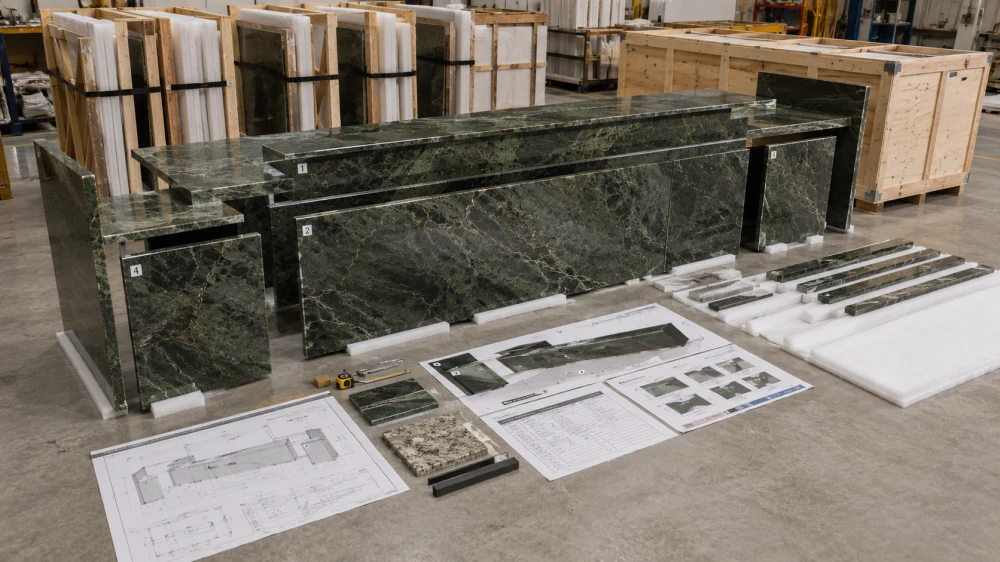
Packing and receiving should support the same layout logic used during fabrication. The buyer should state the delivery destination, unloading constraints, site storage conditions, access route, and anticipated installation sequence. A packing list and clear piece references can help the receiver identify the counter, front panels, returns, and smaller components without unnecessary rehandling. The hypothetical scenario makes no claim about available packing methods or delivery times. It simply shows why those topics should be raised early with the actual project information.
A comparison between Natural Quartzite and granite is meaningful only when the requests describe the same project scope. Confirm whether each quotation addresses the same material basis, finished dimensions, visible faces, finish, edges, cutouts, layout work, packing expectations, and delivery destination. Ask questions rather than filling gaps with assumptions. A lower headline figure may describe a different scope. The buyer should request project-specific commercial confirmation before placing an order and should not infer pricing, availability, origin, or lead time from this hypothetical article.
In this scenario, the team does not declare a universal winner. It selects the material whose currently offered slabs, layout, visual direction, fabrication coordination, and approved scope best fit the reception desk brief. Natural Quartzite may be preferred when the reviewed slabs deliver the desired movement and the project accepts the corresponding natural variation. Granite may be preferred when the reviewed slabs and design direction better satisfy the same written criteria. The responsible decision is evidence-based, project-specific, and recorded before fabrication release.
Selection is the start of coordination, not the end. The buyer should update the brief with the selected material, approved slab references, layout, edge details, piece schedule, and delivery destination. Any revision to dimensions, joinery, lighting, or openings should trigger a review of the affected stone pieces. Keeping revisions traceable helps the project team distinguish a confirmed fabrication instruction from a preliminary design request. It also gives Josh a clear basis for reviewing the Natural Quartzite enquiry without presenting a general guide as a promise about the particular project.
Before releasing the order, check that material selection is based on current slabs, the layout is tied to current drawings, visible faces and edge details are documented, joints and cutouts are resolved, quantities are confirmed, packing needs are stated, and the delivery destination is supplied. For a reception desk, also check surrounding joinery, lighting, and service interfaces. If a question remains unresolved, keep it marked as pending rather than allowing an early concept image to become an unintended fabrication instruction.
HRST STONE / XIAMEN HRST STONE CO., LTD. can help organize the stone-related information needed for a project discussion. Contact Josh with the material name, dimensions, quantities, drawings, required surface, preferred finish, and delivery destination. Include the intended application, edge concept, and any layout priorities. This enables a focused review based on the buyer’s actual brief. It does not replace the project team’s own design, engineering, installation, or commercial due diligence responsibilities.
The project record should travel with the decision from sourcing through fabrication, packing, receiving, and installation. Keep material references, drawing revisions, layout images, and approval comments together. If a project question changes the intended use, visible edge, joint arrangement, or finished dimension, identify the affected pieces and ask for the related review before issuing an instruction. This deliberate handover reduces ambiguity for all parties and keeps the stone discussion anchored to the actual scope rather than to a remembered conversation or an outdated reference image.
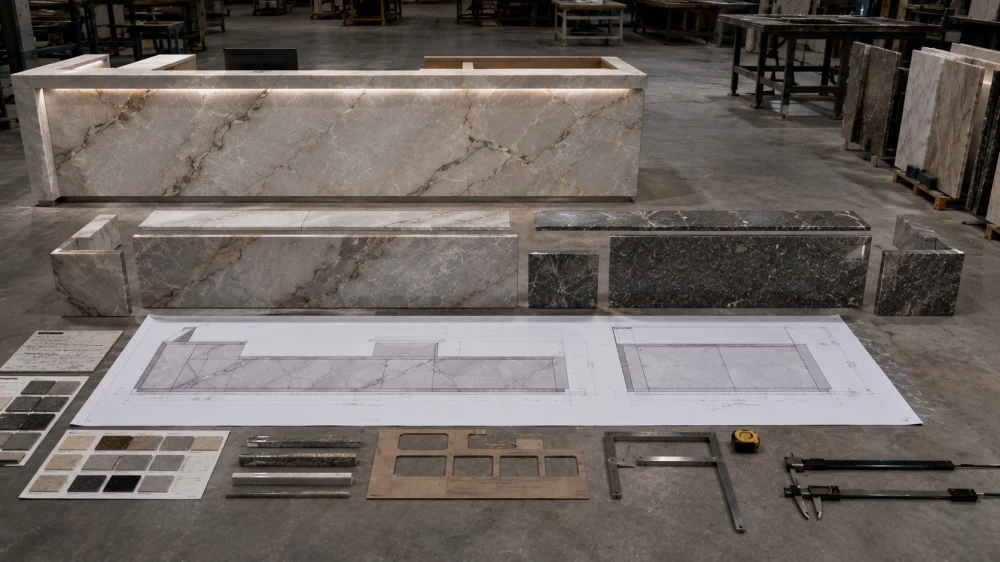
| Stage | What to confirm | Why it matters |
|---|---|---|
| Slab review | Current full-slab images or video and preferred visible faces. | Natural stone is selected from the offered material, not a generic image. |
| Layout review | Orientation, seams, returns, edges, and opening positions. | The visual result and fabrication sequence depend on the approved layout. |
| Pre-pack review | Piece numbers, quantities, finish, protection, and packing list. | Receiving and installation teams can identify pieces against the approved documents. |
No. This is a clearly labelled hypothetical decision scenario for planning purposes. It does not describe a real customer, order, site, material reservation, price, test result, or delivery commitment.
Compare the actual slabs offered, the desired visual direction, the finished dimensions, visible edges, support concept, joint locations, fabrication method, and documented approval route. Do not select from a material name alone.
No. Natural Quartzite is a natural stone product, while engineered quartz is a manufactured composite material. They should be specified and evaluated as different material categories.
Approve the selected slabs, layout, finished sizes, visible faces, finish, edges, joints, cutouts, support-related assumptions, piece numbering, and any accepted natural variation before fabrication begins.
Send the material name, dimensions, quantities, drawings, required surface, preferred finish, edge concept, installation context, and delivery destination so the Natural Quartzite request can be reviewed accurately.
Nota Final
For a project-specific Natural Quartzite review, contact Josh at HRST STONE / XIAMEN HRST STONE CO., LTD. Send the material name, dimensions, quantities, drawings, required surface, preferred finish, and delivery destination. Include your edge concept and layout priorities so the next discussion can be based on the actual project brief.
Copyright (c) HRST STONE / XIAMEN HRST STONE CO., LTD. All rights reserved.