Pedidos de Quartzito Rush: Quais Aprovações Ainda Não Podem Ser Ignoradas?
Post navigation
Resumo Rápido
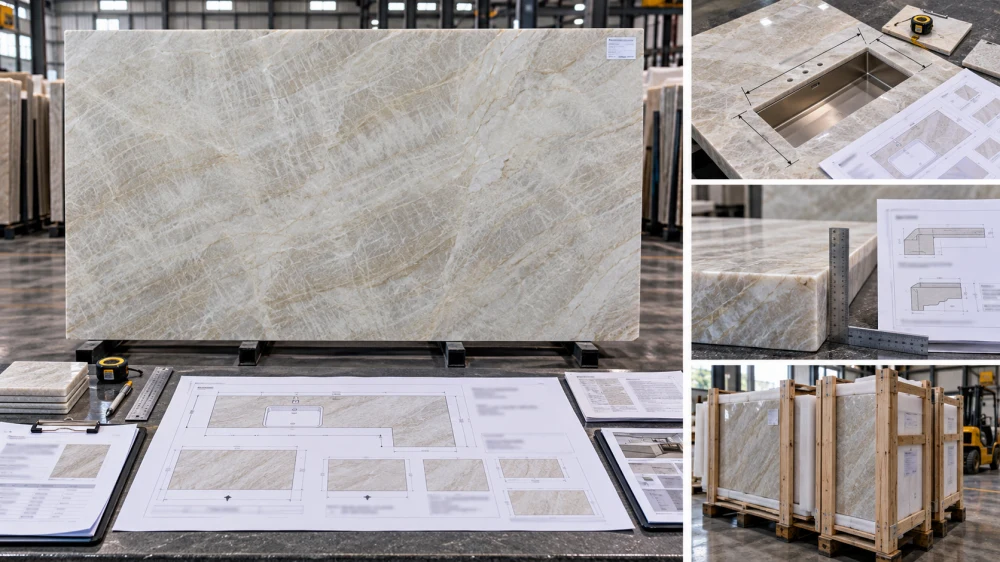
Um pedido urgente de quartzito pode reduzir o tempo de comunicação e revisão, mas não deve eliminar as aprovações que controlam trabalhos irreversíveis. Antes do corte, confirme a laje ou referência material real, a revisão do desenho regulatório, as dimensões críticas, o layout visível, o acabamento, as bordas, os recortes e as interfaces com terceiros. Antes do envio, verifique a identidade da peça, a quantidade, o status do controle de qualidade, a embalagem e o destino. O fluxo de trabalho urgente mais seguro elimina a espera entre decisões, em vez de remover as próprias decisões.
O programa do canteiro avança.
O quartzito é subitamente necessário mais cedo.
O comprador pede ao fornecedor para “apressar tudo”.”
O que realmente pode ser acelerado?
A Pedido urgente de quartzito não deve ser gerenciado eliminando etapas de aprovação aleatoriamente. A abordagem mais adequada é identificar quais decisões protegem trabalhos irreversíveis e, em seguida, reduzir o tempo entre essas decisões.
O princípio de funcionamento é:
Comprimir o tempo de espera → Não controlar decisões.
O que torna um pedido de quartzito um pedido urgente?
Um pedido urgente pode surgir de diversas situações:
uma data de instalação mais antiga;
uma decisão sobre materiais adiada;
uma revisão tardia do desenho;
uma exigência de substituição;
uma mudança no cronograma de construção;
um prazo de embarque;
outro setor aguardando a pedra; ou
um cliente solicitando conclusão mais precoce.
O primeiro passo é registrar o gatilho e o objetivo reais.
“Urgente” não é suficiente.
O projeto deve identificar qual data ou evento é relevante e quais partes do escopo da pedra são afetadas.
Comece separando o tempo compressível das decisões inadiáveis
Atividade do projeto
O tempo pode ser comprimido?
A decisão pode ser omitida?
Tempo de resposta / coordenação
Muitas vezes sim
Não aplicável
Aprovação da laje / material
A revisão pode ser acelerada
Não, onde a seleção do material é necessária
Revisão de desenhos
Sim, por meio de uma via curta de revisão
Nenhuma revisão governamental deve permanecer obscura
Dimensões críticas
A verificação pode ser priorizada
Não onde a fabricação depende delas
Layout / orientação visível
O prazo de aprovação pode ser encurtado
Não onde a aparência depende da colocação
Documentação do controle de qualidade
Pode ser preparada imediatamente
As verificações obrigatórias não devem desaparecer por causa da urgência
Aprovação 1: Confirmar o material real de quartzito
O pedido urgente ainda precisa de uma base material identificada.
Dependendo do projeto, isso pode significar:
amostra física aprovada;
números de lajes identificados;
fotografias ou vídeos de lajes aprovados;
reserved slab group;
replacement-material approval; or
another project-specific material reference.
A commercial name alone should not silently become approval of any slab carrying that name.
Natural Quartzite varies from slab to slab, so the approval record should identify what actual material is being released.
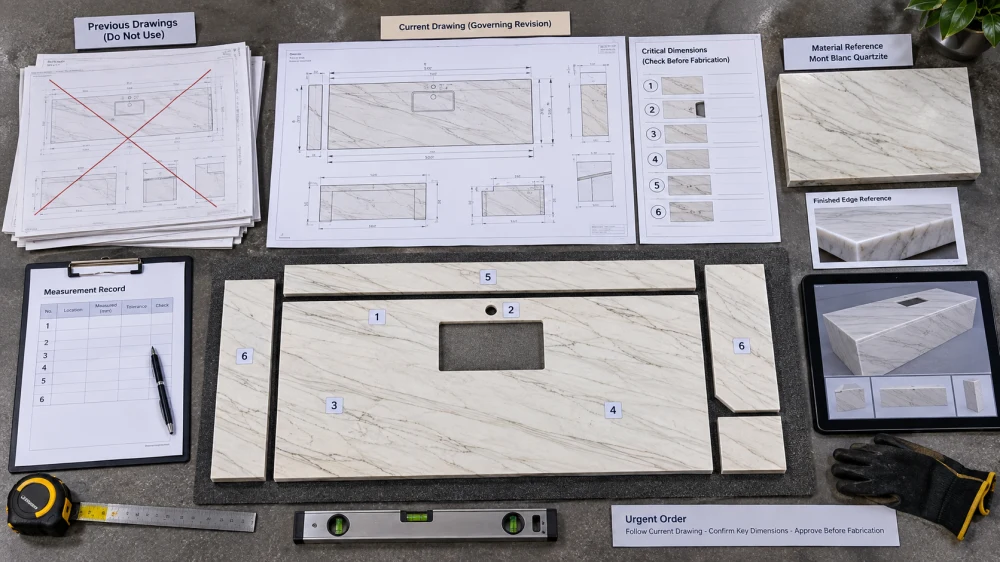
Approval 2: Lock the Governing Drawing Revision
Rush orders are especially vulnerable to drawing confusion because several people may be working simultaneously.
Visible Layout / Orientation Approved Where Required
+
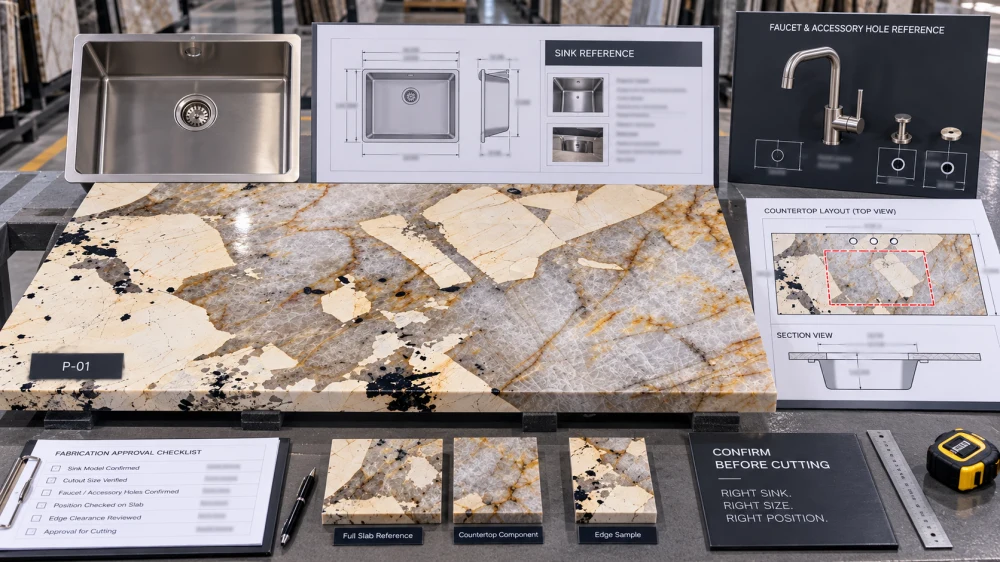
Cutouts / Interfaces Confirmed
+
Finish / Edge Scope Confirmed
↓
Named Cutting Release
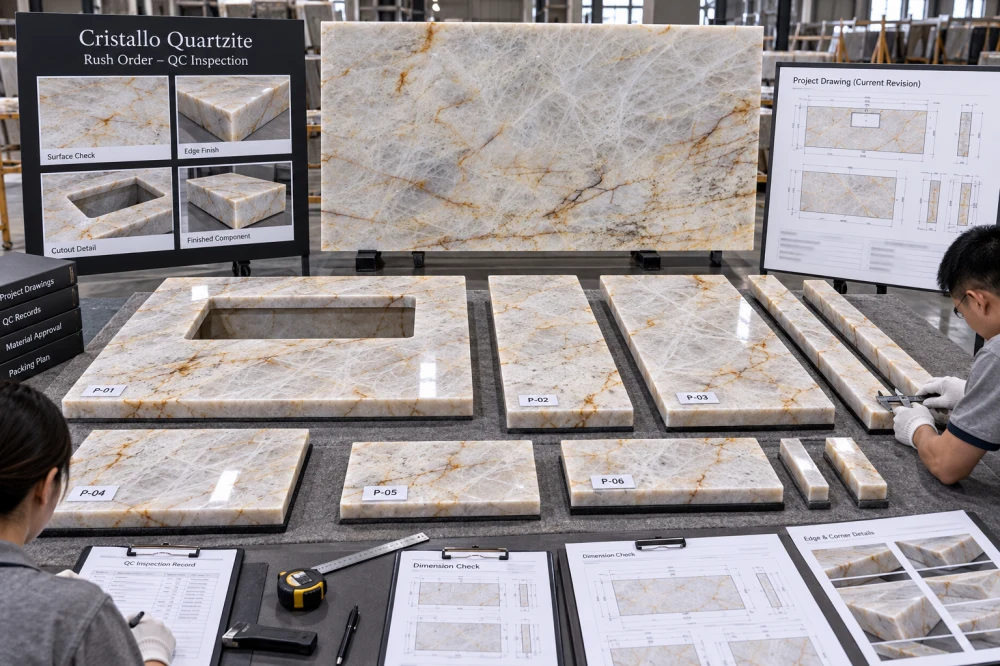
Approval 8: Rush Production Still Needs Traceable QC
Reducing waiting time does not require abandoning inspection records.
For the confirmed scope, project QC can still connect:
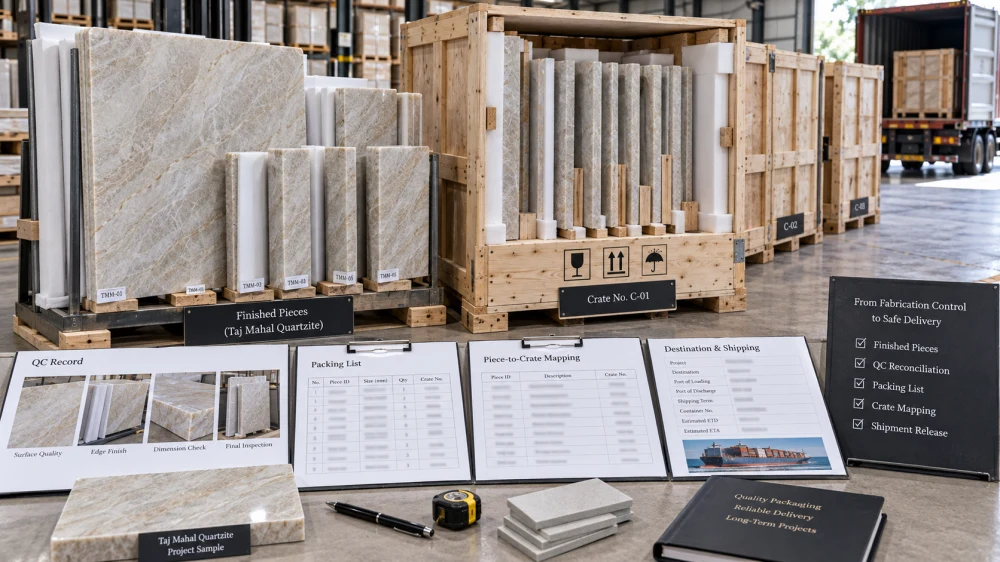
Source Slab → Cutting Plan → Piece ID → Dimensions → Surface / Edge → Cutouts → Dry-Lay Where Required → Packing
The exact inspection scope depends on the product and project.
For a rush order, one advantage of stable piece IDs is that issues can be discussed by component rather than through vague messages such as “the second long piece.”
Can Dry-Lay Approval Be Skipped on a Rush Order?
Not every Quartzite order requires the same dry-lay process.
But if the project has already identified dry lay as an approval requirement because sequence, joints, movement, orientation, or overall visual relationships matter, urgency alone is not a good reason to silently remove it.
This allows the buyer to focus on the information that affects release rather than receiving an unstructured collection of factory photographs.
Approval 9: Shipment Release Is Different from Cutting Release
Finishing fabrication does not automatically mean the order is ready to ship.
Before shipment, confirm the project-specific release items that apply, such as:
quantidade de peças;
identificação das peças;
QC status;
approved issue resolution;
packing list;
piece-to-crate relationship;
quantidade de caixas;
destination;
shipping marks where required; and
commercial / logistics documentation status.
A cutting approval and a shipment approval answer different questions.
What Can Actually Make a Quartzite Rush Order Faster?
The most useful acceleration usually comes from reducing handoff time.
Exemplos incluem:
one governing drawing instead of several competing revisions;
one named decision owner for each approval;
actual slab references instead of generic material photos;
a short approval matrix instead of scattered email chains;
clear piece IDs;
parallel preparation of non-blocked work;
predefined photo / QC requirements;
rapid escalation of blocked decisions; and
separate cutting and shipment release gates.
The goal is not fewer controls.
It is fewer unnecessary pauses between the controls that matter.
Rush Order Release Checklist
BEFORE CUTTING
□ Rush trigger and target identified
quartzite-rush-order-packing-shipment-release
□ Actual material / slab reference confirmed
□ Governing drawing revision confirmed
□ Critical dimensions confirmed
□ Visible layout / orientation approved where required
□ Finish and visible edges confirmed
□ Cutouts and third-party interfaces confirmed
□ Open issues identified
□ Named cutting release recorded
BEFORE SHIPMENT
□ Piece IDs and quantities reconciled
□ Required QC completed
□ Open issues resolved or formally dispositioned
□ Packing list reconciled
□ Piece-to-crate relationship recorded where required
□ Destination confirmed
□ Shipment release recorded
Perguntas frequentes
1. Can a Quartzite rush order skip slab approval?
Se o projeto exigir a seleção efetiva da laje ou a aprovação do aspecto visual, a urgência não deve ser considerada como autorização automática para omiti‑la. A revisão pode ser acelerada, mas o material a ser liberado ainda deve estar claramente identificado.
2. Which approval is most important before cutting Quartzite?
Não existe uma aprovação universal única para todos os projetos. Antes do corte, a liberação deve normalmente reunir a referência de material específica do projeto, o desenho regulatório, as dimensões críticas, o layout ou a orientação exigidos, o escopo de acabamento e de bordas, os recortes, as interfaces e a autorização nominal pertinente às peças afetadas.
3. Can fabrication start while some Quartzite approvals are still open?
A preparação não conflitante pode, por vezes, ocorrer em paralelo, mas informações não resolvidas não devem ser assumidas silenciosamente. O projeto deve identificar quais blocos de aprovação abertos impedem determinada operação, de modo que o trabalho possa prosseguir apenas nos casos em que a decisão pendente não o afete.
4. Can a rush order skip dry-lay approval?
Nem todo projeto exige a montagem a seco. No entanto, se a montagem a seco já é uma etapa de aprovação acordada, por conta da sequência, das emendas, da orientação ou das relações visuais gerais, a mera urgência não deveria, por si só, eliminar essa exigência.
5. Is “looks good” enough to release Quartzite for cutting?
Não necessariamente. Um comentário visual pode aprovar um aspecto do material, enquanto dimensões, desenhos, recortes, interfaces ou outros insumos de fabricação permanecem pendentes. Uma liberação de corte deve identificar o escopo e as informações regulamentadoras que estão sendo autorizadas.
6. Does cutting approval also approve shipment?
Não. A liberação de corte autoriza uma decisão de produção antecipada. A liberação do envio deve considerar separadamente as peças concluídas, as quantidades, o status do controle de qualidade, a resolução de problemas, as informações de embalagem, o destino e a documentação logística aplicável.
7. What should I send a supplier for a Quartzite rush order?
Envie as referências reais dos materiais ou lajes disponíveis, os desenhos vigentes, dimensões, quantidades, acabamento, prioridades de áreas visíveis, recortes e informações de terceiros, data-alvo, aprovações pendentes, destino da entrega e o nome ou a função responsável por cada decisão-chave.
Final Rush-Order RuleA Quartzite rush order should remove idle time, not remove the decisions that protect irreversible work. Use the sequence Material → Drawing → Critical Dimensions → Layout → Interfaces → Cutting Release → QC → Packing → Shipment Release, and show clearly which unresolved approval blocks which next action.
For urgent Natural Quartzite projects, HRST STONE can coordinate actual slab references, CAD/shop drawings, cutting layouts, piece identification, fabrication records, QC photographs, dry-lay documentation where required, packing records, and export preparation for the confirmed stone scope. Send Josh the material, slab references, current drawings, dimensions, quantity, finish, target date, open approvals, and delivery destination so the unresolved stone-related decisions can be identified before production release.
Hi, I am the author of this article. I have been working in the field of Natural Stone for more than 15 years. If you need customized Natural Stone services, please feel free to contact me.
Fabricante e Fornecedor de Mármore, Granito, Quartzito, Ágata da China - HRST STONE
Bem-vindo à HRST STONE!
Olá, gostaria de saber mais sobre seus produtos. Você poderia compartilhar informações sobre preços, quantidade mínima de pedido, opções de personalização e amostras?