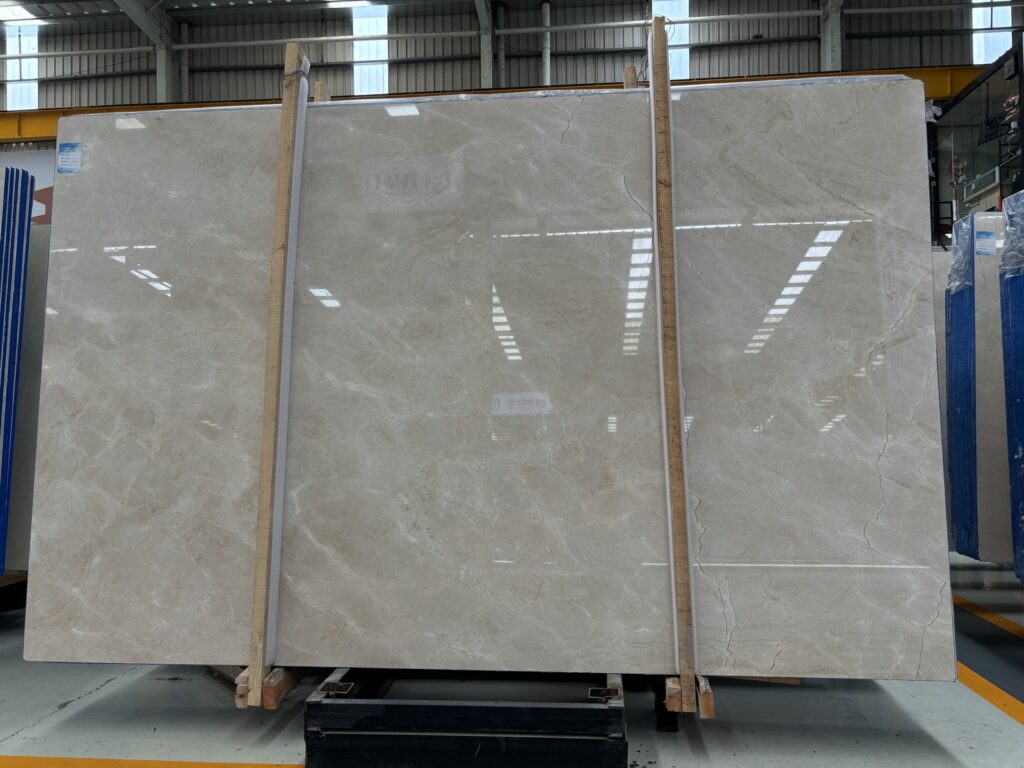

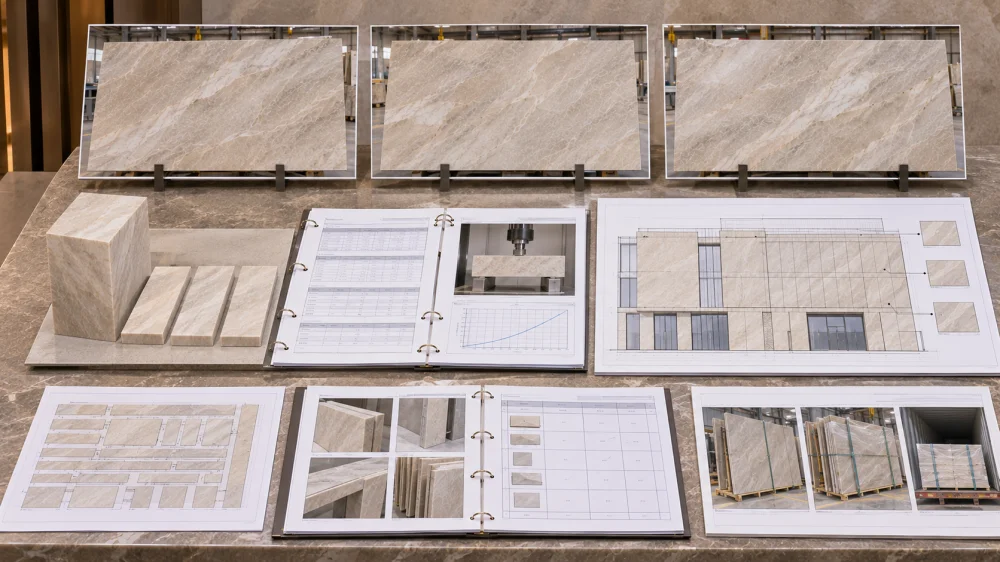
Quartzite facade batch records should connect the tested material to the physical stone installed on the building. A reliable record identifies the test specimen, laboratory report, material batch, source slabs, fabricated panel IDs, packing references and final elevation or installation zones. It also documents substitutions and missing links. The objective is traceability: a reviewer should be able to identify which material evidence relates to which installed panels without assuming that one sample or report automatically represents every slab supplied.
빠른 요약A Quartzite facade batch record is a controlled chain linking material identification, test evidence, slab allocation, finished panels and installed locations. Separate laboratory test specimens from visual range samples and factory QC records. Define what each material batch includes, record the source of the test specimens, connect each fabricated panel to its source slab and preserve the final installed-zone map. If a different batch or substitute slab enters the project, review the affected evidence and approvals rather than automatically transferring the original test or visual acceptance.
ㅏ Quartzite facade batch record is a project-specific material traceability record that links a defined group of natural-stone supply to supporting test evidence, identifiable physical slabs, fabricated cladding panels and their final architectural installation locations.
The commercial material name is only one part of this record.
For a facade project, the more important question is:
Can we identify the actual material behind each test result and locate the finished panels associated with that material on the building?
Consider a Quartzite facade specified for a commercial building.
The design team receives a technical test report and several approved material samples. The first shipment contains stone for the entrance elevation. Later shipments supply a side elevation, an upper facade zone and replacement pieces.
Several months later, the project team asks:
“Which installed panels came from the material represented by the original laboratory test report?”
If the project retained only the commercial stone name and several photographs, the answer may be impossible to establish.
The supplied material may have passed through several stages:
Each stage creates an opportunity for the original material identity to become disconnected from the finished facade.
Batch records are intended to preserve that connection.
They can support material review, exception investigation, replacement planning and maintenance. They do not independently establish compliance with structural or building-envelope requirements.
‘망종’이라는 말은 batch needs a project definition.
Natural Quartzite is not a manufactured product in which every production cycle necessarily produces identical material.
Depending on the supplier and project, several different identifiers may be involved.

This identifies where the stone originated, where that information is available and documented.
Stone from the same commercial quarry may still vary between extraction areas and individual blocks.
A natural-stone block is the physical source from which slabs can be processed.
If block identity is available, it can be an important link between testing, slab production and later fabrication.
A supplier may group multiple slabs under a lot reference for inventory, production or commercial control.
That lot may contain one block or several blocks, depending on the actual supply process.
Do not assume the lot number automatically identifies one geologically uniform group.
A project may establish its own group of material that is reviewed under a particular test or material-approval scope.
This group should be defined using identifiable physical material and the agreed project procedure.
A shipment groups material for transport.
It may contain pieces from different source slabs or supply lots.
A shipment number is not automatically a material-test batch number.
Define the Batch Before Using the Test ReportRecord whether the project batch refers to a block, a defined slab group, a supplier lot or another approved physical grouping.
Without that definition, the statement “Batch approved” may be too ambiguous to support a later installation or material investigation.
One of the most common traceability errors is treating a laboratory test specimen, an aesthetic approval sample and a production QC sample as interchangeable.
They answer different questions.
| Evidence Type | 주된 목적 | Important Limitation |
| Laboratory Test Specimen | Provides measured results for the tested material and test conditions. | Does not automatically establish the properties of unrelated slabs or subsequent batches. |
| Visual Range Sample | Supports approval of colour, movement, finish and other visible characteristics. | Does not establish structural performance or laboratory compliance. |
| Factory QC Reference | Documents the condition and fabrication of identified finished pieces. | Dimensional and visual QC does not replace required material testing. |
| Installed-Panel Record | Confirms where identifiable pieces were finally installed. | Location traceability alone does not prove material or system performance. |
A complete batch-control system uses these records together without confusing their purposes.
For example, an approved visual sample may represent the intended pale-grey colour range. A separate laboratory test specimen may establish measured properties for the material identified in the report.
The project then needs evidence showing how those samples relate to the physical slabs selected for fabrication.
The key question is not simply whether a test report exists.
It is whether the report can be connected to the material group it is being used to assess.
A useful review should identify:

If the report does not identify the original source block or slab, do not invent that relationship.
Instead, record the available traceability and request clarification or additional evidence where the missing link affects project acceptance.
ASTM C616/C616M-22, the Standard Specification for Quartz-Based Dimension Stone, addresses material characteristics, physical requirements and sampling for quartz-based dimension stone.
The applicable specification, laboratory tests and acceptance criteria must be confirmed for the selected stone and project.
Relevant technical review may involve properties such as absorption, density, compressive strength or other specified performance characteristics.
Do not substitute one property’s result for another, and do not assume that a result obtained from one specimen proves the performance of every installed piece.
The responsible design or material-approval team should determine the testing scope, representativeness and any need for supplementary testing.
The most useful document in this workflow is a register that connects material evidence to physical components.
It should be designed around stable identifiers rather than one photograph or a material name alone.
The following structure is an illustrative project register, not a mandatory industry form.
| 기록 필드 | Example or Required Reference | Function |
| Project Material Code | QS-01 | Identifies the specified material within the project. |
| Defined Material Batch | B-01 | Connects the panel to an agreed physical supply group. |
| Test Specimen / Report | S-01 / TR-01 | References the laboratory evidence and its stated scope. |
| Visual Range Approval | VR-01 | Connects the batch to its accepted appearance reference. |
| 원천 슬랩 | SL-014 | Identifies the physical board used for cutting. |
| Finished Panel | P-107 | Identifies the fabricated stone component. |
| Shop Drawing / Revision | SD-03 / R04 | Connects the panel to the controlling geometry. |
| 공장 QC | QC-107 | Records fabrication inspection and disposition. |
| Crate / Shipment | CR-08 / SH-02 | Locates the physical panel during transport. |
| Installed Zone | East Elevation / Zone E2 | Identifies the panel’s destination and final installed position. |
| Installation / As-Built Status | Verified / Record Reference | Confirms the final evidence and any unresolved exception. |
All example IDs above are fictional and demonstrate document structure only.
For large projects, the underlying data may require separate linked registers for batches, laboratory reports, source slabs, panels, crates and installation zones.
A single batch can supply many panels. One report may reference several specimens. A crate may contain panels from more than one source slab.
The system should preserve these relationships rather than forcing all records into one misleading one-to-one chain.
Once a source slab is approved for fabrication, its identity must survive cutting.
The factory should retain a link between:
Source Slab ID → Cutting Layout → Finished Piece ID
For example, a single slab may yield:
SL-014 → P-107, P-108, P-109

These panels may be assigned to different positions on the same elevation.
The cutting layout should therefore document the source slab, finished panel outlines, piece orientation and current shop-drawing reference.
Where relevant, retain full-slab photographs and the actual visual relationship between adjacent pieces.
The material register should also identify whether an item was:
Do not reuse the same panel ID for two different physical pieces without a clear revision or replacement relationship.
A stable identifier makes later factory QC and site investigation much easier.
관련된 Quartzite facade colour-zoning guide covers the visual allocation of slab groups to elevations. The batch register serves a different purpose: it preserves the evidence showing which physical pieces actually belong to each group and where they were installed.
After fabrication, panels may be separated from the slabs and factory inspection locations where they were identified.
They may then be distributed across several crates or shipments.
The packing register should therefore connect:
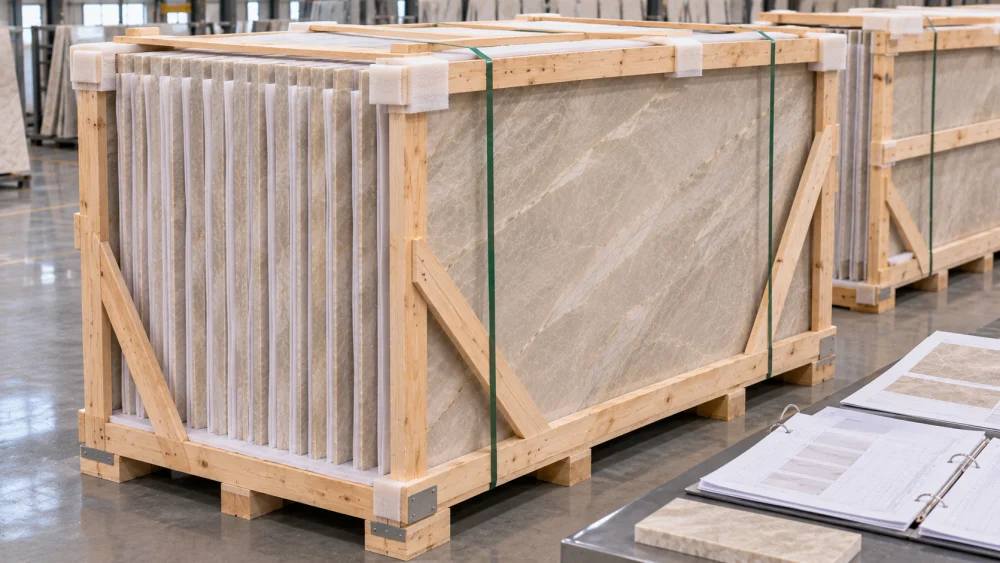
Panel ID → Crate ID → Shipment Reference → Site Receiving Record
Depending on the project, a packing list can include:
For stone panels packed vertically, use a suitable reinforced timber support system, with panels closely arranged and appropriate thin protective interleaving.
Protect finished edges, corners and other vulnerable details without creating unstable, widely spaced heavy-stone pieces.
The actual packing method should reflect the material geometry, dimensions and transport requirements.
그만큼 규암 공장에서 현장 인도 문서 색인 explains how piece IDs, current shop drawings, QC records, packing lists and crate allocations should remain connected through the project handover.
The final destination should be more precise than:
“Installed on the building.”
A large facade may contain several visually or technically distinct areas.
예를 들어:
The site team should connect installed panel IDs to the current elevation or setting-out drawing.
A record can use a simple installation address such as:
Project → Building → Elevation → Level → Zone → Panel Position

예를 들어:
East Elevation → Level 02 → Zone E2 → Panel P-107
The record should be updated when the actual installation differs from the planned allocation.
Do not overwrite the original planned location without retaining the change history.
Instead, distinguish:
Planned Location: P-107 assigned to Zone E2.
Actual Installed Location: P-107 verified at Zone E3.
Change Reason: Current installation revision or recorded site instruction.
Review Status: Accepted, pending or requiring further approval.
These example references are illustrative only.
This distinction allows a reviewer to reconstruct what changed between factory allocation and final installation.
This is one of the most important reasons to maintain batch-level records.
Suppose a project originally approved supply group B-01 and laboratory report TR-01.
Later, another supplier lot is proposed because additional panels are required.
Do not automatically change the register from:

B-01 → B-02
and assume the original report covers the replacement.
First establish whether the new material is within the technical and visual scope previously reviewed.
Questions include:
The response may be a documented acceptance, additional information request, further testing, visual reapproval or rejection.
The appropriate action depends on the actual project specification and the new material evidence.
Do not claim that every new commercial lot requires a universal set of laboratory tests. Equally, do not assume that testing once is sufficient for all future material carrying the same trade name.
Batch Change Hold PointWhen the physical material represented by a previous approval changes, identify the affected test-evidence scope, visual range, source-slab register and installed-zone allocation before releasing the substitute panels.
A traceability register is only useful if it distinguishes confirmed information from assumptions.
Consider three different situations.
A laboratory report is available, but the project cannot establish which block, slab group or supply batch supplied its specimens.
Record the gap. Request the original sampling evidence or refer the acceptance decision to the responsible reviewer.
Do not fill the missing link by assuming the material name proves the relationship.
The finished panel has a piece number, but the original cutting layout or source slab reference is unavailable.
The available factory records should be reviewed to see whether the source can be reconstructed reliably.
If not, mark the physical-source identity as unverified rather than assigning an invented slab number.
A cracked, damaged, dimensionally incorrect or otherwise nonconforming panel may be replaced.
The replacement should receive a traceable identity linked to the original panel and its disposition.
Record the new source slab, batch relationship, factory QC, crate allocation and final installed position.
Where the replacement changes the technical-evidence or appearance scope, return the affected issue for approval.
The original panel should remain in the historical record as rejected, superseded or otherwise disposed of, rather than disappearing from the project register.
아니요.
Traceability helps establish which material and documents are associated with installed stone.
It does not replace the design and verification of the facade system.
For exterior vertical cladding, the responsible team may need to review:
The Natural Stone Institute’s Dimension Stone Design Manual provides technical guidance on stone selection, testing and vertical installations.
The relevant ASTM specification and test methods should be identified through the project’s material and engineering requirements.
The batch register should reference the approved technical documents, but it should not present their existence as automatic proof of complete facade performance.
Similarly, an approved colour-range sample does not prove the strength of a panel, and a material-strength test does not approve the appearance of an entire elevation.
At project completion, the batch record should help a future reviewer move in both directions.
From the Test Report to the Building:
Which defined material batch, source slabs and installed zones are associated with the report?
From the Building Back to the Source:

For a panel in a specific elevation, which source slab, supply group, QC record and material evidence can be identified?
The final archive can include:
그만큼 Quartzite Project Completion Records guide explains the broader handover archive used for future stone matching, replacement and maintenance.
The facade batch register adds a specific material-testing and source-identification dimension to that archive.
Final Traceability DecisionDo not treat a natural-stone facade batch as approved merely because a test report and material sample exist somewhere in the project folder.
Confirm what material each document represents, preserve the physical source-slab and panel identities, and keep those records linked to the actual installed elevation zones.
Buyer Next Step: Before final fabrication and shipment release, request a master batch-to-panel register that identifies test evidence, defined material batches, source slabs, finished-piece IDs and destination zones. Update it with verified installed locations for the final as-built handover.
It is a controlled project record connecting defined natural-stone supply groups to supporting test evidence, physical source slabs, fabricated panel IDs and installation locations. Its purpose is to preserve material identity throughout procurement, fabrication, delivery and site installation.
Not automatically. The report represents the tested specimens under the stated test conditions. Its applicability to other slabs or batches depends on the documented material source, sampling procedure, project requirements and the responsible technical review.
A visual sample supports decisions about appearance, colour range, finish and movement. A laboratory specimen is tested to obtain specified physical-property results. The two types of evidence serve different purposes and should retain separate identities and approval scopes.
For a traceable project-based fabrication and installation process, stable individual panel IDs are strongly recommended. They allow source slabs, cutting drawings, factory QC, packing records and installed positions to remain connected.
Potentially, if the material evidence, visual range and project requirements are appropriately reviewed and accepted. The register should identify which physical panels came from each batch and where they were installed rather than treating the whole elevation as one unidentified material group.
Record the replacement source and review whether existing technical evidence and visual approvals remain applicable. Additional testing, updated material approval or revised panel allocation may be required depending on the actual project specification and documented differences.
No. A packing list identifies what is loaded into each crate or shipment. A batch register connects the physical panels to their source material, supporting evidence and final installation zones. The two records should be cross-referenced but serve different purposes.
Send the current material specification, relevant test requirements and available laboratory reports, known quarry or supply-batch references, slab or board IDs, panel schedule, current elevations, fabrication drawings, required finish and thickness, project quantity, destination and expected handover records. Identify which test-to-batch or batch-to-zone relationships still need verification.