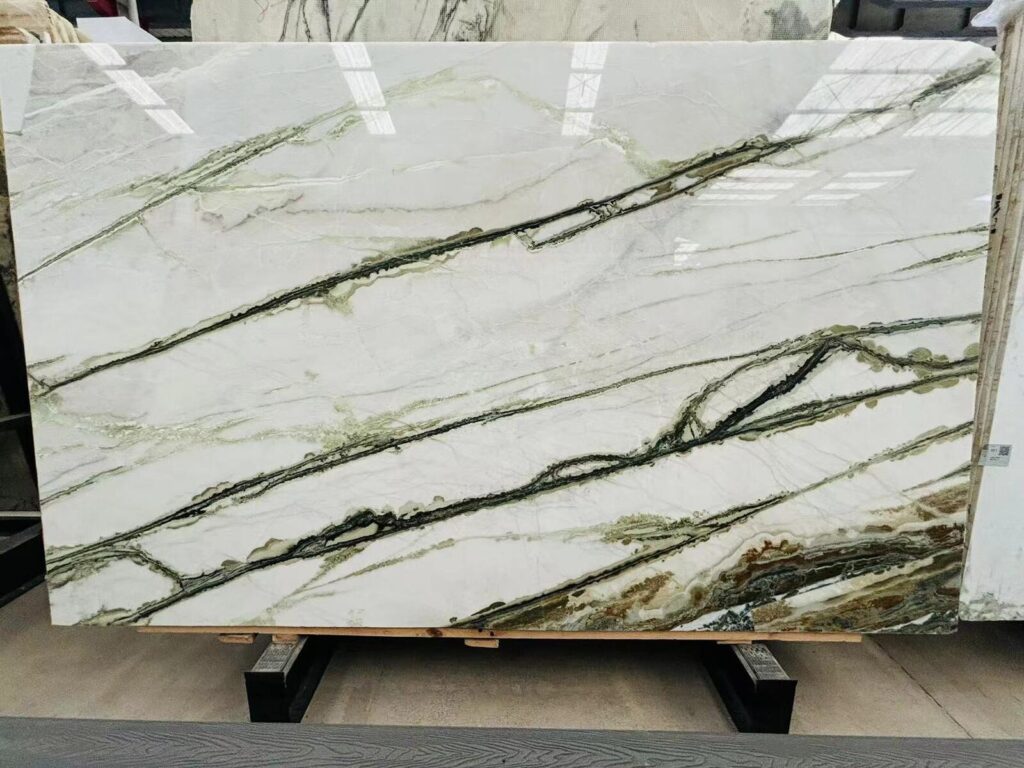

석영암 상자 습기 습기는 선적 시 컨테이너에 이미 존재하던 목재나 포장재의 수분, 항해 중 발생한 결로, 손상된 포장이나 누수된 컨테이너를 통해 유입된 외부 물 등 세 가지 서로 다른 조건으로 구분하여 조사해야 합니다. 목적지에서 상자가 젖어 보인다고 해서 석영암이 손상되었거나 습기가 언제 유입되었는지를 단독으로 입증할 수는 없습니다. 개봉 전에는 추적이 가능한 도착 검사 기록에 컨테이너 상태, 상자 외관, 목재 상태, 보호 재료 및 실제 석재 상태를 반드시 기록하십시오.
ㅏ 석영암 수출용 상자 는 취급 및 국제 운송 과정에서 석영암 판재, 타일 또는 가공 부재를 지지하고 보호하도록 설계된 운송용 조립체입니다. 그 성능은 목재 강도뿐만 아니라 보강재, 내부 보호 장치, 제품 배치 방향, 컨테이너 적재 상태 및 운송 경로 전반에 걸쳐 존재하는 습기 조건에 따라 달라집니다.
따라서 국제 석재 구매자에게 “상자가 젖은 상태로 도착했다”는 표현은 단지 조사의 시작에 불과합니다.
구매자는 무엇이 젖었는지, 습기의 범위가 어느 정도인지, 해당 상태가 석재에 영향을 미쳤는지, 상자가 취급하기에 구조적으로 안전한 상태인지, 그리고 선적 전에 어떤 증거가 있었는지를 파악해야 합니다.
밀폐된 화물 컨테이너는 자체적인 운송 환경을 형성합니다. 습기는 선적 시 유입된 공기, 목재 상자 및 보강재, 기타 흡습성 포장재, 화물 자체 또는 직접적인 물 노출에서 발생할 수 있습니다.
장거리 항해 중 온도 변화로 인해 수증기가 이슬점에 도달하여 컨테이너 벽면, 천장, 포장재 또는 화물 표면에 응결될 수 있습니다.
이 과정은 일반적으로 컨테이너 결로 또는 컨테이너 땀이라고 설명됩니다.
IMO/ILO/UNECE CTU 코드와 같은 운송 지침은 화물 운송 단위 내부의 습기 원천으로 화물, 목재 보강재, 팔레트, 다공성 포장재 및 습한 선적 조건을 지목합니다. 온도 변화는 구멍이나 외부 누수가 없더라도 결로를 유발할 수 있습니다.
석재 화물의 경우 주요 조사는 다음 가능성을 구분해야 합니다.
| 습기 원천 | 가능한 증거 | 구매자 질문 |
| 선적 시 습한 목재 또는 덴니지 | 포장 기록, 목재 상태, 컨테이너 내 일반화된 습기 | 선적 전에 상자와 내부 포장이 충분히 건조했는가? |
| 컨테이너 결로 | 지붕, 벽 또는 상부 포장 표면의 물방울 또는 얼룩 | 운송 중 온도와 습도 변화로 결로가 발생했는가? |
| 선적 또는 하역 중 비 노출 | 국부적인 외부 표면 습기 및 취급 기록 | 컨테이너나 상자가 열려 있는 동안 화물이 노출되었는가? |
| 컨테이너 또는 지붕 누수 | 국부적인 물길, 손상된 밀봉, 구멍 또는 집중된 습기 지역 | 외부 물 침투의 물리적 증거가 있는가? |
| 터미널 또는 창고 바닥의 습기 | 상자 받침대 또는 스키드 주변의 습기 집중 | 하역 후 상자가 고인 물에 접촉했는가? |
올바른 대응은 실제로 어떤 조건이 존재하는지에 따라 달라집니다. 외부 목재 부재에 나타난 몇몇 결로 자국은 완성된 석영암 부품이 들어있는 상자 내부의 고인 물과는 다른 결정을 요구합니다.
아니요. 이는 국제 석재 구매자에게 가장 중요한 구분 사항 중 하나입니다.
ISPM 15 는 국제 무역에서 사용되는 원목 포장재를 통한 검역 해충 확산 위험을 줄이기 위해 제정된 국제 식물 위생 기준입니다.
미국으로 들어오는 화물의 경우 USDA APHIS는 상자, 팔레트 및 덴니지와 같은 규제 대상 목재 포장재가 적용 가능한 ISPM 15 처리 및 표시 요건을 충족하도록 요구합니다.
이러한 규정 준수 여부는 운송 중 습기 관리와는 별개입니다.
유효한 열처리 표시만으로는 석영암이 컨테이너에 포장되는 시점의 목재 수분 상태를 단독으로 입증할 수 없습니다.
식물 위생 목적의 열처리와 수분 감소를 위한 건조는 자동으로 동일한 과정으로 간주되어서는 안 됩니다.
이는 구매자가 두 가지 다른 질문을 해야 함을 의미합니다:
질문 1: 규제 대상 목재 포장재가 목적지의 식물 위생 요건을 준수하고 있는가?
질문 2: 상자, 보강재 및 기타 습기에 관련된 포장재가 계획된 해상 운송에 적합한 상태인가?
포장 습기 관리 = 운송 조건 요건.
상자는 첫 번째 요건을 충족할 수 있지만, 선적 전에 목재 상태, 컨테이너 상태 및 결로 위험에 대한 별도 검토가 필요합니다.
미국행 화물의 경우, 구매자는 공식 목재 포장 표시가 유효하고 현재 APHIS 요건을 준수하는지 확인해야 하며, 비공식적인 열처리 진술만으로 충분하다고 가정해서는 안 됩니다.
Ocean containers can travel through major temperature changes between the loading factory, port, vessel route, transshipment terminal and final destination.

Warm air can contain more water vapour than cooler air. When humid air or moisture released from packing materials cools sufficiently, some of that water can condense onto colder surfaces.
The container roof and walls may therefore become collection surfaces.
Hapag-Lloyd’s container-packing guidance notes that relative humidity inside a container is influenced by moisture from the cargo, stowage material, loading air and outside temperature. It also recommends loading cargo and stowage materials as dry as reasonably possible when moisture damage is a concern.
This means that preventing moisture problems requires more than wrapping the quartzite in plastic after fabrication.
The complete system matters:
A desiccant can be one component of a moisture-control plan, but it should not be treated as a cure for obviously wet timber or uncontrolled water ingress.
Packing should be designed around the form of the quartzite being shipped.
Large slabs, cut-to-size wall panels, countertops, vanity tops and small tiles do not create the same loading risks and should not automatically use the same crate layout.
Finished countertops and similar fabricated pieces are commonly transported in a controlled vertical orientation where appropriate to the geometry.
Pieces should sit close together with thin protective separation between adjacent finished surfaces. The packing design should limit uncontrolled movement while avoiding thick, soft gaps that allow heavy stone pieces to gain momentum during transport.
Openings, narrow bridges, exposed edges and mitred details require additional attention.
Timber framing, internal braces, stops or wedges should stabilize the group so the pieces cannot repeatedly impact one another during container handling.
Repeated pieces of the same size can be grouped tightly into stable packs on reinforced timber bases or within suitable crates.
The packing arrangement should prevent sliding, edge impact and collapse while keeping piece identification connected to the project’s packing list.
For sequenced wall or floor packages, the packing order should also consider how installers will identify and remove the pieces at destination.
Large natural-stone slabs require a different support system based on the actual slab dimensions, weight and transport method.
The slab support must restrain the material safely during loading, sea transport and unloading. Packing design and container loading should therefore be handled by parties experienced with heavy natural-stone shipments.
HRST STONE describes its export process as including quality inspection followed by secure packaging in seaworthy wooden crates. The project-specific crate construction should still reflect the dimensions, form, weight and vulnerability of the actual finished components rather than relying on one generic packing configuration.
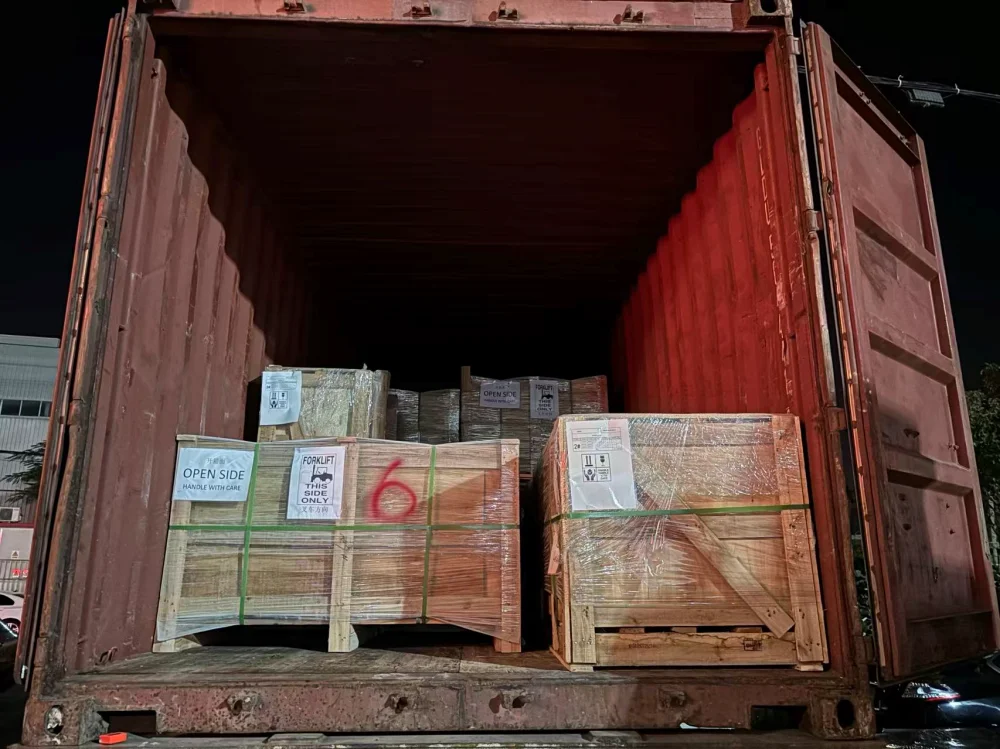
Arrival disputes become much harder to investigate when the only pre-shipment evidence is a photograph of a closed crate.
A useful packing record should establish both the product condition and the packing sequence.
For fabricated quartzite, the record can begin before the first protective layer is installed.
Photographs should show the finished pieces after QC so that later surface stains, edge damage or breakage can be compared with the condition that existed before packing.
The next images can document:
Finished Piece → Piece Identification → Protective Separation → Internal Support → Crate Closure → External Bracing → Container Loading
Where piece traceability matters, use the same piece references already carried through the approved drawings and QC records. HRST’s guidance on board-number and packing traceability similarly emphasizes carrying material and piece identification through production, QC and packing rather than losing that connection after fabrication.
| Evidence Stage | 기록할 내용 | Why It Helps at Destination |
| Final stone QC | Finished face, edges, cutouts and piece references | Establishes pre-packing condition |
| Internal packing | Piece orientation, separation and local protection | Shows how contact surfaces were protected |
| Crate structure | Base, braces, stops and closed crate condition | Supports later assessment of transport movement |
| Container condition | Interior before loading and relevant visible condition | Provides a baseline for water or contamination questions |
| Loaded container | Crate placement, restraint and completed loading | Connects crates with the shipment before sealing |
Record the important stages while they are still visible. The purpose is not to create marketing photographs; it is to make the shipment traceable if the receiving team later finds moisture, movement or damage.
If a container arrives with visible moisture, resist the temptation to remove all packaging immediately.
First preserve the arrival condition.
Photograph the container identification, door area, seal where relevant, interior surfaces and the position of the crates before significant unloading changes the scene.
If water is visible on the roof, walls or floor, document its location.
Then inspect each crate exterior.

Record whether the timber is uniformly damp or wet only in a localized area. Look for staining, softened components, distorted plywood, broken braces, displaced straps, impact damage or a wet base.
Where safe and appropriate, also record moisture at different heights of the crate. A condition concentrated at the bottom can tell a different story from droplets or staining concentrated on the upper surfaces.
Do not discard wet protective materials, broken wood or damaged restraint components until the receiving condition has been adequately documented and the responsible parties have determined whether they need to be preserved as evidence.
Container Exterior → Seal / Door Area → Container Interior → Crate Position → Crate Exterior → Opening Sequence → Internal Packing → Actual Stone
This sequence makes it easier to distinguish a packing problem from later warehouse handling.
No. Crate condition and stone condition should be inspected separately.
Natural quartzite is an inorganic stone material. Moisture on the surrounding timber does not automatically mean that the stone has suffered structural damage.
However, the stone still requires inspection.
Possible arrival observations can include:
Surface moisture: Water is present on the stone or protective film but no permanent condition has yet been established.
Temporary darkening: Some natural stones can appear darker when wet. Do not classify the final colour before the material has had an appropriate opportunity to dry under controlled conditions.
Surface staining or transfer: Water may carry contamination, timber compounds, rust or other materials into contact with the surface.
Edge or impact damage: A moisture event may occur at the same time as packing movement, but breakage and water exposure should still be documented as separate observations.
Repair or resin appearance: Existing resin or repaired areas may look different under wet conditions. Compare them with pre-shipment QC evidence before concluding that the condition developed during transport.
Do not use one photograph to diagnose the cause of a stain or crack when the actual stone has not yet been examined.
If the stone is structurally stable and safe to unpack, some visual observations may need to be reassessed after surface moisture has dissipated.
The drying process should be controlled rather than accelerated with uncontrolled high heat.
Separate pieces where needed to allow safe air circulation, while preserving identification and orientation.
Do not install, seal, coat or aggressively clean questionable pieces merely to see whether the appearance improves. Those actions can change evidence and complicate later assessment.
Instead, classify the pieces by current status.
Condition B — Stone wet, final appearance uncertain: Record the condition and reassess after controlled drying.
Condition C — Local staining or contamination suspected: Isolate the piece and request technical review before treatment.
Condition D — Breakage, movement or packing failure present: Preserve evidence and assess the affected pieces individually.
Condition E — Crate structurally unsafe: Stop routine handling and use a qualified unloading or lifting plan.
This is more useful than immediately classifying the entire shipment as either “good” or “water damaged.”

The cause may not always be obvious, and buyers should avoid making a definitive claim from appearance alone.
Condensation may leave widespread droplets or moisture on cold container surfaces and upper cargo areas. External leakage may instead create a more concentrated path near a damaged roof, wall, door or seal area.
These are only investigation clues, not automatic proof.
A proper review can consider:
When the commercial value or damage exposure is substantial, a cargo surveyor, insurer or logistics specialist may need to inspect the shipment before evidence is disturbed.
The stone supplier should provide the available factory packing and loading records, while the receiving party should provide arrival evidence from destination.
A potential claim should be evidence-driven.
The buyer should not rely on a message such as “the crates were wet and several pieces are bad.”
The record should connect the transport unit, crate and affected finished piece.
예를 들어:
Container → Crate 03 → Piece V-12 → Specific Arrival Condition
Photograph the overall condition first and then the detail. Keep piece numbers visible in the inspection record even if they are not shown on the decorative face.
Where practical, retain relevant packaging materials until the responsible logistics, insurance or supplier parties confirm that disposal will not affect the investigation.
Also distinguish between:
packing moisture, transport damage, natural stone characteristics, 그리고 fabrication conditions that existed before shipment.
A fissure visible in pre-packing QC is not automatically transport damage simply because the crate later arrived damp. Likewise, new edge breakage should not be dismissed as natural variation when the pre-shipment photographs show an intact edge.
Once an arrival issue has been investigated, convert the findings into a better packing specification for the next order.
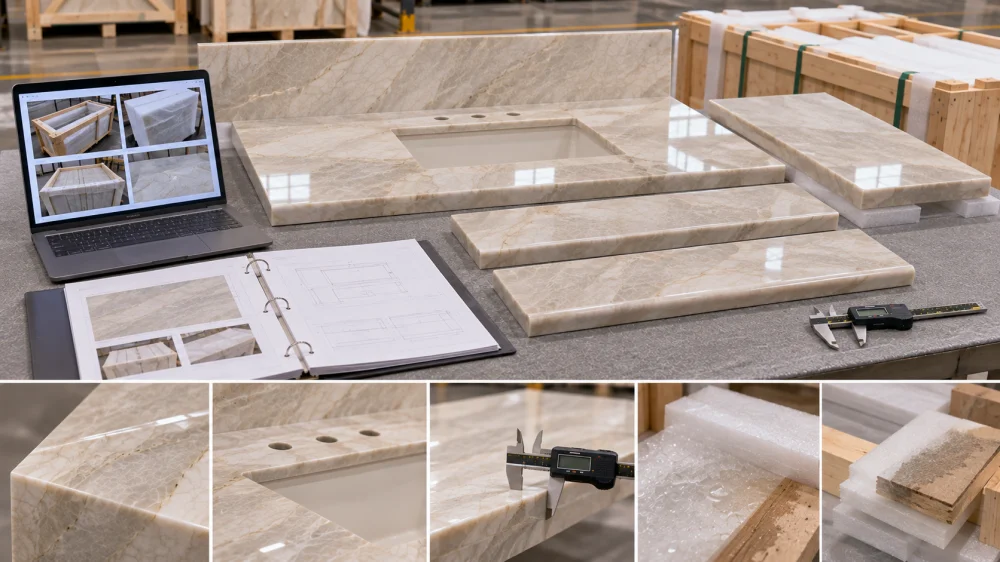
The solution should respond to the actual failure mode rather than adding unnecessary packing material everywhere.
If the issue was high internal humidity, review timber and packing conditions, container loading and moisture-control measures.
If the issue was physical movement, review restraints, wedges, internal support and crate geometry.
If external water entered through a damaged container, improve container-condition documentation and logistics controls.
If the stone arrived intact but the buyer could not identify pieces after unpacking, improve piece numbering and packing-list traceability.
HRST STONE states that its workflow includes final quality inspection and secure export packaging. Buyers preparing a moisture-sensitive or damage-sensitive shipment can use the HRST STONE contact page to provide finished-piece dimensions, quantities, drawings, packing sequence requirements and destination details before production and packing are finalized.
For project shipments, also clarify whether special documentation is required, including crate photographs, loading photographs, piece-level QC, container-condition images or destination-specific wood-packaging requirements.
No. ISPM 15 addresses phytosanitary treatment and marking of regulated raw-wood packaging used in international trade. It should not be treated as proof of the timber’s moisture condition when the stone was packed. Moisture control and phytosanitary compliance should be reviewed separately.
습기는 습한 공기, 목재, 고물, 기타 포장재 또는 적재 과정을 통해 컨테이너 내부로 유입될 수 있습니다. 운송 중 온도 변화로 인해 외부에 명백한 누수가 없더라도 차가운 컨테이너 표면이나 화물 표면에 수증기가 응결될 수 있습니다.
모든 석재 화물에 적합한 단일 포장 방법은 없습니다. 포장 설계 시에는 석재의 형태, 습기 상태, 표면 보호, 통풍 또는 차단 방식, 그리고 예정된 운송 경로를 모두 고려해야 합니다. 플라스틱 포장만으로는 이미 상자 내부에 갇힌 습기를 해결할 수 없습니다.
아니요. 포장 상태와 석재를 각각 점검하십시오. 습기가 있는 목재는 석재에 영구적인 손상 없이 존재할 수 있지만, 고인 물, 오염, 이동 또는 장시간의 접촉은 보다 상세한 검토가 필요할 수 있습니다. 개별 조각을 평가하기 전에 미개봉 크레이트를 기록하십시오.
컨테이너 외부 및 식별 표시, 도어 및 씰 부위, 내부 천장과 벽면, 바닥 상태, 크레이트 위치 및 크레이트 외관부터 시작하십시오. 개봉 순서, 내부 포장 상태 및 영향을 받은 각 석영암 조각에 대해 추적 가능한 조각 참조 번호를 사용하여 계속 기록하십시오.
물품의 상태가 불확실한 동안에는 이를 설치하지 마십시오. 적절하고 안전한 경우, 해당 물품을 기록하고 통제된 건조를 거친 뒤에 일시적인 변색이나 습기로 인한 것으로 의심되는 외관 변화를 재평가하십시오. 상태를 파악하기 전에 증거를 변경할 수 있는 어떠한 처리도 피하십시오.
규암 재료, 도면, 최종 치수, 개당 수량, 두께, 컷아웃, 노출 모서리, 포장 순서 요구 사항 및 납품 목적지를 보내 주십시오. 취약한 형상이 있는 경우 이를 명시하고, 최종 품질 검사 사진, 내부 포장 기록, 나무 상자 사진, 컨테이너 적재 증빙 자료 또는 목적지별 목재 포장 서류 중 어떤 것을 요청하시는지 알려주시기 바랍니다.
First identify where the water is located and preserve the arrival evidence. Then inspect the internal packing and actual stone, compare the findings with pre-shipment QC records, and distinguish temporary wetting from contamination, movement, breakage or other permanent conditions.
Buyer Next Step: For future orders, define the required packing and loading evidence before shipment so the factory and destination team are documenting the same transport risks.