クリビア大理石
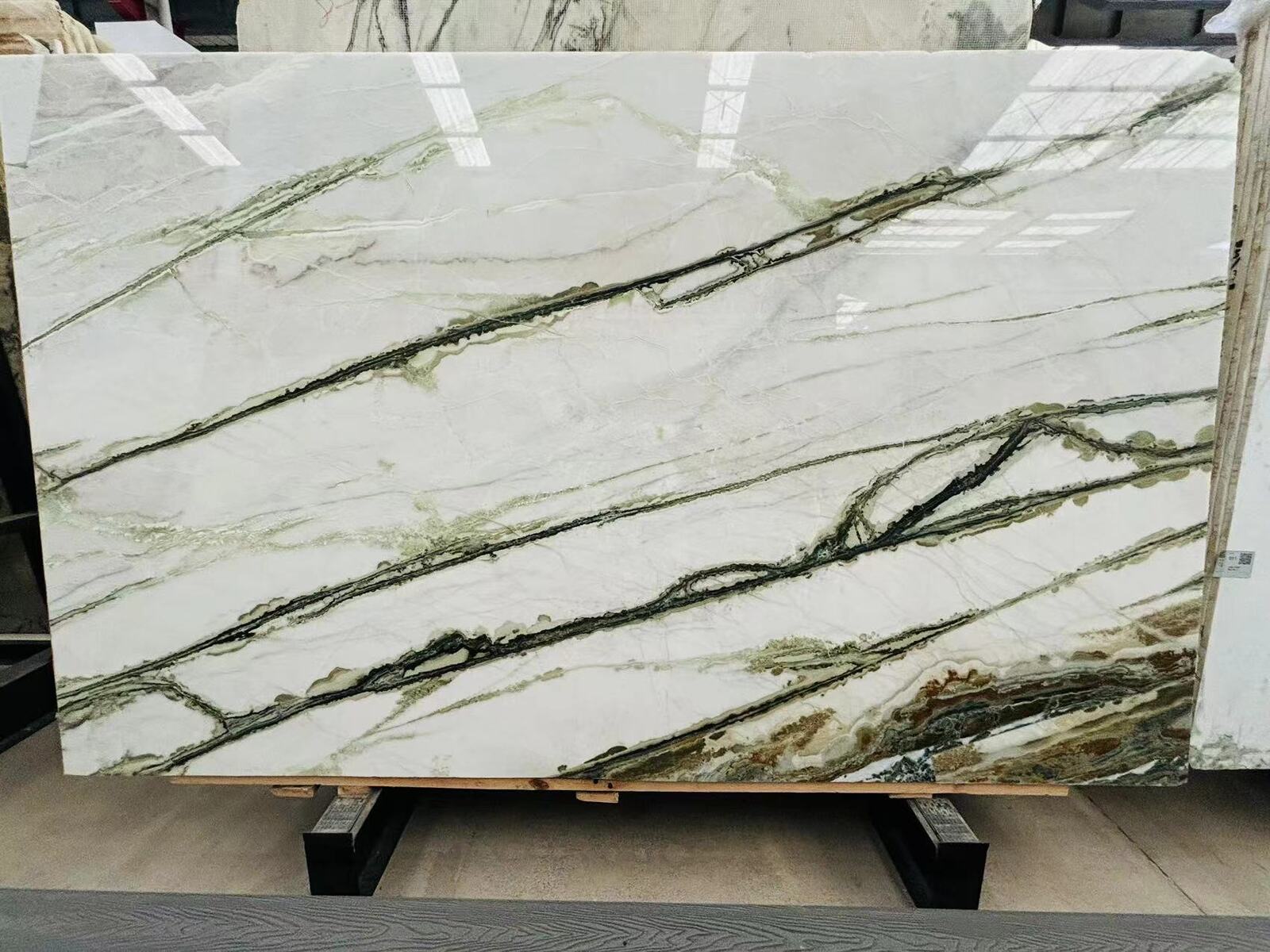
クリビア大理石, also known commercially as Clivia White Marble or China Calacatta Verde Marble, is a natural marble from China characterized by an ivory-white to pale background crossed by expressive green, dark green and occasional grey-black mineral lines.
Unlike white marbles dominated by soft grey veining, Clivia Marble gains much of its identity from the contrast between the light field and its stronger green movement. Some slabs contain long directional veins, while others show branching, layered or more concentrated mineral structures.
This makes slab selection especially important for countertops, feature walls, vanity tops and custom components. A successful project should consider not only which slab is selected, but also where the major green veins will appear after cutting.
天然大理石
中国
Ivory White · Green · Dark Veins
Slabs · Panels · Custom Pieces
製品仕様
| 仕様 | 詳細 |
| 素材名 | クリビア大理石 |
| 素材タイプ | 天然大理石 |
| 別称 | Clivia White Marble / China Calacatta Verde Marble |
| 原産地 | 中国 |
| 主な色合い | Ivory white, white, green, dark green and occasional grey-black mineral accents |
| テクスチャパターン | Directional, branching and naturally irregular green-to-dark veining across a light marble background |
| 利用可能な厚さ | 18mm/20mm |
| 利用可能な形状 | Slabs, cut-to-size panels, countertops, vanity tops, tiles, stairs and custom-fabricated components |
| 利用可能なスラブサイズ | 現在のブロックおよびスラブ在庫に応じて対応します。 |
| カスタムサイズ | According to approved drawings, slab layout and fabrication requirements |
| 表面仕上げ | 研磨、ヘアライン仕上げなど、プロジェクト固有の仕上げは確認が必要です |
| エッジオプション | Straight polished, eased, bevel, mitered and custom edge profiles according to project requirements |
| 適用範囲 | Countertops, feature walls, bathroom vanities, floors, stairs, fireplaces, table tops and custom architectural stonework |
| 梱包詳細 | プロジェクト固有の保護のために、補強された燻蒸済み木箱を使用します |
| MOQ(最小注文数量) | スラブ、タイル、またはオーダーメイド加工の要件に応じて |
| 納期 | 素材の入手可能性、数量、加工範囲に応じて確定します |
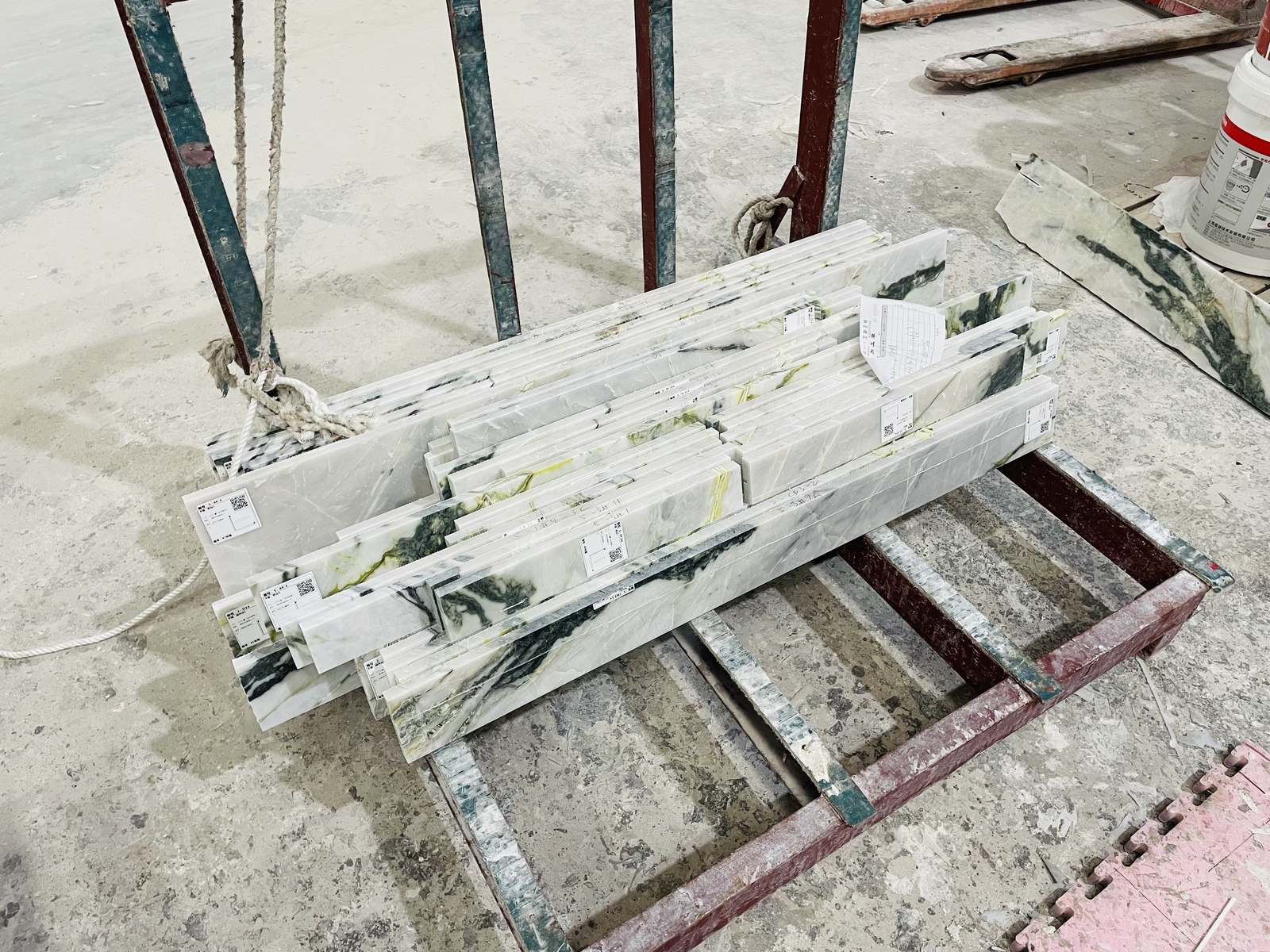
Green Veins Are the Main Design Variable
The strongest visual characteristic of Clivia Marble is the relationship between its light background and green-to-dark mineral lines. These veins can move across the slab as long strokes, branching structures or more concentrated clusters.
For a large wall, the objective may be to preserve the strongest vein as a focal movement. For a countertop, the same vein may need to be repositioned so that it remains visible without being interrupted by a sink or cooktop opening.
This means that the slab should be treated as a complete visual composition before cutting rather than simply as raw square-meter material.
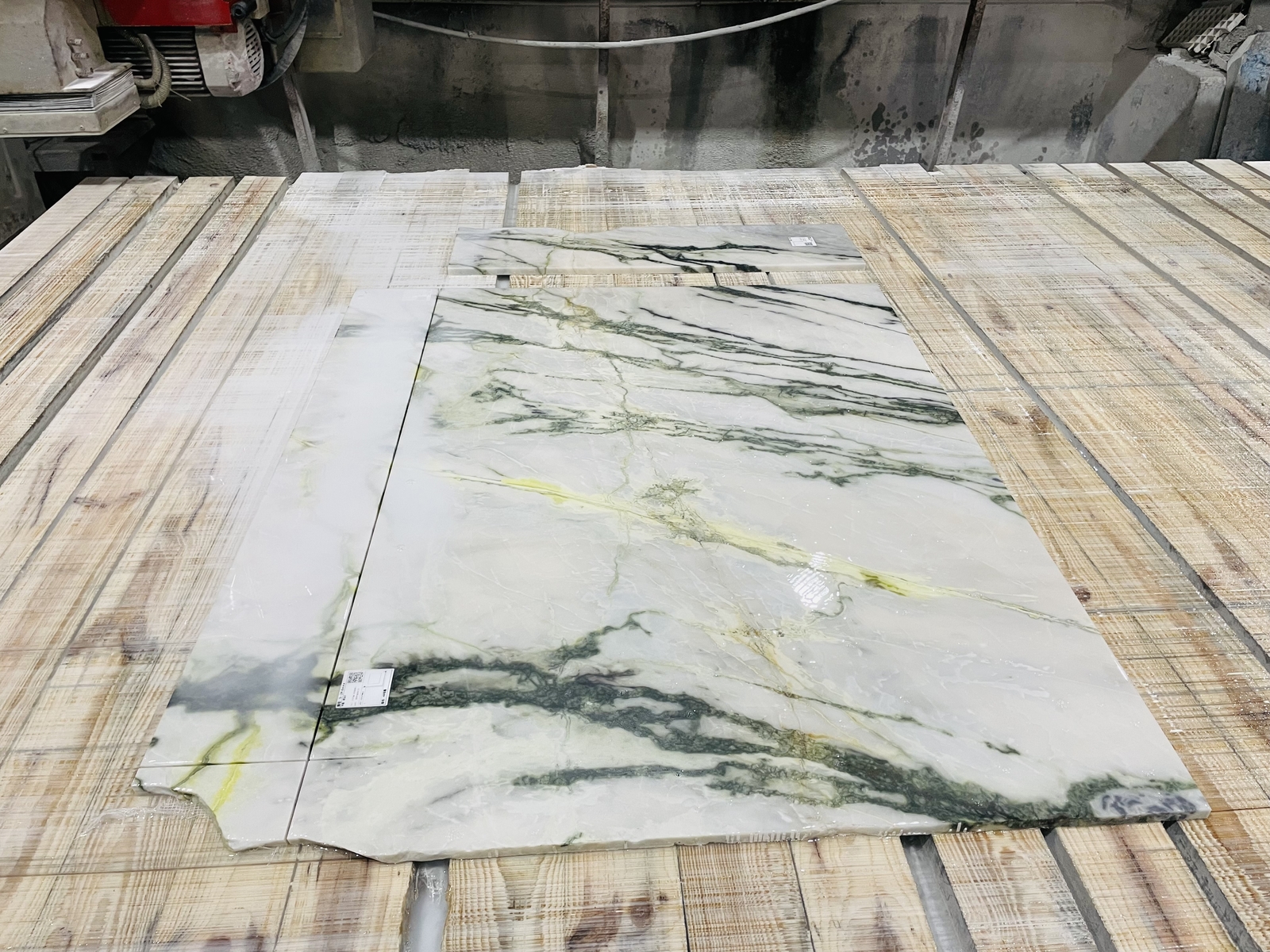
Cutting Position and Slab Yield
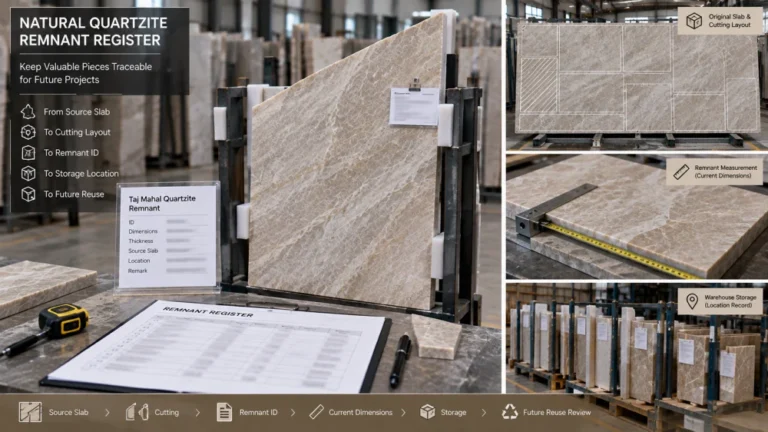
Cutting Clivia Marble requires balancing finished dimensions with visual positioning. A layout that achieves the highest theoretical material yield is not always the best layout if it removes the most important green movement from a focal component.
Before cutting, finished component outlines can be positioned against the actual slab. This helps determine which veins will remain on the countertop, wall panel, vanity or other visible piece.
Sink openings, cooktop cutouts, joints and edge returns should also be considered at this stage so that important visual features are not unintentionally removed.
Corner Matching and Mitered Returns
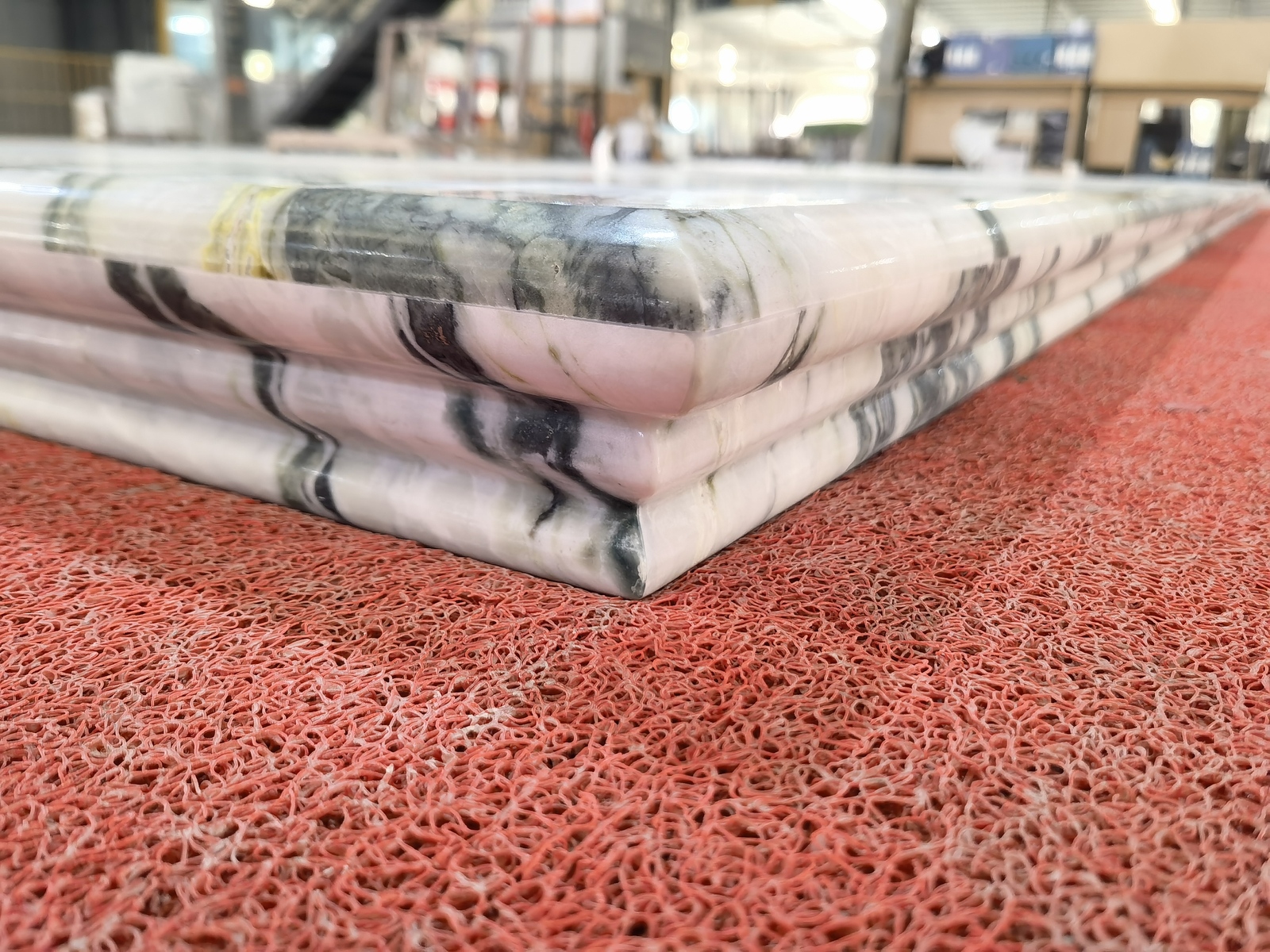
Corners become particularly important when Clivia Marble is used on a thickened countertop edge, return panel, column or other multi-face architectural detail.
A strong green vein that ends abruptly at a visible corner can change the intended appearance. When visual continuity is required, adjoining pieces should be planned from compatible areas of the slab and reviewed together before final fabrication.
Miter preparation, edge alignment, finished thickness and the relationship between the front and return faces should therefore be included in the cutting and fabrication plan.
Custom Fabrication from Drawing to Finished Piece
Custom Clivia Marble components can require several fabrication stages depending on the application. These may include precision cutting, openings, edge processing, miter preparation and surface finishing.
CAD or shop drawings should define the finished geometry before production begins. For countertops and vanity tops, this includes overall dimensions, sink or cooktop openings, faucet holes, joint positions and visible edge requirements.
The drawings should then be coordinated with the actual stone layout so dimensional requirements and visual requirements are resolved together.
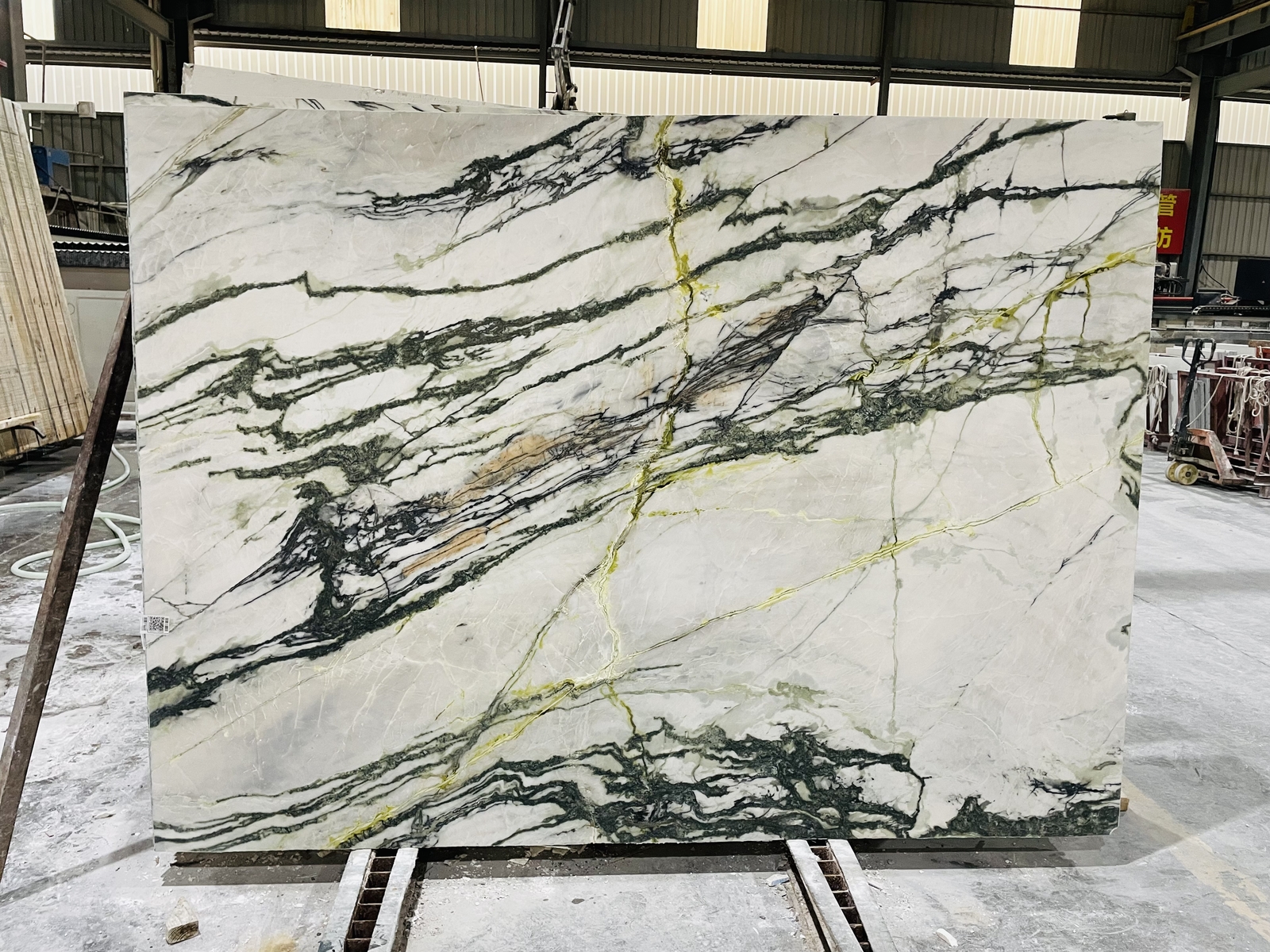
研磨仕上げとホーニング仕上げの選択肢
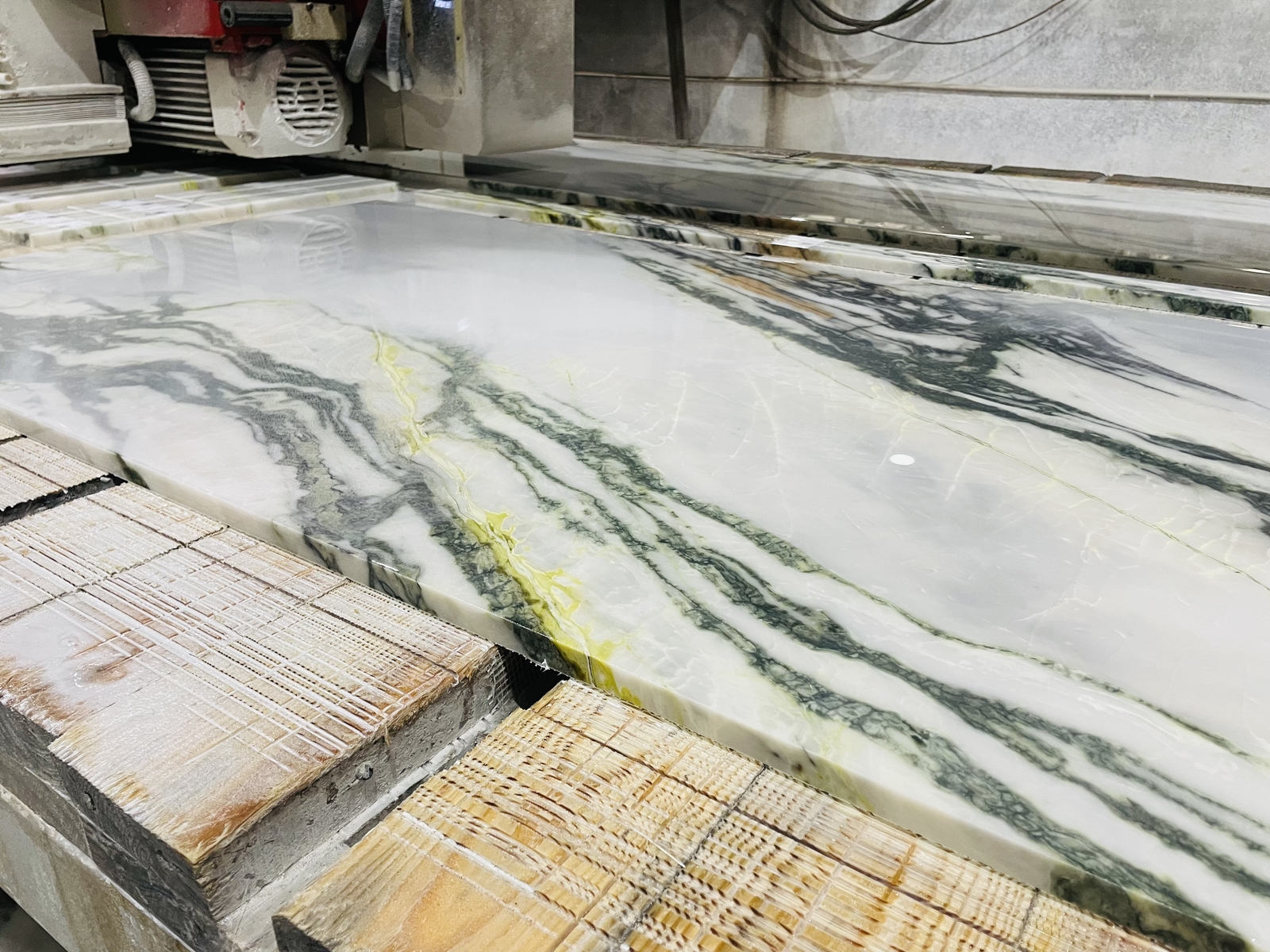
A polished finish increases reflection and typically gives stronger visual definition to the contrast between Clivia Marble’s light background and green mineral movement.
A honed finish reduces surface reflection and can create a softer presentation while retaining the characteristic green-vein structure.
Whichever finish is specified, representative finished pieces should be inspected for overall surface consistency, edge quality and the visibility of natural mineral features or repairs before packing.
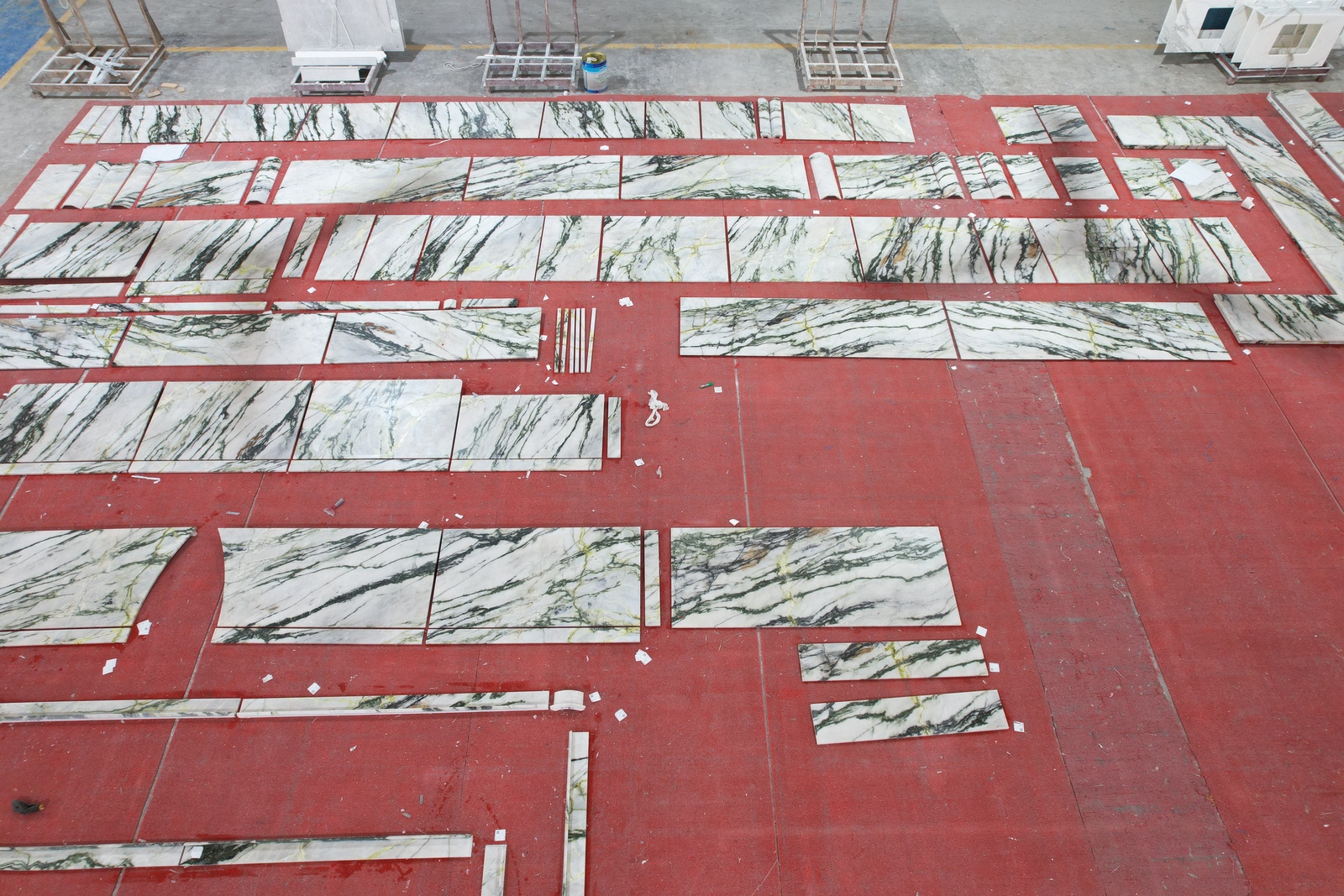
Dry Layout Before Packing
After fabrication, related Clivia Marble components can be arranged in their intended relationship for visual inspection. This is especially useful for feature walls, large countertops, multi-piece vanity assemblies and projects where green-vein continuity has been deliberately planned.
Dry layout allows the factory to verify orientation, piece sequence, major vein relationships and overall visual balance before the components are separated for export packing.
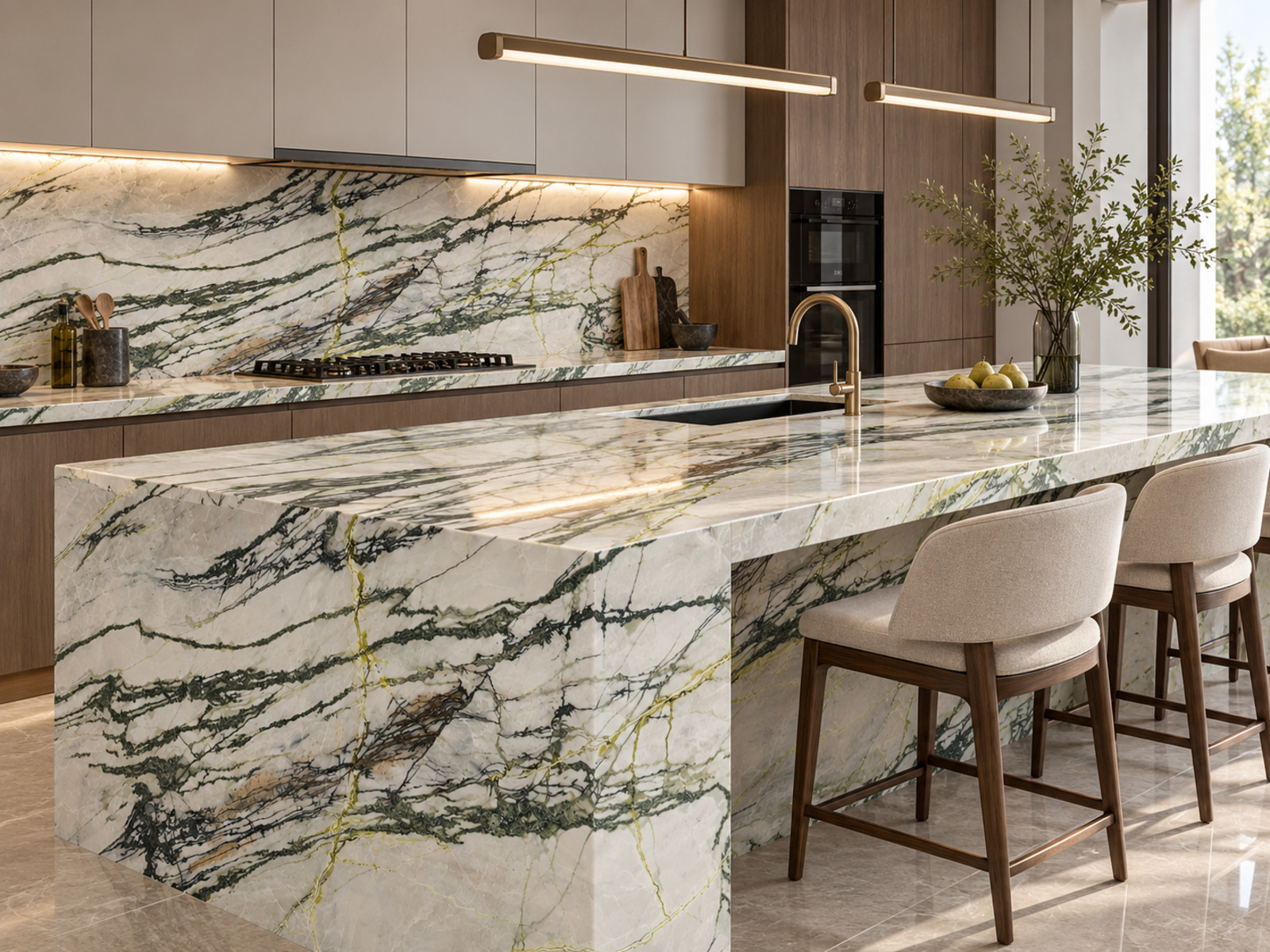
Clivia Marble Countertops
Countertops are an effective application for Clivia Marble because the horizontal surface provides enough area for its green-vein movement to remain visible as a design feature.
Before fabrication, the actual countertop outline should be positioned against the selected slab. Sink and cooktop locations are especially important because a large opening can remove or interrupt the strongest part of the pattern.
For countertops with thickened edges, returns or adjoining vertical faces, those pieces should be considered together during slab layout rather than cut independently.
B2B調達におけるリスク管理
| 購入者リスク/プロジェクトリスク | 推奨される対策 |
| Approved sample does not represent the actual vein composition of the slab | Approve actual slabs when green-vein direction and concentration are important to the finished design. |
| Main green vein is lost during cutting | Position finished component outlines on the actual slab and approve the cutting layout before production. |
| Sink or cooktop opening removes the focal vein | Coordinate openings with the stone layout before CNC or waterjet processing begins. |
| Vein movement stops abruptly at a visible corner | Plan adjoining faces together and review corner or miter relationships before cutting. |
| Adjacent wall panels have incompatible vein direction | Use panel layout and dry-lay review to establish the intended sequence and orientation. |
| Natural fissure or repair becomes prominent in a focal component | Inspect the actual slab and allocate critical visible pieces before fabrication. |
| Finished components are mixed during packing or installation | Use piece identification and installation references after the approved dry layout. |
カスタム加工と品質管理
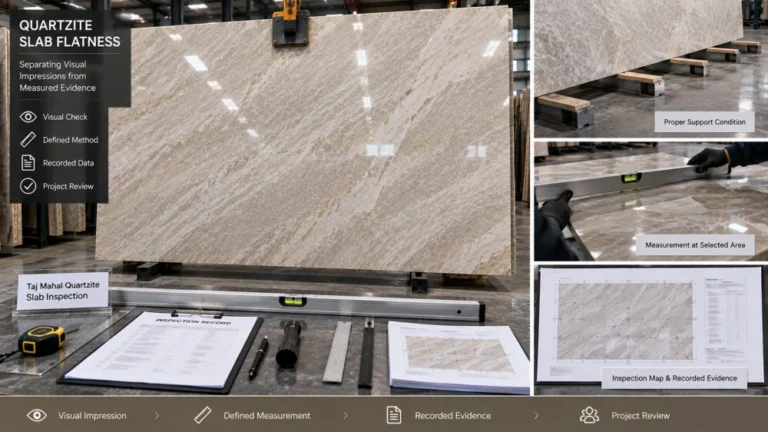
Clivia Marble QC should verify both fabrication accuracy and the visual relationship between finished components. For strongly veined natural stone, dimensional accuracy alone does not guarantee that the installed result will match the approved design.
Track approved slabs from material selection through cutting and fabrication.
Confirm component position, orientation, joints and major vein placement before cutting.
Verify dimensions and confirm the intended stone area has been retained.
Check sink openings, cooktop openings, edge profiles and miter preparation.
Inspect polish or hone consistency, natural features and visible repairs.
Check adjoining faces and returns where visual continuity has been planned.
Arrange related components to verify orientation and vein relationships.
Confirm component identity, protection and crate arrangement before shipment.
包装と国際輸送
Fabricated Clivia Marble pieces should be packed according to their geometry and installation relationship. Finished surfaces receive 柔らかく汚れにくい表面保護, while vulnerable edges and corners are protected with エッジガードやコーナープロテクション.
硬質の区画材や内部の固定装置は are used to reduce movement between components during transportation. Countertops or other pieces containing large cutouts can receive temporary reinforcement or support where appropriate.
When a wall, countertop or other assembly has been dry-laid in a controlled sequence, component identification should remain connected to the approved layout during packing. Production inspection is completed before packing, followed by final packing inspection.
Export components are secured in 補強された燻蒸処理済みの木製ケース appropriate to the finished dimensions, component type and transport requirements.
Why Choose HRST STONE for Clivia Marble Projects?
当社は 17年以上の of natural stone project experience, HRST STONE provides one-stop natural stone solutions covering slab selection, CAD and shop drawings, custom fabrication, QC, dry-lay review and international export packing.
For Clivia Marble, project support can include actual slab selection, vein-position review, cutting-plan coordination, countertop and panel fabrication, corner and miter processing, surface inspection, dry-lay confirmation, piece numbering and final packing QC.
This is particularly useful for projects where the green veining is an intentional part of the design. Instead of treating each component independently, the workflow connects actual slab → CAD layout → cutting → fabrication → dry layout → installation sequence.
見積書作成に必要な情報
- 製品形態: slab, countertop, wall panel, vanity top, tile, stair or custom component
- 寸法: finished dimensions or required slab quantity
- 数量: 枚数、平方メートル数、またはスラブの数量
- 厚さ: 必要な石材の厚み
- 仕上げ: より清潔な白色、より静かな筋模様、より強いグレーの動き、あるいはその他の選択目標
- 外観の好み: desired green-vein density, direction and overall slab character
- Fabrication: cutouts, edge profiles, miters, corners, returns or other custom processing
- Layout Requirement: confirm whether specific vein positioning or continuity is required
- 図面: CAD, PDF, elevations, countertop plans or dimensional sketches where available
- 目的地: 物流評価のための目的港または納品先
Clivia Marble FAQ
1. What does Clivia Marble look like?
Clivia Marble typically has an ivory-white to light background with distinctive green, dark green and occasional grey-black mineral lines. The veining can be directional, branching or more concentrated depending on the individual slab.
2. Where does Clivia Marble come from?
Clivia Marble is a Chinese natural marble and is commonly associated with material from Hubei, China. Actual slab appearance should still be reviewed individually because natural vein direction and concentration vary.
3. Is Clivia Marble suitable for countertops?
Yes. Clivia Marble can be fabricated for countertops where its green-vein movement becomes a strong visual feature. Sink and cooktop positions, joints, edges and the intended vein placement should be coordinated before cutting.
4. Why should the cutting layout be approved before fabricating Clivia Marble?
The same slab can produce very different finished results depending on where each component is positioned. Layout approval helps preserve desirable green veins, avoid losing focal movement in cutouts and coordinate adjoining pieces.
5. Can the green veins continue around a Clivia Marble corner?
Visual continuity can often be planned by selecting adjoining pieces from compatible areas of the slab and coordinating their orientation. The proposed corner or miter relationship should be reviewed before cutting because exact natural vein behavior varies by slab.
6. Should Clivia Marble wall panels be dry-laid before shipment?
Dry-lay review is recommended when a wall design depends on panel sequence, vein direction or continuity. It allows related pieces to be checked together and numbered according to the approved installation arrangement.
7. What should buyers approve before Clivia Marble production begins?
Buyers should confirm the actual slabs, acceptable vein character, dimensions, thickness, finish, fabrication drawings, component orientation and cutting layout. Projects requiring controlled vein continuity should also approve the dry-layout approach and piece-numbering method.
最後に
For slab selection: evaluate the complete green-vein composition rather than choosing only by background color.
For countertops: place sink and cooktop openings only after reviewing how they interact with the major veins.
For corners and returns: plan adjoining faces together when visual continuity is important.
For wall panels: approve panel orientation and sequence before cutting, then verify the relationship again during dry layout.
For export projects: maintain piece identification from the approved layout through final QC and packing so the intended sequence can be reconstructed during installation.
For custom Clivia Marble projects, the recommended control sequence is actual slab approval → vein-position review → CAD/shop drawing → cutting layout → precision cutting → custom fabrication → corner and edge inspection → surface QC → dry-lay confirmation → piece numbering → final QC → reinforced export packing.