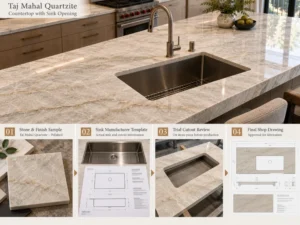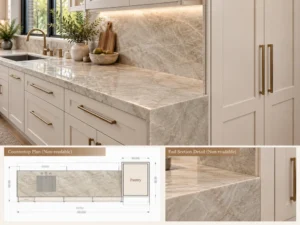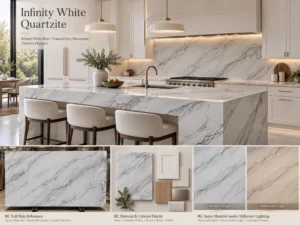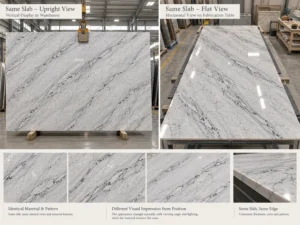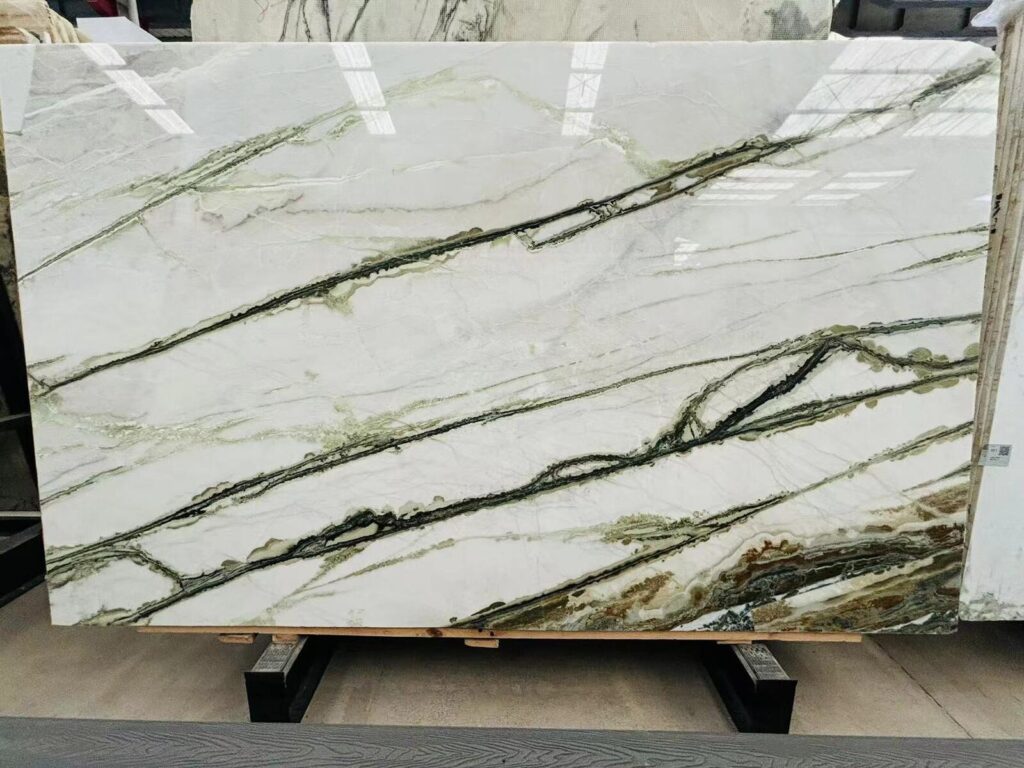

Riepilogo rapido
Il quarzite Taj Mahal con pensili in rovere bianco richiede un percorso di approvazione specifico per ogni progetto. Definire l’ambito, distinguere gli input verificati dalle ipotesi e confermare le decisioni relative ai materiali e alla lavorazione prima della release.
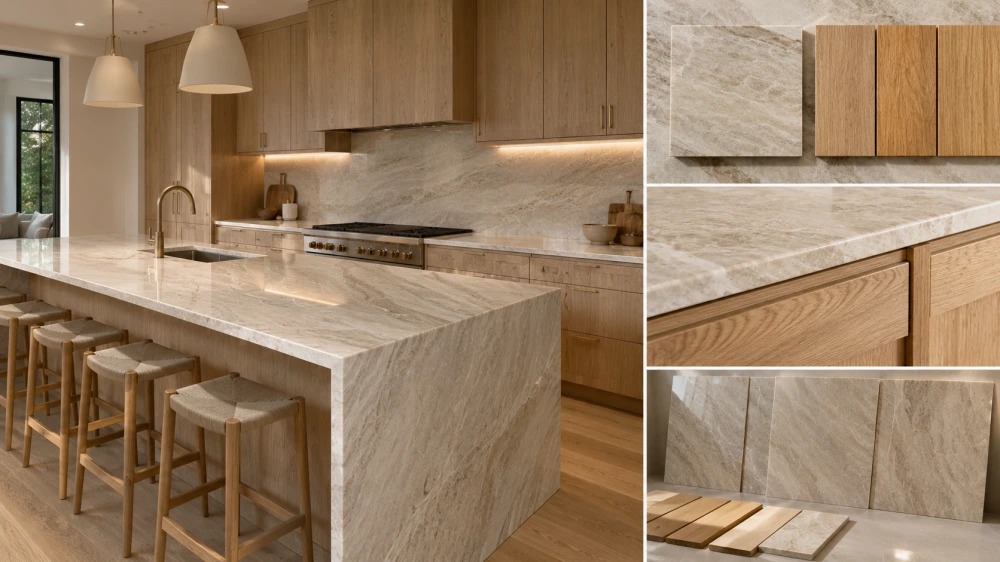
Questa guida all’acquisto illustra il quarzite Taj Mahal con pensili in rovere bianco: abbinamento dei toni caldi sottostanti, rivolta a importatori, fabbricanti, designer, architetti, appaltatori e team di approvvigionamento dei progetti.
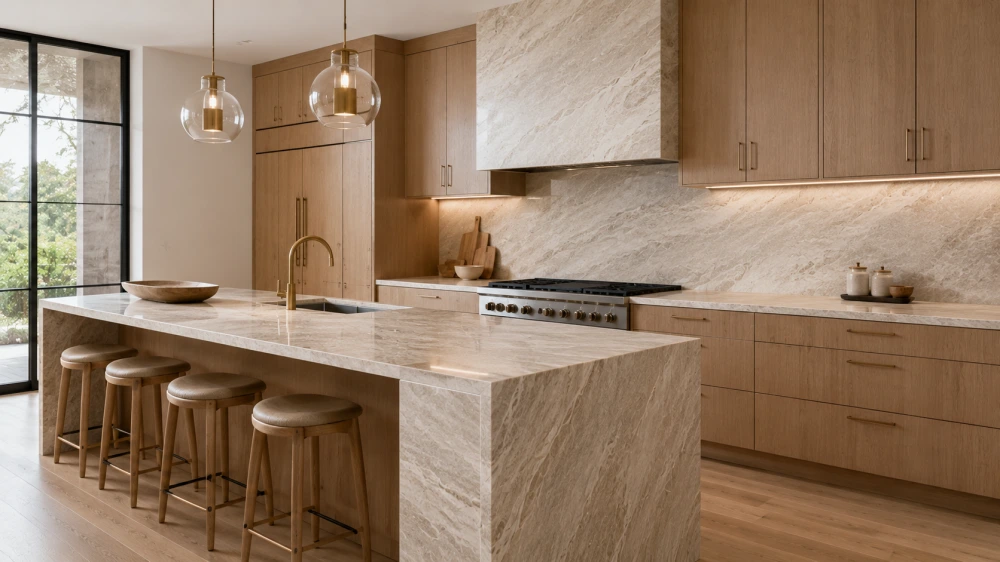
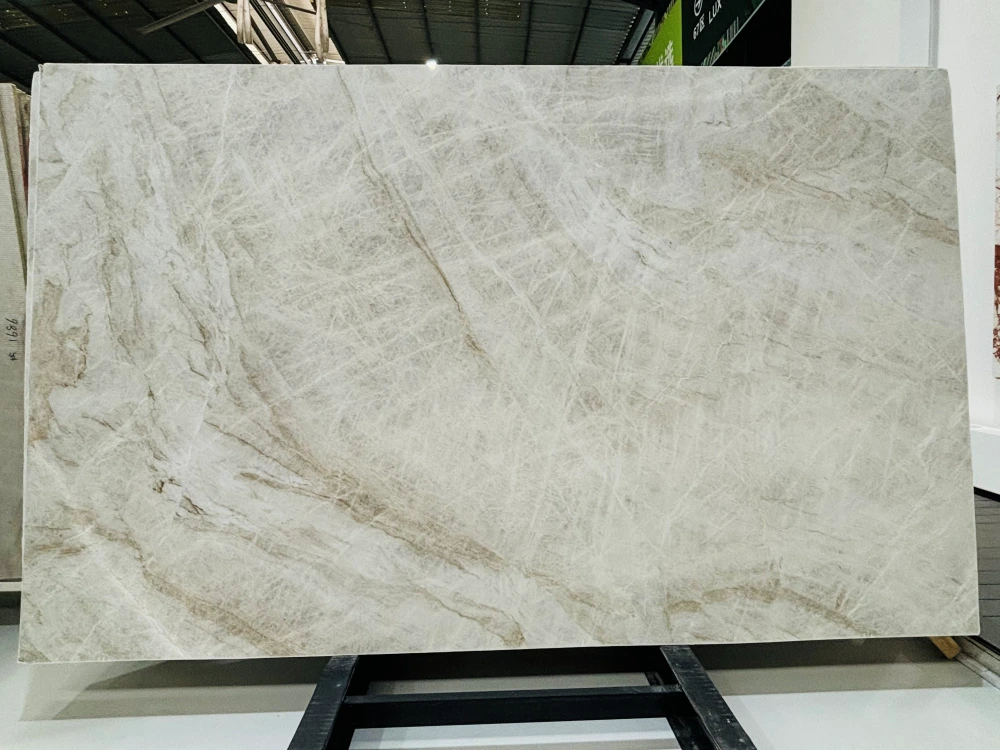
Il quarzite Taj Mahal con pensili in rovere bianco: abbinamento dei toni caldi sottostanti è un tema decisionale relativo al progetto, non una promessa riguardo allo stock, al prezzo, alla capacità produttiva o a una determinata cava. Per un acquirente internazionale, la domanda utile è come trasformare un’intenzione progettuale in un processo di revisione controllato. Il team dovrebbe definire l’applicazione prevista, le facce visibili, i vincoli funzionali e le persone che devono approvare la decisione. In questo modo, il quarzite Taj Mahal con pensili in rovere bianco rimane collegato al progetto anziché a un’immagine isolata su una tavola di mood.
The first review should separate what is known from what still needs evidence. Drawings may establish dimensions and interfaces, while current slab photographs, samples, or technical documents may be needed for visual and material decisions. Do not let a trade name, a small hand sample, or an early quotation become a substitute for a project-specific approval. The aim is not perfect certainty; it is a clear record of what must be checked before the next commitment.
Per il coordinamento del design del Taj Mahal, gli acquirenti traggono vantaggio da un breve documento di approvazione. Indicare il nome del materiale utilizzato nella richiesta, le dimensioni approssimative, la quantità, la revisione del disegno, la finitura, la destinazione e la decisione ancora aperta. Aggiungere eventuali aspettative relative alle facce visibili, alla direzione delle venature, all’illuminazione o alle giunzioni che influenzano il progetto. Se un dato non è disponibile, segnalarlo come in attesa anziché avanzare supposizioni. Questa disciplina rende le successive conversazioni con un fabbricante o un installatore molto più efficienti.
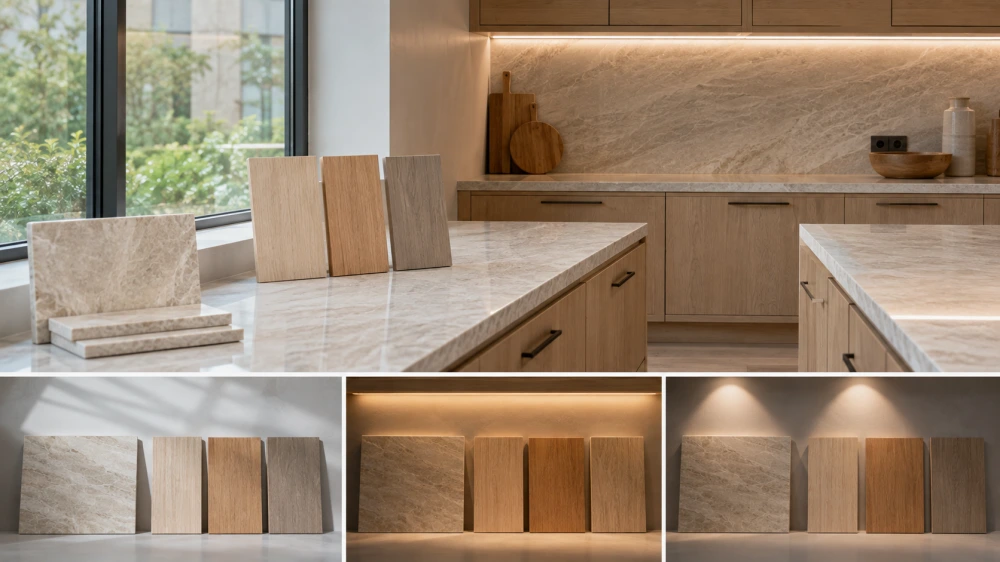
Esaminare i campioni di pietra e di mobili sotto condizioni di illuminazione comparabili e documentare le aree visibili oggetto di discussione. La percezione del colore può variare in base alla luce, alle finiture adiacenti e alla scelta effettiva della lastra. Il valore pratico deriva dal confronto tra elementi omogenei: stesso ambito del disegno, stesse aree visibili e stessi limiti di lavorazione presunti. Un confronto che mescola misure, finiture o responsabilità di posa diversi può apparire preciso, ma rispondere alla domanda sbagliata. Chiedere alle parti coinvolte di individuare per iscritto esclusioni e assunzioni prima che l’acquirente utilizzi i risultati per effettuare una selezione.
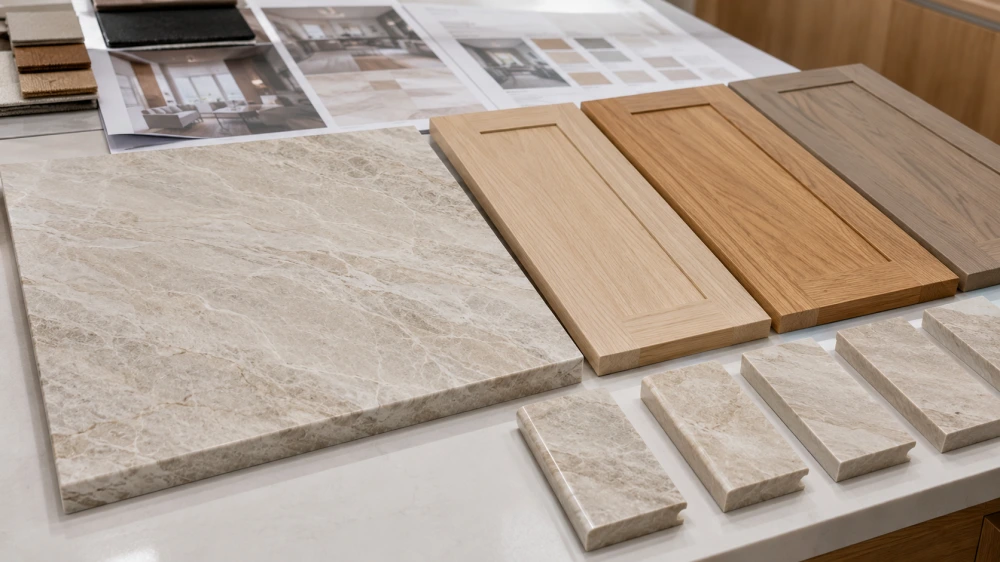
Material review and fabrication review are related but not identical. Material review asks whether the offered slabs can meet the visual and application brief. Fabrication review asks whether the intended layout, joints, edges, cut-outs, supports, and installation interfaces can be coordinated. Treating these as separate checkpoints protects the buyer from approving appearance without understanding the production implications, or approving a drawing without considering the visible outcome.
A helpful working method is to mark each decision as either design intent, verified project input, or assumption awaiting confirmation. Design intent belongs in the drawing and specification conversation. Verified input should be traceable to the current project materials. Assumptions should have an owner and a due date. This simple distinction reduces the risk that a concept sketch or generic statement is later remembered as an approved production instruction.
When teams are in different countries, the wording of an approval matters as much as the image attached to it. Use a named file or drawing revision, identify the relevant area, state the orientation where relevant, and say whether the approval is for concept, material selection, layout, or fabrication release. Avoid vague messages such as ‘looks good’ because they do not tell the project team what has actually been accepted.
Do not assume that a generally attractive solution will perform the same way in every application. Site conditions, support design, cleaning practice, exposure, fabrication details, and installation tolerances can change the questions that matter. The buyer should therefore use this guide as a framework for coordination, then obtain appropriate technical review for the specific project rather than relying on generic online language.
| Buyer question | Useful input | Decision control |
|---|---|---|
| What is being approved? | Drawing revision and visible areas | State concept, material, layout, or fabrication release |
| What remains unknown? | Current project visuals or technical input | Assign an owner and keep it pending |
| Who confirms the next step? | Named project contacts | Record approval in writing |
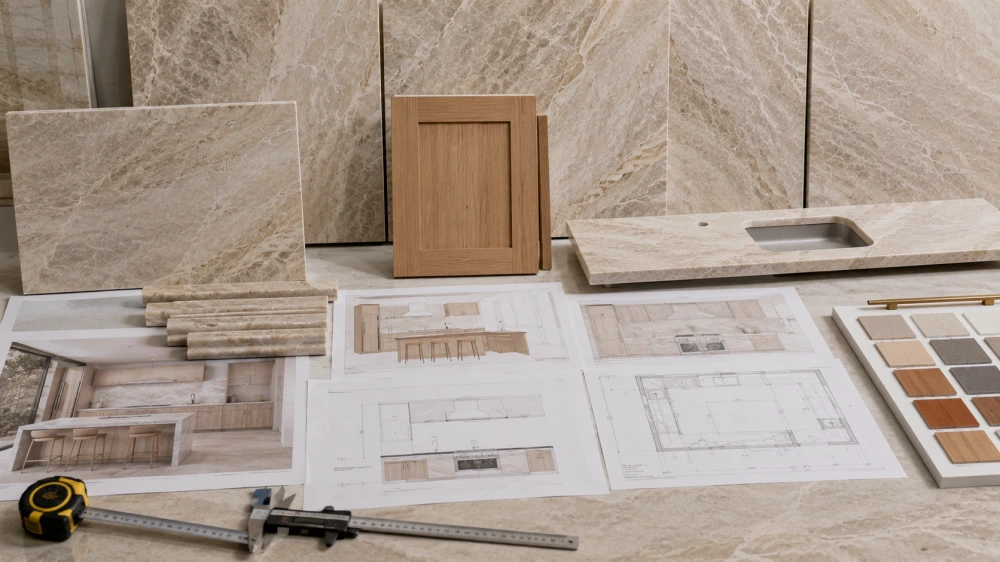
A hypothetical decision scenario can show the sequence without pretending to be a real client project. Imagine a team reviewing a quartzite element with a defined visible face and a fixed drawing. The designer requests a particular visual direction, the fabricator identifies layout constraints, and the buyer collects current material visuals before issuing a written approval. The scenario is useful because every step is explicit; it is not evidence that any named project or material batch exists.
Before an order moves forward, revisit the original enquiry against the latest drawings. Check that material naming, dimensions, quantity, finish, and destination still match the commercial scope. Then identify any decision that depends on actual slab review, technical input, or site coordination. This final pass does not guarantee an outcome, but it prevents an early assumption from travelling unnoticed into fabrication or installation.
For procurement teams, the strongest deliverable is a compact decision record rather than a long exchange of informal messages. It should list the current question, the available evidence, the remaining gap, the responsible party, and the next approval. That record can travel from designer to buyer to fabricator without asking each person to reconstruct the context. It also makes it easier to pause safely when the project lacks an input that cannot be inferred.
Infine, mantenere una terminologia precisa. Il quarzite naturale è una pietra naturale e non dovrebbe essere definito come quarzo ingegnerizzato. Quando si discute di un altro materiale, il confronto deve favorire la selezione del quarzite naturale, evitando di trasformare l’articolo in una pagina di vendita dedicata a un materiale diverso. In questo modo, il quarzite Taj Mahal con pensili in rovere bianco resta utile per gli acquirenti, rispettando i limiti di ciò che le informazioni generiche possono dimostrare.
Per il coordinamento del design del Taj Mahal, gli acquirenti traggono vantaggio da un breve documento di approvazione. Indicare il nome del materiale utilizzato nella richiesta, le dimensioni approssimative, la quantità, la revisione del disegno, la finitura, la destinazione e la decisione ancora aperta. Aggiungere eventuali aspettative relative alle facce visibili, alla direzione delle venature, all’illuminazione o alle giunzioni che influenzano il progetto. Se un dato non è disponibile, segnalarlo come in attesa anziché avanzare supposizioni. Questa disciplina rende le successive conversazioni con un fabbricante o un installatore molto più efficienti.
Esaminare i campioni di pietra e di mobili sotto condizioni di illuminazione comparabili e documentare le aree visibili oggetto di discussione. La percezione del colore può variare in base alla luce, alle finiture adiacenti e alla scelta effettiva della lastra. Il valore pratico deriva dal confronto tra elementi omogenei: stesso ambito del disegno, stesse aree visibili e stessi limiti di lavorazione presunti. Un confronto che mescola misure, finiture o responsabilità di posa diversi può apparire preciso, ma rispondere alla domanda sbagliata. Chiedere alle parti coinvolte di individuare per iscritto esclusioni e assunzioni prima che l’acquirente utilizzi i risultati per effettuare una selezione.
Material review and fabrication review are related but not identical. Material review asks whether the offered slabs can meet the visual and application brief. Fabrication review asks whether the intended layout, joints, edges, cut-outs, supports, and installation interfaces can be coordinated. Treating these as separate checkpoints protects the buyer from approving appearance without understanding the production implications, or approving a drawing without considering the visible outcome.
A helpful working method is to mark each decision as either design intent, verified project input, or assumption awaiting confirmation. Design intent belongs in the drawing and specification conversation. Verified input should be traceable to the current project materials. Assumptions should have an owner and a due date. This simple distinction reduces the risk that a concept sketch or generic statement is later remembered as an approved production instruction.
When teams are in different countries, the wording of an approval matters as much as the image attached to it. Use a named file or drawing revision, identify the relevant area, state the orientation where relevant, and say whether the approval is for concept, material selection, layout, or fabrication release. Avoid vague messages such as ‘looks good’ because they do not tell the project team what has actually been accepted.
Do not assume that a generally attractive solution will perform the same way in every application. Site conditions, support design, cleaning practice, exposure, fabrication details, and installation tolerances can change the questions that matter. The buyer should therefore use this guide as a framework for coordination, then obtain appropriate technical review for the specific project rather than relying on generic online language.
A hypothetical decision scenario can show the sequence without pretending to be a real client project. Imagine a team reviewing a quartzite element with a defined visible face and a fixed drawing. The designer requests a particular visual direction, the fabricator identifies layout constraints, and the buyer collects current material visuals before issuing a written approval. The scenario is useful because every step is explicit; it is not evidence that any named project or material batch exists.
Before an order moves forward, revisit the original enquiry against the latest drawings. Check that material naming, dimensions, quantity, finish, and destination still match the commercial scope. Then identify any decision that depends on actual slab review, technical input, or site coordination. This final pass does not guarantee an outcome, but it prevents an early assumption from travelling unnoticed into fabrication or installation.
The first review should separate what is known from what still needs evidence. Drawings may establish dimensions and interfaces, while current slab photographs, samples, or technical documents may be needed for visual and material decisions. Do not let a trade name, a small hand sample, or an early quotation become a substitute for a project-specific approval. The aim is not perfect certainty; it is a clear record of what must be checked before the next commitment.
Per il coordinamento del design del Taj Mahal, gli acquirenti traggono vantaggio da un breve documento di approvazione. Indicare il nome del materiale utilizzato nella richiesta, le dimensioni approssimative, la quantità, la revisione del disegno, la finitura, la destinazione e la decisione ancora aperta. Aggiungere eventuali aspettative relative alle facce visibili, alla direzione delle venature, all’illuminazione o alle giunzioni che influenzano il progetto. Se un dato non è disponibile, segnalarlo come in attesa anziché avanzare supposizioni. Questa disciplina rende le successive conversazioni con un fabbricante o un installatore molto più efficienti.
| Stage | Buyer action | Do not assume |
|---|---|---|
| Inchiesta | Provide material name, sizes, quantity, drawings, finish, destination | That a general image defines the order |
| Review | Compare current inputs against the project brief | That a small sample represents every slab |
| Release | Confirm the documented scope and remaining limits | That silence equals approval |
Inizia con l’applicazione prevista, le aree visibili richieste, il software di disegno e il flusso di approvazione. Confermare tali input evita di considerare un’idea progettuale generale come un’istruzione definitiva per la produzione.
No. Un campione può essere utile per una discussione preliminare, ma non può sostituire la verifica del materiale effettivo, della disposizione, delle interfacce di fabbricazione e delle approvazioni documentate relative all’ordine specifico.
I documenti utili comprendono normalmente disegni quotati, note relative alle facce visibili, marchi di orientamento ove pertinenti, requisiti di finitura e un registro delle decisioni ancora da prendere. Il pacchetto esatto dipende dal progetto.
Registrare l’incertezza, individuare il responsabile della decisione, richiedere i relativi contributi visivi o tecnici e ottenere l’approvazione scritta prima di considerare l’elemento come rilasciato per la fabbricazione.
Coinvolgere il fabbricatore nella fase di revisione quando l’argomento riguarda la disposizione delle solette, i giunti, i bordi, le condizioni di appoggio, le aperture o le interfacce di posa. Un coordinamento precoce risulta di norma più utile rispetto a una correzione tardiva.
Nota finale
Per una discussione specifica sul progetto, contattare Josh presso HRST STONE indicando il nome del materiale, le dimensioni, la quantità, i disegni, la finitura e la destinazione di consegna. Più chiaro è il brief di progetto, più facile sarà individuare il passo successivo della revisione senza inventare fatti non verificabili.
Copyright (c) HRST STONE / XIAMEN HRST STONE CO., LTD.