Riepilogo rapido
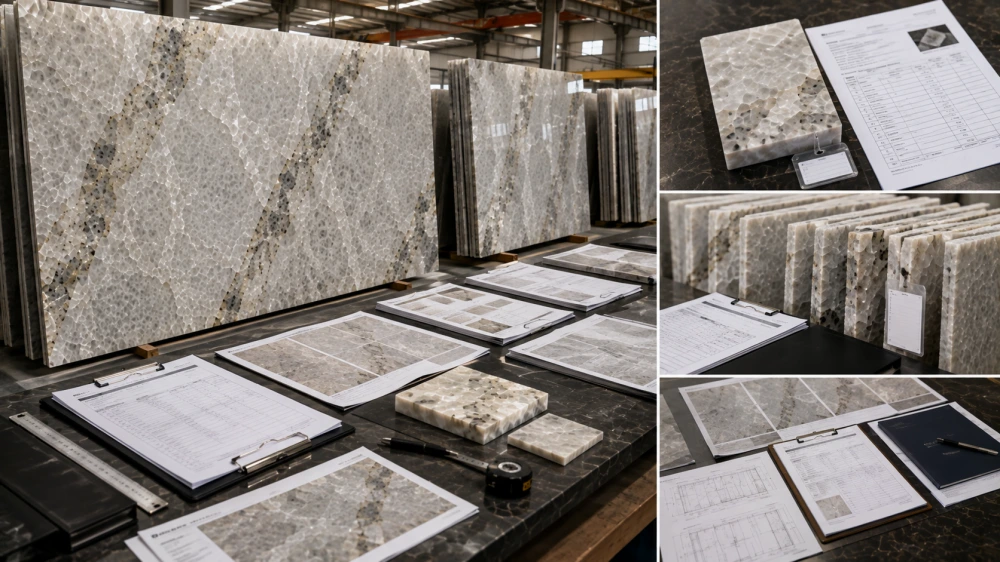
Un rapporto di prova sulla quarzite descrive un campione identificato, sottoposto a test secondo un metodo specificato. Tuttavia, ciò non dimostra automaticamente che ogni lastra venduta con lo stesso nome commerciale, ogni lotto successivo o ogni ordine futuro presenti proprietà identiche. Ai fini degli acquisti, gli acquirenti dovrebbero verificare l’ID del campione, il riferimento al materiale di origine, il riferimento al lotto o alla partita disponibile, il metodo di prova, la data del rapporto e la relazione tra il campione testato e il materiale oggetto di acquisto. Il valore di un risultato di prova dipende non solo dal numero riportato, ma anche dalla chiarezza con cui tale risultato può essere ricondotto al materiale attuale.
Un fornitore di quarzite naturale può fornire un rapporto petrografico, un risultato sull’assorbimento d’acqua, un dato sulla densità, un test di resistenza, un test di abrasione o un altro documento di laboratorio durante una richiesta di informazioni per un progetto.
Il documento può essere tecnicamente valido per il campione sottoposto a prova. Ma ciò solleva una seconda questione per l’acquirente:
Che cosa è stato effettivamente testato e in che modo quel campione è collegato alla quarzite che sto per acquistare?
Ecco perché i riferimenti ai campioni e ai lotti sono importanti.
Un risultato di laboratorio privo di un riferimento materiale tracciabile può comunque fornire informazioni di contesto, ma la sua rilevanza per un ordine corrente potrebbe risultare incerta. Il solo nome commerciale della pietra, di solito, non basta a stabilire tale relazione.
La catena pratica delle prove è:
Nome commerciale → ID del campione testato → Lastra o blocco di origine → Riferimento al lotto o alla partita → Ordine corrente → Requisito del progetto
Questa catena non deve necessariamente apparire identica per ogni fornitore o progetto. Le aziende di pietre naturali utilizzano sistemi diversi di inventario, blocchi, lastre, lotti, fasci, selezioni e spedizioni. L’aspetto fondamentale è che la relazione venga documentata, anziché presunta.
Cosa dimostra realmente un rapporto di prova sulla quarzite?
Un rapporto di prova sulla quarzite registra i risultati relativi al campione identificato nel rapporto stesso, secondo il metodo e le condizioni di prova indicati.
Sembra semplice, ma rappresenta una delle distinzioni più importanti nell’approvvigionamento di pietre naturali.
Un rapporto non dimostra automaticamente che:
- Ogni lastra con lo stesso nome commerciale abbia proprietà identiche
- Ogni lastra fornita dalla stessa azienda provenga dallo stesso materiale testato
- Una spedizione successiva appartenga alla stessa fonte o allo stesso lotto
- Un ordine corrente sia rappresentato da un campione storico
- Un singolo risultato di prova risponda a tutte le domande relative alle prestazioni o alla classificazione
- La pietra testata sia automaticamente adatta a ogni applicazione
Pertanto, il rapporto va letto in due fasi:
Fase 1 — Cosa dice il rapporto di laboratorio sul campione testato?
Fase 2 — Quali prove collegano quel campione al materiale in fase di valutazione o di acquisto?
Entrambe le domande sono importanti.
Perché un rapporto di prova sulla quarzite ha bisogno di un ID del campione?
Un ID del campione aiuta a distinguere il campione testato da altre pietre, campioni, lastre o invii.
A seconda del laboratorio e del processo di prova, l’identità del campione può essere documentata attraverso uno o più dei seguenti elementi:
- Numero del campione assegnato dal laboratorio
- Codice del campione fornito dal cliente
- Descrizione del materiale
- Nome commerciale della pietra
- Riferimento del fornitore
- Numero del blocco o della lastra
- Fotografie
- Etichette o marcature
- Data dell’invio
- Altre informazioni tracciabili sulla provenienza
Più forte è l’identificazione, più facile risulta per un revisore successivo comprendere cosa rappresenti il risultato.
Se il rapporto identifica il campione soltanto come qualcosa di generico, ad esempio “Quarzite bianca”, l’acquirente potrebbe avere difficoltà a stabilire se si tratti del materiale attualmente offerto.
Anche un nome commerciale riconoscibile non risolve tutte le questioni di tracciabilità.
Stesso nome commerciale ≠ Stesso campione testato.
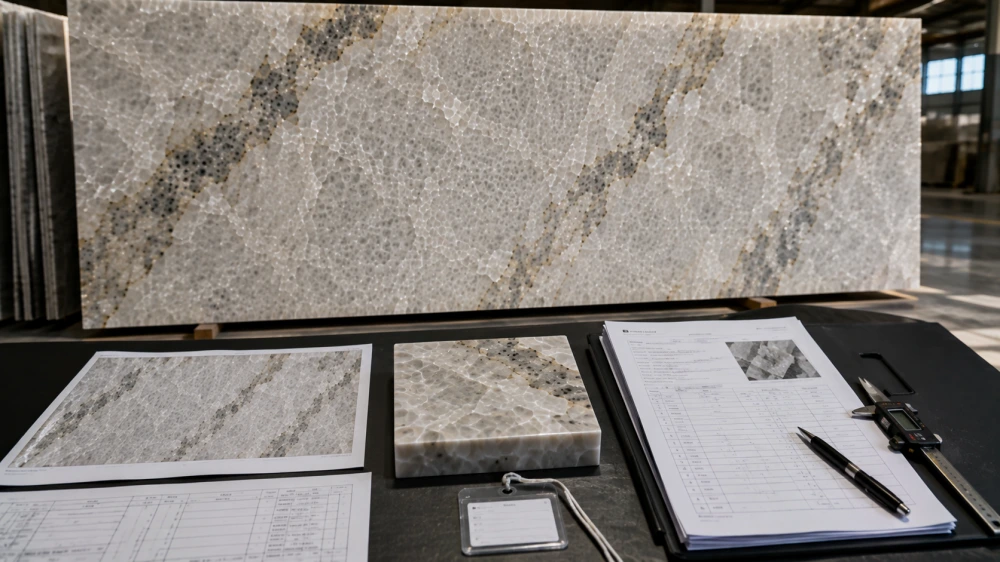
Perché un riferimento al lotto o alla partita è importante per la quarzite naturale?
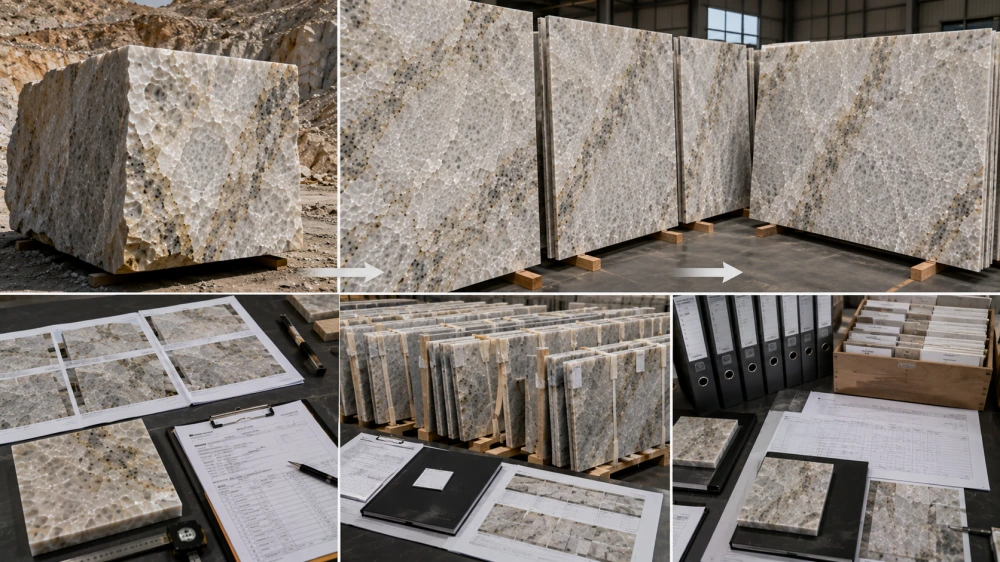
Un riferimento al lotto, alla partita, al fascio, al blocco, alla sequenza di lastre, alla spedizione o simili può aiutare a documentare come il campione testato si relazioni a un gruppo più ampio di materiale.
Questo è particolarmente utile, poiché la quarzite naturale è un materiale geologico, piuttosto che una superficie prodotta secondo una ricetta visiva completamente controllata.
La variazione naturale può manifestarsi tra blocchi e lastre. L’esistenza di tali variazioni non dimostra che due lotti debbano avere risultati di prova differenti, ma rappresenta uno dei motivi per cui gli acquirenti dovrebbero evitare di presumere che un campione storico rappresenti automaticamente ogni spedizione futura.
Lo scopo di un riferimento al lotto è pertanto la tracciabilità, non la promessa di perfetta uniformità.
Una distinzione utile è:
Riferimento al lotto = Prova di relazione
Riferimento al lotto ≠ Prova che ogni lastra naturale sia identica
Campione, lastra, blocco, lotto e ordine: qual è la differenza?
La documentazione relativa alle pietre naturali può risultare confusa, poiché nello stesso processo di approvvigionamento possono comparire diverse referenze.
| Riferimento | Cosa identifica | Cosa non dimostra automaticamente |
| Nome commerciale | Identità commerciale utilizzata per descrivere o vendere la pietra | Che tutto il materiale che porta quel nome corrisponda allo stesso campione testato, al medesimo lotto o alla stessa referenza geologica |
| Campione di prova / Campione | Il materiale fisico sottoposto a un determinato esame o test di laboratorio | Che ogni altra lastra presenti proprietà misurate identiche |
| Lastra sorgente | La lastra da cui è stato prelevato il campione di prova, se documentata | Che un’altra lastra sia automaticamente rappresentata dal risultato |
| Blocco | Un massiccio di pietra estratto dalla cava, da cui possono essere ricavate le lastre | Che ogni parte del blocco o ogni lastra lavorata sia perfettamente uniforme |
| Lotto / Partita / Fagotto | Un raggruppamento utilizzato per la tracciabilità del materiale, delle scorte, della produzione, della selezione o degli acquisti | Che tutte le pietre naturali appartenenti al gruppo siano visivamente o fisicamente identiche |
| Ordine corrente | Il materiale effettivamente proposto o confermato per il progetto dell’acquirente | Che un rapporto più vecchio rappresenti automaticamente il materiale ordinato |
| Numero del rapporto di prova | La registrazione documentale del laboratorio o dell’emittente | Che il rapporto si applichi a un altro campione solo perché il nome della pietra è simile |
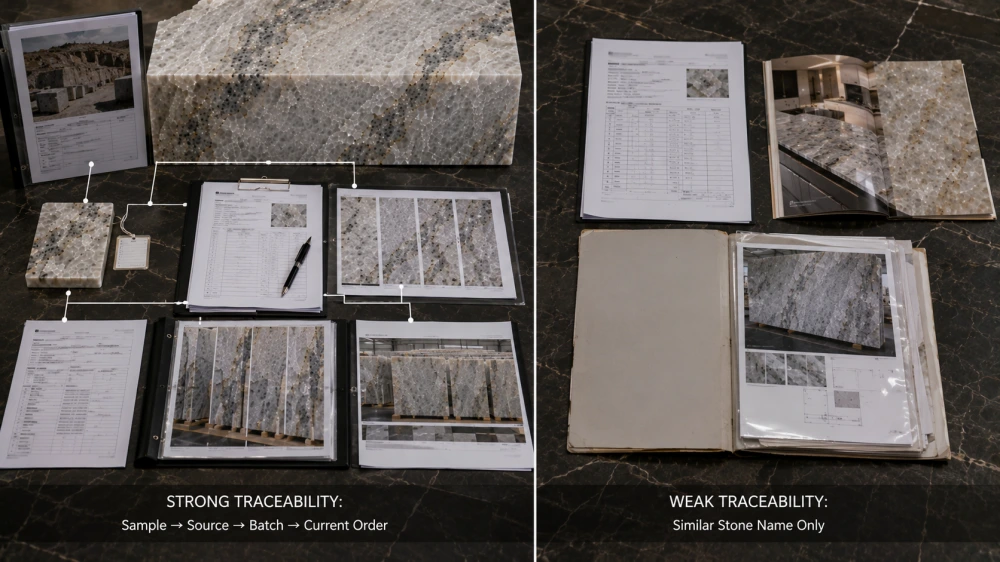
Quanto è solida la connessione tra un rapporto di prova sulla quarzite e il tuo ordine?
Invece di chiedersi semplicemente se un fornitore possiede un rapporto di prova, gli acquirenti possono domandarsi quanto sia forte il legame tracciabile tra il rapporto e il materiale proposto.
Tracciabilità forte
Una catena di prove più solida potrebbe apparire così:
Rapporto di prova → ID del campione → Lastra sorgente / Blocco / Lotto documentato → Materiale proposto per l’ordine corrente
Questo non rende ogni lastra identica al campione di prova, ma offre all’acquirente una relazione documentata da valutare.
Tracciabilità parziale
Una relazione parziale potrebbe avere questo aspetto:
Rapporto di prova → Nome commerciale → Stesso fornitore → Nessuna chiara connessione con il lotto corrente
Il rapporto può comunque fornire informazioni storiche o sulla famiglia del materiale, ma l’acquirente dovrebbe comprendere il collegamento mancante prima di considerarlo come prova specifica per il progetto.
Tracciabilità debole
Una relazione debole potrebbe apparire così:
Rapporto di prova → Solo nome della pietra simile → Nessun ID del campione né relazione con la materia attuale
In questo caso, il documento può essere utile come riferimento di contesto, ma la sua rilevanza per l’ordine corrente risulta difficile da stabilire sulla base delle informazioni disponibili.
Cosa dovrebbero verificare gli acquirenti in un rapporto di prova sulla quarzite?
Prima di concentrarsi sul risultato numerico, esaminare il documento stesso.
| Voce del rapporto | Domanda dell’acquirente |
| Numero del rapporto | È possibile identificare in modo univoco questo documento? |
| Oggetto / Data del test | Quando è stato testato il campione? |
| Laboratorio / Emittente | Chi ha eseguito o emesso il lavoro documentato? |
| ID del campione | Qual è il campione fisico che è stato sottoposto a prova? |
| Descrizione del materiale | Come viene identificato la pietra testata? |
| Fonte / Riferimento del lotto | Esiste una relazione documentata con un blocco, una lastra, un lotto o una selezione? |
| Metodo di prova | Cosa è stato effettivamente misurato o esaminato, e secondo quale metodo dichiarato? |
| Risultati | Che cosa riporta il rapporto riguardo al campione testato? |
| Limitazioni / Note | L’emittente definisce condizioni o limiti che influenzano l’interpretazione? |
| Allegati / Foto | Le pagine di supporto aiutano a identificare il campione o il contesto della prova? |
Perché gli acquirenti dovrebbero leggere il metodo di prova prima dei risultati?
Un numero ha significato solo in relazione a ciò che è stato misurato e a come è stato misurato.
La documentazione sulla quarzite naturale può includere diversi tipi di esame o prove fisiche, a seconda del progetto e delle specifiche. Esempi possono comprendere:
- Esame petrografico o classificazione della roccia
- Assorbimento d’acqua
- Prova della densità o di altre proprietà fisiche correlate
- Resistenza alla flessione
- Modulo di rottura
- Prove relative all’abrasione, ove pertinenti
- Test esterni o ambientali, ove richiesti dalle specifiche del progetto
- Altre esigenze di laboratorio specifiche del progetto
Queste prove non rispondono alla stessa domanda.
Ad esempio:
Classificazione petrografica ≠ Resistenza alla flessione
Risultato dell’assorbimento d’acqua ≠ Classificazione geologica
Un singolo risultato di prova ≠ Valutazione completa dell’idoneità del progetto
Un acquirente dovrebbe pertanto individuare innanzitutto il requisito del progetto e poi verificare se il rapporto presentato lo soddisfa effettivamente.
Lo stesso nome commerciale della quarzite implica che il rapporto di prova sia valido?
No—non da solo.
Un nome commerciale è utile per l’acquisto e la vendita della pietra, ma non costituisce un sistema completo di tracciabilità.
Uno stesso o simile nome commerciale può comparire in mercati diversi, nei registri dei fornitori o in periodi di fornitura differenti. Un nome commerciale da solo non identifica il campione fisico inviato al laboratorio.
Ciò crea una distinzione importante nell’approvvigionamento:
Nome commerciale = Identità del materiale commerciale
ID del campione = Identità del campione testato
Riferimento al lotto / alla fonte = Prova di relazione
Tutti e tre possono essere utili, ma svolgono compiti diversi.
Lo stesso fornitore implica che il rapporto di prova si riferisca al lotto corrente?
Non automaticamente.
Un fornitore può aver venduto la stessa quarzite commerciale nel corso di più anni o proveniente da diversi blocchi e gruppi di lastre.
Un rapporto storico fornito dalla stessa azienda può costituire una prova utile riguardo a un campione precedentemente testato, ma l’identità del fornitore da sola non dimostra che le lastre attuali provengano dalla stessa fonte testata.
Chiedi cosa collega il rapporto al materiale attuale.
Tale collegamento potrebbe essere un numero di campione, un riferimento al blocco, un numero di lastra, un lotto, un fascio, un registro di acquisto, un registro di selezione o un altro identificatore documentato.
Se il collegamento non è disponibile, il rapporto può comunque essere conservato—ma la limitazione dovrebbe rimanere evidente.
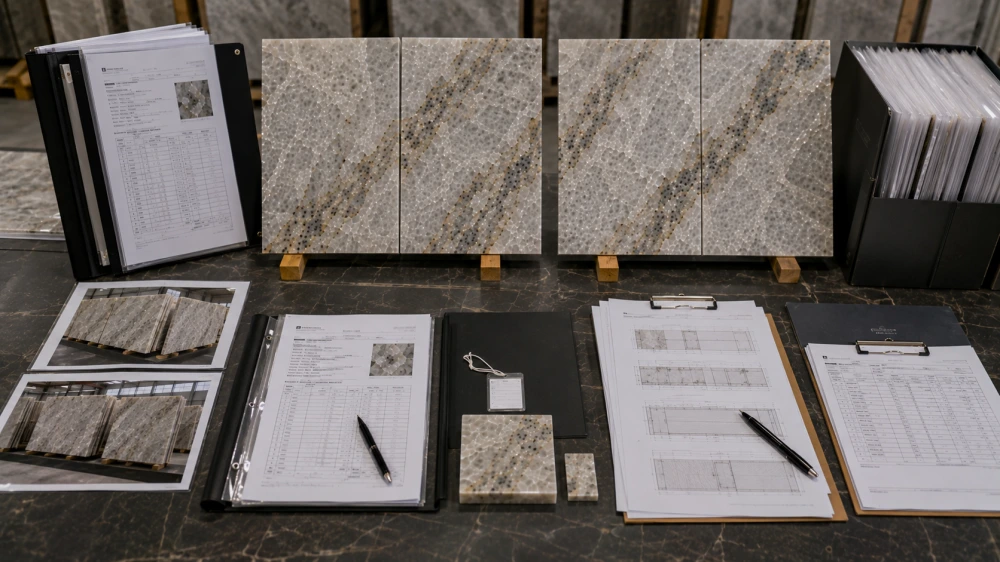
Un vecchio rapporto di prova sulla quarzite può essere utilizzato per un nuovo ordine?
Possibilmente, ma la sola data del rapporto non può rispondere alla domanda.
Supponiamo che un acquirente riceva un rapporto di prova sulla quarzite emesso diversi anni prima dell’ordine corrente.
L’acquirente non dovrebbe respingerlo automaticamente solo perché è datato. Tuttavia, non dovrebbe neppure presumere che sia valido semplicemente perché il nome commerciale del materiale è rimasto invariato.
Recensione:
- L’identità del campione testato
- La data del rapporto
- Il metodo di prova
- La descrizione del materiale
- Le informazioni disponibili sulla provenienza, sul blocco, sul lotto o sulla partita
- La relazione con le lastre attualmente offerte
- Se la specifica del progetto richiede prove correnti o prove specifiche per il progetto
- Se un consulente o un altro soggetto tecnico responsabile richiede verifiche aggiuntive
La distinzione chiave è:
Età del rapporto ≠ Applicabilità del rapporto.
Un rapporto di prova della quarzite scade?
Non esiste una risposta universale utile basata esclusivamente sull’età riportata sul documento.
Un rapporto più vecchio non è automaticamente irrilevante solo perché è trascorso del tempo, e un rapporto recente non è automaticamente applicabile al materiale dell’acquirente solo perché è stato emesso di recente.
La domanda più utile è:
Questo rapporto rimane pertinente per il campione, la fonte del materiale, il metodo di prova, l’ordine corrente e i requisiti del progetto in esame?
Una specifica di progetto, un contratto, un consulente, un programma di test, una procedura di laboratorio o un requisito applicabile possono imporre proprie esigenze in materia di documentazione o di ripetizione delle prove. Tali requisiti vanno verificati separatamente.
E se il rapporto riporta il nome della pietra ma non il numero del campione?
Non scartare automaticamente il rapporto, ma considera la mancanza di identificazione come un problema di tracciabilità.
Cerca altre prove, come:
- Fotografie
- Registri di consegna del fornitore
- Descrizioni del laboratorio
- Riferimenti al blocco o alla lastra
- Numeri di lotto o di partita
- Date
- Registri di acquisto o di selezione
- Corrispondenza che collega il campione al materiale
Se nessuna di queste elementi consente di distinguere il campione testato, il rapporto potrebbe avere un valore limitato nel dimostrare la relazione con l’ordine corrente.
La risposta corretta è documentare tale limitazione anziché colmare silenziosamente la lacuna.
Un singolo campione testato rappresenta tutte le lastre dello stesso lotto?
Non nel senso di dimostrare che ogni lastra naturale sia identica.
Un campione testato può fornire evidenze riguardo a quel campione. Una relazione documentata tra lotto e campione può spiegare perché il rapporto viene preso in considerazione in relazione a un gruppo di materiali.
Tuttavia, la pietra naturale può presentare variazioni mineralogiche e strutturali.
Per questo motivo gli acquirenti dovrebbero distinguere due concetti:
Prova rappresentativa — ovvero il motivo per cui il campione viene utilizzato per orientare una decisione riguardo a un gruppo di materiali.
Materiale identico — un’affermazione molto più forte che non dovrebbe essere presunta semplicemente sulla base di un riferimento al lotto.
La variabilità naturale è un motivo per mantenere la tracciabilità. Da sola, non costituisce prova che ogni lastra si comporterà in modo diverso.
Fatti del rapporto di prova vs fatti dell’ordine corrente
Un altro errore comune negli acquisti è mescolare le informazioni relative al campione di laboratorio con quelle relative all’ordine commerciale corrente.
| Fatti del rapporto di prova | Fatti dell’ordine corrente |
| ID del campione testato | Riferimento alla lastra / al materiale corrente |
| Numero del rapporto | Riferimento al preventivo o all’acquisto |
| Metodo di prova | Specificazione di progetto |
| Data del test | Data dell’acquisto corrente |
| Risultato registrato | Dimensioni, quantità, spessore, finitura e applicazione |
| Fonte o riferimento al lotto, ove documentato | Riferimento al blocco, alla lastra, al fascio, al lotto o alla selezione corrente, ove disponibile |
Il compito dell’acquirente non è quello di unire automaticamente queste colonne.
Il compito è stabilire e documentare la relazione tra di esse.
Esempio pratico: Rapporto storico sulla quarzite vs. Ordine attuale delle lastre
Consideriamo un progetto ipotetico che acquista lastre di quarzite naturale per una grande installazione interna.
Il fornitore fornisce un rapporto di laboratorio emesso in un anno precedente. Il nome commerciale della pietra riportato nel documento corrisponde a quello indicato nel preventivo attuale.
A prima vista, i documenti sembrano coerenti.
Tuttavia, l’acquirente richiede il riferimento del campione.
Scenario A — Relazione tracciabile
Il fornitore è in grado di identificare il campione testato e di fornire documenti che lo collegano a una fonte materiale documentata, rilevante anche per il gruppo di lastre attualmente offerto.
Il rapporto storico ora presenta una relazione più chiara con la discussione sull’approvvigionamento.
Il team di progetto può quindi decidere se tale evidenza soddisfa le specifiche correnti o se sono necessari ulteriori test.
Scenario B — Solo il nome commerciale
Il rapporto riporta lo stesso nome commerciale della pietra, ma non è disponibile alcun numero di campione, blocco, lastra, lotto o altro documento che colleghi il campione al materiale attuale.
Il rapporto può comunque risultare utile come contesto storico.
Tuttavia, l’acquirente non dovrebbe considerarlo tacitamente come prova che le lastre attuali presentino gli stessi risultati misurati.
La differenza tra i due scenari non risiede nel numero stampato sul rapporto di prova.
È la solidità della relazione tracciabile tra il campione testato e il materiale oggetto di acquisto.
Quando dovrebbe un acquirente di quarzite valutare nuovi test?
Nuovi o ulteriori test possono essere opportuni da discutere quando:
- Le specifiche del progetto li richiedono espressamente
- Il rapporto disponibile non può essere adeguatamente collegato al materiale proposto
- La fonte del materiale o il lotto pertinente sono cambiati
- Il rapporto esistente non utilizza il metodo richiesto dal progetto
- Il rapporto affronta una questione tecnica diversa
- Un consulente di progetto o un revisore tecnico responsabile richiede una verifica
- L’applicazione presenta requisiti non coperti dalle prove esistenti
- L’acquirente e il fornitore concordano che una verifica specifica per il progetto sia appropriata
Ciò non significa che ogni ordine di quarzite naturale richieda un programma di laboratorio completamente nuovo.
I test devono rispettare i requisiti del progetto e la solidità delle prove già disponibili.
Checklist per l’acquirente di rapporti di prova sulla quarzite
Prima di utilizzare un rapporto nella decisione di approvvigionamento o nelle specifiche, verificare:
- Numero del rapporto: È possibile identificare in modo univoco il documento del laboratorio?
- Data del rapporto: Quando è stato effettuato il test o l’esame?
- Emittente: Chi ha rilasciato il rapporto?
- ID del campione: È possibile identificare il campione testato?
- Nome del materiale: Quali descrizioni commerciali o tecniche compaiono sul rapporto?
- Riferimento alla fonte: È disponibile un riferimento alla lastra, al blocco, al lotto, al fascio o a qualcosa di simile proveniente dalla fonte?
- Metodo di prova: Il metodo risponde alla vera domanda tecnica del progetto?
- Materiale corrente: Quali lastre o materiali sono attualmente offerti?
- Tracciabilità: Quali prove documentate collegano il campione testato al materiale attuale?
- Limitazioni: Quali relazioni rimangono ancora da verificare?
- Requisito del progetto: Le specifiche richiedono un metodo particolare, una data, un laboratorio, una frequenza o un test specifico per il progetto?
- Revisione tecnica: Il consulente o il revisore responsabile deve confermare l’interpretazione?
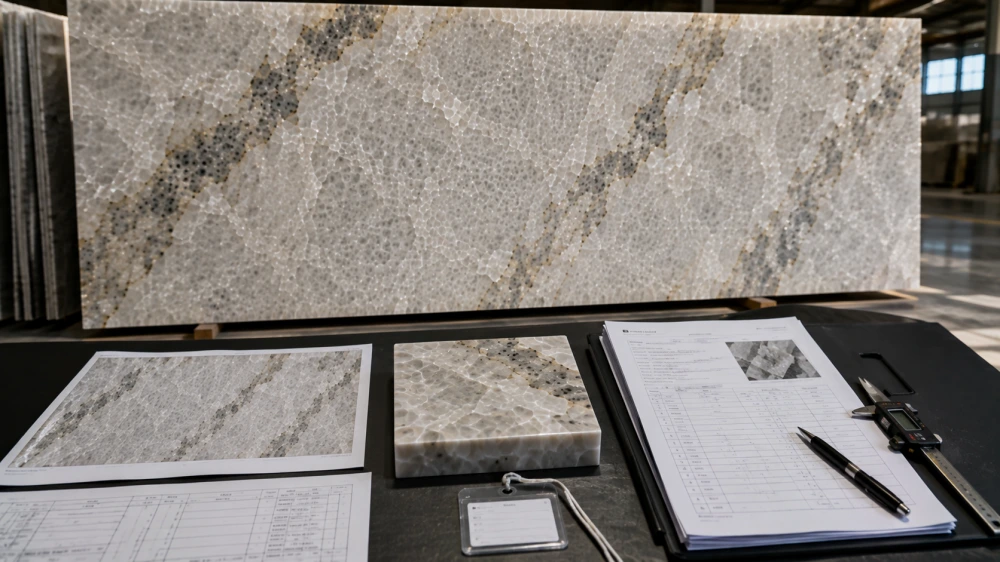
Buyer FAQ
1. Un rapporto di prova della quarzite si applica a ogni lastra con lo stesso nome?
No. Un rapporto riporta i risultati relativi al campione testato identificato, secondo il metodo indicato. La stessa denominazione commerciale non implica automaticamente che ogni lastra, ogni lotto successivo o ogni ordine futuro sia rappresentato da tale campione.
2. Che cos’è un ID campione di quarzite?
Un identificativo del campione è un riferimento utilizzato per identificare il campione fisico inviato per le analisi o gli esami. Può essere un numero di laboratorio, un codice del fornitore, un riferimento alla lastra o al blocco, una fotografia, una marcatura o un altro identificatore documentato.
3. Perché un rapporto di prova della quarzite necessita di un riferimento al lotto o alla partita?
Un lotto, una partita, un blocco, un gruppo di lastre, un fascio o un riferimento analogo può contribuire a documentare la relazione tra il campione sottoposto a prova e un insieme più ampio di materiale. Ciò migliora la rintracciabilità, ma non implica che tutte le lastre di pietra naturale appartenenti a tale gruppo siano identiche.
4. È possibile utilizzare un vecchio rapporto di prova della quarzite per un nuovo ordine?
Possibilmente. L’età da sola non determina l’applicabilità. Verificare il campione testato, il metodo, la descrizione del materiale, la relazione tra fonte o lotto disponibile, le lastre attuali e i requisiti del progetto prima di decidere quale peso attribuire a un rapporto storico.
5. Un rapporto di prova della quarzite ha scadenza?
Non esiste una risposta universale utile basata unicamente sulla data del rapporto. Le specifiche di progetto, i consulenti, i contratti, i programmi di collaudo o altri requisiti possono imporre proprie aspettative. La domanda chiave in materia di approvvigionamento è se il rapporto rimanga pertinente rispetto ai materiali e alle decisioni correnti.
6. Cosa succede se un rapporto sulla quarzite riporta il nome della pietra ma non il numero del campione?
Look for other traceability evidence such as photographs, slab or block references, batch information, submission records, dates, or correspondence. If the tested specimen still cannot be distinguished, record that limitation rather than assuming the report represents the current order.
7. Il rapporto di prova dovrebbe corrispondere alle reali lastre di quarzite acquistate?
La prova di approvvigionamento più solida è quella che documenta una relazione tra il campione sottoposto a prova e il materiale oggetto di valutazione. Ciò non significa che un singolo campione dimostri che ogni lastra sia identica, ma la relazione dovrebbe essere sufficientemente chiara da consentire al team di progetto di comprendere le ragioni per cui viene utilizzato il rapporto.
8. Quando un acquirente dovrebbe richiedere nuovi test sulla quarzite?
Considerare ulteriori prove quando richiesto dalla specifica di progetto, quando il rapporto disponibile non può essere adeguatamente correlato al materiale proposto, quando si verificano variazioni nella fonte o nel lotto pertinente, quando manca il metodo di prova richiesto, oppure quando il revisore tecnico responsabile richiede una verifica specifica per il progetto.
Nota finale
Un rapporto di prova della quarzite non va valutato esclusivamente in base al risultato stampato sulla pagina. Gli acquirenti dovrebbero inoltre chiedersi quale campione sia stato sottoposto a prova, come sia stato identificato, se sia documentata una relazione tra la fonte e il lotto, quale metodo sia stato impiegato e in che modo il rapporto si riferisca al materiale attualmente in fase di acquisto. Il principio fondamentale degli acquisti è semplice: un risultato di prova è utile per l’acquirente solo nella misura in cui esista una relazione tracciabile tra il campione analizzato e il materiale oggetto di valutazione.
Discuti le tue esigenze relative alla quarzite naturale con HRST STONE
Per una richiesta specifica su quarzite naturale relativa a un progetto, contatta Josh presso HRST STONE fornendo il nome del materiale, i riferimenti delle lastre o dei campioni attuali, i rapporti di prova disponibili, le dimensioni, le quantità, i disegni, la finitura superficiale richiesta, l’applicazione prevista e la destinazione di consegna. Qualora siano disponibili informazioni sul lotto, sul blocco, sulla lastra o su altre forme di tracciabilità, includile nella richiesta affinché le questioni riguardanti il materiale e la documentazione possano essere esaminate sulla stessa base.
Copyright (c) HRST STONE / XIAMEN HRST STONE CO., LTD. Tutti i diritti riservati.