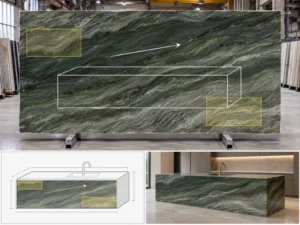
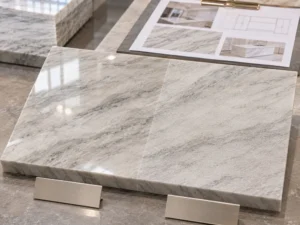
Riepilogo rapidoQuartzite Sample Libraries should distinguish current selection references from expired, superseded, damaged, and historical pieces. A physical Natural Quartzite sample can remain attractive for years while becoming unreliable for a current purchasing decision because the original slabs are gone, a newer sample has replaced it, the intended finish has changed, the source relationship is unknown, or the sample itself has been altered through wear, refinishing, staining, or handling. Give each controlled sample a stable ID and record the material name, finish, source relationship where known, purpose, status, date, physical location, approval scope, and any replacement reference. Do not discard useful historical evidence automatically, but keep obsolete samples physically and digitally distinguishable from active references. Most importantly, do not let an old sample become automatic approval of current Natural Quartzite slabs; slab-specific projects still require review of the currently available physical boards.
A designer opens a Quartzite sample library.
There are several pale cream pieces labelled with familiar stone names.
One sample was received last month.
Another has been in the library for three years.
A third came from a slab group that has already been fabricated and sold.
A fourth was recently replaced because the current material selection is visually different.
All four pieces still look like usable stone samples.
But they do not have the same status.
This is the real issue behind Quartzite Sample Libraries: Marking Expired and Superseded Pieces.
The problem is not that an old physical sample suddenly stops being Natural Quartzite.
The problem is that its meaning can become outdated while the stone itself remains physically intact.
A controlled sample library therefore needs to answer:
What does this sample currently represent, what decision may it support, and has a newer or more relevant reference replaced it?
Natural Quartzite does not have a universal physical “expiry date” like a perishable product.
Sample-library expiry is a control concept.
It means the sample should no longer be treated as a current reference for the decision it once supported.
A sample may have been cut from one identifiable slab or slab group.
If those slabs have already been:
the sample can still be useful as historical evidence or general material direction.
It should not silently imply that matching slabs remain available.
A commercial Natural Quartzite name can continue while the physical inventory changes.
A newer group may differ in:
When that difference matters, a new sample should receive its own identity rather than inheriting the authority of the old one automatically.
A polished sample is not automatically a current honed-finish reference.
If the project or library standard changes finish, record the replacement rather than editing the old sample history until the distinction disappears.
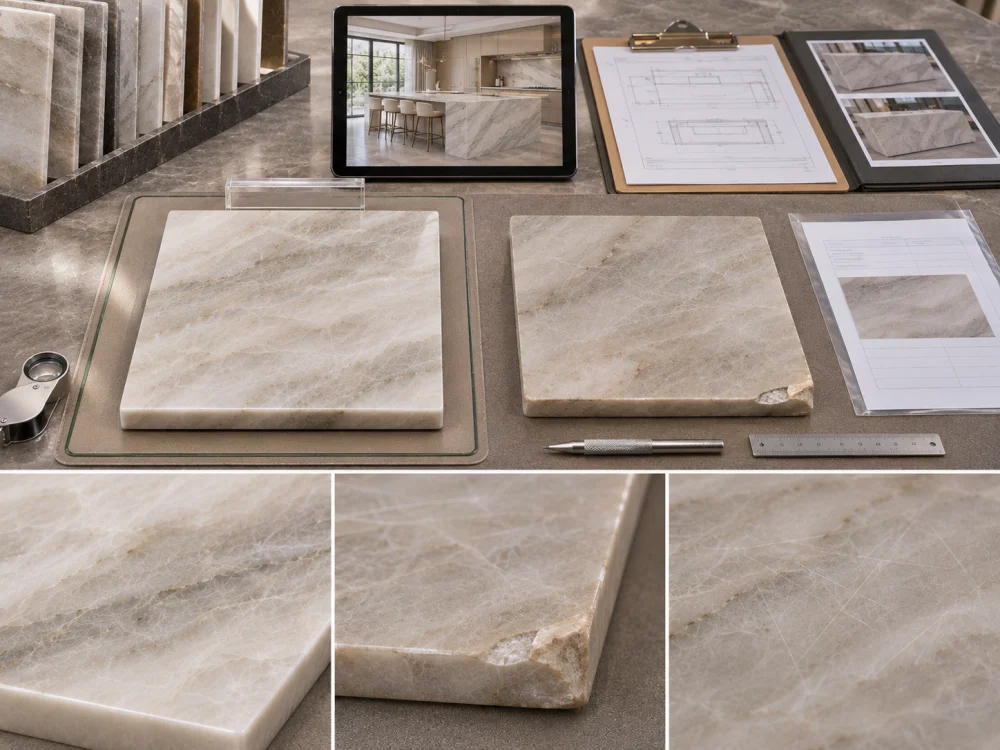
Repeated handling can change a physical sample.
Esempi includono:
A changed sample may no longer represent the condition originally approved.
Status Principle
Physical Sample Exists ≠ Current Reference Is Valid. Control what the piece represents, not only whether the piece is still on the shelf.
A sample library becomes easier to use when the status language is defined before problems occur.
An active sample is currently approved for a defined library or project purpose.
Ad esempio:
Current general colour-direction reference for Taj Mahal Quartzite.

oppure:
Current honed-finish sample for Project K.
Active does not mean that every slab sold under that material name is automatically approved.
A superseded sample has been intentionally replaced by another identified reference.
Ad esempio:
Sample TH-018 superseded by TH-026.
The old sample may remain useful for comparison or history.
It should no longer appear to be the current selection standard.
An expired sample is no longer valid for its former active purpose because a defined condition has ended.
Possible triggers can include:
Do not invent one universal number of months for every Natural Quartzite sample.
A historical sample may be intentionally retained because it documents:
Historical does not mean suitable for new purchasing approval.
A sample may still be associated with current material but be unsuitable for visual review because its own physical condition has changed.
This deserves its own status rather than pretending the sample remains representative.
| Stato | Significato | Use in Current Selection |
| Active | Current reference for a defined purpose | Yes, within its recorded scope |
| Superseded | Replaced by a newer identified sample | No; use replacement reference |
| Expired | Former active purpose no longer valid | No without new review |
| Historical | Retained for traceability or past-project reference | No; reference only |
| Damaged / Altered | Physical sample no longer represents original condition reliably | No until replaced or specifically reassessed |
A physical stone piece without a stable sample ID is difficult to control once several similar materials enter the library.
Use one stable reference that remains attached to the sample history.
Do not reuse the same sample ID for a materially different replacement piece.
Record the commercial or project stone name.
This identifies the general material direction.
It does not uniquely identify current slabs.
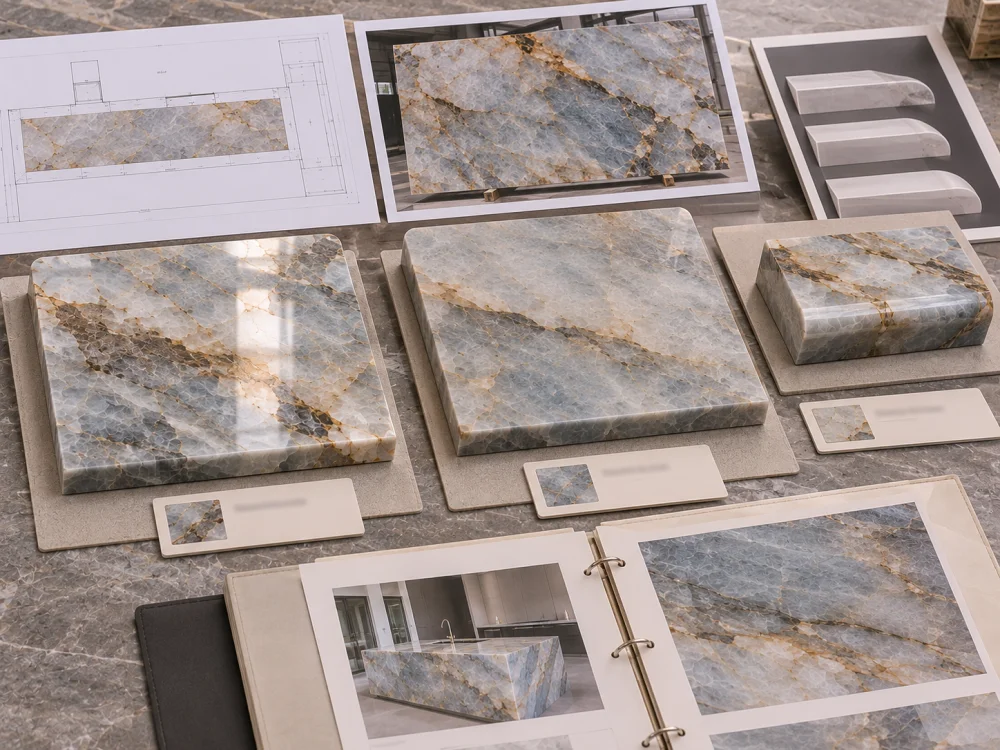
Registrare:
Polished / Honed / Leathered / Project-Specific Finish.
If one material has several active finishes, each physical reference may need its own controlled identity.
Where known and relevant, record whether the sample came from:
If the relationship is unknown, record it as unknown rather than inventing a slab connection.
One sample might exist for:
The purpose determines how much authority the sample should carry.
If a newer sample replaces the old one, record:
Superseded By → New Sample ID.
This is much more useful than simply removing the old piece and losing the reason for the change.
IL Spese di spedizione dei campioni di quarzite: domande da risolvere prima della spedizione guide uses the same sample-control logic: physical samples should remain connected to material, sample ID, finish, source relationship, purpose, and revision.
One of the most dangerous sample-library errors is allowing a preliminary reference to become a blanket approval over time.
A sample may establish only:
Warm cream Natural Quartzite direction accepted.
This does not approve:
A controlled honed sample may approve the intended surface character for a defined project.
That still does not prove that every slab or mineral zone will reproduce identical visual results.
A worked edge can approve:
It should not silently become the reference for the complete full-slab pattern.
A designer may approve Sample M-12 for Project A.
That does not automatically make M-12 the current reference for Project B two years later.
A useful approval record can say:
Accepted for general background colour and polished-finish direction only. Actual project slabs remain subject to board-specific selection.
That sentence is much more useful than:
“Approved.”
Approval Boundary
Sample Approval should answer: Which physical reference? Which decision? Which project or library scope? Which finish? What remains pending?
When a new sample replaces an old one, the library has two competing goals:
prevent accidental reuse
E
preserve traceability.
If the active and superseded samples sit beside each other with identical presentation, a future user may select the wrong one.
The physical library should make the status difference obvious.
A coloured sticker can help visual organization.
But colour by itself may be ambiguous.
The controlled record should state the actual status, such as:
ACTIVE
SUPERSEDED
EXPIRED
HISTORICAL — NOT FOR CURRENT SELECTION
The exact wording can follow the organization’s library system.
A superseded sample should point to its current replacement where one exists.
Ad esempio:
Old Sample → Superseded → Current Sample.
If the physical library is large enough, historical and obsolete references can be moved away from the primary active-selection area.
This reduces the chance that a visitor or new employee interprets old stone as current inventory.
A superseded sample can remain useful for:
The goal is controlled retention, not automatic disposal.
Natural Quartzite samples do not need one universal calendar expiry.
A useful library instead defines the events that require review.
If the sample represented identified boards that are no longer available, update its status.
The sample might become:
Historical source reference — current slabs require new review.
If the supplier or project team intentionally provides a replacement because the current material direction has changed, supersede the old piece.
If a current project moves from polished to honed, do not leave the polished sample labelled as the active finish reference.
A project-specific approval sample can move into project archive status after completion rather than remaining indefinitely in the active general library.
Scratches, heavy handling, contamination, refinishing, or another modification can trigger sample replacement even when the underlying material selection remains current.
If nobody can determine which slab group, project, finish, or supplier record a sample represents, its authority should be reduced.
“We think this is the current piece” is not a strong sample-control system.
A larger library may choose periodic review dates to force status checks.
That is an organizational control decision.
Do not imply that all Natural Quartzite samples become physically invalid after a fixed number of months.
Physical samples are useful.
They cannot reproduce the complete movement of a full Natural Quartzite slab.
It may help review:

For slab-specific projects, the buyer still needs to review:
IL Showroom di lastre di quarzite: cosa portare all’appuntamento per la selezione guide makes this distinction explicit: a physical sample can support colour or finish review, while final slab-specific selection should preserve exact board references and full-slab evidence.
A sample sitting in a library does not prove:
If current slabs are visibly different from the library piece, do not force the boards to conform to the old sample.
Decide whether to:
Sample-library control and slab-inventory control should not operate as unrelated systems.
For example, the material direction may remain acceptable while one set of reserved boards is released back into inventory.
The sample does not necessarily become physically wrong.
But it should no longer be used to imply that those exact boards are secured.
If a reserved slab is replaced by another board, the buyer should review the current physical board rather than relying only on the historical sample.
IL Moduli di prenotazione delle lastre di quarzite: numeri di tavola, scadenza e sostituzioni guide explains why material name, board number, reservation status, expiry and substitution approval should remain distinct.
A prior sample approval may support:
material direction
while the new board still requires:
current slab approval.
This distinction is especially important for:
A spreadsheet that says a sample is active is not enough if the physical shelf contains a different piece.
The record and the stone should be reconciled.
Confirm:
The digital record should identify the same physical piece and current status.
For every superseded sample, confirm whether the stated replacement still exists and remains active.
Project-specific pieces that no longer belong in the active general library should be moved to the appropriate archive or disposal workflow.
An attractive piece with no trustworthy identity should not automatically remain in the current approval library.
Può essere:
A current sample photograph helps remote teams verify that the physical piece they are discussing is still the same reference recorded in the system.
| Library Field | Registrazione |
| Sample Identity | Stable sample ID + material name |
| Physical Condition | Current / damaged / altered / needs review |
| Fine | Polished / honed / leathered / other defined finish |
| Relazione di provenienza | Board / slab group / project / supplier / unknown |
| Scopo | Colour / finish / edge / project approval / other |
| Stato | Active / superseded / expired / historical / damaged |
| Replacement | Current replacement sample ID where applicable |
| Approval Scope | Exact decision the sample may support |
| Località | Current physical library / archive position |
An old sample should not become active again merely because somebody finds it useful for a new project.
If a historical or expired piece is being reconsidered, verify its current relevance.
□ Stable sample ID confirmed.

□ Natural Quartzite material name confirmed.
□ Physical sample matches the digital record.
□ Current surface finish confirmed.
□ Sample condition checked clean and dry.
□ Source relationship verified where known.
□ Current purpose defined.
□ Current project / library scope defined.
□ Current slab availability checked separately where relevant.
□ Sample approval kept separate from board-specific slab approval.
□ Previous superseded or expired status reviewed.
□ Current replacement sample checked before reactivation.
□ New status date or review record added.
□ Approval owner identified where project-specific.
□ Physical status marking updated.
□ Physical storage location updated.
□ Current photograph retained where useful.
□ Obsolete reference will not remain visually indistinguishable from active samples.
The best sample library is not the library with the largest number of stone pieces.
It is the library where another person can quickly answer:
What is this?
What does it represent?
Is it current?
What replaced it?
What may it approve?
And do we still need to review the actual slabs?
There is no universal physical expiry period for every Natural Quartzite sample. A library may mark a piece expired when its former reference purpose is no longer valid—for example because associated inventory is unavailable, a defined review period has ended, the project has closed, the source relationship is uncertain, or another current sample has replaced it. The organization’s control system should define the applicable trigger.
A superseded sample has been intentionally replaced by a newer identified reference. An expired sample is no longer valid for its former active purpose because a time, availability, project, source, or review condition has ended. A sample can sometimes be both—for example an old project reference may expire and also be replaced by a new current sample.
Not automatically. They may still provide useful historical, project, replacement, finish, or approval evidence. If retained, they should be clearly removed from current selection use and linked to the newer reference where applicable so they cannot be mistaken for active samples.
Not automatically. A small sample can support colour, finish, edge, or material-direction decisions within its recorded scope, but Natural Quartzite remains slab-specific. Projects requiring exact board selection should still review current full-slab photographs, board numbers, dimensions, related boards, and the later cutting layout where relevant.
Record the change and assess whether the physical piece still represents the reference it was intended to show. If scratches, staining, refinishing, treatment, or other alteration materially changes its appearance, move it out of active use or replace it rather than allowing the changed piece to continue as the original finish reference.
This article does not prescribe one universal audit interval. Reviews can be triggered by new samples, inventory changes, project completion, finish changes, physical damage, supplier updates, source uncertainty, or a periodic library-control schedule defined by the organization. The important point is that active status should be deliberately maintained rather than assumed indefinitely.
Send Josh the material direction or known Quartzite name, intended application, required finish, project drawings or key dimensions where relevant, quantity, delivery destination, adjacent-material references if colour coordination matters, and the specific question the sample must answer. If you are replacing an older sample, include the old sample ID or photograph and identify whether you need a current colour reference, finish sample, edge sample, current slab options, or project-specific approval material.
Sample-Library Control TakeawayA Quartzite sample library should preserve both current references and useful history without allowing the two to become confused. Give each controlled physical sample a stable identity, record what material, finish, source relationship and decision it represents, and assign a clear current status. When a piece is replaced, expired, damaged or retained only for historical use, change both the physical marking and digital record. Keep the old piece when traceability value justifies retention, but remove it from active selection use. Most importantly, treat a physical sample as evidence for its stated scope—not as permanent proof that future Natural Quartzite slabs, finishes, inventory or project conditions remain unchanged.
For Natural Quartzite sourcing and project sample coordination, HRST STONE can organize current sample references, finish samples, edge samples, sample IDs, related full-slab photographs, board references, project-specific approval records, packing and international sample dispatch within the confirmed scope. Send Josh the material direction, required finish, application, project information, previous sample reference where applicable, requested sample purpose and destination so the current physical reference can be distinguished from older or superseded material.