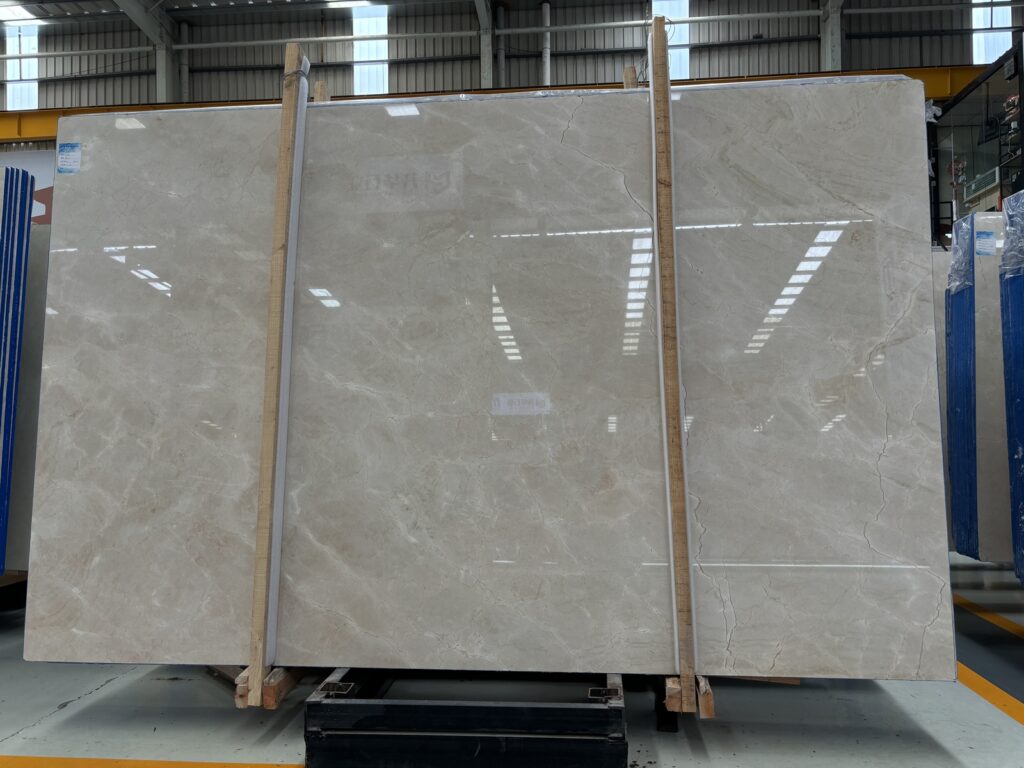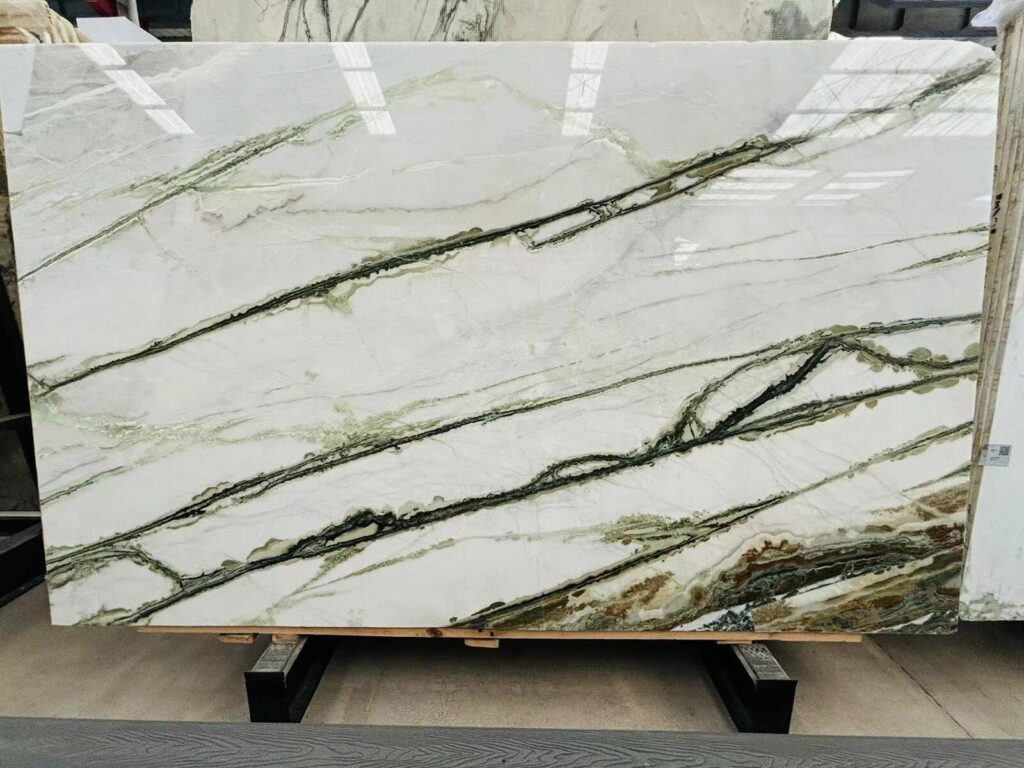


Il Cristallo Quartzite retroilluminato non dovrebbe essere approvato soltanto con i LED accesi. Con la retroilluminazione attiva, la luce trasmessa può rendere luminose le aree cristalline traslucide e aumentare il contrasto tra le zone minerali trasparenti e opache. Quando la retroilluminazione è spenta, la pietra viene osservata principalmente attraverso la luce riflessa del giorno o della luce ambientale; pertanto diventano più importanti il suo colore di base naturale, le zone grigie, la struttura minerale, le fessure, le giunture, le variazioni tra le lastre e la disposizione complessiva. Per progetti particolarmente esigenti dal punto di vista visivo, è consigliabile esaminare il Cristallo Quartzite reale in almeno due condizioni—retroilluminazione spenta e retroilluminazione accesa—e considerare una valutazione separata per la luce diurna e quella serale, quando la luce ambientale varia significativamente.
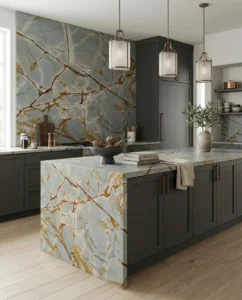
Il Cristallo Quartzite viene spesso scelto per pareti d’accento retroilluminate, bar, banconi reception, isole e altre superfici architettoniche, poiché alcune parti della pietra naturale possono trasmettere la luce attraverso la sua struttura cristallina.
Tuttavia, un’installazione retroilluminata riuscita presenta due aspetti distinti.
C’è l’aspetto scenografico che si manifesta quando il sistema di illuminazione è acceso—e c’è la superficie di pietra naturale che rimane quando i LED sono spenti.
Queste due condizioni possono apparire sorprendentemente diverse.
Una lastra di Cristallo che sotto la luce trasmessa appare luminosa, stratificata e fortemente cristallina può rivelare, alla luce ambientale diurna, un diverso equilibrio tra zone bianco latte, struttura minerale grigio chiaro, zone opache, fessure naturali, inclusioni più scure, giunture e variazioni da lastra a lastra.
Ciò porta a una regola fondamentale per i progetti:
Approvare l’effetto retroilluminato non equivale ad approvare il Cristallo Quartzite con la retroilluminazione spenta.
Per un progetto che sarà visibile sia di giorno che di notte, entrambe le condizioni sono importanti.
Perché cambia il modo in cui la luce raggiunge l’osservatore.
Quando il Cristallo Quartzite è retroilluminato, parte dell’effetto visivo deriva dalla luce trasmessa attraverso le porzioni traslucide della pietra.
Quando la retroilluminazione è spenta, l’osservatore vede la pietra principalmente attraverso la luce riflessa dalla sua superficie e dall’ambiente circostante.
La distinzione più semplice è:
Retroilluminazione ACCESA = Luce Trasmessa + Luce Riflessa
Retroilluminazione SPENTA = Principalmente Luce Ambientale Riflessa
Questo modifica quali caratteristiche geologiche dominano l’aspetto complessivo.
Le aree cristalline altamente traslucide possono diventare luminose quando illuminate da dietro. I minerali più opachi possono interrompere tale trasmissione e apparire relativamente più scuri.
Una volta spenta la retroilluminazione, quelle stesse regioni non sono più definite principalmente in base alla quantità di luce che le attraversa. Diventano invece più importanti il colore della superficie, la struttura minerale, il contrasto, la finitura e il rapporto con la luce diurna circostante.
La pietra non è cambiata. È cambiato il percorso della luce.
Questa distinzione è fondamentale per comprendere un’installazione di Quarzite Naturale traslucida.
| Punto di Valutazione | Retroilluminazione Accesa | Retroilluminazione Spenta / Diurna |
| Luce Visiva Principale | Combinazione di luce trasmessa e riflessa | Principalmente luce ambientale o diurna riflessa |
| Zone Cristalline Traslucide | Possono apparire luminose, più profonde e visivamente dominanti | Si leggono meglio come struttura minerale cristallina naturale |
| Aree Opache | Possono apparire come isole o sagome più scure contro le aree illuminate | Possono integrarsi più naturalmente nel motivo complessivo della lastra |
| Struttura Minerale Grigia | Può essere visivamente alterata dalla luce trasmessa e dalla temperatura di colore dei LED | Spesso diventa più importante per l’aspetto naturale diurno |
| Fessure Naturali | Possono diventare ben delineate dove cambia la trasmissione della luce | Si legge attraverso la riflessione superficiale, la texture e il contrasto minerale |
| Contrasto Complessivo | Può diventare drammatico perché la traslucidità varia lungo tutta la pietra | Dipende maggiormente dal colore naturale della lastra e dalla luce ambientale |
| Domanda Principale di Approvazione | Approviamo l’effetto luminoso? | Approviamo la pietra come superficie architettonica naturale? |

L’approvazione diurna implica l’esame del Cristallo Quartzite con la decorativa retroilluminazione spenta, nelle condizioni di luce ambientale diurna previste dal progetto.
Ciò non implica necessariamente posizionare la lastra sotto la luce diretta del sole.
La condizione di visualizzazione rilevante potrebbe essere:
Lo scopo è rispondere a una domanda diversa rispetto al test di retroilluminazione:
Il cliente approverà comunque questo Cristallo Quartzite quando funziona come pietra e non come elemento luminoso?
Una verifica a luci spente non dovrebbe limitarsi a valutare se la lastra sia ancora “bella”.”
L’acquirente, il progettista o il team di progetto dovrebbero esaminare specifiche condizioni visive.
Senza luce trasmessa, i toni naturali bianco, latte, grigio chiaro, avorio o altri colori minerali diventano le informazioni cromatiche principali.
Una lastra che appariva quasi bianca e luminosa in retroilluminazione può risultare più grigia o più calda quando i LED sono spenti.
Le aree cristalline del Cristallo rimangono visibili anche senza retroilluminazione, ma la loro profondità visiva cambia.
Anziché apparire illuminate dall’interno, vengono percepite attraverso la riflessione superficiale e il contrasto minerale naturale.
Le zone opache meritano un’attenzione particolare.
In retroilluminazione possono creare forti contrasti scuri, poiché meno luce le attraversa. Con le luci spente, queste aree possono integrarsi maggiormente nel motivo complessivo della pietra oppure restare visivamente marcate grazie al loro colore naturale.
La retroilluminazione può modificare la gerarchia percepita delle strutture minerali più scure.
Una verifica diurna consente di verificare se le zone grigie o più scure siano accettabili quando vengono considerate parte della pietra naturale, anziché come sagome contro uno sfondo luminoso.
La luce trasmessa può evidenziare transizioni interne meno visibili sotto la normale illuminazione frontale.
Pertanto, il progetto dovrebbe esaminare tali caratteristiche in entrambe le condizioni, anziché presumere che una rappresenti l’altra.
Se diverse lastre di Cristallo vengono installate insieme, confrontare i loro colori di base naturali con le luci spente.
Due lastre possono produrre effetti luminosi simili, ma presentare differenze visibili nel tono di fondo non illuminato.
Una cucitura che diventa secondaria alla vista quando l’intera parete risplende può risultare più evidente alla luce del giorno.
La posizione dei giunti, la direzione delle venature, la sequenza delle lastre e le strutture minerali adiacenti rimangono quindi importanti, anche quando il concetto progettuale principale è la retroilluminazione.
Una delle caratteristiche visive distintive del Cristallo Quartzite è che la traslucidità non è necessariamente uniforme su tutta la lastra.
Aree diverse possono contenere strutture minerali differenti e trasmettere quantità variabili di luce.
In retroilluminazione, ciò può dare vita a una composizione sorprendente:
Più area traslucida → Maggiore trasmissione di luce
Più area opaca → Minore trasmissione di luce
Tuttavia, questo non va confuso con la composizione cromatica della pietra durante il giorno.
Un’area opaca che appare molto scura in retroilluminazione può avere un attraente carattere minerale naturale quando viene osservata alla luce riflessa.
Al contrario, una zona altamente traslucida che domina il design illuminato può risultare visivamente più discreta con le luci spente.
Ecco perché l’acquirente dovrebbe valutare entrambe le condizioni:
Dove la lastra trasmette la luce?
e:
Come appare quella stessa area quando non è illuminata?

Nessuna delle due condizioni dovrebbe sostituire automaticamente l’altra, soprattutto quando il progetto sarà regolarmente visto in entrambi gli stati.
Un bar retroilluminato può funzionare con i LED accesi per tutta la durata dell’orario di servizio, rendendo predominante la condizione illuminata.
Una parete d’accento residenziale può rimanere spenta per la maggior parte della giornata e illuminarsi soltanto alla sera.
L’atrio di un hotel può essere esposto a una forte luce naturale durante il giorno, a una luce artificiale ambientale alla sera e a un effetto di retroilluminazione in entrambi i periodi.
La priorità di approvazione dovrebbe pertanto seguire il reale schema d’uso.
| Project Condition | Ciò che si sta approvando | Punti chiave della revisione |
| Retroilluminazione spenta — Durante il giorno | Aspetto della pietra naturale | Colore di base, corrispondenza delle lastre, struttura minerale, giunture, fughe, fessure, disposizione |
| Retroilluminazione accesa — Durante il giorno | Effetto di retroilluminazione sotto una luce ambientale più intensa | Traslucenza visibile, equilibrio della luminosità, contrasto, controllo dei punti luminosi |
| Retroilluminazione accesa — Sera / Bassa luce ambientale | Massimo effetto luminoso dell’elemento decorativo | Luminosità, uniformità dei LED, zone scure, contrasto luminoso, atmosfera |
Per molti progetti di alta gamma, queste sono tre condizioni distinte di approvazione visiva, non una sola.

La luce del giorno non è una singola condizione di illuminazione fissa.
La quantità, la direzione e il carattere della luce naturale all’interno di uno spazio possono variare nel corso della giornata.
Un’installazione di Cristallo vicino a grandi vetrate può quindi apparire diversa al mattino, nel pomeriggio e alla sera, anche prima che venga attivato il sistema di retroilluminazione.
Tra i fattori vi sono:
L’obiettivo non è approvare ogni possibile condizione di illuminazione.
L’obiettivo è identificare le condizioni rilevanti per il progetto effettivo e assicurarsi che l’approvazione non si basi esclusivamente su una drammatica fotografia scattata in una stanza buia.
Non necessariamente.
Se la pietra installata non riceverà mai luce solare diretta, un test sotto la luce diretta potrebbe non rappresentare la condizione prevista per il progetto.
L’approccio più utile consiste nel riprodurre o avvicinarsi all’ambiente di visione previsto.
Ad esempio, una parete di reception situata a dieci metri dalla vetrata potrebbe ricevere principalmente una luce ambientale diffusa. Un mock-up esaminato sotto una forte luce solare diretta risponderebbe a una domanda diversa.
L’illuminazione rilevante per il progetto è più utile rispetto alla semplice scelta della luce del giorno più intensa disponibile.
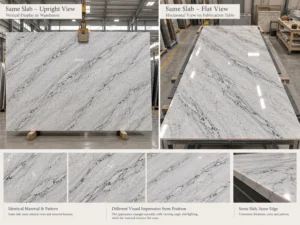
Un piccolo campione può mostrare colore, struttura cristallina e un certo grado di traslucenza, ma non riesce necessariamente a rappresentare la distribuzione delle caratteristiche su un’intera lastra.
Un’intera lastra di Cristallo può contenere:
Queste variazioni influenzano sia l’aspetto retroilluminato sia quello non illuminato.
Per lavori visivamente importanti, l’approvazione dovrebbe quindi procedere da:
Piccolo campione → Lastra effettiva → Proposta di disposizione del taglio → Mock-up del progetto, dove richiesto.
Sì, quando l’aspetto non illuminato durante il giorno è importante per il progetto.
La retroilluminazione può influenzare fortemente il punto verso cui si posa lo sguardo, ma la stessa disposizione deve funzionare anche quando la pietra non è illuminata.
Recensione:
Un layout di taglio ottimizzato esclusivamente per la condizione illuminata potrebbe non garantire l’equilibrio visivo preferito durante il giorno.

Le giunture interrompono sia la lastra fisica sia il movimento visivo dei minerali.
Con la retroilluminazione accesa, una forte luce trasmessa può catturare l’attenzione dello spettatore. A seconda del progetto, la giuntura può apparire secondaria oppure diventare più evidente se i livelli di luce variano lungo la giunzione.
Con la retroilluminazione spenta, la giuntura viene osservata in contrasto con il colore e il motivo naturali della superficie.
Il progetto dovrebbe pertanto considerare:
Ciò è particolarmente importante su grandi pareti decorative e su lunghi fronti di reception o bar assemblati da diverse parti di pietra.
Sì.
La finitura superficiale determina il modo in cui la luce viene riflessa dalla faccia della pietra.
Una superficie lucidata può generare riflessi più intensi e maggiore profondità visiva, mentre una finitura levigata o meno lucida modifica la diffusione della luce ambientale sulla superficie.
Per questo motivo, l’approvazione diurna dovrebbe utilizzare la finitura prevista per il progetto, ove possibile.
Approvare un campione lucidato e poi realizzare una finitura diversa introduce un’ulteriore variabile nel risultato visivo.
Queste dovrebbero essere trattate come decisioni correlate ma distinte.
| Tipo di approvazione | Domanda principale | Prove tipiche |
| Approvazione diurna / a luci spente | Approviamo l’aspetto naturale della pietra senza retroilluminazione decorativa? | Lastra effettiva, fotografie delle lastre, disposizione, revisione della luce ambientale rilevante per il progetto |
| Approvazione con retroilluminazione | Approviamo l’effetto illuminato? | Pietra effettiva, sistema LED, temperatura di colore, profondità della cavità, diffusore, luminosità, mock-up |
| Approvazione del layout | Le aree e le giunture delle lastre selezionate funzionano come un’unica composizione? | Fotografie delle lastre, disegni di taglio, direzione delle venature, posizioni delle giunture |
Una firma su una sola condizione non deve essere automaticamente interpretata come approvazione di tutte e tre, a meno che il registro del progetto non lo specifichi esplicitamente.
Consideriamo una ipotetica parete decorativa in Cristallo Quartzite per un’area living residenziale di lusso.
Le lastre selezionate presentano ampie zone cristalline bianco latte, pallide zone minerali grigio freddo, sottili sfumature avorio e un numero limitato di caratteristiche minerali naturali più scure.
Le grandi zone cristalline diventano luminose. Alcune zone grigio chiaro trasmettono meno luce e creano contrasti interni. Le caratteristiche minerali più scure assumono un ruolo di accentuazione visiva più marcato.
Il cliente approva l’effetto drammatico dell’illuminazione.
Con i LED spenti, la parete non appare più principalmente come una superficie luminosa.
La struttura naturale grigio chiaro diventa più evidente. La differenza tra le lastre adiacenti è più facile da valutare guardando il colore di base piuttosto che la traslucidità. Le giunture e il movimento dei minerali assumono un ruolo più importante nella composizione.
Il team di progetto apporta modifiche alla sequenza proposta delle lastre prima della fabbricazione.
La stessa emissione LED ora compete con la luce naturale diurna più intensa.
L’effetto luminoso risulta più contenuto rispetto alla recensione serale.
Ciò non significa che il sistema di illuminazione abbia fallito. Significa che l’illuminazione ambientale ha modificato la gerarchia visiva.
Le tre recensioni rispondono a tre domande diverse.
| Errore comune | Why It Matters | Approccio migliore |
| Approvare soltanto una fotografia drammatica con retroilluminazione | Non mostra l’aspetto normale della pietra spenta | Esaminare separatamente le condizioni con e senza luci accese |
| Utilizzare solo un campione ridotto | Potrebbe non rappresentare la distribuzione minerale o la traslucenza dell’intera lastra | Valutare le lastre reali prima dell’approvazione definitiva del layout |
| Ignorare le aree opache | Il loro aspetto può cambiare notevolmente tra luce trasmessa e luce riflessa | Valutare le stesse aree sia con le luci accese sia spente |
| Esaminare l’aspetto diurno sotto una luce solare diretta irrealistica | La condizione potrebbe non rispecchiare l’ambiente in cui è stato installato | Utilizzare l’illuminazione ambientale pertinente al progetto |
| Approvare il layout solo con la retroilluminazione accesa | Le giunture e le relazioni cromatiche tra le lastre possono apparire diverse quando sono spente | Verificare il layout finale in entrambe le condizioni |
| Assumere che le condizioni diurna e serale siano identiche | Il livello di luce ambientale modifica l’intensità percepita della retroilluminazione | Esaminare entrambi i contesti in cui l’esperienza del progetto dipende da essi |
Prima dell’approvazione definitiva della fabbricazione o dell’installazione, esaminare quanto segue, ove pertinente:

Perché la retroilluminazione modifica la percezione della pietra. Con i LED accesi, la luce trasmessa può rendere luminose le zone cristalline e aumentare il contrasto con le aree opache. Con la retroilluminazione spenta, la luce ambientale riflessa rivela in modo più diretto il colore di base naturale della pietra, la sua struttura minerale, le giunture, le fessurazioni e le variazioni tra le lastre.
L’approvazione diurna consiste nel valutare la pietra con l’illuminazione di retroilluminazione decorativa spenta, nelle condizioni di luce ambientale previste per il giorno. Ciò non implica necessariamente l’esposizione diretta alla luce solare. L’obiettivo è approvare il Cristallo come superficie architettonica naturale nell’ambiente in cui verrà effettivamente osservato.
Una fotografia può essere utile per una valutazione preliminare, ma un’immagine retroilluminata non rappresenta pienamente l’aspetto della lastra a luci spente. Per progetti di particolare rilievo visivo, è consigliabile esaminare le immagini attuali delle lastre senza retroilluminazione e, quando possibile, la lastra stessa o un mock-up pertinente al progetto.
Possono. Un’area minerale opaca può apparire molto scura rispetto a una pietra traslucida illuminata quando la retroilluminazione è accesa, ma il suo colore naturale e la sua caratteristica minerale possono integrarsi in modo diverso nella lastra se osservati alla luce del giorno riflessa.
Sì, quando l’aspetto diurno è importante. La direzione delle venature, la sequenza delle lastre, le giunture, le variazioni del colore di base, le zone opache e i movimenti minerali possono apparire diversi in assenza di luce trasmessa; pertanto, la disposizione dovrebbe risultare efficace sia in condizioni illuminate sia in condizioni di scarsa illuminazione.
Può essere notevolmente diverso. Una forte luce ambientale diurna entra in competizione con la pietra illuminata, mentre una bassa luce ambientale serale può rendere la stessa retroilluminazione molto più drammatica. I progetti che fanno ampio affidamento su entrambe le condizioni dovrebbero valutarle entrambe.
No. Il Cristallo Quarzite è una pietra naturale, e le lastre possono presentare variazioni nel colore di base, nella struttura cristallina, nelle zone grigie o avorio, nei minerali più scuri, nelle fessurazioni e nella traslucidità. Pertanto, un’analisi approfondita della singola lastra è fondamentale per progetti che richiedono particolare attenzione alla resa estetica.
Per un progetto utilizzato per l’intera giornata e durante la sera, si considerino tre condizioni: retroilluminazione spenta durante il giorno, retroilluminazione accesa durante il giorno e retroilluminazione accesa nelle ore serali o in presenza di scarsa illuminazione ambientale. La sequenza esatta di approvazione dovrebbe rispecchiare le effettive modalità d’uso dell’installazione una volta completata.
Un progetto di retroilluminazione del Cristallo Quartzite ben riuscito deve funzionare sia con le luci accese sia a luci spente. La retroilluminazione mette in risalto la pietra attraverso la luce trasmessa; la verifica diurna a luci spente la evidenzia principalmente grazie alla luce ambientale riflessa. Queste condizioni possono valorizzare differenti zone cristalline, minerali opachi, aree grigie, fessurazioni, giunture e le relazioni tra le lastre. Per questo motivo, l’approvazione della retroilluminazione non dovrebbe essere considerata automaticamente come l’approvazione della pietra a luci spente. Prima della fabbricazione finale, è opportuno esaminare le lastre reali, il layout proposto e le condizioni di illuminazione pertinenti al progetto, in modo da approvare intenzionalmente sia l’aspetto luminoso sia la superficie naturale della pietra.
Copyright (c) HRST STONE / XIAMEN HRST STONE CO., LTD.