

Riepilogo rapido
La quarzite Blue Roma e il marmo Palissandro Blue possono entrambi dare vita a un’isola da cucina dal caratteristico tono blu, ma offrono un aspetto visivo diverso e richiedono attenzioni differenti nell’uso quotidiano. La quarzite Blue Roma è di solito la scelta più adatta per un’isola che voglia esprimere una forte personalità, quando l’acquirente desidera un effetto naturale dinamico, insieme ai vantaggi di durezza tipici della vera quarzite. Il marmo Palissandro Blue, invece, presenta un aspetto blu-grigio più morbido e classico, simile al marmo, ma richiede una maggiore tolleranza verso l’effetto dell’acido e l’evoluzione della patina superficiale. La decisione finale dovrebbe sempre basarsi sulle lastre effettive, sulla finitura, sulla disposizione dell’isola, sui requisiti di lavorazione e sulle aspettative di manutenzione.
Quarzite Blue Roma vs Marmo Palissandro Blue non è semplicemente un confronto tra due pietre naturali blu. Su un’ampia isola da cucina, il loro diverso carattere geologico influisce sia sull’aspetto estetico sia sul modo in cui il proprietario deve considerare l’uso quotidiano.
La quarzite Blue Roma viene scelta per il suo suggestivo campo blu‑grigio, le complesse strutture minerali naturali e i contrasti con movimenti più scuri o caldi. Il marmo Palissandro Blue, invece, tende a creare una composizione marmorea blu‑grigia più delicata, con bande chiare e scure che si susseguono armoniosamente.
Entrambi possono conferire all’isola un aspetto indimenticabile. La scelta migliore dipende dall’importanza attribuita al progetto: se si privilegia un carattere geologico imponente e la praticità quotidiana in cucina, oppure una linea visiva più soffusa e l’evoluzione della patina propria del marmo naturale.
| Factor | Quarzite Roma blu | Marmo Blu Palissandro |
| Categoria del materiale | Quarzite naturale | Marmo naturale |
| Carattere visivo | Complessa, geologica, drammatica e irregolare | Stratificata, fluida, più morbida e simile al marmo |
| Direzione cromatica tipica | Blu ghiaccio, blu‑grigio, tonalità fumose con movimenti minerali dal marrone al nero | Blu‑grigio, grigio argento, bianco e bande scure che scorrono armoniosamente |
| Prevedibilità del motivo | Fortemente legata alla singola lastra | Anche naturalmente variabile; necessaria la verifica della lastra |
| Preoccupazione per l’effetto dell’acido | Generalmente inferiore per la vera quarzite verificata | Più elevato perché il marmo è a base di calcite |
| Posizionamento sull’isola da cucina | Forte candidato per un’isola dal forte impatto visivo | Migliore dove il carattere marmoreo giustifica una maggiore tolleranza a usura e patina visibili |
Se osservate come piccoli campioni, entrambe le pietre possono sembrare appartenere alla stessa ampia famiglia di design blu‑grigio. Tuttavia, su scala di una lastra intera, i loro linguaggi visivi possono essere molto diversi.

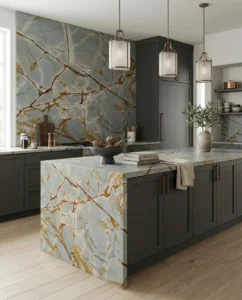
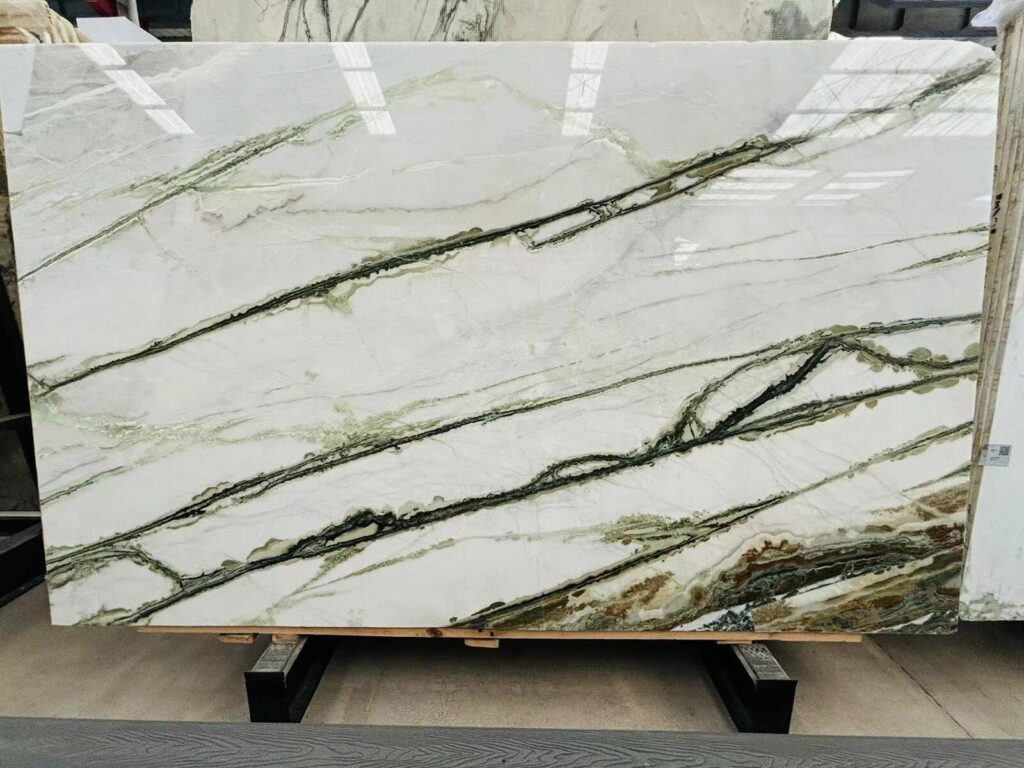
La quarzite Blue Roma può presentare ampie zone blu pallido‑blu‑grigio, unite a strutture geologiche nuvolose, cristalline e irregolari. Movimenti minerali scuri, dal color caffè‑marrone fino quasi al nero, e aree più calde, brune o dorato‑giallastre, possono creare forti contrasti lungo tutta la lastra.
Ciò significa che una grande isola può diventare un punto focale altamente individuale. Una parte della lastra può apparire relativamente calma, mentre un’altra ospita una struttura minerale particolarmente drammatica. La posizione di taglio, dunque, è importante quanto il nome del materiale.
Il marmo Palissandro Blue si legge generalmente più chiaramente come marmo, con bande minerali blu‑grigio, argento, bianco e scure che conferiscono un aspetto fluido o stratificato.
Il risultato può apparire più morbido e direzionale rispetto alla Blue Roma. Per gli acquirenti che desiderano una pietra naturale blu senza la complessità geologica di alcune quarziti esotiche, questo può rappresentare un importante vantaggio progettuale.
Decisione progettuale
Scegliere la Blue Roma quando l’isola stessa deve comportarsi come un’opera d’arte geologica drammatica. Considerare il Palissandro Blue quando l’obiettivo è una composizione marmorea blu‑grigia più morbida e fluida.
Per un’isola da cucina utilizzata per preparare, servire, mangiare, intrattenere e vivere quotidianamente con la famiglia, la categoria del materiale diventa ancora più importante.
La vera quarzite è ricca di quarzo e, in generale, più dura e resistente ai graffi rispetto al marmo. Il marmo contiene calcite e può reagire con sostanze acide comuni, provocando corrosione o cambiamenti nella lucentezza della superficie.
Questo rende la quarzite Blue Roma generalmente la scelta più pratica quando il proprietario desidera un’isola espressiva in pietra naturale, ma non vuole specificamente il carattere di manutenzione proprio del marmo.
Ciò non significa che la Blue Roma sia priva di manutenzione, impermeabile alle macchie, immune ai graffi o adatta a ogni condizione senza verifica. Fessure naturali, trattamenti con resina, finitura, porosità, dettagli di lavorazione e la lastra stessa continuano a giocare un ruolo fondamentale.
Il marmo Palissandro Blue può certamente essere impiegato per un’isola da cucina, ma il proprietario dovrebbe prendere questa decisione con aspettative realistiche. Succo di limone, aceto, vino e altre sostanze acide possono danneggiare le superfici marmoree, soprattutto quelle lucide. Alcuni proprietari accettano questa patina in evoluzione come parte integrante del marmo naturale; altri preferiscono una superficie che mantenga un aspetto più controllato.
Per gli acquirenti che stanno ancora valutando la categoria più ampia dei materiali, il nostro guida all’acquisto di piani da cucina in quarzite spiega le principali differenze tra quarzite naturale, marmo, granito e quarzo ingegnerizzato nelle applicazioni per la cucina.
Questo dipende da cosa si intende per “impatto” nel progetto.
La Blue Roma tende a esprimere un impatto geologico più forte. Le sue strutture minerali contrastanti possono trasformare l’isola nell’elemento visivo dominante della stanza.
Il Palissandro Blue può creare un impatto attraverso il movimento piuttosto che il contrasto. Le sue bande blu‑grigio fluide possono apparire più architettoniche, eleganti e continue lungo un’isola lunga.
| Obiettivo progettuale | Direzione probabile |
| Punto focale drammatico ed esotico | Quarzite Roma blu |
| Movimento blu‑grigio più morbido e fluido | Marmo Blu Palissandro |
| Cucina attiva con priorità pratica più marcata | Quarzite Roma blu |
| Acquirente che desidera specificamente il carattere del marmo naturale e accetta la patina | Marmo Blu Palissandro |
|
|
|
Entrambe le pietre possono integrarsi efficacemente con mobili bianchi, ma il risultato è diverso. Blue Roma crea un contrasto più marcato, rendendo più evidenti le sue strutture minerali marroni e scure. Palissandro Blue, invece, può dare vita a una palette blu‑bianco‑grigio più pacata.
La quercia bianca può risultare particolarmente efficace con Blue Roma, poiché il legno caldo aiuta a creare un legame con le zone marroni e più calde della pietra, bilanciando al contempo la sua parte blu più fredda.
Con Palissandro Blue, la quercia bianca genera un contrasto più caldo rispetto al movimento marmoreo blu‑grigio più freddo, dando vita a una composizione contemporanea più morbida.
Il noce può rendere entrambe le pietre più ricche. Con Blue Roma, i mobili di un marrone più intenso possono esaltare le caratteristiche minerali più scure e calde presenti nella lastra. Palissandro Blue su noce, invece, crea un contrasto più netto tra caldo e freddo.
La scelta diventa ancora più impegnativa quando l’isola include uno o due estremi a cascata.

Per Blue Roma, una vena marrone drammatica, una formazione geologica circolare o una forte transizione blu‑grigio possono attraversare la superficie orizzontale dell’isola. Il posatore deve decidere se tale elemento debba proseguire verso la cascata, rimanere principalmente sulla parte superiore oppure essere bilanciato con un’altra sezione della lastra.
Per Palissandro Blue, il movimento stratificato più direzionale può rendere particolarmente evidente l’orientamento nel punto in cui il piano cambia di 90 gradi.
È quindi fondamentale che il progetto verifichi lo schema reale della lastra prima del taglio, anziché affidarsi esclusivamente a frecce o istruzioni verbali. La nostra guida a simboli-direzionalità-venature-quarzite-disegni-di-lavoro REVISIONE DELLA CASCATA.
Piano dell’isola → Area principale di visione → Pezzo della cascata → Direzione del motivo → Posizione dello sconto → Ritagli → Area utilizzabile della lastra → Approvazione dello schema
Lucido o levigato?
blue-roma-palissandro-blue-finitura-lucida-levigata.

Blue Roma lucido può mettere in risalto la chiarezza e la profondità del suo movimento marmoreo stratificato, mentre la finitura levigata può donare un aspetto architettonico più morbido. Tuttavia, la scelta della finitura non elimina la sensibilità intrinseca del marmo alle sostanze acide.
Per entrambe le pietre, il metodo più sicuro per ottenere l’approvazione è esaminare un campione reale della finitura sul materiale proposto, piuttosto che presumere che le fotografie online rappresentino fedelmente il progetto finito.
E le graffiature, le incisioni e la patina?.
Per la quarzite autentica, graffi e sensibilità agli acidi sono generalmente meno preoccupanti rispetto al marmo, anche se la lastra selezionata e il trattamento superficiale dovrebbero comunque essere valutati singolarmente.
Con il marmo Palissandro Blue, il proprietario deve aspettarsi le caratteristiche tipiche del marmo naturale. Le incisioni acide possono alterare la lucentezza della superficie, i graffi possono diventare visibili con l’uso e la superficie potrebbe sviluppare una patina col passare del tempo.
Nessuno dei due materiali dovrebbe essere venduto con affermazioni assolute come “a prova di graffio”, “a prova di macchia” o “senza manutenzione”. La domanda migliore è: quale comportamento del materiale corrisponde alle aspettative del proprietario?.
Una decisione simile riguardo alla categoria dei materiali viene approfondita nella nostra.
confronto-cucina-taj-mahal-quarzite-vs-crema-marfil-marmo , dove la differenza tra quarzite e marmo assume un’importanza pari in un ambiente di cucina attivo., La scelta della lastra conta più del campione.
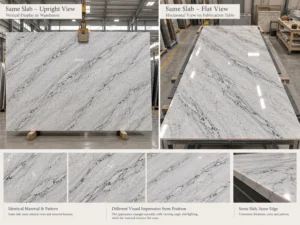
Blue Roma può variare notevolmente nella distribuzione delle aree blu‑grigio, delle fessure più scure, delle strutture cristalline e delle zone minerali più calde. Un piccolo campione potrebbe rappresentare solo una frazione della composizione finale dell’isola.
Anche il marmo Palissandro Blue è naturalmente variabile. La direzione delle bande, l’equilibrio tra blu‑grigio, le zone bianche e il movimento più scuro possono cambiare da lastra a lastra.
Per un’isola dichiarativa, chiedi di esaminare:.
la lastra completa proposta o l’insieme di lastre;
— Vuoi che l’isola sia un punto focale naturale e scenografico.
— Preferisci un complesso movimento geologico blu‑grigio piuttosto che le classiche bande marmoree.
— L’isola sarà utilizzata intensamente e la durezza tipica della quarzite rappresenta un fattore importante.
— Sei disposto ad approvare con cura la lastra esatta e lo schema di taglio.
Scegli il marmo Palissandro Blue se:.
Choose Palissandro Blue Marble if:
— Preferisci un movimento marmoreo blu-grigio più morbido e fluido.
— Il carattere naturale del marmo è più importante rispetto alla massima resistenza all’usura quotidiana della superficie.
— Comprendi e accetti l’effetto di incisione e la patina che si sviluppa nel tempo.
— Il design trae vantaggio da un linguaggio visivo più tipicamente marmoreo.
Per molte isole cucina contemporanee molto sollecitate, la Quarzite Blue Roma risulta generalmente la scelta più robusta in assoluto. Per un acquirente particolarmente attratto dall’aspetto più delicato del marmo e disposto a curarne la manutenzione, il Marmo Blu Palissandro resta una soluzione progettuale distintiva.
Per molte cucine ad alto utilizzo, la quarzite Blue Roma rappresenta la scelta più pratica, poiché la vera quarzite è generalmente più dura e meno sensibile alle sostanze acide rispetto al marmo. Il Palissandro Blue può essere preferito quando l’acquirente desidera specificamente l’aspetto più morbido del marmo e accetta eventuali effetti di erosione e patinatura.
Ciò dipende dalla lastra effettiva. Il Blue Roma può presentare vistose zone di colore blu ghiaccio e blu-grigio, alternate a strutture minerali marrone scuro e più calde, mentre il Palissandro Blue combina comunemente sfumature blu-grigio, argento, bianco e bande più scure dal andamento fluido. È opportuno confrontare le lastre complete piuttosto che affidarsi esclusivamente ai nomi.
[Sì. Blue Roma può realizzare un’isola a cascata dal forte impatto scenico, ma i pannelli superiori e quelli verticali vanno progettati insieme, sfruttando la lastra effettiva, in modo che le principali strutture minerali si integrino in modo deliberato attraverso l’angolo a taglio a 45 gradi.].
In quanto marmo, il Palissandro Blue è soggetto all’effetto corrosivo degli acidi. I proprietari che lo scelgono per un’isola cucina dovrebbero essere consapevoli di come le sostanze acide tipiche della cucina possano influire sulla superficie e valutare se la formazione di una patina sia accettabile.
Entrambi possono funzionare bene. Il Blue Roma si abbina in modo particolarmente efficace al rovere bianco, poiché le sue calde sfumature marroni minerali creano un ponte tra la pietra blu fredda e il legno caldo. Il Palissandro Blue, invece, genera un contrasto più delicato tra freddo e caldo.
Le finiture lucide tendono a esaltare la profondità cristallina e il contrasto cromatico della Quarzite Blue Roma, mentre le finiture levigate offrono un aspetto più morbido e con una minore riflessione. È consigliabile esaminare un campione reale della finitura, poiché l’effetto visivo dipende dalla specifica lastra.
Per un’ampia isola di rivestimento, sì. La verifica su lastra intera consente all’acquirente e al fabbricante di coordinare la posizione del motivo, le sagomature, le giunture, i pannelli a cascata e l’area principale di visualizzazione prima che inizi il taglio irreversibile.
Regola finale di selezione
Scegli prima la categoria di materiale, poi seleziona la lastra specifica. La Quarzite Blue Roma privilegia un carattere geologico marcato e una maggiore resistenza quotidiana in cucina; il Marmo Blu Palissandro predilige un movimento marmoreo più soffice, adatto a chi accetta l’effetto dell’incisione e della patina. Nessuna delle due decisioni dovrebbe essere definita sulla base di un piccolo campione o del solo nome commerciale della pietra.
Per un’isola cucina in Quarzite Blue Roma, HRST STONE può coordinare la selezione della lastra corrente, la verifica dell’intera lastra, la pianificazione del taglio e della disposizione, i rapporti con il piano a cascata, i disegni CAD e di officina, la fabbricazione, il controllo qualità e l’imballaggio per l’esportazione, tutto nell’ambito dello scopo progettuale confermato. Invia a Josh le dimensioni dell’isola, i disegni, la finitura, le esigenze relative ai bordi, le informazioni su lavelli o piani cottura, la direzione visiva preferita e la destinazione di consegna per una valutazione specifica al progetto.
© HRST STONE / XIAMEN HRST STONE CO., LTD. Tutti i diritti riservati.