Marmo Crema Marfil
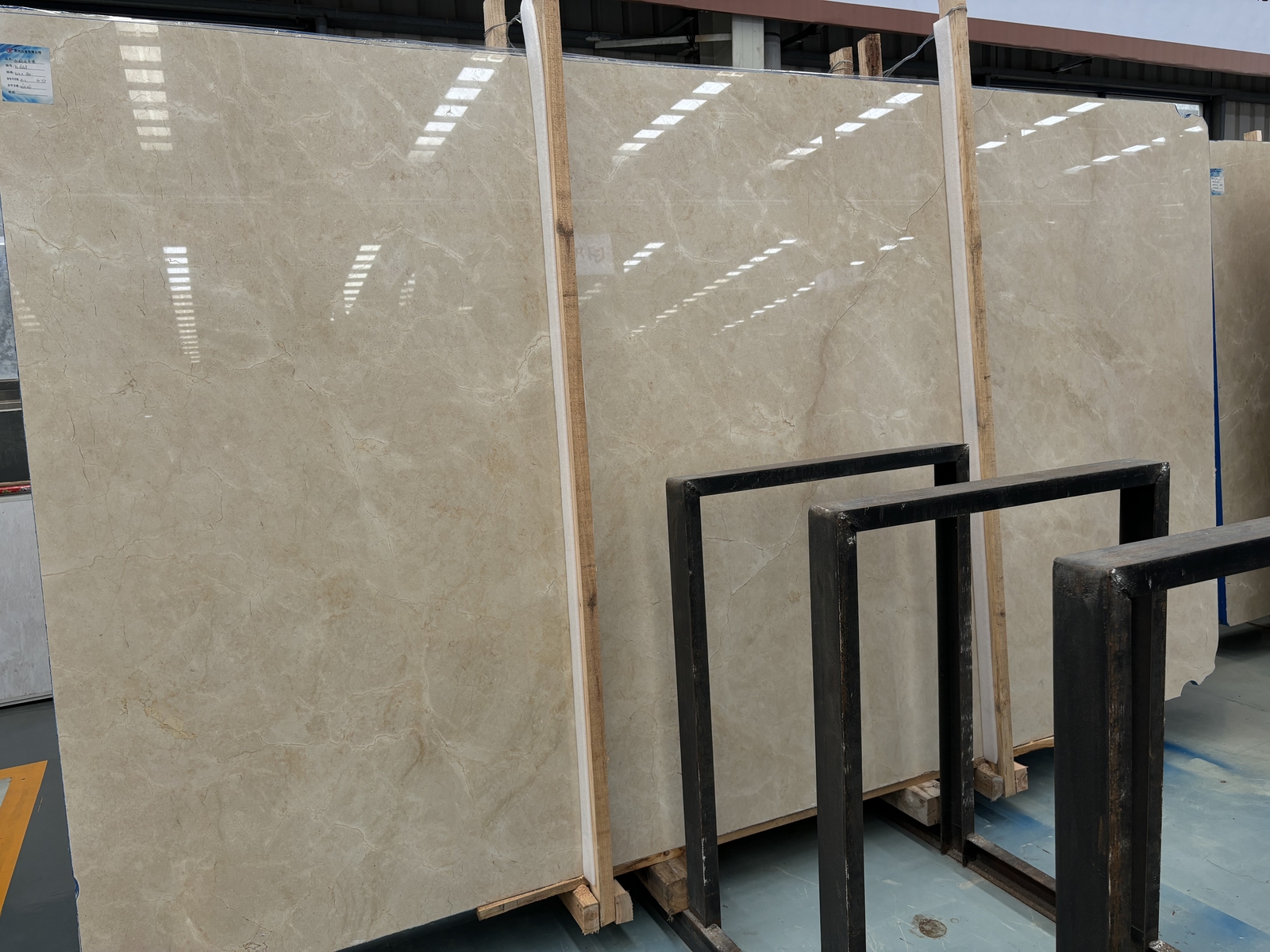
Marmo Crema Marfil is a Spanish natural stone recognized for its warm cream, pale beige and light-ivory appearance. Compared with highly dramatic veined marbles, its visual character is generally quieter, with subtle natural calcite veins and mineral variation distributed through the background.
This relatively restrained appearance makes Crema Marfil particularly useful for architectural areas where stone covers a substantial surface. Interior floors, wall panels, bathrooms and stairs can maintain a warm continuous material palette without relying on strong contrasting veins.
Natural variation still matters. Different production pieces can show lighter ivory areas, warmer beige sections, visible mineral lines or changes in vein concentration. For large B2B projects, the goal is therefore not to expect every piece to be identical, but to define an acceptable visual range and distribute that range intentionally.
Marmo beige naturale
Spagna
Cream · Ivory · Light Beige
Slabs · Tiles · Cut-to-Size
Specifiche del prodotto
| Specifiche | Dettagli |
| Nome del materiale | Marmo Crema Marfil |
| Tipo di materiale | Marmo naturale |
| Origine | Spagna |
| Colori principali | Cream, light ivory and warm beige |
| Motivo della texture | Relatively quiet background with subtle natural veins, calcite lines and slab-dependent mineral variation |
| Spessori disponibili | 18 mm / 20 mm |
| Forme disponibili | Slabs, tiles, wall panels, flooring, vanity tops, stair components and custom cut-to-size pieces |
| Dimensioni disponibili delle lastre | Soggette all’attuale disponibilità di blocchi e lastre |
| Piastrelle / Dimensioni Su Misura | According to project dimensions, cutting schedule and approved drawings |
| Finitura della superficie | Finiture lucide, levigate e altre specifiche di progetto soggette a conferma |
| Opzioni per i bordi | Straight polished, eased, bevel, mitered and custom profiles according to application |
| Ambito di applicazione | Interior floors, walls, bathrooms, vanity tops, stairs, fireplaces and custom architectural stonework |
| Dettagli dell’imballaggio | Protezione specifica per il progetto con casse di legno rinforzate e fumigate |
| Quantità minima ordinabile | In base ai requisiti di lavorazione per lastre, piastrelle o lavorazioni su misura |
| Tempi di consegna | Confermati in base alla disponibilità del materiale, alla quantità e all’ambito di lavorazione |
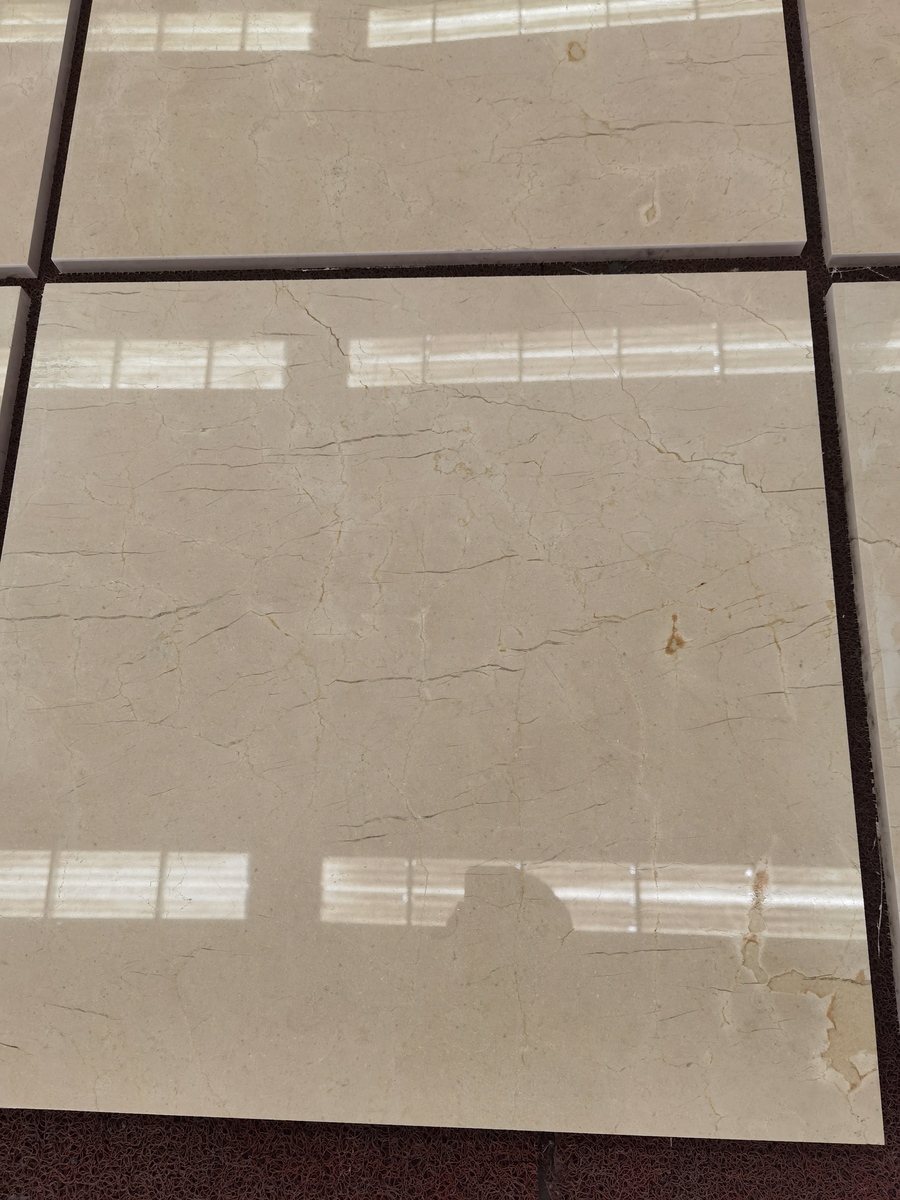
Sample Approval vs. Production-Batch Approval
A Crema Marfil sample is useful for confirming the general cream-beige color family, finish and basic mineral character. It should not, however, be treated as a guarantee that every slab or tile in a project will reproduce the same exact shade.
Natural production material can contain lighter ivory areas, warmer beige pieces and different levels of visible veining. These differences become much easier to see across a large floor or continuous wall than on a hand sample.
Surface Detail, Veins and Natural Features
Crema Marfil is often selected for its relatively restrained pattern, but close inspection reveals natural mineral detail within the cream background. Fine calcite veins, pale mineral lines and localized tonal transitions may appear throughout the stone.
Vein visibility can vary from piece to piece. For large architectural surfaces, buyers should decide whether they prefer a quieter selection or accept a broader range that includes more visible natural markings.
Natural fissures, mineral lines and repaired areas should be evaluated according to their position and the finished application rather than assuming that every natural marking represents the same fabrication risk.
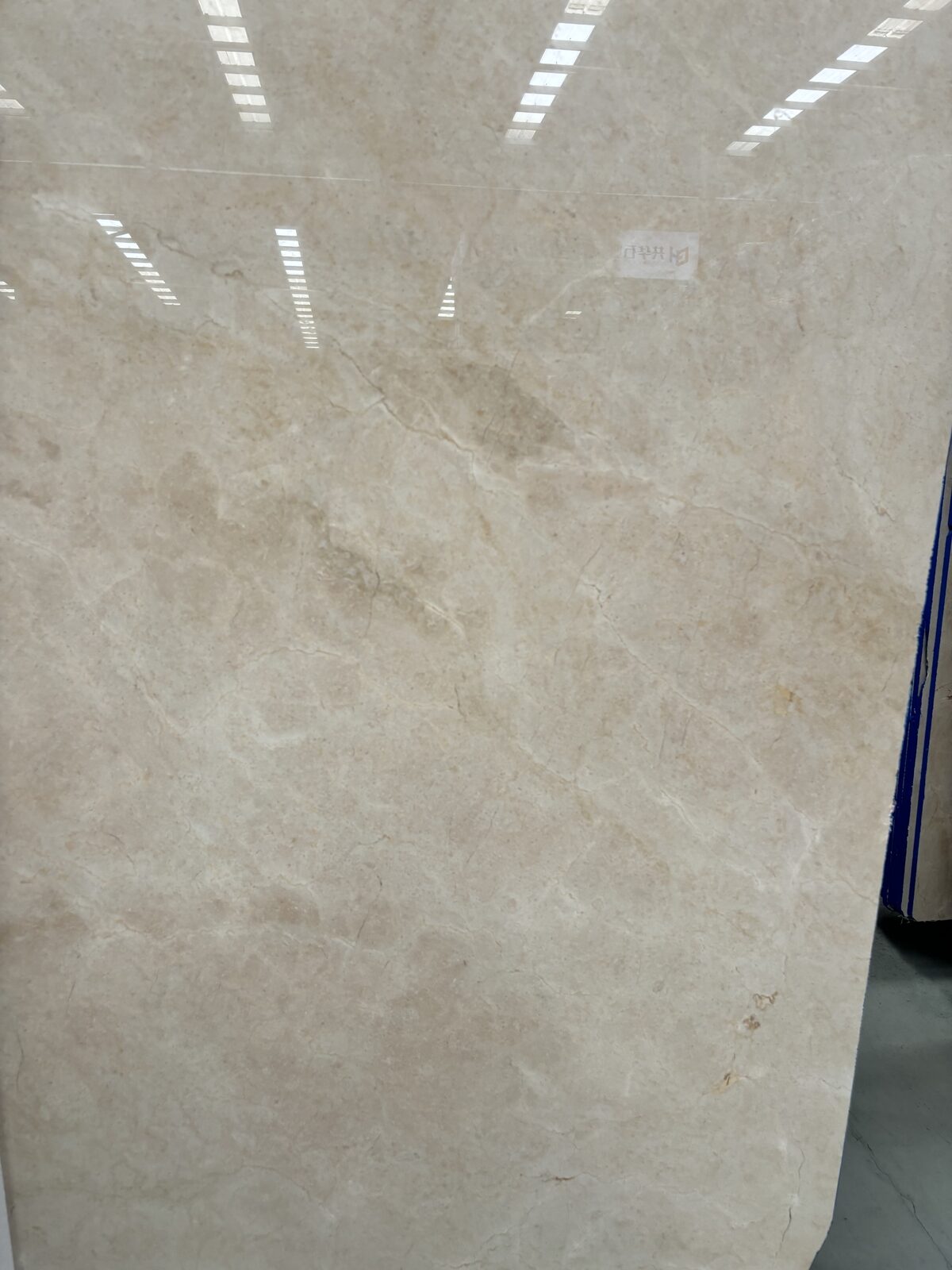
Material Selection and Batch Matching
Crema Marfil is frequently used across large areas, which makes batch matching more important than it may initially appear. A small change in beige depth can become visually obvious when hundreds of tiles are installed side by side.
During material selection, the production batch should be reviewed for overall background tone, vein activity and the proportion of lighter or warmer pieces. For large projects, material can then be divided into compatible groups according to installation area.
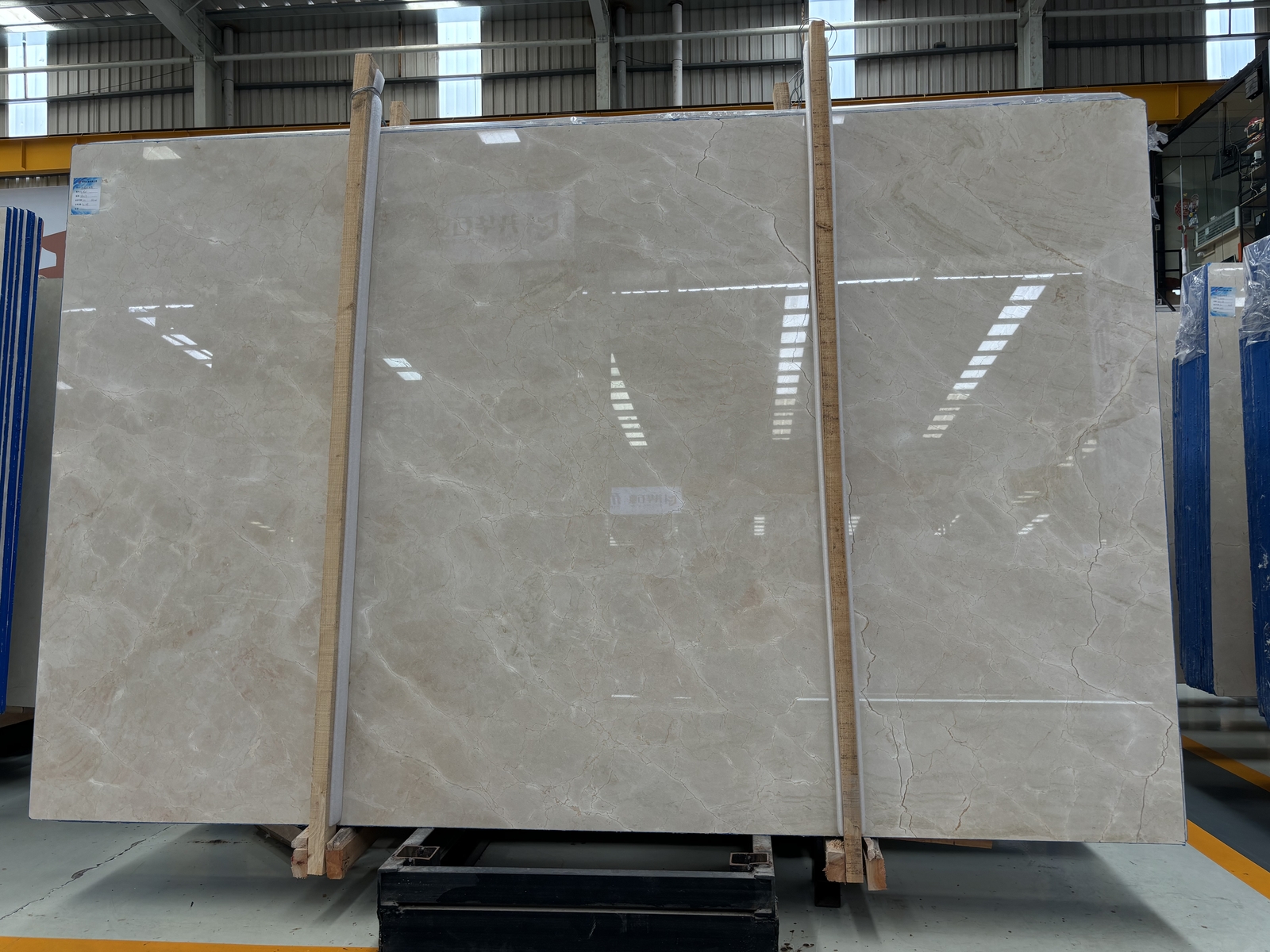
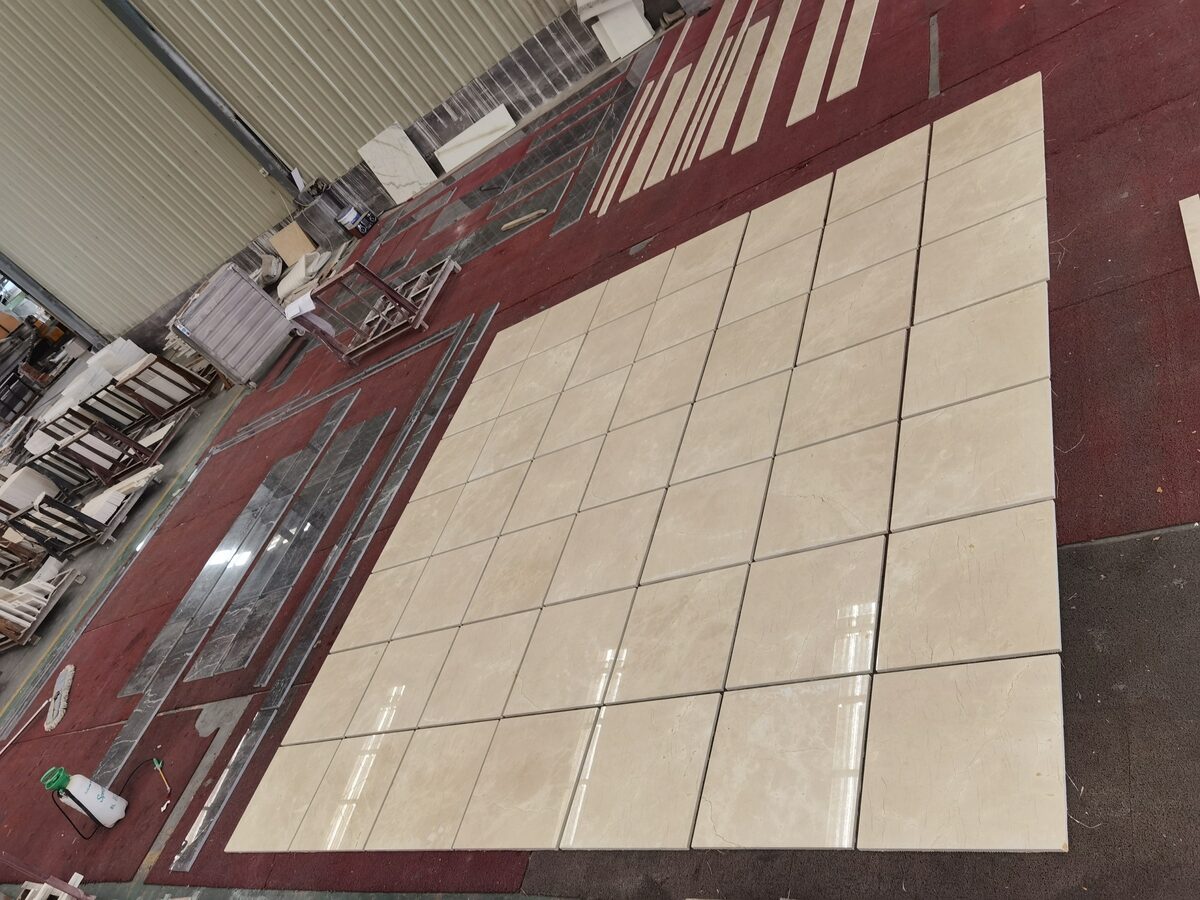
Dry-Lay Review for Large Floors and Walls
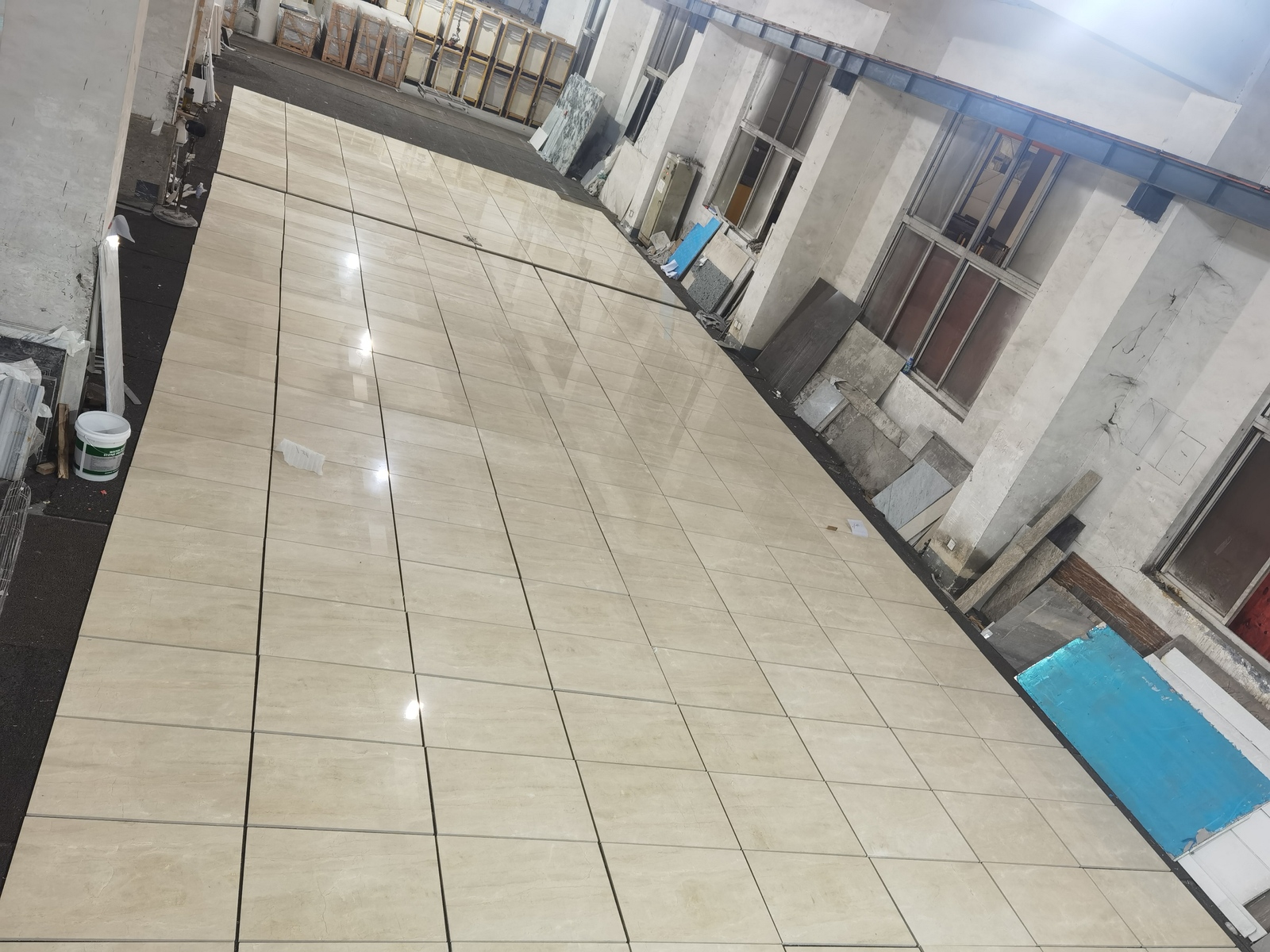
Dry-lay review allows Crema Marfil pieces to be evaluated as a group before they are packed and installed. This is particularly useful when the project contains a large number of tiles or panels from natural material.
Pieces with stronger beige depth, lighter ivory backgrounds or more visible veins can be distributed intentionally instead of becoming concentrated in one area by chance.
For wall elevations, stairs and other sequential components, the same review can also verify piece orientation and installation order before shipment.
Crema Marfil Tiles and Flooring Projects
Flooring is one of the most natural applications for Crema Marfil because its warm, relatively quiet background can extend across large interior areas without creating excessive visual contrast.
The main procurement challenge is consistency across quantity. Tiles cut from different sections of natural material can vary in background tone and vein visibility, so sorting becomes part of the finished design rather than only a factory QC step.
For large floors, tiles can be grouped by visual range and arranged so that changes in tone occur gradually. Piece numbering or installation references can be added when the project requires a controlled layout.
Where Is Crema Marfil Marble Best Used?
Suitable for creating broad warm-neutral stone surfaces where tile sorting and tonal distribution are carefully controlled.
Cut-to-size panels can create relatively calm stone walls with subtle natural variation rather than highly dramatic veining.
Warm ivory tones coordinate naturally across bathroom walls, floors, vanity tops and other custom-fabricated components.
Treads, risers and landings can be fabricated according to approved drawings and grouped for compatible color continuity.
Polished vs. Honed Crema Marfil
A polished finish increases surface reflection and generally makes the warm cream and ivory tones appear richer. It is often selected for interior floors, walls and decorative architectural surfaces where a more refined reflective appearance is desired.
Honed Crema Marfil has lower reflection and produces a softer visual effect. The finish should be selected according to application, lighting, expected traffic and maintenance requirements rather than appearance alone.
Because finish can change the perceived depth of the beige color, project samples should ideally be approved in the same finish specified for production.
Controllo dei rischi nell’approvvigionamento B2B
| Rischio dell’acquirente / Rischio del progetto | Controllo raccomandato |
| Small sample does not represent the complete production batch | Use the sample for initial approval, then confirm the actual batch or agreed visual range before large-volume cutting. |
| Some pieces appear warmer or darker than others | Pre-sort material by background tone and distribute the different shades intentionally across the installation. |
| Visible veins become concentrated in one floor area | Review tile groups or dry-lay the material before packing so more active pieces are distributed appropriately. |
| Wall panels show abrupt color changes at joints | Review adjoining panels together and control their sequence before final packing. |
| Natural mineral lines or repaired areas occur in focal pieces | Inspect critical visible pieces and allocate material according to the approved visual requirement. |
| Production finish does not visually match the approved sample | Confirm the required finish before production and inspect representative finished pieces for surface consistency. |
| Tiles are mixed or installed in the wrong controlled sequence | Use piece or crate identification and installation references where the project requires a planned layout. |
Fabbricazione su misura e controllo qualità
Crema Marfil project QC should evaluate both fabrication accuracy and visual consistency. This is especially important for large floors and wall packages because small differences that are acceptable on individual pieces can become more obvious when hundreds of pieces are installed together.
Confirm the production batch, cream-beige range and visible natural characteristics.
Check finished dimensions and required project quantities during production.
Inspect finish consistency, visible edges and specified fabrication details.
Separate and balance lighter, warmer and more visibly veined pieces where required.
Review related floor, wall or sequential pieces together before packing.
Number controlled panels, stair pieces or installation sequences according to drawings where required.
Confirm quantity, dimensions, visual grouping and fabrication quality before packing.
Verify surface protection, separators, crate grouping and shipment identification.
Crema Marfil Packing and Export Preparation
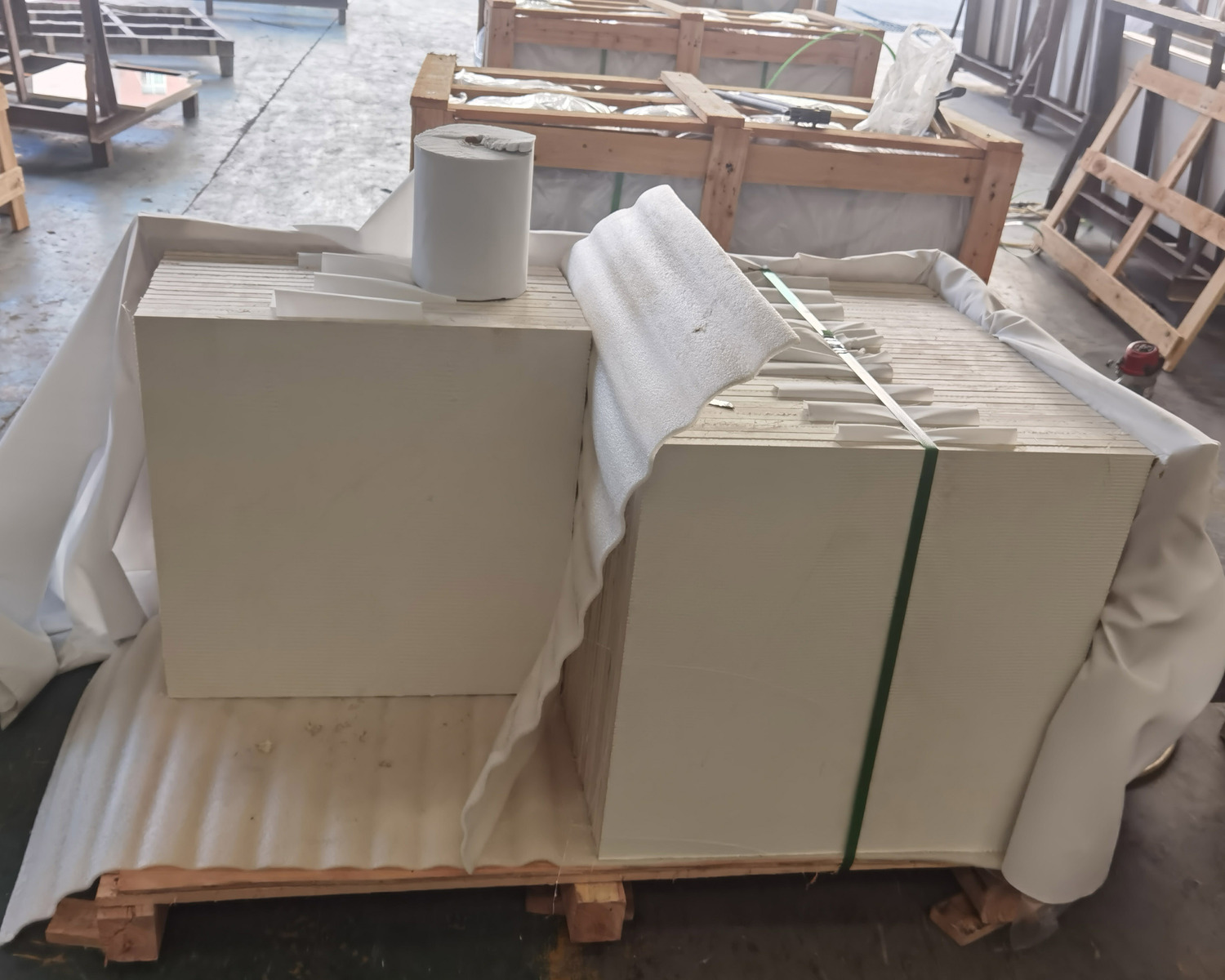
Packing should preserve both the physical condition of the stone and the sorting logic established during production. This is particularly important for tile, wall-panel and stair packages where pieces may already have been grouped according to color or installation sequence.
Finished surfaces use una protezione morbida e non macchiante per la superficie. Vulnerable edges and corners are protected with protezioni per i bordi e per gli angoli, mentre separatori rigidi e blocchi interni help reduce movement during transport.
Related pieces can be packed according to area, drawing reference or installation sequence. Production inspection is completed before packing, followed by final packing inspection.
Export orders are secured in Casse di legno rinforzate e fumigate appropriate to the size, quantity and finished product format.
Why Choose HRST STONE for Crema Marfil Projects?
Con Oltre 17 anni of natural stone project experience, HRST STONE provides one-stop natural stone solutions covering material selection, CAD and shop drawing support, cut-to-size fabrication, visual sorting, quality control and international export packing.
For Crema Marfil projects, support can include production-batch review, cream-beige color matching, tile sorting, wall-panel planning, custom fabrication, dry-lay confirmation, piece numbering, final QC and packing according to project areas or installation sequences.
This workflow is especially useful for hotels, villas and commercial interiors using substantial quantities of the same beige stone, where controlling the relationship between individual natural pieces is as important as inspecting each piece separately.
Informazioni necessarie per un preventivo
- Forma del prodotto: slabs, tiles, wall panels, flooring, vanity tops, stairs or custom pieces
- Dimensioni: tile sizes, panel sizes or finished component dimensions
- Quantità: square meters, pieces or slab quantity
- Spessore: spessore della pietra richiesto
- Finitura: polished, honed or other specified finish
- Preferenza visiva: lighter ivory, warmer cream, quieter pattern or broader natural variation
- Fabrication: cut-to-size, edges, cutouts, stair processing or other custom requirements
- Layout Requirement: random installation, controlled sorting, dry-lay or numbered installation sequence
- Disegni: CAD, PDF, floor plans, elevations or schedules where available
- Destinazione: porto di destinazione o luogo di consegna per la valutazione logistica
Crema Marfil Marble FAQ
1. Where does Crema Marfil Marble come from?
Crema Marfil is a natural Spanish stone associated with Alicante, Spain. Commercial batches should still be approved using the actual material being supplied because background tone and natural markings can vary between production selections.
2. Why can Crema Marfil tiles vary in color even within the same order?
Natural Crema Marfil can range from lighter ivory to warmer cream and beige, while vein visibility also changes between pieces. Large orders should therefore be selected from compatible production material and sorted before packing.
3. Is Crema Marfil suitable for large interior flooring projects?
Yes. Its relatively restrained cream-beige appearance makes it suitable for large interior floor areas. For projects using substantial quantities, tile sorting and dry-lay review can help distribute natural tonal variation more deliberately.
4. Is a small Crema Marfil sample enough to approve a large order?
A sample is useful for confirming the general color family and finish, but it cannot represent the complete natural range of a large production batch. For major projects, buyers should also approve the actual batch or an agreed visual range before cutting.
5. Should Crema Marfil floor tiles be dry-laid before shipment?
Dry-lay review is particularly useful when the project requires controlled color distribution or when lighter, warmer and more visibly veined pieces need to be balanced across a large area. The required level of layout control should be agreed before production.
6. Is polished or honed Crema Marfil better for an interior project?
Polished Crema Marfil has stronger reflection and generally emphasizes the warm cream tone, while a honed finish produces a softer, lower-reflection appearance. The choice should depend on the application, design intent, lighting and maintenance requirements.
7. What should buyers confirm before ordering Crema Marfil Marble?
Buyers should confirm product form, dimensions, thickness, finish, acceptable cream-beige color range, vein tolerance, quantity and any required sorting or dry-lay process. For cut-to-size projects, drawings and installation sequence should also be reviewed before production.
Nota finale
For samples: use them to approve the general cream-beige direction and finish, not as a guarantee that every production piece will be identical.
For flooring: define the acceptable tonal range and pre-sort lighter, warmer and more visibly veined tiles before packing.
For wall panels: review adjoining pieces together so that abrupt changes in color or vein activity can be controlled.
Per le scale: coordinate treads, risers and landings through approved drawings, visual grouping and piece numbering where required.
For large projects: reserve compatible production material early enough to reduce the risk of introducing a visibly different batch later.
For custom Crema Marfil projects, the recommended control sequence is sample approval → production-batch review → color-range confirmation → CAD/shop drawing review → cutting and fabrication → visual sorting → dry-lay where required → piece numbering → final QC → packing inspection → reinforced export packing.