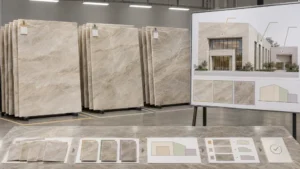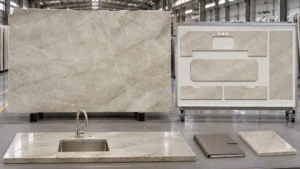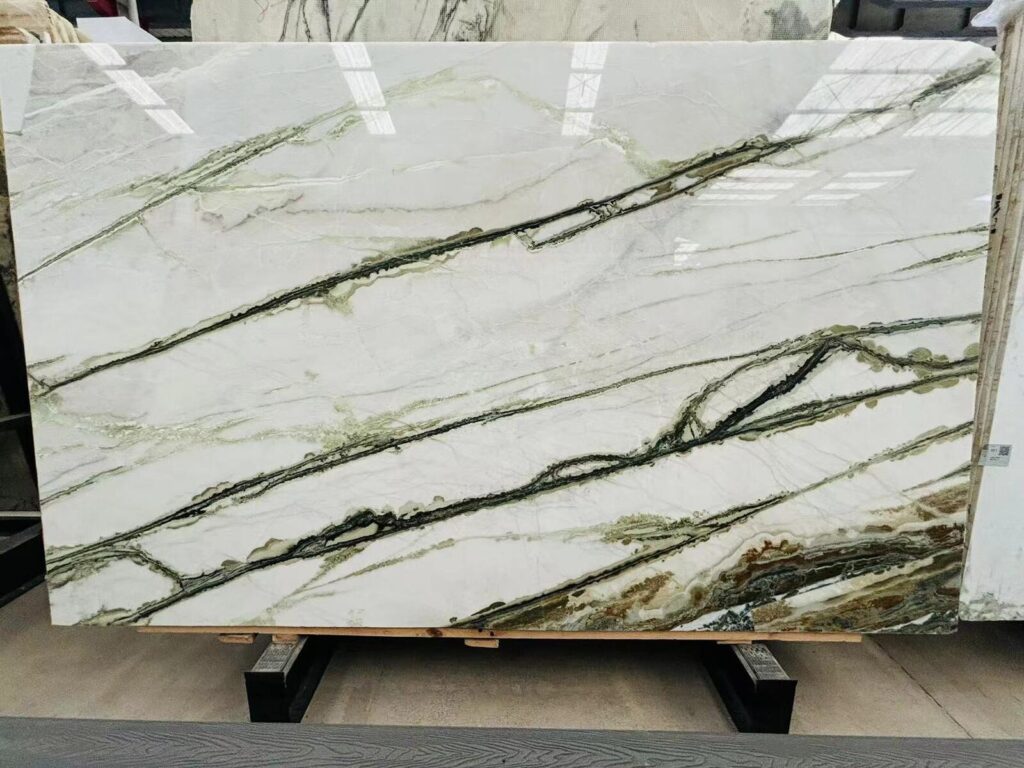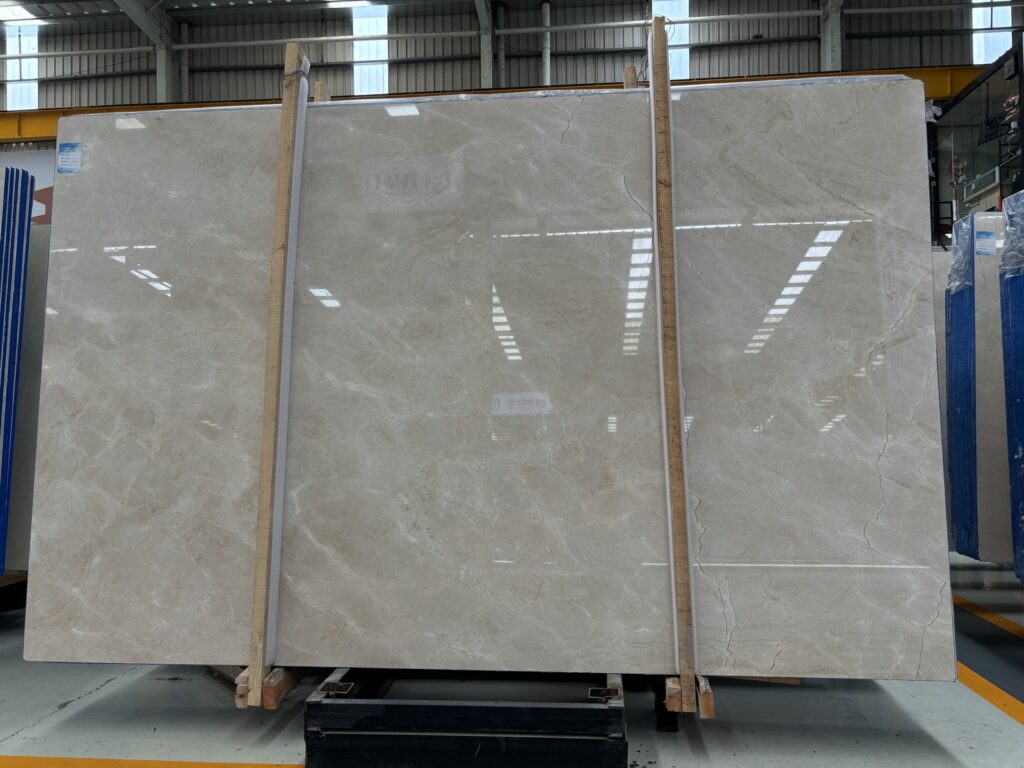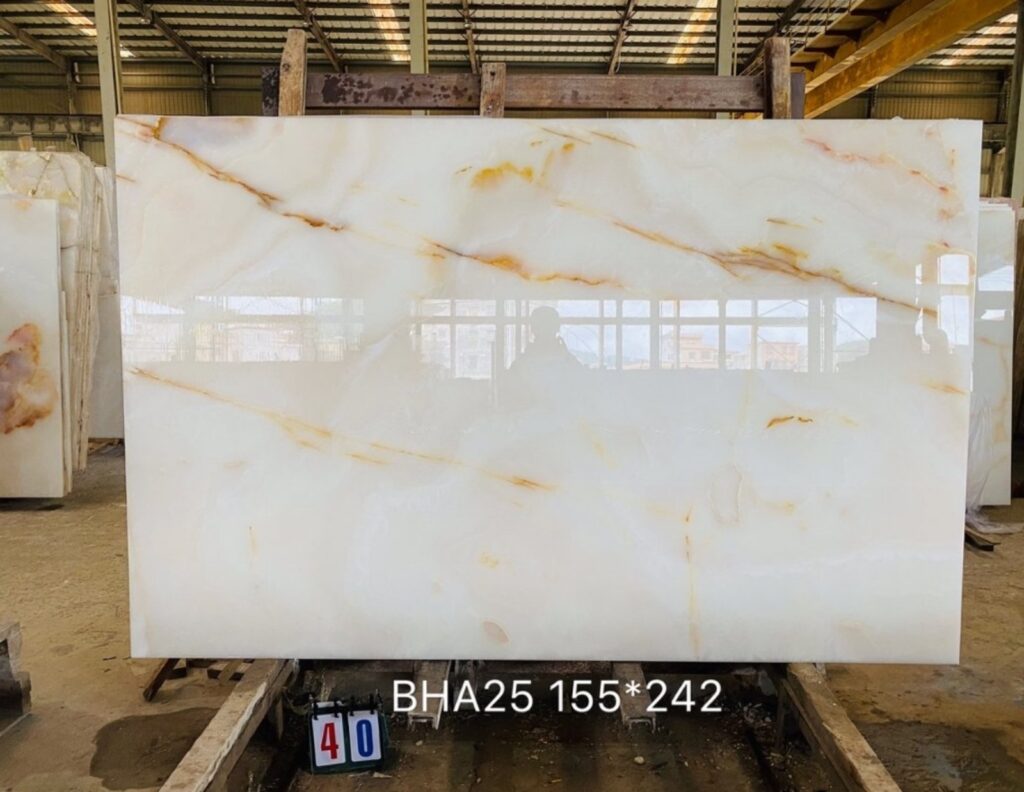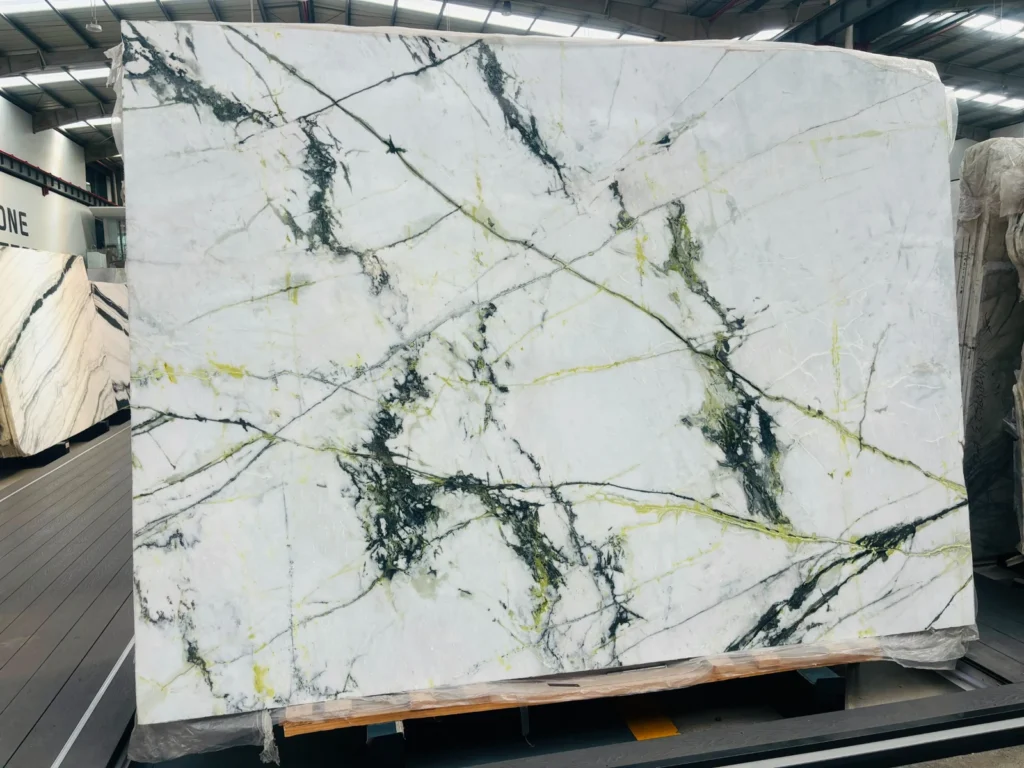

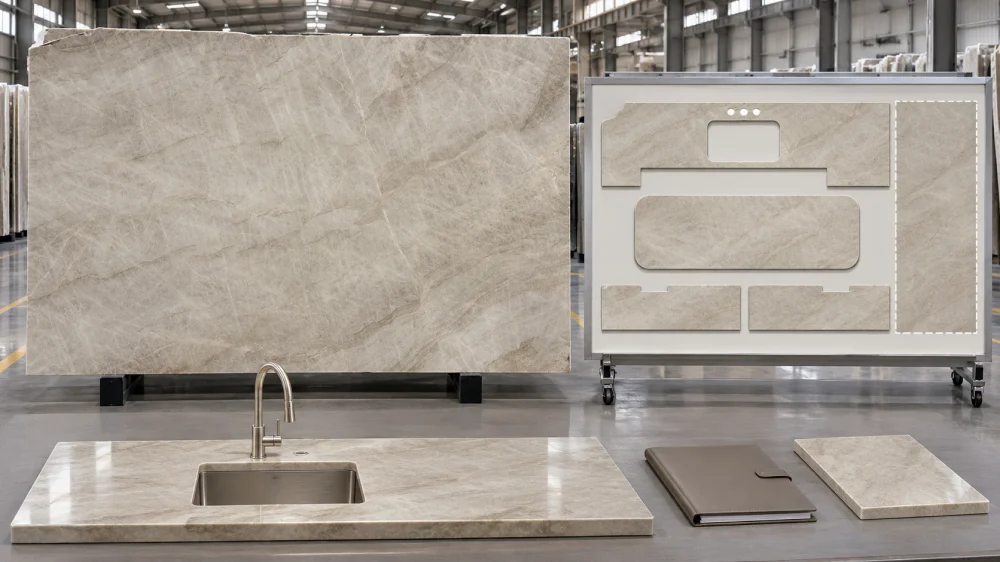
Quartzite spare pieces should be selected before the original slab group disappears if future replacement, repair or project extension would be difficult to match with newly sourced stone. The best reserve is not always a full unused slab. Depending on the project, a finished spare component, a large traceable remnant, a retained slab section or a small finish reference may provide more practical value. Whatever is retained should remain connected to its source board, dimensions, thickness, finish, intended use, storage location and current status.
संक्षिप्त सारांशDo not wait until a Quartzite replacement is needed to ask whether any original stone remains. Before the selected slab group is consumed, sold or released, identify which installed components would be difficult to replace, then decide whether to retain a finished spare piece, a useful raw remnant, a larger reserve section or an additional slab. Record the source board number where known, current dimensions, thickness, finish, photographs, condition, storage location and reservation purpose. The goal is not to keep every offcut; it is to preserve the original stone that has the highest future replacement value.
ए Quartzite spare piece is original project stone intentionally retained for a possible future replacement, repair, extension, finish reference or related project need.
It may be:
The useful question is not:
“How much leftover stone do we have?”
यह है:
“Which retained piece would actually help if an important installed component had to be replaced later?”
नेचुरल क्वार्ट्जाइट स्लैब-विशिष्ट है।.
Once the original selected boards have been fabricated, released or sold, a later slab carrying the same commercial name may still differ in tone, movement, mineral distribution or large-scale pattern.
That does not mean a future match is impossible.
It means the strongest matching opportunity usually exists while the original physical stone is still identifiable and available.
Spare planning should therefore happen during slab allocation and project closeout, not years later after a replacement need appears.
A useful sequence is:
Approved Slabs → Cutting Layout → Main Project Pieces → Remaining Usable Stone → Spare Decision → Remnant Register → Storage → Completion Archive
Reserve Decision PrincipleThe objective is not to save every scrap from the fabrication shop.
Retain the pieces whose original material identity, dimensions and usable geometry create a realistic future replacement or project value.
Start with the installed project rather than the leftover pile.
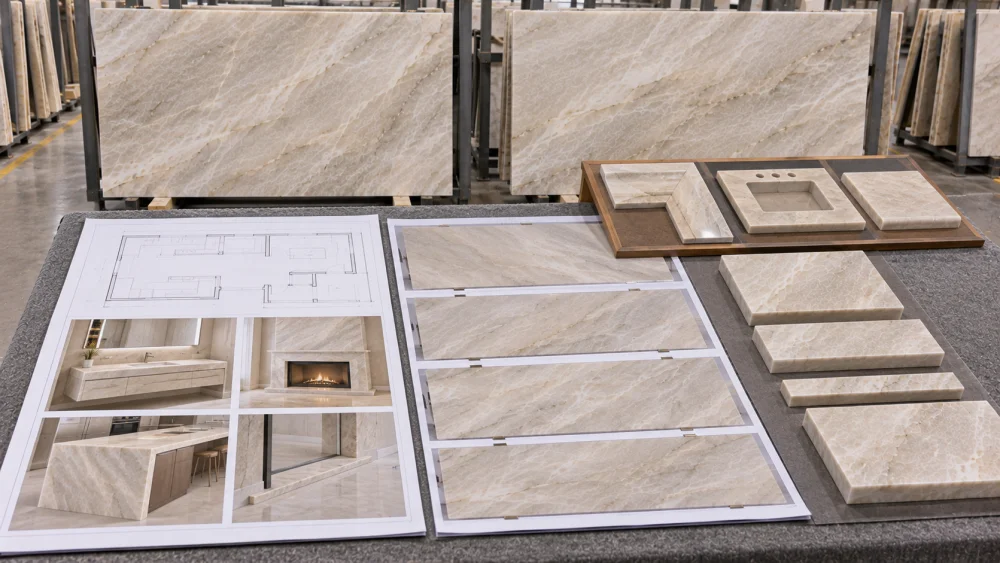
Some components are much harder to replace convincingly than others.
Higher-priority conditions may include:
By contrast, an isolated small component located in another room may tolerate a wider future natural variation.
This means spare planning should consider both:
replacement probability
और
matching sensitivity.
| Installed Condition | Future Matching Sensitivity | Possible Reserve Strategy |
| Small independent threshold | Low to moderate | Useful remnant may be sufficient |
| Repeated hotel vanity | मध्यम से उच्च | Finished spare or large traceable remnant |
| Large island waterfall end | उच्च | Large reserve section if geometry allows |
| Feature-wall panel sequence | Very high | Project-specific spare panel or reserved related stone |
| Finish / edge reference only | Visual-process reference | Small physical reference sample |
These should not be treated as the same inventory.
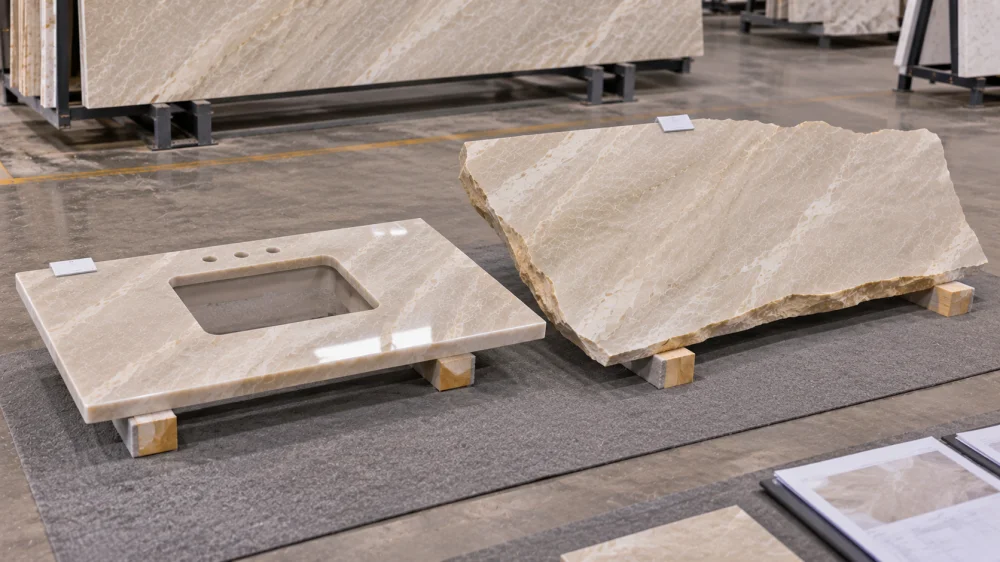
A finished spare has already been fabricated for a defined replacement condition.
It may already contain:
Its major advantage is readiness.
The disadvantage is that its geometry may have limited usefulness if the future condition changes.
A remnant retains more fabrication flexibility.
It can potentially be recut for several different future requirements.
However, its useful area must be judged from its actual current geometry rather than a simple bounding rectangle.
An irregular remnant may contain missing corners, existing cutouts, finished edges or natural features that reduce the available cutting area.
वर्तमान Quartzite Project Completion Records guide distinguishes spare finished pieces from raw remnants and recommends retaining their identity, current dimensions, condition and storage location as part of the final project archive.
A full spare slab can provide the greatest future flexibility, but it also requires the most space, handling and inventory commitment.
It should therefore be a deliberate project decision rather than an automatic rule.
A full slab may deserve consideration when:
A full slab may be excessive when the plausible future replacements are all small pieces and one or more large traceable remnants already provide sufficient usable area.
Do not define one universal spare-slab percentage for every Quartzite project.
The appropriate reserve depends on the installed scope, available material, replacement geometry, storage conditions and commercial priorities.
The best moment to evaluate reserve material is often before the original cutting layout is released.
The fabricator can see:
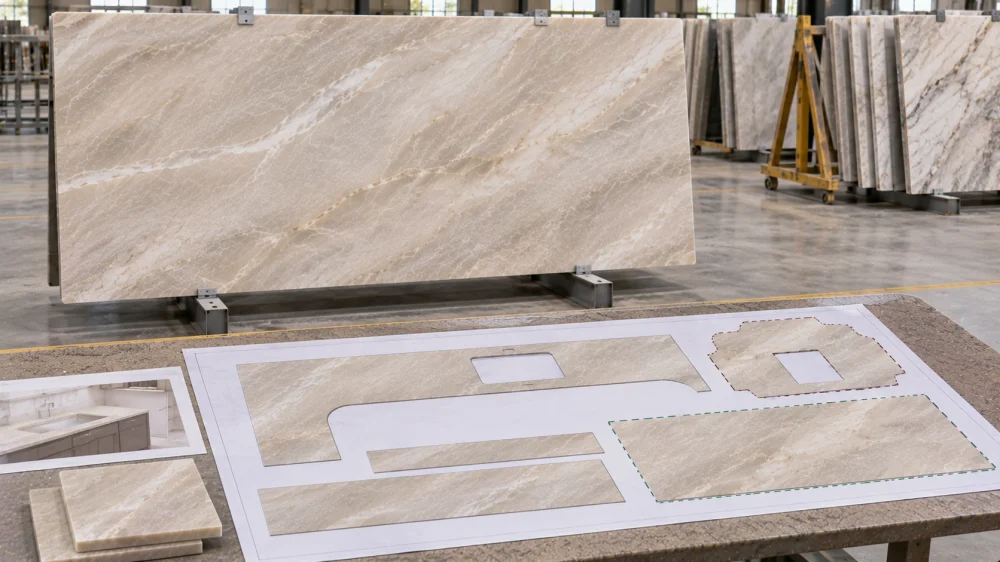
For example, a Taj Mahal Quartzite kitchen package may leave two possible remnants:
Remnant A: large enough numerically but contains an existing sink cutout and irregular edge.
Remnant B: slightly smaller overall but contains a clean rectangular usable area with the same general movement as the perimeter counters.
Remnant B may provide greater future value.
Usable-Area RuleDo not reserve a remnant only because its maximum length and width appear large.
Review the actual current shape and ask whether a realistic future piece can be positioned inside the usable stone area.
Where practical, retaining stone from the same source slab can provide stronger traceability and a closer natural relationship.
That may be especially useful when the future spare would sit directly beside an existing installed piece.
However, this is not always possible or necessary.
A related slab from the same approved group may be more useful if it provides better dimensions.
The decision should record the relationship rather than overstate it.
उदाहरण के लिए:
Source Board: TM-042 — Same slab as installed vanity V-03
या:
Source Board: TM-044 — Related approved board from original project group
That distinction can be extremely valuable years later.
Do not leave it in the warehouse labelled only:
“Taj Mahal leftover.”
Once multiple projects use the same commercial stone name, that label provides very weak traceability.
A controlled spare or remnant record can include:
| रिकॉर्ड क्षेत्र | उद्देश्य |
| Spare / Remnant ID | Stable identity for the retained physical piece |
| सामग्री का नाम | Commercial material reference |
| Source Board | Links it to the original physical slab where known |
| Project / Location | Explains why the stone was retained |
| वर्तमान आयाम | Defines the current physical geometry |
| Thickness / Finish | Supports future fabrication and matching review |
| वर्तमान फोटोग्राफ | Shows actual present shape and visible surface |
| स्टोरेज स्थान | Allows the physical stone to be found again |
| स्थिति | Held / available for review / allocated / recut / consumed / other controlled status |
The ID should be created while the connection to the original slab is still known.
Trying to reconstruct the source six months later from pattern and memory is much less reliable.
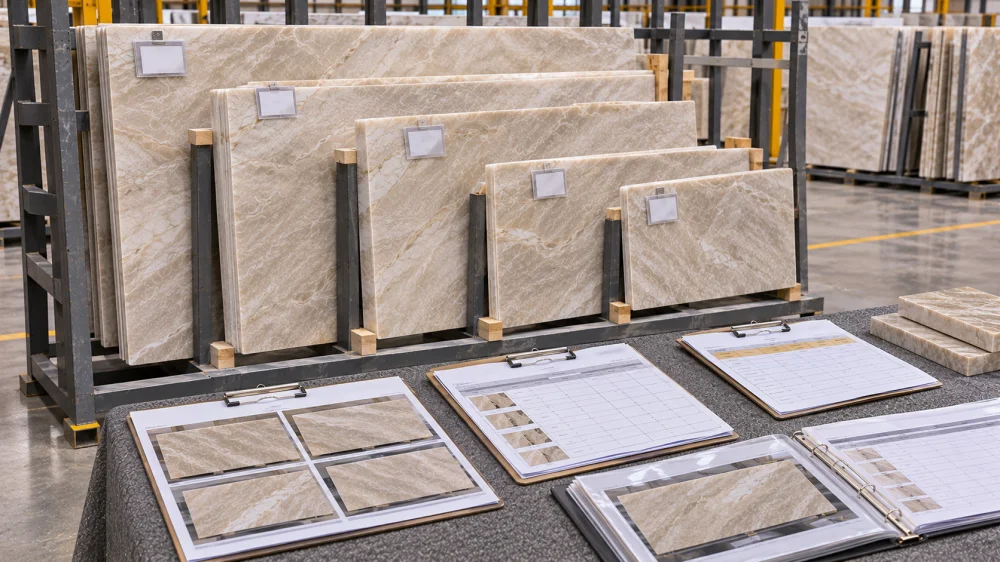
The record should change with the physical stone.
मान लें:
TM-042-R01
is later used to make a replacement backsplash.
If part of the remnant still remains, do not leave its original dimensions and photograph in the register.
Update the history:
Source Board → Original Remnant → Recut Piece → Remaining Remnant
Record the new geometry, new photograph, current storage location and current status.
Do not overwrite the entire history, because the previous record can explain what was removed and what still physically exists.
Controlled storage has a cost.
Keeping every small strip, irregular scrap and anonymous fragment can make the useful pieces harder to find.
A piece may have low reserve value when:
This should not become a rigid discard rule.
A small piece may still be valuable as a finish, edge or colour-direction reference even when it cannot produce a replacement component.
There is no universal answer.
A finished spare component offers maximum certainty when one specific replacement geometry is predictable.
A raw reserve offers greater flexibility when several future pieces could be needed.
A practical project may retain both:
one finished high-risk spare + one flexible raw remnant.
For example, a repeated hotel bathroom project might retain one finished vanity backsplash or threshold from a repeated type while also keeping a larger raw section for other small repairs.
The appropriate strategy depends on:
A spare piece has limited future value if nobody knows that it exists.
The final handover or completion package should therefore identify the retained stone.
A useful project-closeout chain is:
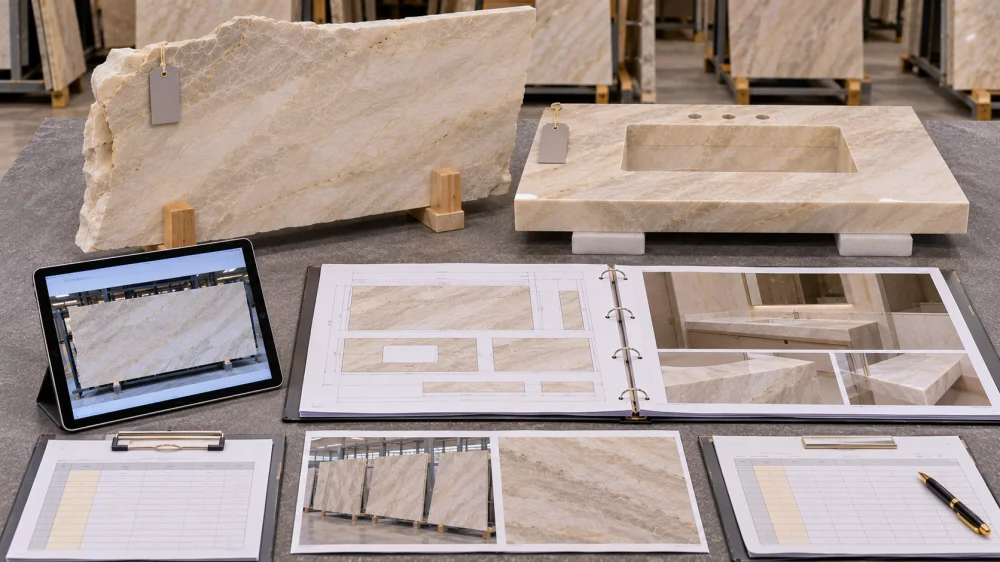
Board Number → Cutting Layout → Installed Piece → Spare / Remnant ID → Storage Location → Current Status
The क्वार्ट्ज़ाइट फ़ैक्टरी से साइट को हस्तांतरण दस्तावेज़ सूची already includes a spare-piece / remnant register as a useful completion record.
The Quartzite Project Completion Records guide goes further by preserving slab identity, final layouts, installed locations and retained original stone for future matching.
This is important because:
Recorded ≠ Available
और
Available ≠ Suitable for the future piece.
A spare may still physically exist while being allocated, already recut, reserved for another project purpose or too small for the replacement currently needed.
A project does not necessarily need to retain the same spare material indefinitely.
The project owner, supplier or other responsible party may later decide that continued storage is no longer justified.
Before releasing a useful reserve, record the change in status.
Where appropriate, confirm:
Do not allow “held for original project” to silently become “used on another order” without updating the record.
The existing Quartzite Slab Reservation Form uses the same principle for full slabs: reservation status, expiry and release should remain explicit rather than being inferred from old messages.
Consider retaining one when future replacement or matching would be difficult and the remaining original stone has useful geometry. The reserve may be a finished spare, raw remnant, larger slab section or additional slab depending on the project.
There is no universal percentage that fits every project. Base the decision on the size and importance of potential replacement pieces, natural-stone matching sensitivity, available usable remnants, project risk, storage capacity and commercial cost.
It can be for smaller replacements. A well-documented remnant may provide enough original material for a vanity component, backsplash, threshold or other small piece. Large future components may require a much larger retained section or full slab.
Where practical, same-slab stone provides strong source traceability and may offer a closer natural relationship. A related board from the original approved set can also be useful. Record which relationship applies rather than implying that all retained pieces came from the same board.
Only when the future replacement geometry is predictable enough to justify doing so. A finished spare can be efficient for repeated components, while raw original stone provides greater flexibility for unknown future requirements.
Record a stable ID, material name, source board where known, current dimensions, thickness, finish, visible face, condition, current photographs, storage location, status and later recut history where relevant.
Send the selected slab references, final cutting layout, high-risk installed components and expected replacement priorities. Ask HRST STONE to identify any useful remaining original stone, current dimensions and source relationships, then decide which finished spares, remnants or larger reserve sections should be held and recorded before the material is released or reused.
Spare-Piece DecisionThe best Quartzite spare is not necessarily the biggest leftover piece.
Reserve the original stone that has the strongest relationship to realistic future replacement needs. Keep its source identity, usable geometry, finish, photographs, storage location and status traceable. When the piece is recut, released or consumed, update the record rather than allowing the project history to become inaccurate.
Buyer Next Step: Review the final cutting layout before the remaining original stone is discarded or returned to stock, and identify which pieces deserve a controlled project hold.