

Xiamen Stone Fair is one of the most important events in the global natural stone industry. Every year thousands of suppliers present marble, granite, quartzite, engineered stone, and fabrication services to international buyers. While the exhibition provides a valuable opportunity to discover new suppliers and materials, trade show meetings alone are rarely enough to finalize a sourcing decision. Serious procurement projects often require a factory visit to verify that the supplier truly has the capabilities demonstrated at the exhibition booth.
Many buyers first build their sourcing shortlist during the exhibition itself. For example, reviewing an exhibitor list and supplier guide helps identify companies that match specific project requirements. However, once several potential suppliers are identified, the next step should always involve deeper verification. Visiting a factory allows buyers to see the production environment, meet technical teams, and confirm whether the supplier’s processes match their marketing claims.
Factory visits are particularly important when the order volume is large or when projects require customized fabrication. Stone is a natural material, and variations in color, veining, and texture can create unexpected issues during installation. By inspecting production lines and quality control systems directly, buyers can better understand how a supplier manages these variations and maintains consistency across large batches.
Many procurement risks originate from incomplete supplier verification. At trade shows, suppliers often present only their best samples and most attractive products. While this is normal marketing practice, it does not always reflect everyday production conditions. A factory visit provides transparency into the real operational environment behind the booth presentation.
For example, buyers should evaluate whether the factory actually owns the machinery required for large-scale production. A company that only coordinates outsourcing might struggle with delivery schedules or quality consistency. This is why many procurement professionals combine exhibition meetings with detailed supplier verification methods. Our guide on how to verify a stone supplier explains the key indicators buyers should check before committing to long-term cooperation.
In addition to machinery and production lines, factory visits allow buyers to evaluate operational discipline. Organized workshops, clear labeling systems, and documented inspection procedures usually indicate strong production management. Conversely, a disorganized factory environment can signal potential delays and quality problems later in the project.
| Zone de vérification | What Buyers Should Observe |
|---|---|
| Production Equipment | Cutting machines, polishing lines, calibration systems |
| Quality Control | Inspection procedures and measurement tools |
| Material Storage | Slab organization and block inventory |
| Export Preparation | Packaging methods and container loading practices |
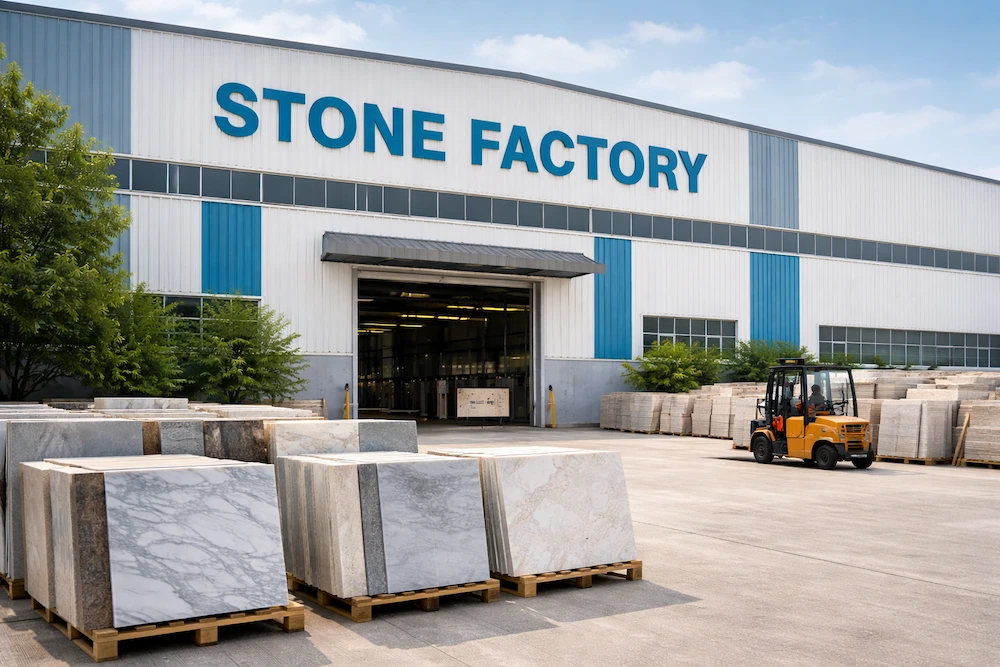
Preparation is essential for an effective factory inspection. Buyers should clearly define their project requirements before scheduling a visit. These requirements may include stone type, slab thickness, surface finish, and fabrication dimensions. Providing this information to the supplier in advance allows the factory to prepare relevant materials and samples.
Buyers should also review current material trends to ensure the selected stone matches market expectations. For example, recent industry discussions around marble versus quartz trends show that both materials remain popular for different architectural applications. Understanding these trends can help buyers choose suppliers who specialize in the most suitable materials for their projects.
Another important preparation step involves creating a supplier evaluation checklist. A structured checklist ensures that each factory is evaluated using the same criteria, making comparison easier after the visit. Buyers often include factors such as slab consistency, fabrication accuracy, packaging standards, and export experience. Our detailed la checklist des fournisseurs pour les acheteurs mondiaux provides a practical framework that can be used during factory inspections.
When visiting a stone factory, buyers should focus on three major operational areas: production capability, quality control systems, and logistics preparation. These three elements determine whether the supplier can reliably support international construction projects.
The first area to inspect is production capacity. Buyers should examine cutting machines, polishing equipment, and fabrication workshops. Observing how workers handle slabs and operate machinery can reveal whether the factory follows standardized procedures. Consistent workflows usually indicate better production efficiency and lower defect rates.
The second area involves quality control. Buyers should ask how slabs are inspected before shipment. Many professional factories measure thickness, check surface defects, and record inspection results before packaging. These procedures reduce the risk of receiving inconsistent materials on site.
The third area concerns export readiness. International stone shipments require careful packaging to prevent breakage during transportation. Wooden crates, foam protection, and proper container loading are essential elements of safe export logistics.
| Inspection Focus | Reason for Verification |
|---|---|
| Workshop organization | Indicates operational discipline |
| Measurement tools | Ensures dimensional accuracy |
| Slab inventory | Confirms supply availability |
| Packaging system | Protects materials during export |
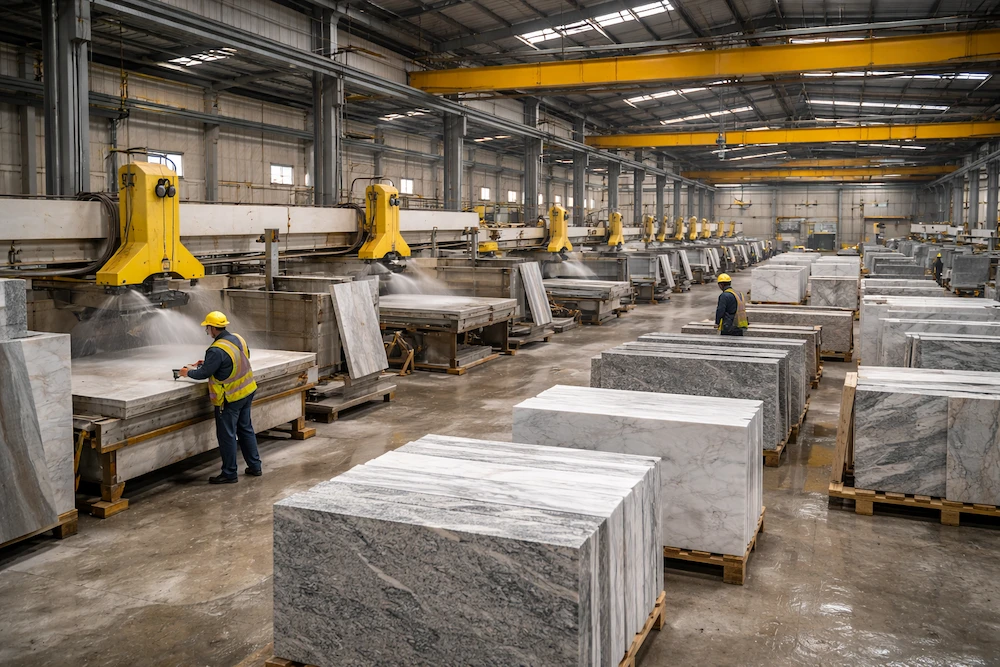
A factory visit is not only about inspection but also about building professional relationships. Meeting engineers, production managers, and quality inspectors allows buyers to understand the people responsible for delivering the final product. Strong communication between buyer and supplier significantly reduces project risk.
Long-term cooperation also depends on transparent expectations. Buyers should clearly explain project timelines, quality requirements, and delivery schedules during the visit. This open discussion helps both sides evaluate whether a partnership is realistic.
Many experienced buyers begin their sourcing journey with a strategic understanding of the exhibition itself. Our comprehensive strategic sourcing guide for international buyers explains how trade shows fit into the broader procurement process. When factory visits are integrated into this strategy, buyers can transform exhibition contacts into reliable long-term suppliers.

Les visites d’usine permettent aux acheteurs de vérifier les conditions réelles de production, les capacités des machines et les systèmes de contrôle qualité, au-delà de ce qui est présenté sur les stands d’exposition.
Most buyers shortlist three to five suppliers for factory visits to compare production capability and reliability.
The first focus should be production capacity and equipment, as these determine whether the supplier can fulfill large orders.
For small sample orders they may not be essential, but for large construction projects they are strongly recommended.
Most visits last between two and four hours, depending on the size of the facility and the complexity of the production process.
Yes, meeting the production team and discussing project requirements directly often strengthens cooperation and trust.