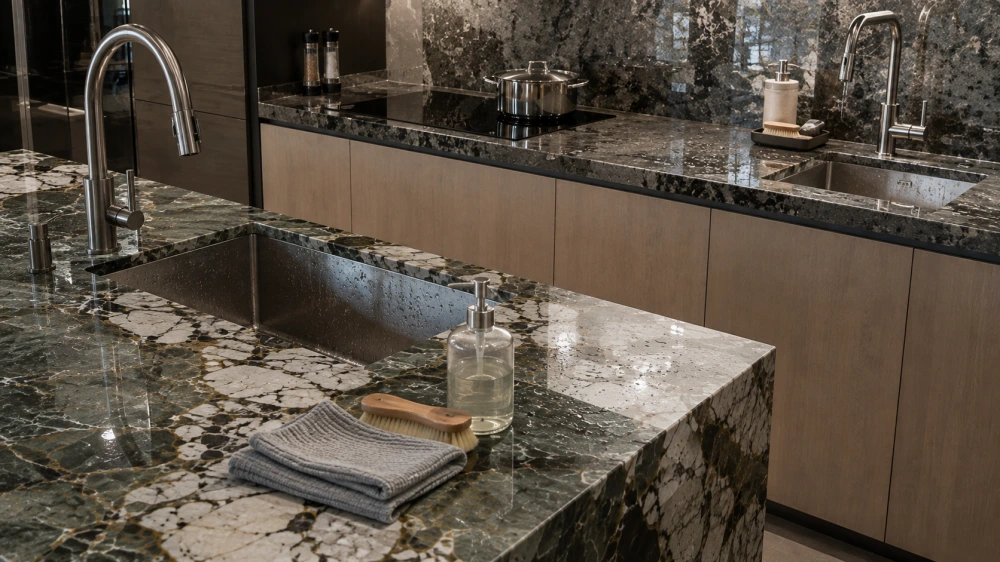
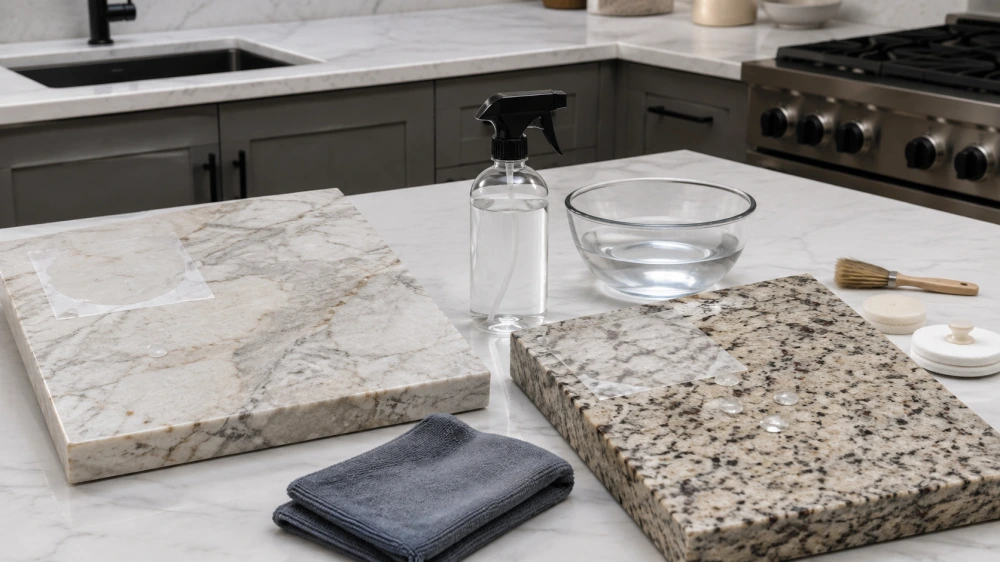
Comparaison de l’entretien : le quartzite est-il plus facile à entretenir que le granit ?
Post navigation
Résumé rapide
Le quartzite naturel et le granit nécessitent tous deux une planification d’entretien spécifique à chaque matériau. Comparez les dalles approuvées, l’usage prévu, la finition, les détails de fabrication et les exigences de réception avant de prendre une décision.
Pour un acheteur international, la question n’est pas de savoir quelle marque semble plus solide, mais plutôt de vérifier si la pierre naturelle choisie, la gamme de dalles approuvées, le plan de fabrication et les attentes en matière d’entretien correspondent bien à l’usage prévu. La comparaison des besoins d’entretien — « Le quartzite est-il plus facile à entretenir que le granit ? » — doit donc être évaluée comme une décision de projet, et non comme un raccourci basé sur un échantillon présenté en showroom. Le quartzite naturel et le granit sont tous deux des pierres naturelles, mais leurs appellations commerciales, leur composition minérale, leur comportement face aux mouvements, leur capacité d’absorption et leur adéquation peuvent varier d’un matériau à l’autre. Une comparaison rigoureuse permet de rester concentré sur les spécificités et aide l’équipe projet à éviter les suppositions avant le début de la découpe.
L’entretien commence par un cahier des charges bien défini
Les comparaisons d’entretien devraient se focaliser sur des pratiques concrètes, et non sur des affirmations absolues selon lesquelles une pierre naturelle serait toujours sans effort. Pour les importateurs, les fabricants, les designers, les architectes, les entrepreneurs et les équipes d’approvisionnement des projets, le point de départ utile est un cahier des charges écrit : application prévue, plans, dimensions finales, épaisseur, traitement des bords, finition, quantité, processus d’approbation et destination de livraison. Ce cahier des charges permet au fournisseur et au fabricant d’évaluer le matériau choisi dans son ensemble, comme un système complet. Il évite également qu’une discussion générale du type “ quartzite versus granit ” ne masque les détails qui influencent effectivement la commande.
Point de décision
Questions à inclure dans le cahier des charges du projet
Pourquoi cela importe-t-il ?
Routine de nettoyage
Quels produits nettoyants, avec quelle fréquence, et quelles habitudes d’utilisation sont attendus ?
Les besoins d’entretien dépendent du matériau réel et des conditions d’utilisation.
Discussion sur le scellement
Un traitement est-il envisagé, et qui en confirme la compatibilité ?
Évitez les généralisations de catégorie concernant l’absorption ou la protection.
Finition et détails
Comment seront entretenues la finition sélectionnée, les bords, les joints et les zones de projection d’eau ?
La surface fabriquée nécessite un plan pratique de réception.
Le quartzite naturel est une catégorie de pierre naturelle et ne doit pas être confondu avec le quartz industriel, qui est un composite manufacturé. Le granit est lui aussi une pierre naturelle, mais il n’est pas interchangeable avec tous les quartzites vendus sous une appellation commerciale. Les déclarations de performance doivent rester spécifiques au matériau. Examinez les dalles réelles, demandez au fabricant comment seront traitées la finition et les détails sélectionnés, et validez tout traitement ou approche de scellement proposée en fonction de la pierre et des conditions du projet. C’est bien plus fiable que de considérer une affirmation de catégorie comme une garantie.
Utilisez la dalle, et non seulement le nom de la catégorie
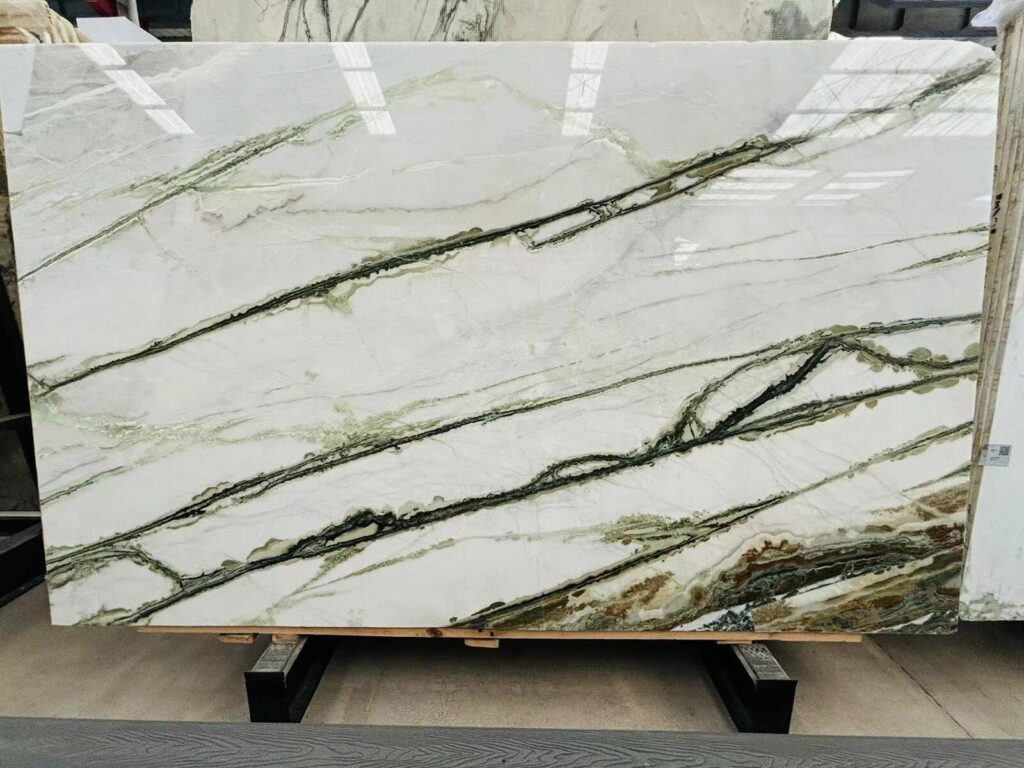
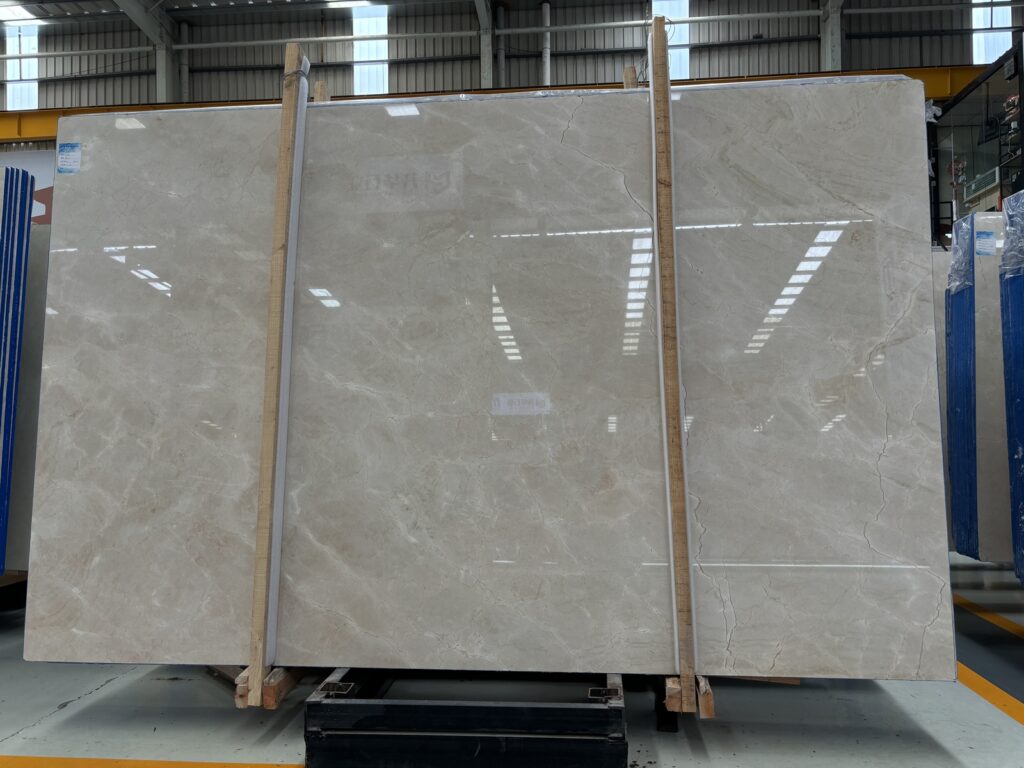
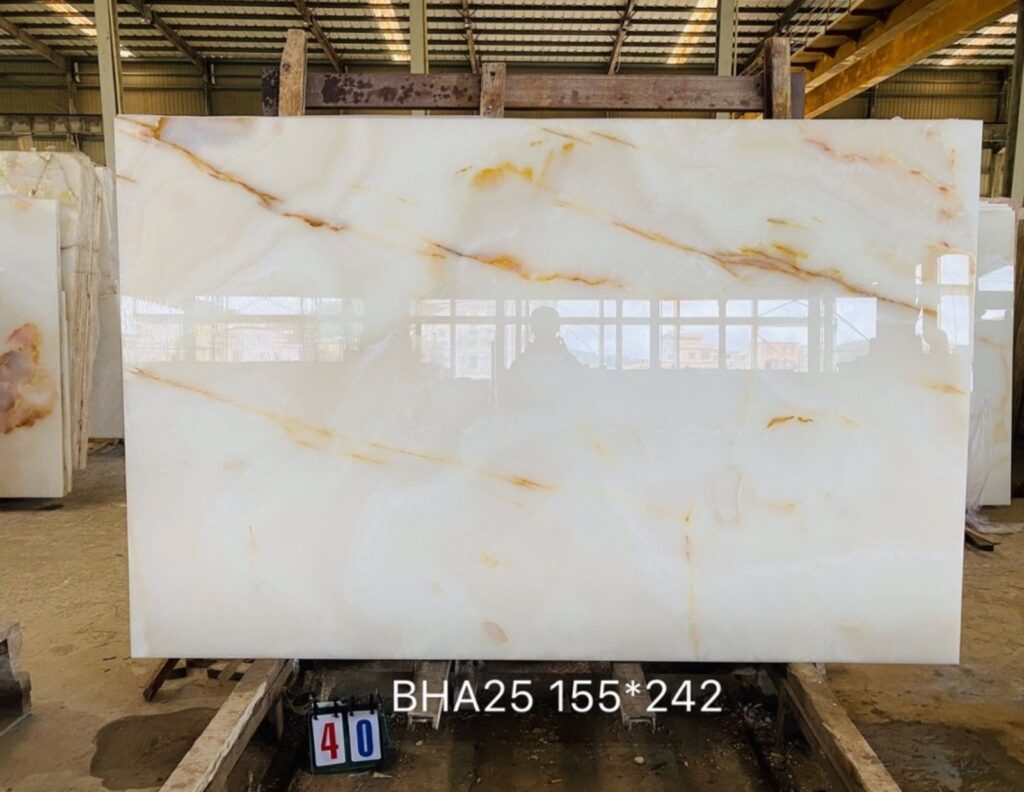
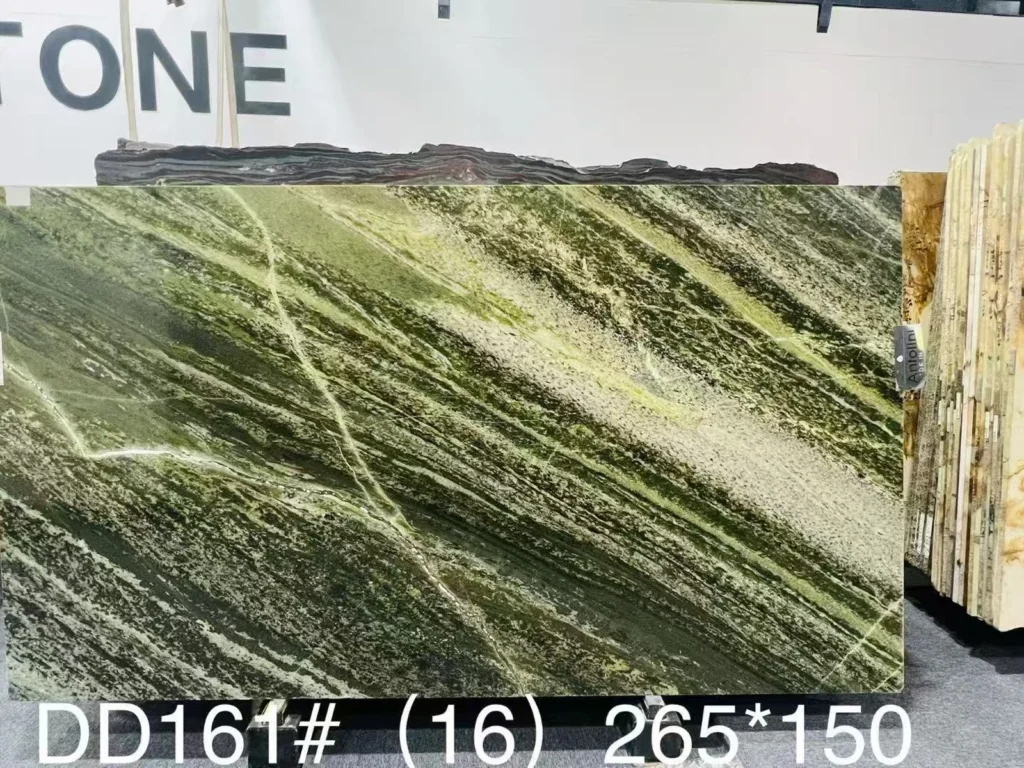
L’approbation des dalles doit faire partie intégrante de la comparaison. Demandez à voir des photos actuelles des dalles ou, lorsque cela est possible, une vidéo en direct ; puis examinez la teinte de fond, les mouvements, les fissures, les zones comblées, le caractère des bords, la régularité de l’épaisseur ainsi que la relation entre la face visible et le plan de découpe prévu. La variation naturelle fait partie intégrante de la pierre naturelle. La question commerciale essentielle est de savoir si la gamme approuvée soutient l’intention de conception et si le nombre de dalles, la marge de rendement et les choix de disposition ont été clairement compris avant la fabrication.
Examinez la fabrication avant de choisir une finition ou un bord
La fabrication modifie les performances d’un matériau en service. Les ouvertures, les rails étroits, les porte-à-faux non supportés, les profils de bord, les joints et les transitions doivent être examinés en lien avec la dalle réelle et le procédé du fabricant. L’équipe projet devrait partager les plans d’atelier dès le début, identifier les zones vulnérables et s’accorder sur qui valide la direction des veines et le placement des pièces. Cela est particulièrement précieux lorsque l’expression visuelle et une surface soumise à un usage quotidien exigeant doivent fonctionner ensemble.
Mettez en place un processus de comparaison prêt à l’achat
La clarté commerciale est tout aussi importante. Un devis utile distingue le périmètre matériel approuvé des travaux de fabrication, de finition, d’emballage, de logistique et des opérations côté destination, là où ces éléments entrent dans le champ d’application. Il ne doit pas laisser entendre l’existence d’un stock, d’un prix, d’un délai, d’une origine, d’un test ou d’une certification non confirmés. Si plusieurs alternatives sont comparées, conservez la même application, les mêmes dimensions, la même quantité, la même finition, les mêmes exigences relatives aux bords et la même base de livraison pour chaque demande. Des paramètres comparables facilitent l’audit d’une décision d’achat.
Phase
Action de l’acheteur
Résultat de la décision
Examen des matériaux
Comparez les dalles réelles et l’application déclarée.
Une gamme visuelle et matérielle approuvée.
Révision technique
Partagez les plans, les dimensions, la finition et les détails des bords.
Une approche consciente de la fabrication.
Révision commerciale
Alignez les quantités, le périmètre, l’emballage et la destination.
Des apports comparables des fournisseurs.
Approbation finale
Confirmez les dalles sélectionnées et la version actuelle du plan.
Un point de libération clair avant le traitement.
Plan d’utilisation, de nettoyage et de réception
L’usage quotidien n’est pas une condition unique. Une cuisine privée, un comptoir de petit-déjeuner d’hôtel, un bureau de service au détail, un bar humide, une coiffeuse, un élément extérieur ou un bureau d’accueil introduisent chacun des schémas différents d’humidité, de nettoyage, d’impact, d’exposition à la chaleur et de comportement des utilisateurs. L’équipe de conception devrait cartographier la surface en fonction de ces conditions, puis discuter des consignes d’entretien et des limites pratiques avec le fabricant. Un plan d’entretien réaliste, documenté pour l’opérateur, est préférable aux promesses selon lesquelles toute pierre naturelle serait entièrement sans entretien.
Comment transformer les questions d’entretien en une commande maîtrisée
L’entretien est souvent abordé trop tard, après le choix d’un matériau uniquement pour son aspect esthétique. Une meilleure approche consiste à intégrer les exigences d’entretien dès l’examen du matériau. Demandez quels produits utiliseront les équipes de nettoyage quotidiennes, si la surface sera compatible avec les aliments, les cosmétiques, l’eau, les huiles ou les produits chimiques de nettoyage, et comment seront gérés les déversements. La réponse peut varier selon qu’il s’agit d’une cuisine résidentielle, d’un projet hôtelier ou d’un environnement commercial de service.
Pour la quartzite naturelle, un acheteur avisé ne doit pas supposer que tous les noms commerciaux de pierre réagiront de manière identique. Il en va de même pour le granit. Les dalles approuvées, la finition, les détails de fabrication et le contexte d’installation doivent guider la discussion sur l’entretien. Si un fabricant recommande un produit d’étanchéité, un nettoyant ou une procédure d’entretien périodique spécifique, il convient d’enregistrer le produit et les instructions dans le cadre de la passation du projet.
Les détails de conception peuvent faciliter ou compliquer l’entretien. Les joints étroits, les transitions au niveau des éviers, les zones d’éclaboussures, le drainage et les profils de bord doivent être examinés au regard des conditions pratiques de nettoyage. Il ne s’agit pas seulement d’un exercice esthétique : des détails bien pensés permettent à l’utilisateur de suivre la routine prévue sans recourir à des solutions improvisées.
Rendre la décision traçable au sein de toute l’équipe
Un choix de matériau peut passer entre le concepteur, le maître d’ouvrage, le responsable des achats, le fabricant, l’installateur et le responsable des services techniques. Chacun peut employer un langage différent pour exprimer la même exigence. Un bref compte-rendu de décision permet de maintenir l’alignement des points de vue : indiquer le matériau proposé, identifier les images ou échantillons de dalle approuvés, préciser l’application envisagée, consigner les finitions et les détails des bords, et noter les hypothèses nécessitant encore une confirmation par des spécialistes. Ce registre est particulièrement utile lorsqu’un projet compare la quartzite naturelle au granit, car il clarifie que la comparaison porte sur un périmètre défini et non sur une préférence générale.
Établir une cadence claire de communication pour les achats à distance. Après une première rencontre succincte, regrouper les questions relatives aux matériaux, aux plans et à la logistique, afin que chaque révision aboutisse à une action concrète et précise. Séparer les validations visuelles des modifications concernant les dimensions ou le périmètre de traitement, car elles impliquent souvent des relecteurs différents. Lorsqu’un point ne peut être confirmé sur la base des informations disponibles, le consigner comme « en attente » plutôt que de le transformer en hypothèse. Un suivi rigoureux aide l’acheteur, le fournisseur et le fabricant à coordonner leurs actions de manière responsable, sans exagérer les faits connus à ce stade.
Utiliser dès le début les informations dimensionnelles. L’épaisseur, le bord fini, le débord, les découpes pour éviers ou appareils, les transitions de dosseret, ainsi que toute modification de plan peuvent influencer à la fois le résultat esthétique et l’examen de la fabrication. Un plan n’a pas besoin d’être excessivement complexe pour être utile ; il doit être à jour, mesurable et associé à la discussion sur le matériau. Si un détail de conception revêt une importance particulière pour l’acheteur, il doit figurer clairement dans les documents fournis pour le devis et l’approbation, plutôt que d’être laissé sous forme d’instruction informelle.
Pour les projets comportant plusieurs pièces, incluez une discussion sur la disposition avant la mise en production. Réfléchissez aux faces qui seront les plus visibles, à la manière dont le mouvement doit se poursuivre entre les pièces adjacentes lorsque cela est pertinent, aux zones susceptibles d’afficher des joints, ainsi qu’à l’éventuelle utilisation du book‑matching ou d’une autre approche directionnelle. Le quartzite naturel peut offrir des variations expressives ; l’acheteur devrait donc s’assurer que la disposition envisagée sera évaluée par rapport aux dalles disponibles. Le granit peut requérir la même rigueur. L’objectif est d’établir des attentes claires, sans promettre une répétition identique des motifs naturels.
La gestion des risques doit être pragmatique. Au lieu de demander des assurances générales, posez des questions ciblées concernant les conditions auxquelles la surface achevée sera exposée. Décrivez l’emplacement, le trafic prévu, les pratiques de nettoyage, les contacts avec l’eau ou la chaleur, ainsi que toute activité opérationnelle inhabituelle. Le fabricant et les professionnels compétents pourront alors évaluer le matériau sélectionné et préciser les détails dans leur contexte. Cette approche aide l’équipe à identifier les situations où une protection supplémentaire, un détail adapté ou un choix de matériau différent méritent d’être pris en compte avant d’engager des coûts.
La réception et la passation de chantier méritent également une attention particulière. Une équipe d’approvisionnement bénéficiera d’une liste d’emballage claire, de l’identification des pièces lorsque cela est nécessaire, ainsi que d’un processus convenu pour les contrôles visuels et dimensionnels à la réception. Le projet devrait également conserver les plans définitifs approuvés, les visuels des matériaux et les informations d’entretien dans un dossier de passation. Cela s’avère utile pour la coordination de l’installation et pour répondre ultérieurement aux questions de maintenance. C’est bien plus fiable que d’essayer de reconstituer ce qui avait été approuvé après que les matériaux aient transité par plusieurs intervenants.
Lorsque vous comparez les fournisseurs, veillez à maintenir la cohérence du cahier des charges. Adressez à chaque partenaire le même nom de matériau ou la même orientation visuelle, les quantités, les plans, les finitions, les détails des bords, la destination de livraison ainsi que le périmètre de services demandé. Les réponses pourront alors être évaluées en fonction de ce qu’elles couvrent effectivement. Si un élément demeure inconnu, laissez‑le en suspens plutôt que de présumer qu’il est inclus. Cette discipline améliore la communication sans inventer de revendications concernant le prix, la disponibilité, les délais, l’origine, les tests ou l’expérience sur le projet.
Enfin, planifiez les validations dans l’ordre où elles influencent le projet. Confirmez d’abord l’application prévue et les critères de comparaison ; examinez ensuite les visuels actuels des matériaux ; harmonisez les détails de fabrication et les plans ; puis fixez le moment de la libération pour le traitement et l’emballage. Cette séquence permet aux décideurs de traiter les questions visuelles, techniques et opérationnelles tant que les modifications restent maîtrisables. Les comparaisons relatives à la maintenance doivent privilégier les routines pratiques, plutôt que des affirmations absolues selon lesquelles une pierre naturelle serait toujours sans effort. Il s’agit d’un processus mesuré qui accompagne un achat international de quartzite naturel, depuis la phase initiale d’enquête jusqu’à la planification de la livraison.
Le contrôle qualité est plus efficace lorsqu’il est visible et structuré. Avant l’emballage, les acheteurs peuvent demander la confirmation de l’identifiant du matériau approuvé, des dimensions, de la finition, des travaux de bord, de l’étiquetage ainsi que de l’approche d’emballage convenue. Pour les travaux sur mesure, la version révisée du plan approuvé doit être explicite. Pour les dalles, l’équipe projet devrait convenir de la manière dont l’identification des lots, la sélection des dalles et l’inspection visuelle seront documentées. Ces étapes ne remplacent pas une inspection professionnelle sur site, mais elles réduisent les malentendus évitables au-delà des frontières.
Questions que les acheteurs devraient régler avant de passer commande
Demandez si le projet dispose d’une équipe dédiée aux installations ou au nettoyage et si celle-ci nécessite une remise en main propre concise concernant l’entretien. Dans les travaux multi‑sites, une fiche d’instructions uniforme peut limiter les variations entre les différents lieux.
Demandez au fabricant d’identifier sur les plans approuvés tous les détails sensibles à l’entretien. L’objectif n’est pas de prédire chaque incident, mais de s’assurer que l’acheteur comprend où l’usage courant, les pratiques de nettoyage et les procédés de fabrication se rejoignent.
Demandez à chaque décideur de valider simultanément le matériau, la finition et les hypothèses d’entretien. Cela permet d’obtenir un historique plus clair que de séparer l’approbation visuelle de l’approbation opérationnelle.
Avant l’approbation finale, diffusez le dossier de comparaison auprès de l’acheteur, de l’équipe de conception, du fabricant et du responsable des achats. Vérifiez que la sélection du matériau, le périmètre, les plans, la finition, les hypothèses opérationnelles et les exigences de réception décrivent bien le même projet. Ce bref contrôle croisé aide à éviter les décisions fondées sur des informations incomplètes ou contradictoires et favorise une mise en production plus ordonnée.
comparaison-entretien-quartzite-granit
Questions fréquentes
1. Le quartzite naturel est‑il entièrement sans entretien ?
Aucune pierre naturelle ne saurait être qualifiée d’entièrement sans entretien. L’entretien dépend du matériau retenu, de la finition, des modalités de fabrication, des conditions d’utilisation ainsi que des pratiques courantes adoptées par l’exploitant.
2. Le granit est‑il toujours plus facile à entretenir que le quartzite naturel ?
Non. Le granit et la quartzite naturelle doivent être évalués matériau par matériau. Comparez les dalles réelles, l’usage prévu, la finition ainsi que le procédé d’entretien proposé pour le projet.
3. Le scellage doit‑il être décidé avant la commande ?
[L’ÉQUIPE DU PROJET DEVRAIT EXAMINER TOUTE PROPOSITION DE TRAITEMENT AVANT SA MISE EN FABRICATION ET VÉRIFIER SA COMPATIBILITÉ AVEC LE MATÉRIAU, LA FINITION ET L’APPLICATION PRÉVUS.].
4. Que doit inclure un acheteur dans la remise en main propre relative à l’entretien de la pierre ?
Incluez le nom du matériau approuvé, la finition, les consignes de nettoyage quotidien, les informations sur le traitement proposé le cas échéant, ainsi que les coordonnées du fabricant ou des professionnels qualifiés du projet.
5. Josh peut‑il aider à organiser une demande axée sur l’entretien ?
Oui. Veuillez transmettre à Josh le nom du matériau, les dimensions, la quantité, les plans, la finition de surface ainsi que la destination de livraison, afin que la demande relative au quartzite naturel puisse être structurée en vue de l’examen du projet.
Note finale
La question la plus pertinente n’est pas de savoir quelle catégorie affiche le slogan le plus simple. Il s’agit plutôt de vérifier si la sélection approuvée de quartzite naturel ou de granit dispose d’un plan d’entretien documenté et réaliste adapté au projet concret.
Parlez avec Josh : Fournissez le nom du matériau, ses dimensions, la quantité, les plans, la finition de surface requise et la destination de livraison. HRST STONE peut vous aider à structurer une demande de quartzite naturel destinée à l’examen de vos équipes d’approvisionnement et de fabrication.
Hi, I am the author of this article. I have been working in the field of Natural Stone for more than 15 years. If you need customized Natural Stone services, please feel free to contact me.
Fabricant et fournisseur de marbre, granit, quartzite, agate de Chine - HRST STONE
Bienvenue chez HRST STONE !
Bonjour, j’aimerais en savoir plus sur vos produits. Pourriez-vous m’indiquer les prix, la quantité minimale de commande, les options de personnalisation ainsi que des informations sur les échantillons ?