Résumé rapide : L’une des plus grandes décisions en matière d’approvisionnement après la Foire de la Pierre de Xiamen 2026 est de savoir s’il vaut mieux travailler directement avec un fabricant ou via une société commerciale. Chaque modèle présente des avantages différents, mais pour les grands projets en marbre, il est essentiel de bien comprendre le contrôle de la production, la responsabilité en matière de qualité et les risques liés à la communication avant de signer des contrats.
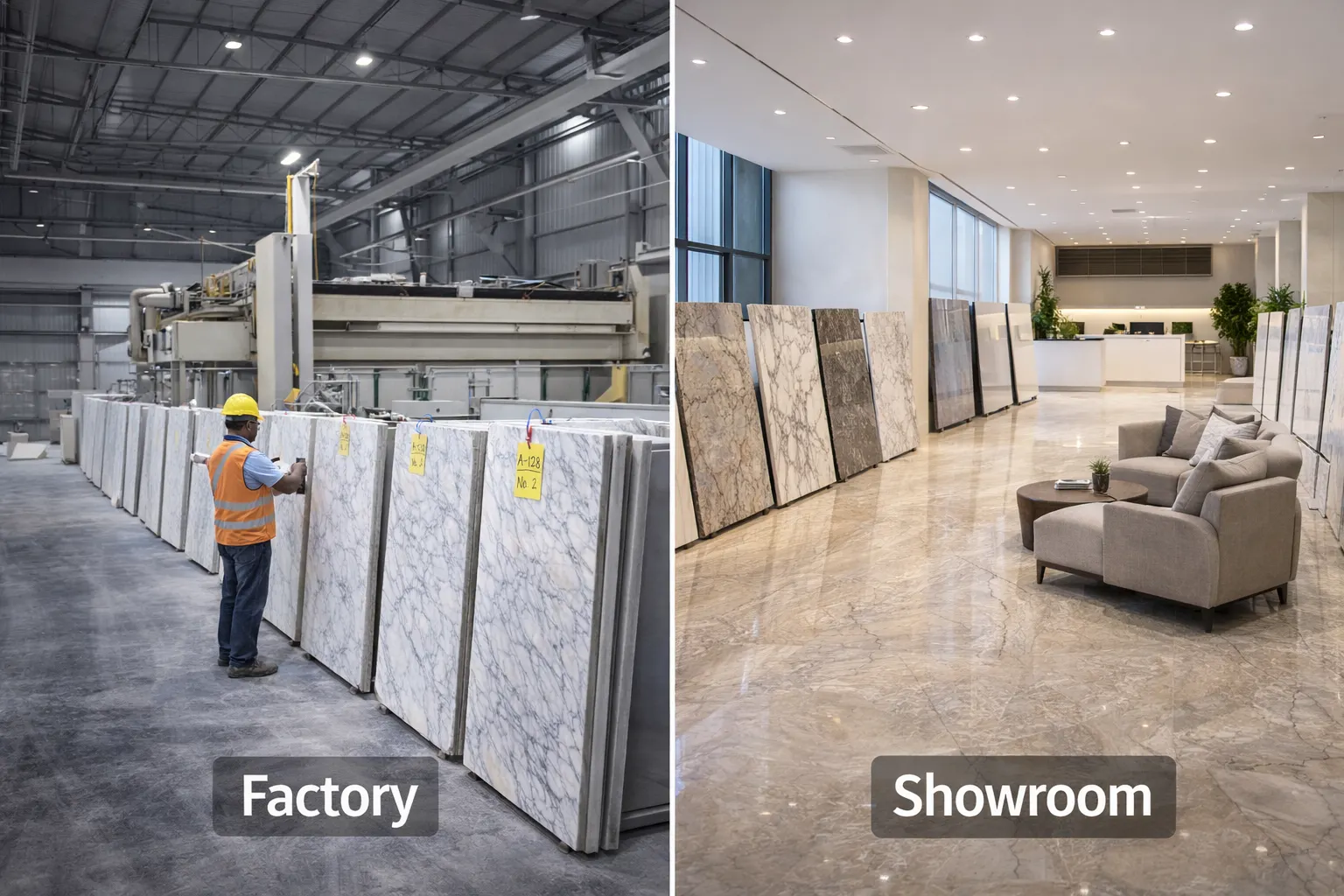
Après avoir visité la Foire de la Pierre de Xiamen 2026, de nombreux acheteurs internationaux repartent avec des dizaines de contacts fournisseurs, des catalogues de produits et des devis. Cependant, l’une des questions d’approvisionnement les plus importantes reste souvent floue : le fournisseur est-il un véritable fabricant ou une société commerciale ? À l’exposition, les deux peuvent se présenter de manière professionnelle, tous deux peuvent montrer des dalles attrayantes et tous deux peuvent offrir des tarifs compétitifs. Mais dès que la production démarre, la différence entre ces deux modèles de fournisseurs devient cruciale pour l’exécution du projet.
Pour les acheteurs gérant des projets en marbre, quartzite, onyx ou pierre reconstituée, choisir la mauvaise structure de fournisseur peut entraîner des retards, une production incohérente, une responsabilité floue et des problèmes de communication lors de l’expédition. C’est pourquoi les acheteurs expérimentés établissent d’abord une logique d’approvisionnement avant de comparer les prix. Si la sélection du fournisseur est encore au stade initial, de nombreuses équipes d’approvisionnement commencent par examiner les liste des exposants et au guide des fournisseurs de la Foire de la Pierre de Xiamen pour comprendre quelles entreprises maîtrisent réellement la capacité de production.
Un fabricant possède ou gère directement les lignes de production. Une société commerciale coordonne généralement entre l’acheteur et l’usine, souvent en s’approvisionnant auprès de plusieurs ateliers selon la catégorie de matériau. Aucun des deux modèles n’est automatiquement meilleur dans tous les cas, mais chacun présente des risques opérationnels très différents selon la taille de la commande, la complexité technique et le calendrier du projet.
Ce qui définit un véritable fabricant de pierre
Un véritable fabricant contrôle généralement les équipements de découpe, les lignes de polissage, le stockage des dalles, les opérations d’emballage et la planification de la production. Cela signifie que le fournisseur peut répondre directement aux questions techniques liées au calibrage de l’épaisseur, au traitement des bords, au traitement de la résine et à la séquence des dalles. Dans les grands projets en marbre, ce contrôle direct réduit souvent les risques, car les décisions peuvent être prises au sein d’un seul système de production.
Les fabricants sont particulièrement importants lorsque les projets nécessitent une allocation stable des lots. Par exemple, lorsque plusieurs conteneurs doivent provenir du même bloc de carrière, la planification de la production devient extrêmement sensible. Les acheteurs gérant ce type de demande examinent souvent également les la stratégie de cohérence par lot pour les projets de marbre avant de sélectionner les fournisseurs finaux.
Cependant, tous les fabricants ne sont pas aussi solides. Certaines usines possèdent des machines mais externalisent tout de même certains traitements spéciaux. Les acheteurs doivent donc vérifier quelles étapes sont internes et lesquelles sont sous-traitées.
Ce que proposent généralement les sociétés commerciales
Les sociétés commerciales offrent souvent une couverture produit plus large. Elles peuvent s’approvisionner en marbre auprès d’une usine, en quartz auprès d’une autre, en terrazzo auprès d’une autre encore, et en produits d’ameublement auprès d’ateliers spécialisés. Cette flexibilité aide les acheteurs ayant besoin d’un approvisionnement mixte sous un seul canal de communication.
Pour les acheteurs qui comparent encore plusieurs matériaux après la foire, les sociétés commerciales peuvent simplifier l’approvisionnement car elles comprennent déjà la coordination inter-catégories. Cela devient utile lorsque les acheteurs évaluent les tendances similaires à celles abordées dans les meilleurs matériaux à la Foire de la Pierre de Xiamen 2026.
| Type de fournisseur |
Avantage principal |
Risque principal |
| Fabricant |
Contrôle direct de la production |
Diversité limitée de matériaux |
| Société commerciale |
Grande flexibilité d’approvisionnement |
Contrôle indirect de l’usine |
| Fabricant avec équipe d’exportation |
Contrôle et communication équilibrés |
Exigences minimales de commande plus élevées |

Différences de transparence tarifaire
De nombreux acheteurs supposent que les fabricants proposent toujours des prix plus bas. En réalité, cela n’est pas toujours vrai. Une société commerciale peut obtenir de meilleurs tarifs internes auprès d’usines partenaires si elle livre un volume annuel important. Parallèlement, certains fabricants facturent plus cher parce qu’ils incluent des processus de contrôle qualité plus rigoureux et une gestion directe de l’exportation.
La question clé n’est pas qui est moins cher, mais qui explique clairement les prix. Les acheteurs doivent demander si les devis incluent une indemnité de remplacement des dalles, une amélioration de l’emballage, une protection contre l’humidité et une inspection à l’exportation.
C’est pourquoi les équipes expérimentées appliquent souvent d’abord une logique de sélection des fournisseurs similaire à la checklist des fournisseurs pour les acheteurs mondiaux avant de commencer la comparaison des prix.
Communication durant la production
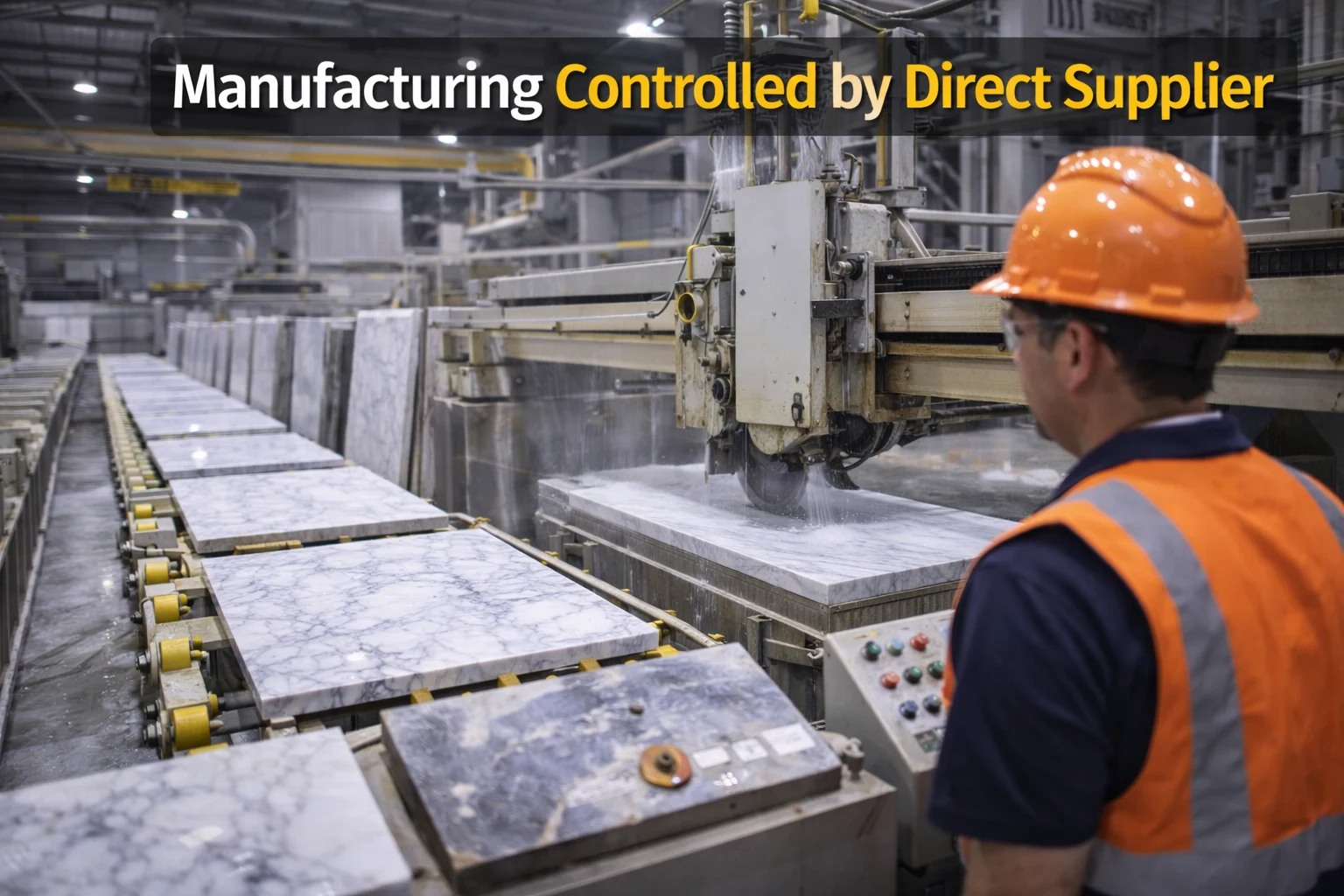
Pour de nombreux projets internationaux, la qualité de la communication détermine le succès du projet plus que la taille de l’usine. Une société commerciale solide avec un reporting discipliné peut surpasser une usine qui répond lentement et manque de documentation.
Les acheteurs doivent donc tester la rapidité de communication avant le paiement de l’acompte : demander des photos actualisées des dalles, des dessins révisés de l’emballage et une confirmation du planning de production. Les fournisseurs qui répondent clairement sous pression donnent généralement de meilleurs résultats lors de l’expédition.
Si l’incertitude demeure, les acheteurs doivent toujours organiser une inspection directe en usine selon le cadre décrit dans comment visiter une usine de pierre après la Foire de la Pierre de Xiamen 2026.
Quel modèle de fournisseur convient le mieux aux grands projets en marbre
Pour les grands projets continus en marbre, les fabricants directs réduisent généralement les risques techniques car la sélection des dalles, leur séquence et le contrôle de l’épaisseur restent centralisés.
Pour les projets résidentiels mixtes nécessitant du marbre, du quartz, des plans de travail pour meubles et des produits décoratifs ensemble, les sociétés commerciales expérimentées améliorent souvent la coordination.
Les meilleurs fournisseurs combinent de plus en plus les deux modèles : propriété de l’usine, gestion de l’exportation et réseau de partenaires externes.
En pratique, les acheteurs ne devraient pas se poser la question “ fabricant ou trader ? ” comme choix fixe. La meilleure question est : qui contrôle exactement les étapes de production nécessaires à mon projet ?
Note finale / conclusions pratiques : Le fournisseur de marbre le plus sûr ne se définit pas uniquement par son étiquette. Les acheteurs doivent se concentrer sur le contrôle de la production, la discipline de communication et la responsabilité documentée. Un fabricant solide avec une mauvaise gestion de l’exportation peut créer autant de risques qu’un trader avec un accès limité à l’usine.

FAQ
1. Un fabricant est-il toujours meilleur qu’une société commerciale ?
Non. Le meilleur choix dépend du type de projet, de la diversité des matériaux et de la complexité de la production.
2. Les sociétés commerciales peuvent-elles assurer une inspection en usine ?
Oui, mais les acheteurs doivent vérifier si l’usine présentée est bien la source réelle de production.
3. Les fabricants sont-ils moins chers ?
Pas toujours. Le prix dépend du niveau de contrôle et des services inclus.
4. Quel fournisseur est le mieux adapté aux grands projets en marbre ?
Les fabricants offrent généralement un contrôle de lot plus rigoureux pour les grands projets.
5. Quel fournisseur est le mieux adapté aux commandes de matériaux mixtes ?
Les sociétés commerciales coordonnent souvent plus efficacement les catégories mixtes.
6. Les acheteurs doivent-ils encore visiter les usines après la foire ?
Oui, l’inspection physique reste essentielle.
HowTo
Étape 1 : Déterminez si le fournisseur possède du matériel de production.
Étape 2 : Demandez quels processus sont sous-traités.
Étape 3 : Comparer la transparence des devis.
Étape 4 : Testez la rapidité de communication avant l’acompte.
Étape 5 : Visitez l'usine avant la commande définitive.
Références