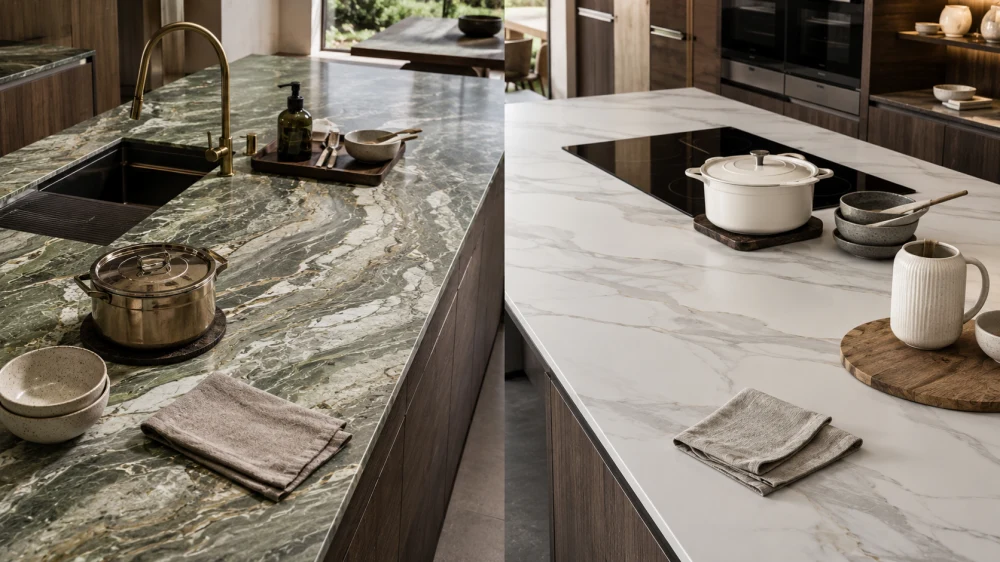
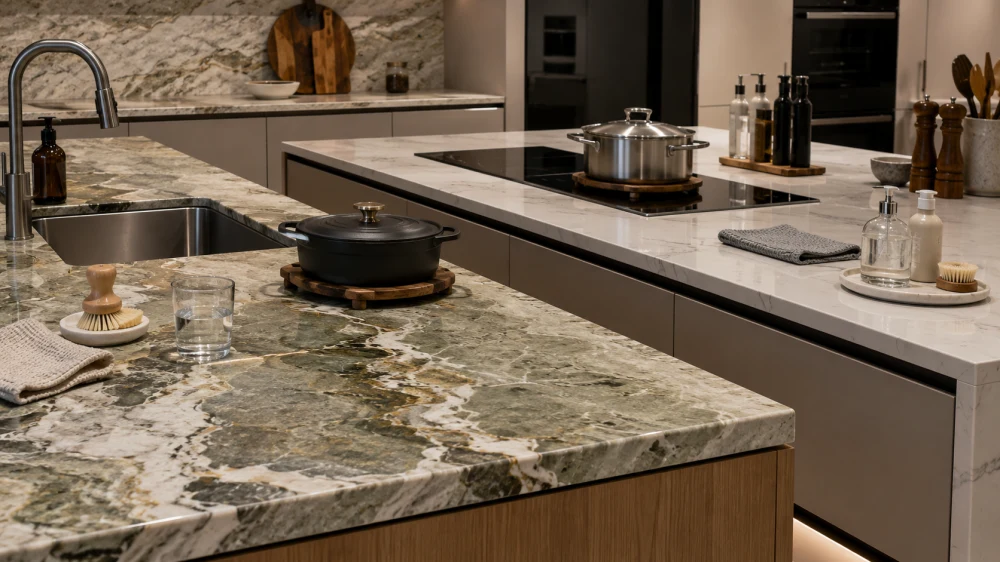
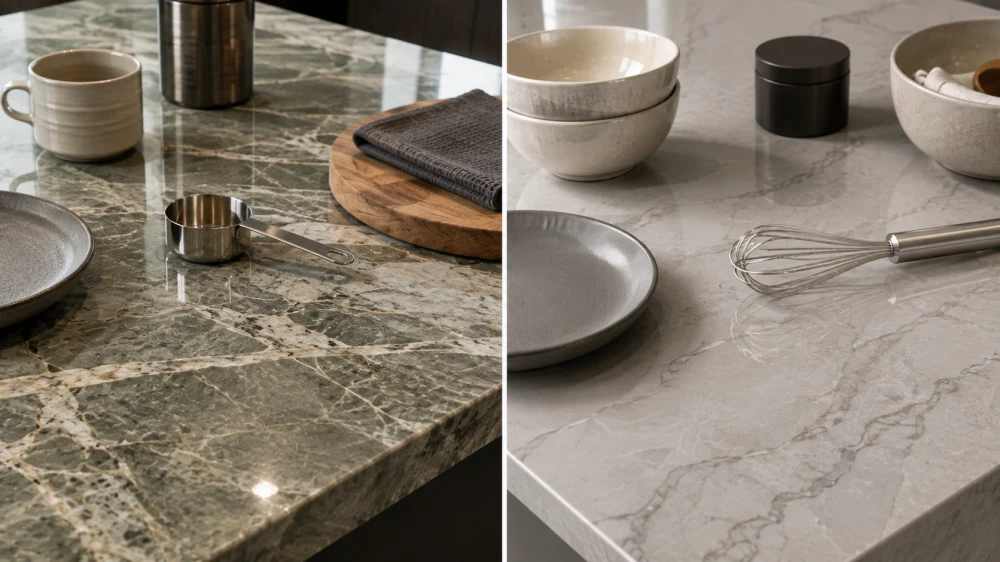
¿Cuál tiene mejor resistencia al calor y a los arañazos: la cuarcita o la losa de porcelana?
Post navigation
Resumen rápido
Tanto la cuarcita natural como las losas de porcelana pueden ser adecuadas para proyectos serios de encimeras e interiores, pero no son el mismo material y no deben seleccionarse siguiendo la misma lista de verificación. La cuarcita natural es una piedra metamórfica natural con variaciones de una losa a otra. La losa de porcelana, en cambio, es una superficie fabricada. Para planificar la resistencia al calor y a los arañazos tanto de la cuarcita natural como de la losa de porcelana, los compradores internacionales deben comparar el pliego del proyecto, el proceso de aprobación visual, el método de fabricación, las expectativas de mantenimiento y los requisitos de entrega antes de elegir un material preferido.
Las preguntas sobre la resistencia al calor y a los arañazos son razonables, pero la respuesta no debe reducirse a una puntuación genérica. La cuarcita natural es una piedra metamórfica natural, mientras que la losa de porcelana es una superficie fabricada. El rendimiento del proyecto depende del material seleccionado, el acabado, los detalles de fabricación, la instalación y el uso real. Esta guía ayuda a los compradores a establecer una comparación responsable antes de emitir una orden de compra o tomar una decisión de fabricación.
Para un importador, un fabricante, un arquitecto, un contratista o un equipo de compras, la pregunta práctica no es qué material es universalmente mejor. La cuestión útil es qué material puede especificarse, aprobarse, fabricarse, instalarse y mantenerse con el menor riesgo evitable para este proyecto en particular. Una decisión sólida comienza con un pliego de condiciones claro, una revisión representativa del material y un acuerdo sobre los detalles que afectan al resultado final.
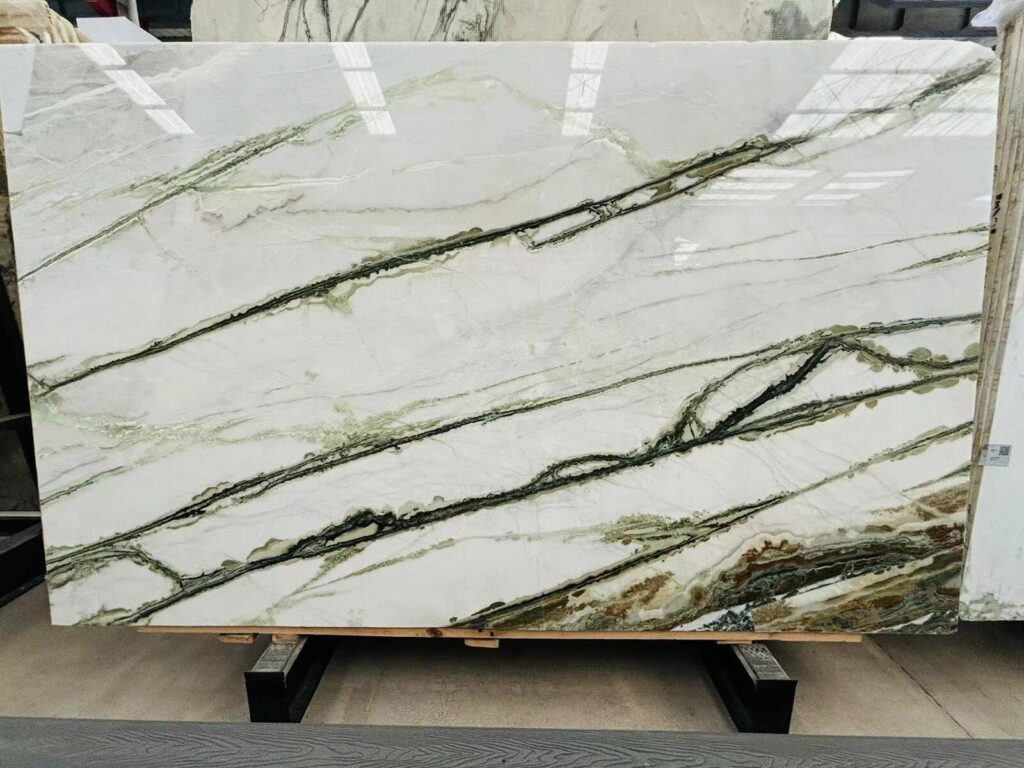
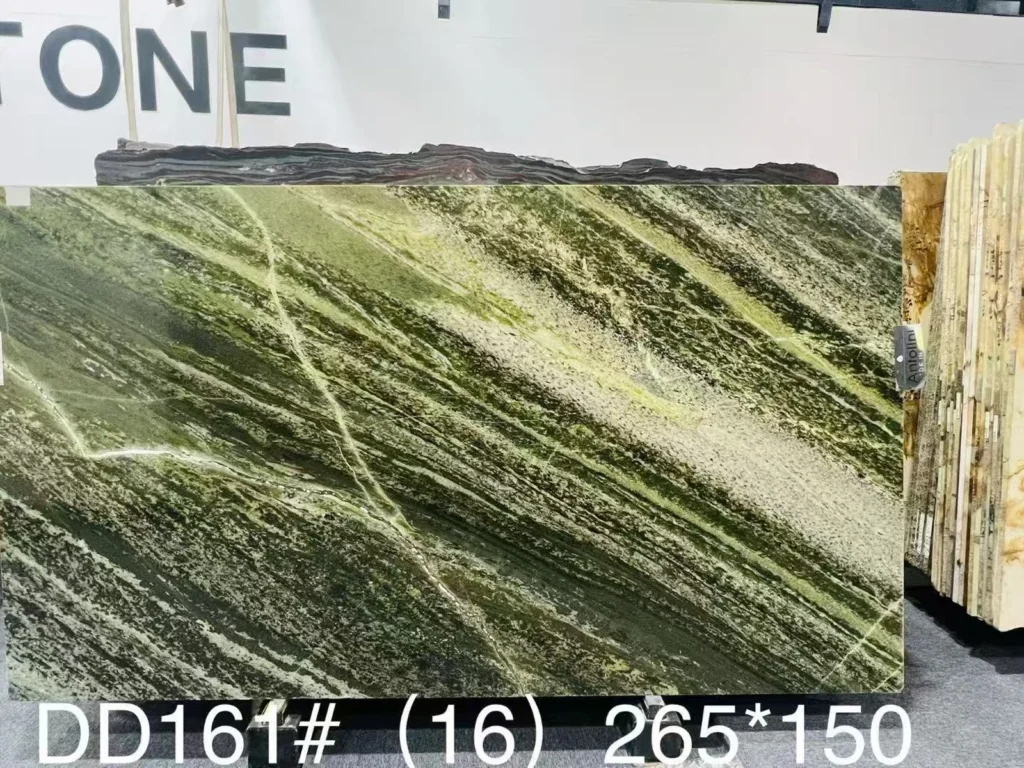
La cuarcita natural es una piedra natural, por lo que su variación de color, sus vetas, sus características minerales y su textura local pueden diferir dentro de una misma losa y entre distintas losas. Estas características pueden constituir una ventaja de diseño cuando el proyecto valora una superficie natural única. También implican que la aprobación debe basarse en las propias losas o en imágenes actuales claras, y no solo en un nombre comercial o en una pequeña muestra. La losa de porcelana, en cambio, es manufacturada y, por ello, se evalúa según su propia gama de productos, las opciones de acabado y las instrucciones de fabricación.
Ninguno de los dos materiales debe describirse con una promesa genérica de rendimiento. El comprador debe solicitar que se consideren conjuntamente la aplicación prevista, el espesor, el perfil de los bordes, las condiciones de soporte, el acabado y las expectativas de cuidado. En el caso de la cuarcita natural, el fabricante debe revisar la estructura específica de la losa y la dirección visual antes de realizar los cortes. Para la losa de porcelana, el fabricante debe seguir las pautas específicas del producto respecto a su manipulación y fabricación. Esta distinción garantiza que la comparación sea honesta y útil.
La exposición al calor es un detalle del proyecto, no un eslogan
Pregunte dónde puede ocurrir el calor, con qué frecuencia y si la superficie forma parte de una encimera, barra, tocador, pared u otro conjunto. Luego solicite al fabricante que tenga en cuenta el material aprobado, el espesor, el tratamiento de los bordes, los soportes, los recortes y las uniones. La cuarcita natural debe evaluarse considerando las losas específicas seleccionadas, no como una categoría abstracta. La losa de porcelana debe analizarse a partir del producto elegido y de las directrices de fabricación aplicables. De este modo se genera una discusión útil sin prometer un resultado universal.
Una especificación sólida distingue entre lo que constituye una preferencia de diseño y lo que corresponde a un punto de control. Las preferencias de diseño incluyen el tono, la dirección de las vetas, el emparejamiento de libros, el aspecto de los bordes y la relación entre la losa y los acabados circundantes. Los puntos de control abarcan la aprobación de la disposición, las ubicaciones de los recortes, el soporte, las tolerancias de movimiento, los detalles de las uniones, el embalaje y la inspección a la llegada. Cuando estos aspectos se dejan para etapas avanzadas del proyecto, la comparación entre materiales pierde importancia frente al problema de coordinación evitable.
Utilice un proceso de aprobación controlado por el comprador
En el caso de la cuarcita natural, confirme el material aprobado mediante las losas actuales y registre las caras seleccionadas, las áreas visibles y el flujo previsto de las vetas. Pida al fabricante que muestre la disposición antes de realizar cortes irreversibles, especialmente en zonas con largas extensiones, retornos, islas, paneles de pared o composiciones emparejadas de libros. Las características naturales deben revisarse en contexto, para que el equipo acuerde lo que resulta visualmente aceptable, en lugar de considerar cada marca mineral como un defecto inesperado.
Para la losa de porcelana, solicite la información pertinente sobre el acabado, el lote o la gama disponible en la línea de productos elegida, así como el método propuesto por el fabricante para los cortes y el tratamiento de los bordes. El equipo del proyecto debe asegurarse de que el diseño seleccionado, la estrategia de juntas, el sustrato y el enfoque de manipulación sean compatibles. En ambos casos, las aprobaciones escritas resultan más fiables que las suposiciones basadas en una imagen publicitaria, una instalación ajena o una muestra incompleta.
Decision area
Control del comprador sobre la cuarcita natural
Control del comprador sobre la losa de porcelana
Aprobación visual
Revise las losas actuales, las caras y la dirección de las vetas.
Confirme la gama seleccionada, el acabado y las expectativas visuales.
Planificación de la fabricación
Aprobar la disposición teniendo en cuenta el movimiento natural y las características clave.
Confirme el plan de corte y tratamiento de bordes adecuado al producto del fabricante.
Entrega del proyecto
Proporcione orientación sobre el cuidado adecuada a la piedra y el acabado aprobados.
Proporcione orientación sobre el cuidado adecuada al producto de porcelana y el acabado seleccionados.
Las preocupaciones por los arañazos requieren contexto
Las preocupaciones por los arañazos varían según se trate de un tocador de bajo uso, una cocina muy concurrida, un mostrador de venta al por menor o un mostrador de recepción pública. El equipo responsable debe identificar los objetos esperados, las herramientas de limpieza y las prácticas de trabajo en torno a la superficie. El acabado de la superficie, la exposición de los bordes y la probabilidad de presencia de residuos abrasivos forman parte de la conversación. En lugar de hacer afirmaciones absolutas, documente cómo se utilizará el área prevista y pida al fabricante que recomiende detalles acordes con el material aprobado y el pliego del proyecto.
La planificación del mantenimiento también es una tarea de comunicación. El propietario, el equipo del recinto y el instalador deben conocer qué limpiadores, almohadillas y decisiones de reparación son adecuados para la superficie real. Evite ofrecer consejos universales no cualificados, como suponer que todas las piedras naturales reaccionan de la misma manera o que todas las losas fabricadas utilizan detalles de fabricación idénticos. Una breve nota de cuidado proporcionada en la entrega resulta valiosa, pues vincula la práctica cotidiana con el material y el acabado efectivamente instalados.
Coordine la fabricación y la instalación desde el principio
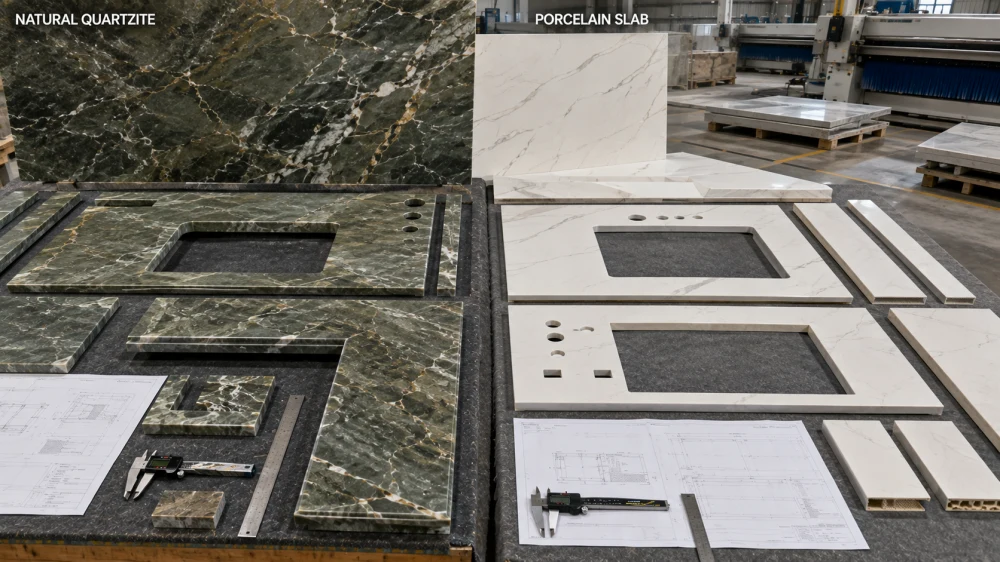
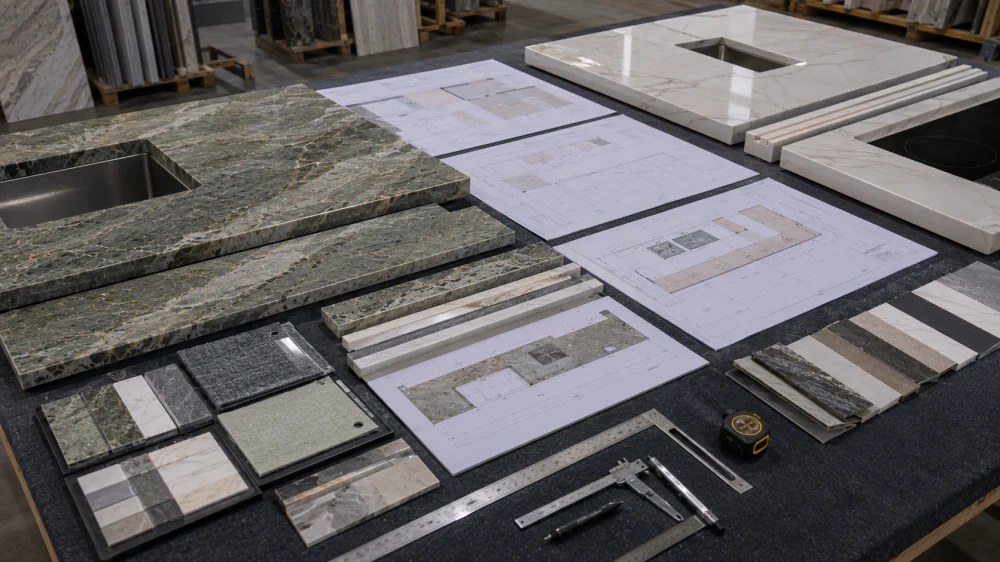
La selección del material no puede separarse de la fabricación. El perfil de los bordes, los recortes para lavabos o electrodomésticos, los tramos sin apoyo, las juntas, la fijación a la pared y la ruta de acceso pueden influir todos en el resultado final. Los trabajos con cuarzita natural se benefician de una discusión sobre la disposición que respete el movimiento natural de la losa y las zonas focales del diseño. Los trabajos con losas de porcelana se benefician de una discusión sobre la fabricación que siga los requisitos técnicos del producto seleccionado. Ambos se ven favorecidos por mediciones precisas del sitio y una revisión conjunta del plano de taller.
Los compradores internacionales también deben definir quién aprueba las sustituciones, quién firma las caras visibles y cómo se documentarán los cambios. Un orden de compra que solo repite un nombre comercial rara vez basta para un proyecto detallado con piedra. Es mejor registrar el tipo de material, el acabado, las dimensiones nominales, las expectativas de tolerancia cuando corresponda, la base de la cantidad, la responsabilidad de la disposición, las expectativas de embalaje, el destino y el momento de la inspección. Estos son controles prácticos, no simples adornos alrededor de una compra.
Planifique las verificaciones de entrega y recepción
La planificación de la exportación debe preservar la identidad del material aprobado desde la selección hasta el embalaje. Para la cuarzita natural, confirme que las losas seleccionadas y las caras visibles puedan rastrearse a lo largo del proceso de disposición acordado. Para cualquier material frágil o de gran formato, aclare cómo se protegerán las piezas, cómo se etiquetarán para el proyecto y cómo se verificarán al llegar. El equipo receptor debe inspeccionar antes del corte o la instalación, documentar cualquier problema de inmediato y conservar fotografías vinculadas al embalaje y a la identificación de cada pieza, cuando sea posible.
No considere la entrega como el final de la adquisición. Un proyecto requiere una transferencia entre el departamento de compras, el fabricante, el instalador y el propietario. Esta transferencia debe incluir el alcance aprobado, los planos, las instrucciones de cuidado y una vía clara para resolver dudas sobre el manejo. Este enfoque reduce la confusión cuando las distintas partes se encuentran en países diferentes o trabajan en etapas separadas del proyecto.
Una comparación responsable utiliza las condiciones del proyecto en lugar de clasificaciones no verificadas. Revise el material seleccionado, el acabado, el ámbito de uso, el método de limpieza, el plan de fabricación, el diseño de los soportes y cualquier instrucción específica del producto. Si una decisión depende de una exposición o condición de servicio particular, resuélvala mediante los profesionales correspondientes de diseño y fabricación antes de realizar el pedido. Así, la comparación de la cuarcita natural se mantiene basada en controles reales del proyecto.
Al comparar opciones, utilice el mismo pliego de condiciones para ambos materiales. Enumere la estancia, el tráfico esperado, la exposición, la intención del diseño, la continuidad deseada, el tratamiento de los bordes, la práctica de limpieza, el acceso a servicios y la ruta de aprobación. Luego pida a cada proveedor o fabricante potencial que responda a ese pliego en lugar de invitar afirmaciones genéricas. Una respuesta comparable facilita identificar qué ha sido confirmado, qué requiere una maqueta y qué debería quedar sujeto a la revisión final de la losa o del producto.
Una matriz de decisión práctica
Pregunta para el equipo del proyecto
Por qué es importante
Acción previa al pedido
¿Es la apariencia única de una losa natural central en el diseño?
La variación natural debe seleccionarse y ubicarse intencionalmente.
Solicite la aprobación actual de la losa y la revisión de la disposición.
¿Están completamente resueltos los detalles de fabricación?
Los bordes, los recortes, los soportes y las juntas afectan a ambos materiales.
Aprobar los planos de taller y el método del fabricante.
¿Quién recibirá y mantendrá la superficie?
La entrega evita cuidados rutinarios incorrectos y disputas tardías.
Proporcionar orientación específica sobre el cuidado y la recepción del material.
La decisión debe ser aprobada por las personas responsables del diseño, la fabricación y las operaciones, y no tomarse de manera aislada por un solo interesado. Un diseñador puede priorizar la expresión visual, un fabricante puede enfocarse en detalles prácticos, y un equipo de compras quizá necesite aprobaciones previsibles y coordinación de entregas. La cuarcita natural suele seleccionarse porque su carácter natural forma parte del diseño. Las losas de porcelana pueden elegirse cuando su estética manufacturada y su sistema de producto se alinean con el pliego de condiciones. El resultado adecuado es una combinación controlada, no un simple eslogan.
Preguntas que los compradores deben resolver antes de la selección final
Antes de realizar un pedido, pregunte si el material se está eligiendo para una encimera, isla, tocador, pared, revestimiento de chimenea, mostrador de recepción u otro uso. Confirme el acabado previsto, la continuidad visual requerida, el número de losas o piezas necesarias, la necesidad de emparejamiento de vetas, los detalles exactos de los bordes y recortes, así como el destino de la entrega. Estos insumos son más valiosos que una solicitud vaga del mejor material, pues convierten una comparación en un brief de abastecimiento accionable.
HRST STONE / XIAMEN HRST STONE CO., LTD. aborda los proyectos de cuarcita natural mediante la revisión del material, la coordinación de la fabricación y la comunicación con el comprador. No sustituimos la ingeniería específica del proyecto, la verificación en obra ni las instrucciones específicas del producto por consejos generales de blog. Para una consulta seria, cuanto más completa sea la información proporcionada desde el principio, más útil resultará la discusión.
Consideraciones adicionales para el comprador
Las buenas decisiones sobre materiales resultan más fáciles de gestionar cuando el registro de aprobación permanece vinculado al proyecto. Mantenga juntos la descripción del material seleccionado, el acabado, imágenes actuales o referencias del producto, la decisión de disposición, los planos, las notas de fabricación, los requisitos de embalaje y la información de contacto para la recepción. Si el alcance cambia, documente dicho cambio antes de cortar, embalar o instalar el material. Esta pequeña disciplina ayuda a los equipos internacionales a comparar la misma información y evita sustituir una decisión del comprador por una suposición tardía.
Preguntas frecuentes
1. ¿Es la cuarcita natural resistente al calor?
La cuarcita natural debe evaluarse como la piedra efectivamente seleccionada y el conjunto instalado, no mediante una declaración genérica. Discuta la exposición al calor prevista, el espesor, el acabado, los detalles de fabricación, los soportes y las condiciones del proyecto con el fabricante responsable antes de realizar la selección final.
2. ¿Es la losa de porcelana resistente a los arañazos?
La losa de porcelana debe evaluarse en función del producto seleccionado, el acabado, el método de fabricación y el uso previsto. El comprador debe evitar afirmaciones genéricas y, en su lugar, confirmar las recomendaciones específicas del producto y las condiciones del proyecto con el fabricante.
3. ¿Por qué importan los recortes y los detalles de los bordes en esta comparación?
Los recortes, los bordes, las juntas, los soportes y los detalles de instalación influyen en el desempeño de la superficie acabada durante su uso. Deben revisarse conjuntamente con la losa de cuarcita natural o el producto porcelánico seleccionado antes de iniciar la fabricación.
4. ¿Puede una pequeña muestra demostrar el rendimiento del proyecto?
Una pequeña muestra puede ayudar a definir la orientación visual, pero no puede sustituir la revisión del alcance completo del material, del plan de fabricación y de la aplicación prevista. La cuarcita natural debe ser aprobada a partir de losas actuales cuando la apariencia es un factor clave, y ambos materiales requieren una revisión detallada específica para cada proyecto.
5. ¿Qué información deben enviar los compradores a HRST STONE para una comparación de cuarcita?
Envíe a Josh el nombre del material de cuarcita natural, las dimensiones, la cantidad, los planos, el acabado, la aplicación prevista, las preocupaciones relacionadas con el calor o el desgaste, y el destino de entrega. Esto facilita una discusión enfocada sobre la selección del material, la disposición y la coordinación de la fabricación.
Nota final
Utilice un pliego del proyecto verificado y una revisión de fabricación cuando la exposición al calor o a los arañazos sea central en la decisión sobre el material. Comuníquese con Josh de HRST STONE indicando el nombre del material, sus dimensiones, la cantidad, los planos, el acabado y el destino de entrega. Esta información permitirá al equipo discutir la selección de la cuarcita natural, la disposición, la coordinación de la fabricación y la planificación de la exportación en términos acordes con el proyecto.
Copyright (c) HRST STONE / XIAMEN HRST STONE CO., LTD.
Hi, I am the author of this article. I have been working in the field of Natural Stone for more than 15 years. If you need customized Natural Stone services, please feel free to contact me.
Fabricante y proveedor de mármol, granito, cuarcita, ágata de China - HRST STONE
¡Bienvenido a HRST STONE!
Hola, me gustaría conocer más sobre sus productos. ¿Podría facilitarme información sobre precios, cantidades mínimas de pedido, opciones de personalización y muestras?