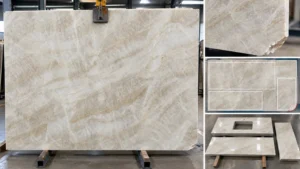
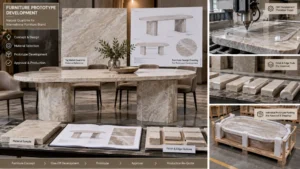
Optimale Dicke und Kantenbearbeitung für Patagonia-Quarzit in Akzentwänden und Kücheninseln
Post navigation
Kurze Zusammenfassung
Patagonia Quartzite thickness and edge details should be decided as one coordinated package. Confirm the visible edge, support condition, seam approach, cutout strategy, and approved slabs before fabrication begins.
Best Thickness and Edge Details for Patagonia Quartzite in Statement Walls And Islands is a buyer-focused guide from HRST STONE for importers, fabricators, designers, architects, contractors, and project procurement teams. The main goal is to turn a material idea into an approval-ready natural quartzite scope without making unsupported assumptions about inventory, price, origin, testing, lead time, or final visual outcome.
How to evaluate Patagonia quartzite thickness for statement walls and islands
Use the project brief, full-slab review, current drawings, and a documented approval process as the foundation. Patagonia Quartzite should be discussed against the intended application, not as a generic commodity. The sections below set out the practical questions that should be resolved before the purchase order and fabrication release.
Entscheidungspunkt
What to confirm
Warum das wichtig ist
Sichtbare Kante
Decide whether Patagonia Quartzite needs a straight, eased, mitred, laminated, or custom-built-up edge.
Die Kante verändert die visuelle Masse und kann die Fertigungsplanung beeinflussen.
Stützbedingungen
Teilen Sie dem Verarbeiter Informationen zu Schränken, Wänden, Rahmen und Untergrund mit.
Die Dicke allein entscheidet nicht über die Eignung; maßgeblich sind die gesamten Stützbedingungen.
Ausschnitte und Fugen
Markieren Sie Spülen-, Kochfeld-, Steckdosen-, Armaturen- und Nahtpositionen auf den aktuellen Zeichnungen.
Öffnungen und Fugen sollten dem genehmigten Plattenlayout und der Fertigungsreihenfolge entsprechen.
Losfreigabe
Genehmigen Sie ganze Platten sowie die vorgeschlagenen Layouts, bevor mit dem Schneiden begonnen wird.
Natürliche Variationen machen eine Los‑basierte Prüfung unerlässlich, um die visuelle Kontinuität sicherzustellen.
Betrachten Sie die Dicke als Systementscheidung
Patagonia Quartzite thickness should not be selected as an isolated number. It works together with the piece dimensions, intended visual mass, edge detail, support condition, openings, joints, and handling route. For statement walls and islands, begin with drawings that show finished sizes and the underlying structure. Then ask the fabricator to assess a workable approach for the actual slabs. This avoids trying to apply a generic detail to a project with different spans, returns, or installation conditions.
Beginnen Sie mit der jeweiligen Platte
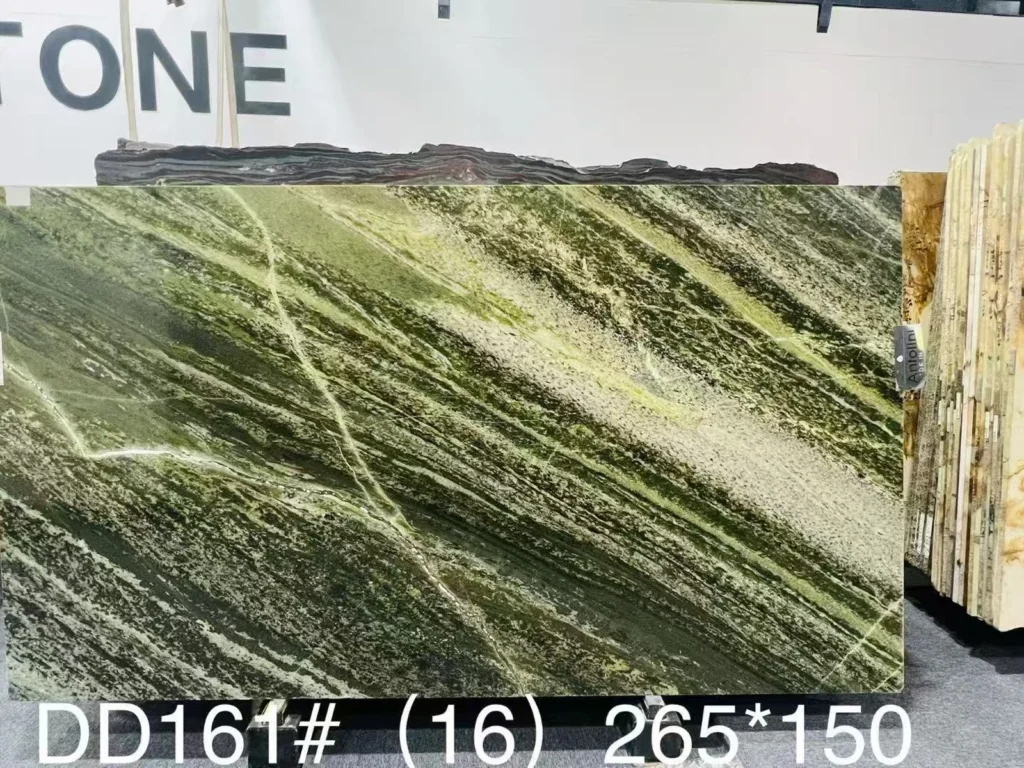
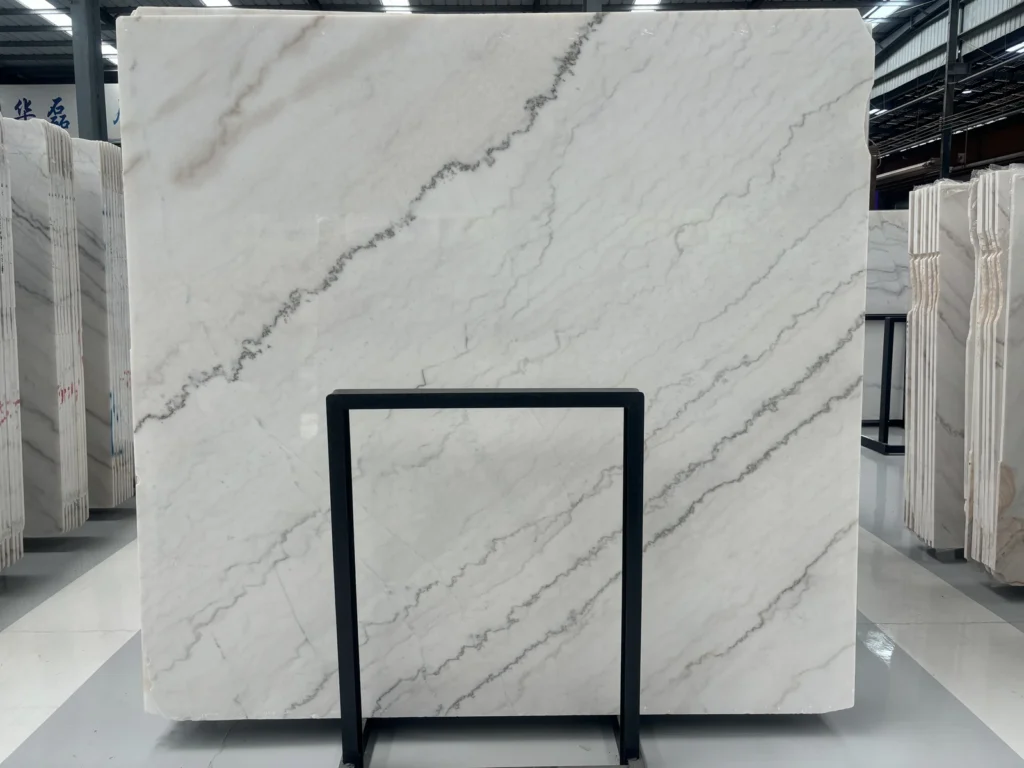
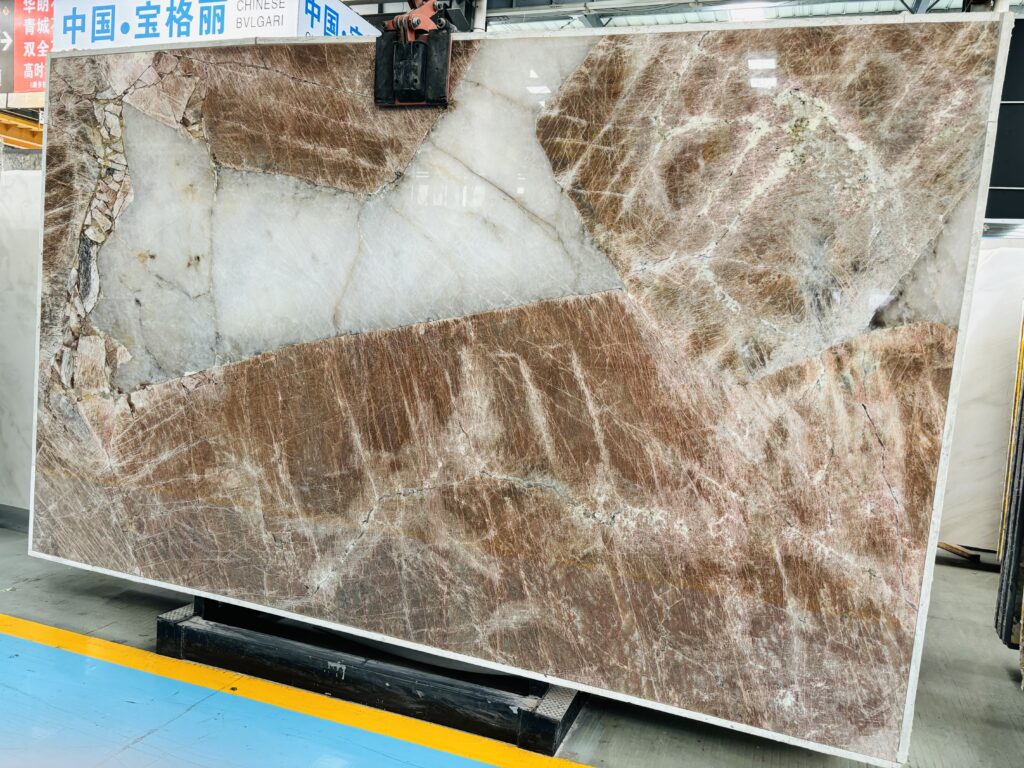
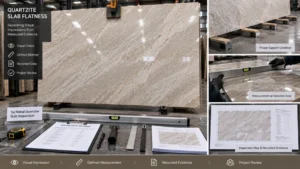
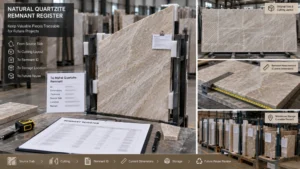
Natürlicher Quarzit variiert von Platte zu Platte; daher sollten Entscheidungen zur Dicke und Kante anhand des ausgewählten Materials überprüft werden. Fotos der gesamten Platte sowie eine Layout‑Diskussion können verdeutlichen, wo sich Bewegungen, Farbabweichungen, kristalline Bereiche oder andere natürliche Merkmale innerhalb der vorgesehenen Stücke befinden. Eine kleine Probe ist nützlich für eine erste Orientierung, kann jedoch weder das endgültige Erscheinungsbild noch die Ausbeute pro Stück festlegen. Genehmigen Sie die tatsächlichen Platten, bevor der Schneideplan freigegeben wird.
Trennen Sie natürlichen Quarzit von technischem Quarzit
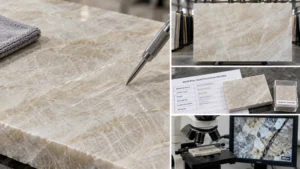
Patagonia Quartzite is discussed here as natural quartzite, not engineered quartz. Engineered quartz is a manufactured composite and should not be treated as the same material in selection or detailing conversations. Natural quartzite needs a lot-level review because its pattern and characteristics are not factory-repeated. This distinction helps project teams communicate clearly when drawings, material schedules, and approvals refer to different surface categories.
Wählen Sie die sichtbare Kante bewusst aus
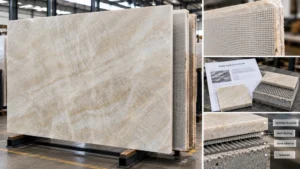
Eine Kante ist sowohl eine visuelle als auch eine Fertigungsentscheidung. Ein einfaches, abgeschrägtes Profil kann die Aufmerksamkeit auf die Steinoberfläche lenken, während eine gefaste oder aufgebaute Lösung eine stärkere visuelle Masse erzeugen kann. Die geeignete Option hängt von der genehmigten Platte, den fertigen Details, den Übergängen, den Stützbedingungen und der Vorgehensweise des Verarbeiters ab. Definieren Sie die gewünschte Kante im Zeichnungspaket, statt sie erst im späteren Workshop zu entscheiden. So unterstützt das Designteam die Skalenüberprüfung und erleichtert dem Verarbeiter die Planung der Fertigungsreihenfolge.
Fragen, die in der Design‑Überprüfung gestellt werden sollten
Fragen Sie, welche Oberflächen am engsten betrachtet werden, welche Höhen eine kontinuierliche Gestaltung erfordern, wo Fugen akzeptabel sind und welche umliegenden Materialien den beabsichtigten Kontrast bilden. Diese Antworten geben der Materialdiskussion einen praktischen Rahmen und helfen allen Beteiligten, die tatsächlichen Platten konsequent zu bewerten.
Koordinieren Sie Ausschnitte, Fugen und Rückläufe
Ausschnitte, Fugen, Ablaufschüssel‑Details, Steckdosen, Rückläufe und verdeckte Stützen können die praktische Umsetzung einer Dickenstrategie beeinflussen. Markieren Sie diese auf den aktuellen Zeichnungen und stimmen Sie sie mit den sichtbaren Oberflächen der ausgewählten Platten ab. Ein Projekt kann sich deutlich verändern, wenn sich eine Naht verschiebt oder ein Rücklauf einen bevorzugten Bereich der Platte beansprucht. Die Überprüfung dieser Bedingungen vor dem Schneiden ist zuverlässiger, als zu versuchen, sie nach der Fertigung der Teile zu lösen.
Machen Sie die Layout‑Freigabe konkret
Ein nützliches Freigabepaket für das Layout enthält die ausgewählten Platten, die Abmessungen der fertigen Teile, die Ausrichtung der Oberflächen, Fugen, Kanten, Ausschnitte sowie alle Buchmatch‑ oder durchgehenden Bereiche. Es sollte mit den aktuellsten Zeichnungen abgestimmt sein. Ändert sich das Projekt, überarbeiten Sie das betroffene Layout, statt sich auf ein früheres Bild zu verlassen. Dies ist besonders wertvoll bei internationalen Beschaffungen, wenn Designer, Importeure, Verarbeiter und Baustellenteams das gleiche Material von unterschiedlichen Standorten aus prüfen.
Lesen Sie die Stützbedingungen aus dem Projekt
Die Stützplanung ist projektspezifisch. Schrankkonstruktion, Wandrahmung, Untergrundbeschaffenheit, Befestigungsmethode, Spannweiten und Zugang zur Installation müssen von den zuständigen Fachkräften verstanden werden. Eine scheinbar dickere Kante definiert allein keine korrekte Stützlösung. Teilen Sie frühzeitig verfügbare Projektinformationen mit, damit der Stein‑Leistungsumfang mit dem Bauunternehmer, Verarbeiter und Designer abgestimmt werden kann, statt als eigenständige Oberflächenwahl behandelt zu werden.
Planen Sie den Umgang und die Installation
Große oder geformte Quarzitstücke erfordern einen Handhabungsplan, der ihre endgültige Größe, die Transportwege sowie die Montagesequence berücksichtigt. Beachten Sie Zugangsöffnungen, Hebewege, Zwischenlagerung und die Frage, ob die Elemente vor oder nach den angrenzenden Oberflächen verlegt werden. Diese Aspekte können maßgeblich beeinflussen, wie das Layout aufgeteilt wird und wie eine Kante oder ein Rücklauf gestaltet wird. Sie sollten bereits vor der finalen Stückliste besprochen werden – insbesondere bei prominenten Inseln, Wandpaneelen und maßgefertigten Möbelelementen.
Verwenden Sie Oberflächenbearbeitungen mit klarem Ziel
Die vorgesehene Oberfläche sollte Teil derselben Prüfung sein. Eine polierte, geschliffene, lederartig behandelte oder andere gewünschte Oberflächenbearbeitung kann die Wahrnehmung der natürlichen Maserung unter der Projektbeleuchtung verändern. Bestätigen Sie das geforderte Erscheinungsbild möglichst anhand eines genehmigten Musters sowie an den tatsächlichen Platten. Eine Oberflächenbearbeitung darf nicht als Lösung für natürliche Schwankungen, als Verdeckung sämtlicher Merkmale oder als Ersatz für ein klares Auswahlverfahren der Platten betrachtet werden.
Informationen, die eine Beschaffungsprüfung verbessern
Fügen Sie den Materialnamen, Abmessungen, Mengenangaben, Zeichnungen, gewünschte Oberfläche, Erwartungen hinsichtlich der Oberflächenbearbeitung, Konzept zur Kantenbearbeitung sowie den Lieferort hinzu. Enthält die Anfrage mehrere Räume, trennen Sie diese klar voneinander. So ermöglicht ein Lieferant präzise Nachfragen, ohne zu implizieren, dass eine allgemeine kommerzielle Beschreibung einer bestätigten Projektspezifikation entspricht.
Inspect what was agreed
Before dispatch, inspection can be structured around the approved items: selected slabs or finished pieces, dimensions, surface presentation, edge details, piece marking, layout references, quantities, and packing method. The exact inspection scope should be agreed for the project. Clear written checkpoints are more dependable than assumptions based on a material name or a generic construction detail.
Verantwortlichkeiten vor Freigabe festlegen
Project teams should clarify who approves material, who controls the latest drawings, who signs off the layout, and who coordinates installation conditions. This is useful wherever importers, designers, fabricators, contractors, and procurement teams contribute to the same scope. A simple responsibility map reduces the risk that one party assumes another has approved the key decisions. It also creates a clear route for resolving a question about Patagonia Quartzite before any irreversible cutting or dispatch action is taken.
Änderungen nachvollziehbar dokumentieren
Die Beschaffung von Naturstein verläuft häufig über überarbeitete Zeichnungen, aktualisierte Mengen und wechselnde Raumprioritäten. Notieren Sie die Versionsnummer, die den ausgewählten Platten und dem vorgeschlagenen Layout zugeordnet ist. Bei Änderungen an Elevation, Kante, Ausschnitten oder Mengen identifizieren Sie die betroffenen Teile und prüfen Sie die Folgen, bevor Sie eine neue Freigabe erteilen. Dies ist zuverlässiger, als sich auf informelle Nachrichten oder ältere Renderings zu verlassen. Nachvollziehbare Änderungen erleichtern die Koordination eines grenzüberschreitenden Projekts, ohne zu behaupten, dass das Material selbst von Los zu Los identisch ist.
Den Entscheidungszyklus schließen
Before work proceeds, review the final material, drawings, layout, finish, edges, quantities, and destination as one package. Check that the people responsible for design, fabrication, procurement, and installation are working from the same revision. This final review is not a formality: it is the moment to surface a missing dimension, an unapproved return, a changed joint, or an unclear visual priority. A short, documented confirmation creates a more reliable handover for every statement walls and islands project involving natural quartzite.
Checkliste für die Projektübergabe
Entscheidungspunkt
What to confirm
Warum das wichtig ist
Material
State Patagonia Quartzite and whether selection must be reviewed from full slabs.
Sorgt dafür, dass die Beschaffungsanfrage mit dem natürlichen Material im Einklang bleibt.
Zeichnungen
Legen Sie die neuesten Pläne, Ansichten, Maße sowie Ausschnittsangaben vor.
Unterstützt ein layoutorientiertes Gespräch vor der Fertigung.
Oberfläche und Kante
Definieren Sie die erforderliche Oberfläche, sichtbare Kanten sowie Erwartungen hinsichtlich der Kontinuität.
Verknüpft die Designintention mit praktischen Detaillierungen.
Bestimmungsort
Nennen Sie den Lieferort sowie etwaige Zugangs- oder Verpackungsbeschränkungen.
Hilft dem Team, die logistische Abstimmung präzise zu skizzieren.
Käufer‑FAQs
1. What thickness is commonly considered for Patagonia Quartzite?
Die geeignete Dicke hängt von der jeweiligen Anwendung, den Endabmessungen, der Kantenbearbeitung, den Öffnungen, den Stützverhältnissen sowie der Fertigungsmethode ab. Stimmen Sie sie bitte anhand der Projektzeichnungen ab, statt sich auf eine allgemeine Regel zu stützen.
2. Can Patagonia Quartzite use a mitred edge?
Eine mitgerundete Kante kann in Betracht gezogen werden, wenn die zugelassenen Platten, das visuelle Ziel, die Stützanordnung sowie die Fertigungsmethode geeignet sind. Prüfen Sie das vorgeschlagene Detail und die Anschlüsse vor der Produktion.
3. Do thicker slabs remove the need for support planning?
Nein. Die Dicke ist nur ein Teil des Entwurfs. Schränke, Wandkonstruktion, Spannweiten, Verbindungen, Öffnungen und die Handhabung erfordern jeweils eine projektspezifische Prüfung.
4. When should the edge detail be selected?
Wählen Sie die Kante aus, während die Planungs- und Fertigungszeichnungen erstellt werden, noch vor dem Schneiden. Die sichtbaren Kanten, Rückläufe, Verbindungen und Ausschnitte sind aufeinander abzustimmen.
5. What should I send for a fabrication enquiry?
Send the material name, dimensions, quantities, drawings, required surface, edge concept, and delivery destination so Josh can help organize the next review.
Schlussbemerkung
Für eine projektspezifische Prüfung wenden Sie sich bitte an Josh bei HRST STONE / XIAMEN HRST STONE CO., LTD. Bitte senden Sie den Materialnamen, die Abmessungen, die Mengen, die Zeichnungen, die gewünschte Oberfläche, die bevorzugte Oberflächenbearbeitung sowie den Lieferort. So erhalten das Team klare Grundlagen für die nächste Auswahl des natürlichen Quarzits und das anschließende Gespräch zur Fertigung. Gleichzeitig ermöglicht dies, dass sich die Überprüfung auf die tatsächlichen Zeichnungen, ausgewählten Platten und die für das Projekt relevanten Genehmigungspunkte konzentriert.
Copyright | HRST STONE / XIAMEN HRST STONE CO., LTD. All rights reserved.
Hi, I am the author of this article. I have been working in the field of Natural Stone for more than 15 years. If you need customized Natural Stone services, please feel free to contact me.