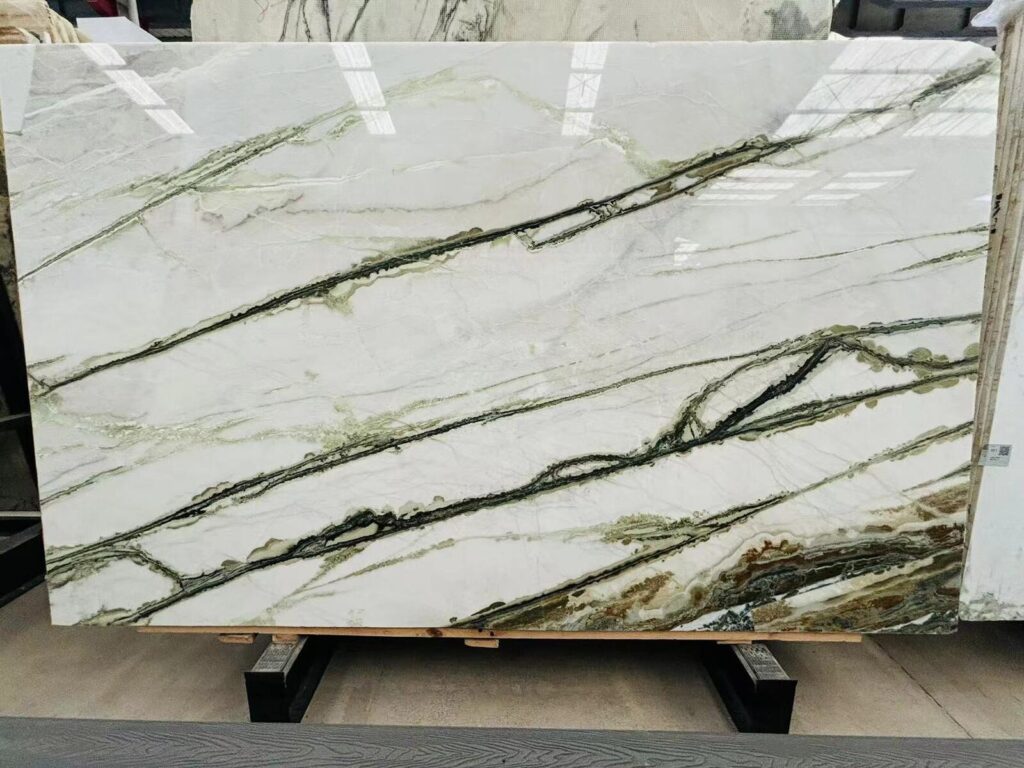

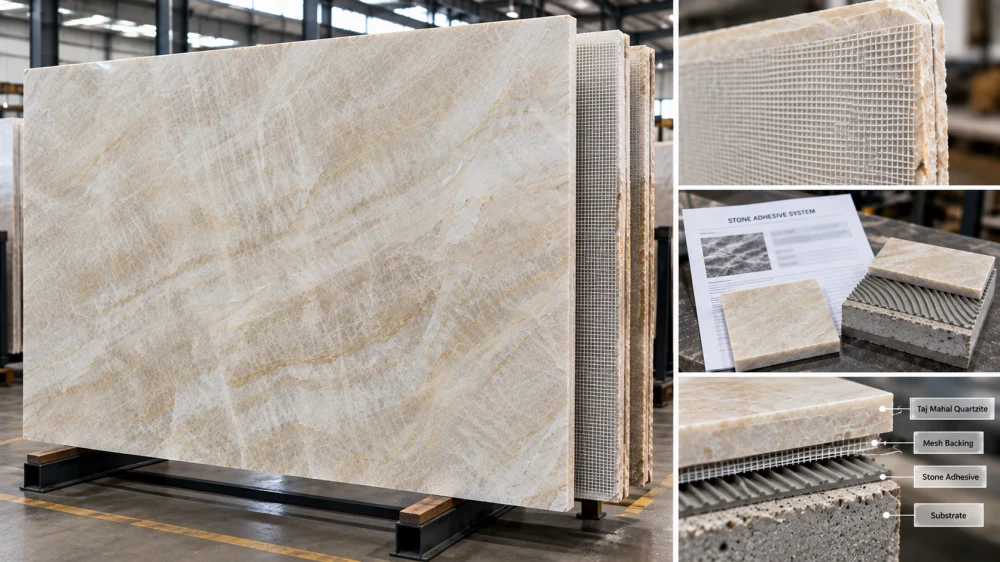
يجب مراجعة ألواح الكوارزيت ذات الدعم الشبكي كواجهة ربط كاملة قبل التركيب. لا تفترض أن المادة اللاصقة ستلتصق مباشرةً بالكوارزيت الطبيعي، أو أن جميع أنظمة الدعم متماثلة، أو أن الشبكة يجب إزالتها أو تركها تلقائيًا. حدد الحالة الفعلية للسطح الخلفي للوح، ونوع الدعم أو الراتنج الموجود، ونظام المادة اللاصقة المقصود، والركيزة، ومتطلبات معالجة السطح، وبيئة التركيب، بالإضافة إلى الإرشادات المناسبة الخاصة بالنظام المسؤول. وعند وجود شك في التوافق أو إذا كانت عواقب الفشل كبيرة، استخدم اختبارًا تجريبيًا أو نموذجًا أوليًا مُتحكمًا فيه بشكل مناسب قبل إطلاق المشروع.
يتسلم المُركّب لوحًا من الكوارزيت الطبيعي يظهر عليه شبكة دعم أو أي تعزيز آخر على الجانب الخلفي.
يبدو الوجه الأمامي وكأنه الحجر المحدد في المشروع، لكن السطح الذي سيُثبت عليه فعليًا قد يكون مختلفًا تمامًا.
قد تلامس المادة اللاصقة:
الكوارزيت الطبيعي → الراتنج → الشبكة → طبقة دعم أخرى
بدلًا من الحجر العاري.
وهذا يغيّر السؤال.
بدلًا من السؤال:
“أي مادة لاصقة تناسب الكوارزيت؟”
ينبغي لفريق التركيب أن يسأل:
“ما السطح الذي سنثبت عليه فعليًا، وهل يدعم نظام التركيب المقترح هذه الحالة؟”
قد تتلقى ألواح الحجر الطبيعي دعمًا أو تعزيزًا أثناء المعالجة لأغراض المناولة أو الاستقرار أو لأسباب أخرى مرتبطة بالإنتاج.
يمكن أن يختلف التركيب الدقيق.
قد يواجه المشتري أو المُركّب:
لذلك، يشير وجود الشبكة للمُركّب إلى وجود حالة دعم، لكنها لا تفسر وحدها كيمياء هذا الدعم، أو مدى تغطيته، أو قوة الربط، أو طريقة التركيب المقصودة، أو توافقه مع مادة لاصقة معينة.
كل واجهة في هذه السلسلة لها أهميتها.
إذا لامست المادة اللاصقة الدعم الموجود بدلًا من الحجر المُعد حديثًا، يصبح التوافق مع حالة الدعم أمرًا ذا صلة.
إذا تطلبت عملية التركيب مسارًا آخر لمعالجة السطح، فيجب تحديد ذلك قبل بدء التركيب.
لا يمكن لاسم الحجر التجاري وحده الإجابة عن هذه الأسئلة.
لا تبدأ ببيان عام مثل “كوارزيت مدعوم بشبكة”.”
ابدأ بالمادة الموردة فعلًا.
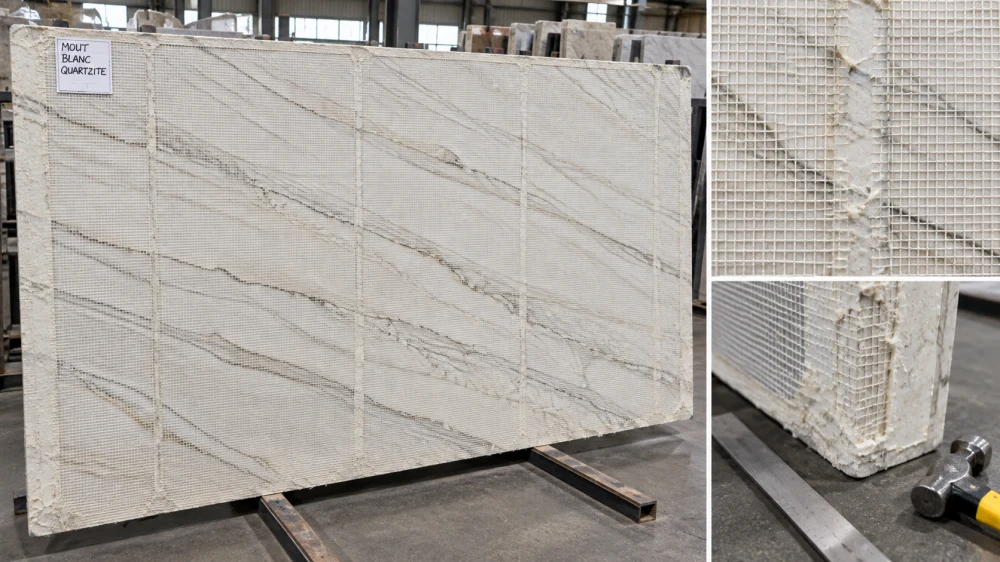
سجل:
هذا يُنشئ سجلًا خاصًا بالمشروع يعكس الحالة الفعلية، بدلًا من افتراض أن كل لوح يُباع تحت نفس اسم الكوارزيت الطبيعي له نفس المعالجة الخلفية.
هذا هو السؤال الأساسي للمُركّب.
يُظهر التحضير المعتمد سطحًا حجريًا لإجراء الالتصاق.
يتلامس اللاصق المقترح مع حالة دعم مطبقة مسبقًا في المصنع.
قد يكشف التحضير عن أكثر من مادة أو حالة واحدة عبر منطقة الالتصاق.
لا ينبغي التعامل مع هذه الأسطح تلقائيًا على أنها ركائز متكافئة.
مقالنا حول علاجات راتنج الكوارزيت واختيار اللاصق يطرح نفس الفكرة العامة: يجب أن تبدأ قرارات اختيار اللاصق بالسطح الفعلي المراد لصقه، والمعالجة الحالية، وغرض الالتصاق، والإرشادات الحالية للمنتج—وليس فقط اسم الحجر التجاري وحده.
سؤال شائع هو:
“هل يجب طحن الشبكة قبل التركيب؟”
لا ينبغي وجود إجابة عالمية تستند فقط إلى عبارة “كوارزيت مدعوم بشبكة”.”
قد يؤدي الإزالة إلى تغيير:
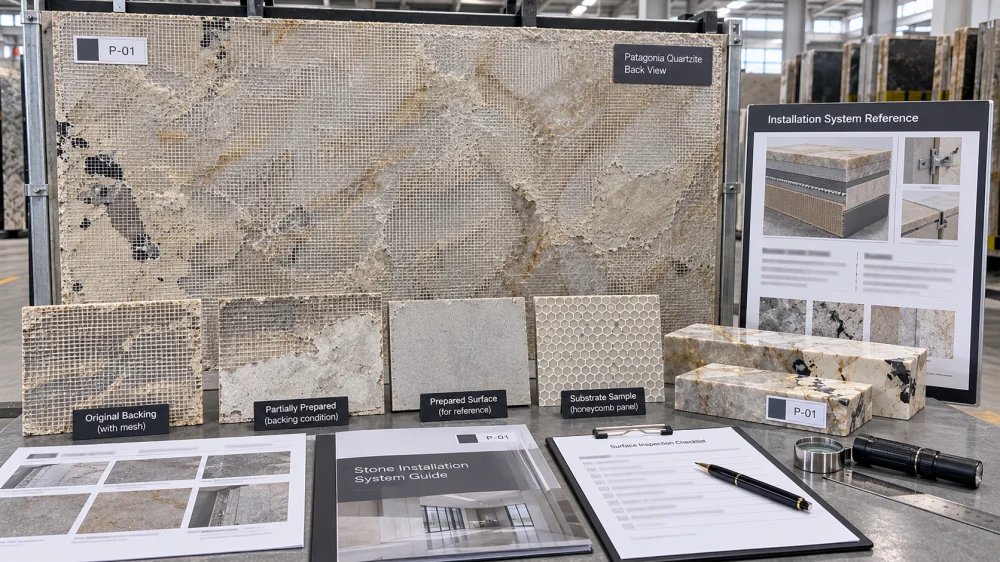
وبالمثل، لا ينبغي اعتبار ترك الدعم دون تعديل أمرًا مقبولًا تلقائيًا لكل نظام لاصق.
لا تقم بإزالة أو إبقاء نظام دعم الكوارزيت بحسب العادة. ابدأ بتحديد الحالة المورَّدة وتأكد من التحضير المطلوب عبر نظام التركيب المسؤول والإرشادات التقنية الحالية.
إن معرفة الجزء الخلفي من الكوارزيت ليس سوى نصف الواجهة.
أما النصف الآخر فهو الركيزة المستقبلة.
يجب على فريق التركيب تحديد الركيزة الفعلية المحددة للمشروع بدلاً من الاكتفاء بكتابة “جدار” أو “أرضية”.”
تشمل الأسئلة ذات الصلة:
بالنسبة لتطبيقات الواجهات على وجه الخصوص، لا ينبغي فصل الالتصاق عن مفهوم التثبيت الكامل المعتمد. إن دليل تثبيت واجهات الكوارزيت الطبيعي يوضح لماذا يجب تنسيق ألواح الحجر، ومفاهيم التثبيت، ورسومات المشروع، والواجهات، والمهنيين المسؤولين عن التصميم، كمنظومة واحدة، بدلاً من التعامل معها كجزء عام من تفاصيل تركيب الألواح.
بمجرد تحديد الجانبين الفعليين للالتصاق، راجع المعلومات التقنية الحالية لنظام اللاصق المقترح.
يجب على المثبت المسؤول التحقق من المتطلبات المتعلقة بالمشروع مثل:
وصف المنتج مثل “للحجر الطبيعي” لا ينبغي تفسيره تلقائيًا على أنه موافقة على كل شبكة، أو راتنج، أو دعم، أو ركيزة، أو حجم لوح، أو بيئة، أو تكوين تركيب.
| Known Condition | لا تفترض | Confirm Instead |
| Slab has mesh backing | All mesh-backed slabs use the same system | Actual backing condition and available supplier information |
| Adhesive says “for stone” | It is compatible with every backing | Current manufacturer guidance for the actual interface |
| Mesh is visible | It must automatically be removed | Approved surface-preparation route |
| Small sample bonded successfully | Every slab and site condition is therefore approved | What the trial represented and what decision it supports |
Mesh or resin may have been applied during slab processing or reinforcement.
The installation adhesive has another function.
These should not be merged into one generic idea of “glue.”
على سبيل المثال:
Each can involve different materials, surfaces, purposes, and responsible parties.
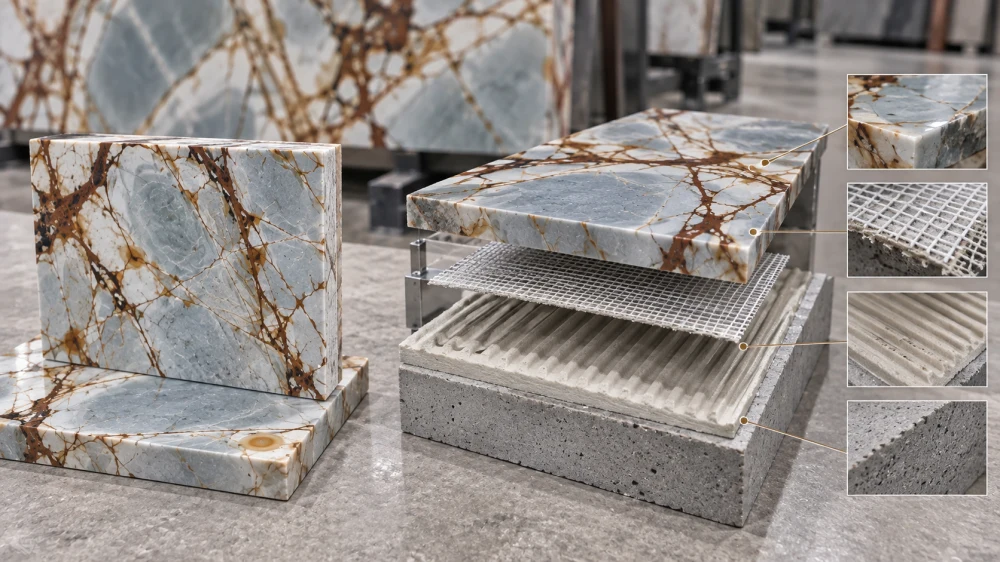
A full slab may arrive with one backing condition, but the finished component may not remain identical after fabrication.
Cutting, edge fabrication, openings, local reinforcement, handling provisions, or other approved fabrication operations can create different conditions across the back of the finished piece.
Before installation, review the actual fabricated component—not only a photograph of the original slab.
This becomes particularly important around:
A small sample is useful for answering limited questions.
It cannot automatically reproduce every condition of a large fabricated panel.
Differences can include:
This is especially important for feature walls and other large-format applications. Large Natural Quartzite panels should be coordinated with the approved project installation concept rather than extrapolating an entire assembly from a small sample alone.
A controlled trial or mock-up may be useful when:

Actual Quartzite → Actual Backing Condition → Intended Surface Preparation → Proposed Adhesive → Representative Substrate → Required Cure → Review → Recorded Decision
The closer the mock-up is to the actual interface, the more relevant the observation can be.
But a successful trial should still be documented according to what it actually represents rather than converted into a universal guarantee.
“Test passed” is not enough information for a project record.
سجل:
This makes the trial traceable to the actual installation decision.
A bonding trial can help evaluate the particular interface represented by the test.
It does not automatically establish:
Those questions belong to the appropriate project designers, system providers, installers, engineers, manufacturers, or other qualified responsible parties.
| القرار | Information Needed |
| Supplied stone condition | Slab / component reference, front and back photographs, available treatment information |
| Adhesive compatibility | Actual bonding surface, substrate, preparation and current system documentation |
| Surface preparation | Approved installation-system procedure for the actual condition |
| Panel support / fixing | Current project drawings, system requirements and responsible technical review |
| Installation release | Approved system information, resolved open items and named responsible party |
The approved installation basis should be reviewed if the actual delivered or fabricated material differs from the condition previously assessed.
من الأمثلة على ذلك:
The purpose is not to create unnecessary delay. It is to prevent an approval made for one interface from being reused for a materially different one.
Before bonding mesh-backed Quartzite, confirm:
□ Correct Quartzite slab / finished component identified
□ Backing condition photographed and recorded
□ Actual bonding surface identified
□ Required backing preparation confirmed
□ Actual project substrate identified
□ Proposed adhesive system identified
□ Current manufacturer / system documentation reviewed
□ Environmental and application limitations checked
□ Trial or mock-up completed where required
□ Trial conditions and limitations recorded
□ Mechanical fixing / structural requirements separately resolved where applicable
□ Responsible party has released the installation method
The Natural Quartzite supplier can help make the interface clearer by providing available information about the material being shipped.
قد تشمل السجلات المفيدة ما يلي:
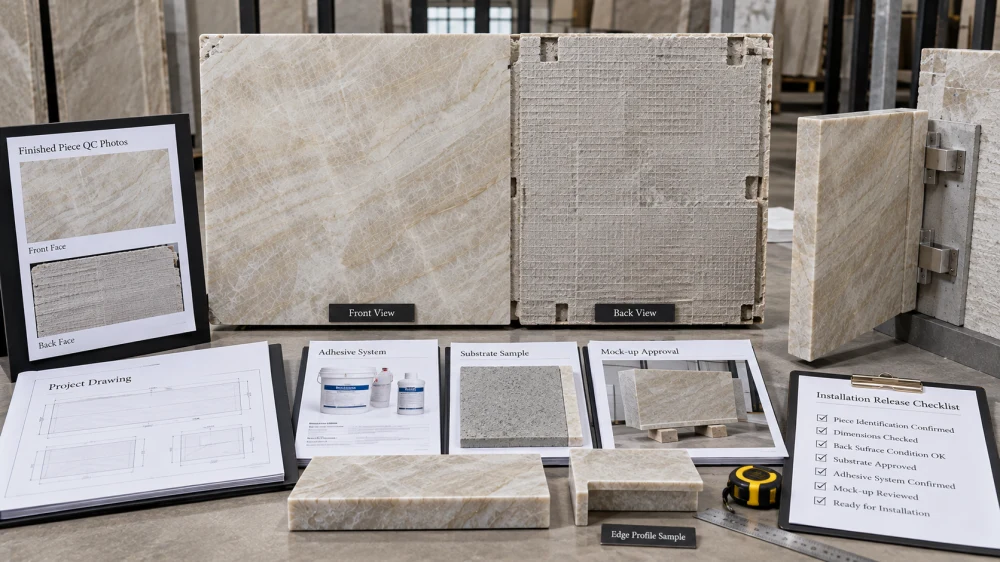
The stone supplier should not replace the adhesive manufacturer, installation-system provider, structural designer, or qualified installer when those parties are responsible for final system suitability.
اللوح المصنوع من الكوارزيت ذي الدعم الشبكي هو كوارزيت طبيعي يُزوَّد بشبكة أو نظام تدعيم آخر على جزء من سطحه الخلفي أو على كامله. وقد يختلف تركيب الدعم الفعلي، لذا ينبغي للمُركِّبين تسجيل الحالة الفعلية المورَّدة بدلاً من افتراض أن جميع الألواح ذات الدعم الشبكي متماثلة.
ليس تلقائيًا. يعتمد ما إذا كان ينبغي الإبقاء على الدعم أو تحضيره أو تعديله على الحالة الفعلية للدعم، ونظام اللصق المقترح، والركيزة، وطريقة التركيب، بالإضافة إلى التوجيهات الحالية الصادرة عن الجهات التقنية المسؤولة. لا تقم بإزالة الشبكة لمجرد أنها مرئية.
لا يمكن تحديد ذلك استنادًا إلى اسم الكوارتزيت أو وجود الشبكة وحدهما. يُرجى أولاً تحديد المادة التي سيتصل بها اللاصق فعليًا، والتأكد من ملاءمة النظام المقترح وتحضير السطح لتلك الواجهة.
Not necessarily. Mesh reinforcement, resin associated with the backing, localized repairs, slab-surface resin treatment, fabrication adhesive, and installation adhesive can perform different functions. Record the actual condition instead of grouping all of them under the word “resin.”
تربط رابطة التركيب بين جانبين من واجهة التثبيت؛ إذ يُعدّ بطانة الكوارزيت أحد الجانبين، بينما يُعدّ الركيزة الخاصة بالمشروع الجانب الآخر. ولذلك، ينبغي مراجعة توافق المادة اللاصقة، وعمليات التحضير، والظروف البيئية، ومتطلبات التركيب في ضوء كليهما.
قد يكون إجراء تجربة تمثيلية أو نموذج أولي مناسبًا عندما تكون ظروف التثبيت، والتوافق، وتحضير السطح، والتأثير البصري، أو ظروف التركيب غير مؤكدة، أو عندما يطلب الأطراف المسؤولة عن المشروع إجراء عملية التحقق. سجّل بدقة المواد والظروف التي تمثلها هذه التجربة.
لا. يوفّر اختبار الالتصاق معلومات فقط حول الواجهة والظروف التي يمثّلها ذلك الاختبار. أما التصميم الإنشائي، والتثبيت الميكانيكي، وكفاية الركيزة، والحركات، والعزل المائي، ومتطلبات المواصفات، والأحمال البيئية، وغيرها من المسائل على مستوى النظام، فتستلزم مراجعة منفصلة خاصة بكل مشروع حسب ما يقتضي الحال.
For project-based Natural Quartzite supply, HRST STONE can document slab identity, front and back conditions, visible mesh or reinforcement, fabrication details, finished-piece references, QC photographs, and packing records. Final adhesive selection, surface preparation, fixing design, and installation method should be confirmed for the actual project condition by the responsible installer, adhesive or installation-system provider, designer, engineer, or other qualified project party as applicable.
© شركة HRST STONE / شركة شيامن HRST STONE المحدودة. جميع الحقوق محفوظة.