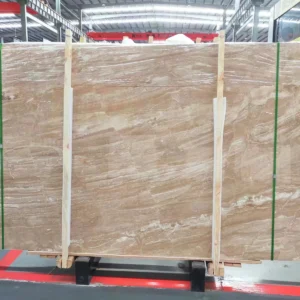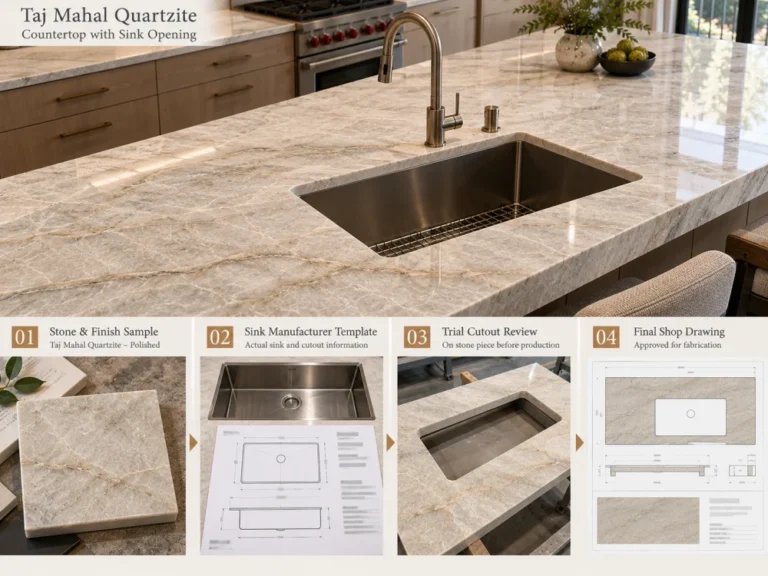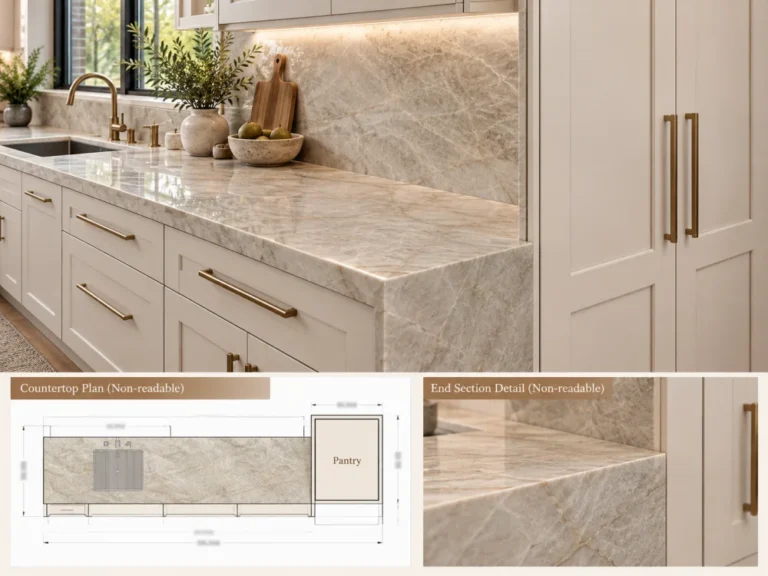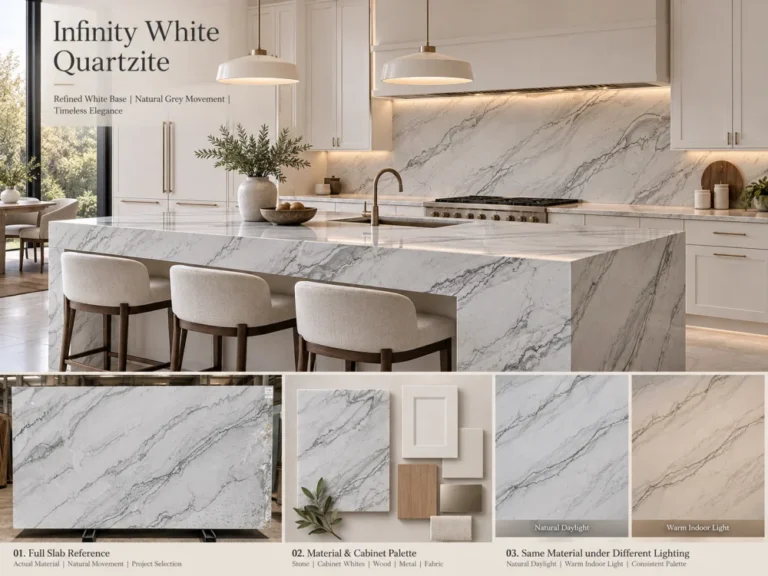

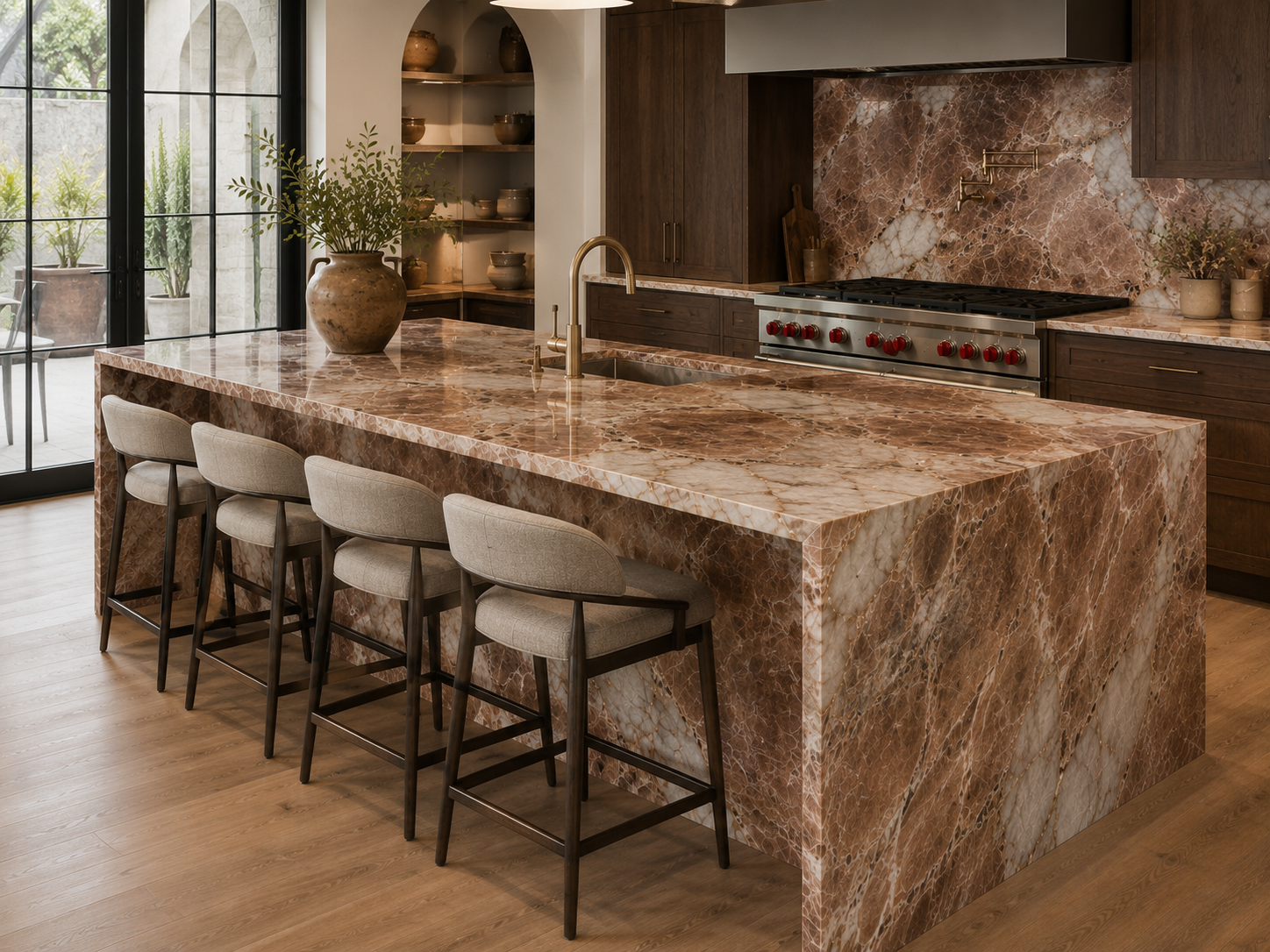
جزيرة مطبخ من الكوارتزيت البني من باتاغونيا
باتاغونيا الكوارتزيت يُقدَّر هذا الحجر بسبب جيولوجيته الطبيعية المعقدة أكثر من نمطه الخطي المتكرر. في باتاغونيا البني, ، تتفاعل التشكيلات الكبيرة للبلورات الشاحبة مع كتل المعادن البنية والبيج الدافئة، وتحولات الرمادي المدخن، وشظايا داكنة متناثرة.
وهذا يجعل المادة مناسبة بشكل خاص لتصميم جزيرة مطبخ لافتة للنظر. جزيرة المطبخ, ، حيث تتيح مساحة سطح كبيرة وغير متقطعة إبقاء التركيبة الأصلية للوح ظاهرة للعيان.
لطلب مخصص جزيرة كوارتزيت, ، ينبغي أن يبدأ التصميم باللوح الفعلي. يجب تنسيق أبعاد الجزيرة، وموقع الحوض، وموقد الطهي، وبروز المقاعد، ولوحات الشلال، والحواف الظاهرة قبل عملية القطع.
مواصفات المنتج
| تخصيص | تفاصيل المشروع |
| اسم المادة | كوارتزيت باتاغونيا البني |
| نوع المادة | الكوارتزيت الطبيعي |
| الألوان الأساسية | أبيض حليبي / عاجي / كريمي / بيج / بني / رمادي مدخن / لمسات معدنية داكنة |
| نمط الملمس | حقول بلورية كبيرة / بنية معدنية متشعبة / حركة بنية-رمادية غير منتظمة |
| الشفافية | تختلف حسب منطقة البلورات؛ يُوصى بإجراء اختبار إضاءة فعلي على اللوح. |
| السماكة المتاحة | خيارات قياسية بسمك 18 مم / 20 مم |
| حجم اللوح المتاح | يخضع لتوافر اللوح الحالي. |
| تشطيب السطح | التشطيب المصقول / المجلد / الخاص بالمشروع |
| خيارات التصنيع | الأسطح العلوية للجزر / الشلالات / الحواف المدببة / فتحات الحوض / فتحات موقد الطهي / الحوائط الخلفية |
| خيارات الحواف | بناء مُخفف / مشطوف / مدبب / بملف شخصي مخصص |
| نطاق التطبيق | جزر المطبخ / أسطح العمل / أطراف الشلال / الحوائط الخلفية / أسطح الميزات |
| مقاس مخصص | وفقًا لمخططات المحل المعتمدة، وأبعاد اللوح، ونسبة العائد القابل للاستخدام. |
| تفاصيل التعبئة | حماية السطح + حماية الحواف + دعم الفتحات + صناديق خشبية مُعززة ومُعقمة بالتبخير. |
| الحد الأدنى للطلب | وفقًا للوح المختار ومتطلبات التصنيع. |
| موعد التسليم | تم التأكيد وفقًا لمدى توفر المواد، والكمية، ونطاق المعالجة |
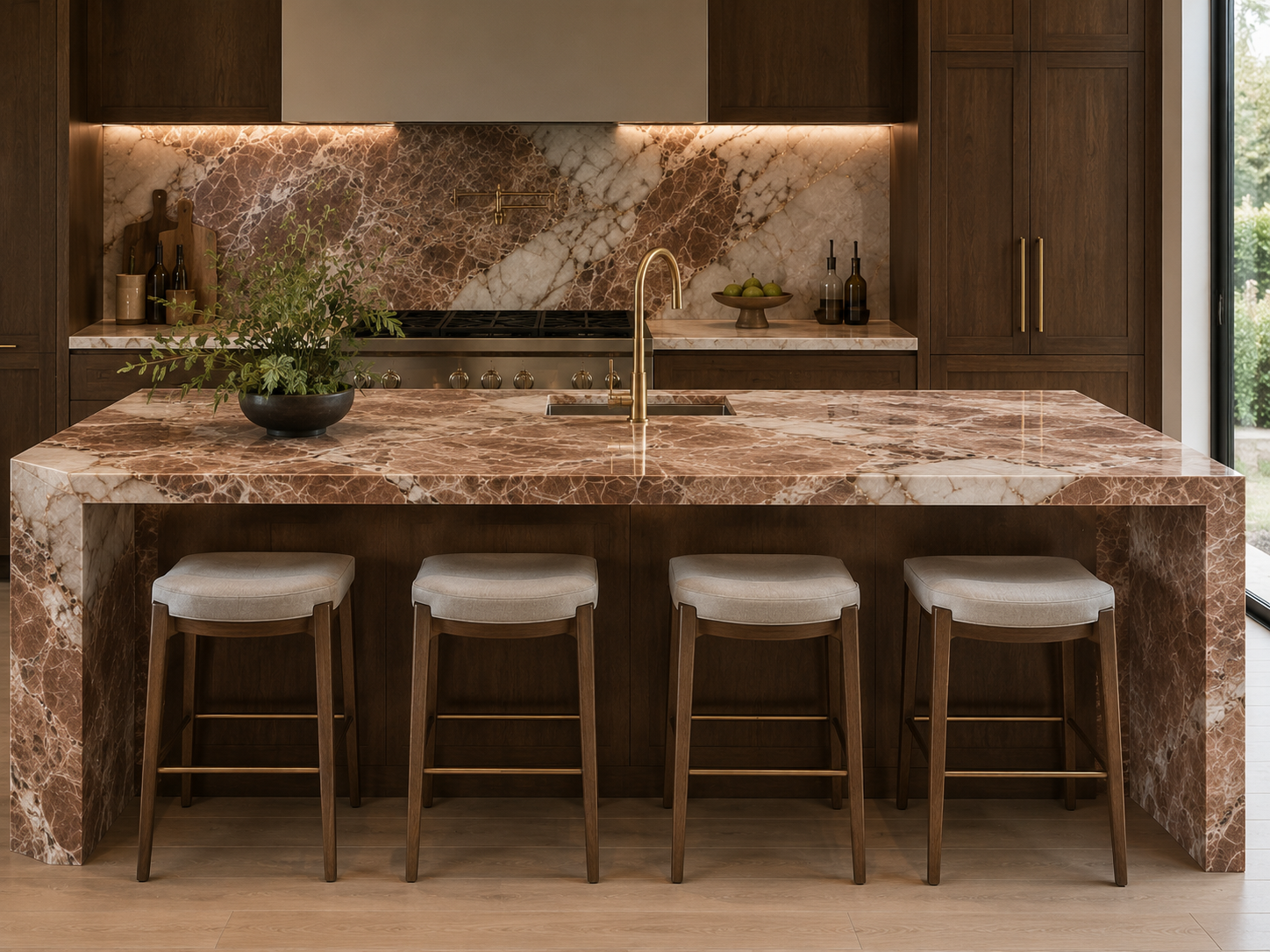
الطابع البلوري والبني والمعادن المدخنة.
باتاغونيا البني ليس بلون متجانس. الكوارتز البني. تكمن هويته في التباين بين البلورات الضوئية الكبيرة والبنى والرمادية والمعادن الداكنة الأكثر كثافة.
قد تبدو مناطق البلورات الشاحبة البيضاء والكريمية شبه شفافة، بينما تخلق الشظايا البنية والداكنة الأعمق وزنًا بصريًا.
هذه البنية الجيولوجية غير المنتظمة تمنح المادة طابعًا كريستال كوارتزيت أكثر من طابع الحجر التقليدي ذي العروق المتدفقة.
يجب مراجعة موقع وحجم هذه المناطق المعدنية قبل تحديد مكونات الجزيرة النهائية.
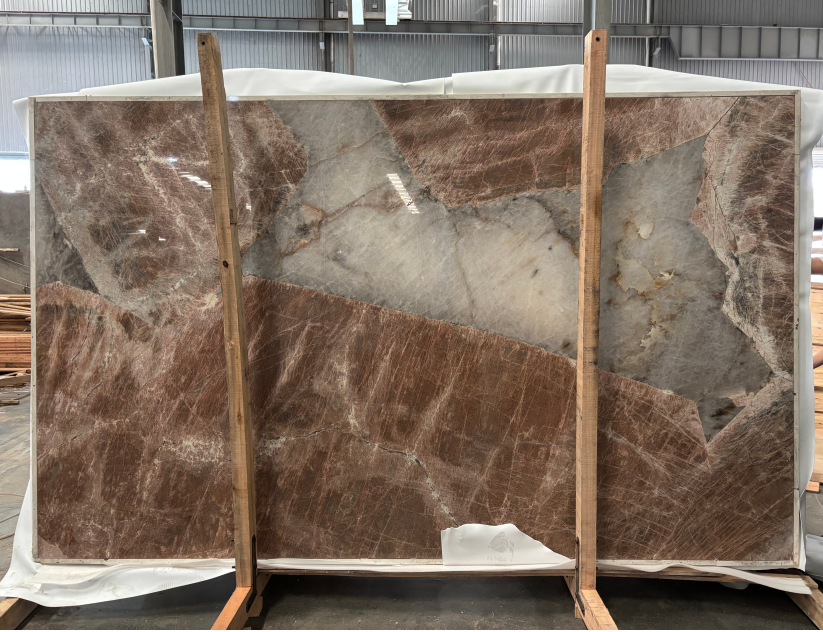
اختيار اللوح بالكامل قبل تصميم الجزيرة.
لا يمكن لعينة صغيرة أن تمثل كامل لوح باتاغونيا.
بالنسبة لـ لوح كوارتزيت, ، ينبغي للمشتري مراجعة ليس فقط اللون، بل أيضًا العلاقة القابلة للاستخدام بين الحقول البلورية، ومناطق المعادن البنية، والشظايا الداكنة، والشقوق، والأماكن المُصلحة.
مراجعة اللوح بالكامل:
حجم اللوح → توزيع البلورات → حقل المعادن البنية → حركة الرمادي المدخن → الشظايا الداكنة → الشقوق → الإصلاحات → المناطق الشفافة → نسبة العائد القابل للاستخدام → تسلسل اللوح
يحدد ذلك ما إذا كان اللوح المختار قادرًا على إنتاج السطح العلوي للجزيرة ولوحات الشلال وغيرها من المكونات بشكل واقعي، مع الحفاظ على التكوين البصري المطلوب.
تخطيط قطع جزيرة المطبخ
أ جزيرة الحجر يجب وضعها باستخدام صور اللوح الفعلي بعد تأكيد أبعاد الخزانة والأجهزة.
يمكن للقالب النهائي أن يوضح:
السطح العلوي للجزيرة → الحوض → موقد الطهي → الصنبور → برزخ المقاعد → مناطق الدعم → الدرز → لوحة الشلال → الحافة النهائية → الحائط الخلفي
يتيح ذلك للمصنع الحفاظ على مناطق البلورات المهمة وتجنب وضع التحولات المعدنية الضعيفة داخل الجسور الضيقة حول الفتحات.
وضع الحوض وموقد الطهي
يمكن لحوض الغسيل أو سطح الطهي إزالة جزء كبير من النمط البصري من سطح العمل الجزيرة.
بالنسبة لباتاغونيا براون، ينبغي عند التخطيط للقطع أن يُؤخذ في الاعتبار كلٌّ من المظهر والملاءمة الإنشائية.
| فحص القطع | ما أهمية ذلك |
| المنطقة البلورية الرئيسية | تجنب إزالة أهم ميزة بصرية دون داعٍ |
| التشققات الطبيعية | مراجعة المناطق المحيطة بالجسور الضيقة قبل القطع |
| الإصلاحات | تجنب المناطق المرممة الضعيفة حيثما أمكن ذلك |
| دعم النقل | قد تتطلب الفتحات الكبيرة تعزيزاً مؤقتاً أثناء المناولة |
تصميم جزيرة الشلال
أ جزيرة الشلال يتيح لباتاغونيا براون الاستمرار من السطح الأفقي للجزيرة نزولاً إلى الأرضية.
لنجاح شلال الحجر, ، ينبغي تخطيط الألواح العلوية والجانبية كزوج بصري قبل قطع أي منهما.
حيثما أمكن، يمكن استخدام المناطق المجاورة من الألواح لإنشاء انتقال واقعي بين الهيكلين المعدنيين الأفقي والعمودي.
الهدف هو الاستمرارية الطبيعية، لا نمط انعكاسي مصطنع.

تصنيع الحواف المتشابكة
أ جزيرة متشابكة يمكن أن يخلق مظهر سطح حجري أكثر سمكاً دون استخدام قطعة صلبة واحدة ذات سمك ظاهر متساوٍ.
ال الحافة المتشابكة ينبغي قطعها بدقة وإجراء محاولة تركيب أولية قبل التشطيب النهائي.
التخطيط المعتمد → القطع الدقيق → التشابك بزاوية 45° → مراجعة التعزيز → المحاولة الأولى للتركيب → مواءمة الوصلات → التحكم باللاصق → تنقيح الحافة → الفحص النهائي
يتطلب الأمر عناية خاصة عندما يعبر التشابك منطقة بلورية أو مكسوة بالبريشيات، لأن سلوك الحافة قد يختلف بشكل كبير عبر اللوح نفسه.
كوارتزيت باتاغونيا براون المضاء من الخلف
يمكن للمناطق البلورية الشاحبة المختارة أن تتصرف كـ الحجر الشفاف وقد تُعتبر لـ جزيرة مضاءة من الخلف.
ومع ذلك، فإن باتاغونيا براون ليس شفافاً بشكل موحد. يعتمد الاستجابة الفعلية على كثافة البلورات، واللون، والتركيبة المعدنية، والسماكة.
| منطقة الحجر | الاستجابة المتوقعة |
| بلورة بيضاء حليبية | قد تكون نسبة النفاذية أعلى؛ يرجى التحقق من اللوح الفعلي |
| بلورة كريمية | نفاذية دافئة متغيرة |
| منطقة معدنية بنية | بشكل عام، نفاذية ضوئية أقل |
| جزء داكن | غالباً ما يكون شبه معتم |
لـ كوارتزيت بإضاءة خلفية, يجب إكمال اختبار اللوح الفعلي قبل الانتهاء من وضع مصابيح LED وتخطيط القطع.
تنسيق نظام الإضاءة الخلفية
يجب أن تُنسق الجزيرة المضاءة من الخلف مع نظام الإضاءة والحجر كوحدة واحدة.
سماكة الحجر → رسم خرائط البلورات → غرفة الإضاءة → توزيع مصابيح LED → المشتت → الدعم الإنشائي → التهوية → الوصول للصيانة → التعتيم
يساعد اختبار النظام الكامل قبل التصنيع على تقليل بقع الحرارة الناتجة عن مصابيح LED، والظلال الداكنة الناتجة عن الدعم، والفروق غير المقصودة في السطوع.

أسطح المطبخ وأسطح العمل
يمكن أيضاً تنسيق باتاغونيا براون كـ سطح عمل المطبخ, سطح عمل حجري أو سطح عمل من الكوارتزيت.
في المطابخ التي يُراد أن تظل فيها الجزيرة محور التركيز، يمكن تصنيع أسطح العمل المحيطة من أقسام أكثر هدوءاً بصرياً من ألواح متوافقة.
هذا يحافظ على التسلسل الهرمي للتصميم مع الحفاظ في الوقت نفسه على لوحة متناسقة من المواد الطبيعية في جميع أنحاء المطبخ.
تنسيق واجهة الخلفية من الكوارتزيت
أ Quartzite Backsplash يمكن أن تمتد المادة عموديًا خلف موقد الطهي أو الحوض أو المنضدة المحيطة.
يجب إدراج واجهة الخلفية في حساب العائد من اللوح قبل بدء القطع.
إذا كانت الجزيرة تحتوي بالفعل على بلورات قوية وحركة معدنية داكنة، فإن واجهة خلفية أكثر هدوءًا قد تخلق تركيبًا متوازنًا أكثر في المطبخ.
كوارتزيت باتاغونيا براون المصقول
الكوارتزيت المصقول يُبرز عمق البلورات الفاتحة والتباين بين الهياكل المعدنية البنية والبيج والرمادية الدخانية والداكنة.
هذا التشطيب مناسب بشكل خاص عندما يُراد للجزيرة أن تكون نقطة محورية درامية من الحجر الطبيعي.
يجب أن تشمل الفحوصات النهائية مراقبة لمعان السطح والخدوش والإصلاحات وجودة الحواف وأي معالجة مرئية بالراتنج في كلٍ من المناطق التي تحتوي على بلورات ومناطق المعادن الكثيفة.
عائد اللوح القابل للاستخدام
جميل للغاية لوح حجري بني لا يوفّر تلقائيًا عائدًا مرتفعًا قابلًا للاستخدام.
بالنسبة لباتاغونيا براون، يمكن تقليل المساحة القابلة للاستخدام عن طريق:
الاختيار البصري → الشقوق → الإصلاحات → موقع القطع → مطابقة الشلال → متطلبات الحواف → المواد الاحتياطية → مناطق المخاطر الإنشائية
لذلك ينبغي تقييم التكلفة النهائية للحجر بناءً على خطة القطع الكاملة وليس فقط على المساحة الإجمالية بالمترو المربع للوح.
تنسيق الرسومات باستخدام الحاسوب ورسومات الورشة
أ كوارتزيت مخصص يجب تصنيع الجزيرة وفق رسومات معتمدة.
يجب أن تحدد رسومات الورشة:
الأبعاد الكلية → غلاف الخزانة → الحوض → موقد الطهي → الصنبور → السماكة النهائية → البروز → الدعم الإنشائي → الشلال → الزاوية المائلة → الوصلة → واجهة الخلفية → فتحات الخدمات
بمجرد اعتماد هذه التفاصيل، يمكن وضع الأجزاء النهائية على صور اللوح الفعلية للتأكيد البصري النهائي.
التصنيع ومراقبة الجودة
تأكيد المواد الفعلية
رسم خرائط المكونات إلى اللوح
هندسة الحوض وموقد الطهي
فحص الوصلات والزوايا
مراجعة المناطق الضعيفة
مراجعة التشطيب والإصلاحات
فحص الشلال والوصلة
الحماية قبل الشحن
مراقبة مخاطر الشراء بين الشركات
| مخاطر المشتري | التحكم الموصى به |
| الجزيرة تختلف عن العينة المرجعية الصغيرة | اعتماد اللوحات الفعلية بالحجم الكامل قبل التصنيع |
| قسم مهم من البلورات ضاع في فتحة الحوض | وضع القوالب النهائية فوق صور اللوح قبل القطع |
| الشلال لا يتصل بصريًا بالسطح العلوي | تخصيص مناطق مجاورة أو مناطق متوافقة بصريًا من اللوح |
| شق يعبر حوضًا ضيقًا أو جسرًا فوق موقد الطهي | مراجعة البنية الطبيعية وإعادة ترتيب التخطيط حيث يكون ذلك عمليًا |
| الإضاءة الخلفية تنتج سطوعًا غير متساوٍ | اختبار الحجر الفعلي مع التكوين المقترح من مصابيح LED والمشتت الضوئي |
| الأجزاء الكبيرة المصنعة تتعرض للتلف أثناء الشحن | استخدام دعامات صلبة وحواجز للحواف وتعزيزات للقطع عند الحاجة |
التعبئة والتسليم الدولي.
أجزاء جزيرة باتاغونيا براون الكبيرة تحتاج إلى تغليف مصمم خصيصًا وفق حجمها الفعلي ووزنها وفتحاتها ومناطقها الحساسة للتشققات.
تُمنح الأسطح المرئية حماية ناعمة وغير ملطخة، بينما تحظى الزوايا المكشوفة والحواف المائلة بوسادة كثيفة وحواجز صلبة للحواف.
يمكن تزويد فتحات الحوض وسطح الطهي بدعامات مؤقتة أثناء النقل عند الحاجة لحماية الجسور الحجرية الضيقة.
تُثبت المكونات النهائية داخل الصندوق صناديق خشبية مدعمة ومعقمة مع فصل صلب، وحاجز داخلي، ومواد واقية مناسبة لهندسة المنتج. يتم إجراء فحص الإنتاج والفحص النهائي للتعبئة قبل الشحن.
التعامل مع مورد الكوارتزيت
مشروع يركز على النتائج مورد الكوارتزيت يجب توفير أكثر من صورة واحدة تمثيلية للبلاطة لمنتج باتاغونيا براون.
يشمل الدعم المفيد في مجال الأعمال بين الشركات تصوير البلاط بالكامل، وأبعاد البلاط، والفرز البصري، والتداخل باستخدام برامج التصميم بمساعدة الحاسوب (CAD)، ورسومات الجزيرة، وتنسيق شلال المياه، وتخطيط الفتحات، والتركيب التجريبي، وفحص جودة الإنتاج، وتعبئة المنتج للتصدير.
هذا يمنح المشتري سيطرة على العلاقة بين البلاطة الطبيعية المختارة والجزيرة النهائية قبل بدء عملية التصنيع التي لا رجعة فيها.
لماذا تختار HRST STONE
توفر شركة HRST STONE حلولاً متكاملة للحجر الطبيعي، مدعومة بأكثر من 17 عاماً من الخبرة في توريد الحجر وتنفيذ المشاريع الدولية.
بالنسبة لجزر المطبخ المصنوعة من حجر الكوارزيت باتاغونيا براون، يمكن أن يشمل الدعم اختيار البلاطة الفعلية، وتصوير البلاطة بالكامل، وتصميمات CAD والرسومات التنفيذية، والموافقة على تخطيط القطع، وتصنيع الجزيرة وشلال المياه، ومعالجة الزوايا المائلة، والتركيب التجريبي، والفحص النهائي للجودة، وتعبئة المنتج للتصدير الدولي.
تساعد هذه العملية المنسقة المصممين والمستوردين والمقاولين وأصحاب المنازل على التحكم في مظهر البلاطة، والعائد القابل للاستخدام، ومخاطر الفتحات، واستمرارية شلال المياه، ودقة التصنيع، وحماية النقل، وذلك منذ مرحلة الموافقة على المواد وحتى التسليم.
المعلومات المطلوبة للتسعير
| عنصر التسعير. | المعلومات المطلوبة. |
| حجم الجزيرة | الطول / العرض / الارتفاع النهائي |
| سمك الحجر | 18 ملم / 20 ملم أو طبقاً للبناء المحدد |
| الشلال | لا شيء / طرف واحد / طرفان |
| الفتحات | الحوض / سطح الطهي / الصنبور / الفتحات الأخرى |
| الحافة | حافة ملساء / بناء مائل / ملف تعريف مخصص |
| الإضاءة الخلفية | مطلوب / غير مطلوب / قيد التقييم |
| التفضيل البصري. | أكثر بلورية / أكثر بنيّة / متوازن / مرجع بلاطة محدد |
| الوجهة | ميناء الوصول أو عنوان تسليم المشروع الكامل |
أسئلة وأجوبة حول جزر المطبخ المصنوعة من حجر الكوارزيت باتاغونيا براون
1. كيف يبدو حجر الكوارزيت باتاغونيا براون؟
عادةً ما يجمع بين مناطق بلورية بيضاء حليبية وعاجية مع هياكل معدنية طبيعية بنية، وكريمية، ورمادية دخانية، وأخرى أغمق.
2. هل يصلح حجر باتاغونيا براون لجزر المطبخ؟
نعم. إن تركيبه البلوري والمعدني واسع النطاق يجعله مناسبًا بشكل خاص لتصاميم أسطح الجزيرة البارزة ولوحات الشلالات.
3. هل يمكن إضاءة حجر الكوارزيت باتاغونيا براون من الخلف؟
قد تُشِعّ المناطق البلورية الشاحبة المختارة الضوء، إلا أن درجة الشفافية تتفاوت بشكل كبير. يلزم إجراء اختبارات فعلية على الألواح قبل الانتهاء من تصميم الإضاءة.
4. هل يمكن استخدامه لجزيرة ذات شلال مائي؟
نعم. ينبغي رسم خرائط للألواح العلوية و ألواح الشلال من مناطق الألواح المجاورة أو المتناسقة بصريًا حيث يُراد تحقيق استمرارية طبيعية.
5. هل يجب الموافقة على مواقع الحوض وسطح الطهي قبل القطع؟
نعم. ينبغي تنسيق الفتحات مع المناطق البلورية الفعلية، والصدوع، والإصلاحات، والجسور الحجرية المتبقية.
6. هل يحتوي حجر الكوارزيت باتاغونيا على شقوق طبيعية؟
يمكن ذلك. قد تحتوي الأحجار الطبيعية المعقدة البلورية والمُكسرة على شقوق ومناطق مُصلَحة ينبغي مراجعتها أثناء اختيار الألواح.
7. ما التشطيب الموصى به؟
غالبًا ما يُختار التشطيب المصقول لإبراز عمق البلورات وتباين المعادن، بينما ينتج الصقل الخشن مظهرًا أكثر نعومة وأقل انعكاسًا.
8. لماذا يعد العائد القابل للاستخدام من البلاطة أمراً مهماً؟
قد تؤدي عمليات المطابقة على شكل شلال، والاختيار المرئي، والتشققات، والإصلاحات، والقطع إلى تقليل كمية الألواح التي يمكن استخدامها في المكونات النهائية.
9. ما الرسومات المطلوبة؟
يجب تأكيد الأبعاد النهائية للجزيرة، وهندسة الخزانة، وفتحات الحوض وموقد الطهي، والحواف الزائدة، والدعامات، ولوحات الشلال، وتفاصيل الحواف ومواقع اللحامات.
10. كيف يتم تعبئة جزيرة باتاغونيا كبيرة الحجم؟
تُزوَّد القطع المُنتَجة بحماية سطحية، وواقيات للحواف، ودعامات مؤقتة لفتحات القص عند الحاجة، بالإضافة إلى فواصل صلبة وتعبئة في صناديق خشبية مُعزَّزة ومُعقَّمة بالتبخير.
ملاحظة ختامية
يجب تصميم جزر المطبخ المصنوعة من حجر الكوارزيت باتاغونيا براون انطلاقاً من البلاطة الفعلية نحو الخارج. أولاً، يتم اعتماد التركيبة البلورية، والبني-العاجي، والرمادي الدخاني، والمعادن الداكنة. ثم تُوضع قمة الجزيرة، والحوض، وسطح الطهي، والشلالات، والدرزات، والحواف المائلة على البلاط المختار. وإذا كانت الإضاءة الخلفية مطلوبة، فيُجرى اختبار المناطق البلورية الشفافة فعلياً قبل إتمام نظام الإضاءة. وأخيراً، يتم التحقق من العائد القابل للاستخدام من البلاطة، والشقوق، والدعامات، والتركيب التجريبي، وجودة التشطيب، وتعبئة المنتج للتصدير. هذه العملية تحمي كلاً من القيمة البصرية للحجر والموثوقية التقنية للجزيرة النهائية.