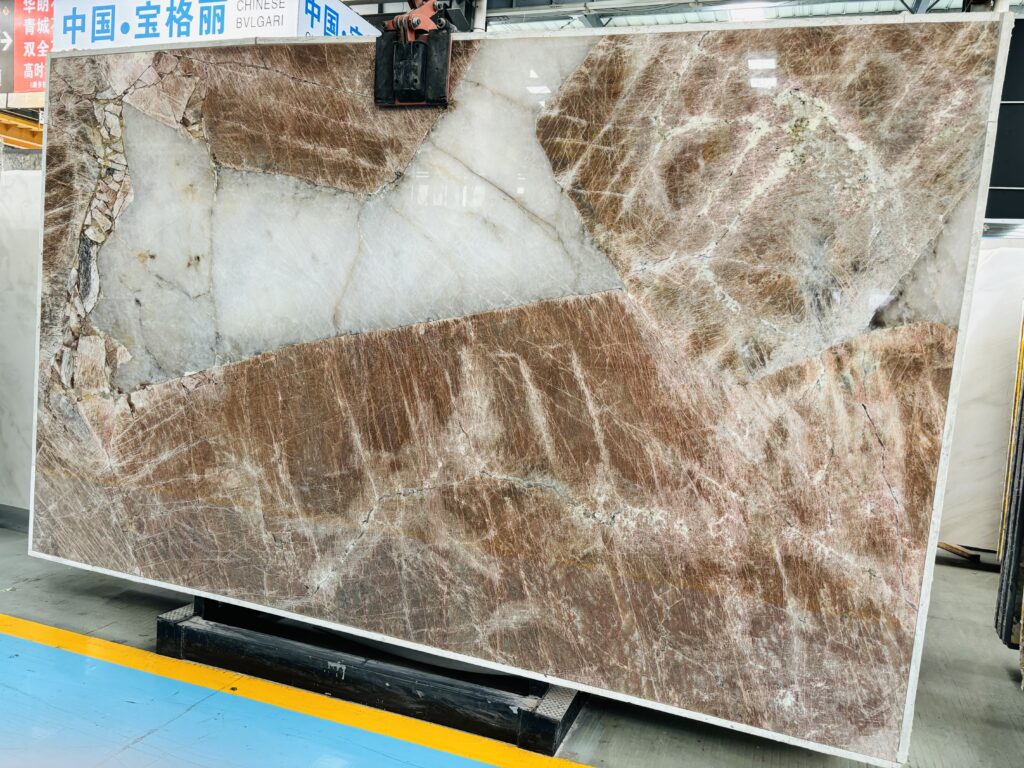
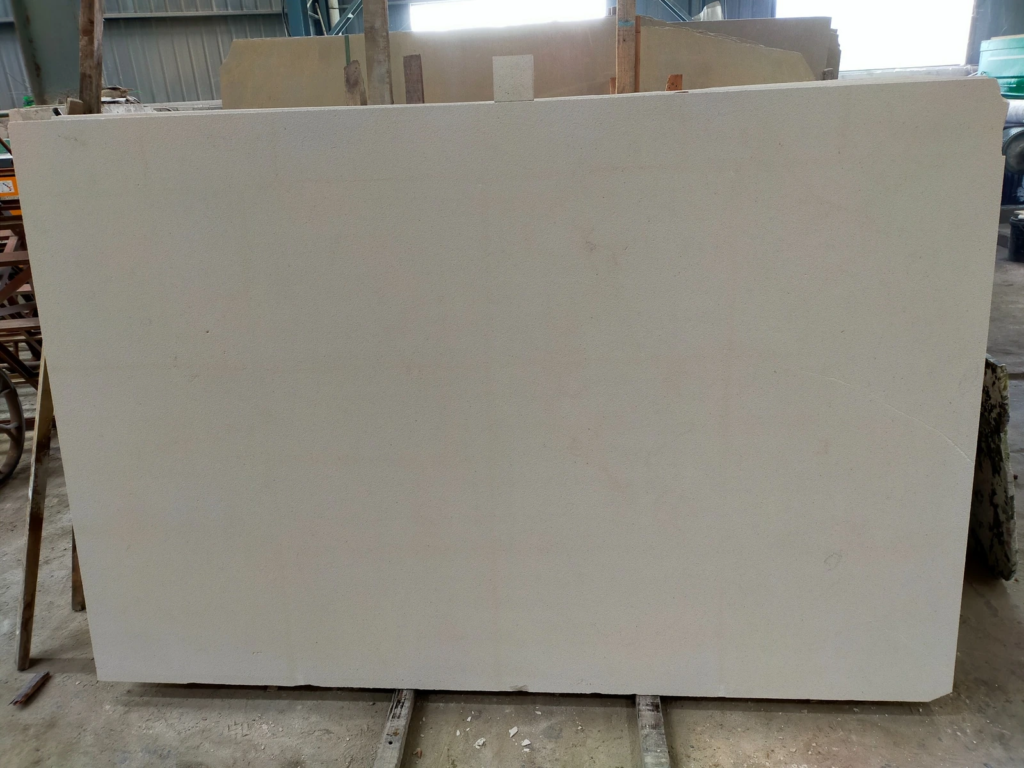
Resumo rápido: Os primeiros 30 dias após a Feira de Pedra de Xiamen frequentemente determinam se os compradores escolhem parceiros confiáveis de longo prazo ou enfrentam riscos evitáveis no projeto. Um processo estruturado de tomada de decisão sobre fornecedores ajuda a converter contatos feitos na exposição em resultados seguros de compra.

Para compradores globais de pedra, a exposição em si é apenas uma parte do processo de compra. A Feira de Pedra de Xiamen 2026 oferece acesso a centenas de fornecedores de mármore, quartzito, granito e pedra industrializada, mas a decisão mais sólida sobre o fornecedor raramente ocorre dentro do estande. Durante a feira, os compradores principalmente colhem primeiras impressões, coletam amostras de materiais, comparam a qualidade da apresentação dos estandes e observam como os fornecedores se comunicam sob pressão da exposição. No entanto, a força real do fornecedor geralmente aparece somente após o término da feira.
Os trinta dias após a Feira de Pedra de Xiamen são críticos porque os fornecedores agora devem converter as promessas feitas na exposição em desempenho mensurável. Os compradores começam a receber cotações revisadas, fotos atualizadas das lajes, propostas de embalagem e explicações sobre a produção. Nessa fase, fornecedores que pareceram impressionantes durante a feira podem começar a mostrar atrasos na comunicação, respostas técnicas pouco claras ou documentação inconsistente dos materiais. Por isso, muitas equipes de compra primeiro retornam à lista de expositores da Feira de Pedra de Xiamen e ao guia de fornecedores e reconstroem a classificação dos fornecedores numa perspectiva mais prática.
O erro mais comum cometido pelos compradores é tentar manter muitos fornecedores ativos por muito tempo. Embora manter flexibilidade pareça atraente, muitas negociações simultâneas frequentemente atrasam as decisões finais de produção e enfraquecem a atenção dos fornecedores. Compradores experientes geralmente reduzem todos os contatos para três a cinco candidatos sérios já na primeira semana após a feira.
Semana 1: Construa uma Lista Curta Prática de Fornecedores
Durante a primeira semana, a prioridade não é a negociação de preços, mas sim a categorização dos fornecedores. Os compradores devem separar os fornecedores em grupos claros: fabricantes diretos, empresas comerciais, operadores de fornecimento misto e oficinas altamente especializadas. Essa distinção importa porque cada tipo carrega riscos diferentes de produção.
Um fabricante direto geralmente controla linhas de corte, sistemas de polimento, embalagem e gestão de armazéns. Uma empresa comercial pode oferecer uma gama maior de produtos, mas depende de várias fábricas. Para entender essas diferenças, muitos compradores comparam fornecedores usando frameworks semelhantes a fabricante vs empresa comercial para fornecedores de mármore, pois a estrutura do fornecedor afeta diretamente a responsabilidade em caso de problemas de produção.
Nesta fase, os compradores devem solicitar três documentos imediatos de cada fornecedor sério: cotação atualizada, fotos recentes do estoque de lajes e exemplos de embalagem para exportação. Fornecedores que respondem claramente dentro de quarenta e oito horas geralmente permanecem como candidatos fortes. Fornecedores que atrasam frequentemente ficam mais fracos sob pressão da produção.
Outro teste útil é fazer perguntas técnicas que exigem conhecimento real de produção. Por exemplo: Como você controla a tolerância de espessura das lajes de mármore polido? Como você substitui lajes danificadas em remessas com vários contêineres? Fornecedores que respondem especificamente geralmente controlam a produção de forma mais direta.
| Item de Avaliação |
Foco do Comprador |
Peso da Decisão |
| Velocidade de Resposta |
Revisão da Cotação em 48 Horas |
Alto |
| Clareza Técnica |
Respostas detalhadas sobre a produção |
Muito Alto |
| Transparência da Fábrica |
Fotos ou provas em vídeo da produção |
Muito Alto |
| Experiência em Exportação |
Exemplos de embalagem e envio |
Alto |
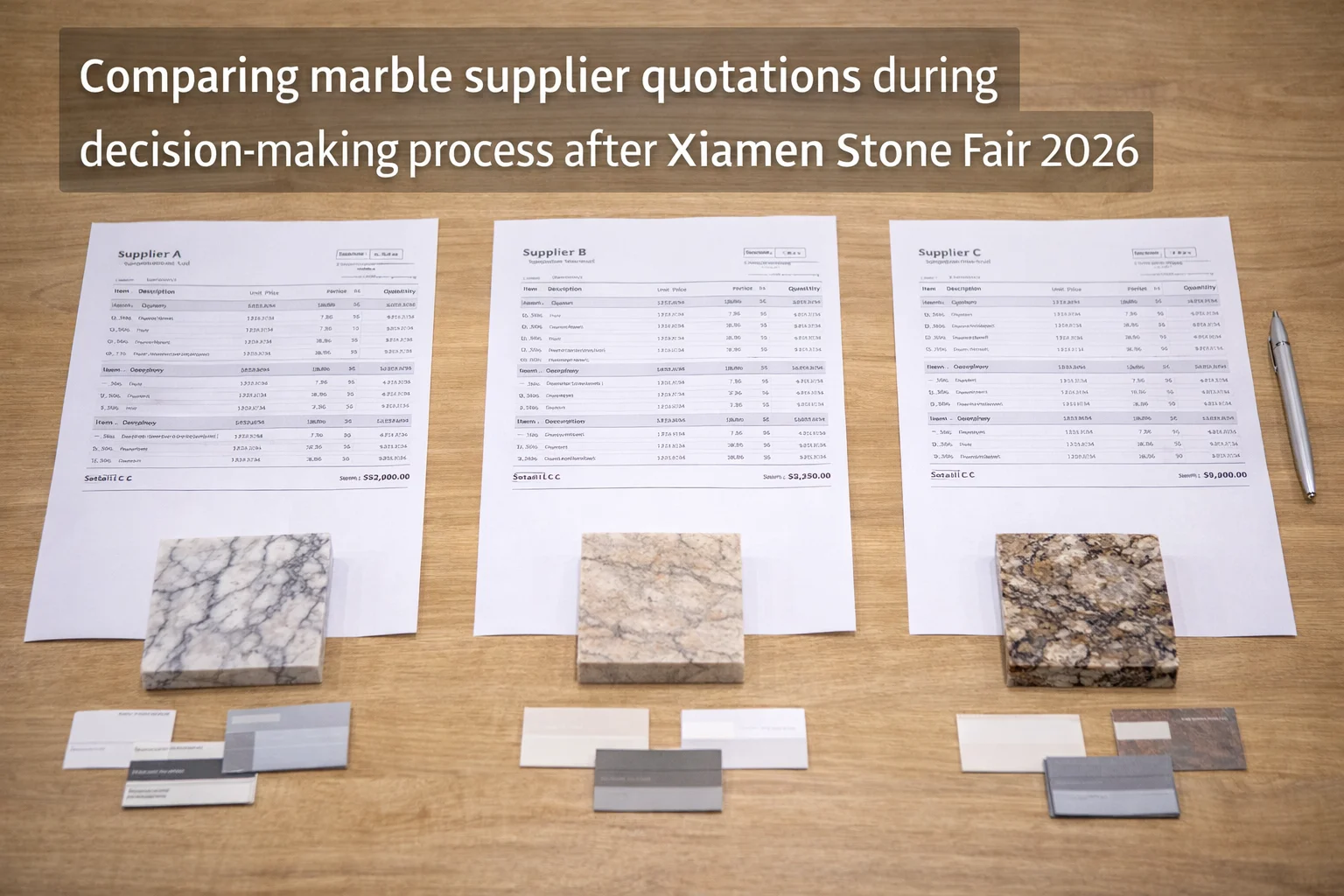
Semana 2: Compare a Estabilidade do Material em Lugar da Beleza da Amostra
Uma vez que a lista curta de fornecedores esteja clara, os compradores devem ir além das amostras do estande. As amostras mostradas durante as exposições geralmente são peças selecionadas e não conseguem representar a realidade completa do projeto. A verdadeira questão é se o fornecedor consegue entregar continuidade visual em grandes quantidades.
Isso torna-se especialmente importante para mármores brancos, bege ou materiais com veios intensos, onde pequenas diferenças de tonalidade se tornam altamente visíveis após a instalação. Compradores que lidam com projetos de múltiplos contêineres frequentemente usam lógicas semelhantes a estratégia de consistência de lotes para projetos de mármore pois a continuidade das lajes afeta diretamente a aparência final do projeto.
Portanto, os fornecedores devem fornecer fotografias completas da sequência das lajes, em vez de lajes isoladas. Os compradores devem pedir lajes numeradas, referências de blocos sempre que possível e confirmação das regras de substituição caso uma laje chegue danificada.
Nesta fase, compradores experientes também comparam se o material selecionado ainda está alinhado com a tendência de design. Se a seleção do material ainda estiver aberta, revisar os melhores materiais na Feira de Pedra de Xiamen 2026 pode ajudar a alinhar a escolha final com a movimentação atual do mercado.
Semana 3: Verifique a Realidade da Produção
A terceira semana é o momento em que a confiança do fornecedor deve ser testada sob condições reais de produção. Se o valor do pedido for médio ou grande, a inspeção na fábrica torna-se altamente recomendada. Mesmo uma visita curta pode revelar mais do que dezenas de e-mails.
Quando viajar for impossível, os compradores devem solicitar vídeos ao vivo em vez de vídeos de marketing editados. O fornecedor deve mostrar o armazenamento das lajes, o funcionamento das máquinas, a área atual de embalagem e rótulos recentes de produção. Isso ajuda a confirmar se o fornecedor realmente controla a produção ou apenas organiza processamento externo.
Muitos compradores agora aplicam métodos semelhantes a como visitar uma fábrica de pedra após a Feira de Pedra de Xiamen 2026 mesmo através de inspeções remotas, pois a verificação visual expõe imediatamente lacunas na produção.
A verificação da fábrica também ajuda a avaliar a qualidade da gestão. Uma fábrica com armazenamento organizado de lajes, numeração clara e movimentação disciplinada geralmente tem melhor desempenho na exportação do que uma oficina com materiais inacabados dispersos.
Os compradores também devem verificar quem cuida internamente da embalagem. Alguns fornecedores terceirizam a embalagem, o que pode aumentar o risco de danos durante o transporte de longa distância.

Semana 4: Pare de Comparar e Tome a Decisão Final
Muitos compradores perdem impulso na fase final porque continuam solicitando cotações de muitos fornecedores. Isso frequentemente enfraquece a qualidade da negociação, pois os fornecedores percebem a indecisão.
Na quarta semana, o fornecedor mais forte geralmente já está visível. O fornecedor responde às perguntas técnicas sem hesitação, atualiza rapidamente as informações sobre o material e assume a responsabilidade de forma clara. O preço ainda importa, mas agora o preço passa a ser apenas um fator dentro de um quadro mais amplo de confiabilidade.
Os compradores não devem mais comparar apenas os números totais das cotações. Em vez disso, devem comparar o valor oculto da produção: confiança na substituição das lajes, qualidade da embalagem, realismo do cronograma de produção e estabilidade da comunicação.
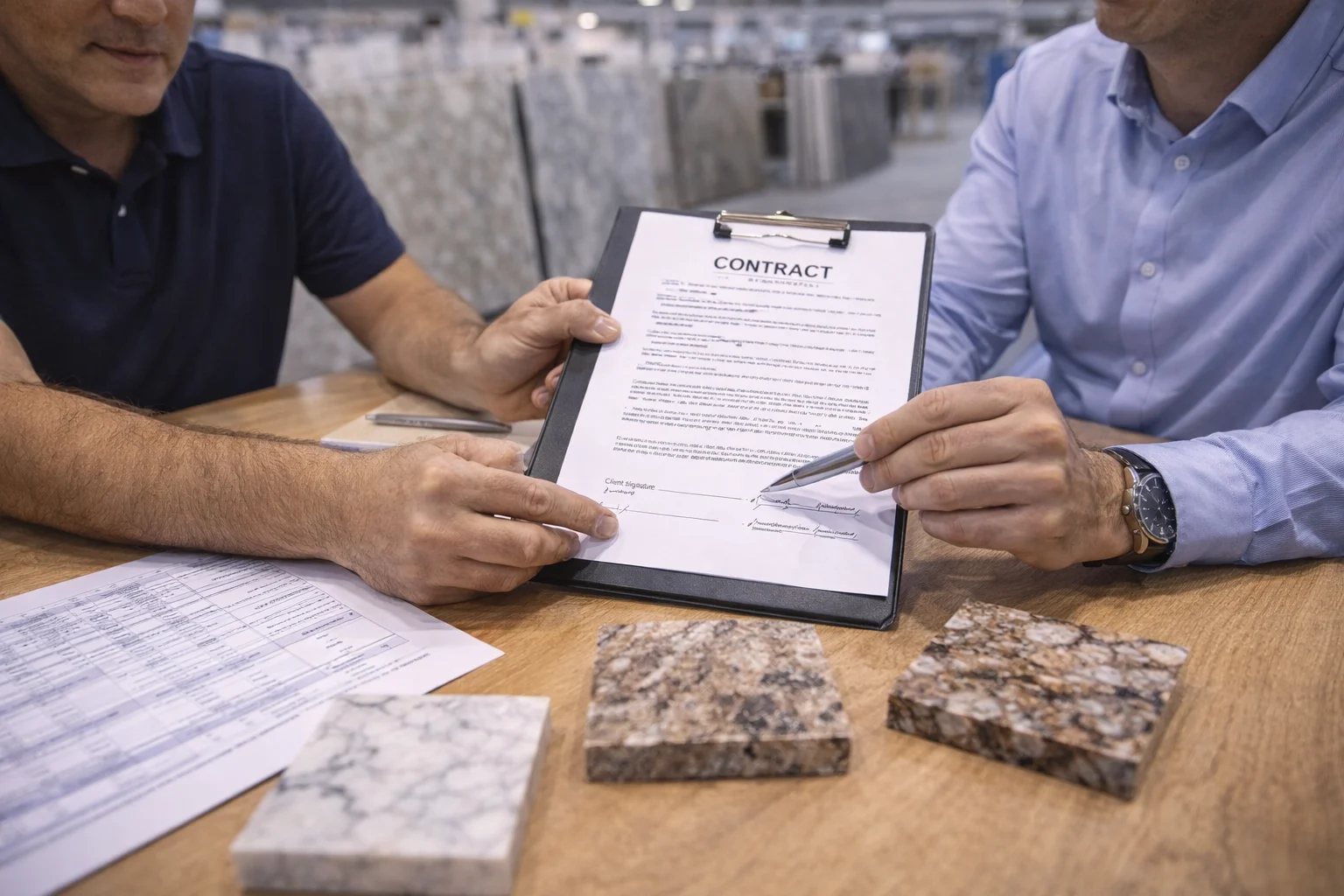
Alguns compradores também revisitam a lógica inicial de triagem usando checklist de fornecedores para compradores globais antes de confirmar o pagamento do depósito.
A decisão final sobre o fornecedor deve ocorrer antes que os blocos premium fiquem indisponíveis. Esperar demais frequentemente significa que o material selecionado já pode ter sido transferido para outros compradores.
Em muitos projetos, o fornecedor mais seguro não é aquele com a cotação mais baixa, mas sim aquele que se comporta de forma consistente ao longo de quatro semanas.
Nota Final / Tomada Prática: O fornecedor que se sai melhor após a feira geralmente se torna mais confiável do que aquele que se sai bem apenas durante a feira. A verdadeira força na compra aparece na disciplina de acompanhamento.
Perguntas frequentes
1. Por que a decisão sobre fornecedores deve esperar até depois da feira?
Porque o desempenho real do fornecedor aparece durante a comunicação de acompanhamento.
2. Quantos fornecedores devem permanecer após a primeira semana?
Geralmente de três a cinco candidatos sérios.
3. A inspeção na fábrica é sempre necessária?
Para pedidos médios e grandes, a verificação de fábrica é altamente recomendada.
4. O preço deve ser o principal fator de decisão?
Não, a comunicação e o controle da produção são igualmente importantes.
5. Quando o pagamento do depósito deve ocorrer?
Somente após a confirmação da laje e a certeza da produção estarem claras.
6. Um fornecedor pode lidar com materiais mistos?
Sim, mas as fontes de produção ainda devem ser verificadas cuidadosamente.
ComoFazer
Passo 1: Reduzir a lista de fornecedores dentro de uma semana.
Passo 2: Compare a continuidade da laje e a revisão da cotação.
Passo 3: Verificar as condições de produção.
Passo 4: Compare a qualidade real da comunicação.
Passo 5: Confirme o fornecedor antes de alterar a alocação de materiais.
Referências