
石英岩スラブの見積書には、測定対象となる面積と実際に請求される面積を明示する必要があります。総スラブ面積、有効な切断面積、仕上げ後の純面積、および請求対象面積はそれぞれ異なる概念です。また、プロジェクトで必要な材料量が少ない場合でも、最低請求額が適用されることがあります。二つの見積書を比較する前に、単に平方メートル当たりの価格だけでなく、材料、スラブ数量、計測基準、加工内容、梱包、運賃、通貨、納品条件などを統一して比較することが重要です。.
あるプロジェクトでは、仕上げ済みの天然石英岩が12㎡必要です。.
サプライヤーAは15㎡と見積もっています。.
サプライヤーBは12㎡と見積もっています。.
サプライヤーCは仕上げ済みの部材が12㎡と示していますが、最低請求額が高めに設定されています。.
では、 石英岩スラブの見積書 は実際にはどちらが安いのでしょうか?
これらの面積数値だけでは判断できません。.
まず、各数値が何を意味するのかを確認しましょう。.
適切な比較を行うためには、
要求される仕上げ面積 → 実際の材料消費量 → 見積り上の面積基準 → 最低請求額 → 加工範囲 → 梱包 → 運賃 → 総合的な比較対象
見積りにおける最大の誤りは、すべての平方メートルの数値を同一の意味であるかのように扱ってしまうことです。.
| 面積用語 | 実務上の意味 | 購入者からの質問 |
| スラブ総面積 | スラブの寸法やサプライヤーが提示するスラブ面積基準によって表される全体の面積 | 私はスラブ全体を購入しているのでしょうか? |
| 使用可能なスラブ領域 | プロジェクト固有の制約を考慮した上で、承認された切断レイアウトに実際に寄与しうる面積 | 私の部材にとって、スラブのどの部分が有用でしょうか? |
| 仕上げ後の純面積 | 提示された計測基準に基づき、要求される仕上げ部材の計算上の面積 | 私の設計図には、どれくらいの仕上げ石材が含まれているのでしょうか? |
| 請求対象面積 | サプライヤーが商業計算に実際に使用する面積または数量 | 見積り単価を掛け算する対象となるのは、どちらの数量でしょうか? |
これらの数量が一致することもあります。.
多くの場合、一致しません。.
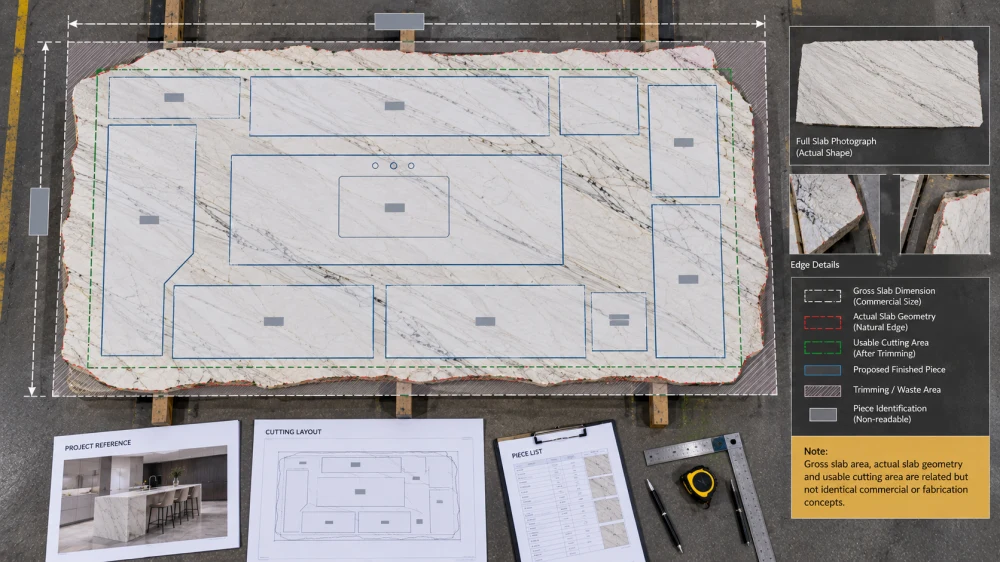
スラブ取引において、総面積とは通常、スラブの寸法やサプライヤーが提示する計測基準によって表される面積を指します。.
簡単な長方形の例で説明すると:
スラブの長さ×幅=総スラブ面積
しかし、この総長方形のすべての平方センチメートルが仕上げられたカウンタートップになるわけではないことを意味します。.
天然石英岩スラブには、
そのため、総スラブ面積を自動的に有効な切断可能面積とみなすべきではないのです。.
私たちの 天然クォーツァイトの利用可能面積とスラブ総面積のガイド 切断レイアウトの観点から、この違いを説明しています。.
この用語にはより慎重な取り扱いが必要です。.
「純」の意味を明確に定義していない限り、純面積は実用的ではありません。.
ある見積書では、純面積を仕上げ済みの長方形部材の合計として表現している場合があります。.
別の見積書では、仕上げ部材の面積を異なる方法で算出していることもあります。.
さらに別のサプライヤーは、この用語を完全に避け、代わりに次のように見積もる場合もあります:
両方の供給業者が、面積の算出方法およびその数値に含まれる商取引上の項目を明示するまで、二つの「純面積」の数値を比較してはならない。.
仕上げ図面には、カウンタートップ、壁パネル、洗面台天板、あるいはその他の部材が一定の平方メートル数で記載されていると仮定しよう。.
実際のスラブ内に部材を配置する必要があるため、工場が必要とする原材料のスラブ面積は、仕上げ後の純面積よりも大きくなることがある。.
材料消費量には、次のような要因が影響する可能性がある:
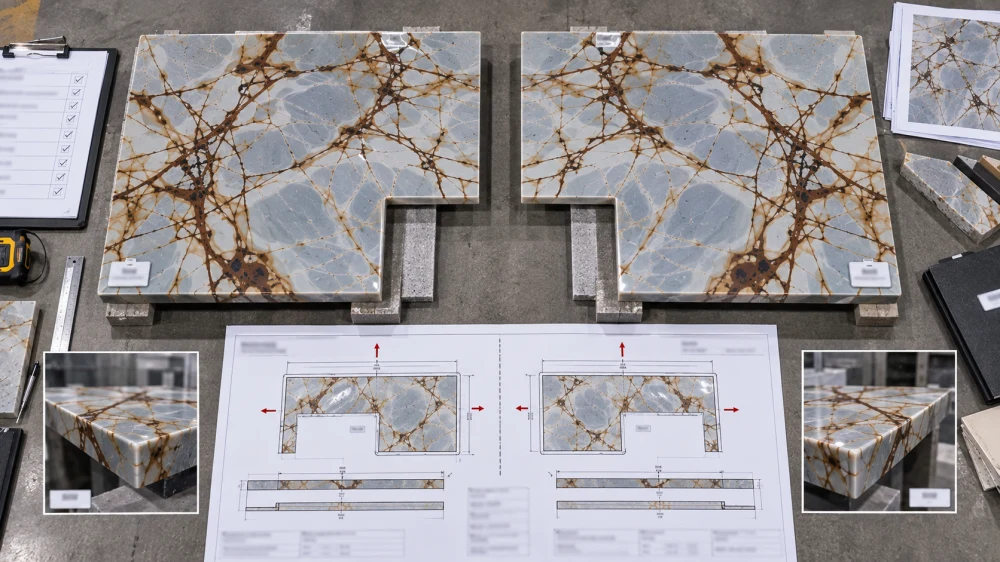
したがって、10㎡の仕上げ済みプロジェクトが、必ずしも10㎡のスラブを消費するわけではない。.
有用な概念的関係として、次のものが挙げられる:
必要な仕上げ部材の数
↓
実際のスラブ上に部材を配置する
↓
向き・視覚的制約・製作上の制約を適用する
↓
実際のスラブ消費量を算出する
↓
商業的な料金基準を設定する
したがって、歩留まりとは単に次のものではない:
“「工場は私にどれくらいの廃棄物料金を請求したいのか?」”
それは、承認されたプロジェクトの制約のもとで、求められる仕上げ形状を実際の天然石スラブに収める過程における結果である。.
最低料金とは、たとえ直近のプロジェクト要求がそれより小さくても、供給業者が所定の最低額・最低数量・最低スラブ枚数・最低加工量、またはその他合意された商業基準に基づいて料金を請求するという商業上のルールである。.
天然クォーツァイトにおける普遍的な最低料金は存在しない。.
供給業者や業務範囲によって、最低料金は次のような場合に関連することがある:
見積書には、どの基準が適用されるかを明記すべきである。.
これらの用語は商業的に重なることがあるが、自動的に同一ではない。.
| 用語 | それが答える質問 |
| MOQ(最小注文数量) | 供給業者が受諾する最低注文数量はいくらか? |
| 最低料金 | What is the minimum commercial amount or quantity basis that will be charged? |
A supplier could theoretically accept a small quantity while still applying a minimum processing or commercial charge.
Always confirm the actual quotation rather than assuming the two terms are interchangeable.
This is one of the most important questions for buyers of premium Natural Quartzite.
Imagine a project requires only part of one slab.
The supplier may still quote the complete slab if the commercial arrangement requires the buyer to purchase that slab rather than only the area physically converted into finished pieces.
That does not automatically mean the unused material is “waste.”
Ask what happens to the balance.
Possible commercial arrangements can include:
The quotation should make this clear before payment.
この質問はしばしば見落とされがちです。.
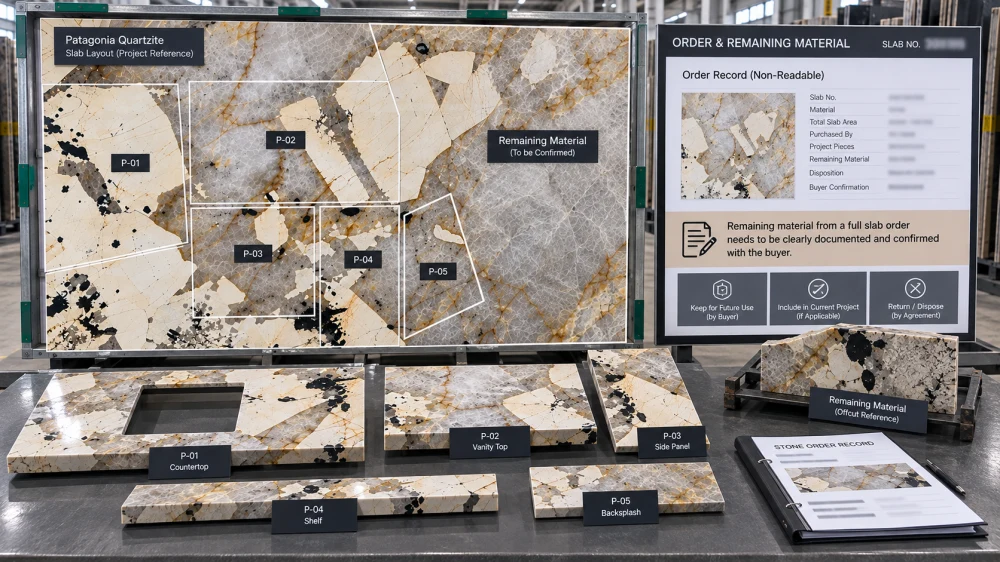
If the buyer pays for gross slab area but only part of the slab becomes finished components, clarify:
If I am paying for the complete slab, what happens to the material that is not used in the finished pieces?
A minimum charge is a commercial term.
Yield loss or waste is a cutting-layout result.
They should not be merged into one unexplained percentage.
For example, a project may have efficient slab yield but still fall below a supplier’s minimum commercial charge.
Another project may exceed the minimum charge but require significant raw slab consumption because the finished components are difficult to nest.
These are different reasons for the final quoted amount.
A raw-slab quotation and a finished-piece quotation should not be compared only by $/m².
A slab quote may primarily cover the natural-stone material.
A cut-to-size quote can also include or separately charge for:
This distinction is explained further in our Quartzite slabs vs cut-to-size pieces guide.
When comparing quotations, identify how fabrication is charged.
It may be:
None of these formats is automatically wrong.
The important issue is whether the buyer can see the scope well enough to compare it with another proposal.
Suppose two suppliers quote the same Natural Quartzite project.
Build a comparison sheet before deciding which number is lower.
| 比較項目 | 見積もりA | 見積もりB |
| Material / selection basis | 確認すること。 | 確認すること。 |
| Thickness / finish | 確認すること。 | 確認すること。 |
| スラブの総数量 | 記録 | 記録 |
| Finished net area | Record basis | Record basis |
| Chargeable quantity | 記録 | 記録 |
| Minimum charge | State basis | State basis |
| 加工 | Included / separate / excluded | Included / separate / excluded |
| 梱包 | Included / separate | Included / separate |
| Freight / Incoterm | 記録 | 記録 |
| Currency / validity | 記録 | 記録 |
| Total comparable scope | Calculate | Calculate |
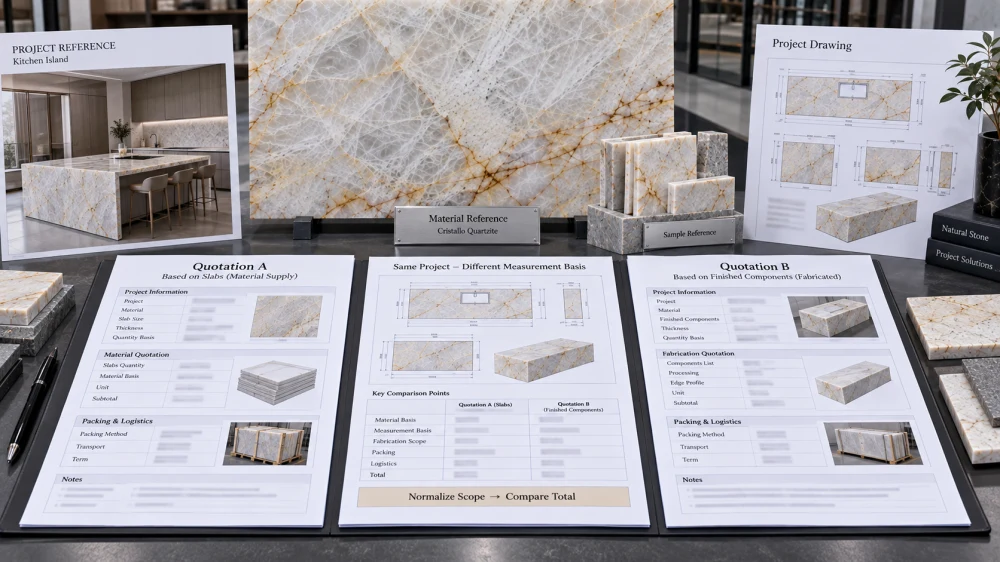
Consider a hypothetical comparison.
One supplier offers a lower material rate but charges complete slabs and excludes fabrication.
Another supplier shows a higher finished-piece rate but includes some fabrication and uses a different chargeable quantity.
The first $/m² can be lower while the completed commercial scope is higher.
This is why procurement teams should compare:
Comparable Total ÷ Comparable Scope
rather than ranking quotations by the first unit rate visible on the page.
Area pricing does not end at the factory invoice.
Raw slabs and finished pieces can require different packing and shipping arrangements.
For a project quotation, confirm whether the price includes:
A quote that looks expensive at the material line can be more complete commercially, while a low material rate may leave several later costs outside the proposal.
01 — What quantity is my project drawing asking for?
02 — How much raw Quartzite is required?
03 — Am I purchasing complete slabs or only finished pieces?
04 — What does “gross area” mean in this quotation?
05 — What does “net area” mean in this quotation?
06 — What quantity is actually chargeable?
07 — Is there a minimum charge?
08 — What happens to unused slab material?
09 — Which fabrication items are included?
10 — Is packing included?
11 — What Incoterm / delivery scope applies?
12 — What is the final comparable total?
For an international project, a useful quotation can identify:
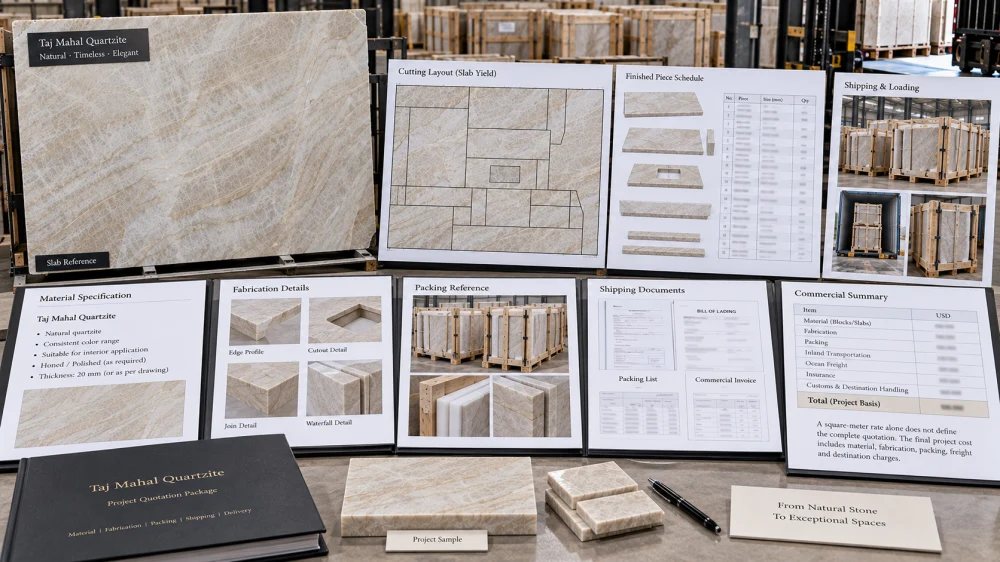
The goal is not to make every supplier use the same quotation format.
The goal is to make the commercial basis understandable enough to compare.
Gross area generally refers to the overall slab-area basis stated in the quotation, often related to the slab dimensions. It should not automatically be interpreted as usable cutting area or finished project area. Confirm the supplier’s exact measurement method in the quotation.
正味面積とは、仕上げ品の計算上の面積を指す場合や、他の供給業者が定める計測基準を指す場合があります。この用語だけでは十分に明確ではないため、購入者は、正味面積の算出方法および、廃材、加工、切り欠き、端部、その他の項目が含まれるか除外されるかを、必ず具体的に確認する必要があります。.
完成品は必ず実際のスラブから切り出さなければなりません。スラブの寸法、部材の形状、切断余裕、配置方向、外観上の選定基準、継ぎ目、くり抜き、パターン合わせの要件など、各種レイアウト上の制約により、原材料の消費量が最終的な仕上げ面積を上回る場合があります。また、別途設定される最低料金も、商業用数量に影響を及ぼすことがあります。.
これは、たとえ当面の需要がそれよりも少額であっても、供給者が所定の最低取引金額、数量、スラブ枚数、処理単位、またはその他の定められた料金を適用することを意味します。すべての天然クォーツァイトの供給業者やプロジェクトに対して一律の最低料金が設定されているわけではないため、その根拠は文書で明示されるべきです。.
いずれの見解も前提としないでください。注文前に商取引の取り決めを確認してください。見積書または注文記録には、未使用の資材について、出荷するか、予備部品に加工するか、保管するか、留保するか、その他の処理を行うかを明記する必要があります。.
必ずしもそうではありません。MOQは、サプライヤーが注文として受け入れる最低数量を示すのに対し、最低請求額は、請求される最低の金額または数量基準を示します。実際の見積書には、これらの条件が適用される場合には両方を明示する必要があります。.
材料、厚さ、仕上げ、スラブ数量、仕上げ面積、請求可能数量、最低請求額、加工範囲、梱包、運賃、通貨、見積有効期限および納品条件を標準化してください。また、単に平米単価の見出し価格のみを比較するのではなく、同一の完成した商業的範囲を対象として比較してください。.
For project-based Natural Quartzite quotations, HRST STONE can review current drawings, finished dimensions, actual slab requirements, cutting layouts, fabrication scope, packing requirements, and shipping destination before preparing the commercial scope. Send Josh the material name, dimensions, quantities, finish, drawings, edge and cutout requirements, packing requirements, and delivery destination so the quotation can clearly separate material, fabrication, packing, and logistics.
© HRST STONE/XIAMEN HRST STONE CO., LTD. 無断転載を禁じます。.