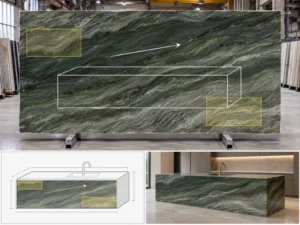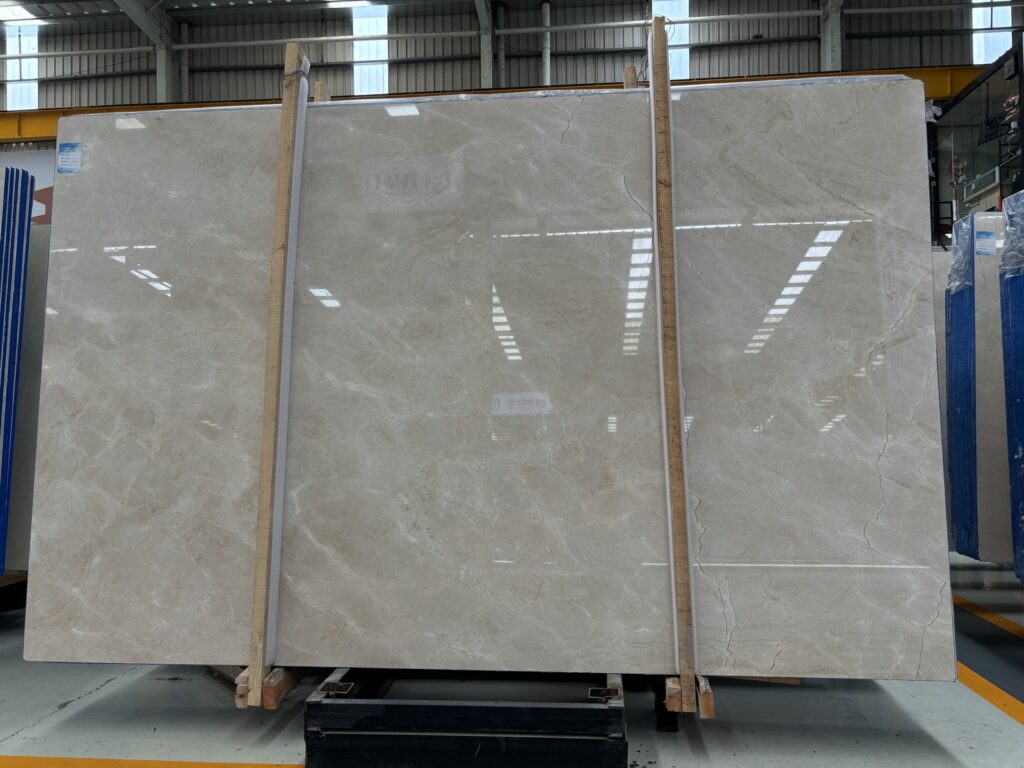


क्वार्ट्ज़ाइट के किनारे के नुकसान से उपयोगी उत्पादन में केवल तभी कमी आती है जब प्रभावित क्षेत्र अनुमोदित तैयार भाग के लेआउट के लिए आवश्यक सामग्री के साथ रुकावट बनाता है। सभी नियोजित घटकों के बाहर एक चिपड़े हुए कोने का असर बहुत कम या न के बराबर हो सकता है, जबकि एक लंबे द्वीप, दिखाई देने वाले तैयार किनारे, झरने, ज्वाइंट क्षेत्र या अन्य आवश्यक भाग में फैले नुकसान से अतिरिक्त कटाई, पुनर्स्थापन, नया ज्वाइंट या एक और स्लैब की आवश्यकता पड़ सकती है। उपयोगी सामग्री का कितना नुकसान हुआ है, इसका निर्णय लेने से पहले कटिंग योजना के अनुसार वास्तविक स्लैब की स्थिति का आकलन करें।.
एक खरीदार कटिंग से पहले एक प्राकृतिक क्वार्ट्ज़ाइट स्लैब की तस्वीरें प्राप्त करता है और एक चिपड़े हुए किनारे या टूटे हुए कोने को देखता है।.
अक्सर तत्काल प्रश्न यही होता है:
“हमने कितना उपयोगी क्षेत्र खो दिया है?”
इस प्रश्न का उत्तर केवल चिप से ही विश्वसनीय रूप से नहीं दिया जा सकता है।.
एक कोने पर 100 मिमी का क्षतिग्रस्त क्षेत्र इसका मतलब यह नहीं है कि पूरे स्लैब को दोनों आयामों में 100 मिमी तक कम कर दिया जाना चाहिए। इसके विपरीत, अपेक्षाकृत छोटी किनारे की स्थिति भी बहुत महत्वपूर्ण हो सकती है यदि वह एक बड़े द्वीप, झरने के पैनल, लंबे वैनिटी या अन्य महत्वपूर्ण तैयार घटक के लिए एकमात्र कार्यक्षम स्थिति के ठीक अंदर आ जाती है।.
सही दृष्टिकोण है— क्वार्ट्ज़ाइट के किनारे के नुकसान को वास्तविक कटिंग लेआउट से जोड़ना।.
कुल स्लैब के आयाम स्लैब के भौतिक आवरण का वर्णन करते हैं।.
उपयोगी उत्पादन यह बताता है कि उस विशेष स्लैब का कितना हिस्सा वास्तव में परियोजना की कटिंग योजना को पूरा कर सकता है।.
इस अंतर को निम्नलिखित कारक प्रभावित कर सकते हैं:
इसीलिए एक स्लैब का आकलन केवल उसकी कुल लंबाई और कुल चौड़ाई को गुणा करके नहीं किया जाना चाहिए।.
सभी नियोजित भागों के बाहर का नुकसान
परियोजना के उत्पादन पर बहुत कम या कोई प्रभाव नहीं पड़ सकता है।.
एक ऐसे क्षेत्र के अंदर का नुकसान जो पहले से ही कटाई के लिए निर्धारित है
बिना तैयार भाग के लेआउट को बदले इसे समायोजित किया जा सकता है।.
नुकसान एक नियोजित भाग से छूता है, लेकिन वह भाग आगे बढ़ सकता है
इसके लिए एक और स्लैब की बजाय लेआउट के अनुकूलन की आवश्यकता पड़ सकती है।.
नुकसान एक महत्वपूर्ण भाग में प्रवेश करता है जो आगे नहीं बढ़ सकता है
इससे उपयोगी उत्पादन में कमी आ सकती है और एक ज्वाइंट, पुनर्डिज़ाइन या अतिरिक्त सामग्री की आवश्यकता पड़ सकती है।.
नुकसान एक आवश्यक दिखाई देने वाले तैयार किनारे तक पहुंच जाता है
इसके लिए विशिष्ट दृश्य और निर्माण समीक्षा की आवश्यकता होती है, भले ही कुल भाग अभी भी फिट हो।.
यह निर्णय लेने से पहले कि क्या क्वार्ट्ज़ाइट के किनारे के नुकसान को ऑर्डर को प्रभावित करता है या नहीं, वास्तविक स्लैब के लिए एक सरल स्थिति रिकॉर्ड बनाएं।.
दर्ज करें:
स्थिति को पूरे स्लैब की छवि पर पहचानना चाहिए। एक क्लोज़-अप अकेले से एक छोटी किनारे की चिप को पूरे बोर्ड के संदर्भ में जितना बड़ा दिखाया जा सकता है, उससे कहीं अधिक महत्वपूर्ण बना देता है।.
नुकसान हर आवश्यक तैयार भाग के बाहर है। उत्पादन में कोई बदलाव नहीं हो सकता है।.
प्रभावित सामग्री को पहले ही स्क्वायरिंग या फैब्रिकेशन के दौरान हटा दिया गया होगा।.
एक या अधिक टुकड़ों को आवश्यक परियोजना परिणाम को बनाए रखते हुए पुनर्स्थापित किया जा सकता है।.
क्षति एक आवश्यक घटक या दृश्यमान किनारे में प्रवेश करती है और लेआउट बस दूर नहीं हो सकता है।.
यह सबसे सरल स्थिति है।.
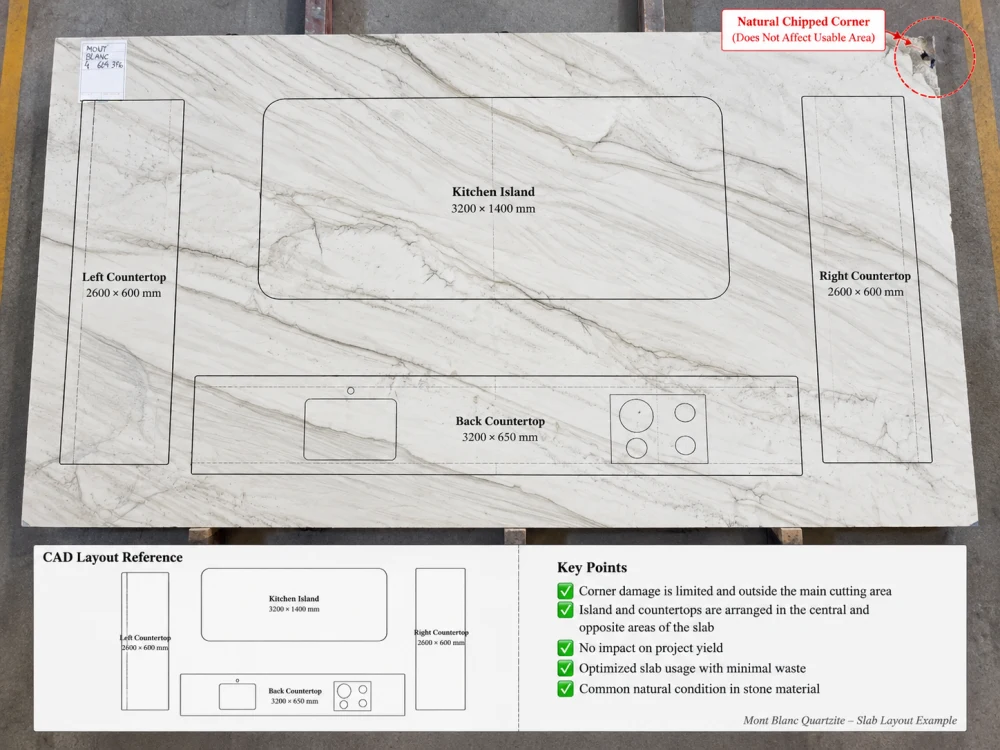
मान लीजिए कि स्लैब का एक अनियमित चिप वाला कोना है, लेकिन कटिंग योजना निम्नलिखित स्थिति में रखती है:
अगर उनमें से किसी भी घटक को क्षतिग्रस्त क्षेत्र की आवश्यकता नहीं है, तो चिप परियोजना की उत्पादकता में बिल्कुल भी कमी नहीं ला सकती है।.
स्लैब का कुल आकार अपने परिधि पर दृश्य रूप से क्षतिग्रस्त रहता है, लेकिन परियोजना के उपयोगी क्षेत्र अपरिवर्तित रह सकता है।.
प्राकृतिक पत्थर के स्लैब में हमेशा पूरी तरह से सीधे उत्पादन के लिए तैयार किनारे नहीं होते हैं।.
एक कटिंग योजना पहले से ही मान सकती है कि तैयार टुकड़ों के निर्माण से पहले परिधि का एक हिस्सा हटा दिया जाएगा।.
अगर एक किनारे की चिप पूरी तरह से उस सामग्री के अंदर पड़ती है जिसे पहले से ही ट्रिम कर दिया जाना था, तो यह अतिरिक्त उत्पादकता की हानि का कारण नहीं बन सकती है।.
हर क्वार्ट्जाइट स्लैब के लिए एक सार्वभौमिक “मानक ट्रिमिंग अनुमति” न बनाएं। आवश्यक ट्रिमिंग वास्तविक स्लैब के किनारे, कटिंग विधि, तैयार टुकड़ों की ज्यामिति, फैब्रिकेशन प्रक्रिया और परियोजना की आवश्यकताओं पर निर्भर करती है।.
कभी-कभी क्षति एक टुकड़े की पहली प्रस्तावित स्थिति में प्रवेश करती है, लेकिन स्लैब को अनुपयोगी नहीं बनाती है।.
फैब्रिकेटर टुकड़ों को पुनर्स्थापित करने में सक्षम हो सकता है।.
हालाँकि, एक टुकड़े को हिलाने से एक और सवाल उठना चाहिए:
टुकड़े के हिलने से और क्या बदलता है?
जाँच करें:
एक किनारे के टकराव को हल करने से दूसरे स्थान पर अनजाने में और बदतर दृश्य या फैब्रिकेशन समस्या नहीं पैदा होनी चाहिए।.
यहीं पर क्वार्ट्ज़ाइट के किनारे के नुकसान को वास्तव में उपयोगी उत्पादकता को कम कर सकती है।.
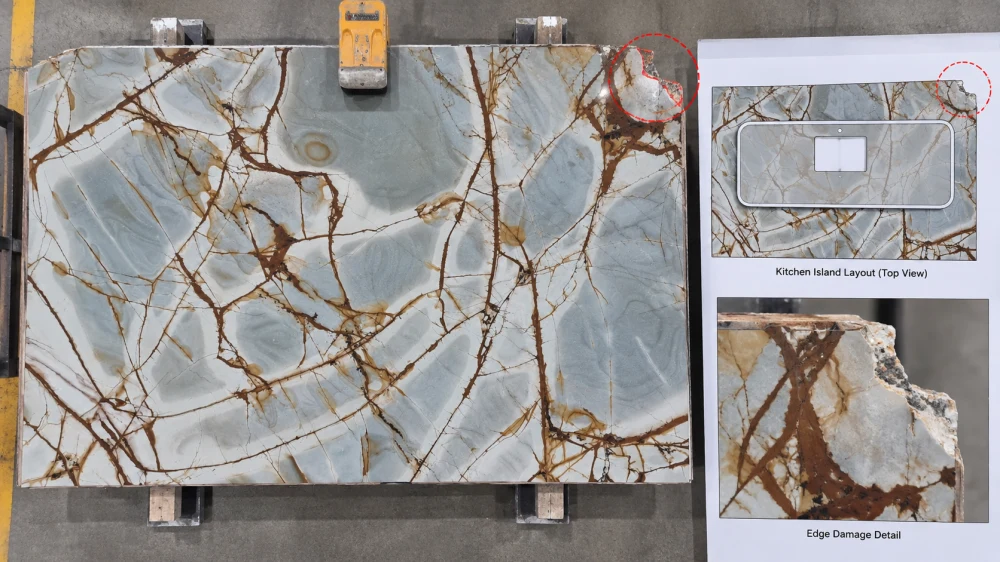
उदाहरण के लिए, परियोजना में एक लंबे एक-टुकड़ा वाले द्वीप की आवश्यकता है और चुने गए स्लैब पर केवल एक स्थान ही पर्याप्त उपयोगी लंबाई प्रदान करता है।.
अगर क्षतिग्रस्त किनारा उस आवश्यक एनवलोप में फैल जाता है, तो संभावित परिणामों में शामिल हो सकते हैं:
सही समाधान वास्तविक स्लैब और परियोजना पर निर्भर करता है। किनारे की स्थिति ही यह निर्धारित नहीं करती है कि किस विकल्प का चयन किया जाना चाहिए।.
उत्पादकता केवल यह नहीं है कि एक आयत भौतिक रूप से फिट है या नहीं।.
मान लीजिए कि एक काउंटरटॉप टुकड़ा स्लैब के आयामों के भीतर फिट है, लेकिन प्रभावित क्षेत्र एक उजागर तैयार किनारे का हिस्सा बन जाता है।.
परियोजना को तब निम्नलिखित को ध्यान में रखना चाहिए:

A piece can therefore “fit” geometrically while still requiring visual review.
This is an important procurement distinction.
If a small damaged corner forces a 3,000 mm-long finished component to move to another slab, the commercial effect may be much larger than the physical area of the chip.
Conversely, a visibly larger edge condition may have almost no project effect if that entire perimeter lies outside all required components.
Physical damage area and project yield loss are not the same measurement. Yield loss should be evaluated through the cutting plan.
The most useful review is visual.
Place the proposed finished-piece outlines over the actual slab image and show the edge condition in the same record.
This allows the buyer and fabricator to see:
Actual Slab → Edge Condition → Piece Envelope → Trim Zone → Cutouts → Visible Edges → Remaining Material
साइट का क्वार्ट्जाइट स्लैब आरक्षण मार्गदर्शिका similarly recommends checking actual slabs against the project cut list rather than relying on gross dimensions alone. It specifically identifies edge trimming, orientation, natural features, openings, waterfall returns, and cutting layout as factors that can change usable yield.
When several slabs from the same bundle are available, a condition report without a board number can quickly become ambiguous.
The yield review should connect:
Board Number → Full-Slab Photo → Edge Condition → Cutting Plan → Finished Pieces
If the cutting layout is revised, retain the same slab identity so the buyer knows which physical board is being reassessed.
For projects where several slabs feed multiple finished components, the क्वार्ट्जाइट कटिंग-प्लान गाइड explains how board numbers and finished-piece IDs can maintain this traceability through fabrication.
A damaged perimeter can become more significant when the planned component also contains a large opening.
For example, moving an island away from an edge chip may shift the sink cutout closer to:
This is why layout optimization should consider the whole finished component rather than only avoiding the damaged perimeter.
The पैटागोनिया ब्राउन क्वार्टज़ाइट किचन आइलैंड page likewise treats usable slab yield as a combination of visual selection, fissures, repairs, cutout position, waterfall matching, edge requirements, spare material, and other risk areas rather than gross slab area alone.
Do not make repair the first question.
First determine whether the affected material is even needed.
If the edge condition changes the cutting plan, record both versions.
| समीक्षा आइटम | Original Layout | Revised Layout |
| Slab / Board | Same identified slab | Same or replacement slab |
| Main Piece Position | Original position | Moved if required |
| Edge Condition | Conflicts / no conflict | Excluded, trimmed, or still relevant |
| Secondary Pieces | Original allocation | Reallocated where necessary |
| Additional Material | Original assumption | Confirm after revised layout |

The practical answer is:
When avoiding, trimming, or accommodating the affected edge prevents the approved finished-piece set from being produced from the slab in the intended layout.
This may happen when:
It may have no meaningful effect when:
The decision still needs to be tied to the actual slab and current cutting plan rather than assumed from these examples.
Before cutting a slab with a recorded edge condition, confirm:
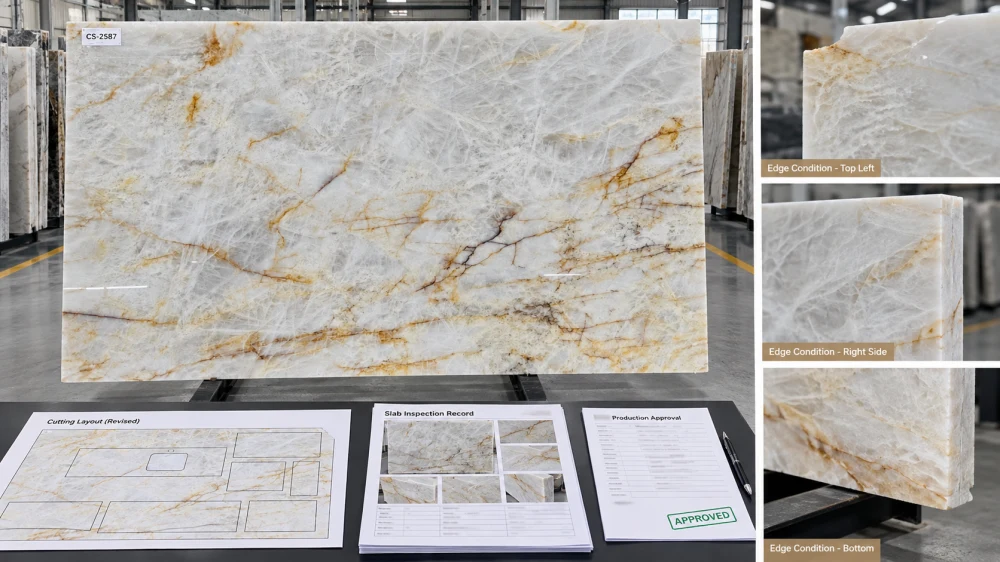
□ Correct slab / board number identified
□ Full-slab photograph retained
□ Edge condition shown in context
□ Current slab dimensions confirmed
□ Latest cutting-plan revision used
□ Finished pieces overlaid on actual slab
□ Visible edges checked
□ Cutouts and seams reviewed
□ Original vs revised yield recorded if layout changed
□ Additional material requirement confirmed if applicable
□ Buyer / designated reviewer approval recorded
नहीं। एक चिप्ड किनारा सभी आवश्यक तैयार टुकड़ों के बाहर हो सकता है या ऐसी सामग्री के अंदर हो सकता है जिसे पहले ही काट दिया गया होगा। इसके प्रभाव का मूल्यांकन वास्तविक स्लैब और कटिंग योजना के संदर्भ में किया जाना चाहिए।.
वास्तविक स्लैब के आयामों और अवस्था के साथ-साथ तैयार टुकड़ों के लेआउट की समीक्षा करें। यह निर्धारित करें कि प्रभावित क्षेत्र टुकड़ों की स्थिति, जोड़ों, दृश्य संबंधों, कटआउट्स या आवश्यक स्लैबों की संख्या को कैसे प्रभावित करता है। केवल भौतिक चिप क्षेत्र के आधार पर उत्पादन हानि की गणना न करें।.
संभवतः। उत्तर क्षतिग्रस्त क्षेत्र के स्थान, उपयोगी स्लैब के आयाम, द्वीप का आकार, कटआउट, दृश्य प्राथमिकताएं, किनारे की आवश्यकताएं, और यह कि क्या अनुमोदित लेआउट को बरकरार रखते हुए द्वीप को प्रभावित क्षेत्र से दूर स्थित किया जा सकता है, इन सभी पर निर्भर करता है।.
नहीं। सबसे पहले यह निर्धारित करें कि प्रभावित क्षेत्र कटिंग योजना के अनुसार आवश्यक है या नहीं। यदि क्षतिग्रस्त सामग्री को हटा दिया जाएगा या यह सभी तैयार भागों के बाहर स्थित है, तो मरम्मत संबंधित नहीं हो सकती। जो सामग्री तैयार घटक में बनी रहती है, उसकी मरम्मत को वास्तविक परियोजना के लिए समीक्षा के लिए भेजा जाना चाहिए।.
कभी-कभी। टुकड़ों का पुनर्स्थापन एक किनारे की स्थिति से बचने में मदद कर सकता है, लेकिन संशोधित लेआउट की नसों की दिशा, दृश्य प्राथमिकताएं, ज्वाइंट्स, कटआउट्स, वॉटरफॉल संबंधों और अन्य घटकों के लिए शेष स्थान की भी जाँच की जानी चाहिए।.
जब किनारे की स्थिति और अन्य लेआउट आवश्यकताओं को ध्यान में रखने के बाद, अनुमोदित तैयार टुकड़ों का सेट चुने गए सामग्री के उपयोगी क्षेत्रों में अब फिट नहीं हो पाता है, तो एक और स्लैब की आवश्यकता हो सकती है। कृपया इसे केवल किनारे की तस्वीर से नहीं, बल्कि संशोधित कटिंग योजना के माध्यम से पुष्टि करें।.
सामग्री का नाम, स्लैब या बोर्ड का नंबर, पूर्ण स्लैब की तस्वीर, प्रभावित किनारे की क्लोज़-अप छवियाँ, स्लैब के आयाम, वर्तमान ड्राइंग्स, तैयार टुकड़ों के आकार, कटआउट्स, दिखाई देने वाले किनारे की आवश्यकताएँ, लेआउट की प्राथमिकताएँ, और वर्तमान कटिंग-प्लान संशोधन भेजें।.
For project-based Natural Quartzite fabrication, HRST STONE can coordinate actual slab photographs, board identification, CAD cutting layouts, finished-piece positioning, visual review, fabrication QC, and export packing around the approved project scope. Send Josh the slab reference, condition photographs, drawings, required piece sizes, finish, cutouts, edge requirements, and destination when an edge condition needs to be reviewed before cutting.
© HRST STONE / XIAMEN HRST STONE CO., LTD. सभी अधिकार सुरक्षित हैं।.